Man has developed a form of
architecture based on megaliths (a big
rock) from the Greek word lithos (stone)
and megas (big).
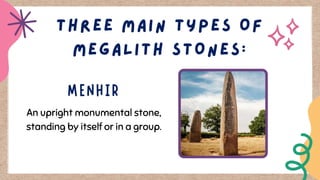
An upright monumental stone,
standing by itself or in a group.
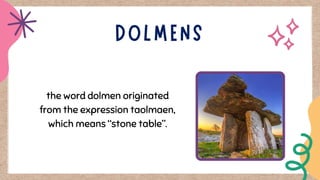
the word dolmen originated
from the expression taolmaen,
which means “stone table”.
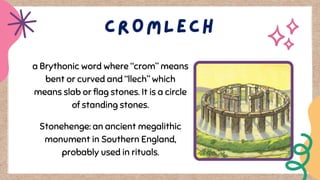
a Brythonic word where “crom” means
bent or curved and “llech” which
means slab or flag stones. It is a circle
of standing stones.
Stonehenge: an ancient megalithic
monument in Southern England,
probably used in rituals.
This architectural style was developed
during the pre-dynastic period 4,000 BC.
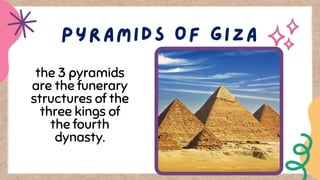
the 3 pyramids
are the funerary
structures of the
three kings of
the fourth
dynasty.
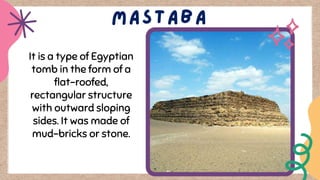
It is a type of Egyptian
tomb in the form of a
flat-roofed,
rectangular structure
with outward sloping
sides. It was made of
mud-bricks or stone.
Temples consisted of a central shrine or
room in an aisle surrounded by rows of
columns. These buildings were designed
in one of three architectural style or
orders: Doric, Ionic, Corinthian.
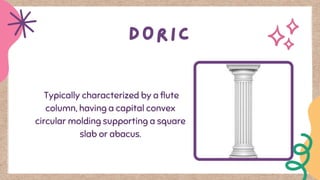
Typically characterized by a flute
column, having a capital convex
circular molding supporting a square
slab or abacus.
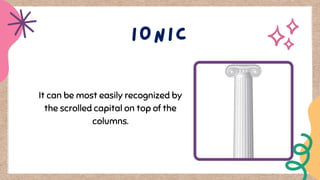
It can be most easily recognized by
the scrolled capital on top of the
columns.
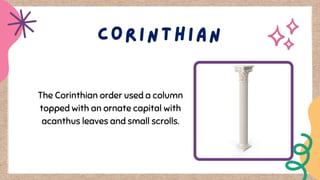
The Corinthian order used a column
topped with an ornate capital with
acanthus leaves and small scrolls.
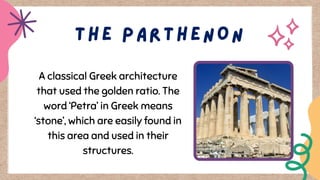
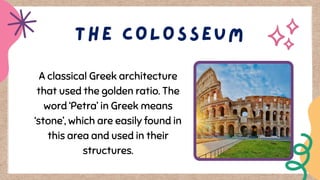
A classical Greek architecture
that used the golden ratio. The
word ‘Petra’ in Greek means
‘stone’, which are easily found in
this area and used in their
structures.
They built well-made stone
structures both for use and to
maintain their glory.
A classical Greek architecture
that used the golden ratio. The
word ‘Petra’ in Greek means
‘stone’, which are easily found in
this area and used in their
structures.
It has a lot in common with the early Christian
architecture. Mosaic decoration was perfected by
the Byzantines, as was the use of clerestory to
bring light in from high windows. Byzantine's
advancement in developing the dome created a
new style in global architecture.
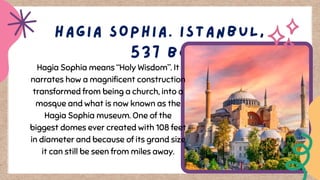
Hagia Sophia means “Holy Wisdom”. It
narrates how a magnificent construction
transformed from being a church, into a
mosque and what is now known as the
Hagia Sophia museum. One of the
biggest domes ever created with 108 feet
in diameter and because of its grand size
it can still be seen from miles away.
Romanesque architecture displayed solid
masonry walls, rounded arches and masonry
vaults. It is the period of great building activities in
Europe, castles, churches, monasteries arose
everywhere.
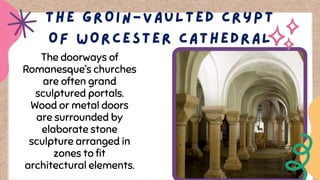
The doorways of
Romanesque’s churches
are often grand
sculptured portals.
Wood or metal doors
are surrounded by
elaborate stone
sculpture arranged in
zones to fit
architectural elements.
This design included two new devices: pointed
arch which enabled builders to construct much
higher ceiling vaults and stone vaulting borne on a
network of stone ribs supported by piers and
clustered pillars.
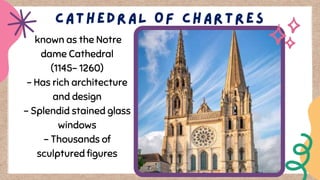
known as the Notre
dame Cathedral
(1145- 1260)
- Has rich architecture
and design
- Splendid stained glass
windows
- Thousands of
sculptured figures

ARTS 9 1ST QUARTER part3.............pptx

  • 2.
    Man has developeda form of architecture based on megaliths (a big rock) from the Greek word lithos (stone) and megas (big).
  • 3.
    An upright monumentalstone, standing by itself or in a group.
  • 4.
    the word dolmenoriginated from the expression taolmaen, which means “stone table”.
  • 5.
    a Brythonic wordwhere “crom” means bent or curved and “llech” which means slab or flag stones. It is a circle of standing stones. Stonehenge: an ancient megalithic monument in Southern England, probably used in rituals.
  • 6.
    This architectural stylewas developed during the pre-dynastic period 4,000 BC.
  • 7.
    the 3 pyramids arethe funerary structures of the three kings of the fourth dynasty.
  • 8.
    It is atype of Egyptian tomb in the form of a flat-roofed, rectangular structure with outward sloping sides. It was made of mud-bricks or stone.
  • 9.
    Temples consisted ofa central shrine or room in an aisle surrounded by rows of columns. These buildings were designed in one of three architectural style or orders: Doric, Ionic, Corinthian.
  • 10.
    Typically characterized bya flute column, having a capital convex circular molding supporting a square slab or abacus.
  • 11.
    It can bemost easily recognized by the scrolled capital on top of the columns.
  • 12.
    The Corinthian orderused a column topped with an ornate capital with acanthus leaves and small scrolls.
  • 13.
    A classical Greekarchitecture that used the golden ratio. The word ‘Petra’ in Greek means ‘stone’, which are easily found in this area and used in their structures.
  • 14.
    They built well-madestone structures both for use and to maintain their glory.
  • 15.
    A classical Greekarchitecture that used the golden ratio. The word ‘Petra’ in Greek means ‘stone’, which are easily found in this area and used in their structures.
  • 16.
    It has alot in common with the early Christian architecture. Mosaic decoration was perfected by the Byzantines, as was the use of clerestory to bring light in from high windows. Byzantine's advancement in developing the dome created a new style in global architecture.
  • 17.
    Hagia Sophia means“Holy Wisdom”. It narrates how a magnificent construction transformed from being a church, into a mosque and what is now known as the Hagia Sophia museum. One of the biggest domes ever created with 108 feet in diameter and because of its grand size it can still be seen from miles away.
  • 18.
    Romanesque architecture displayedsolid masonry walls, rounded arches and masonry vaults. It is the period of great building activities in Europe, castles, churches, monasteries arose everywhere.
  • 19.
    The doorways of Romanesque’schurches are often grand sculptured portals. Wood or metal doors are surrounded by elaborate stone sculpture arranged in zones to fit architectural elements.
  • 20.
    This design includedtwo new devices: pointed arch which enabled builders to construct much higher ceiling vaults and stone vaulting borne on a network of stone ribs supported by piers and clustered pillars.
  • 21.
    known as theNotre dame Cathedral (1145- 1260) - Has rich architecture and design - Splendid stained glass windows - Thousands of sculptured figures