Classical Art Architecture
G9 First Grading Period
Architecture from the Early Age
Pre-Historic Architecture
Man has developed a form of architecture based on
megaliths (a big rock) from the Greek word lithos (stone)
and megas (big). This architecture is made of huge stone
blocks which were probably intended for burial.
Megalithic monuments have always ignited man’s
imagination. It provided plenty of legends and
superstition.During this era, stones and rocks were
associated with divinity.
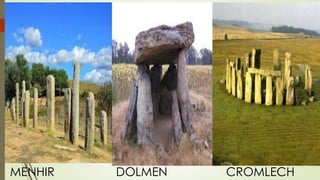
Three main types of megalith stones:
1. Menhir: a huge stone standing vertically on the ground, usually standing
in the middle of the field or arranged in rows.
2. Dolmens: the word dolmen originated from the expression
taolmaen, which means “stone table”. These structures are in a form
of table consisting of two huge standing stones supporting a
horizontal giant stone. It is believed that it served as grave
or as an altar.
3. Cromlech: a Brythonic word where “crom” means bent or
curved and “llech” which means slab or flagstones.
Literary it is a circle of standing stones.
Stonehenge: best preserved megalithic site in Europe, a group of
stones arranged in concentric circles, with a large external circle of
triliths (Greek word meaning three stones) two internal circles
built in a similar manner and altar- shape stone in the center.
It is a temple where rituals were held.
MENHIR DOLMEN CROMLECH
 Egyptian Architecture
 This architectural style was developed during the pre-dynastic period 4,000BC.
 Characteristics of Egyptian Architecture:
 1. The structure has thick sloping walls with few openings to obtain stability.
 2. The exterior and interior walls along with columns and piers were covered with
hieroglyphics and pictorial frescoes and carvings painted in brilliantcolors.
 3. Ornamentations were symbolic including scarab (sacred beetle), solar disk and
vulture, common motifs (palmleaves, buds, flower of lotus, and papyrus plants)
 4. Temples were aligned with astronomically significant events like solstices (comes
from the Latin word Sol, meaning sun and stitium meaning stoppage, as the sun
appears to stand still on the first day of winter) and equinox (a time or date when
day and night are of equal length) with precise measurements required in
determining the moment of that particular event.
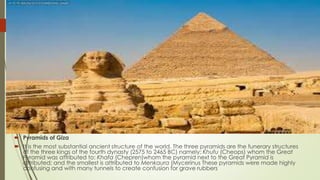
 Pyramids of Giza
 It is the most substantial ancient structure of the world. The three pyramids are the funerary structures
of the three kings of the fourth dynasty (2575 to 2465 BC) namely: Khufu (Cheops) whom the Great
Pyramid was attributed to; Khafa (Chepren)whom the pyramid next to the Great Pyramid is
attributed; and the smallest is attributed to Menkaura (Mycerinus These pyramids were made highly
confusing and with many tunnels to create confusion for grave rubbers
 Egyptian Temples were built to serve as places of residence for the gods. They also served as key centers for
economic activity. Ancient temples were made of perishables materials like wood, reed matting and mud
brick. Their walls were covered with scenes that were carved onto the stone then brightly painted. Pharaoh
fighting in the battles and performing rituals with the gods were the scenes found on the walls.
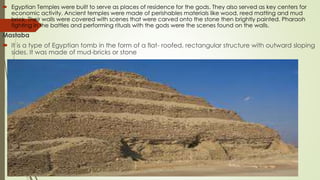
Mastaba
 It is a type of Egyptian tomb in the form of a flat- roofed, rectangular structure with outward sloping
sides. It was made of mud-bricks or stone
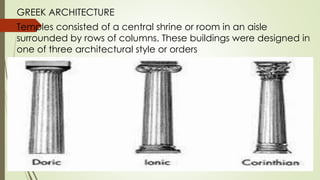
GREEK ARCHITECTURE
Temples consisted of a central shrine or room in an aisle
surrounded by rows of columns. These buildings were designed in
one of three architectural style or orders
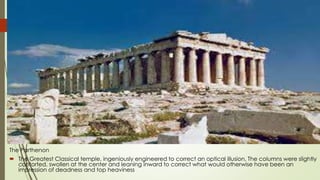
The Parthenon
 The Greatest Classical temple, ingeniously engineered to correct an optical illusion. The columns were slightly
contorted, swollen at the center and leaning inward to correct what would otherwise have been an
impression of deadness and top heaviness
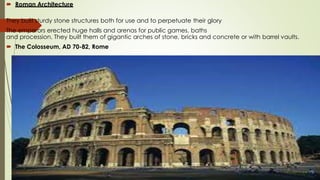
 Roman Architecture
They built sturdy stone structures both for use and to perpetuate their glory
The emperors erected huge halls and arenas for public games, baths
and procession. They built them of gigantic arches of stone, bricks and concrete or with barrel vaults.
 The Colosseum, AD 70-82, Rome
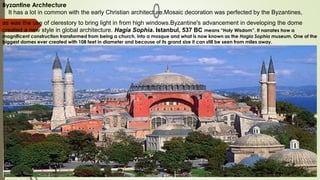
Byzantine Archtecture
It has a lot in common with the early Christian architecture.Mosaic decoration was perfected by the Byzantines,
as was the use of clerestory to bring light in from high windows.Byzantine's advancement in developing the dome
created a new style in global architecture. Hagia Sophia. Istanbul, 537 BC means “Holy Wisdom”. It narrates how a
magnificent construction transformed from being a church, into a mosque and what is now known as the Hagia Sophia museum. One of the
biggest domes ever created with 108 feet in diameter and because of its grand size it can still be seen from miles away.
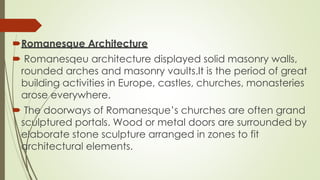
Romanesque Architecture
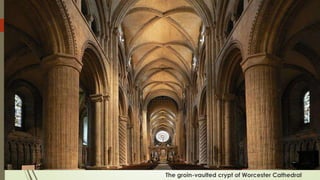
 Romanesqeu architecture displayed solid masonry walls,
rounded arches and masonry vaults.It is the period of great
building activities in Europe, castles, churches, monasteries
arose everywhere.
 The doorways of Romanesque’s churches are often grand
sculptured portals. Wood or metal doors are surrounded by
elaborate stone sculpture arranged in zones to fit
architectural elements.
The groin-vaulted crypt of Worcester Cathedral
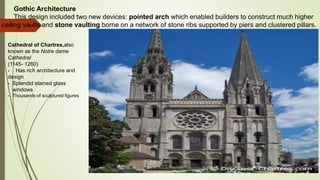
Gothic Architecture
This design included two new devices: pointed arch which enabled builders to construct much higher
ceiling vaults and stone vaulting borne on a network of stone ribs supported by piers and clustered pillars.
Cathedral of Chartres,also
known as the Notre dame
Cathedral
(1145- 1260)
- Has rich architecture and
design
- Splendid stained glass
windows
- Thousands of sculptured figures
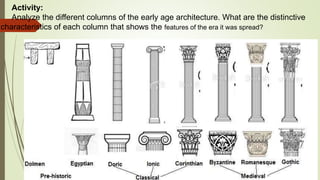
Activity:
Analyze the different columns of the early age architecture. What are the distinctive
characteristics of each column that shows the features of the era it was spread?
Individual Activity:
My Dream House!
If you were given a chance to design your
dream house, how would you like it to be?
Choose from the different architectures
that we discussed and use it as inspiration
for your dream house.
Explain the reason for choosing that style.
What are the distinctive characteristics of that
architectural design that will be visible in your
own dream house?
THE END

G 9 art 1st grading classical art architecture

  • 1.
    Classical Art Architecture G9First Grading Period
  • 2.
    Architecture from theEarly Age Pre-Historic Architecture Man has developed a form of architecture based on megaliths (a big rock) from the Greek word lithos (stone) and megas (big). This architecture is made of huge stone blocks which were probably intended for burial. Megalithic monuments have always ignited man’s imagination. It provided plenty of legends and superstition.During this era, stones and rocks were associated with divinity.
  • 3.
    Three main typesof megalith stones: 1. Menhir: a huge stone standing vertically on the ground, usually standing in the middle of the field or arranged in rows. 2. Dolmens: the word dolmen originated from the expression taolmaen, which means “stone table”. These structures are in a form of table consisting of two huge standing stones supporting a horizontal giant stone. It is believed that it served as grave or as an altar. 3. Cromlech: a Brythonic word where “crom” means bent or curved and “llech” which means slab or flagstones. Literary it is a circle of standing stones. Stonehenge: best preserved megalithic site in Europe, a group of stones arranged in concentric circles, with a large external circle of triliths (Greek word meaning three stones) two internal circles built in a similar manner and altar- shape stone in the center. It is a temple where rituals were held.
  • 4.
  • 5.
     Egyptian Architecture This architectural style was developed during the pre-dynastic period 4,000BC.  Characteristics of Egyptian Architecture:  1. The structure has thick sloping walls with few openings to obtain stability.  2. The exterior and interior walls along with columns and piers were covered with hieroglyphics and pictorial frescoes and carvings painted in brilliantcolors.  3. Ornamentations were symbolic including scarab (sacred beetle), solar disk and vulture, common motifs (palmleaves, buds, flower of lotus, and papyrus plants)  4. Temples were aligned with astronomically significant events like solstices (comes from the Latin word Sol, meaning sun and stitium meaning stoppage, as the sun appears to stand still on the first day of winter) and equinox (a time or date when day and night are of equal length) with precise measurements required in determining the moment of that particular event.
  • 6.
     Pyramids ofGiza  It is the most substantial ancient structure of the world. The three pyramids are the funerary structures of the three kings of the fourth dynasty (2575 to 2465 BC) namely: Khufu (Cheops) whom the Great Pyramid was attributed to; Khafa (Chepren)whom the pyramid next to the Great Pyramid is attributed; and the smallest is attributed to Menkaura (Mycerinus These pyramids were made highly confusing and with many tunnels to create confusion for grave rubbers
  • 7.
     Egyptian Templeswere built to serve as places of residence for the gods. They also served as key centers for economic activity. Ancient temples were made of perishables materials like wood, reed matting and mud brick. Their walls were covered with scenes that were carved onto the stone then brightly painted. Pharaoh fighting in the battles and performing rituals with the gods were the scenes found on the walls. Mastaba  It is a type of Egyptian tomb in the form of a flat- roofed, rectangular structure with outward sloping sides. It was made of mud-bricks or stone
  • 8.
    GREEK ARCHITECTURE Temples consistedof a central shrine or room in an aisle surrounded by rows of columns. These buildings were designed in one of three architectural style or orders
  • 9.
    The Parthenon  TheGreatest Classical temple, ingeniously engineered to correct an optical illusion. The columns were slightly contorted, swollen at the center and leaning inward to correct what would otherwise have been an impression of deadness and top heaviness
  • 10.
     Roman Architecture Theybuilt sturdy stone structures both for use and to perpetuate their glory The emperors erected huge halls and arenas for public games, baths and procession. They built them of gigantic arches of stone, bricks and concrete or with barrel vaults.  The Colosseum, AD 70-82, Rome
  • 11.
    Byzantine Archtecture It hasa lot in common with the early Christian architecture.Mosaic decoration was perfected by the Byzantines, as was the use of clerestory to bring light in from high windows.Byzantine's advancement in developing the dome created a new style in global architecture. Hagia Sophia. Istanbul, 537 BC means “Holy Wisdom”. It narrates how a magnificent construction transformed from being a church, into a mosque and what is now known as the Hagia Sophia museum. One of the biggest domes ever created with 108 feet in diameter and because of its grand size it can still be seen from miles away.
  • 12.
    Romanesque Architecture  Romanesqeuarchitecture displayed solid masonry walls, rounded arches and masonry vaults.It is the period of great building activities in Europe, castles, churches, monasteries arose everywhere.  The doorways of Romanesque’s churches are often grand sculptured portals. Wood or metal doors are surrounded by elaborate stone sculpture arranged in zones to fit architectural elements.
  • 13.
    The groin-vaulted cryptof Worcester Cathedral
  • 14.
    Gothic Architecture This designincluded two new devices: pointed arch which enabled builders to construct much higher ceiling vaults and stone vaulting borne on a network of stone ribs supported by piers and clustered pillars. Cathedral of Chartres,also known as the Notre dame Cathedral (1145- 1260) - Has rich architecture and design - Splendid stained glass windows - Thousands of sculptured figures
  • 15.
    Activity: Analyze the differentcolumns of the early age architecture. What are the distinctive characteristics of each column that shows the features of the era it was spread?
  • 16.
    Individual Activity: My DreamHouse! If you were given a chance to design your dream house, how would you like it to be? Choose from the different architectures that we discussed and use it as inspiration for your dream house. Explain the reason for choosing that style. What are the distinctive characteristics of that architectural design that will be visible in your own dream house?
  • 17.