Insect Pests of Cotton
Ehtisham Hussain
BAGF15E258
University College Of Agriculture,
University Of Sargodha, Sargodha
In the name of Allah, the most Merciful and the most Beneficent
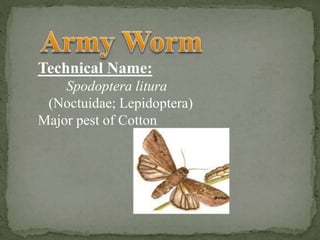
Technical Name:
Spodoptera litura
(Noctuidae; Lepidoptera)
Major pest of Cotton
Identification:
Army worm is a pest of graminaceous crops all
over the world
 Moth- pale brown
 Larva- dull white and later turn green
 Egg- round light green when freshly laid and
turn yellow and finally black
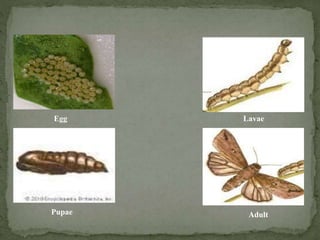
Pupae
Lavae
Adult
Egg
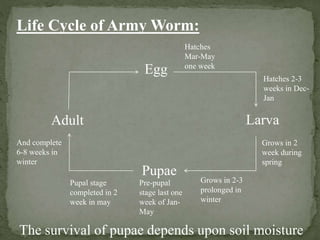
Life Cycle of Army Worm:
LarvaAdult
Egg
Pupae
The survival of pupae depends upon soil moisture
Hatches
Mar-May
one week
Hatches 2-3
weeks in Dec-
Jan
Grows in 2
week during
spring
Grows in 2-3
prolonged in
winter
Pre-pupal
stage last one
week of Jan-
May
Pupal stage
completed in 2
week in may
And complete
6-8 weeks in
winter
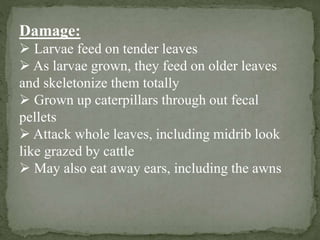
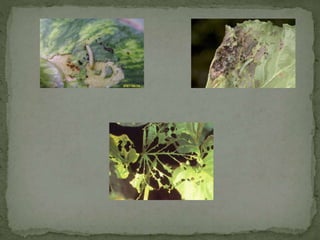
Damage:
 Larvae feed on tender leaves
 As larvae grown, they feed on older leaves
and skeletonize them totally
 Grown up caterpillars through out fecal
pellets
 Attack whole leaves, including midrib look
like grazed by cattle
 May also eat away ears, including the awns
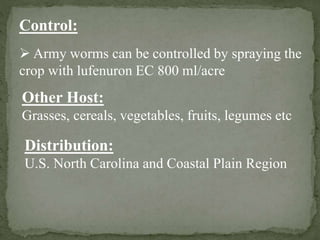
Control:
 Army worms can be controlled by spraying the
crop with lufenuron EC 800 ml/acre
Other Host:
Grasses, cereals, vegetables, fruits, legumes etc
Distribution:
U.S. North Carolina and Coastal Plain Region

Army worm

  • 1.
    Insect Pests ofCotton Ehtisham Hussain BAGF15E258 University College Of Agriculture, University Of Sargodha, Sargodha In the name of Allah, the most Merciful and the most Beneficent
  • 2.
    Technical Name: Spodoptera litura (Noctuidae;Lepidoptera) Major pest of Cotton
  • 3.
    Identification: Army worm isa pest of graminaceous crops all over the world  Moth- pale brown  Larva- dull white and later turn green  Egg- round light green when freshly laid and turn yellow and finally black
  • 4.
  • 5.
    Life Cycle ofArmy Worm: LarvaAdult Egg Pupae The survival of pupae depends upon soil moisture Hatches Mar-May one week Hatches 2-3 weeks in Dec- Jan Grows in 2 week during spring Grows in 2-3 prolonged in winter Pre-pupal stage last one week of Jan- May Pupal stage completed in 2 week in may And complete 6-8 weeks in winter
  • 6.
    Damage:  Larvae feedon tender leaves  As larvae grown, they feed on older leaves and skeletonize them totally  Grown up caterpillars through out fecal pellets  Attack whole leaves, including midrib look like grazed by cattle  May also eat away ears, including the awns
  • 8.
    Control:  Army wormscan be controlled by spraying the crop with lufenuron EC 800 ml/acre Other Host: Grasses, cereals, vegetables, fruits, legumes etc Distribution: U.S. North Carolina and Coastal Plain Region