Gram pod
borer
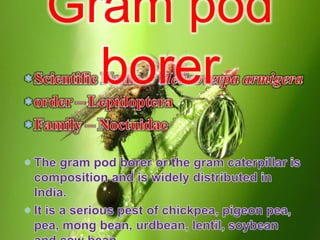
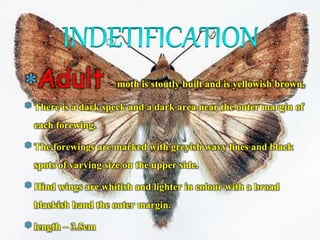
Adult – moth is stoutly built and is yellowish brown.
There is a dark speck and a dark area near the outer margin of
each forewing.
The forewings are marked with greyish wavy lines and black
spots of varying size on the upper side.
Hind wings are whitish and lighter in colour with a broad
blackish band the outer margin.
length – 3.5cm
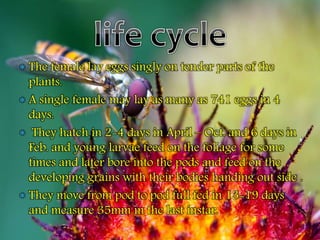
 The female lay eggs singly on tender parts of the
plants.
 A single female may lay as many as 741 eggs in 4
days.
 They hatch in 2-4 days in April – Oct. and 6 days in
Feb. and young larvae feed on the foliage for some
times and later bore into the pods and feed on the
developing grains with their bodies handing out side .
 They move from pod to pod full fed in 13-19 days
and measure 35mm in the last instar.
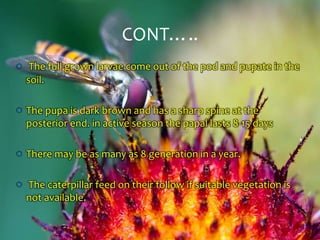
 The full grown larvae come out of the pod and pupate in the
soil.
 The pupa is dark brown and has a sharp spine at the
posterior end. in active season the papal lasts 8-15 days
 There may be as many as 8 generation in a year.
 The caterpillar feed on their follow if suitable vegetation is
not available.
CONT…..
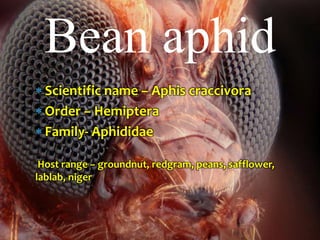
 Scientific name – Aphis craccivora
 Order – Hemiptera
 Family- Aphididae
Host range – groundnut, redgram, peans, safflower,
lablab, niger
Bean aphid
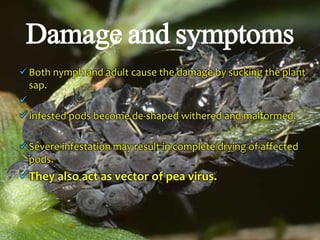
Both nymph and adult cause the damage by sucking the plant
sap.

Infested pods become de-shaped withered and malformed.
Severe infestation may result in complete drying of affected
pods.
They also act as vector of pea virus.
Damage and symptoms
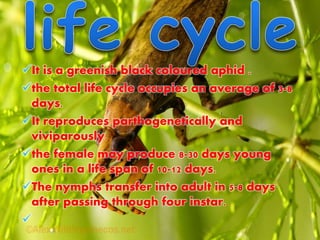
It is a greenish black coloured aphid .
the total life cycle occupies an average of 3-8
days.
It reproduces parthogenetically and
viviparously.
the female may produce 8-30 days young
ones in a life span of 10-12 days.
The nymphs transfer into adult in 5-8 days
after passing through four instar.

Management
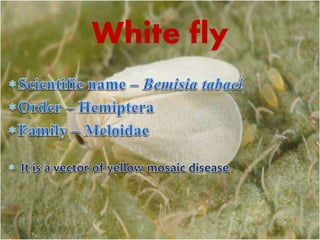
White fly
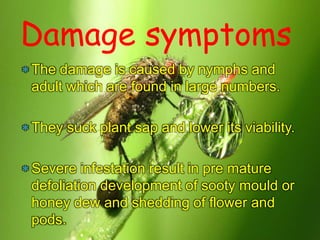
Damage symptoms
 The damage is caused by nymphs and
adult which are found in large numbers.
 They suck plant sap and lower its viability.
 Severe infestation result in pre mature
defoliation development of sooty mould or
honey dew and shedding of flower and
pods.
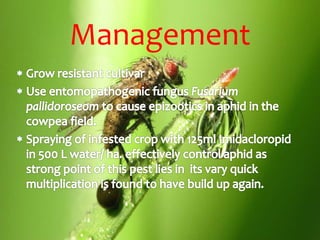
 Grow resistant variety
 Spray the infested crop Dimethate 30EC
750ml in 700-800 L water/ha.
Managements
Scientific name - Maruca
testulalis
Order - lepidoptera
Family- pyralidae
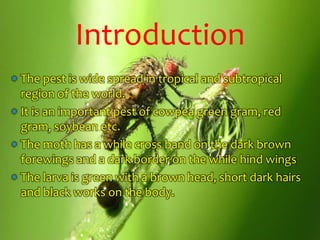
 The pest is wide spread in tropical and subtropical
region of the world.
 It is an important pest of cowpea green gram, red
gram, soybean etc.
 The moth has a while cross band on the dark brown
forewings and a dark border on the while hind wings
 The larva is green with a brown head, short dark hairs
and black works on the body.
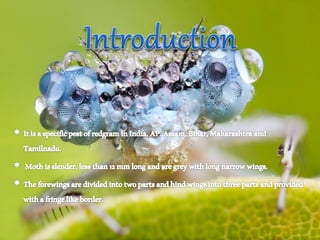
Introduction
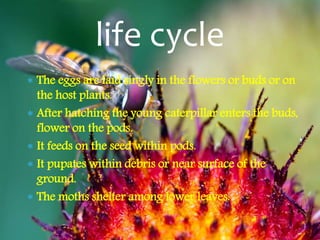
 The eggs are laid singly in the flowers or buds or on
the host plants.
 After hatching the young caterpillar enters the buds,
flower on the pods.
 It feeds on the seed within pods.
 It pupates within debris or near surface of the
ground.
 The moths shelter among lower leaves.
life cycle
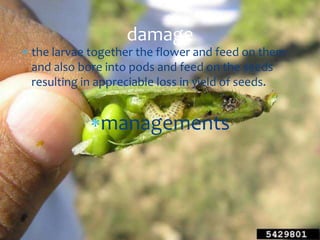
 the larvae together the flower and feed on them
and also bore into pods and feed on the seeds
resulting in appreciable loss in yield of seeds.
managements
damage
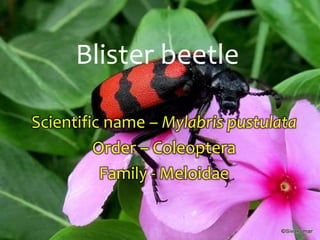
Blister beetle
Scientific name – Mylabris pustulata
Order – Coleoptera
Family - Meloidae
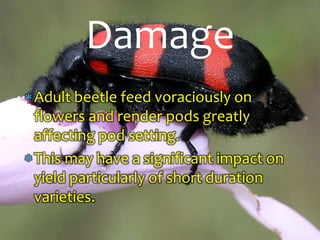
Adult beetle feed voraciously on
flowers and render pods greatly
affecting pod setting.
This may have a significant impact on
yield particularly of short duration
varieties.
Damage
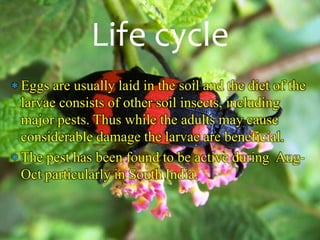
 Eggs are usually laid in the soil and the diet of the
larvae consists of other soil insects, including
major pests. Thus while the adults may cause
considerable damage the larvae are beneficial.
 The pest has been found to be active during Aug-
Oct particularly in South India.
Life cycle
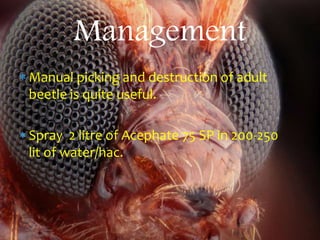
 Manual picking and destruction of adult
beetle is quite useful.
 Spray 2 litre of Acephate 75 SP in 200-250
lit of water/hac.
Management
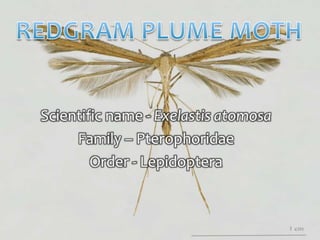
Scientific name - Exelastis atomosa
Family – Pterophoridae
Order - Lepidoptera
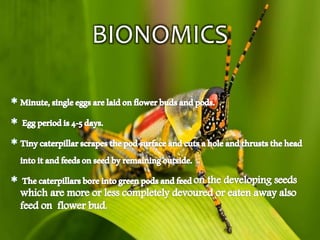
BIONOMICS
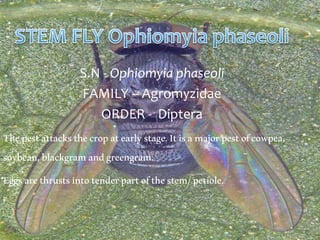
S.N - Ophiomyia phaseoli
FAMILY – Agromyzidae
ORDER - Diptera
Thepestattacksthecropatearlystage.Itisamajorpestofcowpea,
soybean,blackgramandgreengram.
Eggsarethrustsintotenderpartofthestem/petiole.
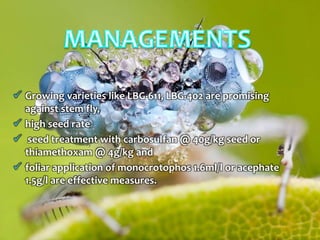
 Growing varieties like LBG-611, LBG-402 are promising
against stem fly,
 high seed rate
 seed treatment with carbosulfan @ 40g/kg seed or
thiamethoxam @ 4g/kg and
 foliar application of monocrotophos 1.6ml/l or acephate
1.5g/l are effective measures.
Insect Pests of pulses

Insect Pests of pulses

  • 3.
  • 4.
    Adult – mothis stoutly built and is yellowish brown. There is a dark speck and a dark area near the outer margin of each forewing. The forewings are marked with greyish wavy lines and black spots of varying size on the upper side. Hind wings are whitish and lighter in colour with a broad blackish band the outer margin. length – 3.5cm
  • 6.
     The femalelay eggs singly on tender parts of the plants.  A single female may lay as many as 741 eggs in 4 days.  They hatch in 2-4 days in April – Oct. and 6 days in Feb. and young larvae feed on the foliage for some times and later bore into the pods and feed on the developing grains with their bodies handing out side .  They move from pod to pod full fed in 13-19 days and measure 35mm in the last instar.
  • 7.
     The fullgrown larvae come out of the pod and pupate in the soil.  The pupa is dark brown and has a sharp spine at the posterior end. in active season the papal lasts 8-15 days  There may be as many as 8 generation in a year.  The caterpillar feed on their follow if suitable vegetation is not available. CONT…..
  • 8.
     Scientific name– Aphis craccivora  Order – Hemiptera  Family- Aphididae Host range – groundnut, redgram, peans, safflower, lablab, niger Bean aphid
  • 9.
    Both nymph andadult cause the damage by sucking the plant sap.  Infested pods become de-shaped withered and malformed. Severe infestation may result in complete drying of affected pods. They also act as vector of pea virus. Damage and symptoms
  • 11.
    It is agreenish black coloured aphid . the total life cycle occupies an average of 3-8 days. It reproduces parthogenetically and viviparously. the female may produce 8-30 days young ones in a life span of 10-12 days. The nymphs transfer into adult in 5-8 days after passing through four instar. 
  • 12.
  • 13.
  • 14.
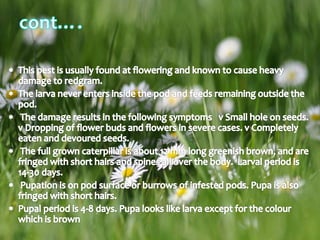
    Damage symptoms  Thedamage is caused by nymphs and adult which are found in large numbers.  They suck plant sap and lower its viability.  Severe infestation result in pre mature defoliation development of sooty mould or honey dew and shedding of flower and pods.
  • 16.
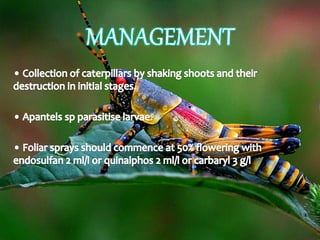
     Grow resistantvariety  Spray the infested crop Dimethate 30EC 750ml in 700-800 L water/ha. Managements
  • 17.
    Scientific name -Maruca testulalis Order - lepidoptera Family- pyralidae
  • 18.
     The pestis wide spread in tropical and subtropical region of the world.  It is an important pest of cowpea green gram, red gram, soybean etc.  The moth has a while cross band on the dark brown forewings and a dark border on the while hind wings  The larva is green with a brown head, short dark hairs and black works on the body. Introduction
  • 19.
     The eggsare laid singly in the flowers or buds or on the host plants.  After hatching the young caterpillar enters the buds, flower on the pods.  It feeds on the seed within pods.  It pupates within debris or near surface of the ground.  The moths shelter among lower leaves. life cycle
  • 20.
     the larvaetogether the flower and feed on them and also bore into pods and feed on the seeds resulting in appreciable loss in yield of seeds. managements damage
  • 21.
    Blister beetle Scientific name– Mylabris pustulata Order – Coleoptera Family - Meloidae
  • 22.
    Adult beetle feedvoraciously on flowers and render pods greatly affecting pod setting. This may have a significant impact on yield particularly of short duration varieties. Damage
  • 23.
     Eggs areusually laid in the soil and the diet of the larvae consists of other soil insects, including major pests. Thus while the adults may cause considerable damage the larvae are beneficial.  The pest has been found to be active during Aug- Oct particularly in South India. Life cycle
  • 24.
     Manual pickingand destruction of adult beetle is quite useful.  Spray 2 litre of Acephate 75 SP in 200-250 lit of water/hac. Management
  • 25.
    Scientific name -Exelastis atomosa Family – Pterophoridae Order - Lepidoptera
  • 27.
  • 30.
    S.N - Ophiomyiaphaseoli FAMILY – Agromyzidae ORDER - Diptera Thepestattacksthecropatearlystage.Itisamajorpestofcowpea, soybean,blackgramandgreengram. Eggsarethrustsintotenderpartofthestem/petiole.
  • 32.
     Growing varietieslike LBG-611, LBG-402 are promising against stem fly,  high seed rate  seed treatment with carbosulfan @ 40g/kg seed or thiamethoxam @ 4g/kg and  foliar application of monocrotophos 1.6ml/l or acephate 1.5g/l are effective measures.