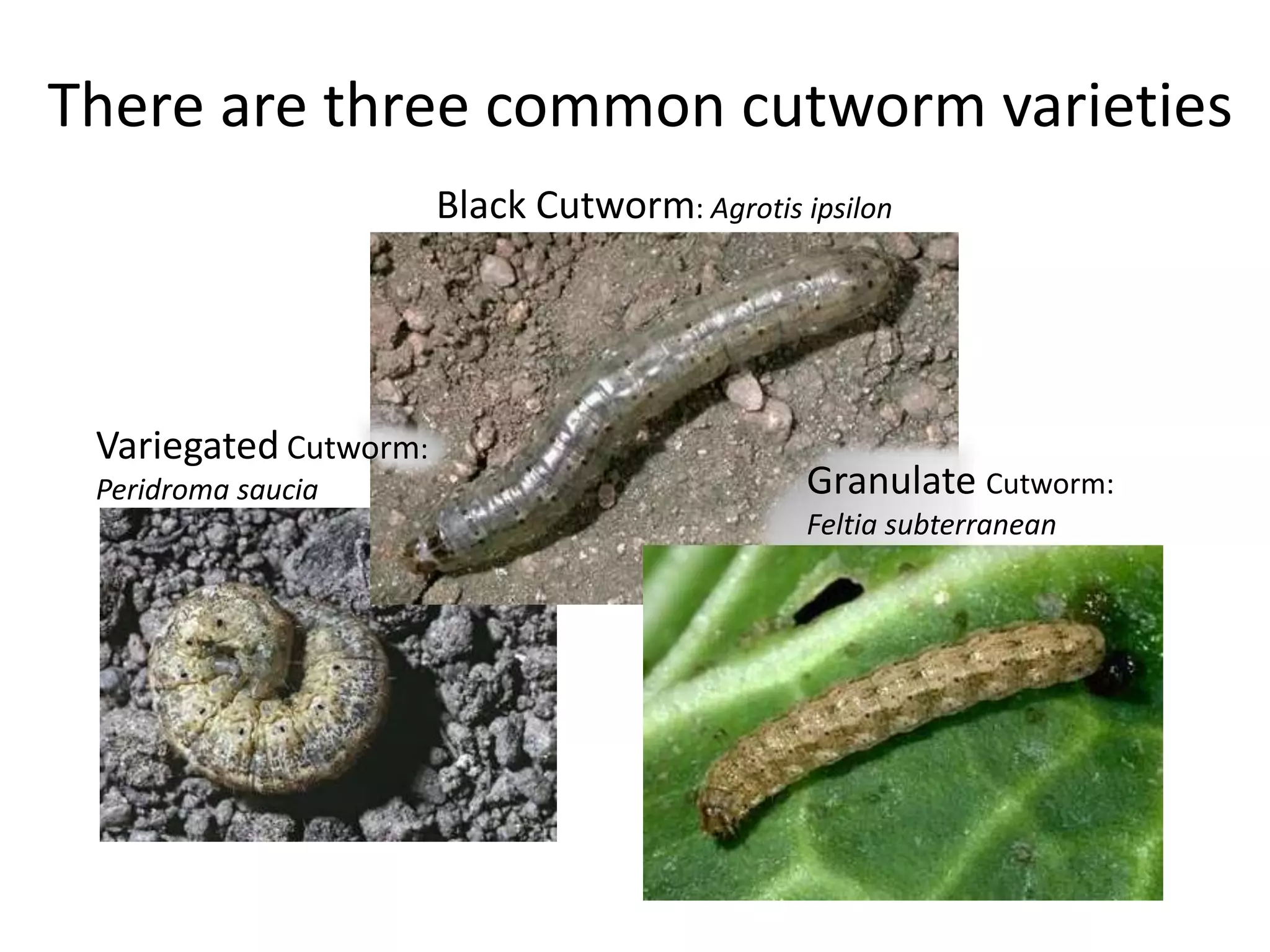
There are three common cutworm varieties 
Black Cutworm: Agrotis ipsilon 
Granulate Cutworm: 
Feltia subterranean 
Variegated Cutworm: 
Peridroma saucia
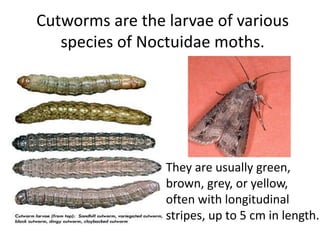
Cutworms are the larvae of various 
species of Noctuidae moths. 
They are usually green, 
brown, grey, or yellow, 
often with longitudinal 
stripes, up to 5 cm in length.
The larvae are soft and fat, 
and roll up when disturbed. 
In many climates, 
cutworms will winter 
under the soil, while 
they transform from 
larvae to pupae. 
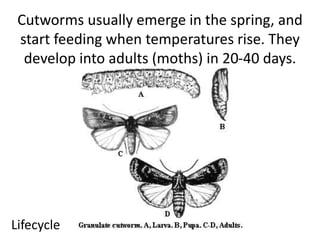
Lifecycle
Cutworms usually emerge in the spring, and 
start feeding when temperatures rise. They 
develop into adults (moths) in 20-40 days. 
Lifecycle
Cutworms cut seedling plants off at the 
soil surface, causing the plants to fall over. 
Crop Damage 
Photo: umn.edu
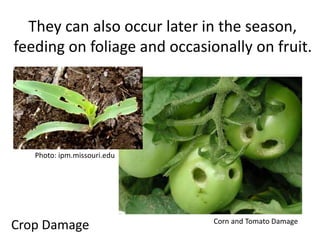
They can also occur later in the season, 
feeding on foliage and occasionally on fruit. 
Photo: ipm.missouri.edu 
Crop Damage 
Corn and Tomato Damage
The worms feed mostly at night. 
During the day they may be found curled up in the 
damaged fruit or in the soil clods around the plant. 
Crop Damage
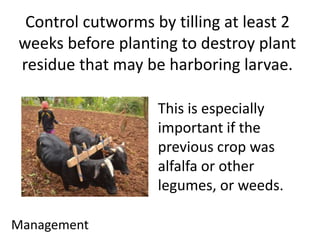
Control cutworms by tilling at least 2 
weeks before planting to destroy plant 
residue that may be harboring larvae. 
Management 
This is especially 
important if the 
previous crop was 
alfalfa or other 
legumes, or weeds.
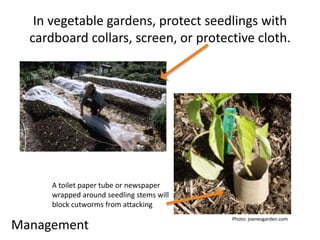
In vegetable gardens, protect seedlings with 
cardboard collars, screen, or protective cloth. 
A toilet paper tube or newspaper 
wrapped around seedling stems will 
block cutworms from attacking 
Management Photo: joenesgarden.com

Cutworms

  • 1.
    There are threecommon cutworm varieties Black Cutworm: Agrotis ipsilon Granulate Cutworm: Feltia subterranean Variegated Cutworm: Peridroma saucia
  • 2.
    Cutworms are thelarvae of various species of Noctuidae moths. They are usually green, brown, grey, or yellow, often with longitudinal stripes, up to 5 cm in length.
  • 3.
    The larvae aresoft and fat, and roll up when disturbed. In many climates, cutworms will winter under the soil, while they transform from larvae to pupae. Lifecycle
  • 4.
    Cutworms usually emergein the spring, and start feeding when temperatures rise. They develop into adults (moths) in 20-40 days. Lifecycle
  • 5.
    Cutworms cut seedlingplants off at the soil surface, causing the plants to fall over. Crop Damage Photo: umn.edu
  • 6.
    They can alsooccur later in the season, feeding on foliage and occasionally on fruit. Photo: ipm.missouri.edu Crop Damage Corn and Tomato Damage
  • 7.
    The worms feedmostly at night. During the day they may be found curled up in the damaged fruit or in the soil clods around the plant. Crop Damage
  • 8.
    Control cutworms bytilling at least 2 weeks before planting to destroy plant residue that may be harboring larvae. Management This is especially important if the previous crop was alfalfa or other legumes, or weeds.
  • 9.
    In vegetable gardens,protect seedlings with cardboard collars, screen, or protective cloth. A toilet paper tube or newspaper wrapped around seedling stems will block cutworms from attacking Management Photo: joenesgarden.com