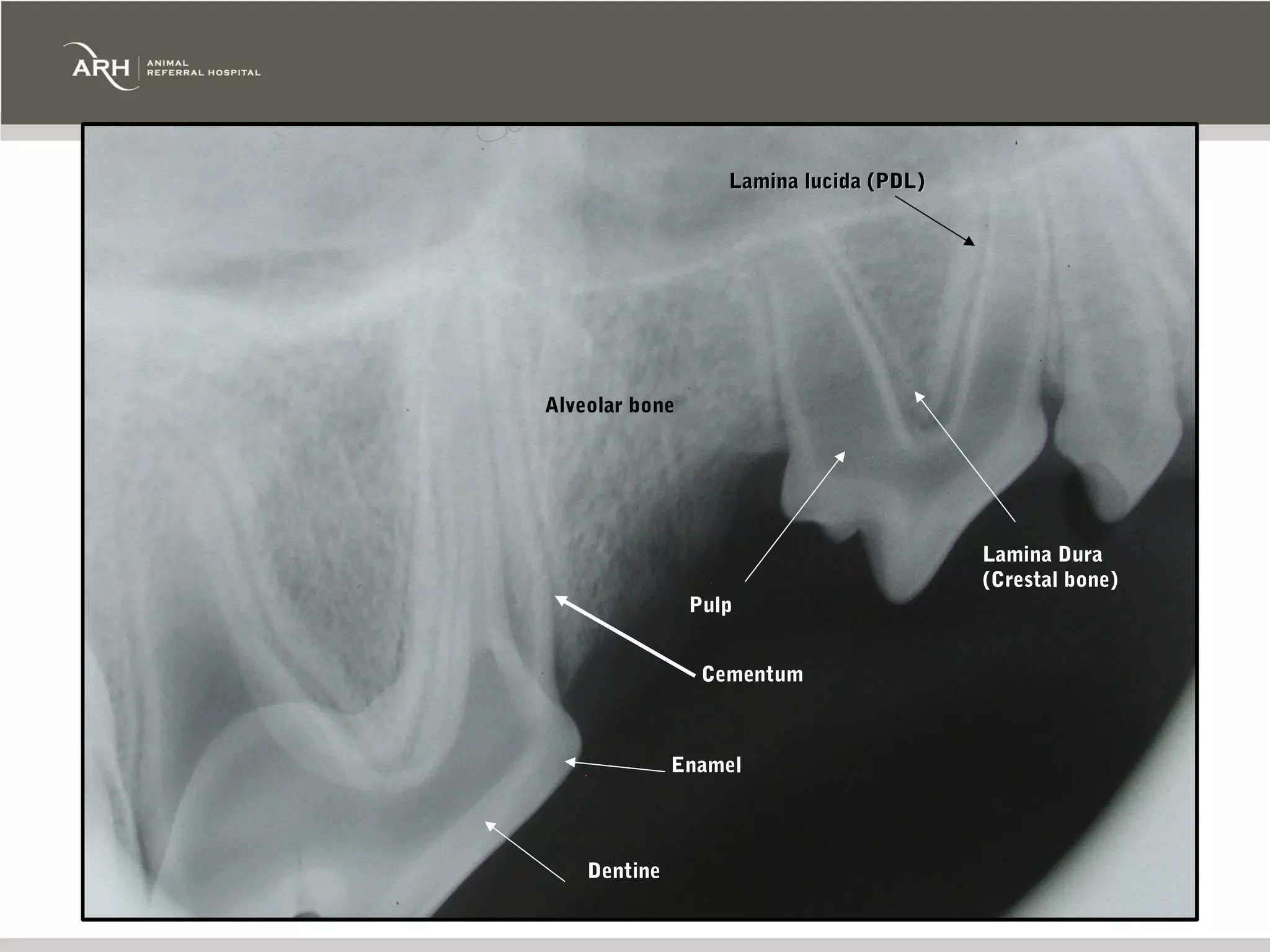
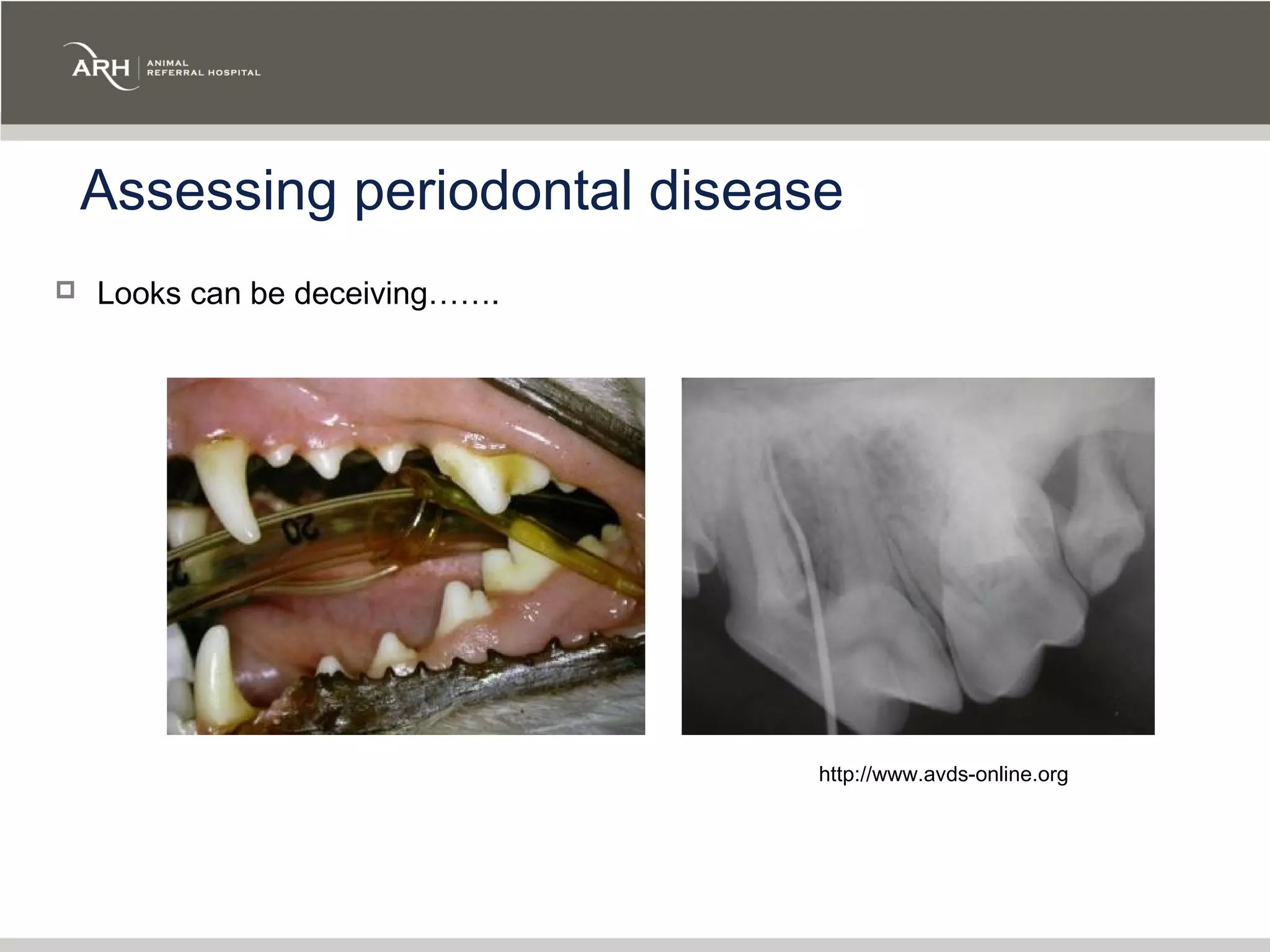
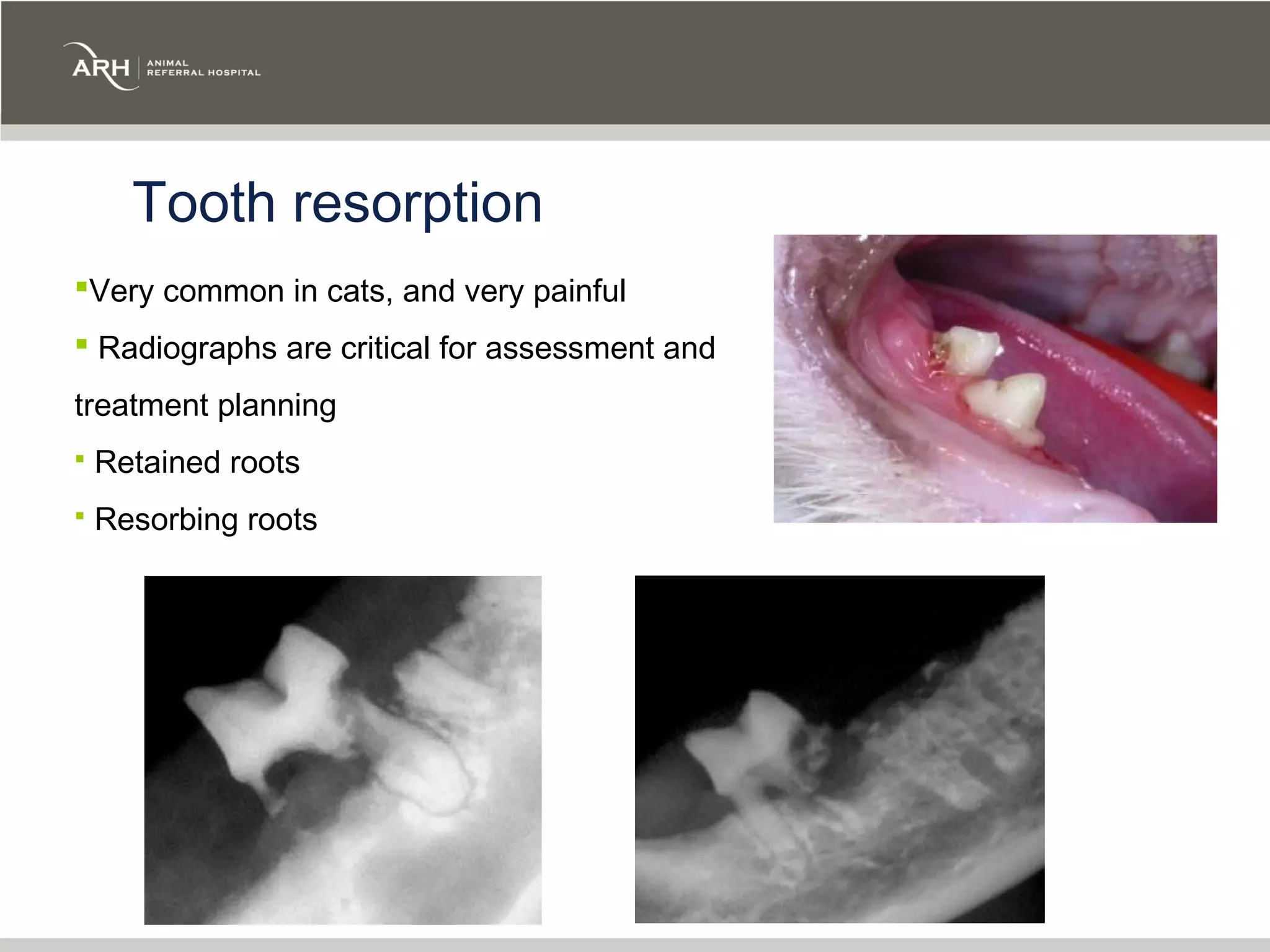
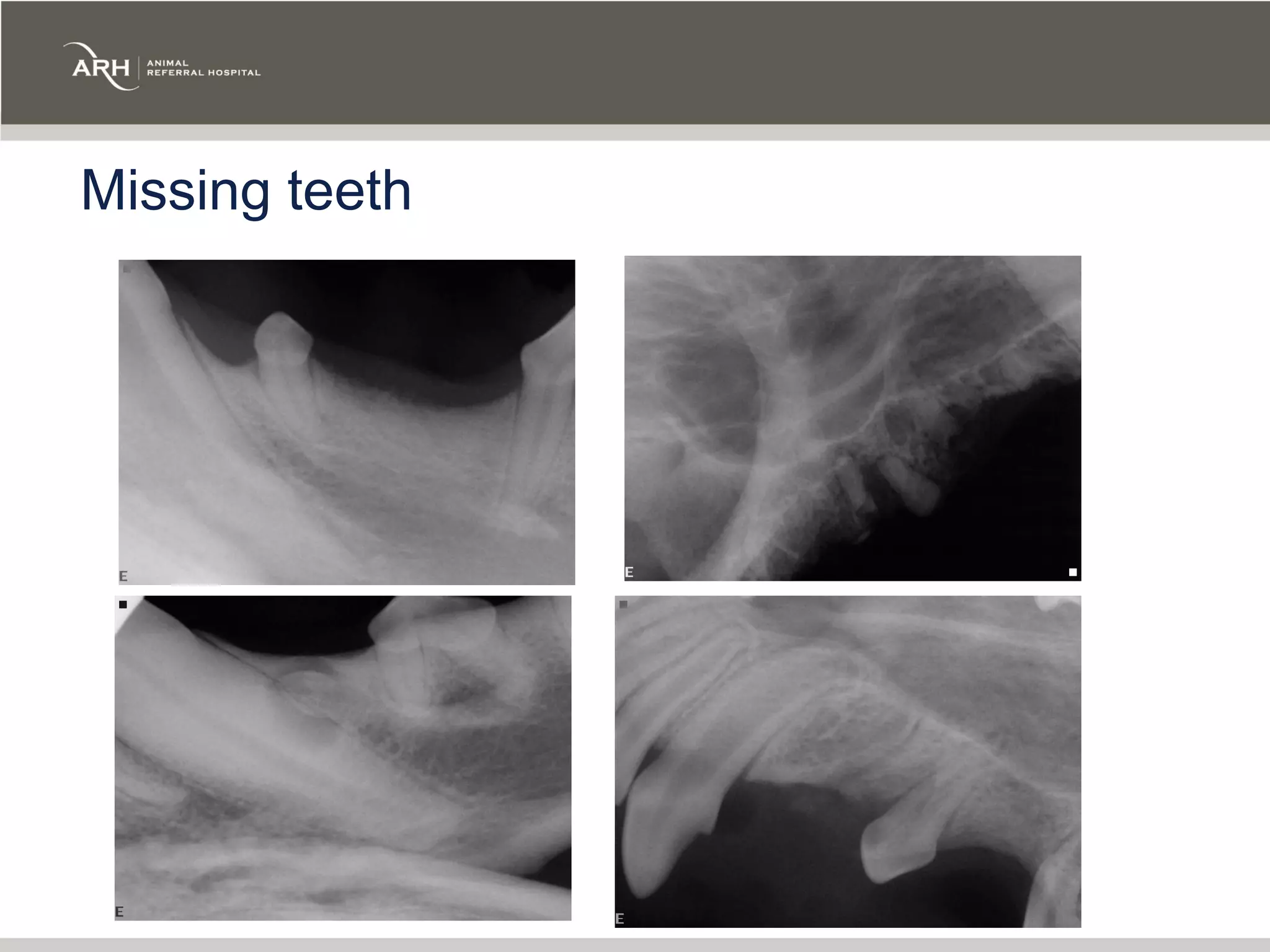
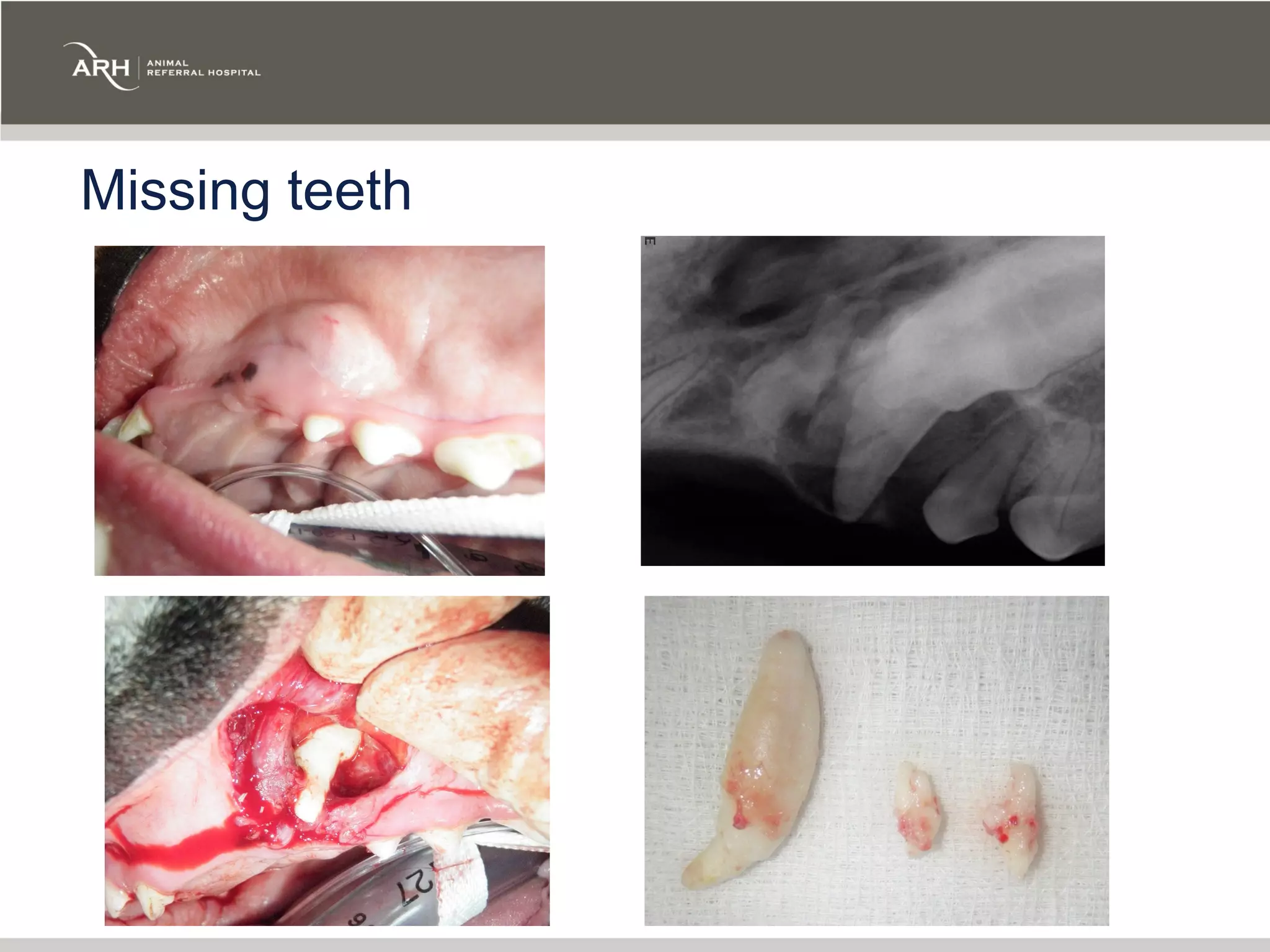
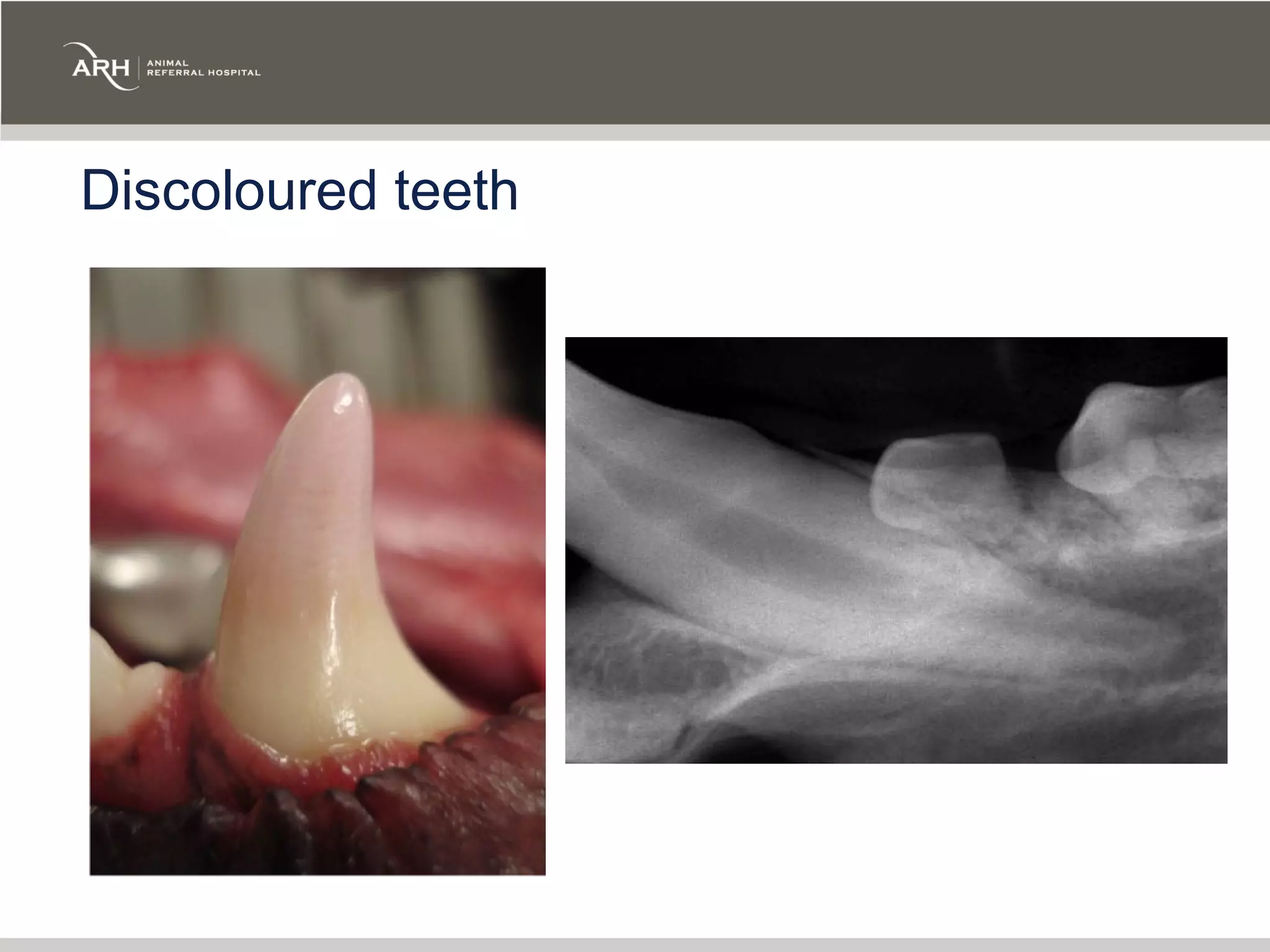
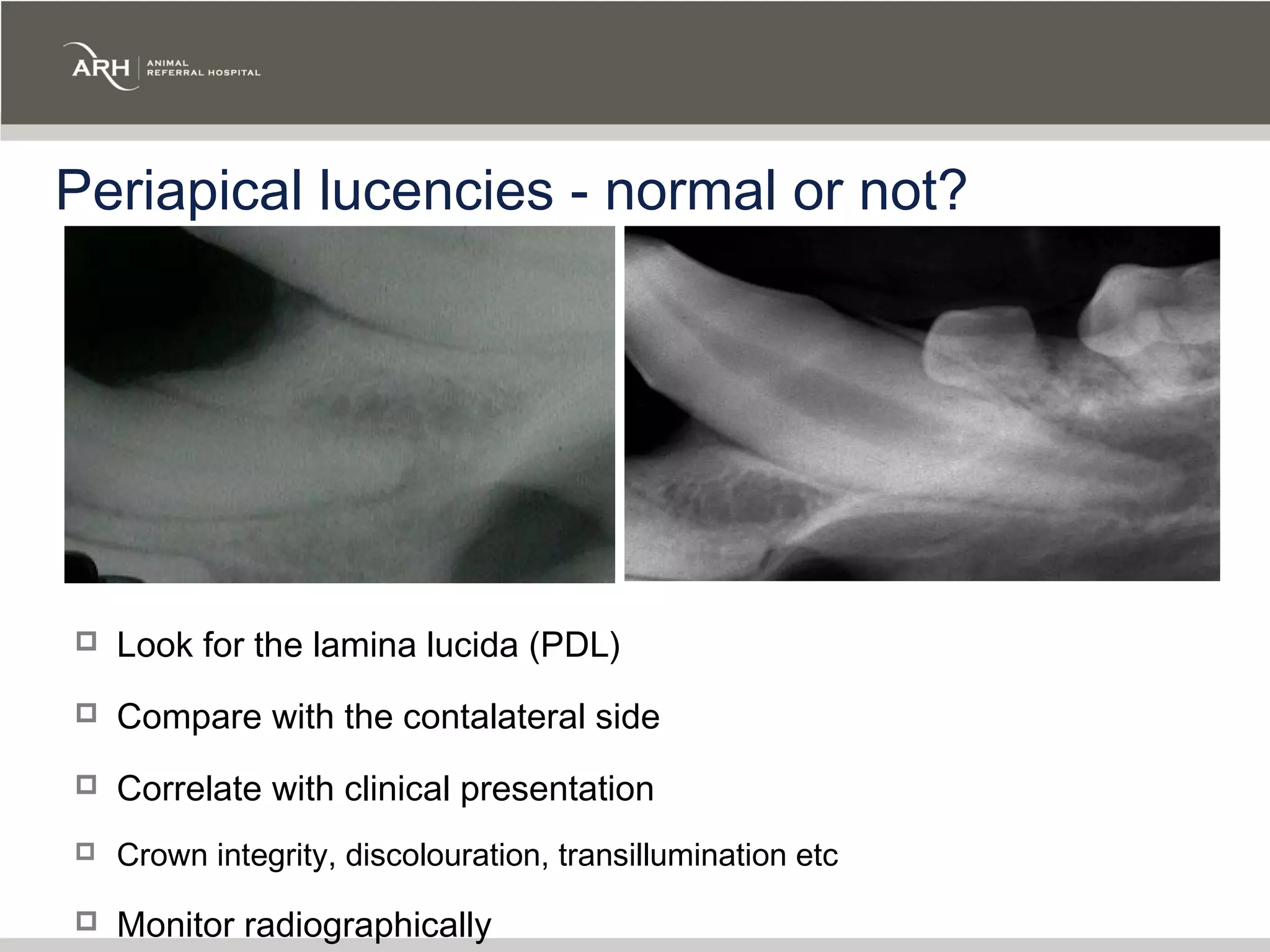
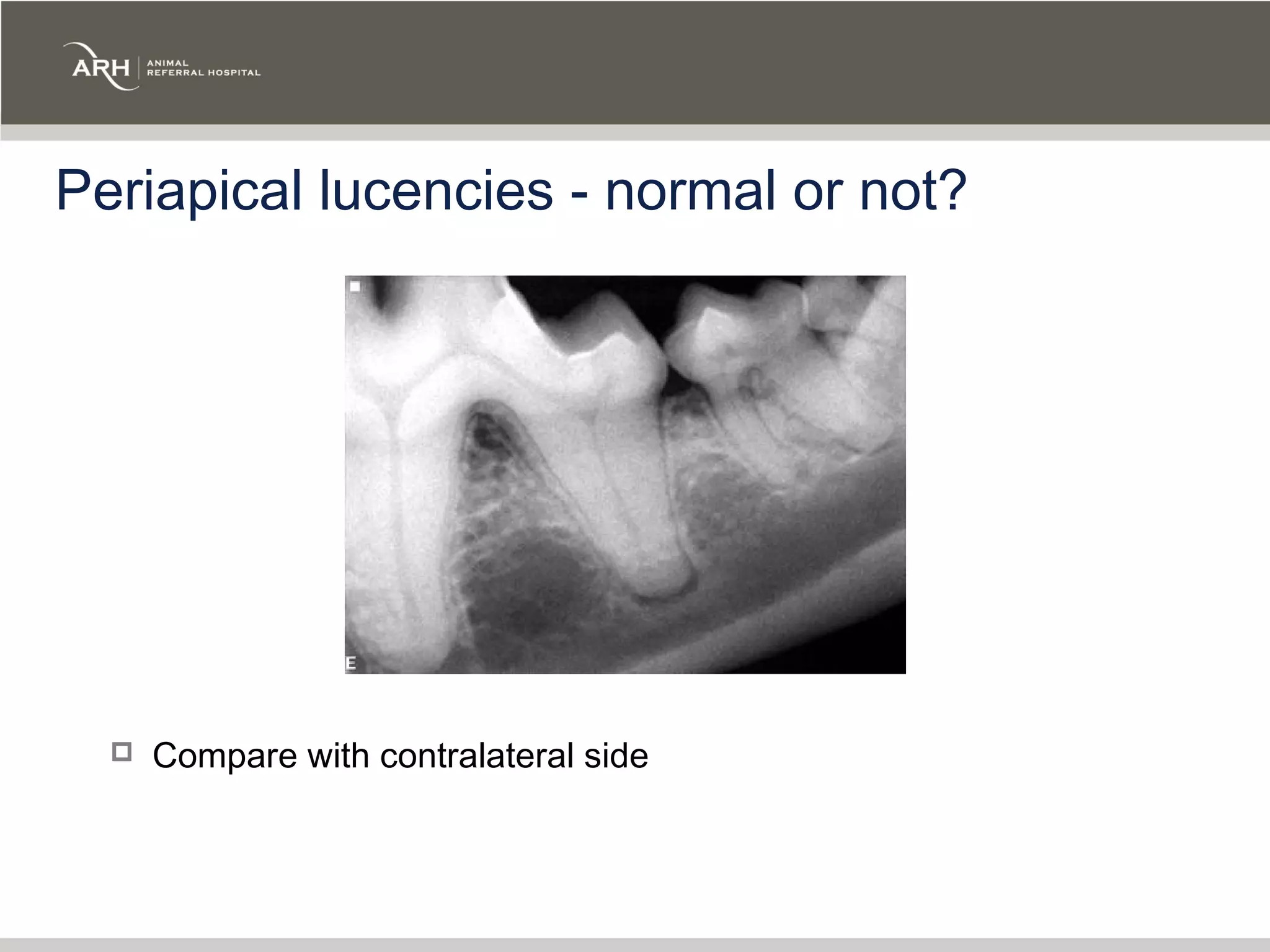
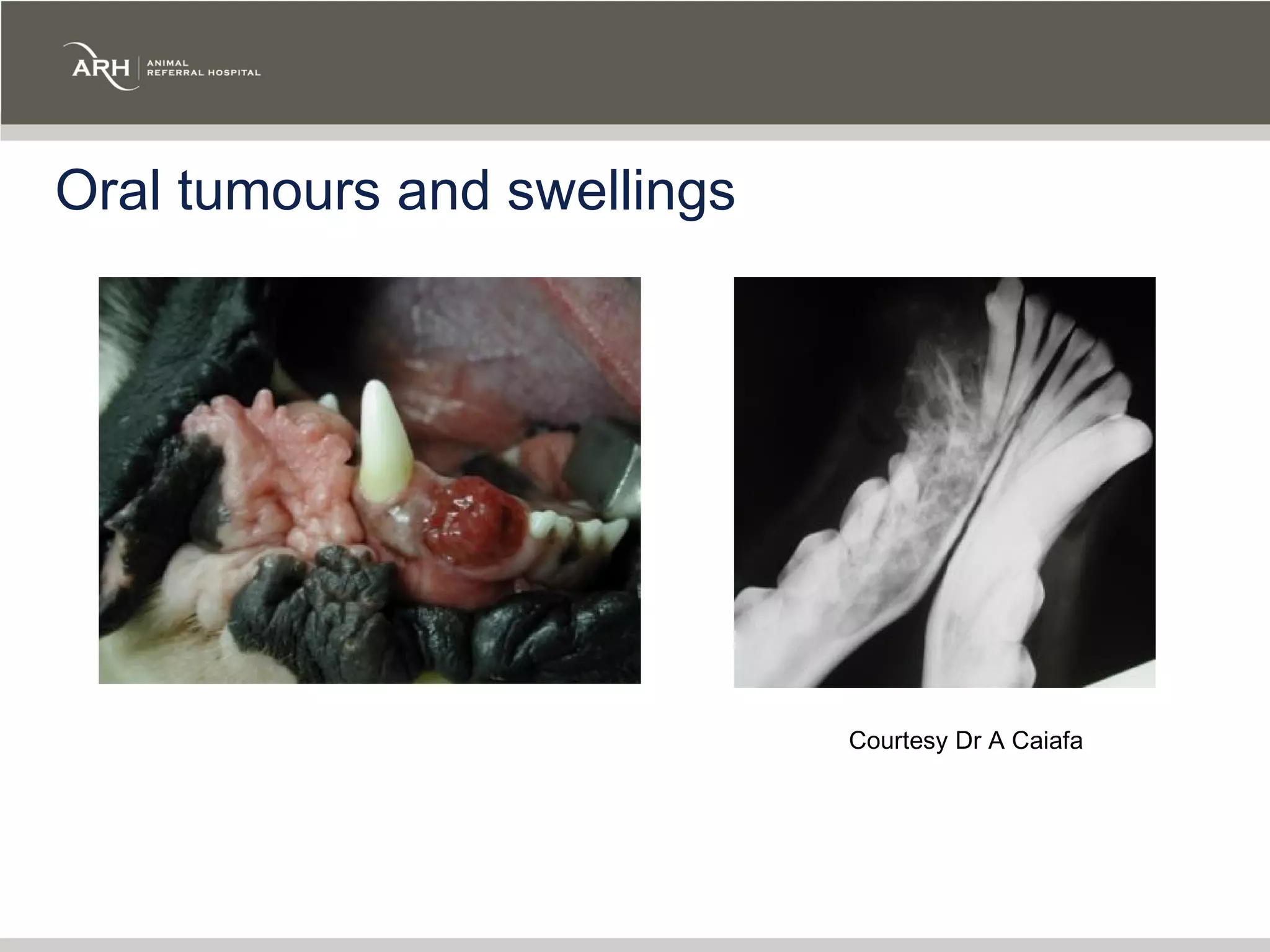
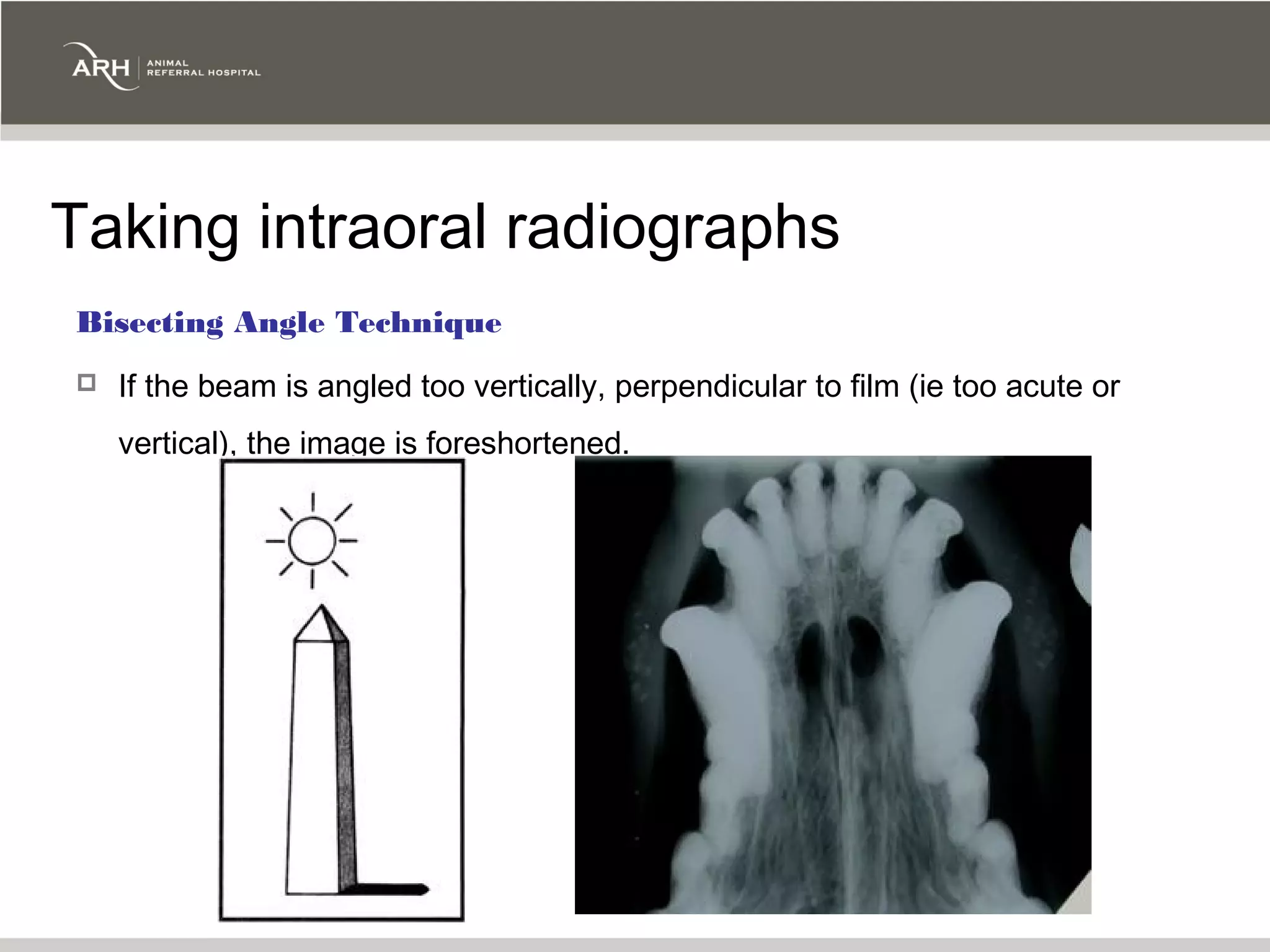
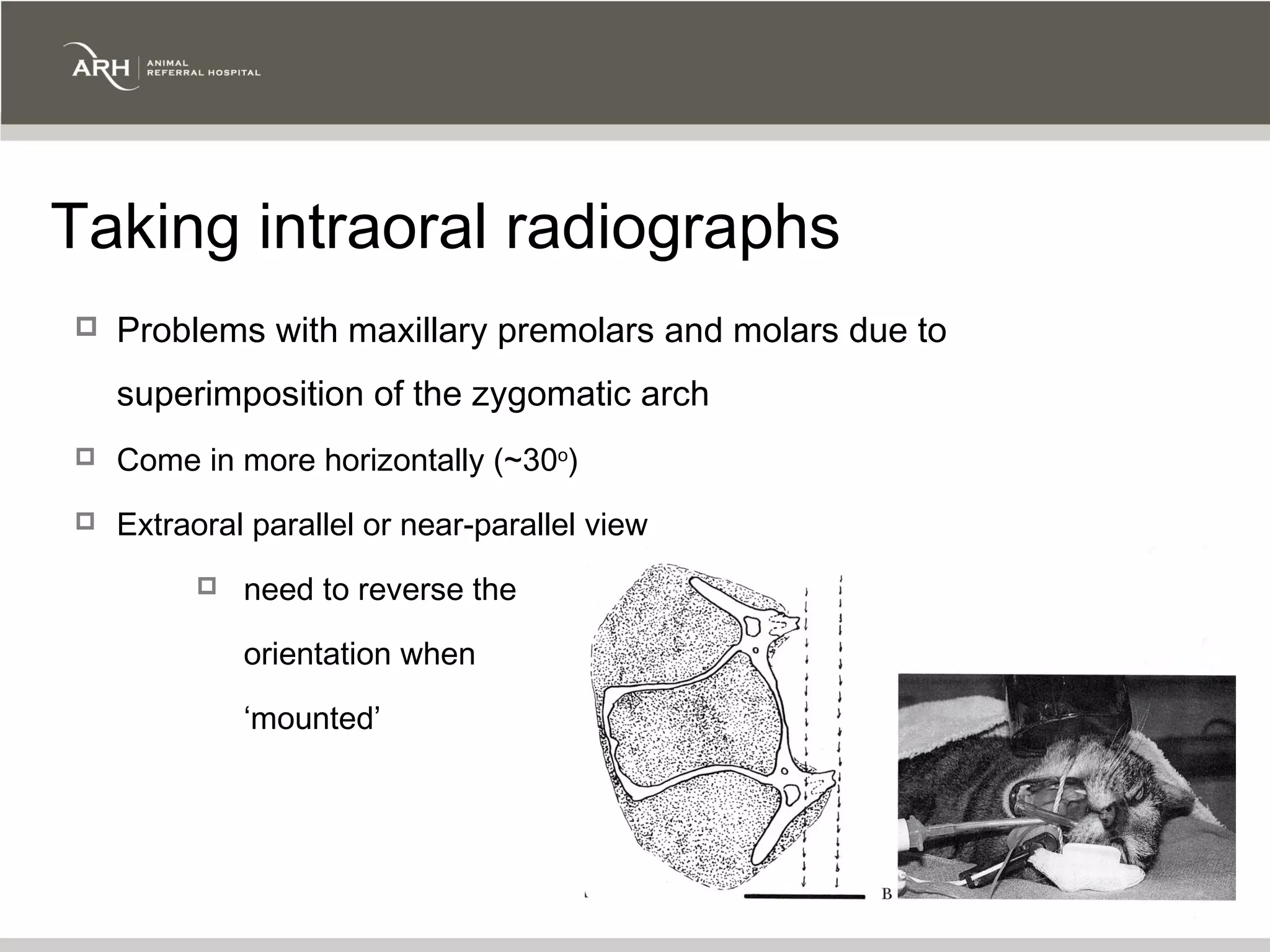
The document discusses the importance of dental radiology for veterinary practices, as radiographs can reveal up to 50% more pathology than clinical oral exams alone and are necessary for accurate diagnosis, treatment planning, and monitoring of conditions like periodontal disease and tooth resorption. Proper radiographic techniques like the bisecting angle method are outlined to minimize distortion and avoid overlapping structures. Interpreting dental radiographs requires understanding orientation, anatomy, and comparing features between sides to diagnose normal versus abnormal findings.