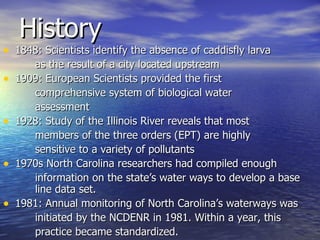
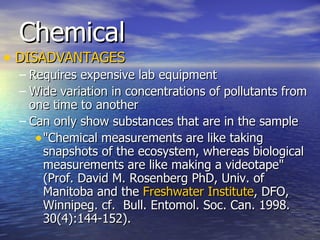
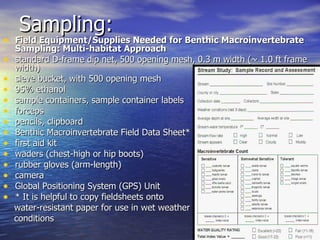
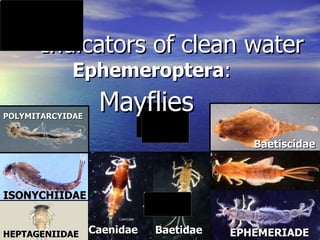
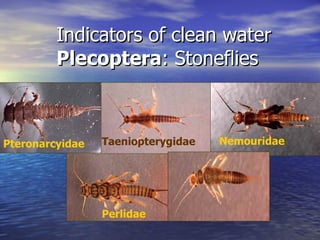
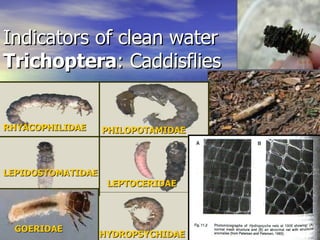
The document discusses the use of Ephemeroptera (mayflies), Plecoptera (stoneflies), and Trichoptera (caddisflies) to assess water quality. It notes that these orders were identified in the 1800s and 1900s as being sensitive to pollution. Researchers in North Carolina in the 1970s compiled baseline data on these organisms. Their monitoring program was standardized in 1981. The document outlines physical, chemical, and biotic metrics used to evaluate water quality and lists taxa that indicate clean or polluted conditions. It also describes the benefits of using EPT taxa, including low cost and the ability of volunteers to assist with sample collection.