Aquaponics, hydroponics
& aeroponics
Presented by:
Ayman Mohamed Esraa Hussein
Why we work on
alternatives for farming?
Hydroponics
Aeroponics
Aquaponics
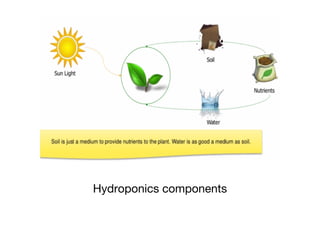
Hydroponics components
What is Hydroponics?
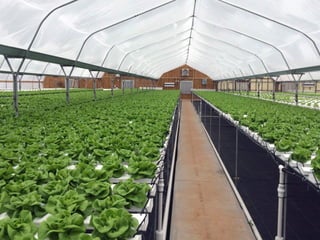
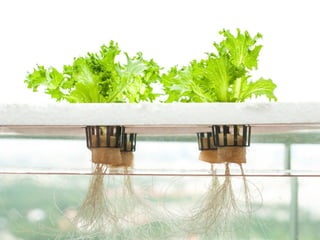
• It is technique for growing plants without soil. Utilizing this
technology, the roots absorb balanced nutrient dissolved in
water that meets all the plant developmental requirements
Hydroponics
• The nutrients used in hydroponic systems can come from an
array of different sources; these can include, fish waste,
duck manure, or purchased chemical fertilizers.
Plant Growth Requirement
• Water
• Light “ Need 8-10 hours to produce well”
• Air
• Nutrients (usually soil)
•Needed in large quantities
•nitrogen, phosphorus, potassium, calcium,
magnesium, and sulfur.
•Needed in tiny amounts
•iron, manganese, boron, zinc, copper, molybdenum,
and chlorine.
• Support
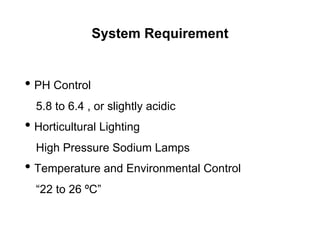
System Requirement
• PH Control
5.8 to 6.4 , or slightly acidic
• Horticultural Lighting
High Pressure Sodium Lamps
• Temperature and Environmental Control
“22 to 26 ºC”
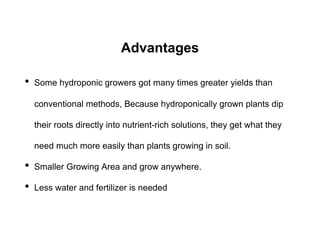
Advantages
• Some hydroponic growers got many times greater yields than
conventional methods, Because hydroponically grown plants dip
their roots directly into nutrient-rich solutions, they get what they
need much more easily than plants growing in soil.
• Smaller Growing Area and grow anywhere.
• Less water and fertilizer is needed
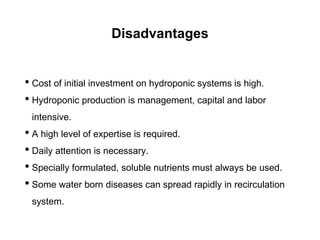
Disadvantages
• Cost of initial investment on hydroponic systems is high.
• Hydroponic production is management, capital and labor
intensive.
• A high level of expertise is required.
• Daily attention is necessary.
• Specially formulated, soluble nutrients must always be used.
• Some water born diseases can spread rapidly in recirculation
system.
Aeroponics
Aeroponics
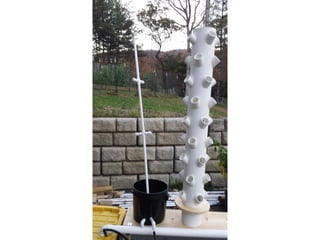
• Aeroponics is an indoor gardening practice in
which plants are grown and nourished by
suspending their root structures in air and
regularly spraying them with a nutrient and water
solution.
Aquaponics
Aquaponics
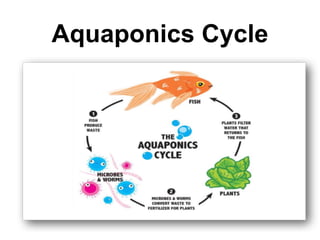
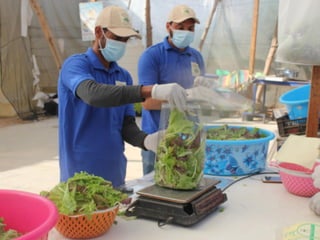
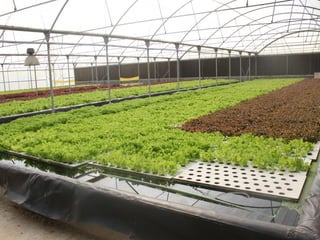
• Aquaponics is a combination of aquaculture, which is
growing fish and hydroponics which is growing plants
without soil.
• Aquaponics uses these two in a symbiotic
combination in which plants are fed the aquatic
animals’ discharge or waste. In return, the vegetables
clean the water that goes back to the fish.
Aquaponics
• Microbes play an important role to the nutrition of
the plants. These beneficial bacteria gather in the
spaces between the roots of the plant and
converts the fish waste and the solids into
substances the plants can use to grow.
Aquaponics Cycle
Aquaponics Requirement
• High Pressure Sodium Lamps
400 watts
1.5m above tables
• Daily Testing
Dissolved oxygen “DO”
Temperature
Total ammonia nitrogen “TAN”
• Weekly Testing
Iron , Alkalinity , Nitrate , Potassium , Calsium
Aquaponics Requirement
• PH Control
More efficient at PH 7.5
Optimum PH for nutrient solubility is 6.5 or slightly lower
Low PH ammonia accumulates to level that are toxic to fish
• Ensure good aeration
Fish, plant and bacteria require adequate levels of dissolved
oxygen “DO”
Maintain DO > 5 mg/liter
Vertical aquaponics
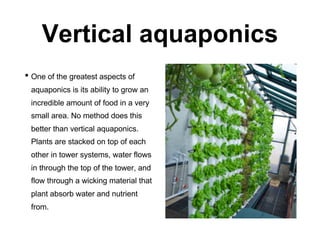
• One of the greatest aspects of
aquaponics is its ability to grow an
incredible amount of food in a very
small area. No method does this
better than vertical aquaponics.
Plants are stacked on top of each
other in tower systems, water flows
in through the top of the tower, and
flow through a wicking material that
plant absorb water and nutrient
from.
Vertical aquaponics
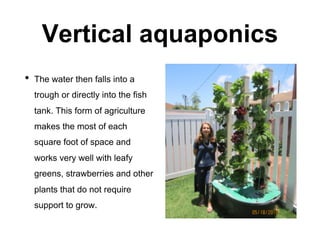
• The water then falls into a
trough or directly into the fish
tank. This form of agriculture
makes the most of each
square foot of space and
works very well with leafy
greens, strawberries and other
plants that do not require
support to grow.
Benefits of Aquaponics
• Aquaponics is a way to grow your own fish and vegetables at the same
time.
• There is no need to use fertilizers because the fish provide rich nutrients
for the plants.
• In aquaponics, less water is used for the crops. Research has shown
that aquaponics gardens use 1/10th of the water you would use for soil
garden.
• You can grow plants in very small space, and have a great harvest.
Benefits of Aquaponics
• Chemicals can’t be used because they would harm the
fish.
• Reduce damage from pests and diseases.
• Plants grow fast
• Water is used in a closed system and circulated
effectively, reducing the consumption of water.
Disadvantages of
Aquaponics
• Require technical knowledge of aquaponics
systems.
• High start up implementation cost.
Cost range 200$-14000$
References
• https://permaculturenews.org/2016/05/30/what-is-aquaponics-and-how-does-it-work/
• https://sustainabilitybox.com/diy-aquaponic-pvc-garden/
• https://www.slideshare.net/shubhangimulik/hydroponics-ppt-67212865
• https://www.google.com/imgres?imgurl=http%3A%2F%2Faquaponicsplan.com%2Fwp-
content%2Fuploads%2F2013%2F05%2Fvertical-aquaponics-
51.jpg&imgrefurl=http%3A%2F%2Faquaponicsgetdes.blogspot.com%2F2017%2F10%2Fvertical-
aquaponics_11.html&docid=tLCKzaxdFrCFkM&tbnid=cW_8NXgx-
5UP_M%3A&vet=10ahUKEwi61Me1rK_eAhVLZFAKHfXSA7kQMwg-
KAEwAQ..i&w=1200&h=1600&client=safari&bih=837&biw=1440&q=vertical%20aquaponics&ved=0a
hUKEwi61Me1rK_eAhVLZFAKHfXSA7kQMwg-
KAEwAQ&iact=mrc&uact=8#h=1600&imgdii=cW_8NXgx-
5UP_M:&vet=10ahUKEwi61Me1rK_eAhVLZFAKHfXSA7kQMwg-KAEwAQ..i&w=1200
• https://www.slideshare.net/PrabhakarNikumbe/aquaponics-16567094
Thank you

Aqua, hydra, aeroponics

  • 1.
    Aquaponics, hydroponics & aeroponics Presentedby: Ayman Mohamed Esraa Hussein
  • 2.
    Why we workon alternatives for farming?
  • 3.
  • 4.
  • 5.
    What is Hydroponics? •It is technique for growing plants without soil. Utilizing this technology, the roots absorb balanced nutrient dissolved in water that meets all the plant developmental requirements
  • 8.
    Hydroponics • The nutrientsused in hydroponic systems can come from an array of different sources; these can include, fish waste, duck manure, or purchased chemical fertilizers.
  • 9.
    Plant Growth Requirement •Water • Light “ Need 8-10 hours to produce well” • Air • Nutrients (usually soil) •Needed in large quantities •nitrogen, phosphorus, potassium, calcium, magnesium, and sulfur. •Needed in tiny amounts •iron, manganese, boron, zinc, copper, molybdenum, and chlorine. • Support
  • 11.
    System Requirement • PHControl 5.8 to 6.4 , or slightly acidic • Horticultural Lighting High Pressure Sodium Lamps • Temperature and Environmental Control “22 to 26 ºC”
  • 12.
    Advantages • Some hydroponicgrowers got many times greater yields than conventional methods, Because hydroponically grown plants dip their roots directly into nutrient-rich solutions, they get what they need much more easily than plants growing in soil. • Smaller Growing Area and grow anywhere. • Less water and fertilizer is needed
  • 13.
    Disadvantages • Cost ofinitial investment on hydroponic systems is high. • Hydroponic production is management, capital and labor intensive. • A high level of expertise is required. • Daily attention is necessary. • Specially formulated, soluble nutrients must always be used. • Some water born diseases can spread rapidly in recirculation system.

  • 15.
  • 16.
    Aeroponics • Aeroponics isan indoor gardening practice in which plants are grown and nourished by suspending their root structures in air and regularly spraying them with a nutrient and water solution.
  • 18.
  • 19.
    Aquaponics • Aquaponics isa combination of aquaculture, which is growing fish and hydroponics which is growing plants without soil. • Aquaponics uses these two in a symbiotic combination in which plants are fed the aquatic animals’ discharge or waste. In return, the vegetables clean the water that goes back to the fish.
  • 20.
    Aquaponics • Microbes playan important role to the nutrition of the plants. These beneficial bacteria gather in the spaces between the roots of the plant and converts the fish waste and the solids into substances the plants can use to grow.
  • 21.
  • 22.
    Aquaponics Requirement • HighPressure Sodium Lamps 400 watts 1.5m above tables • Daily Testing Dissolved oxygen “DO” Temperature Total ammonia nitrogen “TAN” • Weekly Testing Iron , Alkalinity , Nitrate , Potassium , Calsium
  • 23.
    Aquaponics Requirement • PHControl More efficient at PH 7.5 Optimum PH for nutrient solubility is 6.5 or slightly lower Low PH ammonia accumulates to level that are toxic to fish • Ensure good aeration Fish, plant and bacteria require adequate levels of dissolved oxygen “DO” Maintain DO > 5 mg/liter
  • 24.
    Vertical aquaponics • Oneof the greatest aspects of aquaponics is its ability to grow an incredible amount of food in a very small area. No method does this better than vertical aquaponics. Plants are stacked on top of each other in tower systems, water flows in through the top of the tower, and flow through a wicking material that plant absorb water and nutrient from.
  • 25.
    Vertical aquaponics • Thewater then falls into a trough or directly into the fish tank. This form of agriculture makes the most of each square foot of space and works very well with leafy greens, strawberries and other plants that do not require support to grow.
  • 26.
    Benefits of Aquaponics •Aquaponics is a way to grow your own fish and vegetables at the same time. • There is no need to use fertilizers because the fish provide rich nutrients for the plants. • In aquaponics, less water is used for the crops. Research has shown that aquaponics gardens use 1/10th of the water you would use for soil garden. • You can grow plants in very small space, and have a great harvest.
  • 27.
    Benefits of Aquaponics •Chemicals can’t be used because they would harm the fish. • Reduce damage from pests and diseases. • Plants grow fast • Water is used in a closed system and circulated effectively, reducing the consumption of water.
  • 28.
    Disadvantages of Aquaponics • Requiretechnical knowledge of aquaponics systems. • High start up implementation cost. Cost range 200$-14000$
  • 31.
    References • https://permaculturenews.org/2016/05/30/what-is-aquaponics-and-how-does-it-work/ • https://sustainabilitybox.com/diy-aquaponic-pvc-garden/ •https://www.slideshare.net/shubhangimulik/hydroponics-ppt-67212865 • https://www.google.com/imgres?imgurl=http%3A%2F%2Faquaponicsplan.com%2Fwp- content%2Fuploads%2F2013%2F05%2Fvertical-aquaponics- 51.jpg&imgrefurl=http%3A%2F%2Faquaponicsgetdes.blogspot.com%2F2017%2F10%2Fvertical- aquaponics_11.html&docid=tLCKzaxdFrCFkM&tbnid=cW_8NXgx- 5UP_M%3A&vet=10ahUKEwi61Me1rK_eAhVLZFAKHfXSA7kQMwg- KAEwAQ..i&w=1200&h=1600&client=safari&bih=837&biw=1440&q=vertical%20aquaponics&ved=0a hUKEwi61Me1rK_eAhVLZFAKHfXSA7kQMwg- KAEwAQ&iact=mrc&uact=8#h=1600&imgdii=cW_8NXgx- 5UP_M:&vet=10ahUKEwi61Me1rK_eAhVLZFAKHfXSA7kQMwg-KAEwAQ..i&w=1200 • https://www.slideshare.net/PrabhakarNikumbe/aquaponics-16567094
  • 32.