Hydroponic
Growing
Guide
What Is Hydroponics
And How Does It Work?
THE WORD
Comes from Two
Greek words
"hydro" and "ponics"
“Hydro” means water “Ponics” means labor
Hydroponic can be defined as a subset of
hydro culture and is a way of growing plants,
food crops or flowers in water but without
any soil
History Of Hydroponics
The scientists however, started their
experiments with soil less gardening back in
the 1950's and there has been progress and
developments in this concept which came to
be known as hydroponic gardening
What Are The Benefits
Of Hydroponics?
No need for a yard or a garden to grow your plants
Quite affordable
No longer have to be dependent on
seasonal planting
Plants grow faster under this system
Yield of the plants under the hydroponic
system is around 20-25% bigger
Convenient way of
growing plants
Gardening takes up less space than the conventional way
Helps to save water
Hydroponic system is better for
the overall environment
Way of enjoyment
Bond the family together
This system only needs about 1/4 of the
fertilizer in the planting
Great form of food source
Produce about the same yeild as compared to the soil gardening
Different Types Of
Hydroponic Systems
Deep water culture1 Ebb and flow 2
Wicking3 The Drip System 4
Aeroponic5 Nutrient Film technique 6
1
DEEPWATER CULTURE
The Deepwater culture or DWC is also
known as the reservoir method and it is
also one of the easiest way of growing
plants using the hydroponic system
2
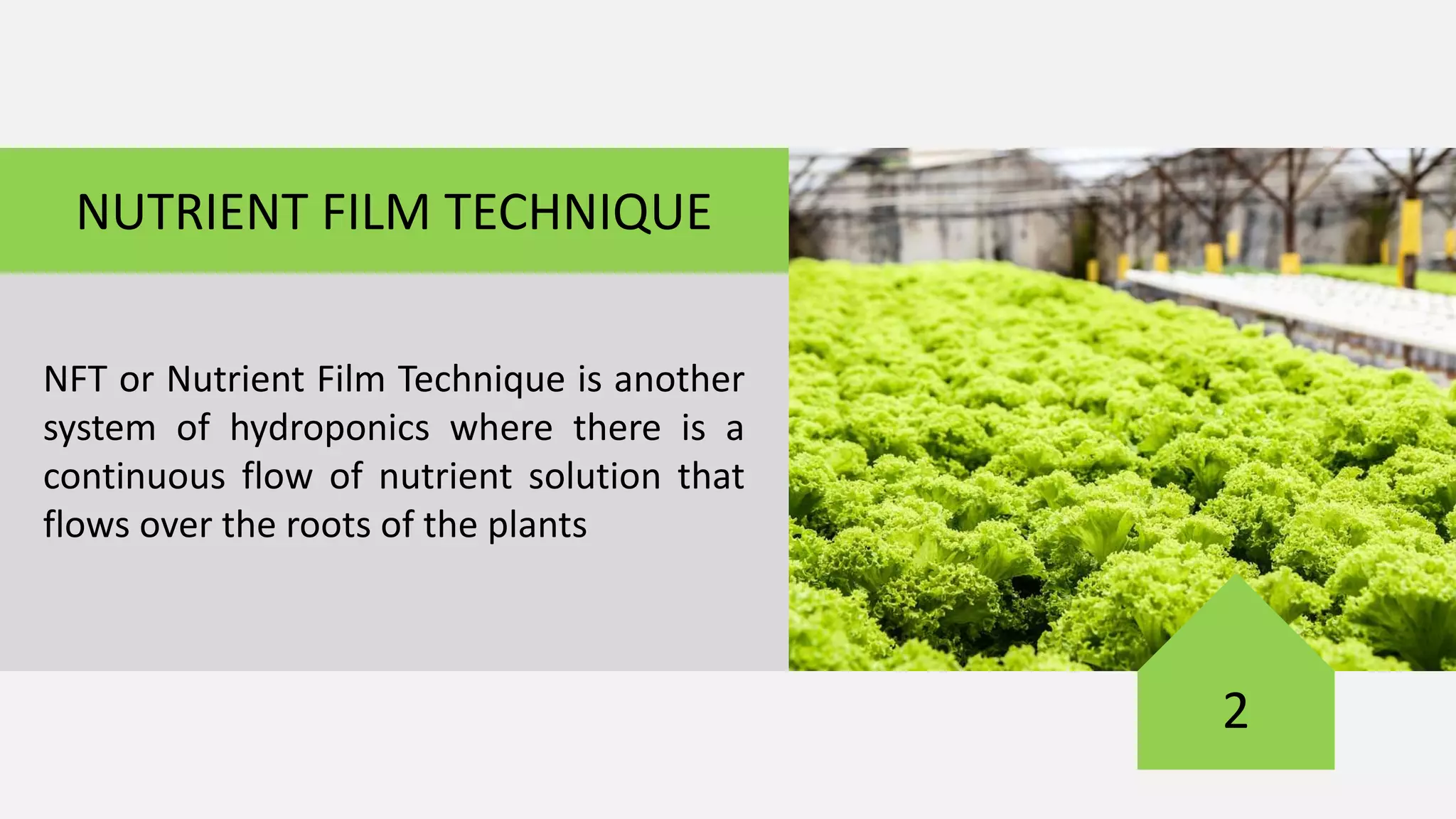
NUTRIENT FILM TECHNIQUE
NFT or Nutrient Film Technique is another
system of hydroponics where there is a
continuous flow of nutrient solution that
flows over the roots of the plants
3
AEROPHONICS
This method of hydroponic is where the
roots of the plant are misted with the
nutrient solution while they are
suspended in the air
4
THE WICK SYSTEM
There is a reservoir that is filled with
nutrients and water and above it there is a
container that is filled with the growing
medium
5
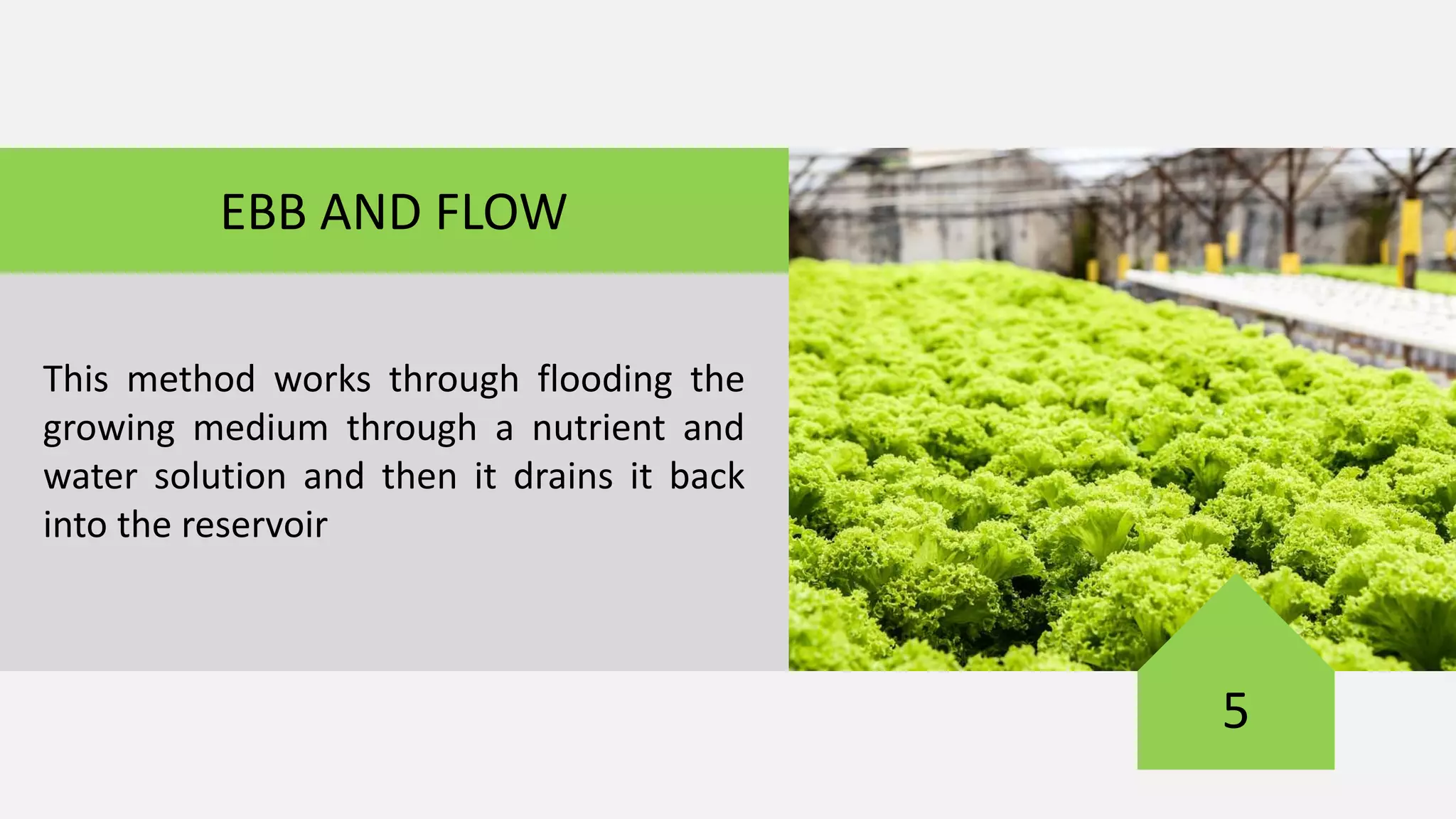
EBB AND FLOW
This method works through flooding the
growing medium through a nutrient and
water solution and then it drains it back
into the reservoir
6
THE DRIP SYSTEM
There is a timer which controls a
submersed pump and the timers turns the
pump on and the solution mixed with the
nutrients is dripped on the base of each
plant using a very small drip line
Getting Started With The
Hydroponic System
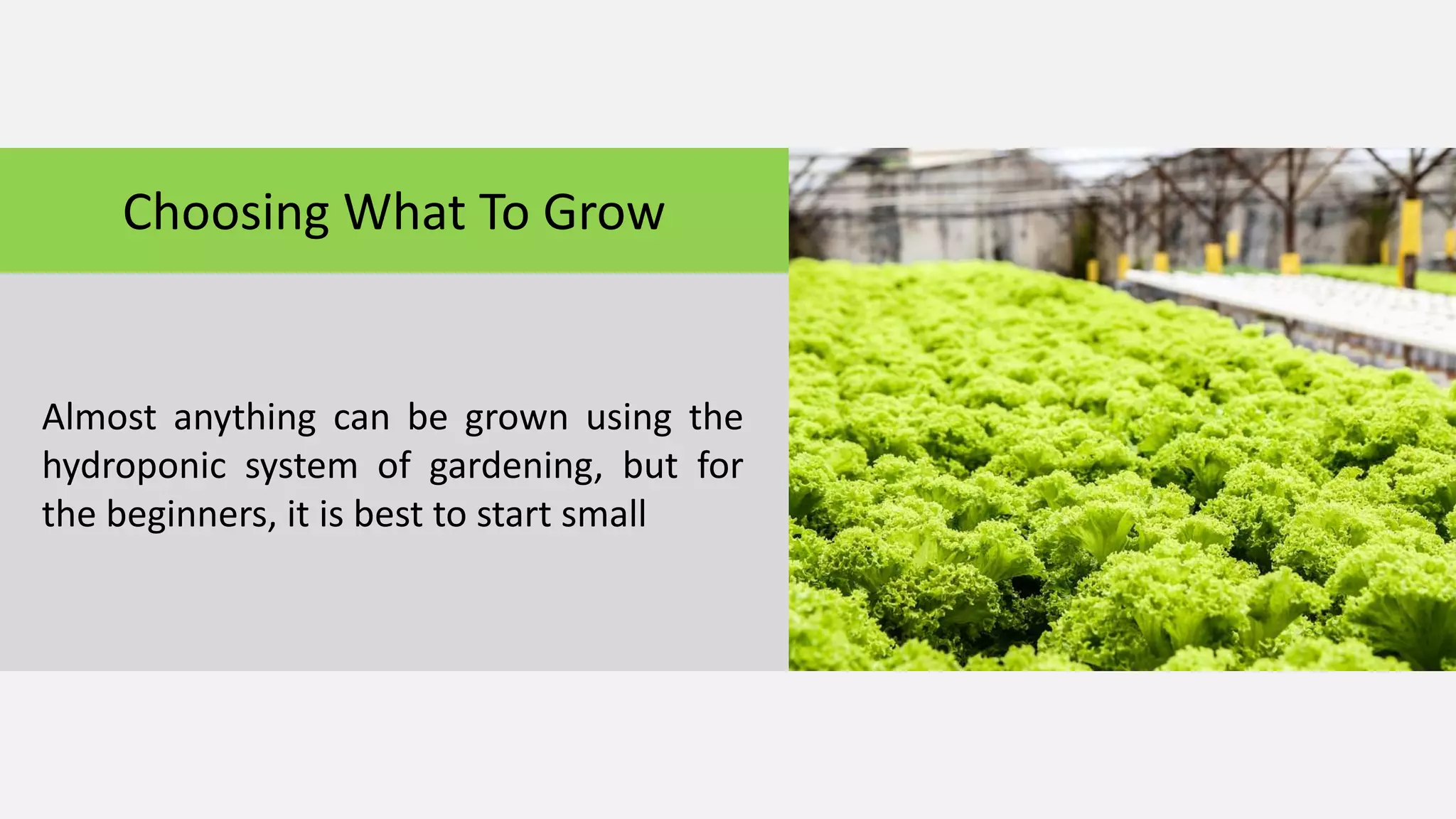
Choosing What To Grow
Almost anything can be grown using the
hydroponic system of gardening, but for
the beginners, it is best to start small
Lighting
At least six hours of sunlight every single
day and twelve or sixteen hours is even
better for their growth
Room Conditions
Air circulation as well as the CO2 levels.
The ideal level of humidity for the
hydroponic grow room is around 40-60%
relative humidity.
Water Quality
PH of the water as well as the level of the
mineral salts. The PH level, which is the
ideal level, is around 5.8 to 6.2 (slightly
acidic)
Nutrients
The fertilizers or the nutrients which are
used in the hydroponic system are
available quite easily in two forms, liquid
as well as in the dry form
Other Equipment
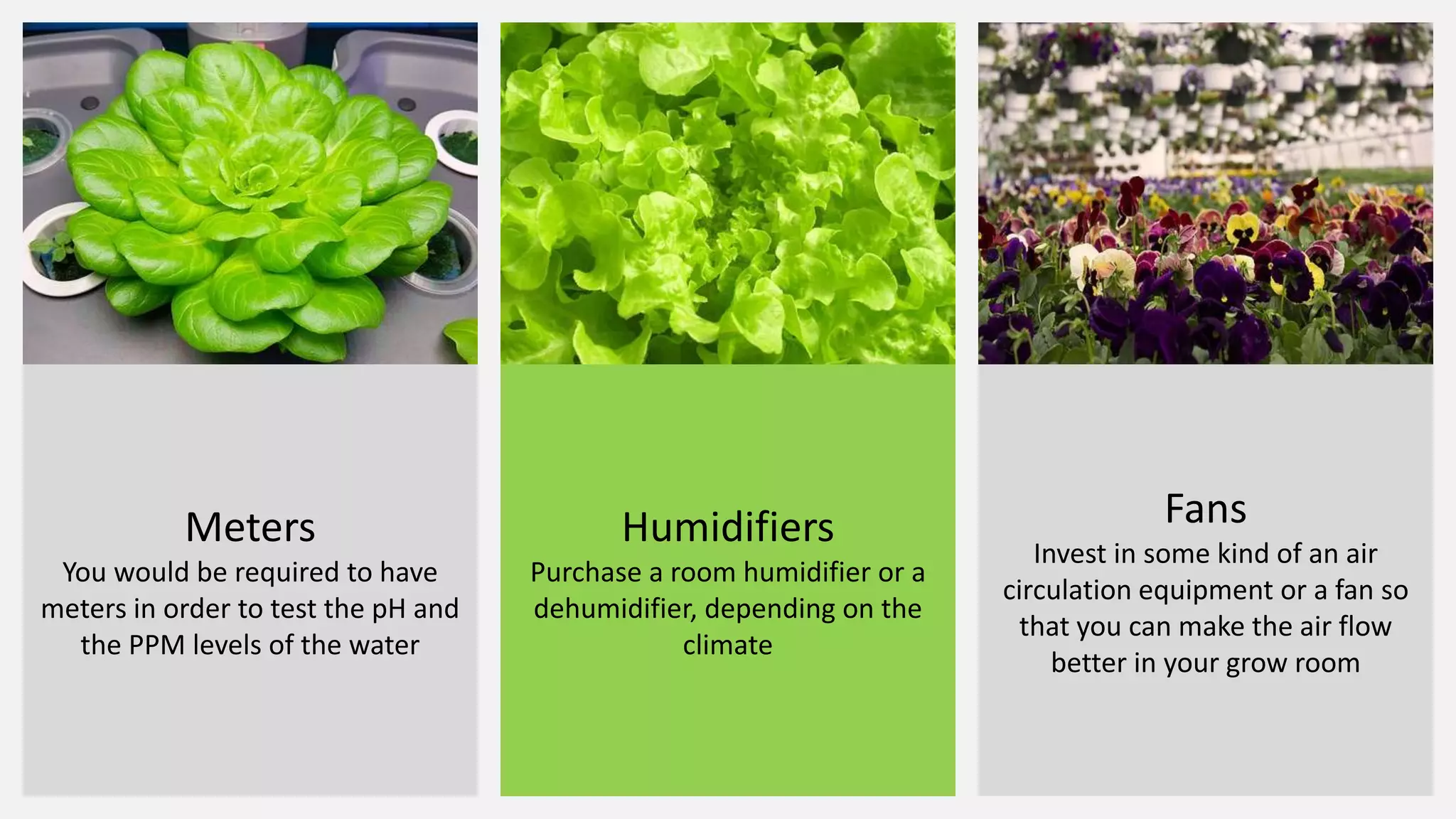
Meters Humidifiers Fans
Meters
You would be required to have
meters in order to test the pH and
the PPM levels of the water
Humidifiers
Purchase a room humidifier or a
dehumidifier, depending on the
climate
Fans
Invest in some kind of an air
circulation equipment or a fan so
that you can make the air flow
better in your grow room
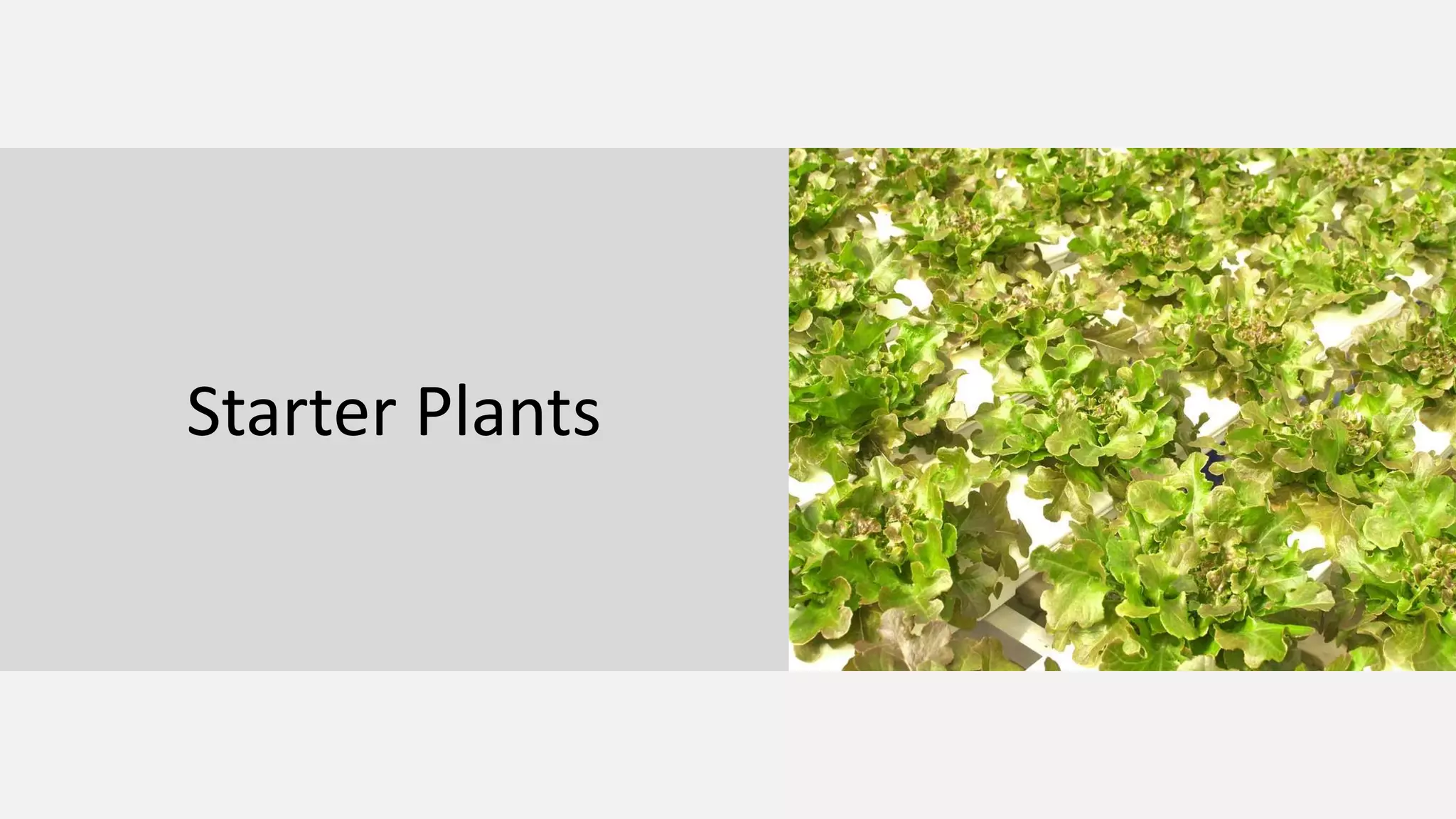
Starter Plants
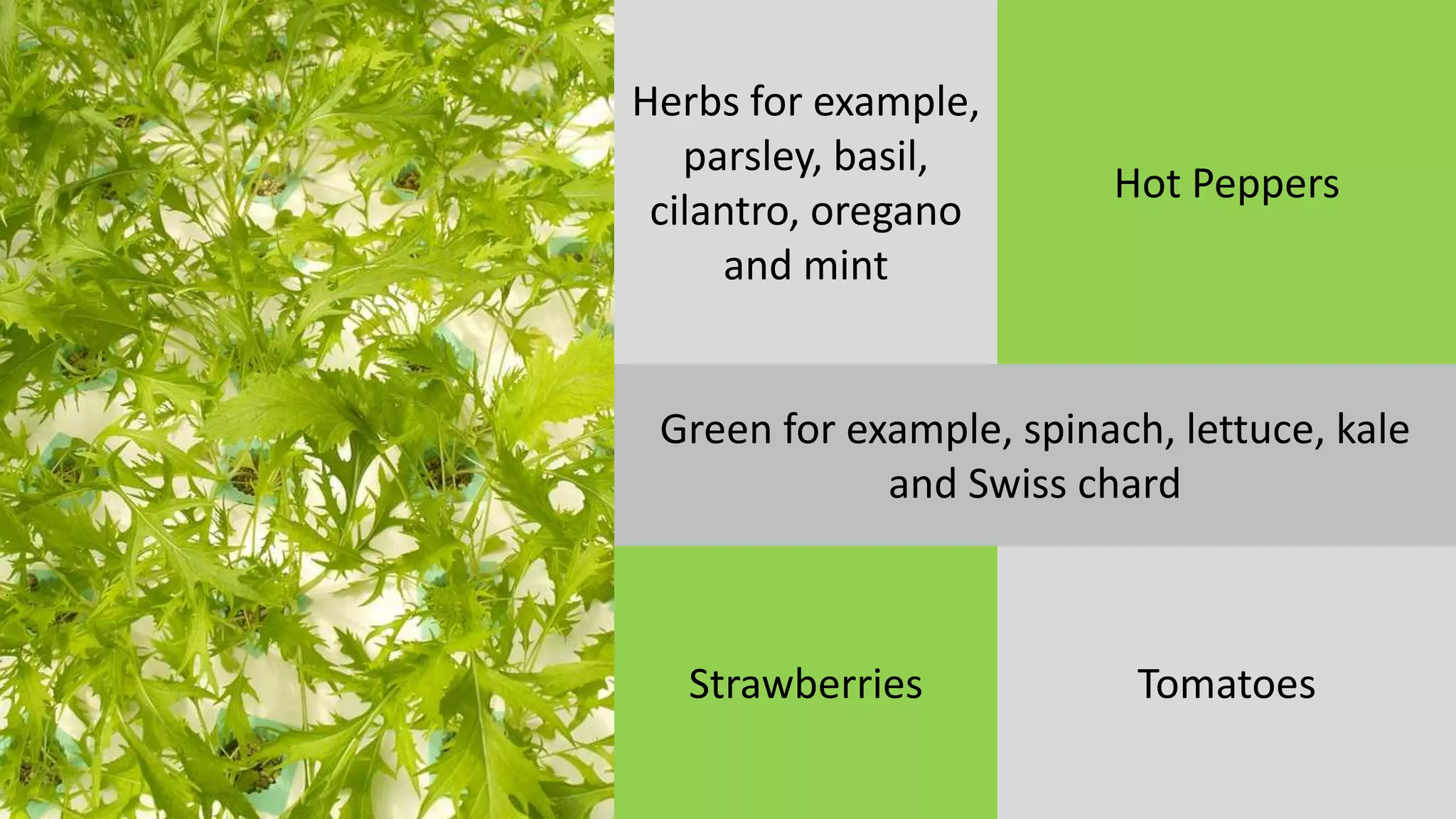
Herbs for example,
parsley, basil,
cilantro, oregano
and mint
Green for example, spinach, lettuce, kale
and Swiss chard
Strawberries Tomatoes
Hot Peppers
Pick Your Medium
Coconut Coir LECA / Clay Balls
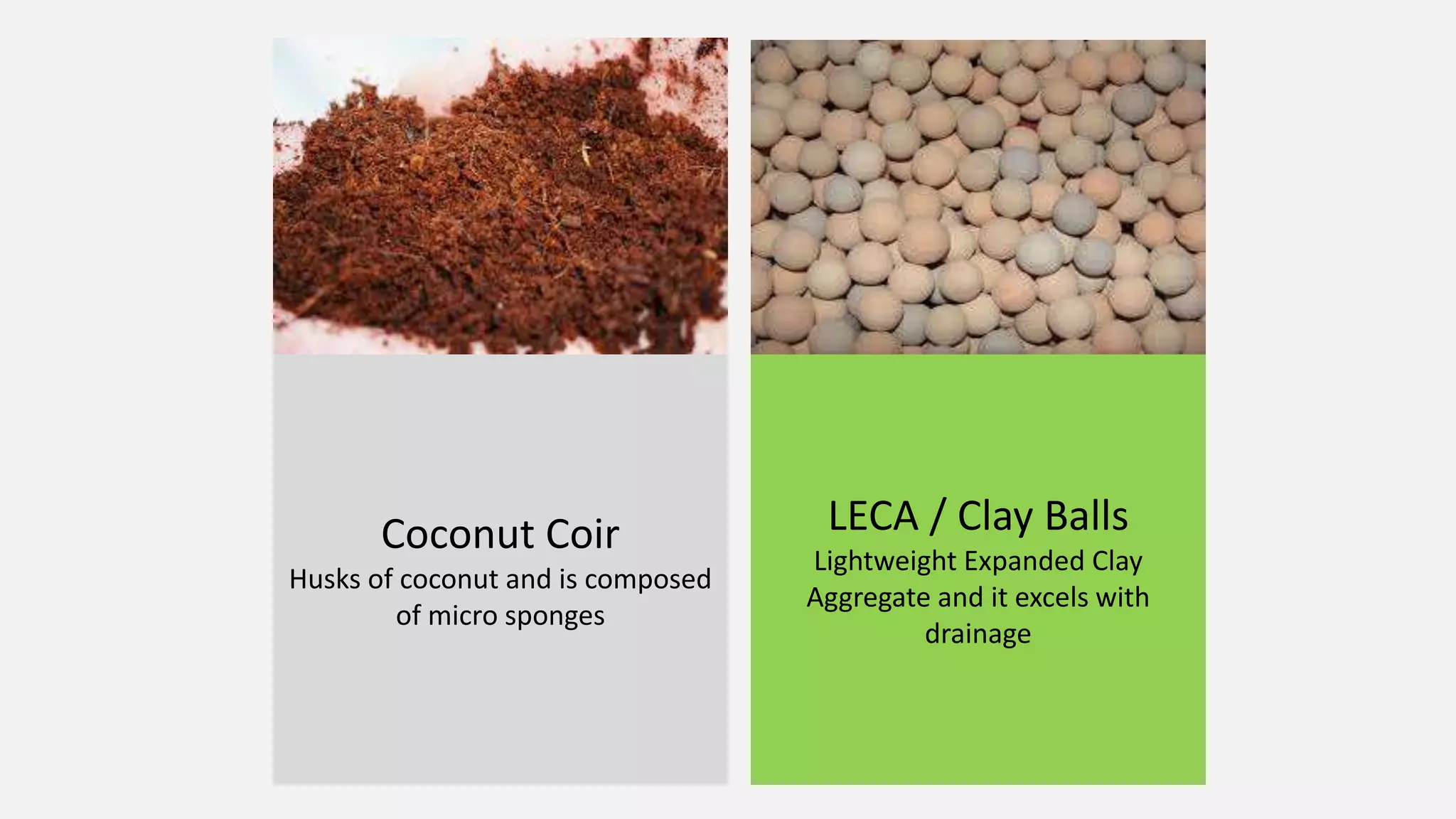
Coconut Coir
Husks of coconut and is composed
of micro sponges
LECA / Clay Balls
Lightweight Expanded Clay
Aggregate and it excels with
drainage
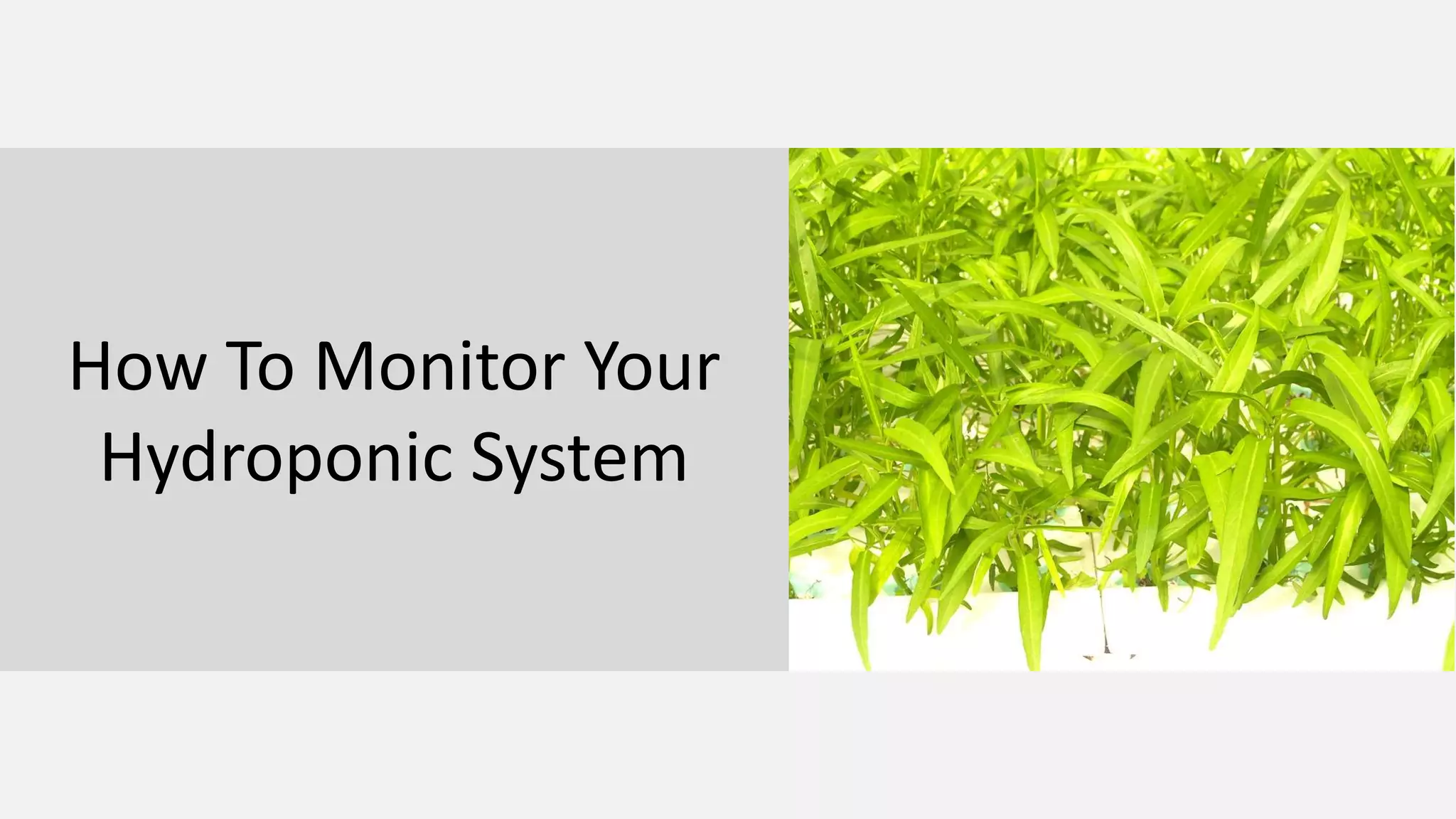
How To Monitor Your
Hydroponic System
Monitor your hydroponic crops regularly
The mechanics of your
hydroponic system
You should
also check
the timer
and the
lights
They should be
monitored at least once
a week
The water needs to be changed in case
there is a sign of any disease
Check the
plants for
disease or
any pests
Check the
nutrient
levels
The Future Of
Hydroponics
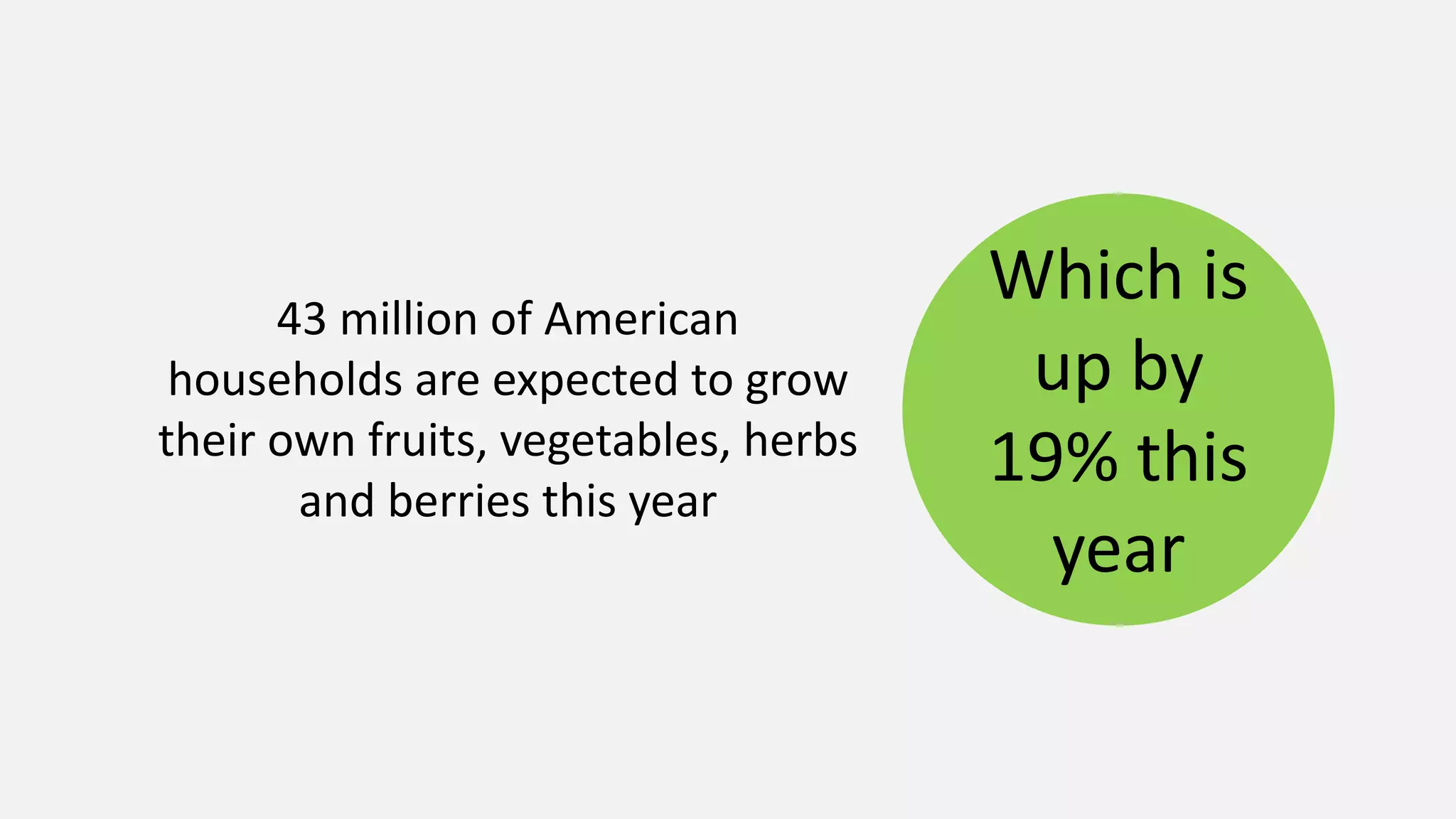
Which is
up by
19% this
year
43 million of American
households are expected to grow
their own fruits, vegetables, herbs
and berries this year
With the movement towards the health
conscious society on the rise, this is a
great opportunity for hydroponics and
organic farming
MORE INFORMATION
www.Hydroponicgarde
ningcenter.com/Learn-
hydroponics/

Hydroponic Growing Guide

  • 1.
  • 2.
    What Is Hydroponics AndHow Does It Work?
  • 3.
    THE WORD Comes fromTwo Greek words "hydro" and "ponics"
  • 4.
    “Hydro” means water“Ponics” means labor
  • 5.
    Hydroponic can bedefined as a subset of hydro culture and is a way of growing plants, food crops or flowers in water but without any soil
  • 6.
  • 7.
    The scientists however,started their experiments with soil less gardening back in the 1950's and there has been progress and developments in this concept which came to be known as hydroponic gardening
  • 8.
    What Are TheBenefits Of Hydroponics?
  • 9.
    No need fora yard or a garden to grow your plants Quite affordable No longer have to be dependent on seasonal planting Plants grow faster under this system Yield of the plants under the hydroponic system is around 20-25% bigger Convenient way of growing plants Gardening takes up less space than the conventional way
  • 10.
    Helps to savewater Hydroponic system is better for the overall environment Way of enjoyment Bond the family together This system only needs about 1/4 of the fertilizer in the planting Great form of food source Produce about the same yeild as compared to the soil gardening
  • 11.
  • 12.
    Deep water culture1Ebb and flow 2 Wicking3 The Drip System 4 Aeroponic5 Nutrient Film technique 6
  • 13.
    1 DEEPWATER CULTURE The Deepwaterculture or DWC is also known as the reservoir method and it is also one of the easiest way of growing plants using the hydroponic system
  • 14.
    2 NUTRIENT FILM TECHNIQUE NFTor Nutrient Film Technique is another system of hydroponics where there is a continuous flow of nutrient solution that flows over the roots of the plants
  • 15.
    3 AEROPHONICS This method ofhydroponic is where the roots of the plant are misted with the nutrient solution while they are suspended in the air
  • 16.
    4 THE WICK SYSTEM Thereis a reservoir that is filled with nutrients and water and above it there is a container that is filled with the growing medium
  • 17.
    5 EBB AND FLOW Thismethod works through flooding the growing medium through a nutrient and water solution and then it drains it back into the reservoir
  • 18.
    6 THE DRIP SYSTEM Thereis a timer which controls a submersed pump and the timers turns the pump on and the solution mixed with the nutrients is dripped on the base of each plant using a very small drip line
  • 19.
    Getting Started WithThe Hydroponic System
  • 20.
    Choosing What ToGrow Almost anything can be grown using the hydroponic system of gardening, but for the beginners, it is best to start small
  • 21.
    Lighting At least sixhours of sunlight every single day and twelve or sixteen hours is even better for their growth
  • 22.
    Room Conditions Air circulationas well as the CO2 levels. The ideal level of humidity for the hydroponic grow room is around 40-60% relative humidity.
  • 23.
    Water Quality PH ofthe water as well as the level of the mineral salts. The PH level, which is the ideal level, is around 5.8 to 6.2 (slightly acidic)
  • 24.
    Nutrients The fertilizers orthe nutrients which are used in the hydroponic system are available quite easily in two forms, liquid as well as in the dry form
  • 25.
  • 26.
  • 27.
    Meters You would berequired to have meters in order to test the pH and the PPM levels of the water Humidifiers Purchase a room humidifier or a dehumidifier, depending on the climate Fans Invest in some kind of an air circulation equipment or a fan so that you can make the air flow better in your grow room
  • 28.
  • 29.
    Herbs for example, parsley,basil, cilantro, oregano and mint Green for example, spinach, lettuce, kale and Swiss chard Strawberries Tomatoes Hot Peppers
  • 30.
  • 31.
    Coconut Coir LECA/ Clay Balls
  • 32.
    Coconut Coir Husks ofcoconut and is composed of micro sponges LECA / Clay Balls Lightweight Expanded Clay Aggregate and it excels with drainage
  • 33.
    How To MonitorYour Hydroponic System
  • 34.
    Monitor your hydroponiccrops regularly The mechanics of your hydroponic system You should also check the timer and the lights They should be monitored at least once a week The water needs to be changed in case there is a sign of any disease Check the plants for disease or any pests Check the nutrient levels
  • 35.
  • 36.
    Which is up by 19%this year 43 million of American households are expected to grow their own fruits, vegetables, herbs and berries this year
  • 37.
    With the movementtowards the health conscious society on the rise, this is a great opportunity for hydroponics and organic farming
  • 38.