AS ECONOMICS
MEASUREMENT OF MACROECONOMIC PERFORMANCE
LESSON OBJECTIVES
 1. To be able to define different measures of macroeconomic
performance (KNOWLEDGE)
 2. To be able to apply the most appropriate measure in given
circumstances (APPLICATION)
 3. To be able to suggest the most appropriate macroeconomic actions to
implement policies (ANALYSIS)
Definition 1
 Definition of 'Gross Domestic Product - GDP'

The monetary value of all the finished goods and services produced within a country's
borders in a specific time period, though GDP is usually calculated on an annual basis. It
includes all of private and public consumption, government outlays, investments and
exports less imports that occur within a defined territory.
GDP = C + G + I + NX
where:
"C" is equal to all private consumption, or consumer spending, in a nation's economy
"G" is the sum of government spending
"I" is the sum of all the country's businesses spending on capital
"NX" is the nation's total net exports, calculated as total exports minus total imports. (NX =
Exports - Imports)
Further Considerations
 It does not include any activity which is not formally reported in
government statistics:
 Eg Blackmarket activities
 Sale of illegal substances
 Activities being carried out at home by mothers/fathers
 See extra handout. It can be considered outdated
Definition 2
 Unemployment is defined as a situation where someone of working age is
not able to get a job but would like to be in full time employment
 Demand Deficient Unemployment. – Lack of AD in economy (e.g.
Recession)
 Structural Unemployment – workers lack necessary skills or geographical
immobility
 Real Wage Unemployment – wages above equilibrium
 Frictional unemployment – workers in between jobs
 Voluntary Unemployment. – workers prefer not to work
Demand Deficient Unemployment
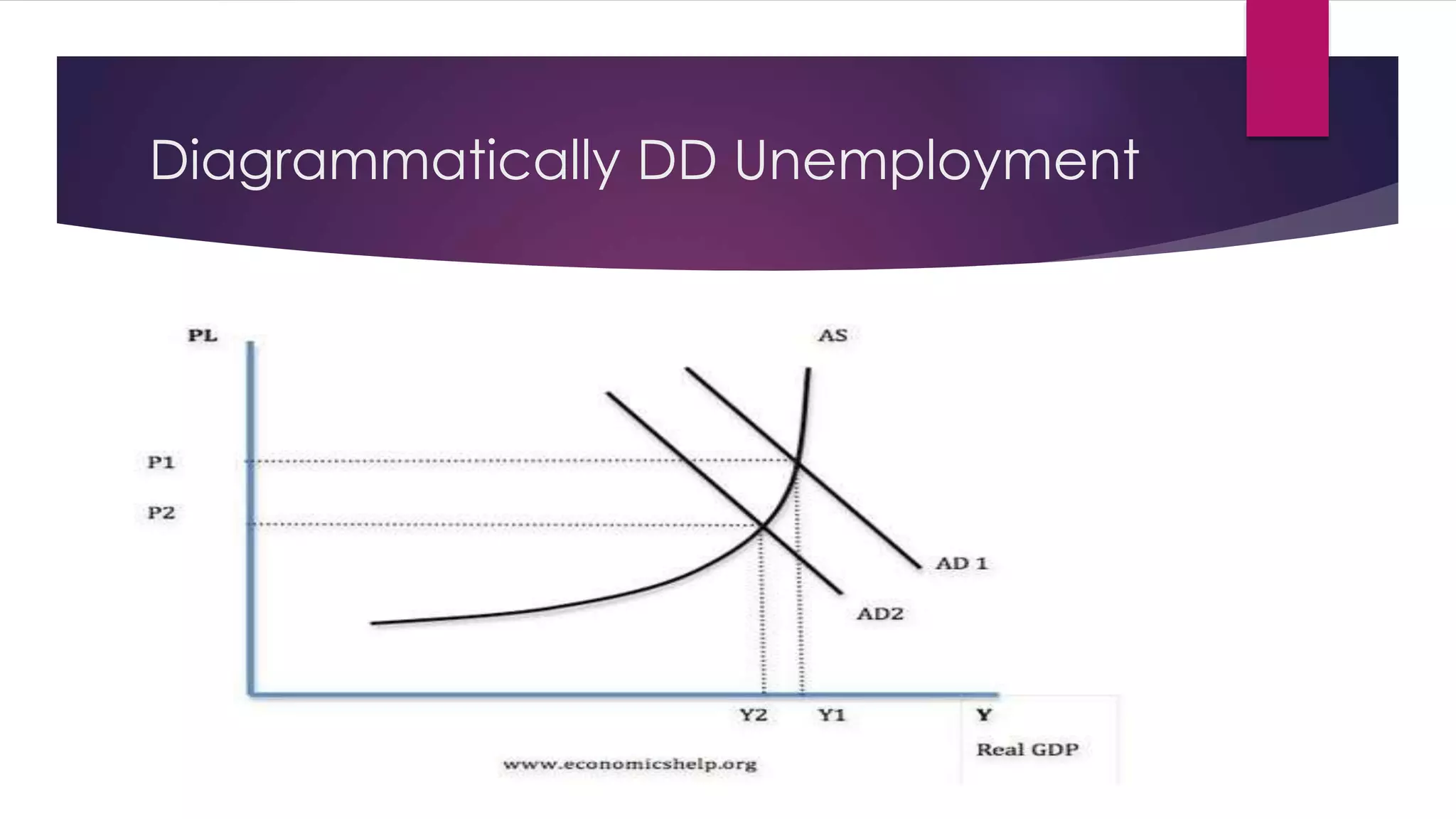
 Demand deficient unemployment occurs in a recession or period of very
low growth. If there is insufficient Aggregate Demand, firms will cut back
on output. If they cut back on output then they will employ less workers.
Firms will either cut back on recruitment or lay off workers. The deeper the
recession, the more demand deficient unemployment there will be. This is
often the biggest cause of unemployment, especially in a downturn.
Diagrammatically DD Unemployment
Definition 2
 Structural Unemployment
 This is unemployment due to inefficiencies in the labour market. It may occur due to a
mismatch of skills or geographical location. For example structural unemployment could
be due to:
 Occupational immobility. There may be skilled jobs available, but many workers may not
have the relevant skills. Sometimes firms can struggle to recruit during periods of high
unemployment. This is due to the occupational immobility.
 Geographical immobility. Jobs may be available in London, but, unemployed workers
may not be able to move there due to difficulties in getting housing e.t.c.
 Technological change. If an economy goes through technological change some
industries will decline. This is likely to lead to structural unemployment. For example, new
technology (nuclear power) could make coal mines close down leaving many coal
miners unemployed
Definition 3
 Real Wage Unemployment
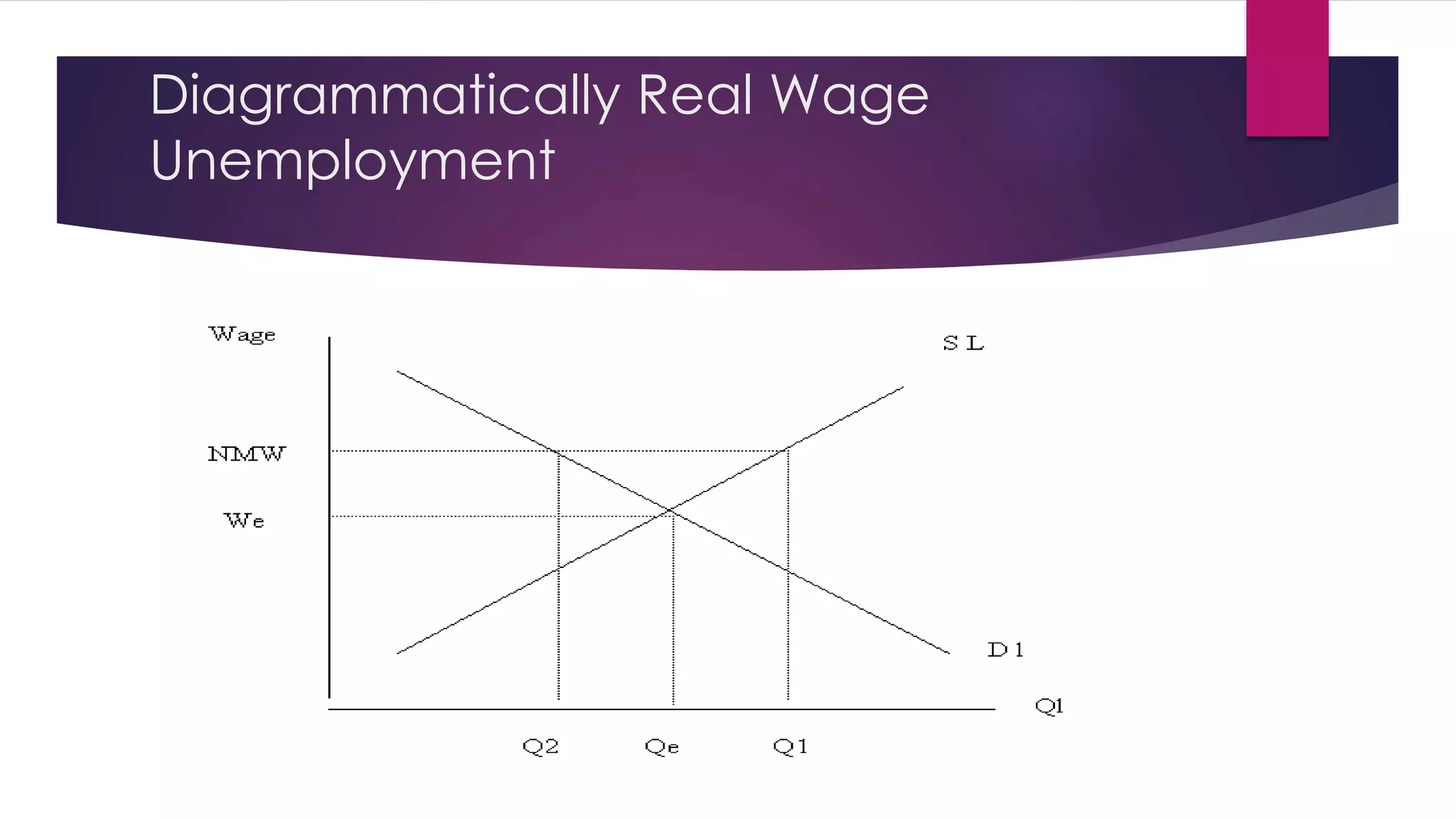
 This occurs when wages are artificially kept above the equilibrium. For
example, powerful trades unions or minimum wages could lead to wages
above the equilibrium leading to excess supply of labour (this assumes
labour markets are competitive)
 Keynesian analysis suggests a fall in AD can lead to real wage
unemployment as wages are sticky downwards and a fall in AD doesn’t
lead to wages clearing.
Diagrammatically Real Wage
Unemployment
Definition 4
 Frictional Unemployment
 This occurs when workers are in between jobs e.g. school leavers take time
to find work. There is always likely to be some frictional unemployment in
an economy as people take time to find a job suited to their skills
Other Matters
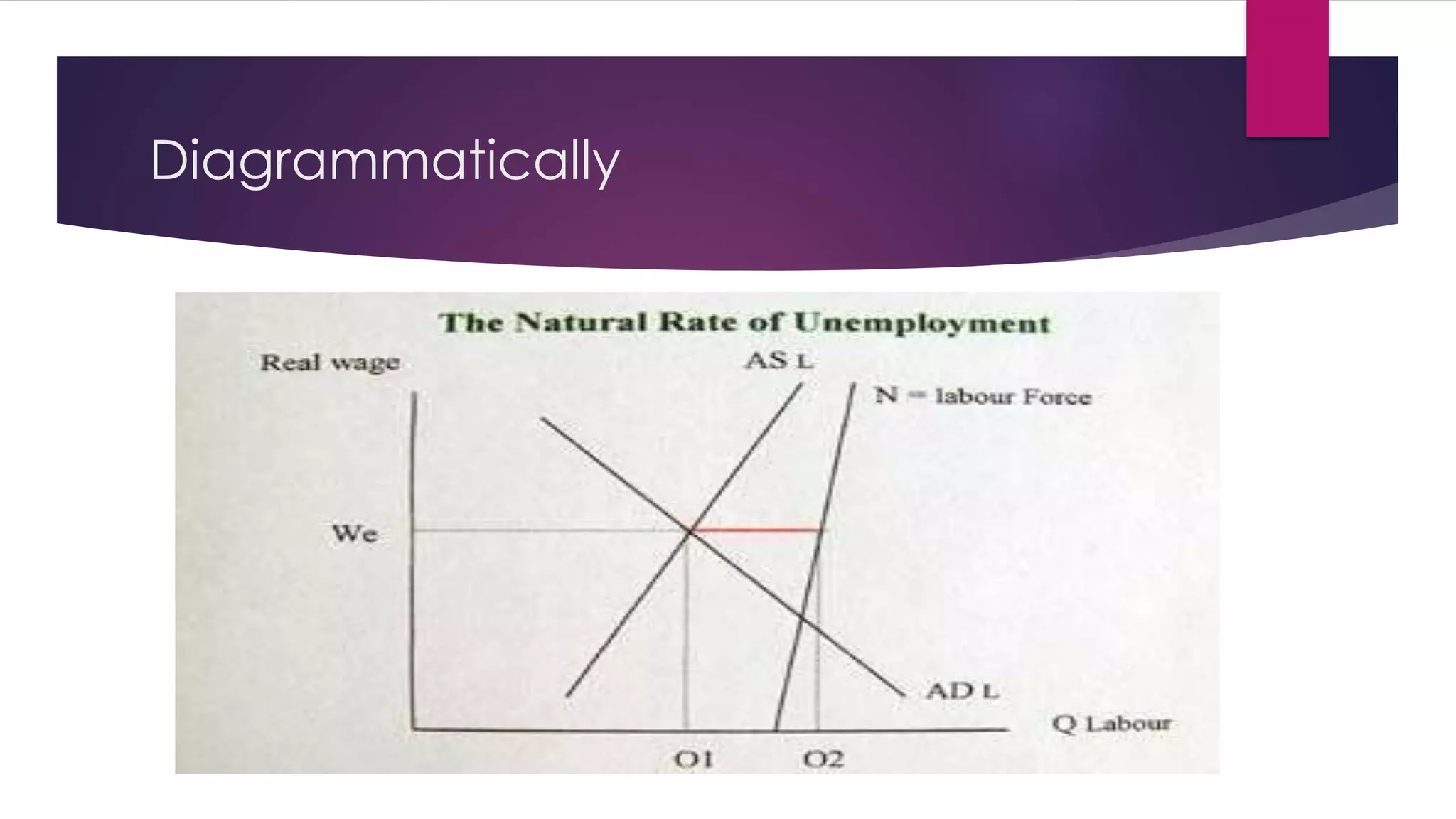
 The labour force includes everyone of working age who is either working or
looking for work. The Aggregate Supply of labour is every one who is able
and willing to supply their labour. Not everyone in the labour force will
actually be able to supply their labour, and this leads to the natural rate of
unemployment
Diagrammatically

Pass that A Level - AQA AS Economics measurement of macroeconomic performance 2

  • 1.
    AS ECONOMICS MEASUREMENT OFMACROECONOMIC PERFORMANCE
  • 2.
    LESSON OBJECTIVES  1.To be able to define different measures of macroeconomic performance (KNOWLEDGE)  2. To be able to apply the most appropriate measure in given circumstances (APPLICATION)  3. To be able to suggest the most appropriate macroeconomic actions to implement policies (ANALYSIS)
  • 3.
    Definition 1  Definitionof 'Gross Domestic Product - GDP'  The monetary value of all the finished goods and services produced within a country's borders in a specific time period, though GDP is usually calculated on an annual basis. It includes all of private and public consumption, government outlays, investments and exports less imports that occur within a defined territory. GDP = C + G + I + NX where: "C" is equal to all private consumption, or consumer spending, in a nation's economy "G" is the sum of government spending "I" is the sum of all the country's businesses spending on capital "NX" is the nation's total net exports, calculated as total exports minus total imports. (NX = Exports - Imports)
  • 4.
    Further Considerations  Itdoes not include any activity which is not formally reported in government statistics:  Eg Blackmarket activities  Sale of illegal substances  Activities being carried out at home by mothers/fathers  See extra handout. It can be considered outdated
  • 5.
    Definition 2  Unemploymentis defined as a situation where someone of working age is not able to get a job but would like to be in full time employment  Demand Deficient Unemployment. – Lack of AD in economy (e.g. Recession)  Structural Unemployment – workers lack necessary skills or geographical immobility  Real Wage Unemployment – wages above equilibrium  Frictional unemployment – workers in between jobs  Voluntary Unemployment. – workers prefer not to work
  • 6.
    Demand Deficient Unemployment Demand deficient unemployment occurs in a recession or period of very low growth. If there is insufficient Aggregate Demand, firms will cut back on output. If they cut back on output then they will employ less workers. Firms will either cut back on recruitment or lay off workers. The deeper the recession, the more demand deficient unemployment there will be. This is often the biggest cause of unemployment, especially in a downturn.
  • 7.
  • 8.
    Definition 2  StructuralUnemployment  This is unemployment due to inefficiencies in the labour market. It may occur due to a mismatch of skills or geographical location. For example structural unemployment could be due to:  Occupational immobility. There may be skilled jobs available, but many workers may not have the relevant skills. Sometimes firms can struggle to recruit during periods of high unemployment. This is due to the occupational immobility.  Geographical immobility. Jobs may be available in London, but, unemployed workers may not be able to move there due to difficulties in getting housing e.t.c.  Technological change. If an economy goes through technological change some industries will decline. This is likely to lead to structural unemployment. For example, new technology (nuclear power) could make coal mines close down leaving many coal miners unemployed
  • 9.
    Definition 3  RealWage Unemployment  This occurs when wages are artificially kept above the equilibrium. For example, powerful trades unions or minimum wages could lead to wages above the equilibrium leading to excess supply of labour (this assumes labour markets are competitive)  Keynesian analysis suggests a fall in AD can lead to real wage unemployment as wages are sticky downwards and a fall in AD doesn’t lead to wages clearing.
  • 10.
  • 11.
    Definition 4  FrictionalUnemployment  This occurs when workers are in between jobs e.g. school leavers take time to find work. There is always likely to be some frictional unemployment in an economy as people take time to find a job suited to their skills
  • 12.
    Other Matters  Thelabour force includes everyone of working age who is either working or looking for work. The Aggregate Supply of labour is every one who is able and willing to supply their labour. Not everyone in the labour force will actually be able to supply their labour, and this leads to the natural rate of unemployment
  • 13.