APTITUDE
 Concepts
 Types
 Individual
Differences And
Variability
Introduction
 Aptitude means quickness in learning and
understanding. people differ from one
another and within themselves in their
performance in fields of human activities
such as leadership, music, art, mechanical
work, teaching etc. Raman goes to music
institute in order to learn music and singing,
he progress rapidly with music and gets
diploma in music course, later on he is
offered a music teacher job and he carries
it out satisfactorily.
Definition
 An aptitude is a natural ability to acquire
General or special type of knowledge or
skill quickly.
Concept Of Aptitude
 Aptitude is derived from general mental
ability and it predict one’s possible
success or failure.
 Aptitude is an innate inborn ability to do a
certain kind of work. aptitude may be
physical or mental.
 Aptitude helps an individual to learn faster
and achieve success.
 To predict an achievement in some
particular job or training course we need
to know more about one's aptitude rather
than his intelligence for general ability.
Aptitude is a special ability where
intelligence is a general ability.
Aptitude differs from ability. it gives an
indication of the future success of an
individual, where ability limit itself to
the present performance of an
individual.
Aptitude is very helpful in choosing
any kind of activity in which we wish
to be successful or enjoy.
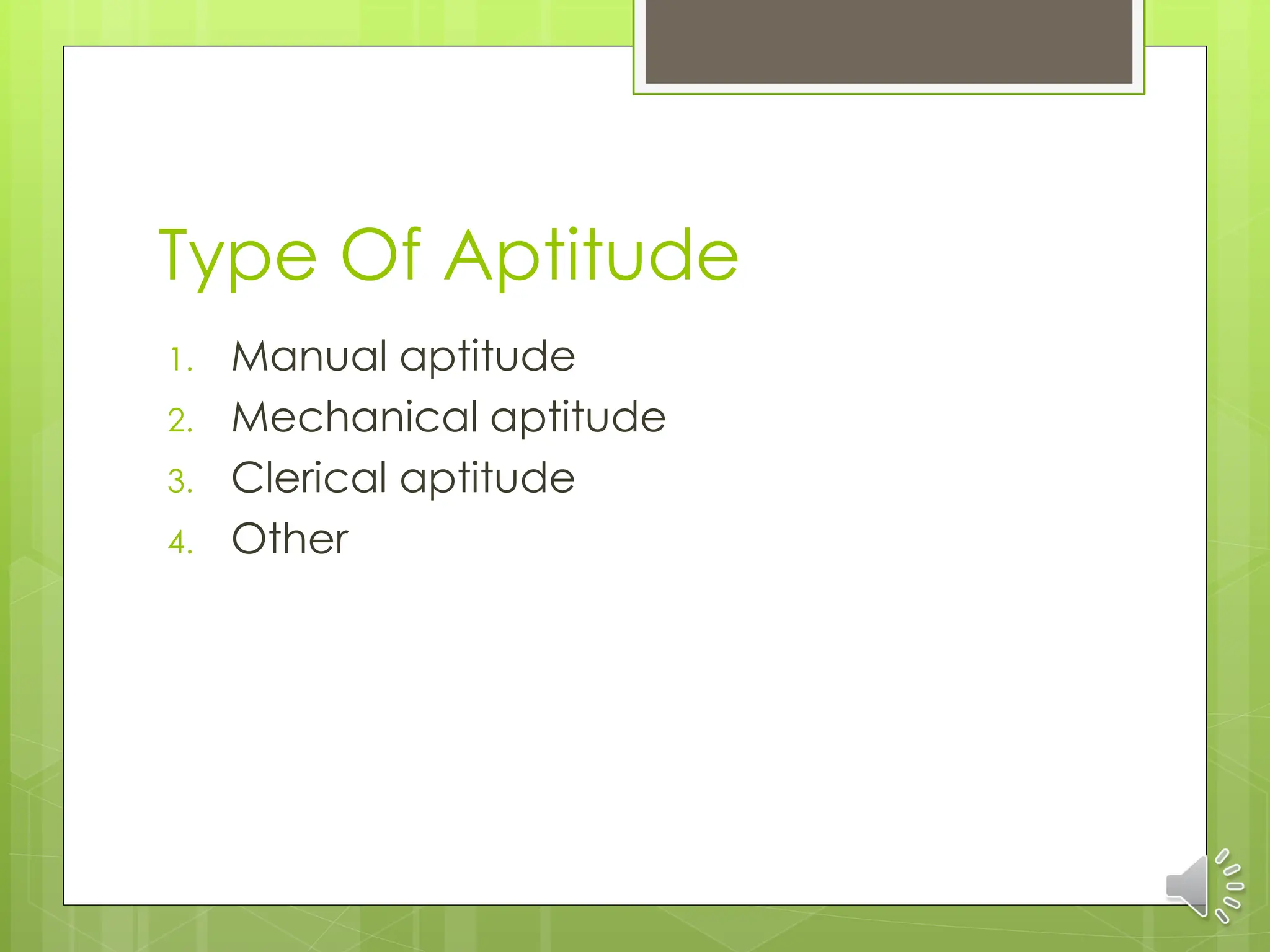
Type Of Aptitude
1. Manual aptitude
2. Mechanical aptitude
3. Clerical aptitude
4. Other
Manual Aptitude
 It indicates motor ability or skill required for
Semi skilled occupations.
Mechanical Aptitude
 This aptitude involves the ability to
understand and solve problem, involving
mechanical relationship and
arrangements such as those which occur
in the adjustment, repair assembly of
machinery.
Clerical Aptitude
 this aptitude indicates different abilities
like perceptual, intellectual ability, mental
skills.
Other Types Of Aptitude
 general learning ability
 verbal aptitude
 numerical aptitude
 reasoning aptitude
 language learning aptitude
 mechanical comprehension
 visual memory
Individual Differences And
Variability
 Suppose that two person of equal intelligence
have the same opportunities to learn a job or
developer skill, attend the same training or classes,
study the same material and practice the same
length of time.
 While one of them acquire the knowledge or skill
easily, the other has difficulty and takes more time,
these two people differ in aptitude for this type of
work or skill.
 Aptitude are highly individualized. For example, two
individual may have the same level of intelligence but
not do well in the same kind of education or training
because of differences in aptitude. Difference in
aptitude will decide the area in which they will
practice successfully. One nurse may have aptitude for
handling surgical instrument and do well in the
operation theatre, another may have an aptitude for
problem solving in research and enjoy research and
teaching. Aptitude are very important in determining
success in professional practice.
 The higher the aptitude, the higher the chance of
success. The lower the attitude the lower probability of
achievement. The higher the aptitude the less the time
required for learning and mastery, the lower the
aptitude the more the time required for learning.
Thank You

APTITUDE. B b. .pdf

  • 1.
    APTITUDE  Concepts  Types Individual Differences And Variability
  • 2.
    Introduction  Aptitude meansquickness in learning and understanding. people differ from one another and within themselves in their performance in fields of human activities such as leadership, music, art, mechanical work, teaching etc. Raman goes to music institute in order to learn music and singing, he progress rapidly with music and gets diploma in music course, later on he is offered a music teacher job and he carries it out satisfactorily.
  • 3.
    Definition  An aptitudeis a natural ability to acquire General or special type of knowledge or skill quickly.
  • 4.
    Concept Of Aptitude Aptitude is derived from general mental ability and it predict one’s possible success or failure.  Aptitude is an innate inborn ability to do a certain kind of work. aptitude may be physical or mental.  Aptitude helps an individual to learn faster and achieve success.  To predict an achievement in some particular job or training course we need to know more about one's aptitude rather than his intelligence for general ability.
  • 5.
    Aptitude is aspecial ability where intelligence is a general ability. Aptitude differs from ability. it gives an indication of the future success of an individual, where ability limit itself to the present performance of an individual. Aptitude is very helpful in choosing any kind of activity in which we wish to be successful or enjoy.
  • 6.
    Type Of Aptitude 1.Manual aptitude 2. Mechanical aptitude 3. Clerical aptitude 4. Other
  • 7.
    Manual Aptitude  Itindicates motor ability or skill required for Semi skilled occupations.
  • 8.
    Mechanical Aptitude  Thisaptitude involves the ability to understand and solve problem, involving mechanical relationship and arrangements such as those which occur in the adjustment, repair assembly of machinery.
  • 9.
    Clerical Aptitude  thisaptitude indicates different abilities like perceptual, intellectual ability, mental skills.
  • 10.
    Other Types OfAptitude  general learning ability  verbal aptitude  numerical aptitude  reasoning aptitude  language learning aptitude  mechanical comprehension  visual memory
  • 11.
    Individual Differences And Variability Suppose that two person of equal intelligence have the same opportunities to learn a job or developer skill, attend the same training or classes, study the same material and practice the same length of time.  While one of them acquire the knowledge or skill easily, the other has difficulty and takes more time, these two people differ in aptitude for this type of work or skill.
  • 12.
     Aptitude arehighly individualized. For example, two individual may have the same level of intelligence but not do well in the same kind of education or training because of differences in aptitude. Difference in aptitude will decide the area in which they will practice successfully. One nurse may have aptitude for handling surgical instrument and do well in the operation theatre, another may have an aptitude for problem solving in research and enjoy research and teaching. Aptitude are very important in determining success in professional practice.  The higher the aptitude, the higher the chance of success. The lower the attitude the lower probability of achievement. The higher the aptitude the less the time required for learning and mastery, the lower the aptitude the more the time required for learning.
  • 13.