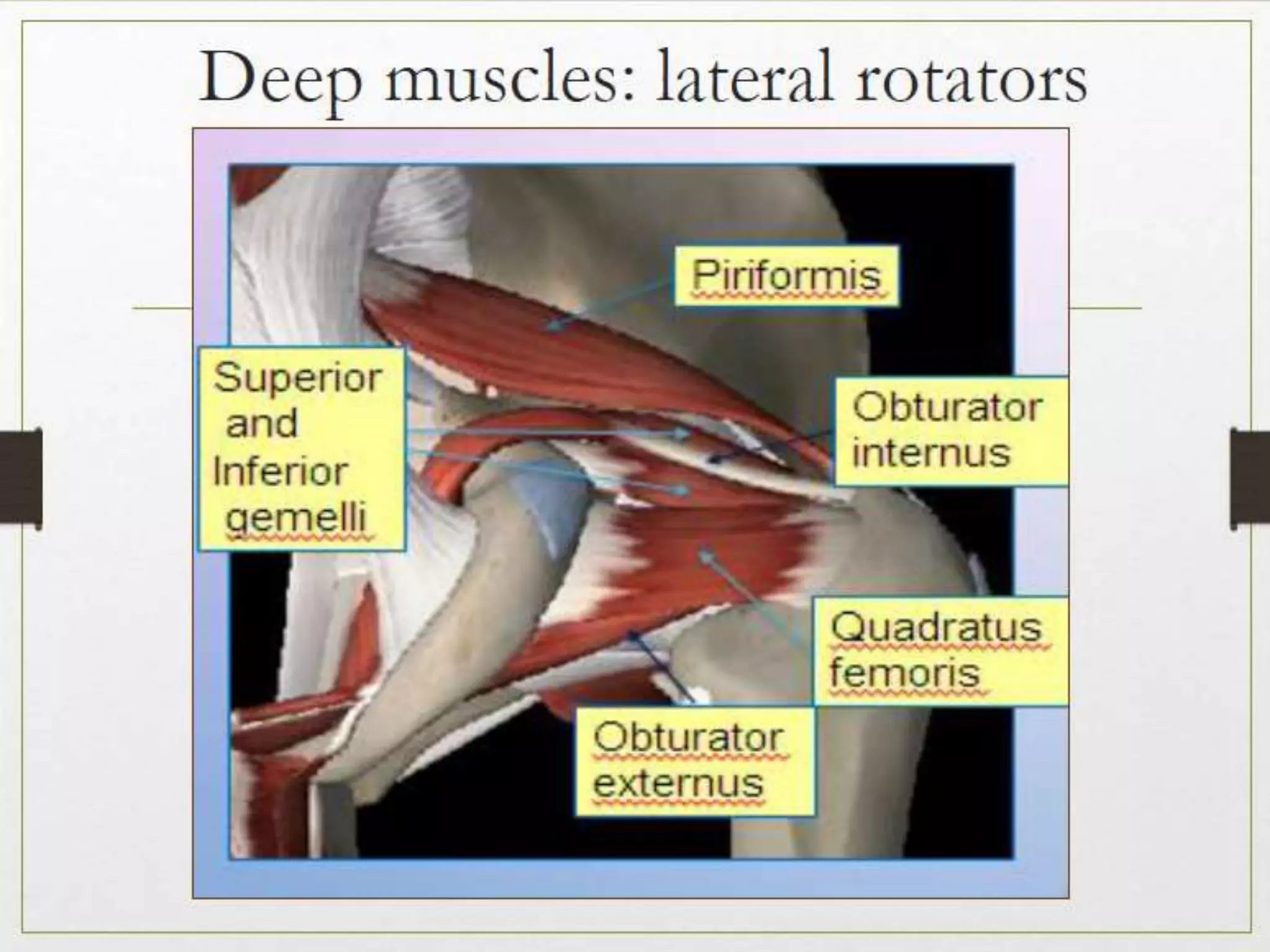

GLUTEAL
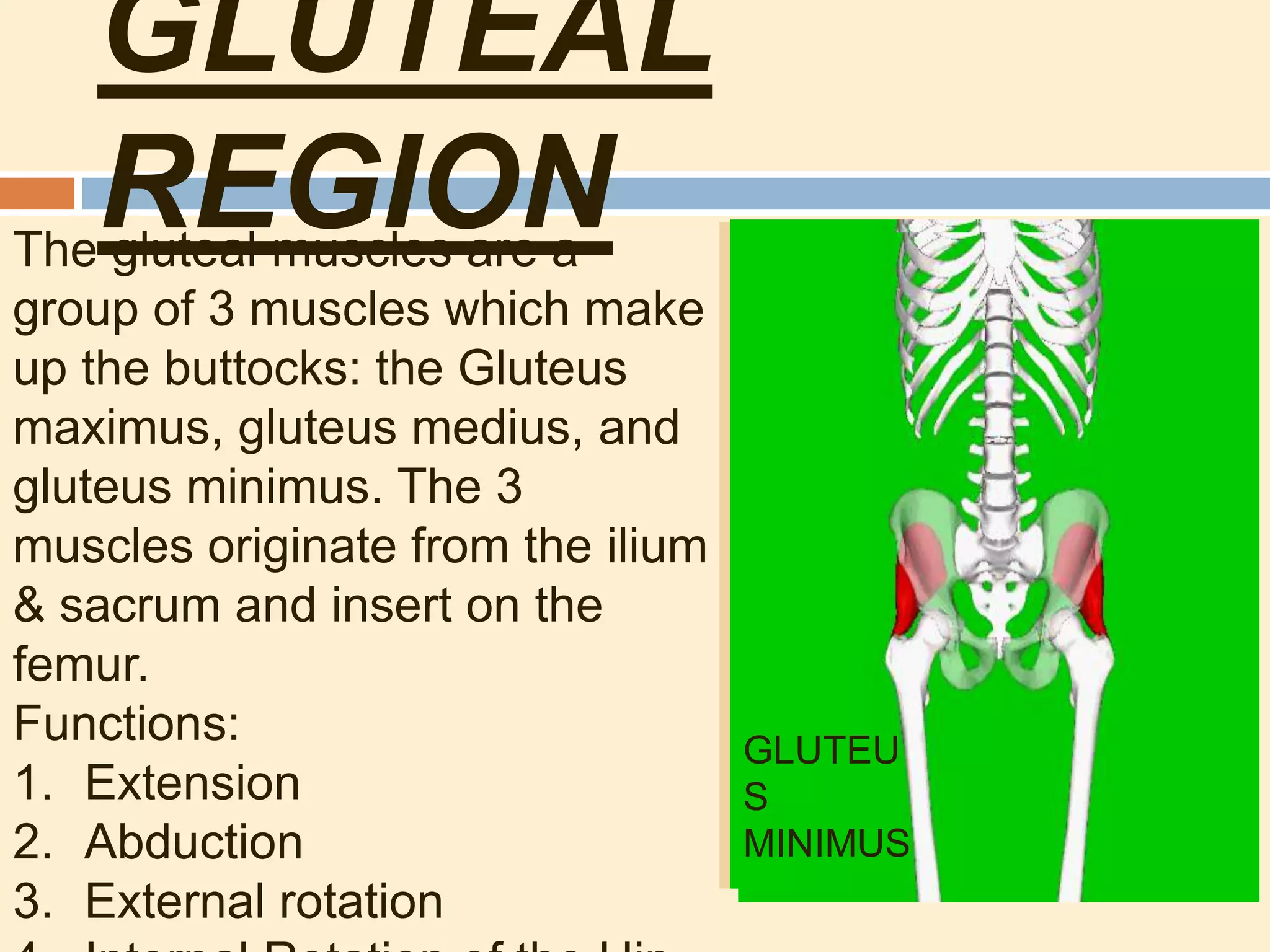
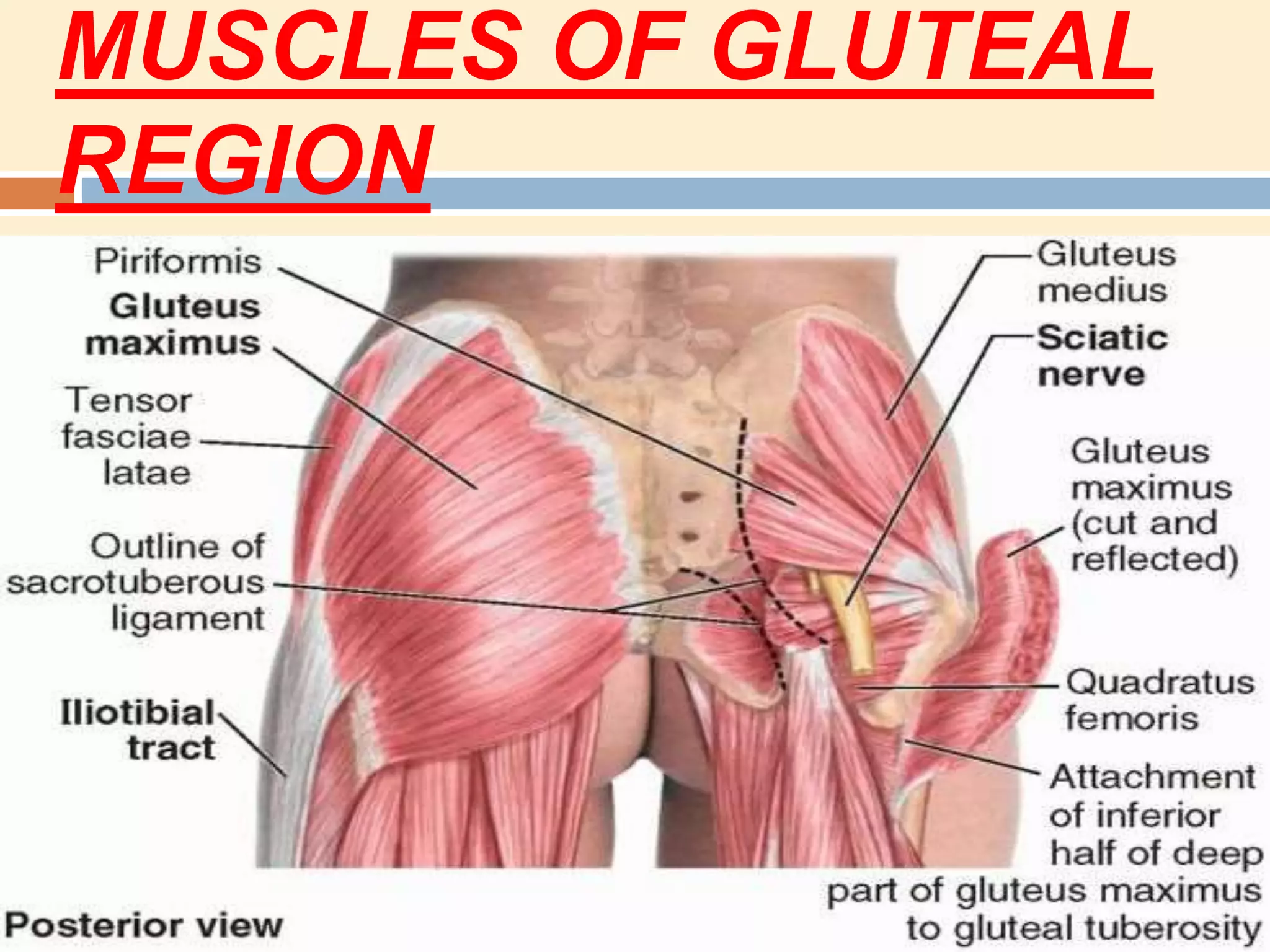
REGIONThe gluteal muscles are a
group of 3 muscles which make
up the buttocks: the Gluteus
maximus, gluteus medius, and
gluteus minimus. The 3
muscles originate from the ilium
& sacrum and insert on the
femur.
Functions:
1. Extension
2. Abduction
3. External rotation
GLUTEU
S
MAXIMU
S
GLUTEUS
MEDIUS
GLUTEU
S
MINIMUS
MUSCLES OF GLUTEAL
REGION
CLINICAL ANATOMY
CONTEN
TS
TO
BE
STUDIED
 Trendlenberg's gait
 Sciatic Nerve
 Sciatic Hernia
 Trochanteric Bursitis
 Piriformis Syndrome
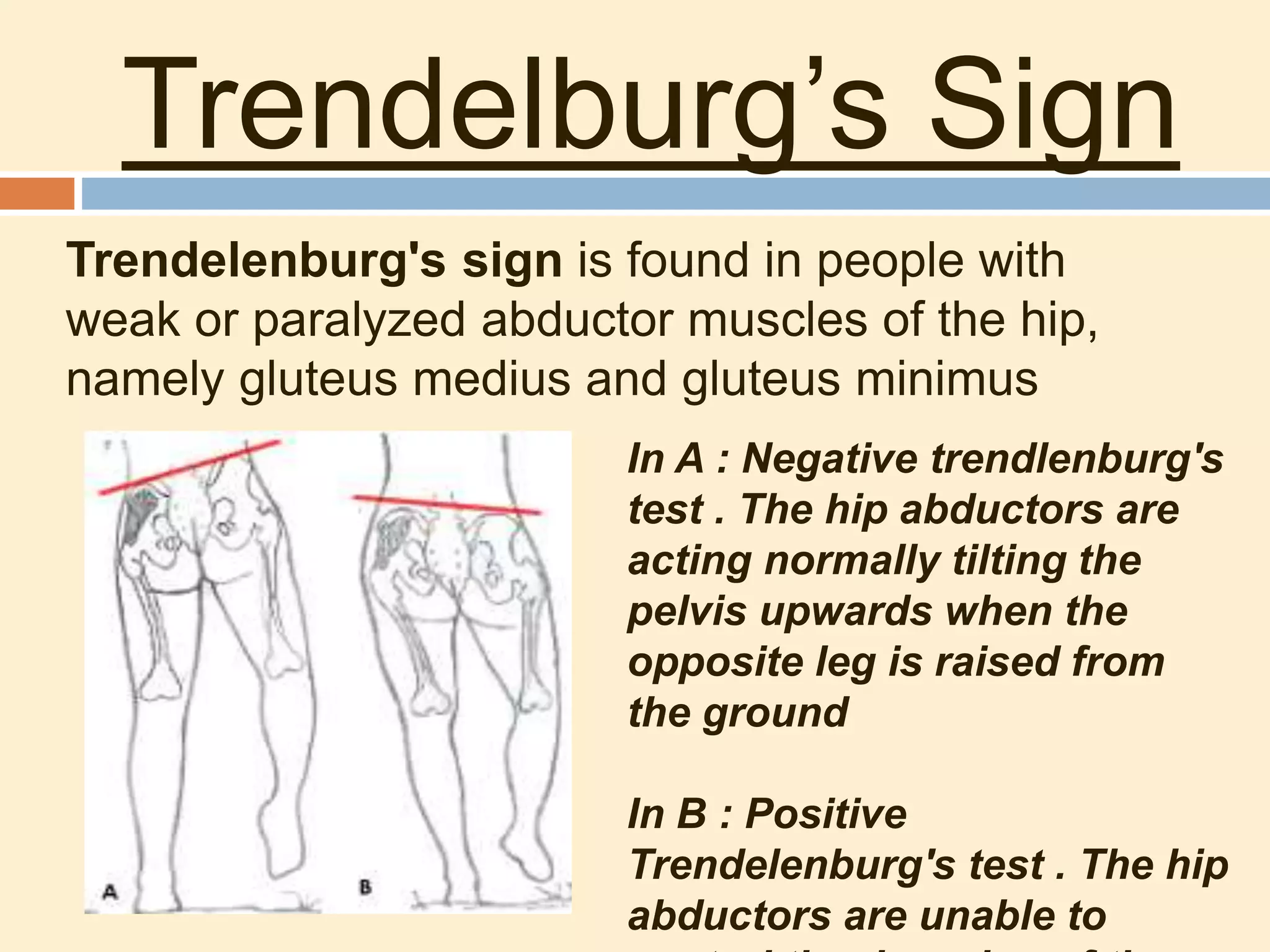
Trendelburg’s Sign
Trendelenburg's sign is found in people with
weak or paralyzed abductor muscles of the hip,
namely gluteus medius and gluteus minimus
In A : Negative trendlenburg's
test . The hip abductors are
acting normally tilting the
pelvis upwards when the
opposite leg is raised from
the ground
In B : Positive
Trendelenburg's test . The hip
abductors are unable to
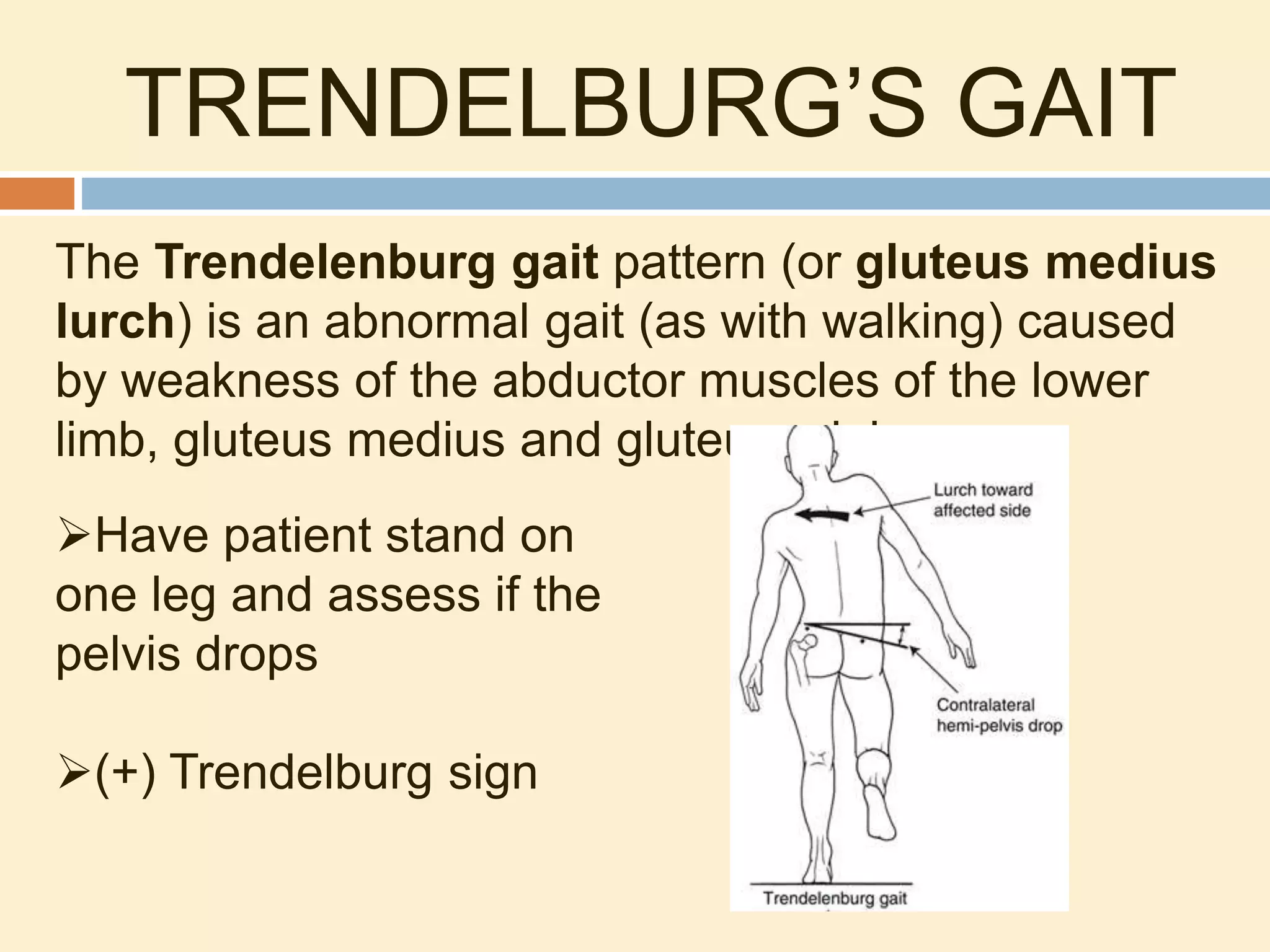
TRENDELBURG’S GAIT
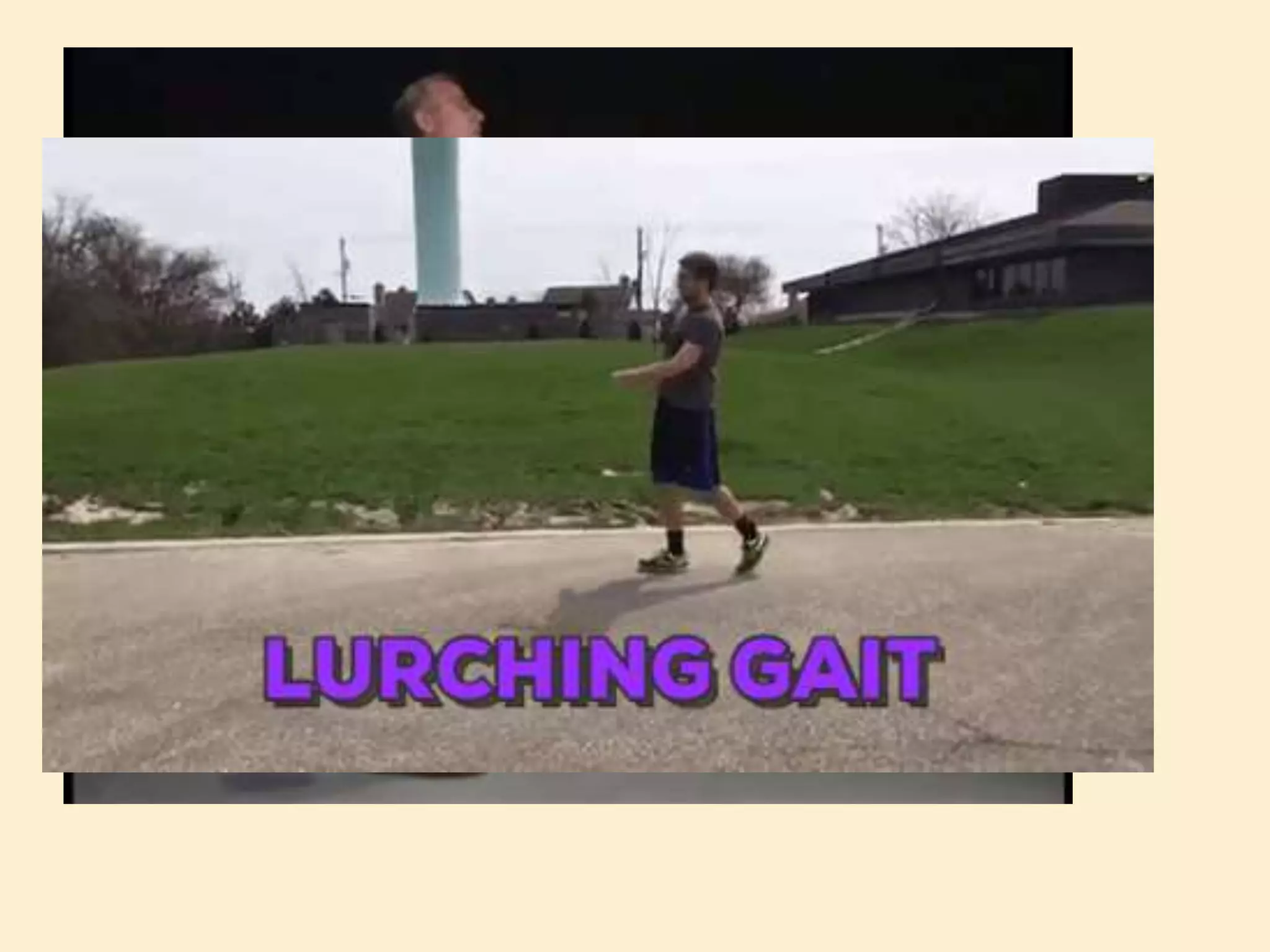
The Trendelenburg gait pattern (or gluteus medius
lurch) is an abnormal gait (as with walking) caused
by weakness of the abductor muscles of the lower
limb, gluteus medius and gluteus minimus
Have patient stand on
one leg and assess if the
pelvis drops
(+) Trendelburg sign
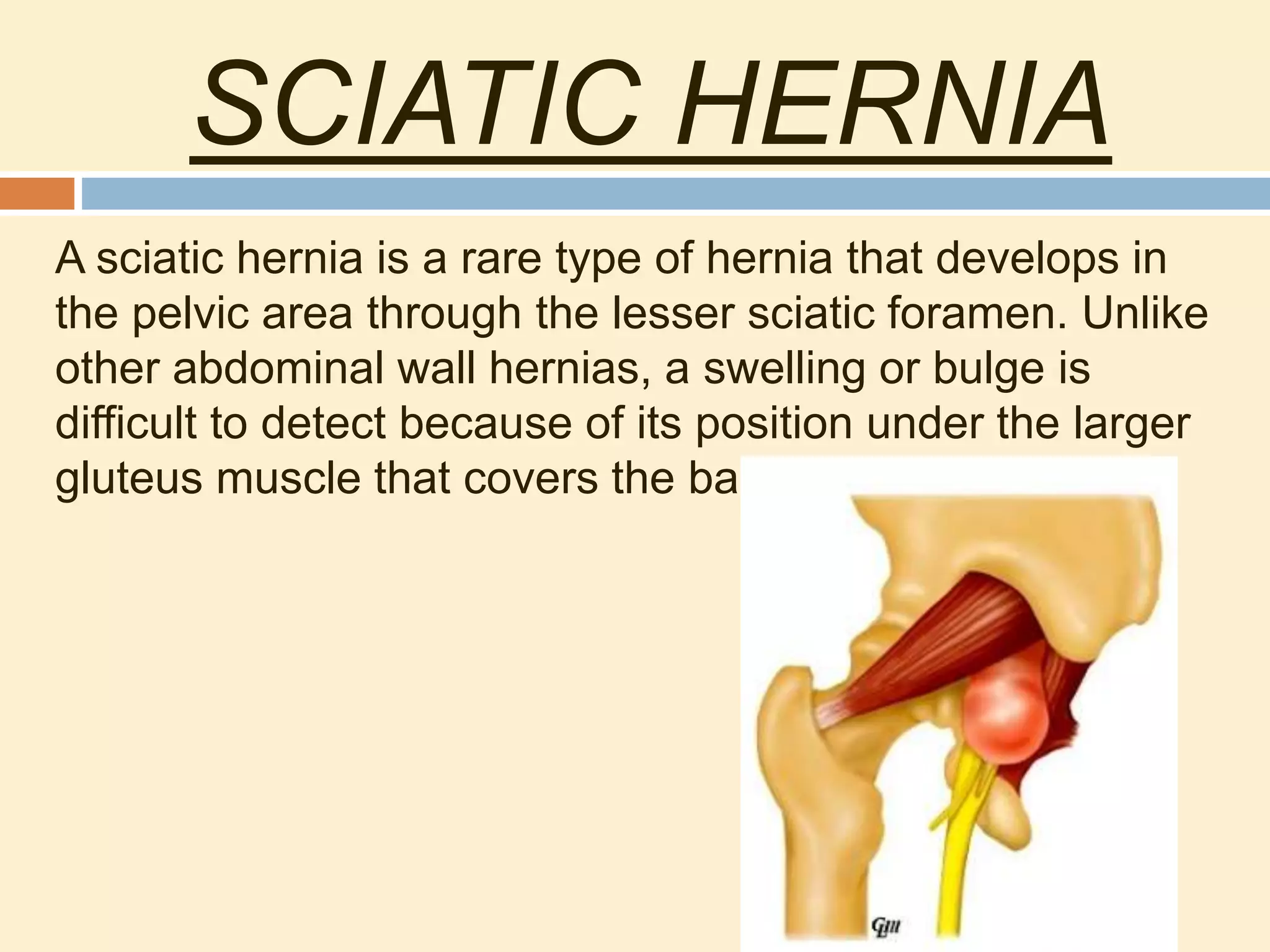
SCIATIC HERNIA
A sciatic hernia is a rare type of hernia that develops in
the pelvic area through the lesser sciatic foramen. Unlike
other abdominal wall hernias, a swelling or bulge is
difficult to detect because of its position under the larger
gluteus muscle that covers the back of the pelvis.
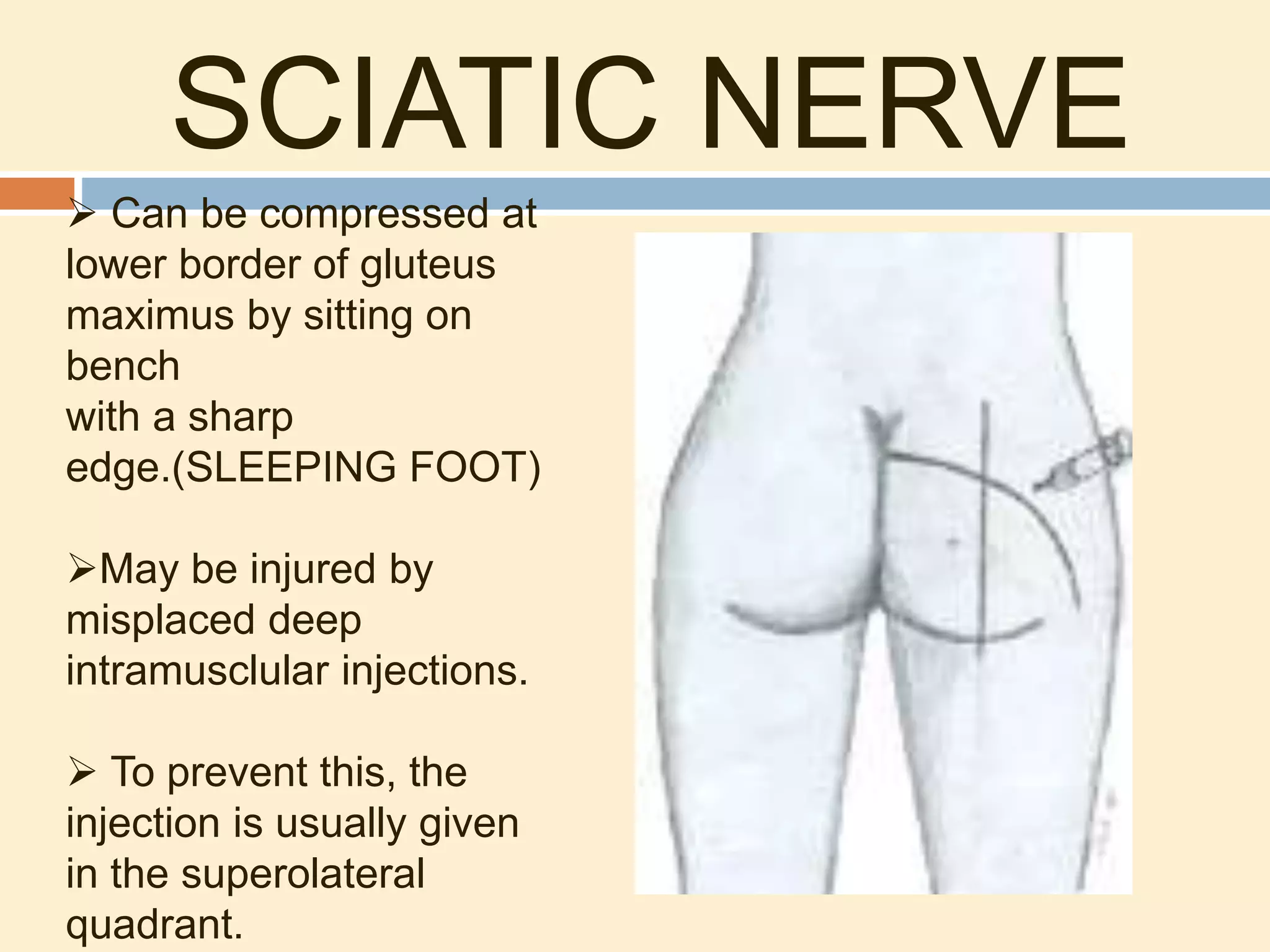
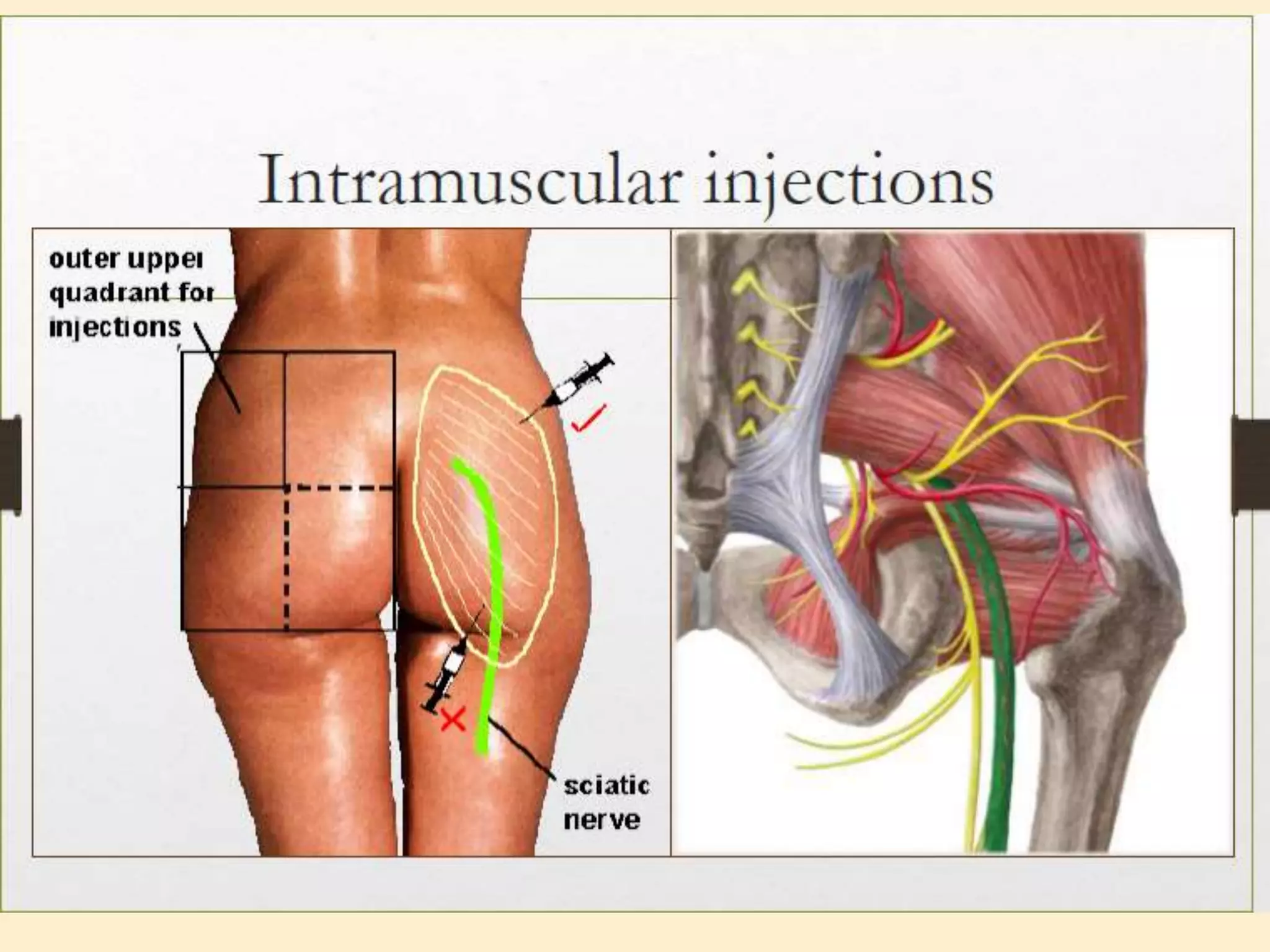
SCIATIC NERVE
 Can be compressed at
lower border of gluteus
maximus by sitting on
bench
with a sharp
edge.(SLEEPING FOOT)
May be injured by
misplaced deep
intramusclular injections.
 To prevent this, the
injection is usually given
in the superolateral
quadrant.
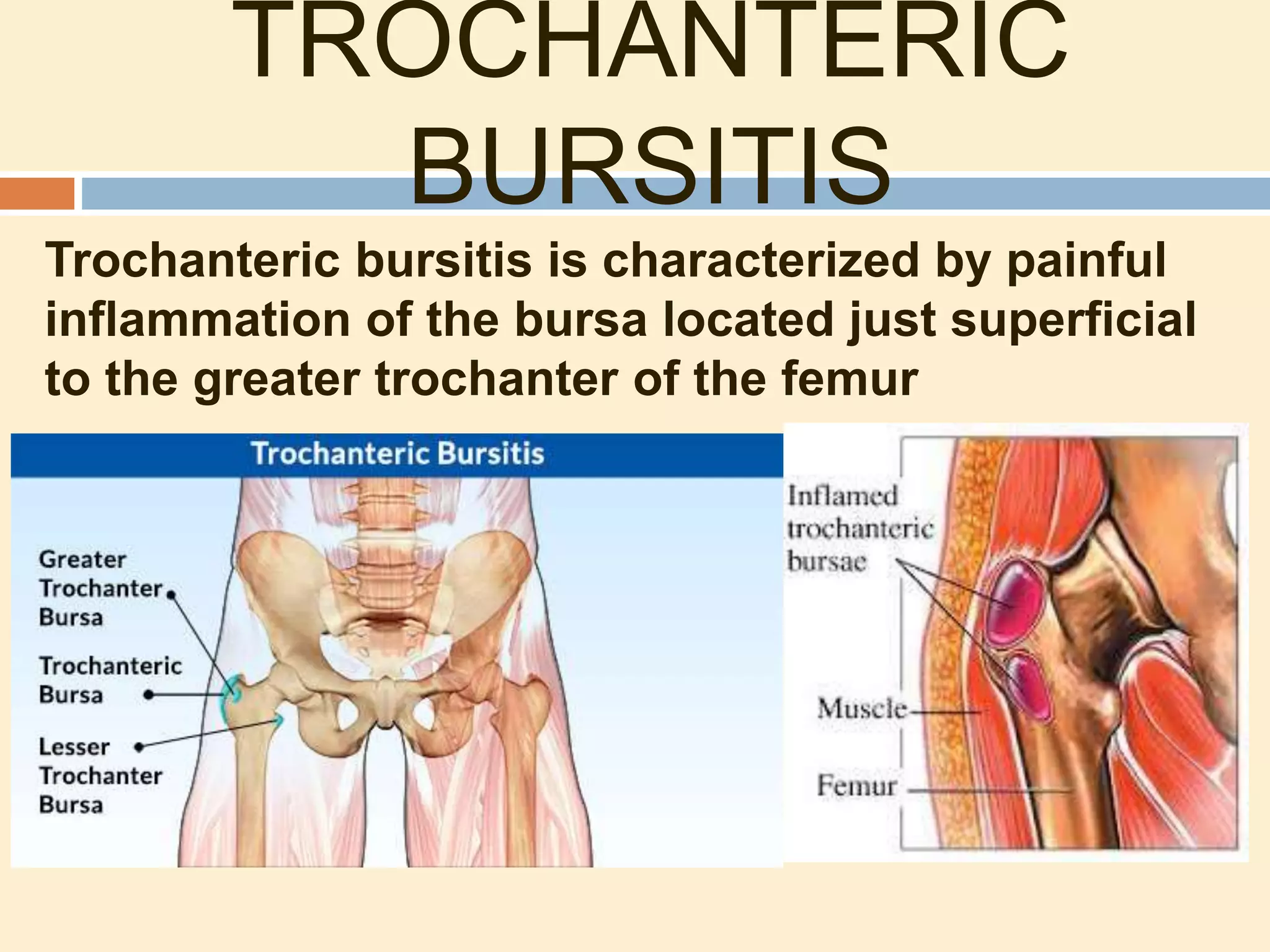
TROCHANTERIC
BURSITIS
Trochanteric bursitis is characterized by painful
inflammation of the bursa located just superficial
to the greater trochanter of the femur
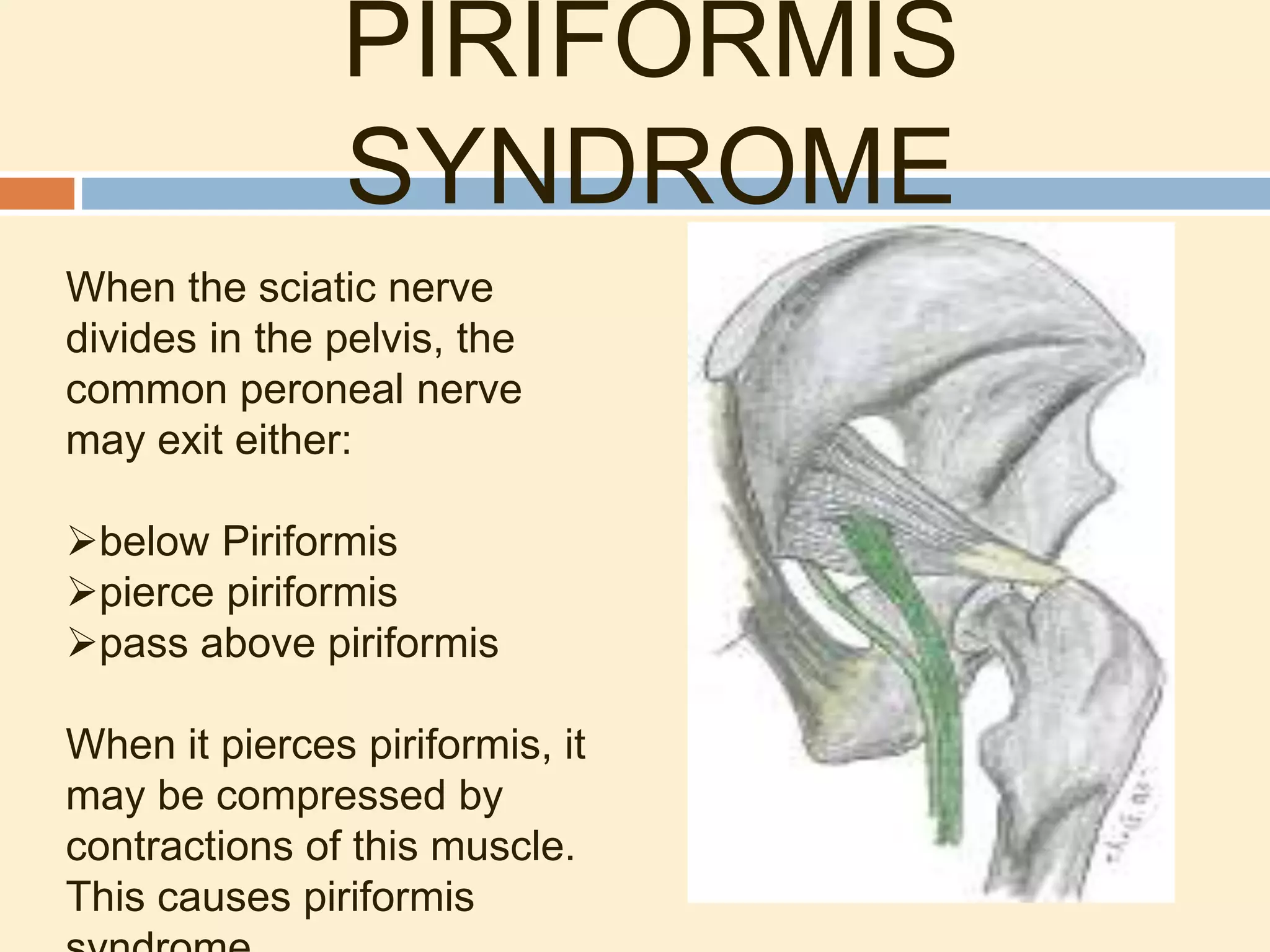
PIRIFORMIS
SYNDROME
When the sciatic nerve
divides in the pelvis, the
common peroneal nerve
may exit either:
below Piriformis
pierce piriformis
pass above piriformis
When it pierces piriformis, it
may be compressed by
contractions of this muscle.
This causes piriformis
REFERENCES
1.BD CHAURASIA
2.VISHRAM SINGH CLINICAL ANATOMY
3.CLASS NOTES
APPLIED AND BASIC INTRO OF GLUTEAL REGION

APPLIED AND BASIC INTRO OF GLUTEAL REGION

  • 4.
    GLUTEAL REGIONThe gluteal musclesare a group of 3 muscles which make up the buttocks: the Gluteus maximus, gluteus medius, and gluteus minimus. The 3 muscles originate from the ilium & sacrum and insert on the femur. Functions: 1. Extension 2. Abduction 3. External rotation GLUTEU S MAXIMU S GLUTEUS MEDIUS GLUTEU S MINIMUS
  • 5.
  • 7.
    CLINICAL ANATOMY CONTEN TS TO BE STUDIED  Trendlenberg'sgait  Sciatic Nerve  Sciatic Hernia  Trochanteric Bursitis  Piriformis Syndrome
  • 8.
    Trendelburg’s Sign Trendelenburg's signis found in people with weak or paralyzed abductor muscles of the hip, namely gluteus medius and gluteus minimus In A : Negative trendlenburg's test . The hip abductors are acting normally tilting the pelvis upwards when the opposite leg is raised from the ground In B : Positive Trendelenburg's test . The hip abductors are unable to
  • 9.
    TRENDELBURG’S GAIT The Trendelenburggait pattern (or gluteus medius lurch) is an abnormal gait (as with walking) caused by weakness of the abductor muscles of the lower limb, gluteus medius and gluteus minimus Have patient stand on one leg and assess if the pelvis drops (+) Trendelburg sign
  • 11.
    SCIATIC HERNIA A sciatichernia is a rare type of hernia that develops in the pelvic area through the lesser sciatic foramen. Unlike other abdominal wall hernias, a swelling or bulge is difficult to detect because of its position under the larger gluteus muscle that covers the back of the pelvis.
  • 12.
    SCIATIC NERVE  Canbe compressed at lower border of gluteus maximus by sitting on bench with a sharp edge.(SLEEPING FOOT) May be injured by misplaced deep intramusclular injections.  To prevent this, the injection is usually given in the superolateral quadrant.
  • 14.
    TROCHANTERIC BURSITIS Trochanteric bursitis ischaracterized by painful inflammation of the bursa located just superficial to the greater trochanter of the femur
  • 15.
    PIRIFORMIS SYNDROME When the sciaticnerve divides in the pelvis, the common peroneal nerve may exit either: below Piriformis pierce piriformis pass above piriformis When it pierces piriformis, it may be compressed by contractions of this muscle. This causes piriformis
  • 16.
    REFERENCES 1.BD CHAURASIA 2.VISHRAM SINGHCLINICAL ANATOMY 3.CLASS NOTES