THE BUBBLE CURSOR
Introduction to Human-Computer Interaction

Craig Kershaw & Francesco Bonadiman
THE CONTEXT


Paper by T. Grossman and R. Balakrishnan



CHI 2005 Best Paper Award Winner



Target acquisition technique



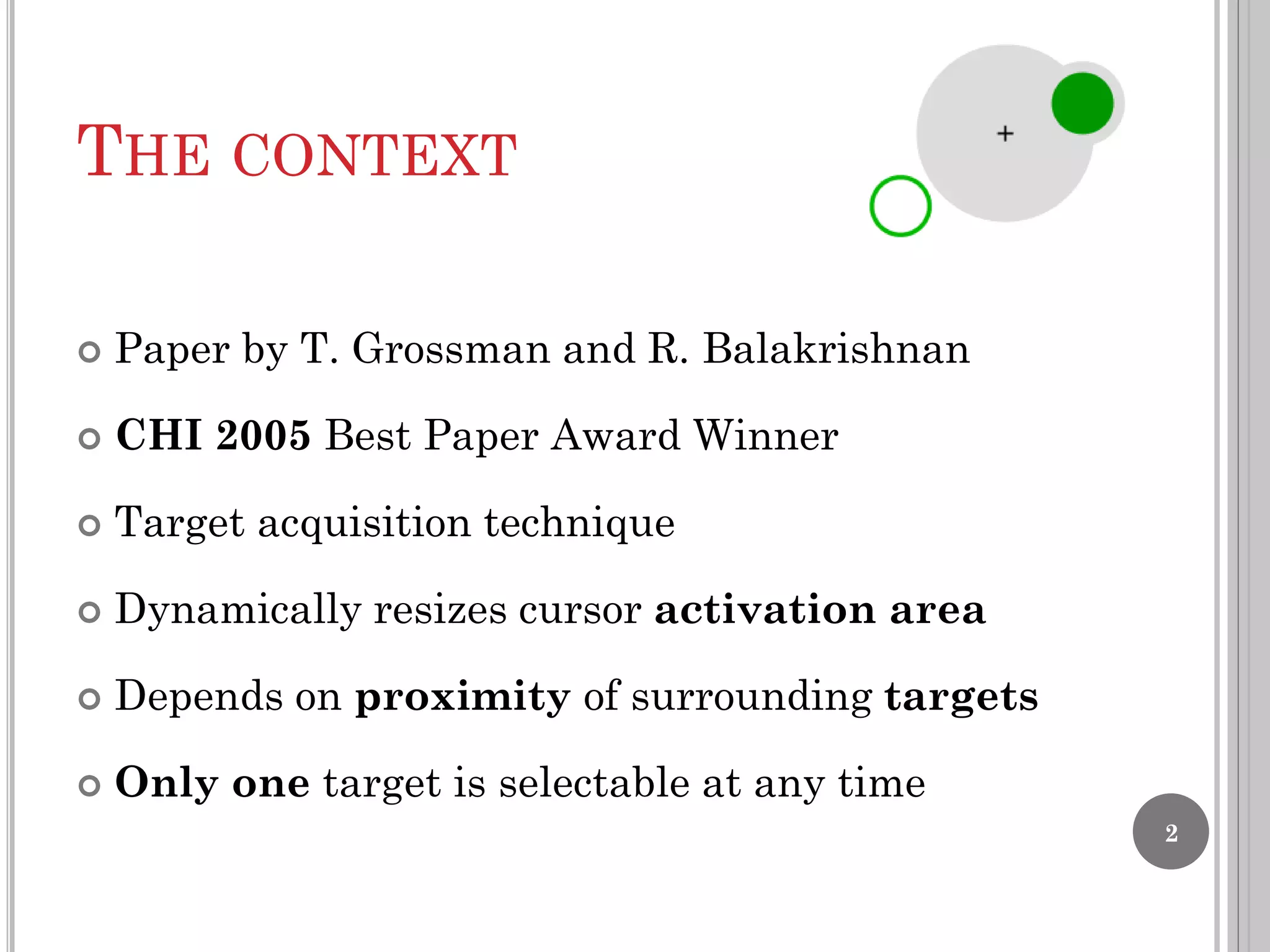
Dynamically resizes cursor activation area



Depends on proximity of surrounding targets



Only one target is selectable at any time
2
THE MOTIVATION


Improvements in pointing performance
 significant impact on usability



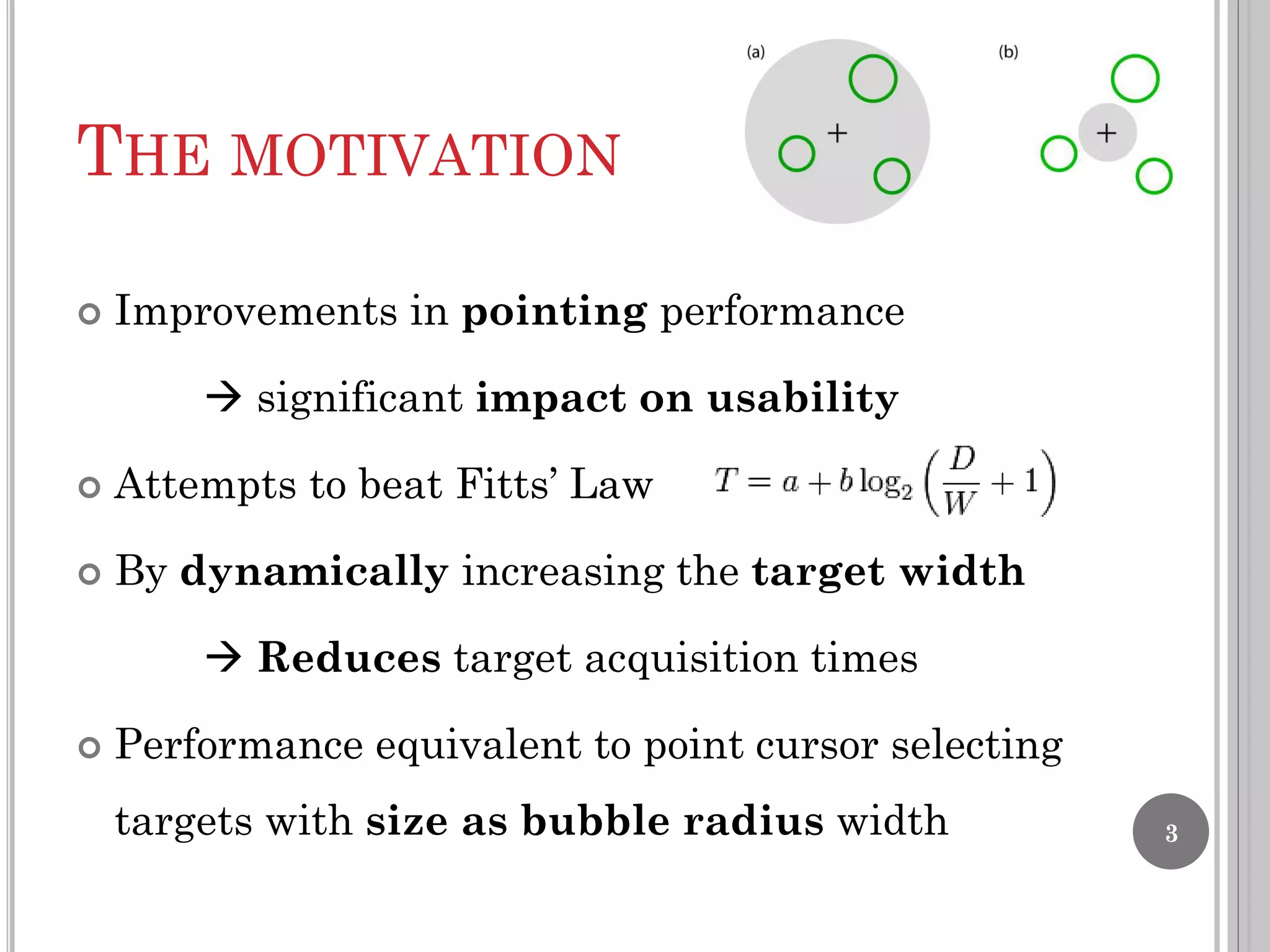
Attempts to beat Fitts’ Law



By dynamically increasing the target width
 Reduces target acquisition times



Performance equivalent to point cursor selecting
targets with size as bubble radius width

3
SQUARES VS. CIRCLES


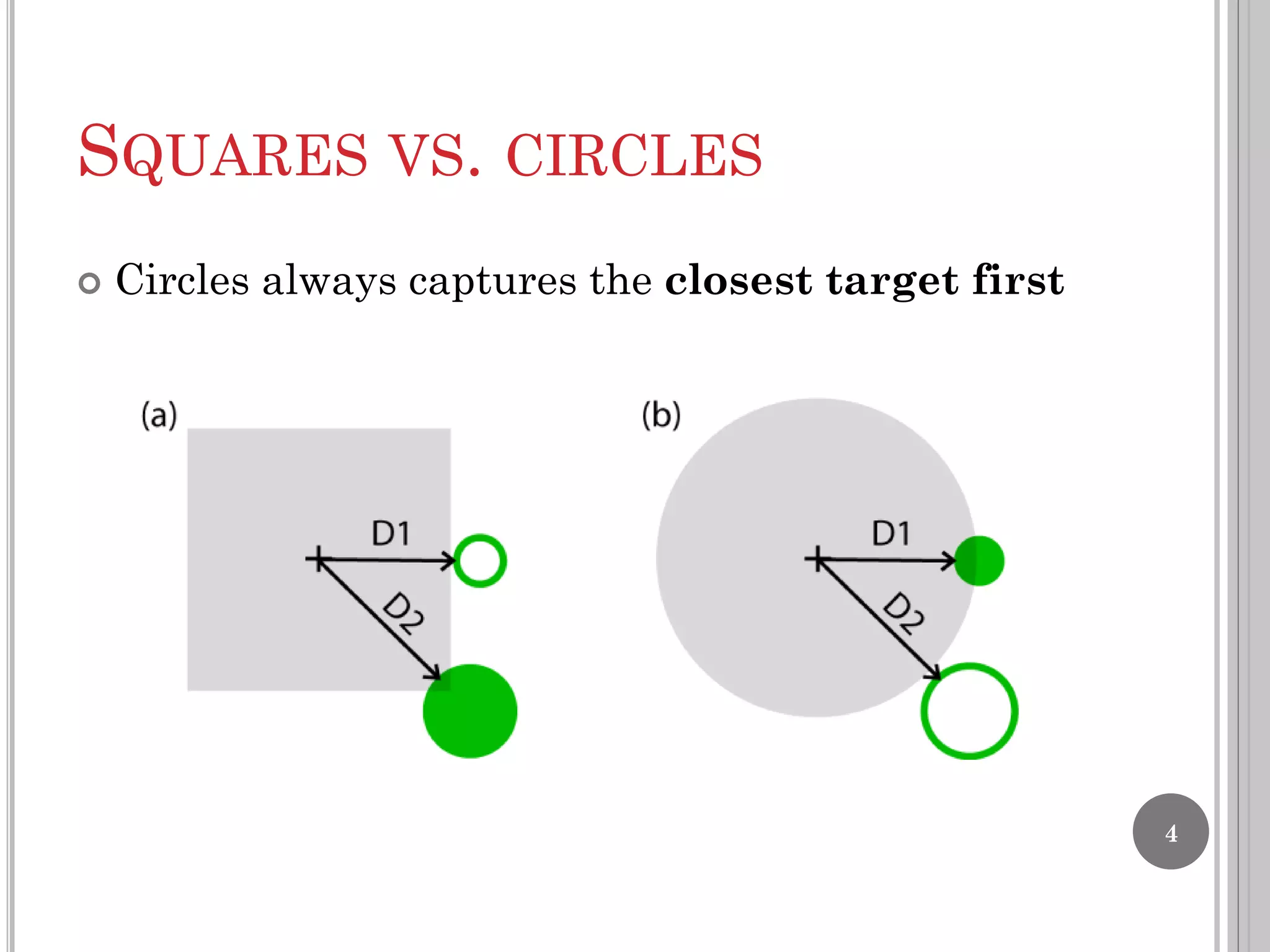
Circles always captures the closest target first

4
A SIMPLE ALGORITHM


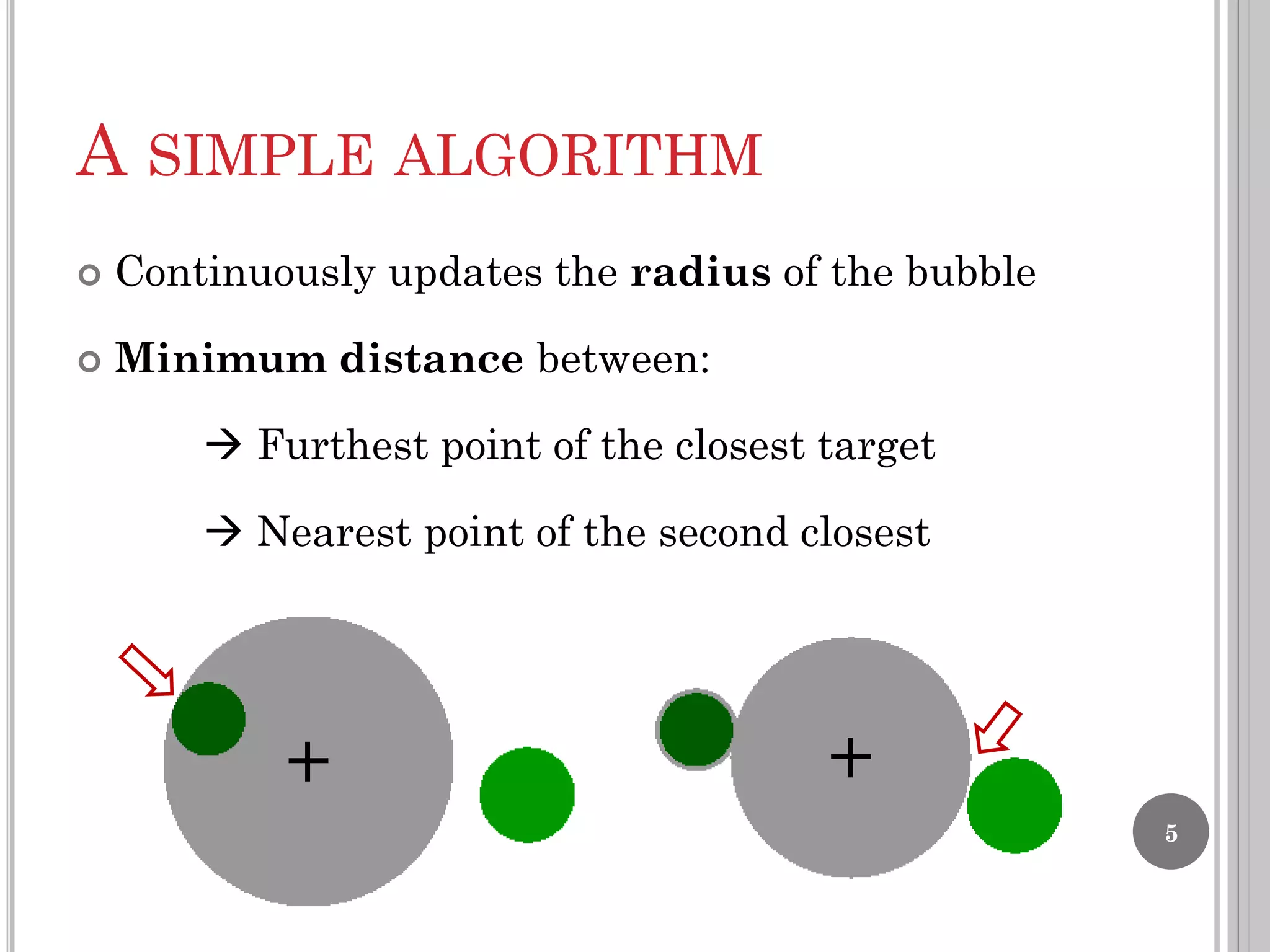
Continuously updates the radius of the bubble



Minimum distance between:
 Furthest point of the closest target
 Nearest point of the second closest

5
OUR IMPLEMENTATION


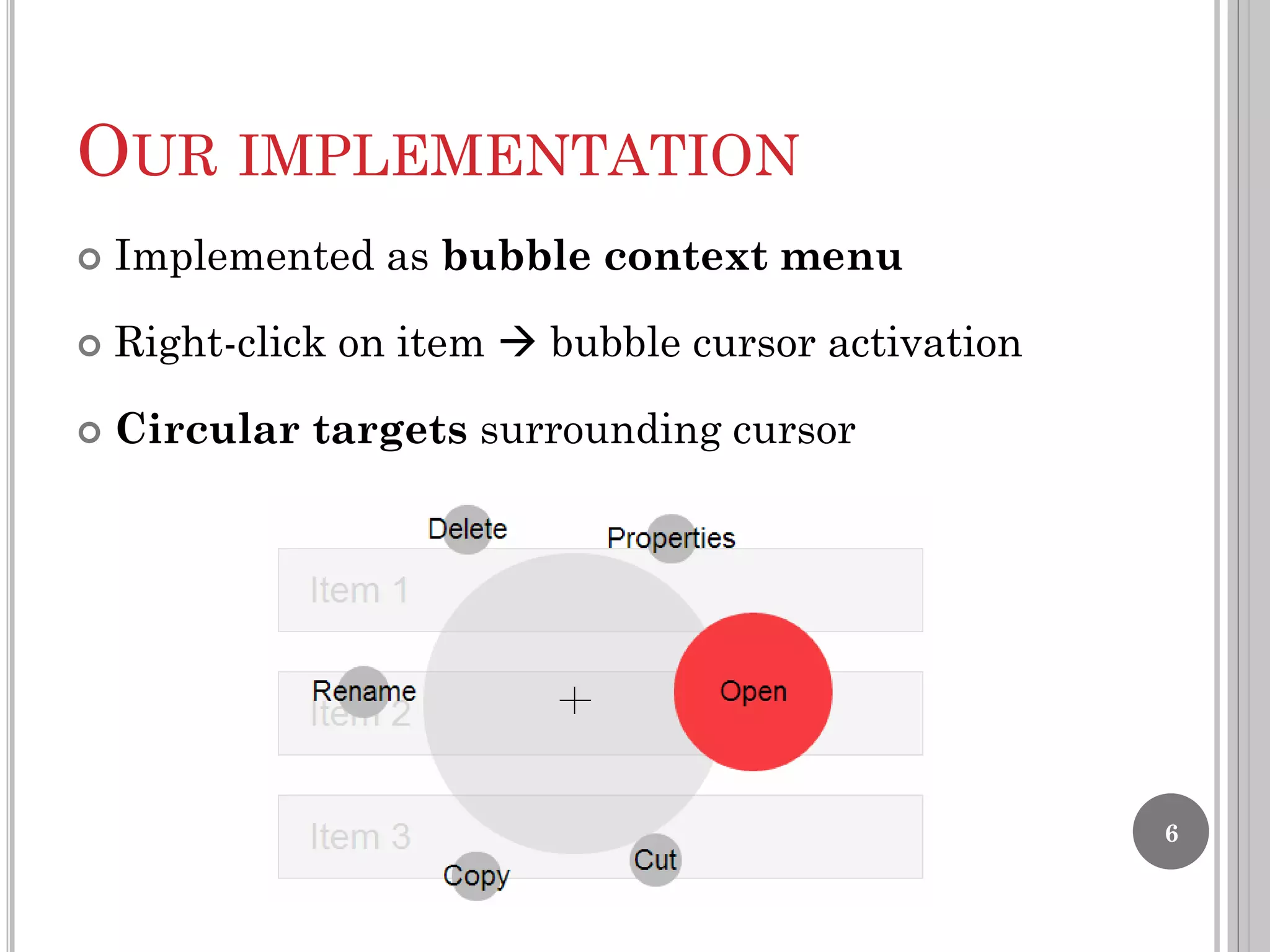
Implemented as bubble context menu



Right-click on item  bubble cursor activation



Circular targets surrounding cursor

6
OUR IMPLEMENTATION


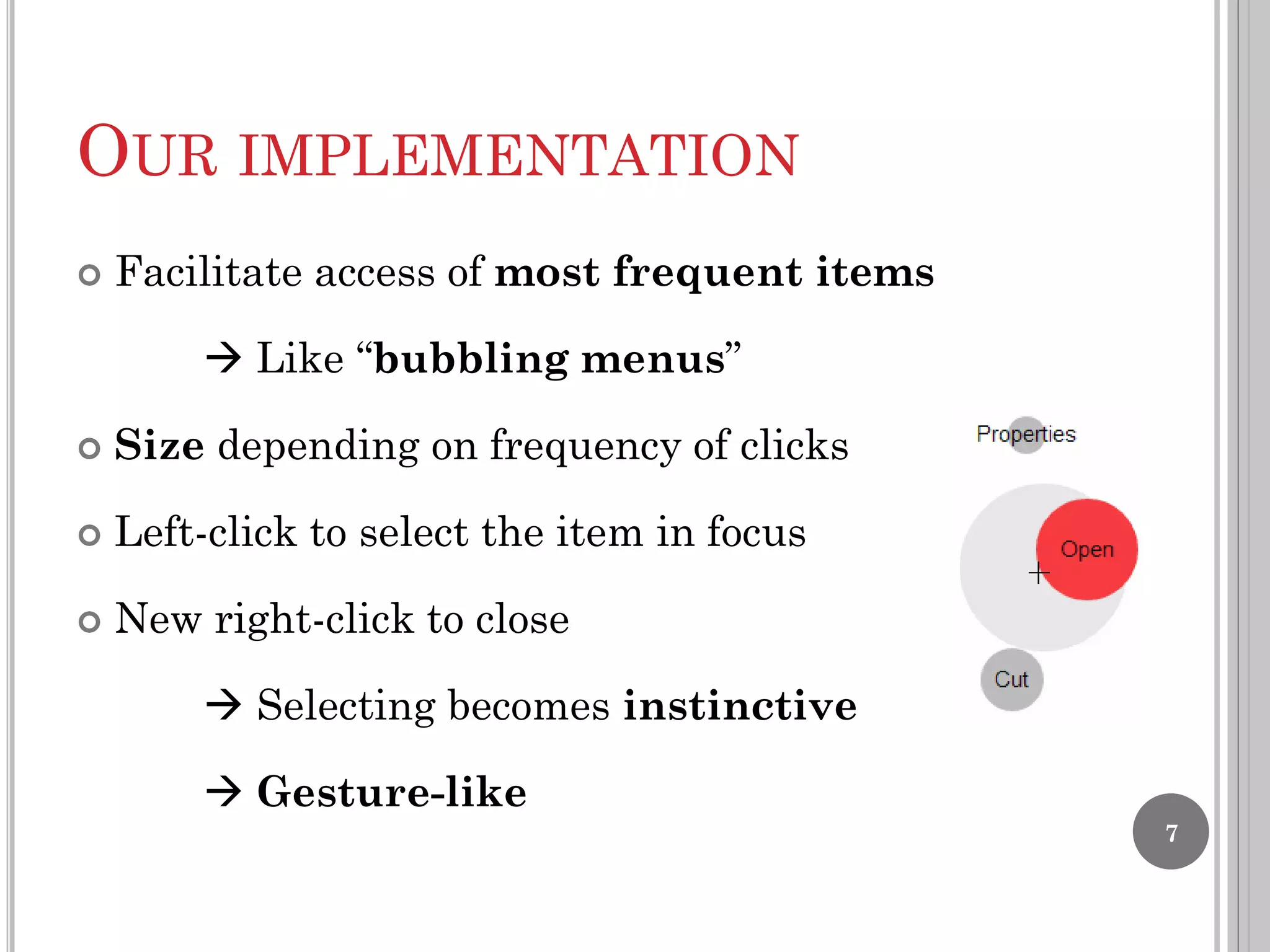
Facilitate access of most frequent items
 Like “bubbling menus”



Size depending on frequency of clicks



Left-click to select the item in focus



New right-click to close
 Selecting becomes instinctive

 Gesture-like
7
DEMO
8

Thank you!

The Bubble Cursor

  • 1.
    THE BUBBLE CURSOR Introductionto Human-Computer Interaction Craig Kershaw & Francesco Bonadiman
  • 2.
    THE CONTEXT  Paper byT. Grossman and R. Balakrishnan  CHI 2005 Best Paper Award Winner  Target acquisition technique  Dynamically resizes cursor activation area  Depends on proximity of surrounding targets  Only one target is selectable at any time 2
  • 3.
    THE MOTIVATION  Improvements inpointing performance  significant impact on usability  Attempts to beat Fitts’ Law  By dynamically increasing the target width  Reduces target acquisition times  Performance equivalent to point cursor selecting targets with size as bubble radius width 3
  • 4.
    SQUARES VS. CIRCLES  Circlesalways captures the closest target first 4
  • 5.
    A SIMPLE ALGORITHM  Continuouslyupdates the radius of the bubble  Minimum distance between:  Furthest point of the closest target  Nearest point of the second closest 5
  • 6.
    OUR IMPLEMENTATION  Implemented asbubble context menu  Right-click on item  bubble cursor activation  Circular targets surrounding cursor 6
  • 7.
    OUR IMPLEMENTATION  Facilitate accessof most frequent items  Like “bubbling menus”  Size depending on frequency of clicks  Left-click to select the item in focus  New right-click to close  Selecting becomes instinctive  Gesture-like 7
  • 8.