Application of Machine
Learning in Oil and Gas
Industry
Priyanka Raghavan
About me
 Team Lead at Schlumberger working on Prestack Seismic Interpretation product
 Did Coursera Machine Learning Course
 Little experience on Machine Learning before this challenge
 Participated in SEG “machine learning challenge” with another team member (Steve
Hall)
Agenda
 Background oil & gas Industry
 Problem statement
 Exploring Data
 Algorithms we tried
 What worked?
 What did the top team do?
 Future Work and Lessons Learnt
Background- Oil & Gas (Big Data)
 Big data in Oil and Gas Industry
 Well logging was discovered by Marcel and Conrad Schlumberger in 1927
 Nearly 100 years of oil field data
 Typical data size- Normal to see peta-byte data
 Many tools and techniques in Geoscientist toolbox for identifying Lithofacies
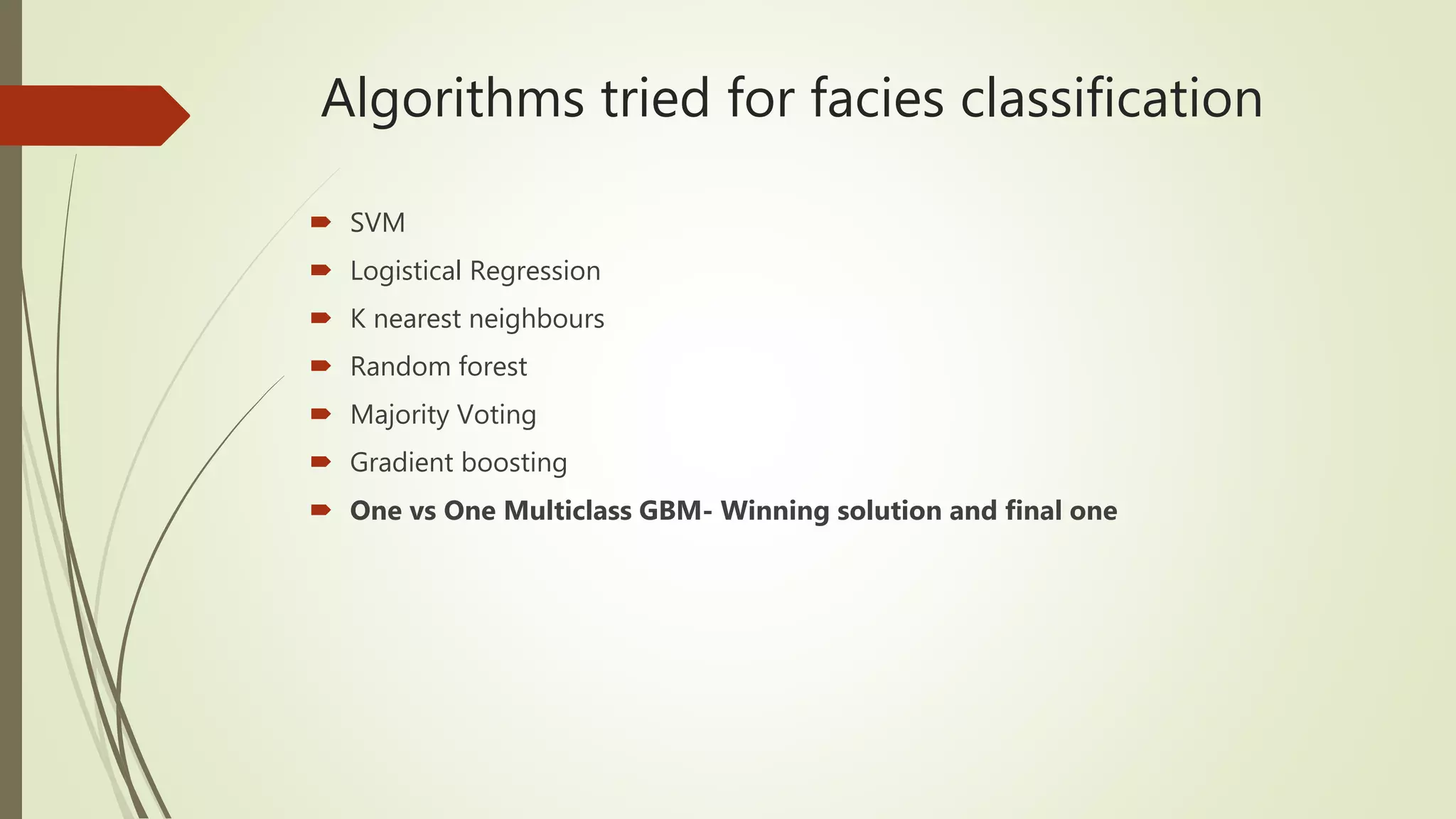
 Aim to find reservoir rock or target areas for hydrocarbon extraction
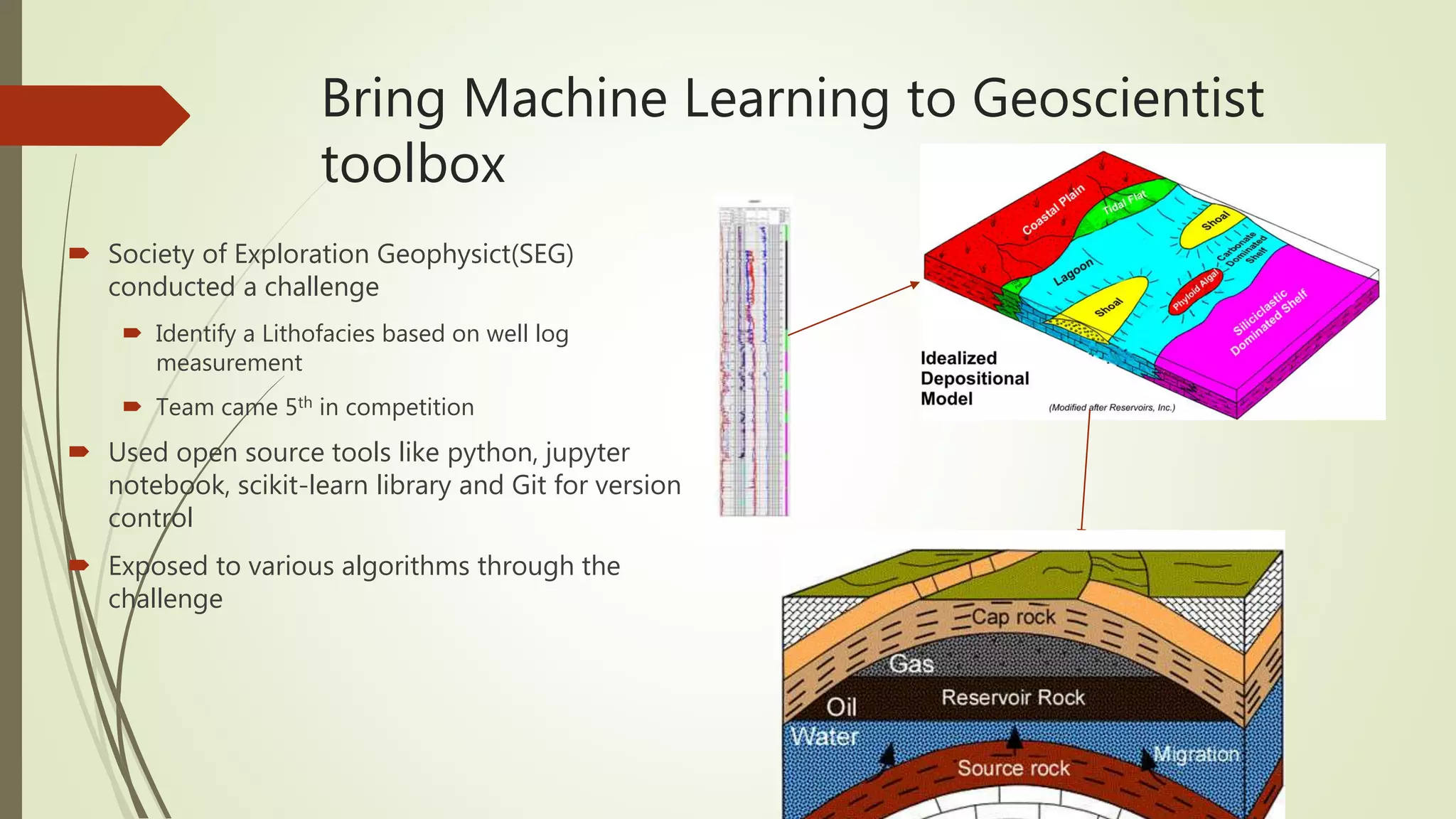
 What is Well logging?
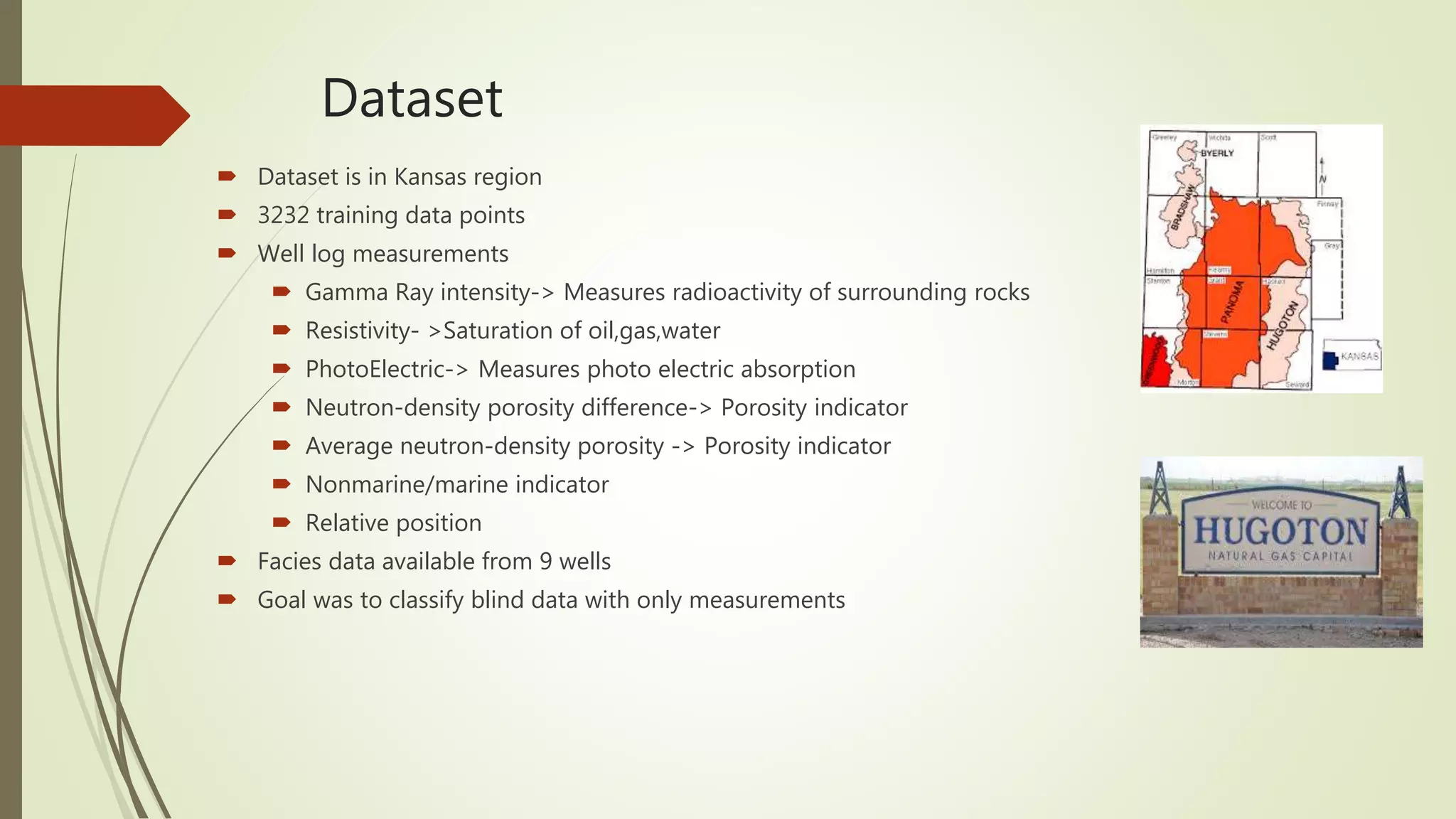
 What is Lithofacies and classification?
Bring Machine Learning to Geoscientist
toolbox
 Society of Exploration Geophysict(SEG)
conducted a challenge
 Identify a Lithofacies based on well log
measurement
 Team came 5th in competition
 Used open source tools like python, jupyter
notebook, scikit-learn library and Git for version
control
 Exposed to various algorithms through the
challenge
Dataset
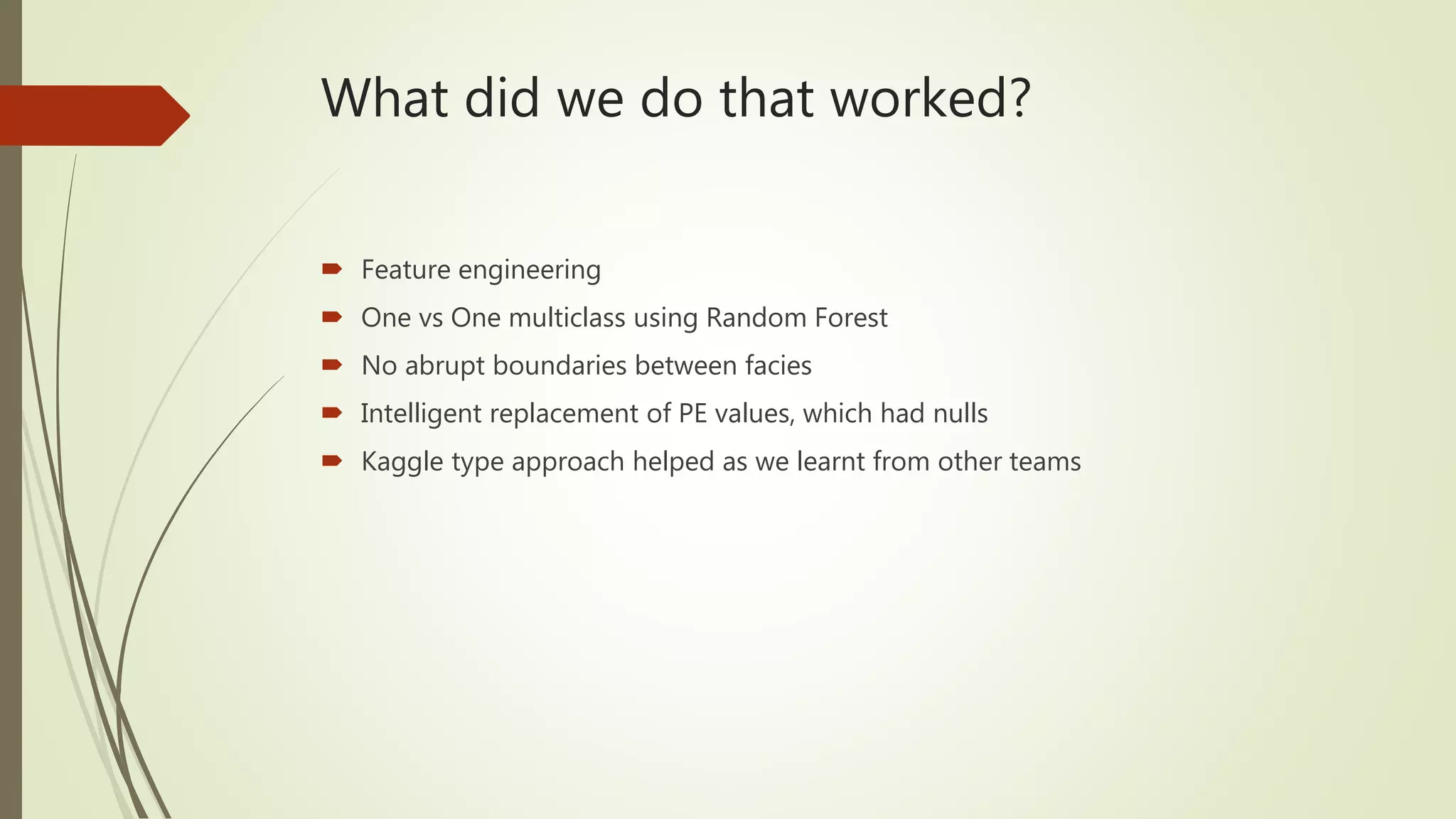
 Dataset is in Kansas region
 3232 training data points
 Well log measurements
 Gamma Ray intensity-> Measures radioactivity of surrounding rocks
 Resistivity- >Saturation of oil,gas,water
 PhotoElectric-> Measures photo electric absorption
 Neutron-density porosity difference-> Porosity indicator
 Average neutron-density porosity -> Porosity indicator
 Nonmarine/marine indicator
 Relative position
 Facies data available from 9 wells
 Goal was to classify blind data with only measurements
Algorithms tried for facies classification
 SVM
 Logistical Regression
 K nearest neighbours
 Random forest
 Majority Voting
 Gradient boosting
 One vs One Multiclass GBM- Winning solution and final one
What did we do that worked?
 Feature engineering
 One vs One multiclass using Random Forest
 No abrupt boundaries between facies
 Intelligent replacement of PE values, which had nulls
 Kaggle type approach helped as we learnt from other teams
What the Winning Team did & Lessons
Learnt
 Better Feature extraction
 Finding new features
 Model Tuning
 Using XGradientBoost
 Some key takeaways from our experience (to be elaborated)
 Machine Learning is a good strategy for facies prediction
Future work
 Get some more geological information by collaborating with experts
 Improving classifier by training on other datasets
 Concentrate on weighting by being more intelligent
 Rank results from algorithm and Geoscientist, like a Turing test?

Application of machine learning in oil and gas

  • 1.
    Application of Machine Learningin Oil and Gas Industry Priyanka Raghavan
  • 2.
    About me  TeamLead at Schlumberger working on Prestack Seismic Interpretation product  Did Coursera Machine Learning Course  Little experience on Machine Learning before this challenge  Participated in SEG “machine learning challenge” with another team member (Steve Hall)
  • 3.
    Agenda  Background oil& gas Industry  Problem statement  Exploring Data  Algorithms we tried  What worked?  What did the top team do?  Future Work and Lessons Learnt
  • 4.
    Background- Oil &Gas (Big Data)  Big data in Oil and Gas Industry  Well logging was discovered by Marcel and Conrad Schlumberger in 1927  Nearly 100 years of oil field data  Typical data size- Normal to see peta-byte data  Many tools and techniques in Geoscientist toolbox for identifying Lithofacies  Aim to find reservoir rock or target areas for hydrocarbon extraction  What is Well logging?  What is Lithofacies and classification?
  • 5.
    Bring Machine Learningto Geoscientist toolbox  Society of Exploration Geophysict(SEG) conducted a challenge  Identify a Lithofacies based on well log measurement  Team came 5th in competition  Used open source tools like python, jupyter notebook, scikit-learn library and Git for version control  Exposed to various algorithms through the challenge
  • 6.
    Dataset  Dataset isin Kansas region  3232 training data points  Well log measurements  Gamma Ray intensity-> Measures radioactivity of surrounding rocks  Resistivity- >Saturation of oil,gas,water  PhotoElectric-> Measures photo electric absorption  Neutron-density porosity difference-> Porosity indicator  Average neutron-density porosity -> Porosity indicator  Nonmarine/marine indicator  Relative position  Facies data available from 9 wells  Goal was to classify blind data with only measurements
  • 7.
    Algorithms tried forfacies classification  SVM  Logistical Regression  K nearest neighbours  Random forest  Majority Voting  Gradient boosting  One vs One Multiclass GBM- Winning solution and final one
  • 8.
    What did wedo that worked?  Feature engineering  One vs One multiclass using Random Forest  No abrupt boundaries between facies  Intelligent replacement of PE values, which had nulls  Kaggle type approach helped as we learnt from other teams
  • 9.
    What the WinningTeam did & Lessons Learnt  Better Feature extraction  Finding new features  Model Tuning  Using XGradientBoost  Some key takeaways from our experience (to be elaborated)  Machine Learning is a good strategy for facies prediction
  • 10.
    Future work  Getsome more geological information by collaborating with experts  Improving classifier by training on other datasets  Concentrate on weighting by being more intelligent  Rank results from algorithm and Geoscientist, like a Turing test?