
Apple Inc
Apple? What’s that?
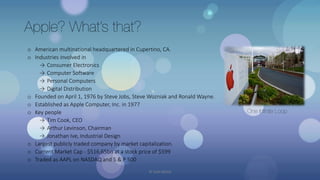
o American multinational headquartered in Cupertino, CA.
o Industries involved in
→ Consumer Electronics
→ Computer Software
→ Personal Computers
→ Digital Distribution
o Founded on April 1, 1976 by Steve Jobs, Steve Wozniak and Ronald Wayne.
o Established as Apple Computer, Inc. in 1977
o Key people
→ Tim Cook, CEO
→ Arthur Levinson, Chairman
→ Jonathan Ive, Industrial Design
o Largest publicly traded company by market capitalization.
o Current Market Cap - $516.65bn at a stock price of $599
o Traded as AAPL on NASDAQ and S & P 500
One Infinite Loop
© Yash Mittal
A Brief History in Time
o 1976 – 1980: Beginnings
o 1981 – 1985: Mac Success
o 1986 – 1992: Rise and Fall
o 1993 – 1996: Continued Failures
o 1997 – 2000: Return from Death
o 2001 – 2011: Jobs Reinvents Apple
o 2011 – now : Back on Top
© Yash Mittal
Beginnings
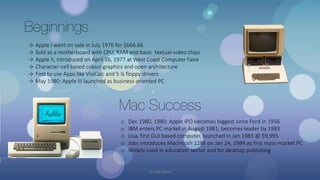
→ Apple I went on sale in July 1976 for $666.66
→ Sold as a motherboard with CPU, RAM and basic textual-video chips
→ Apple II, introduced on April 16, 1977 at West Coast Computer Faire
→ Character-cell based colour graphics and open architecture
→ First to use Apps like VisiCalc and 5 ¼ floppy drivers
→ May 1980: Apple III launched as business-oriented PC
Mac Success
o Dec 1980, 1980: Apple IPO becomes biggest since Ford in 1956
o IBM enters PC market in August 1981; becomes leader by 1983
o Lisa, first GUI based computer, launched in Jan 1983 @ $9,995
o Jobs introduces Macintosh 128K on Jan 24, 1984 as first mass-market PC
o Widely used in education sector and for desktop publishing
© Yash Mittal
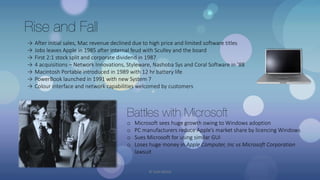
Rise and Fall
→ After initial sales, Mac revenue declined due to high price and limited software titles
→ Jobs leaves Apple in 1985 after internal feud with Sculley and the board
→ First 2:1 stock split and corporate dividend in 1987
→ 4 acquisitions – Network Innovations, Styleware, Nashoba Sys and Coral Software in ’88
→ Macintosh Portable introduced in 1989 with 12 hr battery life
→ PowerBook launched in 1991 with new System 7
→ Colour interface and network capabilities welcomed by customers
Battles with Microsoft
o Microsoft sees huge growth owing to Windows adoption
o PC manufacturers reduce Apple’s market share by licencing Windows
o Sues Microsoft for using similar GUI
o Loses huge money in Apple Computer, Inc vs Microsoft Corporation
lawsuit
© Yash Mittal
Continued Failures
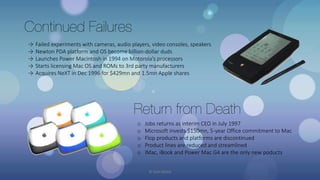
→ Failed experiments with cameras, audio players, video consoles, speakers
→ Newton PDA platform and OS become billion-dollar duds
→ Launches Power Macintosh in 1994 on Motorola’s processors
→ Starts licensing Mac OS and ROMs to 3rd party manufacturers
→ Acquires NeXT in Dec 1996 for $429mn and 1.5mn Apple shares
Return from Death
o Jobs returns as interim CEO in July 1997
o Microsoft invests $150mn, 5-year Office commitment to Mac
o Flop products and platforms are discontinued
o Product lines are reduced and streamlined
o iMac, iBook and Power Mac G4 are the only new poducts
© Yash Mittal
Jobs Reinvents Apple
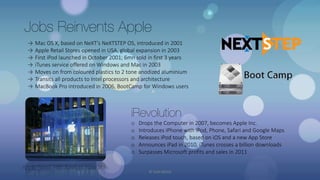
→ Mac OS X, based on NeXT’s NeXTSTEP OS, introduced in 2001
→ Apple Retail Stores opened in USA, global expansion in 2003
→ First iPod launched in October 2001; 6mn sold in first 3 years
→ iTunes service offered on Windows and Mac in 2003
→ Moves on from coloured plastics to 2 tone anodized aluminium
→ Transits all products to Intel processors and architecture
→ MacBook Pro introduced in 2006, BootCamp for Windows users
iRevolution
o Drops the Computer in 2007, becomes Apple Inc.
o Introduces iPhone with iPod, Phone, Safari and Google Maps
o Releases iPod touch, based on iOS and a new App Store
o Announces iPad in 2010, iTunes crosses a billion downloads
o Surpasses Microsoft profits and sales in 2011
Apple Store, Fifth Avenue, New York
© Yash Mittal
Back on Top
→ Introduces Siri, an intelligent software assistant and iCloud in 2011
→ Jobs passes away a day later on October 5, 2011
→ Unveils iPhone 5 and iPad mini in 2012, wins $1bn against Samsung
→ Announces iTunes Radio, iOS 7, OS X Mavericks & Mac Pro at WWDC ‘13
→ Releases iPhone 5S with 64-bit architecture and dual chips
→ Plans new India strategy after sales grow 400% in Q2
→ Launches iBeacon technology across stores in Dec 2013
Milestones
o 65 bn App Store downloads, 1 mn available apps
o 25 bn+ iTunes downloads, 15k per minute, >$10bn in sales
o 350 mn iPods, 421 mn iPhones, 200 mn iPads sold
o 424 Retail stores in 16 countries, 250 in the US
© Yash Mittal
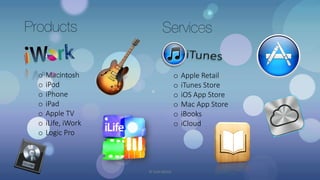
Products
o Macintosh
o iPod
o iPhone
o iPad
o Apple TV
o iLife, iWork
o Logic Pro
Services
o Apple Retail
o iTunes Store
o iOS App Store
o Mac App Store
o iBooks
o iCloud
© Yash Mittal
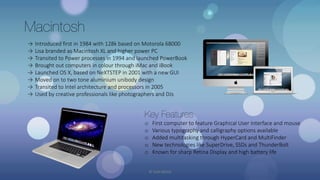
Macintosh
→ Introduced first in 1984 with 128k based on Motorola 68000
→ Lisa branded as Macintosh XL and higher power PC
→ Transited to Power processes in 1994 and launched PowerBook
→ Brought out computers in colour through iMac and iBook
→ Launched OS X, based on NeXTSTEP in 2001 with a new GUI
→ Moved on to two tone aluminium unibody design
→ Transited to Intel architecture and processors in 2005
→ Used by creative professionals like photographers and DJs
Key Features
o First computer to feature Graphical User Interface and mouse
o Various typography and calligraphy options available
o Added multitasking through HyperCard and MultiFinder
o New technologies like SuperDrive, SSDs and ThunderBolt
o Known for sharp Retina Display and high battery life
© Yash Mittal
Music
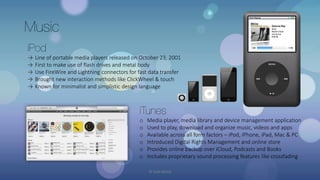
iPod
→ Line of portable media players released on October 23, 2001
→ First to make use of flash drives and metal body
→ Use FireWire and Lightning connectors for fast data transfer
→ Brought new interaction methods like ClickWheel & touch
→ Known for minimalist and simplistic design language
iTunes
o Media player, media library and device management application
o Used to play, download and organize music, videos and apps
o Available across all form factors – iPod, iPhone, iPad, Mac & PC
o Introduced Digital Rights Management and online store
o Provides online backup over iCloud, Podcasts and Books
o Includes proprietary sound processing features like crossfading
© Yash Mittal
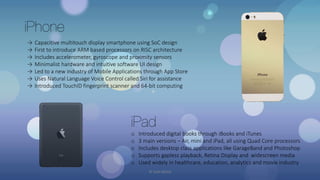
iPhone
→ Capacitive multitouch display smartphone using SoC design
→ First to introduce ARM based processors on RISC architecture
→ Includes accelerometer, gyroscope and proximity sensors
→ Minimalist hardware and intuitive software UI design
→ Led to a new industry of Mobile Applications through App Store
→ Uses Natural Language Voice Control called Siri for assistance
→ Introduced TouchID fingerprint scanner and 64-bit computing
iPad
o Introduced digital books through iBooks and iTunes
o 3 main versions – Air, mini and iPad, all using Quad Core processors
o Includes desktop class applications like GarageBand and Photoshop
o Supports gapless playback, Retina Display and widescreen media
o Used widely in healthcare, education, analytics and movie industry
© Yash Mittal
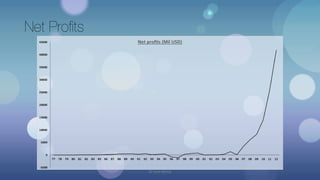
Net Profits
© Yash Mittal
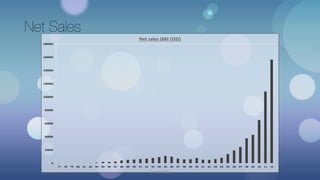
Net Sales
© Yash Mittal
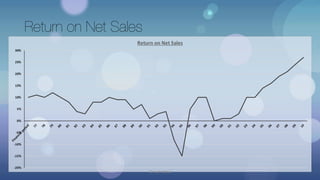
Return on Net Sales
© Yash Mittal
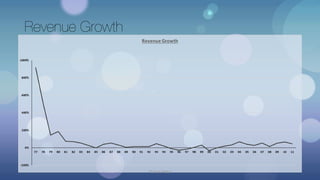
Revenue Growth
© Yash Mittal
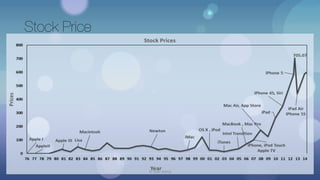
Stock Price
© Yash Mittal
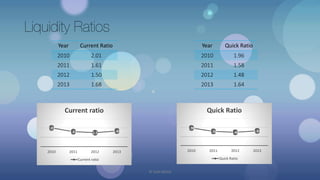
Liquidity Ratios
Year Current Ratio
2010 2.01
2011 1.61
2012 1.50
2013 1.68
2.01
1.61 1.5 1.68
2010 2011 2012 2013
Current ratio
Current ratio
Year Quick Ratio
2010 1.96
2011 1.58
2012 1.48
2013 1.64
1.96
1.58 1.48 1.64
2010 2011 2012 2013
Quick Ratio
Quick Ratio
© Yash Mittal
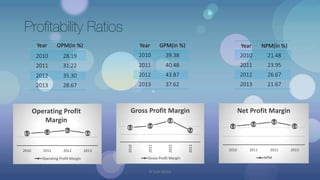
Profitability Ratios
Year OPM(in %)
2010 28.19
2011 31.22
2012 35.30
2013 28.67
28.19 31.22 35.3
28.67
2010 2011 2012 2013
Operating Profit
Margin
Operating Profit Margin
Year GPM(in %)
2010 39.38
2011 40.48
2012 43.87
2013 37.62
39.38 40.48
43.87
37.622010
2011
2012
2013
Gross Profit Margin
Gross Profit Margin
Year NPM(in %)
2010 21.48
2011 23.95
2012 26.67
2013 21.67
21.48
23.95
26.67
21.67
2010 2011 2012 2013
Net Profit Margin
NPM
© Yash Mittal
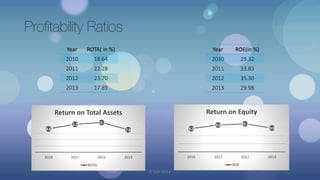
Profitability Ratios
Year ROTA( in %)
2010 18.64
2011 22.28
2012 23.70
2013 17.89
18.64
22.28 23.7
17.89
2010 2011 2012 2013
Return on Total Assets
ROTA
Year ROE(in %)
2010 29.32
2011 33.83
2012 35.30
2013 29.98
29.32
33.83 35.3
29.98
2010 2011 2012 2013
Return on Equity
ROE
© Yash Mittal
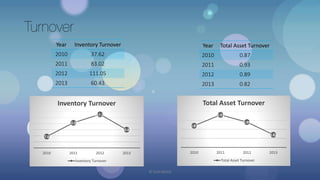
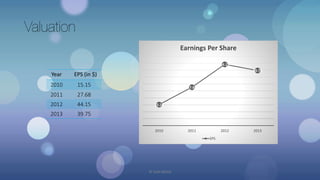
Turnover
Year Inventory Turnover
2010 37.62
2011 83.02
2012 111.05
2013 60.43
37.62
83.02
111.05
60.42
2010 2011 2012 2013
Inventory Turnover
Inventory Turnover
Year Total Asset Turnover
2010 0.87
2011 0.93
2012 0.89
2013 0.82
0.87
0.93
0.89
0.82
2010 2011 2012 2013
Total Asset Turnover
© Yash Mittal
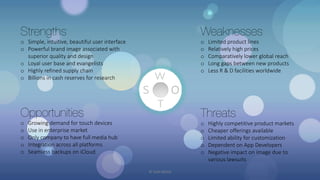
Valuation
Year EPS (in $)
2010 15.15
2011 27.68
2012 44.15
2013 39.75
15.15
27.68
44.15
39.75
2010 2011 2012 2013
Earnings Per Share
EPS
© Yash Mittal
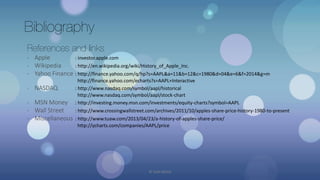
Strengths
o Simple, intuitive, beautiful user interface
o Powerful brand image associated with
superior quality and design
o Loyal user base and evangelists
o Highly refined supply chain
o Billions in cash reserves for research
Weaknesses
o Limited product lines
o Relatively high prices
o Comparatively lower global reach
o Long gaps between new products
o Less R & D facilities worldwide
Opportunities
o Growing demand for touch devices
o Use in enterprise market
o Only company to have full media hub
o Integration across all platforms
o Seamless backups on iCloud
Threats
o Highly competitive product markets
o Cheaper offerings available
o Limited ability for customization
o Dependent on App Developers
o Negative impact on image due to
various lawsuits
© Yash Mittal
Bibliography
References and links
- Apple : investor.apple.com
- Wikipedia : http://en.wikipedia.org/wiki/History_of_Apple_Inc.
- Yahoo Finance : http://finance.yahoo.com/q/hp?s=AAPL&a=11&b=12&c=1980&d=04&e=6&f=2014&g=m
http://finance.yahoo.com/echarts?s=AAPL+Interactive
- NASDAQ : http://www.nasdaq.com/symbol/aapl/historical
http://www.nasdaq.com/symbol/aapl/stock-chart
- MSN Money : http://investing.money.msn.com/investments/equity-charts?symbol=AAPL
- Wall Street : http://www.crossingwallstreet.com/archives/2011/10/apples-share-price-history-1980-to-present
- Miscellaneous : http://www.tuaw.com/2013/04/23/a-history-of-apples-share-price/
http://ycharts.com/companies/AAPL/price
© Yash Mittal
Thank You
© Yash Mittal

Apple Inc's Financial Analysis

  • 1.
  • 2.
    Apple? What’s that? oAmerican multinational headquartered in Cupertino, CA. o Industries involved in → Consumer Electronics → Computer Software → Personal Computers → Digital Distribution o Founded on April 1, 1976 by Steve Jobs, Steve Wozniak and Ronald Wayne. o Established as Apple Computer, Inc. in 1977 o Key people → Tim Cook, CEO → Arthur Levinson, Chairman → Jonathan Ive, Industrial Design o Largest publicly traded company by market capitalization. o Current Market Cap - $516.65bn at a stock price of $599 o Traded as AAPL on NASDAQ and S & P 500 One Infinite Loop © Yash Mittal
  • 3.
    A Brief Historyin Time o 1976 – 1980: Beginnings o 1981 – 1985: Mac Success o 1986 – 1992: Rise and Fall o 1993 – 1996: Continued Failures o 1997 – 2000: Return from Death o 2001 – 2011: Jobs Reinvents Apple o 2011 – now : Back on Top © Yash Mittal
  • 4.
    Beginnings → Apple Iwent on sale in July 1976 for $666.66 → Sold as a motherboard with CPU, RAM and basic textual-video chips → Apple II, introduced on April 16, 1977 at West Coast Computer Faire → Character-cell based colour graphics and open architecture → First to use Apps like VisiCalc and 5 ¼ floppy drivers → May 1980: Apple III launched as business-oriented PC Mac Success o Dec 1980, 1980: Apple IPO becomes biggest since Ford in 1956 o IBM enters PC market in August 1981; becomes leader by 1983 o Lisa, first GUI based computer, launched in Jan 1983 @ $9,995 o Jobs introduces Macintosh 128K on Jan 24, 1984 as first mass-market PC o Widely used in education sector and for desktop publishing © Yash Mittal
  • 5.
    Rise and Fall →After initial sales, Mac revenue declined due to high price and limited software titles → Jobs leaves Apple in 1985 after internal feud with Sculley and the board → First 2:1 stock split and corporate dividend in 1987 → 4 acquisitions – Network Innovations, Styleware, Nashoba Sys and Coral Software in ’88 → Macintosh Portable introduced in 1989 with 12 hr battery life → PowerBook launched in 1991 with new System 7 → Colour interface and network capabilities welcomed by customers Battles with Microsoft o Microsoft sees huge growth owing to Windows adoption o PC manufacturers reduce Apple’s market share by licencing Windows o Sues Microsoft for using similar GUI o Loses huge money in Apple Computer, Inc vs Microsoft Corporation lawsuit © Yash Mittal
  • 6.
    Continued Failures → Failedexperiments with cameras, audio players, video consoles, speakers → Newton PDA platform and OS become billion-dollar duds → Launches Power Macintosh in 1994 on Motorola’s processors → Starts licensing Mac OS and ROMs to 3rd party manufacturers → Acquires NeXT in Dec 1996 for $429mn and 1.5mn Apple shares Return from Death o Jobs returns as interim CEO in July 1997 o Microsoft invests $150mn, 5-year Office commitment to Mac o Flop products and platforms are discontinued o Product lines are reduced and streamlined o iMac, iBook and Power Mac G4 are the only new poducts © Yash Mittal
  • 7.
    Jobs Reinvents Apple →Mac OS X, based on NeXT’s NeXTSTEP OS, introduced in 2001 → Apple Retail Stores opened in USA, global expansion in 2003 → First iPod launched in October 2001; 6mn sold in first 3 years → iTunes service offered on Windows and Mac in 2003 → Moves on from coloured plastics to 2 tone anodized aluminium → Transits all products to Intel processors and architecture → MacBook Pro introduced in 2006, BootCamp for Windows users iRevolution o Drops the Computer in 2007, becomes Apple Inc. o Introduces iPhone with iPod, Phone, Safari and Google Maps o Releases iPod touch, based on iOS and a new App Store o Announces iPad in 2010, iTunes crosses a billion downloads o Surpasses Microsoft profits and sales in 2011 Apple Store, Fifth Avenue, New York © Yash Mittal
  • 8.
    Back on Top →Introduces Siri, an intelligent software assistant and iCloud in 2011 → Jobs passes away a day later on October 5, 2011 → Unveils iPhone 5 and iPad mini in 2012, wins $1bn against Samsung → Announces iTunes Radio, iOS 7, OS X Mavericks & Mac Pro at WWDC ‘13 → Releases iPhone 5S with 64-bit architecture and dual chips → Plans new India strategy after sales grow 400% in Q2 → Launches iBeacon technology across stores in Dec 2013 Milestones o 65 bn App Store downloads, 1 mn available apps o 25 bn+ iTunes downloads, 15k per minute, >$10bn in sales o 350 mn iPods, 421 mn iPhones, 200 mn iPads sold o 424 Retail stores in 16 countries, 250 in the US © Yash Mittal
  • 9.
    Products o Macintosh o iPod oiPhone o iPad o Apple TV o iLife, iWork o Logic Pro Services o Apple Retail o iTunes Store o iOS App Store o Mac App Store o iBooks o iCloud © Yash Mittal
  • 10.
    Macintosh → Introduced firstin 1984 with 128k based on Motorola 68000 → Lisa branded as Macintosh XL and higher power PC → Transited to Power processes in 1994 and launched PowerBook → Brought out computers in colour through iMac and iBook → Launched OS X, based on NeXTSTEP in 2001 with a new GUI → Moved on to two tone aluminium unibody design → Transited to Intel architecture and processors in 2005 → Used by creative professionals like photographers and DJs Key Features o First computer to feature Graphical User Interface and mouse o Various typography and calligraphy options available o Added multitasking through HyperCard and MultiFinder o New technologies like SuperDrive, SSDs and ThunderBolt o Known for sharp Retina Display and high battery life © Yash Mittal
  • 11.
    Music iPod → Line ofportable media players released on October 23, 2001 → First to make use of flash drives and metal body → Use FireWire and Lightning connectors for fast data transfer → Brought new interaction methods like ClickWheel & touch → Known for minimalist and simplistic design language iTunes o Media player, media library and device management application o Used to play, download and organize music, videos and apps o Available across all form factors – iPod, iPhone, iPad, Mac & PC o Introduced Digital Rights Management and online store o Provides online backup over iCloud, Podcasts and Books o Includes proprietary sound processing features like crossfading © Yash Mittal
  • 12.
    iPhone → Capacitive multitouchdisplay smartphone using SoC design → First to introduce ARM based processors on RISC architecture → Includes accelerometer, gyroscope and proximity sensors → Minimalist hardware and intuitive software UI design → Led to a new industry of Mobile Applications through App Store → Uses Natural Language Voice Control called Siri for assistance → Introduced TouchID fingerprint scanner and 64-bit computing iPad o Introduced digital books through iBooks and iTunes o 3 main versions – Air, mini and iPad, all using Quad Core processors o Includes desktop class applications like GarageBand and Photoshop o Supports gapless playback, Retina Display and widescreen media o Used widely in healthcare, education, analytics and movie industry © Yash Mittal
  • 13.
  • 14.
  • 15.
    Return on NetSales © Yash Mittal
  • 16.
  • 17.
  • 18.
    Liquidity Ratios Year CurrentRatio 2010 2.01 2011 1.61 2012 1.50 2013 1.68 2.01 1.61 1.5 1.68 2010 2011 2012 2013 Current ratio Current ratio Year Quick Ratio 2010 1.96 2011 1.58 2012 1.48 2013 1.64 1.96 1.58 1.48 1.64 2010 2011 2012 2013 Quick Ratio Quick Ratio © Yash Mittal
  • 19.
    Profitability Ratios Year OPM(in%) 2010 28.19 2011 31.22 2012 35.30 2013 28.67 28.19 31.22 35.3 28.67 2010 2011 2012 2013 Operating Profit Margin Operating Profit Margin Year GPM(in %) 2010 39.38 2011 40.48 2012 43.87 2013 37.62 39.38 40.48 43.87 37.622010 2011 2012 2013 Gross Profit Margin Gross Profit Margin Year NPM(in %) 2010 21.48 2011 23.95 2012 26.67 2013 21.67 21.48 23.95 26.67 21.67 2010 2011 2012 2013 Net Profit Margin NPM © Yash Mittal
  • 20.
    Profitability Ratios Year ROTA(in %) 2010 18.64 2011 22.28 2012 23.70 2013 17.89 18.64 22.28 23.7 17.89 2010 2011 2012 2013 Return on Total Assets ROTA Year ROE(in %) 2010 29.32 2011 33.83 2012 35.30 2013 29.98 29.32 33.83 35.3 29.98 2010 2011 2012 2013 Return on Equity ROE © Yash Mittal
  • 21.
    Turnover Year Inventory Turnover 201037.62 2011 83.02 2012 111.05 2013 60.43 37.62 83.02 111.05 60.42 2010 2011 2012 2013 Inventory Turnover Inventory Turnover Year Total Asset Turnover 2010 0.87 2011 0.93 2012 0.89 2013 0.82 0.87 0.93 0.89 0.82 2010 2011 2012 2013 Total Asset Turnover Total Asset Turnover © Yash Mittal
  • 22.
    Valuation Year EPS (in$) 2010 15.15 2011 27.68 2012 44.15 2013 39.75 15.15 27.68 44.15 39.75 2010 2011 2012 2013 Earnings Per Share EPS © Yash Mittal
  • 23.
    Strengths o Simple, intuitive,beautiful user interface o Powerful brand image associated with superior quality and design o Loyal user base and evangelists o Highly refined supply chain o Billions in cash reserves for research Weaknesses o Limited product lines o Relatively high prices o Comparatively lower global reach o Long gaps between new products o Less R & D facilities worldwide Opportunities o Growing demand for touch devices o Use in enterprise market o Only company to have full media hub o Integration across all platforms o Seamless backups on iCloud Threats o Highly competitive product markets o Cheaper offerings available o Limited ability for customization o Dependent on App Developers o Negative impact on image due to various lawsuits © Yash Mittal
  • 24.
    Bibliography References and links -Apple : investor.apple.com - Wikipedia : http://en.wikipedia.org/wiki/History_of_Apple_Inc. - Yahoo Finance : http://finance.yahoo.com/q/hp?s=AAPL&a=11&b=12&c=1980&d=04&e=6&f=2014&g=m http://finance.yahoo.com/echarts?s=AAPL+Interactive - NASDAQ : http://www.nasdaq.com/symbol/aapl/historical http://www.nasdaq.com/symbol/aapl/stock-chart - MSN Money : http://investing.money.msn.com/investments/equity-charts?symbol=AAPL - Wall Street : http://www.crossingwallstreet.com/archives/2011/10/apples-share-price-history-1980-to-present - Miscellaneous : http://www.tuaw.com/2013/04/23/a-history-of-apples-share-price/ http://ycharts.com/companies/AAPL/price © Yash Mittal
  • 25.