A P P E N D I X   C


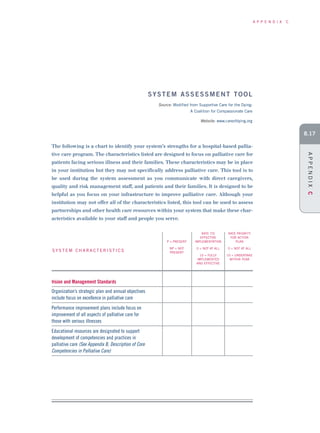
                                                       SYSTEM ASSESSMENT TOOL
                                                         Source: Modified from Supportive Care for the Dying:
                                                                           A Coalition for Compassionate Care

                                                                                Website: www.careofdying.org


                                                                                                                                      8.17

The following is a chart to identify your system’s strengths for a hospital-based pallia-


                                                                                                                                       APPENDIX C
tive care program. The characteristics listed are designed to focus on palliative care for
patients facing serious illness and their families. These characteristics may be in place
in your institution but they may not specifically address palliative care. This tool is to
be used during the system assessment as you communicate with direct caregivers,
quality and risk management staff, and patients and their families. It is designed to be
helpful as you focus on your infrastructure to improve palliative care. Although your
institution may not offer all of the characteristics listed, this tool can be used to assess
partnerships and other health care resources within your system that make these char-
acteristics available to your staff and people you serve.

                                                                                 RATE ITS      RATE PRIORITY
                                                                                EFFECTIVE       FOR ACTION
                                                             P = PRESENT     IMPLEMENTATION        PLAN

                                                               NP = NOT       0 = NOT AT ALL   0 = NOT AT ALL
SYSTEM CHARACTERISTICS                                         PRESENT
                                                                                10 = FULLY     10 = UNDERTAKE
                                                                              IMPLEMENTED        WITHIN YEAR
                                                                              AND EFFECTIVE


Vision and Management Standards

Organization’s strategic plan and annual objectives
include focus on excellence in palliative care
Performance improvement plans include focus on
improvement of all aspects of palliative care for
those with serious illnesses
Educational resources are designated to support
development of competencies and practices in
palliative care (See Appendix B, Description of Core
Competencies in Palliative Care)
A P P E N D I X   C


                                                                                                                    RATE ITS     RATE PRIORITY
                                                                                                                   EFFECTIVE      FOR ACTION
                                                                                                  P = PRESENT   IMPLEMENTATION       PLAN

                                                                                                   NP = NOT     0 = NOT AT ALL   0 = NOT AT ALL
                                    SYSTEM CHARACTERISTICS                                         PRESENT
                                                                                                                  10 = FULLY     10 = UNDERTAKE
                                                                                                                IMPLEMENTED        WITHIN YEAR
                                                                                                                AND EFFECTIVE


                                    Practice Standards (Procedures, Policies, Care Protocol)
                                    Holistic comfort care or palliative care standard(s) are
                                    implemented. Standards specify population to be served
8.18
                                    Interdisciplinary palliative care consult services
                                    are available
                                    Advance care planning supports are available
 APPENDIX C


                                    Cultural/religious guidelines are integrated
                                    Organ/tissue donation guidelines are implemented
                                    Complementary or integrative therapies are supported
                                    Space and Visiting Standards
                                    Patient room is comfortable, home-like, and supports
                                    family visiting and confidentiality
                                    24 hour visiting for close friends/family as defined
                                    by ill person/family. No age limits to visitors and pets
                                    accommodated
                                    Family participate in care as desired
                                    Family space is home-like and is supportive of families
                                    and their ADL needs
                                    Spiritual, Religious, and Cultural Standards
                                    Support is available 24 hours a day for patient, family,
                                    and professional caregivers
                                    Links/communication are established with spiritual
                                    care providers
                                    Bereavement Support Standards
                                    Active follow-up available for 100% of bereaved families
                                    whose loved ones have died within your facility or practice
                                    environment 2-4 weeks following death
                                    Bereavement support groups and 1:1 support available
                                    and offered for families and professionals
A P P E N D I X   C


                                                                                    RATE ITS     RATE PRIORITY
                                                                                   EFFECTIVE      FOR ACTION
                                                                  P = PRESENT   IMPLEMENTATION       PLAN

                                                                   NP = NOT     0 = NOT AT ALL   0 = NOT AT ALL
SYSTEM CHARACTERISTICS                                             PRESENT
                                                                                  10 = FULLY     10 = UNDERTAKE
                                                                                IMPLEMENTED        WITHIN YEAR
                                                                                AND EFFECTIVE


Psychosocial and Emotional Standards
Referral and individual support is available 24 hours
for patients/families and professional caregivers
                                                                                                                                        8.19
Support groups for patient/families are available
regardless of diagnosis(es)
Waiting time to join a support group is less than 2 weeks


                                                                                                                                         APPENDIX C
Patients/families are given information about
support groups
Communication Standards
Patient care preferences; values; spiritual, emotional,
and relationship needs; and treatment decisions are
consistently and accurately communicated across
care settings and professional providers
Patient care preferences are honored across care
settings and professional providers
Frequent physician communication occurs throughout
the course of the serious illness
Communication with community spiritual care providers
is routine
Professional Experiential Education during Orientation
and as Continuing Education
Education on palliative care provided for all leadership teams,
employed staff and physicians in the following areas:

Organization values and strategic objectives
Ethics
Palliative care practice standards
Palliative care quality standards
Communication
Grief and bereavement
Patient/family supports
Professional caregiver/staff support
Spiritual/religious/cultural standards
Individual performance expectations
A P P E N D I X   C


                                                                                                                              RATE ITS     RATE PRIORITY
                                                                                                                             EFFECTIVE      FOR ACTION
                                                                                                            P = PRESENT   IMPLEMENTATION       PLAN

                                                                                                             NP = NOT     0 = NOT AT ALL   0 = NOT AT ALL
                                    SYSTEM CHARACTERISTICS                                                   PRESENT
                                                                                                                            10 = FULLY     10 = UNDERTAKE
                                                                                                                          IMPLEMENTED        WITHIN YEAR
                                                                                                                          AND EFFECTIVE


                                    Individual Performance/Competency Standards
                                    Established and Monitored at Least Annually
                                    (See Appendix B, Description of Core Competencies in Palliative Care)

8.20                                Volunteer Program Standards (If Applicable)
                                    Training program for volunteers required
                                    Volunteers available to visit seriously ill patients and/or
 APPENDIX C


                                    maintain vigil with dying person if appropriate
                                    Quality Improvement Standards
                                    Routine feedback from patients, family caregivers,
                                    bereaved family members, and community partners
                                    is obtained
                                    Annual objectives and priorities include focus on
                                    palliative care and respond to feedback from above
                                    Employee Support Standards
                                    Human Resources policies for employees support
                                    bereavement leave for those the person defined as close
                                    or family and is at least 7 days
                                    Human resources policies allow others to “give” vacation
                                    time or time off to support other employees
                                    Acuity and patient assignments provide time to “be with”
                                    the patient and family throughout the course of the serious
                                    or life-threatening illness
                                    Professional caregiver is supported to attend
                                    memorial/funeral service of patients
                                    Community Network and Partnerships
                                    Care offered by faith-based ministries (including parish
                                    nursing) is coordinated with patient needs
                                    Hospital partners with formal and informal community
                                    organizations to meet support needs for patient and
                                    family caregivers
                                    Hospice/home care services are available and linked to
                                    other hospital palliative care services
                                    Education about accessing palliative care is integrated
                                    within schools, workplaces, faith-based organizations, and
                                    other community formal and informal gatherings

Appendix C[1]

  • 1.
    A P PE N D I X C SYSTEM ASSESSMENT TOOL Source: Modified from Supportive Care for the Dying: A Coalition for Compassionate Care Website: www.careofdying.org 8.17 The following is a chart to identify your system’s strengths for a hospital-based pallia- APPENDIX C tive care program. The characteristics listed are designed to focus on palliative care for patients facing serious illness and their families. These characteristics may be in place in your institution but they may not specifically address palliative care. This tool is to be used during the system assessment as you communicate with direct caregivers, quality and risk management staff, and patients and their families. It is designed to be helpful as you focus on your infrastructure to improve palliative care. Although your institution may not offer all of the characteristics listed, this tool can be used to assess partnerships and other health care resources within your system that make these char- acteristics available to your staff and people you serve. RATE ITS RATE PRIORITY EFFECTIVE FOR ACTION P = PRESENT IMPLEMENTATION PLAN NP = NOT 0 = NOT AT ALL 0 = NOT AT ALL SYSTEM CHARACTERISTICS PRESENT 10 = FULLY 10 = UNDERTAKE IMPLEMENTED WITHIN YEAR AND EFFECTIVE Vision and Management Standards Organization’s strategic plan and annual objectives include focus on excellence in palliative care Performance improvement plans include focus on improvement of all aspects of palliative care for those with serious illnesses Educational resources are designated to support development of competencies and practices in palliative care (See Appendix B, Description of Core Competencies in Palliative Care)
  • 2.
    A P PE N D I X C RATE ITS RATE PRIORITY EFFECTIVE FOR ACTION P = PRESENT IMPLEMENTATION PLAN NP = NOT 0 = NOT AT ALL 0 = NOT AT ALL SYSTEM CHARACTERISTICS PRESENT 10 = FULLY 10 = UNDERTAKE IMPLEMENTED WITHIN YEAR AND EFFECTIVE Practice Standards (Procedures, Policies, Care Protocol) Holistic comfort care or palliative care standard(s) are implemented. Standards specify population to be served 8.18 Interdisciplinary palliative care consult services are available Advance care planning supports are available APPENDIX C Cultural/religious guidelines are integrated Organ/tissue donation guidelines are implemented Complementary or integrative therapies are supported Space and Visiting Standards Patient room is comfortable, home-like, and supports family visiting and confidentiality 24 hour visiting for close friends/family as defined by ill person/family. No age limits to visitors and pets accommodated Family participate in care as desired Family space is home-like and is supportive of families and their ADL needs Spiritual, Religious, and Cultural Standards Support is available 24 hours a day for patient, family, and professional caregivers Links/communication are established with spiritual care providers Bereavement Support Standards Active follow-up available for 100% of bereaved families whose loved ones have died within your facility or practice environment 2-4 weeks following death Bereavement support groups and 1:1 support available and offered for families and professionals
  • 3.
    A P PE N D I X C RATE ITS RATE PRIORITY EFFECTIVE FOR ACTION P = PRESENT IMPLEMENTATION PLAN NP = NOT 0 = NOT AT ALL 0 = NOT AT ALL SYSTEM CHARACTERISTICS PRESENT 10 = FULLY 10 = UNDERTAKE IMPLEMENTED WITHIN YEAR AND EFFECTIVE Psychosocial and Emotional Standards Referral and individual support is available 24 hours for patients/families and professional caregivers 8.19 Support groups for patient/families are available regardless of diagnosis(es) Waiting time to join a support group is less than 2 weeks APPENDIX C Patients/families are given information about support groups Communication Standards Patient care preferences; values; spiritual, emotional, and relationship needs; and treatment decisions are consistently and accurately communicated across care settings and professional providers Patient care preferences are honored across care settings and professional providers Frequent physician communication occurs throughout the course of the serious illness Communication with community spiritual care providers is routine Professional Experiential Education during Orientation and as Continuing Education Education on palliative care provided for all leadership teams, employed staff and physicians in the following areas: Organization values and strategic objectives Ethics Palliative care practice standards Palliative care quality standards Communication Grief and bereavement Patient/family supports Professional caregiver/staff support Spiritual/religious/cultural standards Individual performance expectations
  • 4.
    A P PE N D I X C RATE ITS RATE PRIORITY EFFECTIVE FOR ACTION P = PRESENT IMPLEMENTATION PLAN NP = NOT 0 = NOT AT ALL 0 = NOT AT ALL SYSTEM CHARACTERISTICS PRESENT 10 = FULLY 10 = UNDERTAKE IMPLEMENTED WITHIN YEAR AND EFFECTIVE Individual Performance/Competency Standards Established and Monitored at Least Annually (See Appendix B, Description of Core Competencies in Palliative Care) 8.20 Volunteer Program Standards (If Applicable) Training program for volunteers required Volunteers available to visit seriously ill patients and/or APPENDIX C maintain vigil with dying person if appropriate Quality Improvement Standards Routine feedback from patients, family caregivers, bereaved family members, and community partners is obtained Annual objectives and priorities include focus on palliative care and respond to feedback from above Employee Support Standards Human Resources policies for employees support bereavement leave for those the person defined as close or family and is at least 7 days Human resources policies allow others to “give” vacation time or time off to support other employees Acuity and patient assignments provide time to “be with” the patient and family throughout the course of the serious or life-threatening illness Professional caregiver is supported to attend memorial/funeral service of patients Community Network and Partnerships Care offered by faith-based ministries (including parish nursing) is coordinated with patient needs Hospital partners with formal and informal community organizations to meet support needs for patient and family caregivers Hospice/home care services are available and linked to other hospital palliative care services Education about accessing palliative care is integrated within schools, workplaces, faith-based organizations, and other community formal and informal gatherings