Health Systems in Transition
Kingdom of Tonga
Health System Review
Health Systems in Transition:
Kingdom of Tonga Health System Review
2
Authors:
Editors:
Maxine Whittaker
Anna Rodney
Anna Rodney Sione Hufunga
Viliami Ika Sela Sausini Paasi
Paula Vivili Tu’akoi ‘Ahoi
Mafi Hufanga
Suggested citation: Rodny A, Huanga S, Ika V, Passi SS, Vivlli P, Ahio Ta, et al. The Kingdom of Tonga Health System Review.
Vol.5 No.6. Manila: World Health Organization, Regional Office for the Western Pacific, 2015.
 Tonga: Socio-demographic profile
 Overview of health system
 Service delivery network
 Governance and administration
 Health financing
 Infrastructure
 Human Resources
 Major reforms
 Main findings
 Progress made
 Remaining challenges
 Future prospects
3
Presentation outline:
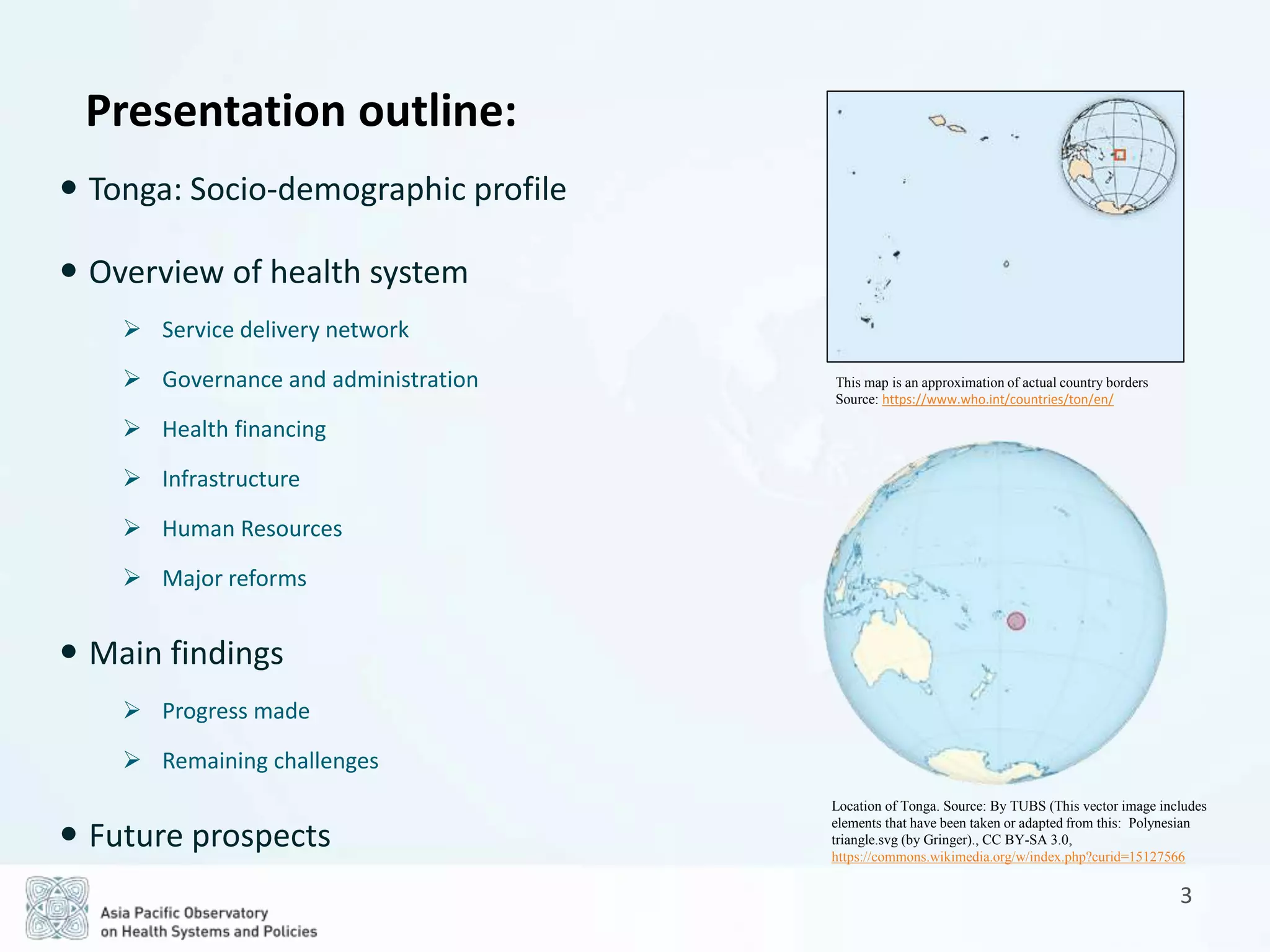
This map is an approximation of actual country borders
Source: https://www.who.int/countries/ton/en/
Location of Tonga. Source: By TUBS (This vector image includes
elements that have been taken or adapted from this: Polynesian
triangle.svg (by Gringer)., CC BY-SA 3.0,
https://commons.wikimedia.org/w/index.php?curid=15127566
4
Socio-demographic profile
Area 649.38 sq. km*
170 islands and islets
Population • 103252 (2011)
• 76.5% Rural population
• 4.1 TFR (2012)
Life expectancy at
birth m/f
65/69 (2011)
GDP per capita: USD $4,332 (PPP, 2012)
HDI 95
Expenditure on
health % GDP
5 (2011)
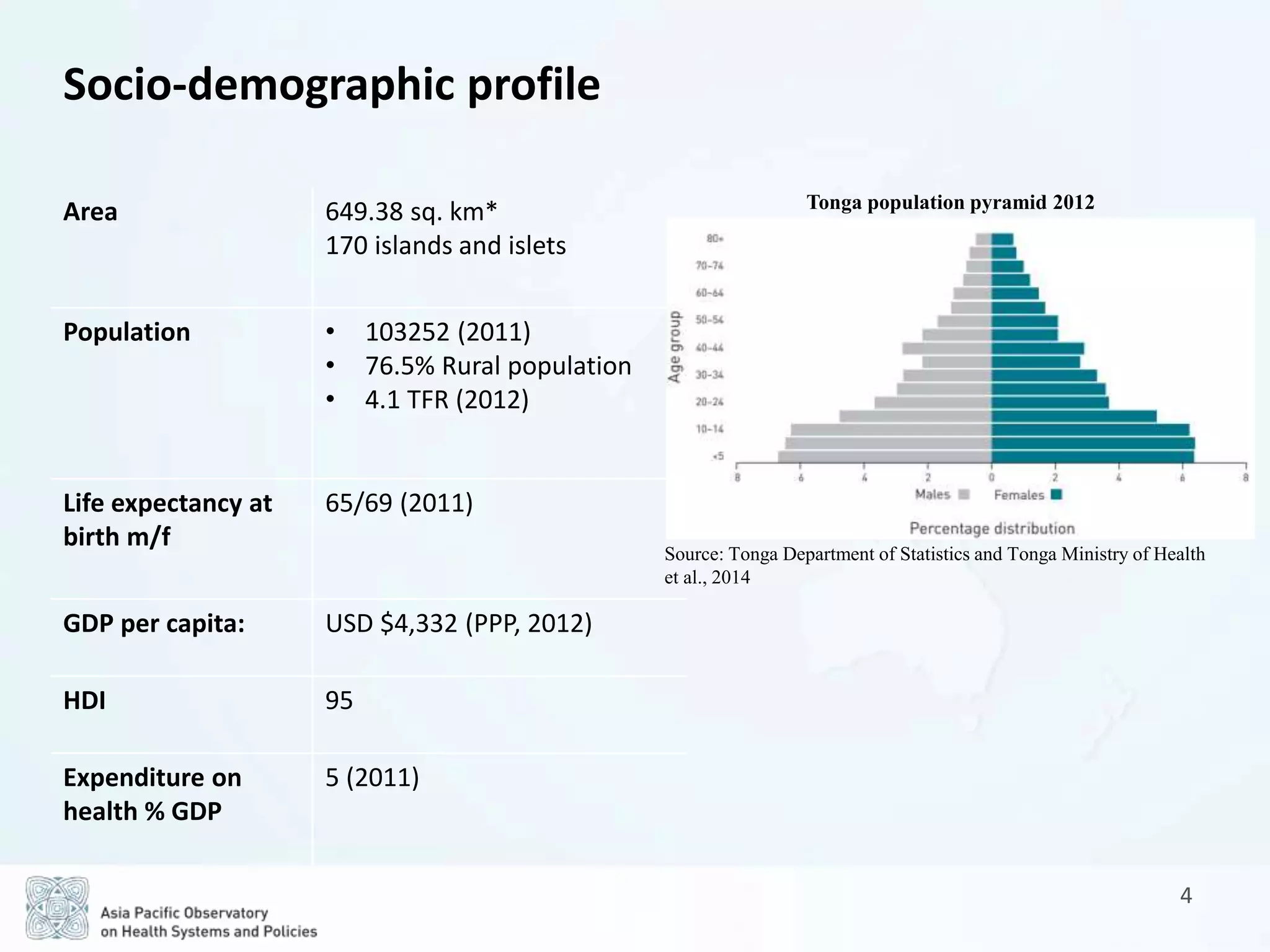
Source: Tonga Department of Statistics and Tonga Ministry of Health
et al., 2014
Tonga population pyramid 2012
5
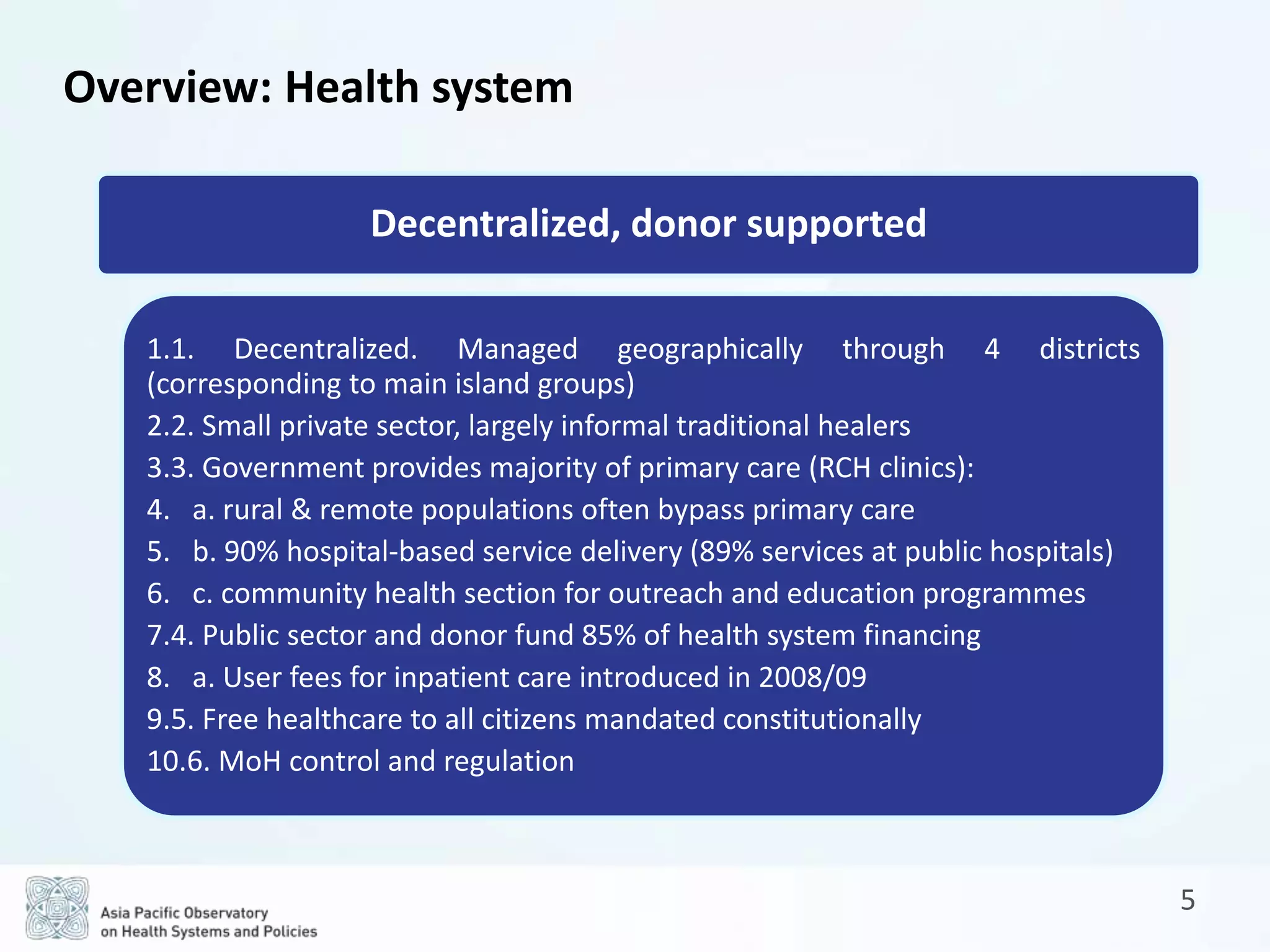
Decentralized, donor supported
1.1. Decentralized. Managed geographically through 4 districts
(corresponding to main island groups)
2.2. Small private sector, largely informal traditional healers
3.3. Government provides majority of primary care (RCH clinics):
4. a. rural & remote populations often bypass primary care
5. b. 90% hospital-based service delivery (89% services at public hospitals)
6. c. community health section for outreach and education programmes
7.4. Public sector and donor fund 85% of health system financing
8. a. User fees for inpatient care introduced in 2008/09
9.5. Free healthcare to all citizens mandated constitutionally
10.6. MoH control and regulation
Overview: Health system
Overview: Service delivery
Service delivery overview:
 Decentralized
 6 divisions responsible for service delivery
Patient pathways:
 Patients may bypass primary care and access tertiary care services directly
 Access to overseas referral treatment (NZ and Aus)
Outpatient /inpatient care:
 Low outpatient contact rate (1-2 consultations/year)
 Anecdotal evidence highlight draw attention to the limited capacity and lack of equipment of
outer health centre doctors
 Basic medical equipment not always available at lower level health centres
 Surgical teams from overseas visit to provide surgical care unavailable in Tonga normally
6
A nurse takes vital signs after registration at the reception
desk in a clinic in Nukuʻalofa. ©WHO/Yoshi Shimizu
7
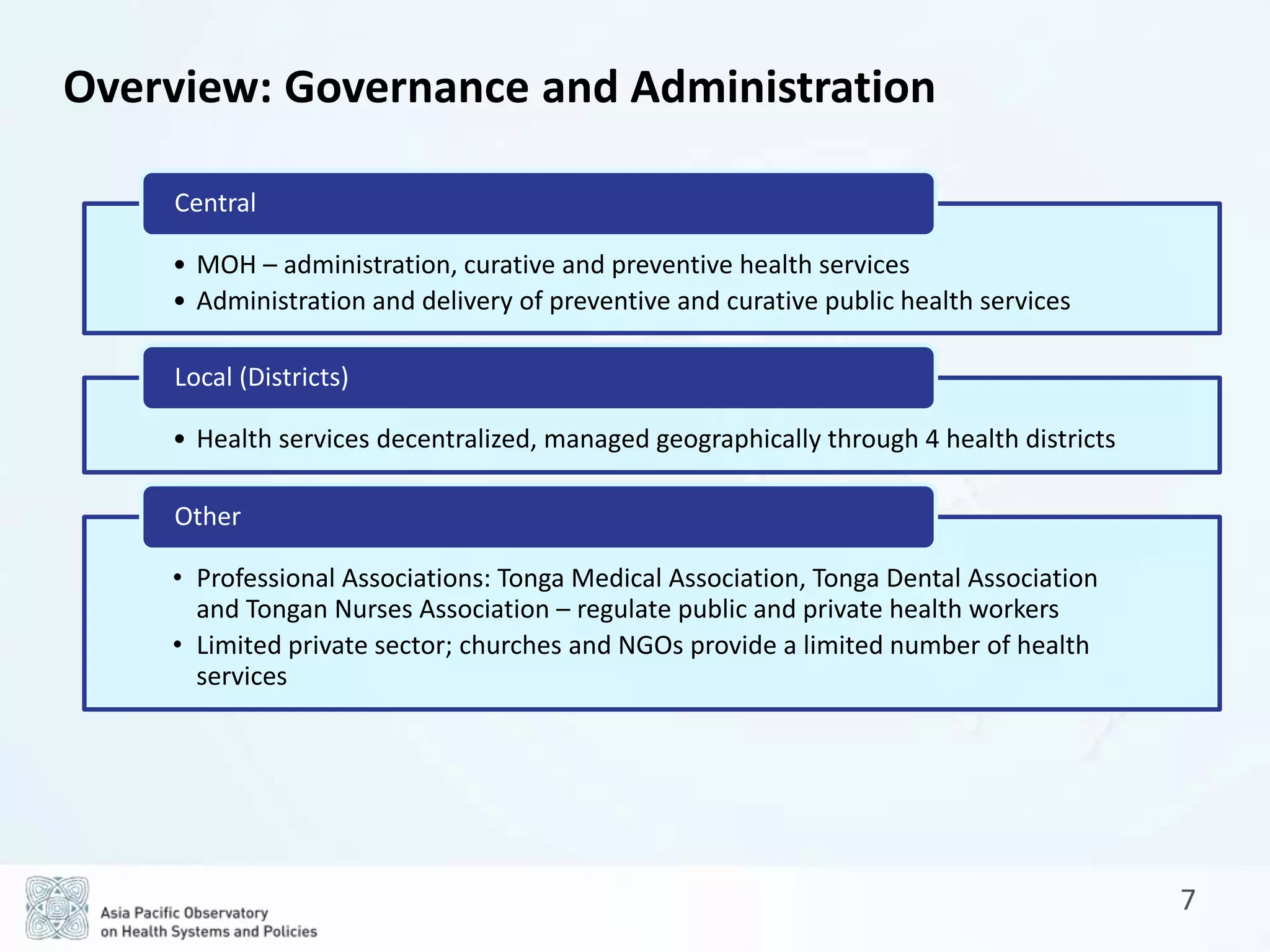
• MOH – administration, curative and preventive health services
• Administration and delivery of preventive and curative public health services
Central
• Health services decentralized, managed geographically through 4 health districts
Local (Districts)
• Professional Associations: Tonga Medical Association, Tonga Dental Association
and Tongan Nurses Association – regulate public and private health workers
• Limited private sector; churches and NGOs provide a limited number of health
services
Other
Overview: Governance and Administration
8
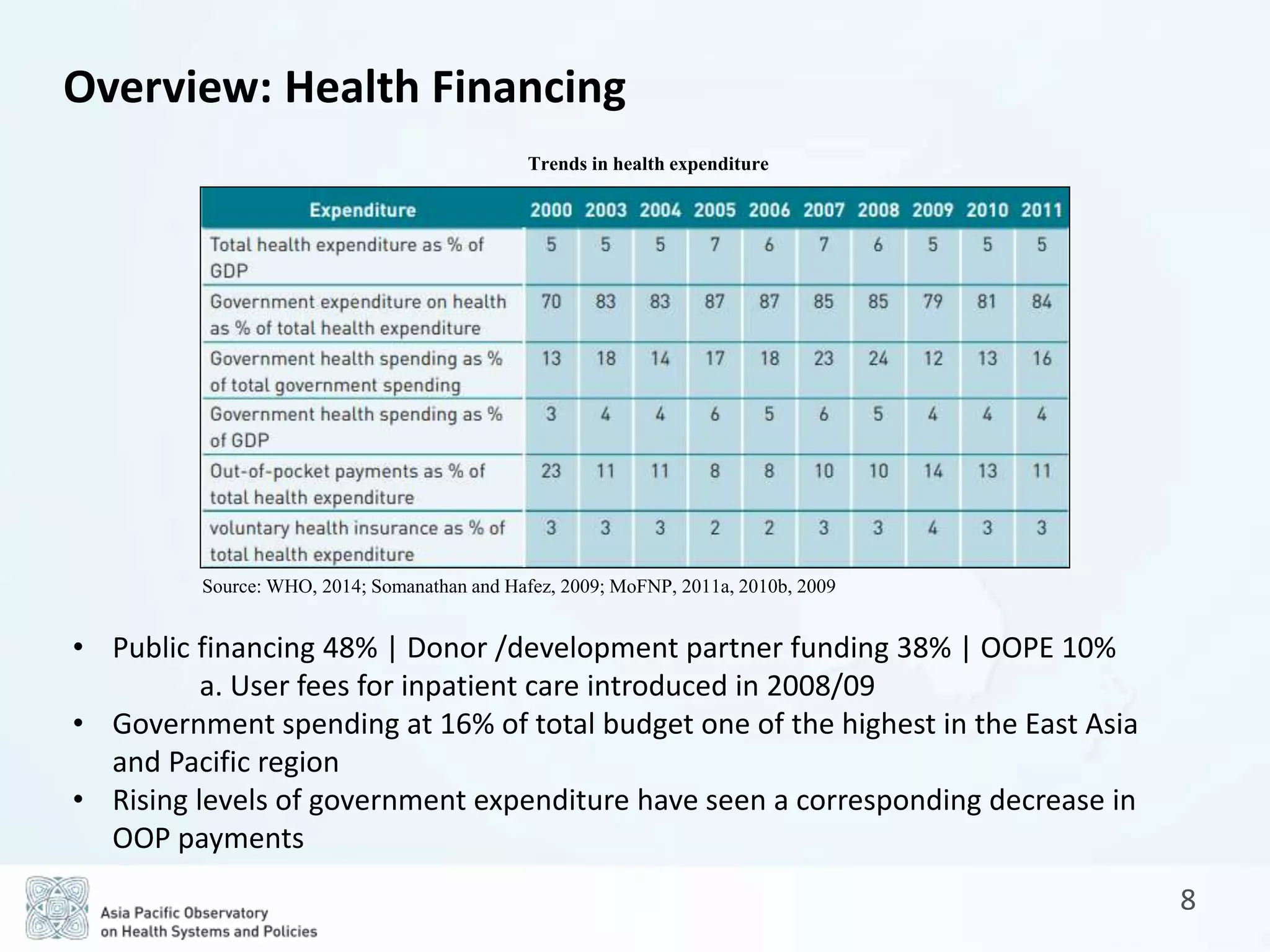
Overview: Health Financing
• Public financing 48% | Donor /development partner funding 38% | OOPE 10%
a. User fees for inpatient care introduced in 2008/09
• Government spending at 16% of total budget one of the highest in the East Asia
and Pacific region
• Rising levels of government expenditure have seen a corresponding decrease in
OOP payments
Source: WHO, 2014; Somanathan and Hafez, 2009; MoFNP, 2011a, 2010b, 2009
Trends in health expenditure
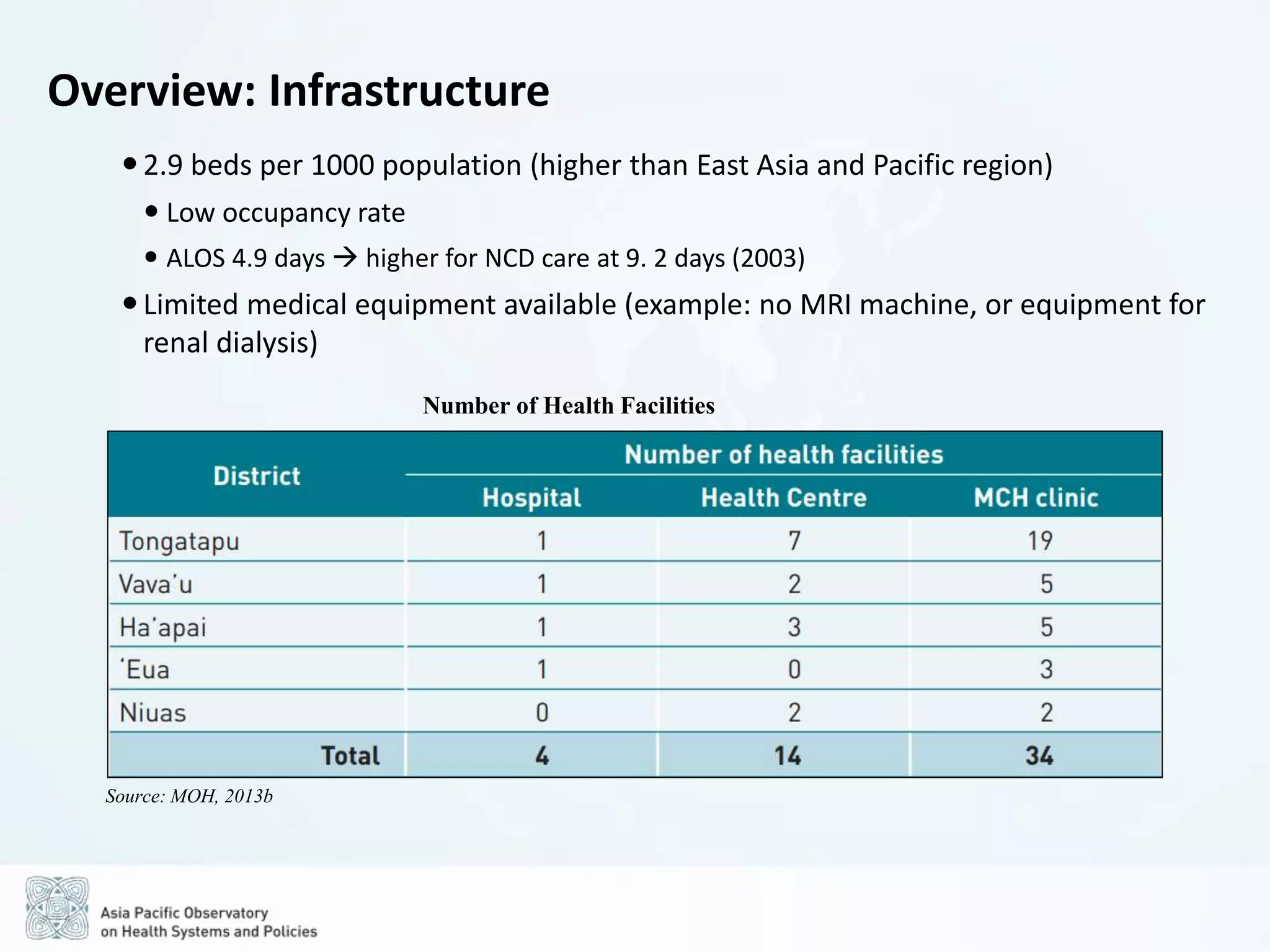
Number of Health Facilities
Overview: Infrastructure
Source: MOH, 2013b
2.9 beds per 1000 population (higher than East Asia and Pacific region)
 Low occupancy rate
 ALOS 4.9 days  higher for NCD care at 9. 2 days (2003)
Limited medical equipment available (example: no MRI machine, or equipment for
renal dialysis)
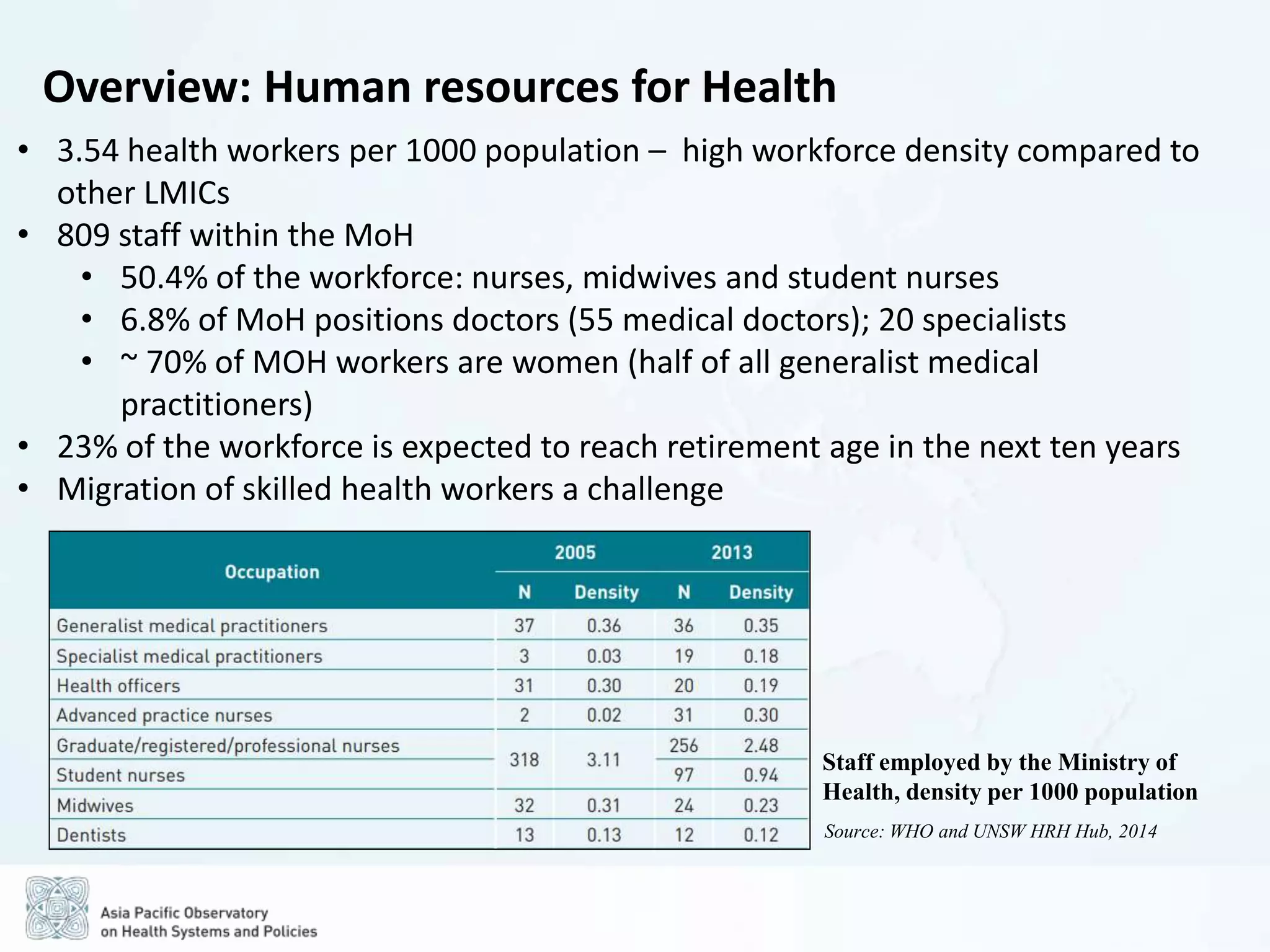
Overview: Human resources for Health
Source: WHO and UNSW HRH Hub, 2014
Staff employed by the Ministry of
Health, density per 1000 population
• 3.54 health workers per 1000 population – high workforce density compared to
other LMICs
• 809 staff within the MoH
• 50.4% of the workforce: nurses, midwives and student nurses
• 6.8% of MoH positions doctors (55 medical doctors); 20 specialists
• ~ 70% of MOH workers are women (half of all generalist medical
practitioners)
• 23% of the workforce is expected to reach retirement age in the next ten years
• Migration of skilled health workers a challenge
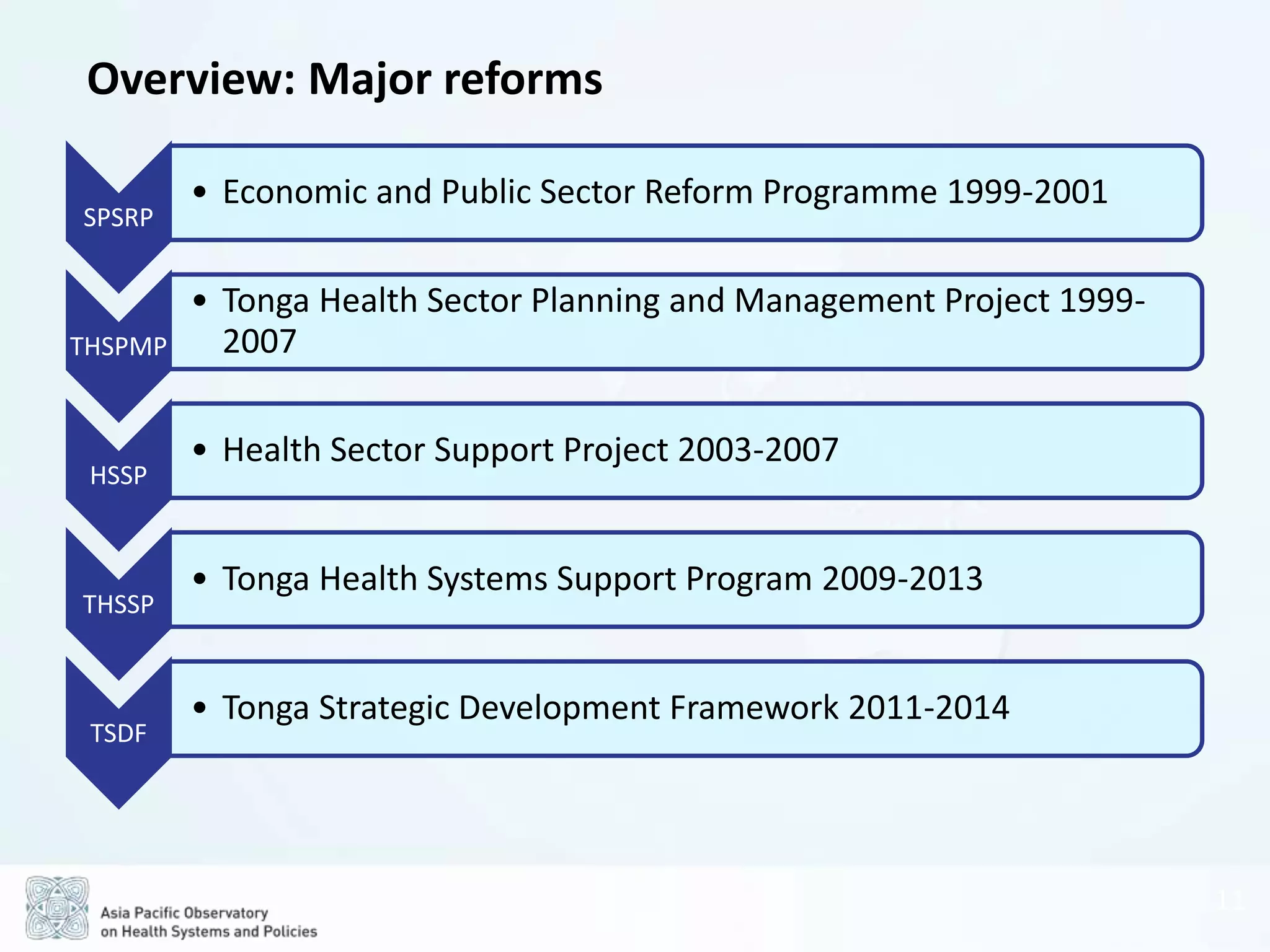
Overview: Major reforms
SPSRP
• Economic and Public Sector Reform Programme 1999-2001
THSPMP
• Tonga Health Sector Planning and Management Project 1999-
2007
HSSP
• Health Sector Support Project 2003-2007
THSSP
• Tonga Health Systems Support Program 2009-2013
TSDF
• Tonga Strategic Development Framework 2011-2014
11
12
Achievements and progress made: Health Status
One of the best overall levels of health in Pacific
Control and eradication of common infectious diseases
Safe drinking water and adequate sanitation
Maternal and child health
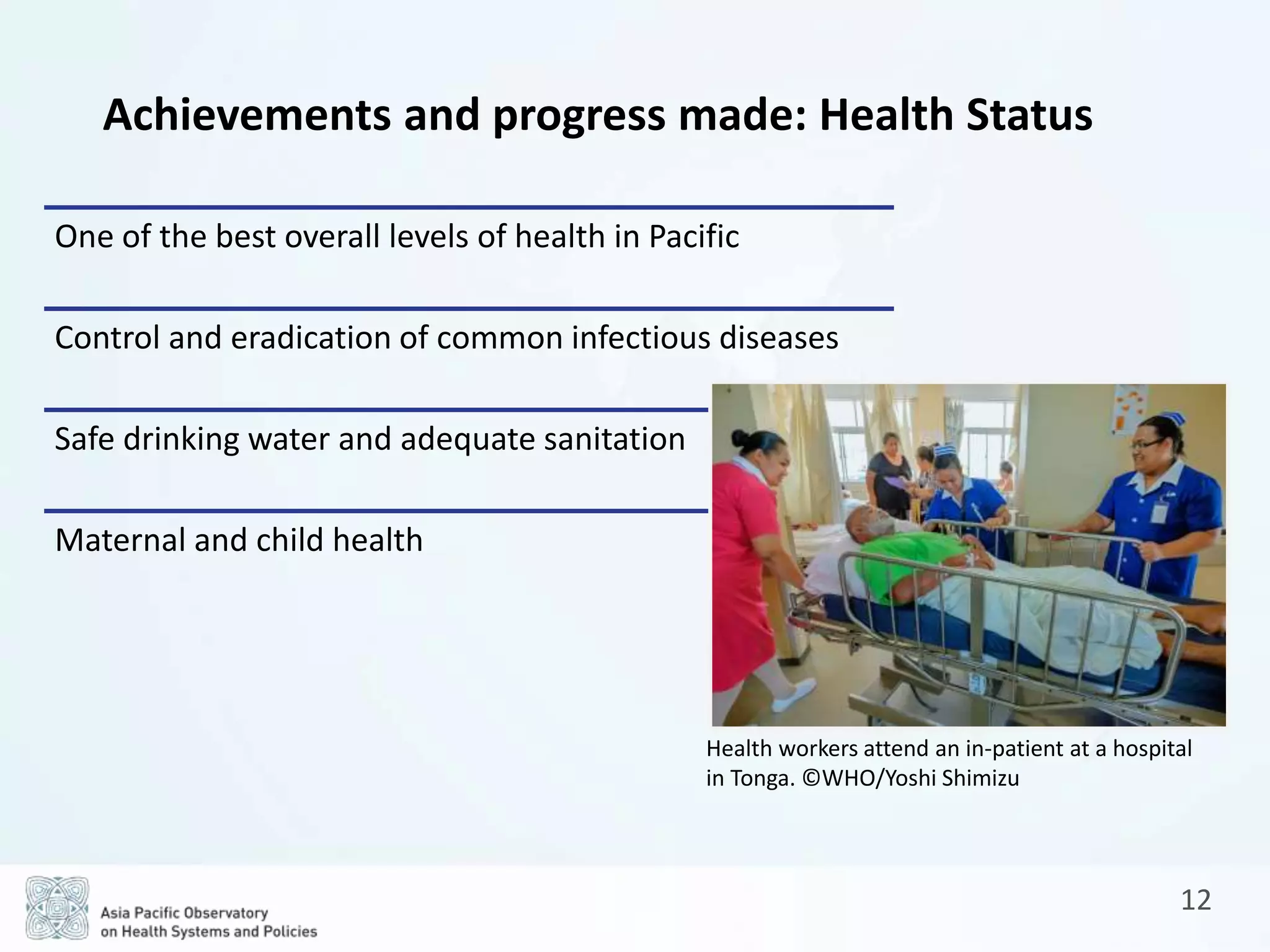
Health workers attend an in-patient at a hospital
in Tonga. ©WHO/Yoshi Shimizu
13
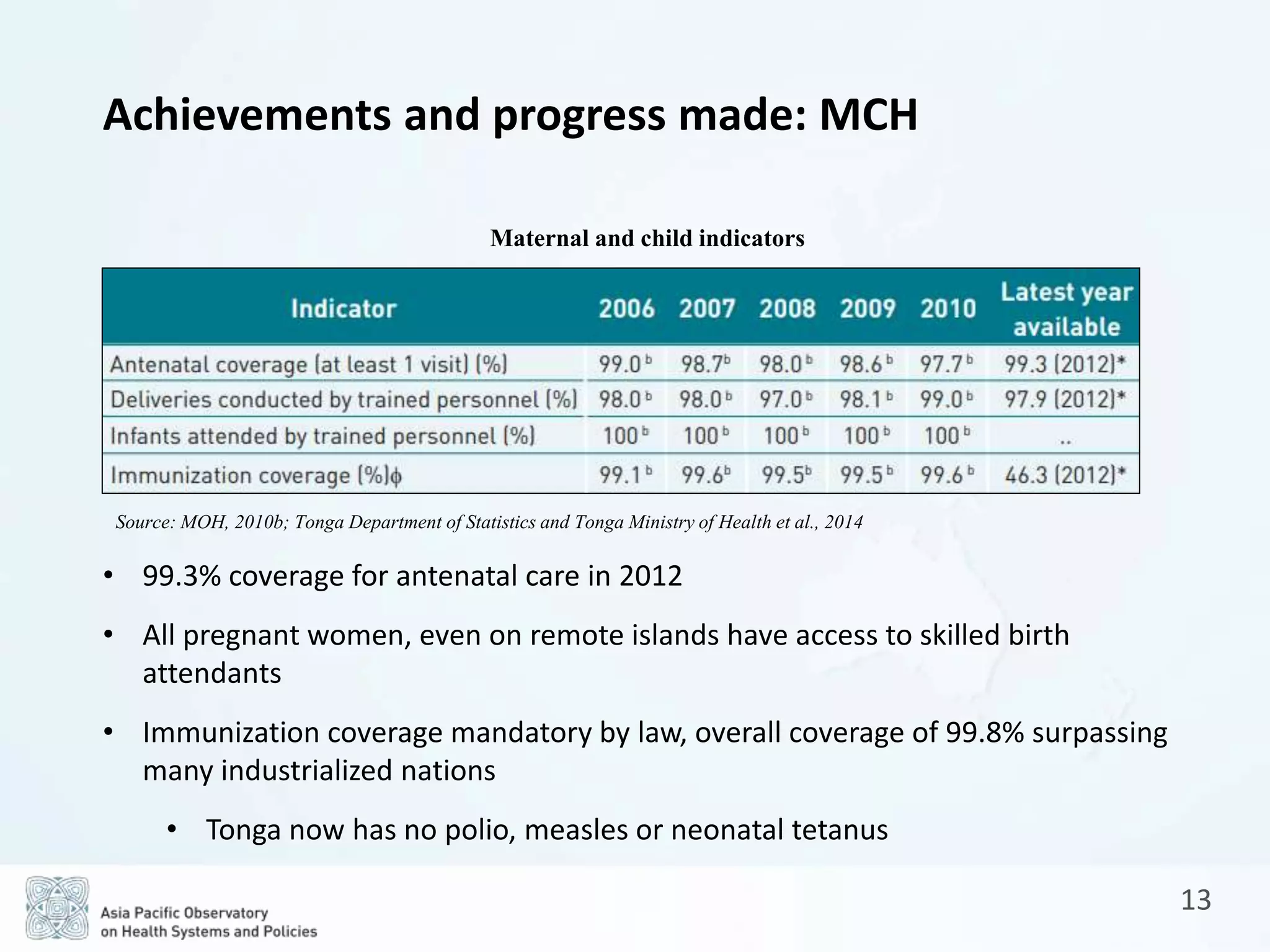
Achievements and progress made: MCH
Source: MOH, 2010b; Tonga Department of Statistics and Tonga Ministry of Health et al., 2014
Maternal and child indicators
• 99.3% coverage for antenatal care in 2012
• All pregnant women, even on remote islands have access to skilled birth
attendants
• Immunization coverage mandatory by law, overall coverage of 99.8% surpassing
many industrialized nations
• Tonga now has no polio, measles or neonatal tetanus
Finance
National Health Accounts (introduced 2001/2002)
Budget execution 90%
Policy & planning
Key policy recommendations: Integrating traditional healers, NCD focus and
re-alignment
Corporate plan: linking strategies, KPIs and the budget framework
Key performance appraisals for staff – accountability, monitoring and
reporting
14
Achievements & progress: Integrated policy, planning
and finances
15
Achievements & progress: NCD control and prevention
Key achievements:
• Strategic prioritization of NCDs in
Tonga Strategic Development
Framework 2011-2014
• TongaHealth: better definition,
distribution of funding sources for
NCD activities, website for health
promotion
• Health Promoting Church
partnership: Facilitate health
messages and interventions via the
Church
1st Pacific
nation to
develop NCD
strategy
TSDF inclusion:
Prioritized
national
strategy
Tonga Health
Promotion
Foundation
Government-
church
partnership
16
Source: WHO, 2014
Achievements & progress: Low OOPE
Regional comparison of OOPs as a percentage of total health expenditure
17
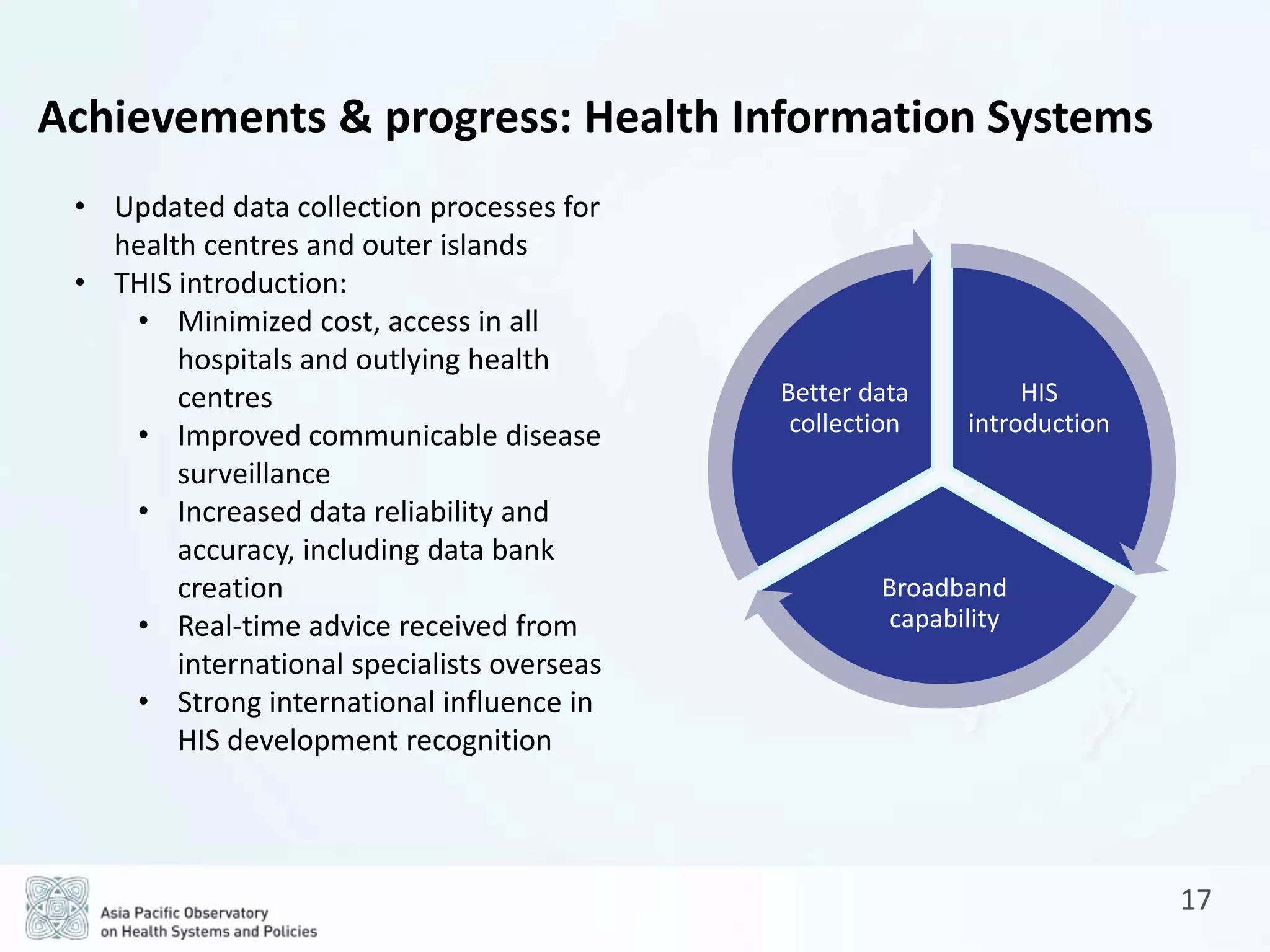
Achievements & progress: Health Information Systems
HIS
introduction
Broadband
capability
Better data
collection
• Updated data collection processes for
health centres and outer islands
• THIS introduction:
• Minimized cost, access in all
hospitals and outlying health
centres
• Improved communicable disease
surveillance
• Increased data reliability and
accuracy, including data bank
creation
• Real-time advice received from
international specialists overseas
• Strong international influence in
HIS development recognition
18
Achievements & progress: Intersectoral collaboration &
emergency preparedness
Pandemic
preparedness, e.g.
influenza
Water and sanitation
MDG taskforce
National NCD
Committee
• Tonga vulnerable to natural disasters
including cyclones, earthquakes and
tsunamis
• National Committees made to plan
and standardize emergency response
processes
• Efforts led by MOH: Pandemic
preparedness, water and sanitation
and the National NCD Committee
19
NCDs
• 99.9% of the adult population estimated to be at
moderate to high risk of developing NCD
• Epidemiological transition: NCDs cause 74% of
deaths
• Leading causes of NCD mortality: Cancers, CVDs,
respiratory diseases, diabetes
• Diabetes prevalence doubled to 34.4% by 2012
Risk factors
• 3rd most overweight country in the world
• Tobacco: 7% male and 8% female deaths
Remaining challenges: NCDs and risk factors
Source: 2004 STEPS survey (MoH and WHO, 2012), 2011/2012
STEPS survey (MoH and WPRO, 2013)
Risk factors influencing health status
20
Remaining challenges:
• Donors provide 38% of health system
funding
• Significant infrastructure upgrades:
Vaiola Hospital, 54% of equipment and
lab costs
• Funding visiting overseas medical
specialists, overseas treatment of
patients, education of majority of
medical workforce
• Assistance with development of MOH
leadership
• Implementing THSPMP: public sector
management and budgeting
Leadership
Management
FundingInfrastructure
Workforce,
treatment
21
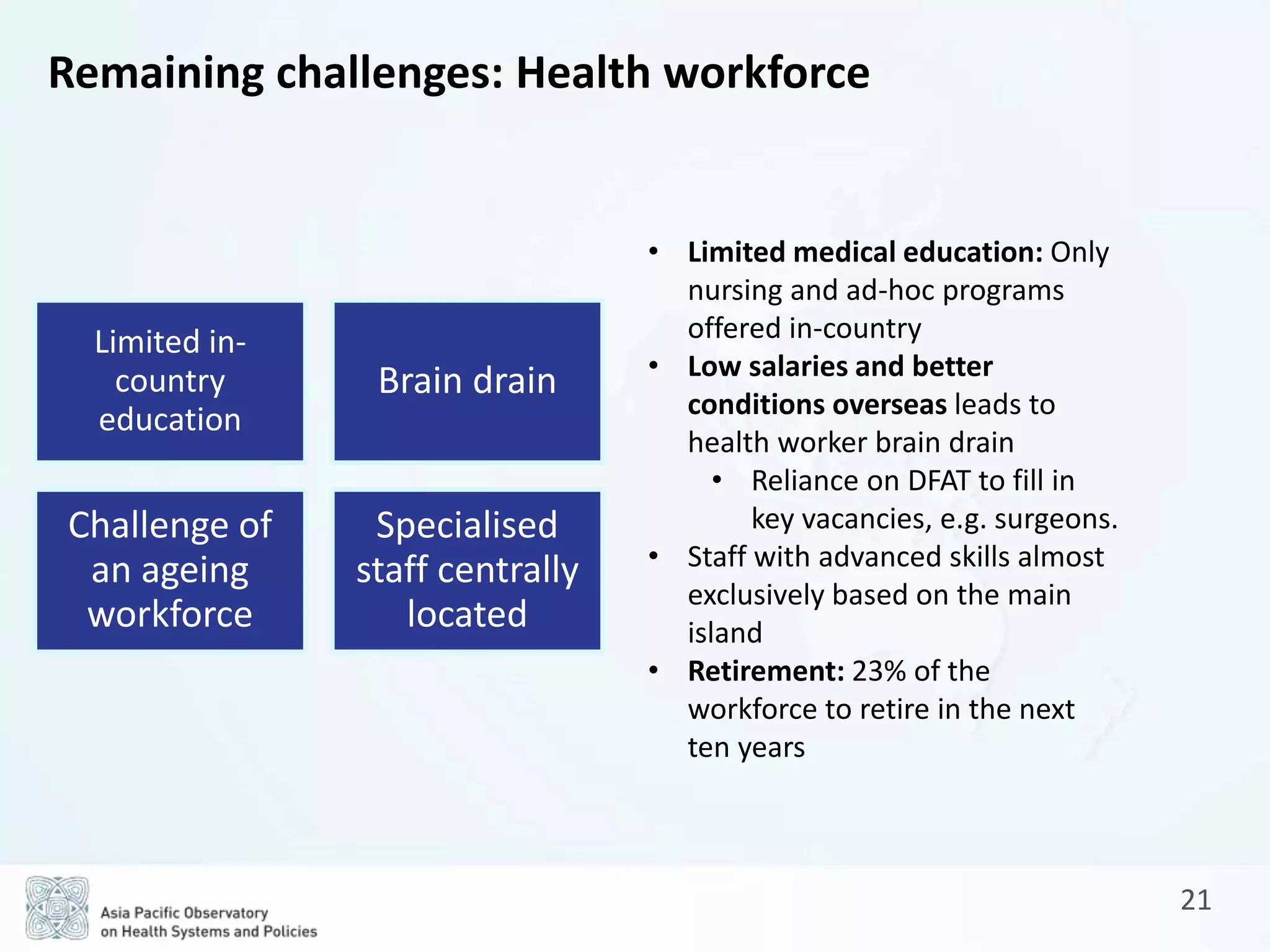
Remaining challenges: Health workforce
• Limited medical education: Only
nursing and ad-hoc programs
offered in-country
• Low salaries and better
conditions overseas leads to
health worker brain drain
• Reliance on DFAT to fill in
key vacancies, e.g. surgeons.
• Staff with advanced skills almost
exclusively based on the main
island
• Retirement: 23% of the
workforce to retire in the next
ten years
Limited in-
country
education
Brain drain
Challenge of
an ageing
workforce
Specialised
staff centrally
located
22
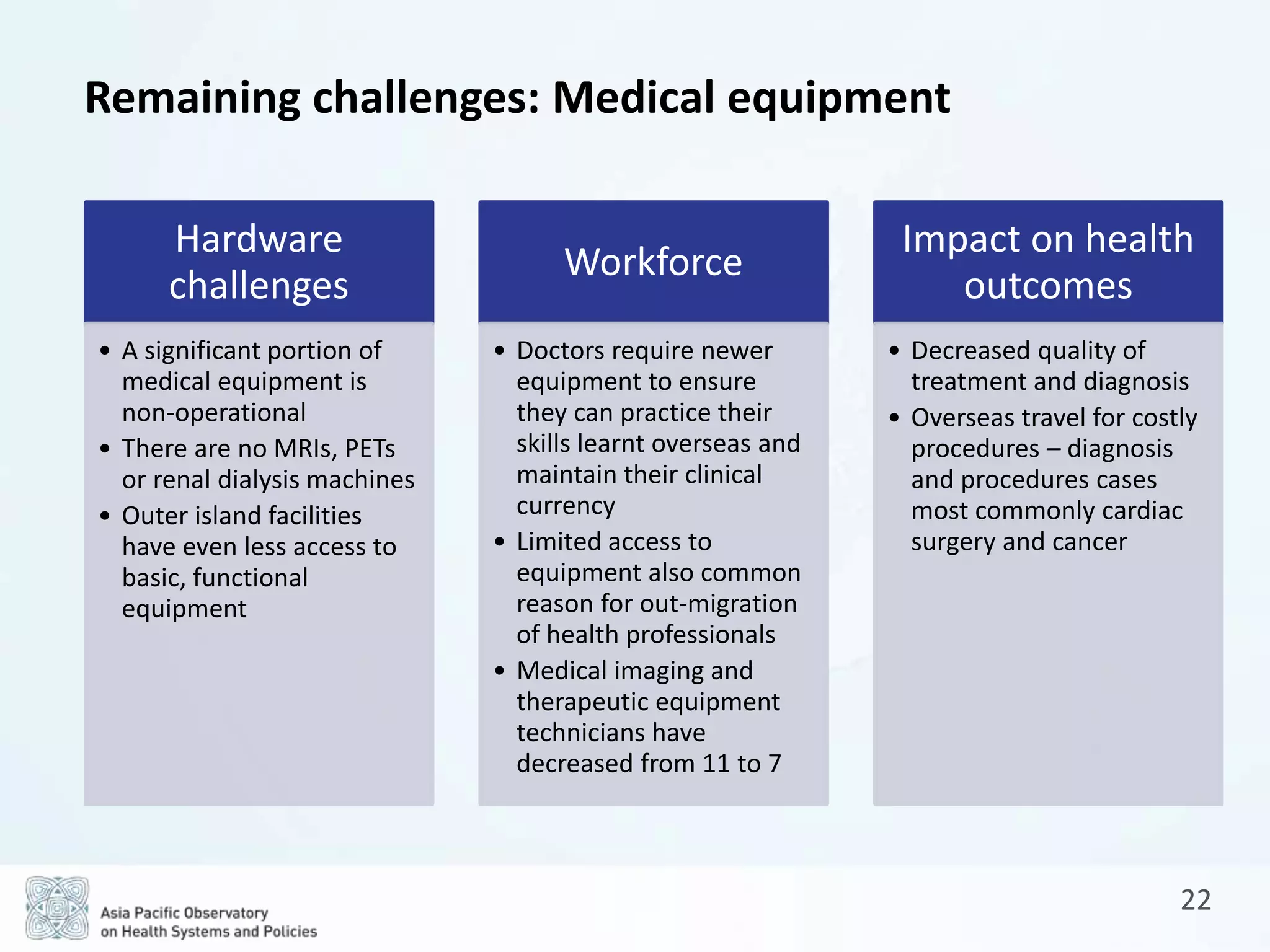
Remaining challenges: Medical equipment
Hardware
challenges
• A significant portion of
medical equipment is
non-operational
• There are no MRIs, PETs
or renal dialysis machines
• Outer island facilities
have even less access to
basic, functional
equipment
Workforce
• Doctors require newer
equipment to ensure
they can practice their
skills learnt overseas and
maintain their clinical
currency
• Limited access to
equipment also common
reason for out-migration
of health professionals
• Medical imaging and
therapeutic equipment
technicians have
decreased from 11 to 7
Impact on health
outcomes
• Decreased quality of
treatment and diagnosis
• Overseas travel for costly
procedures – diagnosis
and procedures cases
most commonly cardiac
surgery and cancer
23
Remaining challenges: Quality of Care
• Customer service
• Improvements made towards better customer service, lack of
follow-up hinders understanding of progress
• Vaiola Hospital centric service provision
• 73% of population reside in Tongatapu, 80% of health workers
including hi-tech equipment and operating staff
• Socioeconomic status
• Lowest income quintile less likely to access services than highest
• Neonatal mortality 6 times higher and under-5 mortality 2 times
higher in lowest quintile compared to highest
• Limitations in Overseas Treatment Scheme
• May not cover some treatments, e.g. radiotherapy, limiting
treatments to those who can find alternative financing
• Mental health
• Mental health on outer islands delivered by staff with no formal
training
24
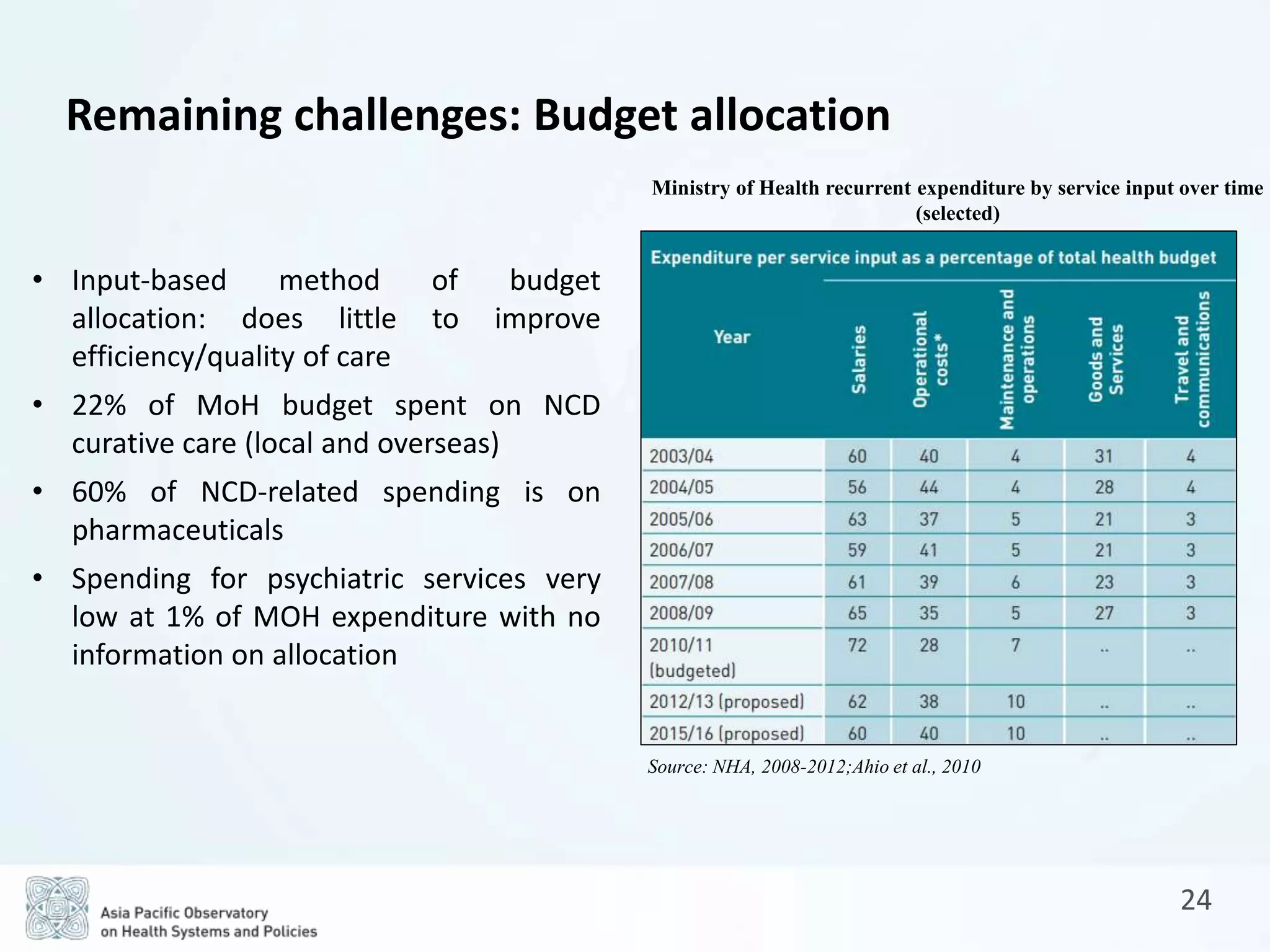
Remaining challenges: Budget allocation
Source: NHA, 2008-2012;Ahio et al., 2010
Ministry of Health recurrent expenditure by service input over time
(selected)
• Input-based method of budget
allocation: does little to improve
efficiency/quality of care
• 22% of MoH budget spent on NCD
curative care (local and overseas)
• 60% of NCD-related spending is on
pharmaceuticals
• Spending for psychiatric services very
low at 1% of MOH expenditure with no
information on allocation
25
Remaining challenges: Health data
•Lack of disaggregation of data demographics, e.g. gender
to understand health outcome inequitiesHealth outcomes
•Poor reporting prior to 2011 led to overestimation of life
expectancy by 5 years for males, 3 years for females.
Inefficient
mortality reporting
•Missing private sector data: not routinely reported
including traditional healers who are often first line of
treatment for many.
Private sector
•Impact of user fees unclear: social health insurance
vetoedLack of research
26
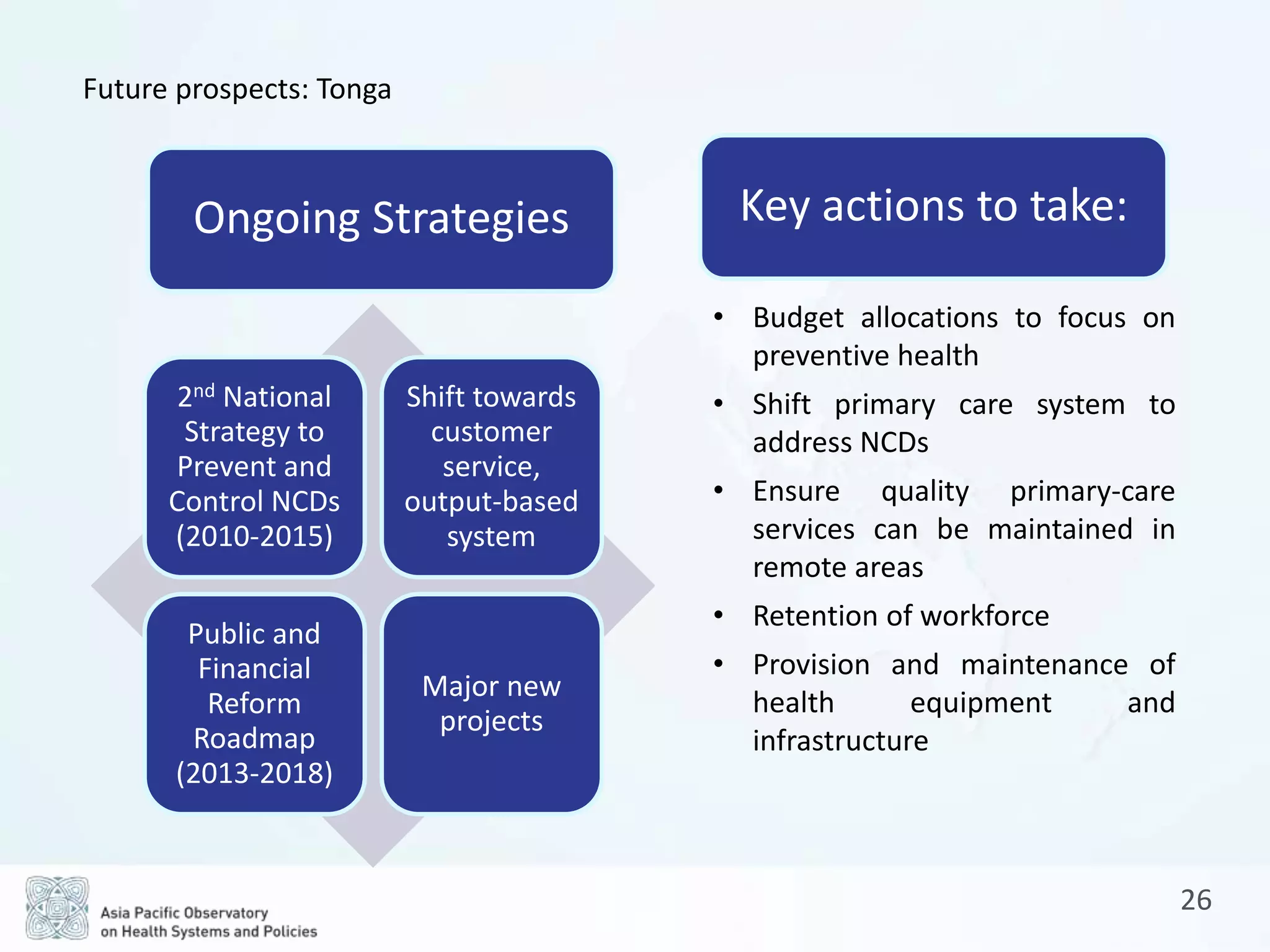
Future prospects: Tonga
2nd National
Strategy to
Prevent and
Control NCDs
(2010-2015)
Shift towards
customer
service,
output-based
system
Public and
Financial
Reform
Roadmap
(2013-2018)
Major new
projects
Ongoing Strategies Key actions to take:
• Budget allocations to focus on
preventive health
• Shift primary care system to
address NCDs
• Ensure quality primary-care
services can be maintained in
remote areas
• Retention of workforce
• Provision and maintenance of
health equipment and
infrastructure
27
Based on the Health Systems in Transition
The Kingdom of Tonga Health System Review, 2015
http://www.searo.who.int/entity/asia_pacific_observatory/publications/hits/hit_Tonga/en/
Access full publication at:
THANK YOU

APO The Kingdom of Tonga Health System Review (Health in Transition)

  • 1.
    Health Systems inTransition Kingdom of Tonga Health System Review
  • 2.
    Health Systems inTransition: Kingdom of Tonga Health System Review 2 Authors: Editors: Maxine Whittaker Anna Rodney Anna Rodney Sione Hufunga Viliami Ika Sela Sausini Paasi Paula Vivili Tu’akoi ‘Ahoi Mafi Hufanga Suggested citation: Rodny A, Huanga S, Ika V, Passi SS, Vivlli P, Ahio Ta, et al. The Kingdom of Tonga Health System Review. Vol.5 No.6. Manila: World Health Organization, Regional Office for the Western Pacific, 2015.
  • 3.
     Tonga: Socio-demographicprofile  Overview of health system  Service delivery network  Governance and administration  Health financing  Infrastructure  Human Resources  Major reforms  Main findings  Progress made  Remaining challenges  Future prospects 3 Presentation outline: This map is an approximation of actual country borders Source: https://www.who.int/countries/ton/en/ Location of Tonga. Source: By TUBS (This vector image includes elements that have been taken or adapted from this: Polynesian triangle.svg (by Gringer)., CC BY-SA 3.0, https://commons.wikimedia.org/w/index.php?curid=15127566
  • 4.
    4 Socio-demographic profile Area 649.38sq. km* 170 islands and islets Population • 103252 (2011) • 76.5% Rural population • 4.1 TFR (2012) Life expectancy at birth m/f 65/69 (2011) GDP per capita: USD $4,332 (PPP, 2012) HDI 95 Expenditure on health % GDP 5 (2011) Source: Tonga Department of Statistics and Tonga Ministry of Health et al., 2014 Tonga population pyramid 2012
  • 5.
    5 Decentralized, donor supported 1.1.Decentralized. Managed geographically through 4 districts (corresponding to main island groups) 2.2. Small private sector, largely informal traditional healers 3.3. Government provides majority of primary care (RCH clinics): 4. a. rural & remote populations often bypass primary care 5. b. 90% hospital-based service delivery (89% services at public hospitals) 6. c. community health section for outreach and education programmes 7.4. Public sector and donor fund 85% of health system financing 8. a. User fees for inpatient care introduced in 2008/09 9.5. Free healthcare to all citizens mandated constitutionally 10.6. MoH control and regulation Overview: Health system
  • 6.
    Overview: Service delivery Servicedelivery overview:  Decentralized  6 divisions responsible for service delivery Patient pathways:  Patients may bypass primary care and access tertiary care services directly  Access to overseas referral treatment (NZ and Aus) Outpatient /inpatient care:  Low outpatient contact rate (1-2 consultations/year)  Anecdotal evidence highlight draw attention to the limited capacity and lack of equipment of outer health centre doctors  Basic medical equipment not always available at lower level health centres  Surgical teams from overseas visit to provide surgical care unavailable in Tonga normally 6 A nurse takes vital signs after registration at the reception desk in a clinic in Nukuʻalofa. ©WHO/Yoshi Shimizu
  • 7.
    7 • MOH –administration, curative and preventive health services • Administration and delivery of preventive and curative public health services Central • Health services decentralized, managed geographically through 4 health districts Local (Districts) • Professional Associations: Tonga Medical Association, Tonga Dental Association and Tongan Nurses Association – regulate public and private health workers • Limited private sector; churches and NGOs provide a limited number of health services Other Overview: Governance and Administration
  • 8.
    8 Overview: Health Financing •Public financing 48% | Donor /development partner funding 38% | OOPE 10% a. User fees for inpatient care introduced in 2008/09 • Government spending at 16% of total budget one of the highest in the East Asia and Pacific region • Rising levels of government expenditure have seen a corresponding decrease in OOP payments Source: WHO, 2014; Somanathan and Hafez, 2009; MoFNP, 2011a, 2010b, 2009 Trends in health expenditure
  • 9.
    Number of HealthFacilities Overview: Infrastructure Source: MOH, 2013b 2.9 beds per 1000 population (higher than East Asia and Pacific region)  Low occupancy rate  ALOS 4.9 days  higher for NCD care at 9. 2 days (2003) Limited medical equipment available (example: no MRI machine, or equipment for renal dialysis)
  • 10.
    Overview: Human resourcesfor Health Source: WHO and UNSW HRH Hub, 2014 Staff employed by the Ministry of Health, density per 1000 population • 3.54 health workers per 1000 population – high workforce density compared to other LMICs • 809 staff within the MoH • 50.4% of the workforce: nurses, midwives and student nurses • 6.8% of MoH positions doctors (55 medical doctors); 20 specialists • ~ 70% of MOH workers are women (half of all generalist medical practitioners) • 23% of the workforce is expected to reach retirement age in the next ten years • Migration of skilled health workers a challenge
  • 11.
    Overview: Major reforms SPSRP •Economic and Public Sector Reform Programme 1999-2001 THSPMP • Tonga Health Sector Planning and Management Project 1999- 2007 HSSP • Health Sector Support Project 2003-2007 THSSP • Tonga Health Systems Support Program 2009-2013 TSDF • Tonga Strategic Development Framework 2011-2014 11
  • 12.
    12 Achievements and progressmade: Health Status One of the best overall levels of health in Pacific Control and eradication of common infectious diseases Safe drinking water and adequate sanitation Maternal and child health Health workers attend an in-patient at a hospital in Tonga. ©WHO/Yoshi Shimizu
  • 13.
    13 Achievements and progressmade: MCH Source: MOH, 2010b; Tonga Department of Statistics and Tonga Ministry of Health et al., 2014 Maternal and child indicators • 99.3% coverage for antenatal care in 2012 • All pregnant women, even on remote islands have access to skilled birth attendants • Immunization coverage mandatory by law, overall coverage of 99.8% surpassing many industrialized nations • Tonga now has no polio, measles or neonatal tetanus
  • 14.
    Finance National Health Accounts(introduced 2001/2002) Budget execution 90% Policy & planning Key policy recommendations: Integrating traditional healers, NCD focus and re-alignment Corporate plan: linking strategies, KPIs and the budget framework Key performance appraisals for staff – accountability, monitoring and reporting 14 Achievements & progress: Integrated policy, planning and finances
  • 15.
    15 Achievements & progress:NCD control and prevention Key achievements: • Strategic prioritization of NCDs in Tonga Strategic Development Framework 2011-2014 • TongaHealth: better definition, distribution of funding sources for NCD activities, website for health promotion • Health Promoting Church partnership: Facilitate health messages and interventions via the Church 1st Pacific nation to develop NCD strategy TSDF inclusion: Prioritized national strategy Tonga Health Promotion Foundation Government- church partnership
  • 16.
    16 Source: WHO, 2014 Achievements& progress: Low OOPE Regional comparison of OOPs as a percentage of total health expenditure
  • 17.
    17 Achievements & progress:Health Information Systems HIS introduction Broadband capability Better data collection • Updated data collection processes for health centres and outer islands • THIS introduction: • Minimized cost, access in all hospitals and outlying health centres • Improved communicable disease surveillance • Increased data reliability and accuracy, including data bank creation • Real-time advice received from international specialists overseas • Strong international influence in HIS development recognition
  • 18.
    18 Achievements & progress:Intersectoral collaboration & emergency preparedness Pandemic preparedness, e.g. influenza Water and sanitation MDG taskforce National NCD Committee • Tonga vulnerable to natural disasters including cyclones, earthquakes and tsunamis • National Committees made to plan and standardize emergency response processes • Efforts led by MOH: Pandemic preparedness, water and sanitation and the National NCD Committee
  • 19.
    19 NCDs • 99.9% ofthe adult population estimated to be at moderate to high risk of developing NCD • Epidemiological transition: NCDs cause 74% of deaths • Leading causes of NCD mortality: Cancers, CVDs, respiratory diseases, diabetes • Diabetes prevalence doubled to 34.4% by 2012 Risk factors • 3rd most overweight country in the world • Tobacco: 7% male and 8% female deaths Remaining challenges: NCDs and risk factors Source: 2004 STEPS survey (MoH and WHO, 2012), 2011/2012 STEPS survey (MoH and WPRO, 2013) Risk factors influencing health status
  • 20.
    20 Remaining challenges: • Donorsprovide 38% of health system funding • Significant infrastructure upgrades: Vaiola Hospital, 54% of equipment and lab costs • Funding visiting overseas medical specialists, overseas treatment of patients, education of majority of medical workforce • Assistance with development of MOH leadership • Implementing THSPMP: public sector management and budgeting Leadership Management FundingInfrastructure Workforce, treatment
  • 21.
    21 Remaining challenges: Healthworkforce • Limited medical education: Only nursing and ad-hoc programs offered in-country • Low salaries and better conditions overseas leads to health worker brain drain • Reliance on DFAT to fill in key vacancies, e.g. surgeons. • Staff with advanced skills almost exclusively based on the main island • Retirement: 23% of the workforce to retire in the next ten years Limited in- country education Brain drain Challenge of an ageing workforce Specialised staff centrally located
  • 22.
    22 Remaining challenges: Medicalequipment Hardware challenges • A significant portion of medical equipment is non-operational • There are no MRIs, PETs or renal dialysis machines • Outer island facilities have even less access to basic, functional equipment Workforce • Doctors require newer equipment to ensure they can practice their skills learnt overseas and maintain their clinical currency • Limited access to equipment also common reason for out-migration of health professionals • Medical imaging and therapeutic equipment technicians have decreased from 11 to 7 Impact on health outcomes • Decreased quality of treatment and diagnosis • Overseas travel for costly procedures – diagnosis and procedures cases most commonly cardiac surgery and cancer
  • 23.
    23 Remaining challenges: Qualityof Care • Customer service • Improvements made towards better customer service, lack of follow-up hinders understanding of progress • Vaiola Hospital centric service provision • 73% of population reside in Tongatapu, 80% of health workers including hi-tech equipment and operating staff • Socioeconomic status • Lowest income quintile less likely to access services than highest • Neonatal mortality 6 times higher and under-5 mortality 2 times higher in lowest quintile compared to highest • Limitations in Overseas Treatment Scheme • May not cover some treatments, e.g. radiotherapy, limiting treatments to those who can find alternative financing • Mental health • Mental health on outer islands delivered by staff with no formal training
  • 24.
    24 Remaining challenges: Budgetallocation Source: NHA, 2008-2012;Ahio et al., 2010 Ministry of Health recurrent expenditure by service input over time (selected) • Input-based method of budget allocation: does little to improve efficiency/quality of care • 22% of MoH budget spent on NCD curative care (local and overseas) • 60% of NCD-related spending is on pharmaceuticals • Spending for psychiatric services very low at 1% of MOH expenditure with no information on allocation
  • 25.
    25 Remaining challenges: Healthdata •Lack of disaggregation of data demographics, e.g. gender to understand health outcome inequitiesHealth outcomes •Poor reporting prior to 2011 led to overestimation of life expectancy by 5 years for males, 3 years for females. Inefficient mortality reporting •Missing private sector data: not routinely reported including traditional healers who are often first line of treatment for many. Private sector •Impact of user fees unclear: social health insurance vetoedLack of research
  • 26.
    26 Future prospects: Tonga 2ndNational Strategy to Prevent and Control NCDs (2010-2015) Shift towards customer service, output-based system Public and Financial Reform Roadmap (2013-2018) Major new projects Ongoing Strategies Key actions to take: • Budget allocations to focus on preventive health • Shift primary care system to address NCDs • Ensure quality primary-care services can be maintained in remote areas • Retention of workforce • Provision and maintenance of health equipment and infrastructure
  • 27.
    27 Based on theHealth Systems in Transition The Kingdom of Tonga Health System Review, 2015
  • 28.