A new concept in accuracy and reliabilityApexNRG RIDER
Real-Time Handpiece measurements
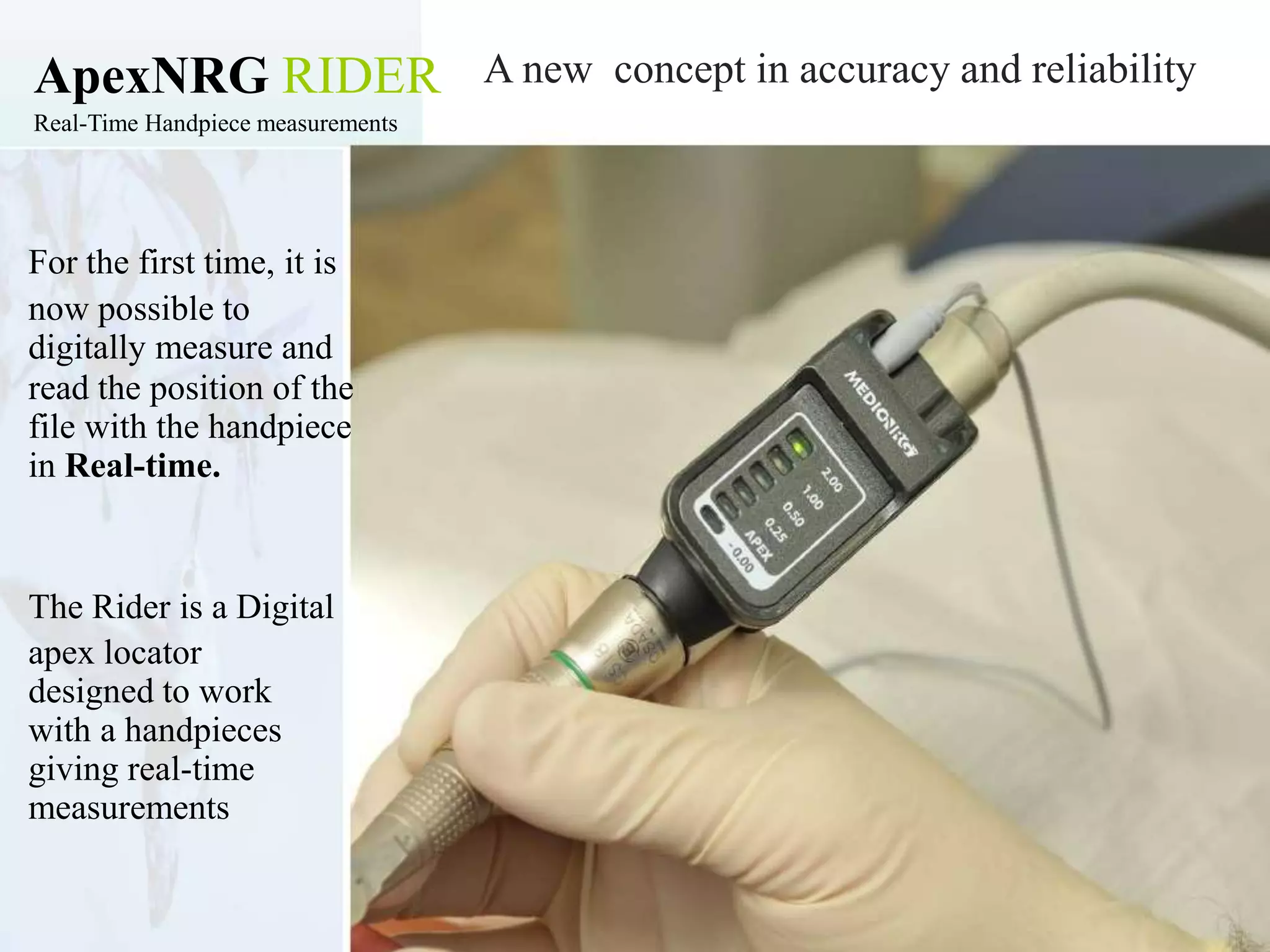
For the first time, it is
now possible to
digitally measure and
read the position of the
file with the handpiece
in Real-time.
The Rider is a Digital
apex locator
designed to work
with a handpieces
giving real-time
measurements
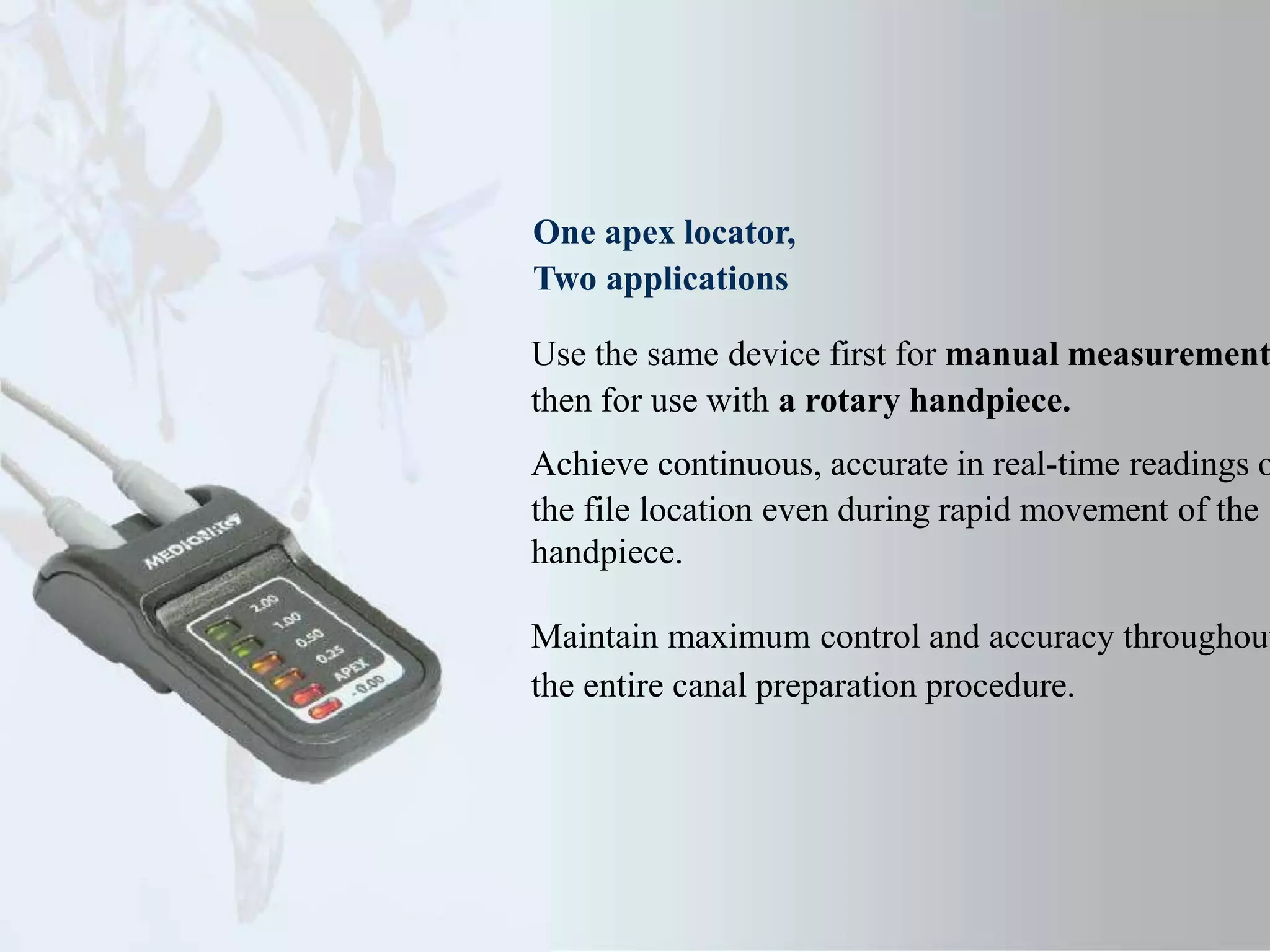
One apex locator,
Two applications
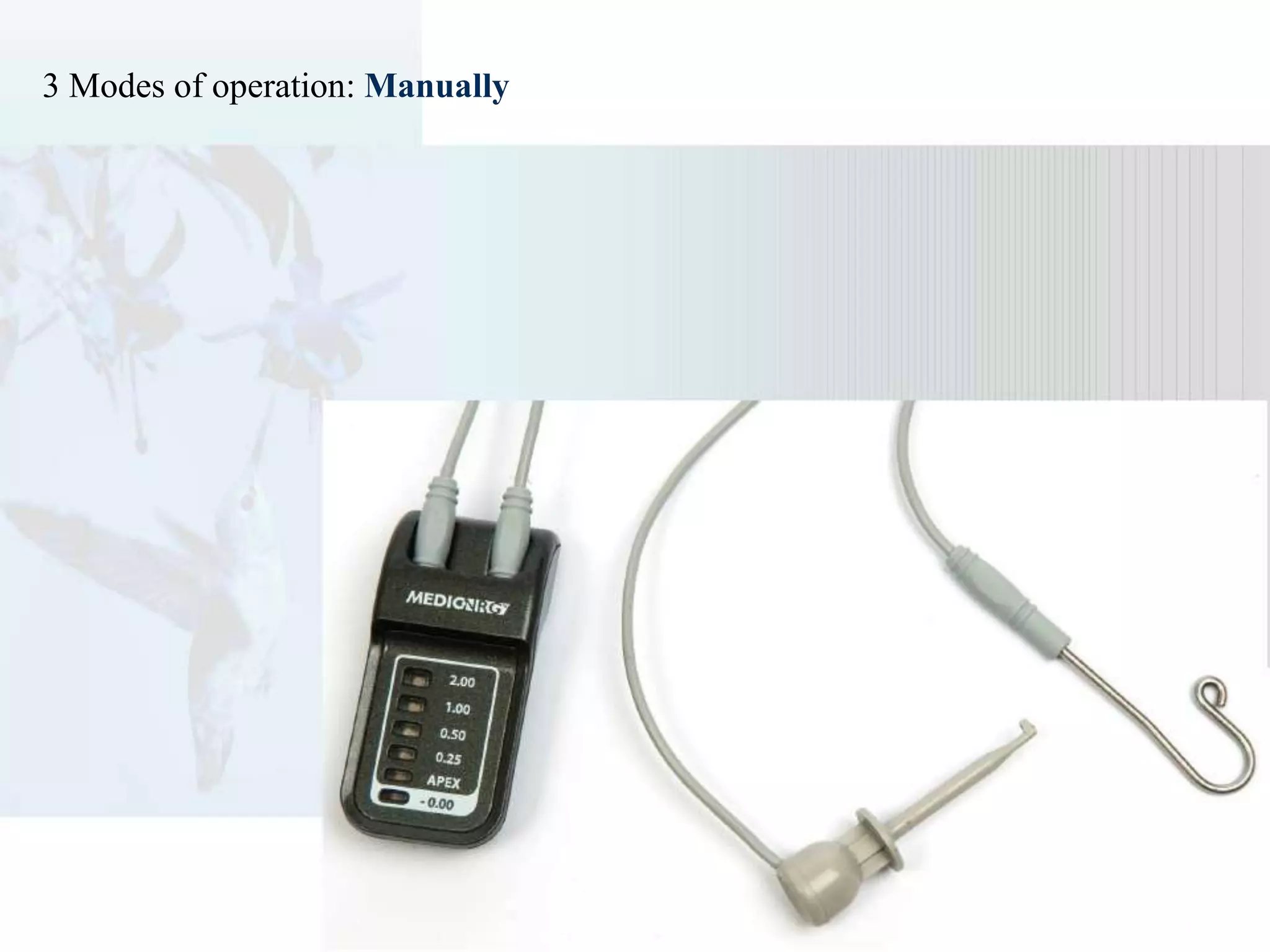
Use the same device first for manual measurement
then for use with a rotary handpiece.
Achieve continuous, accurate in real-time readings o
the file location even during rapid movement of the
handpiece.
Maintain maximum control and accuracy throughout
the entire canal preparation procedure.
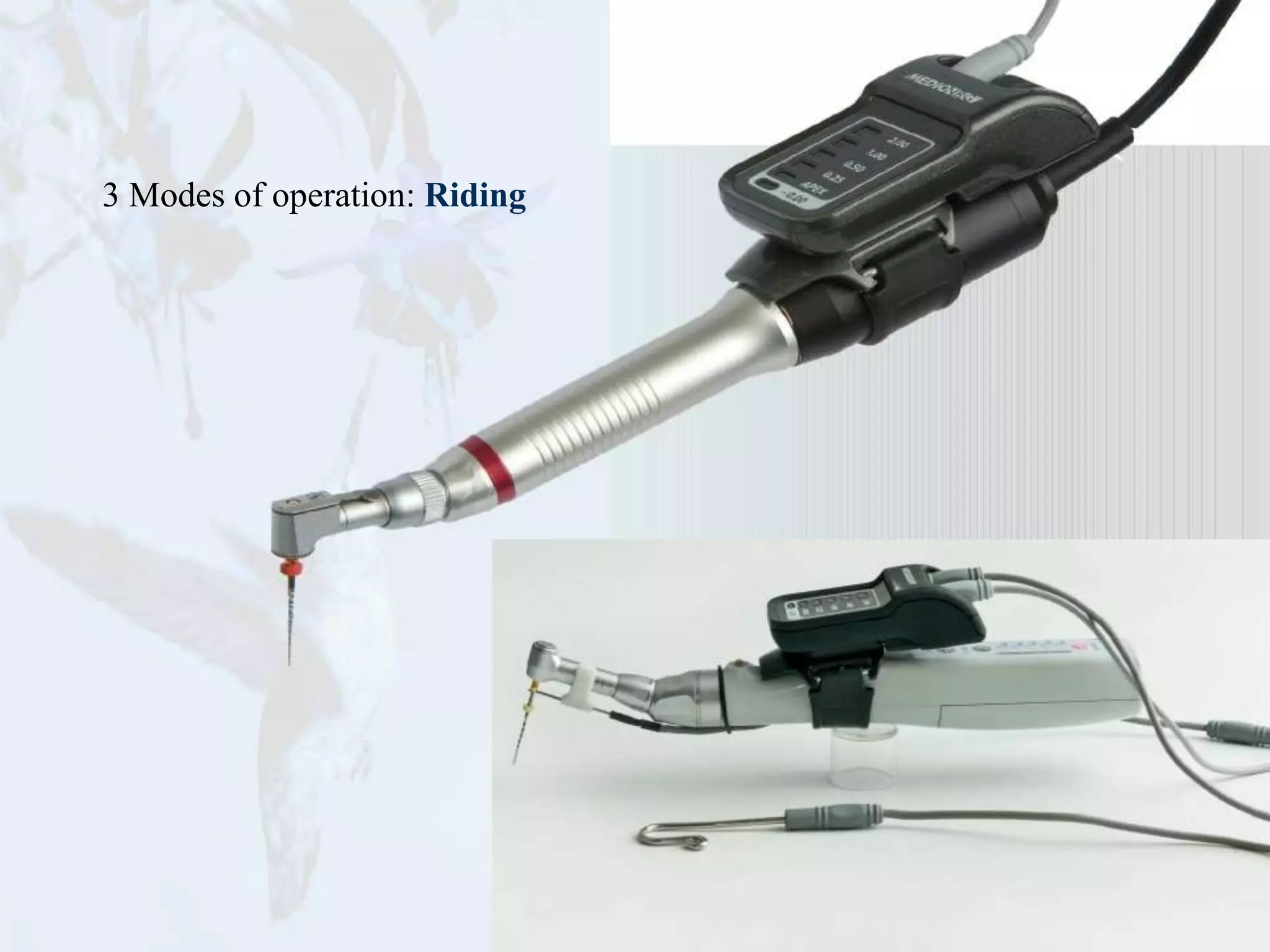
3 Modes of operation: Riding
3 Modes of operation: Satellite
3 Modes of operation: Manually
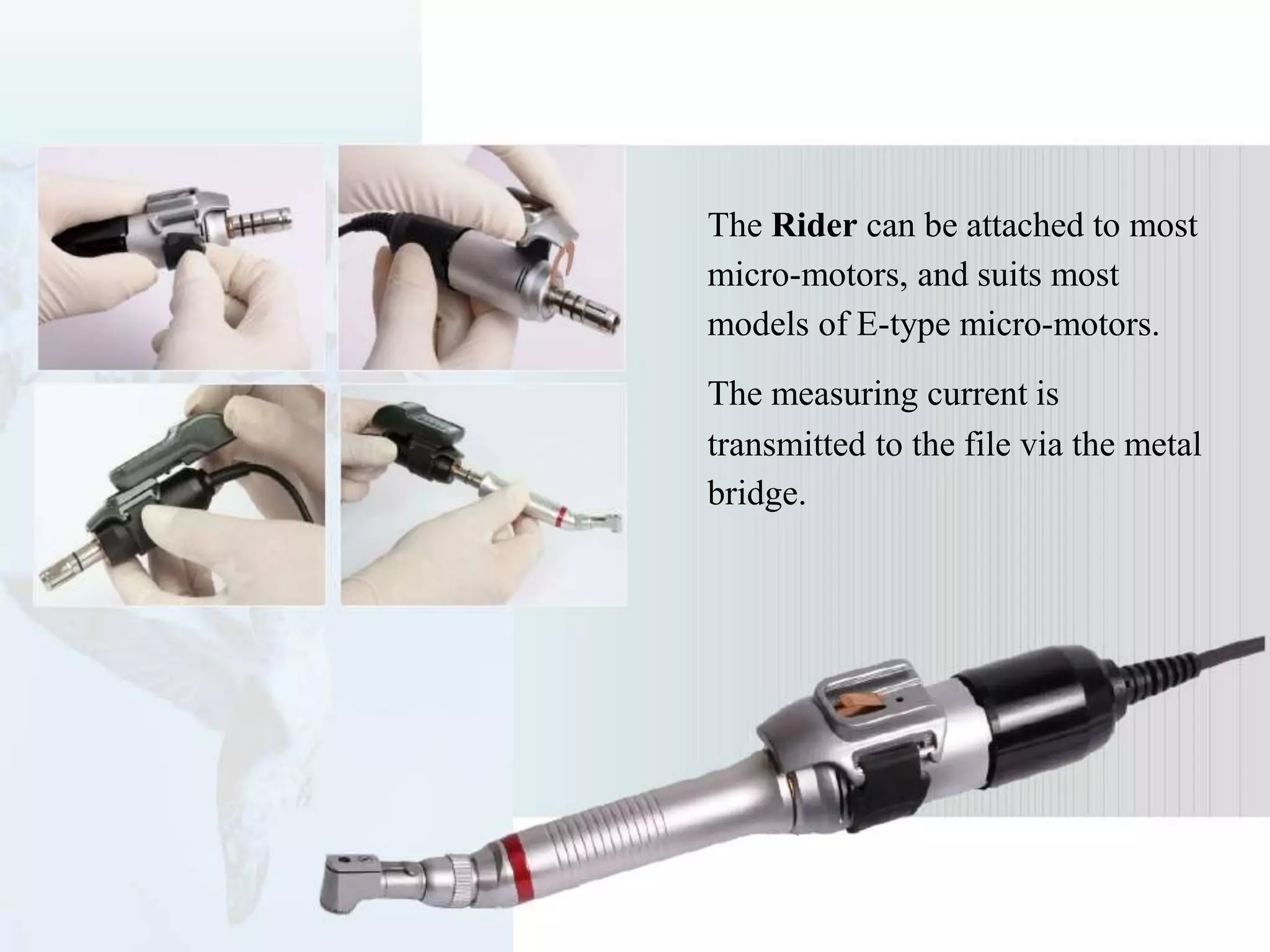
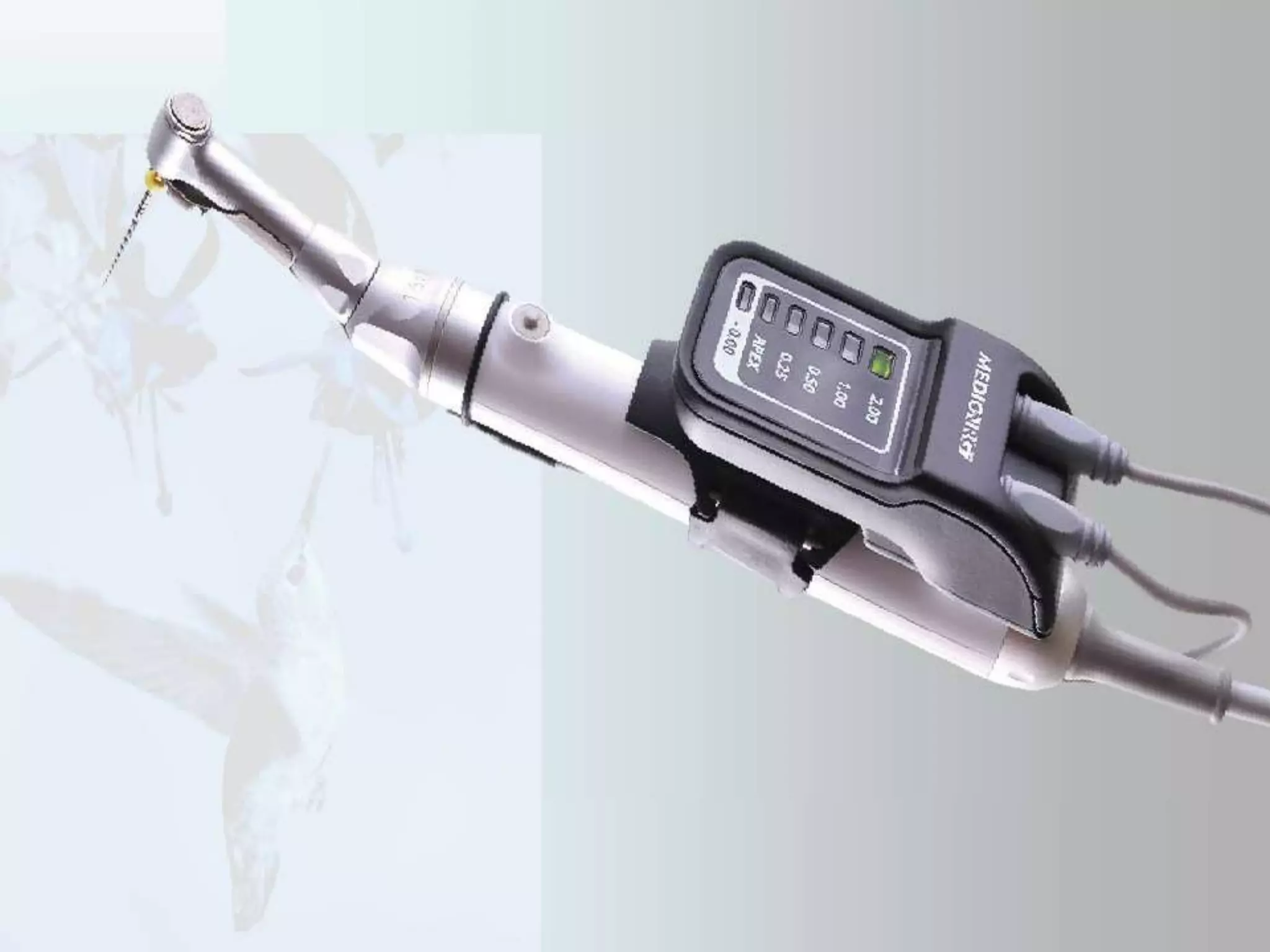
The Rider can be attached to most
micro-motors, and suits most
models of E-type micro-motors.
The measuring current is
transmitted to the file via the metal
bridge.
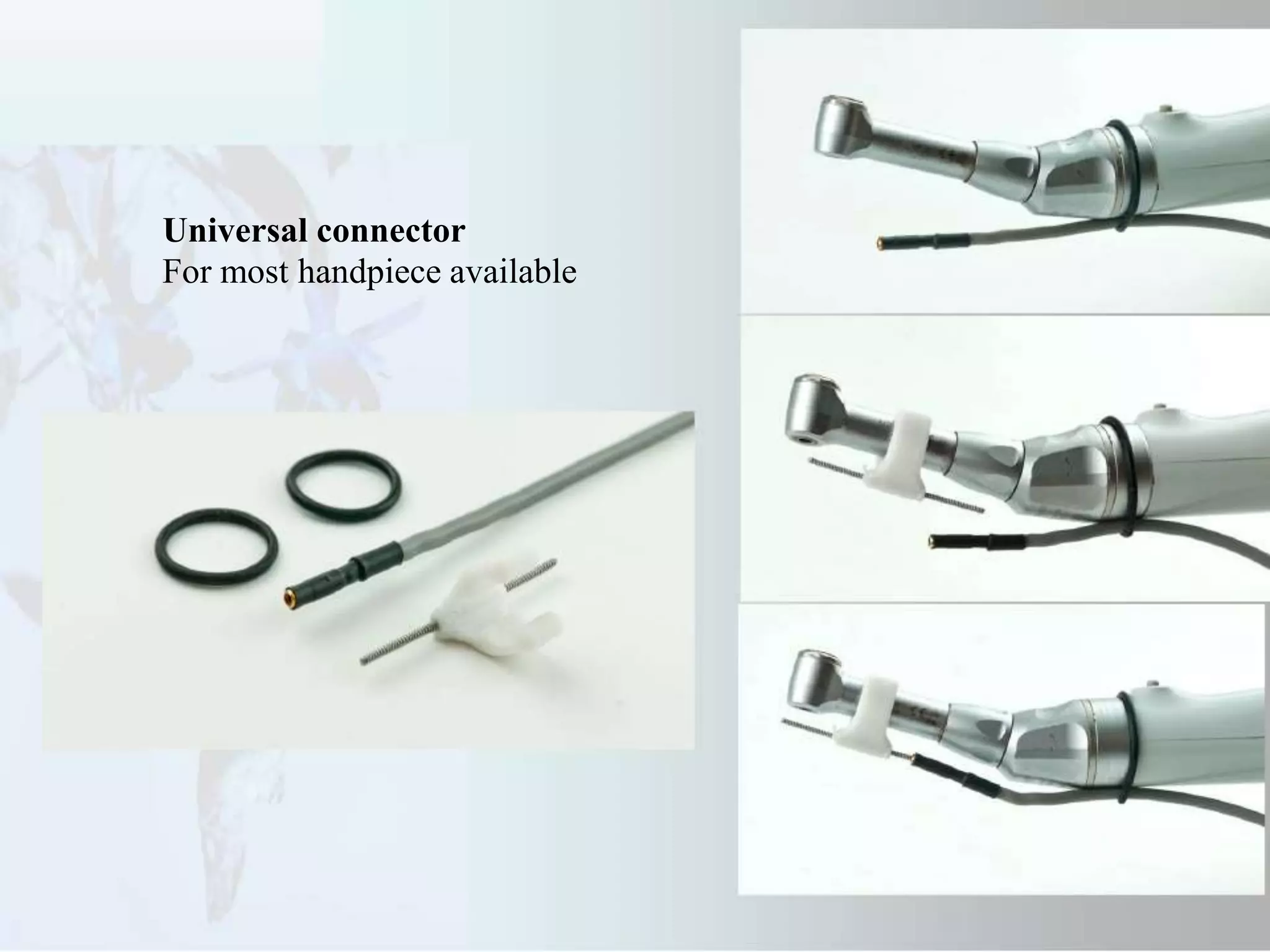
Universal connector
For most handpiece available
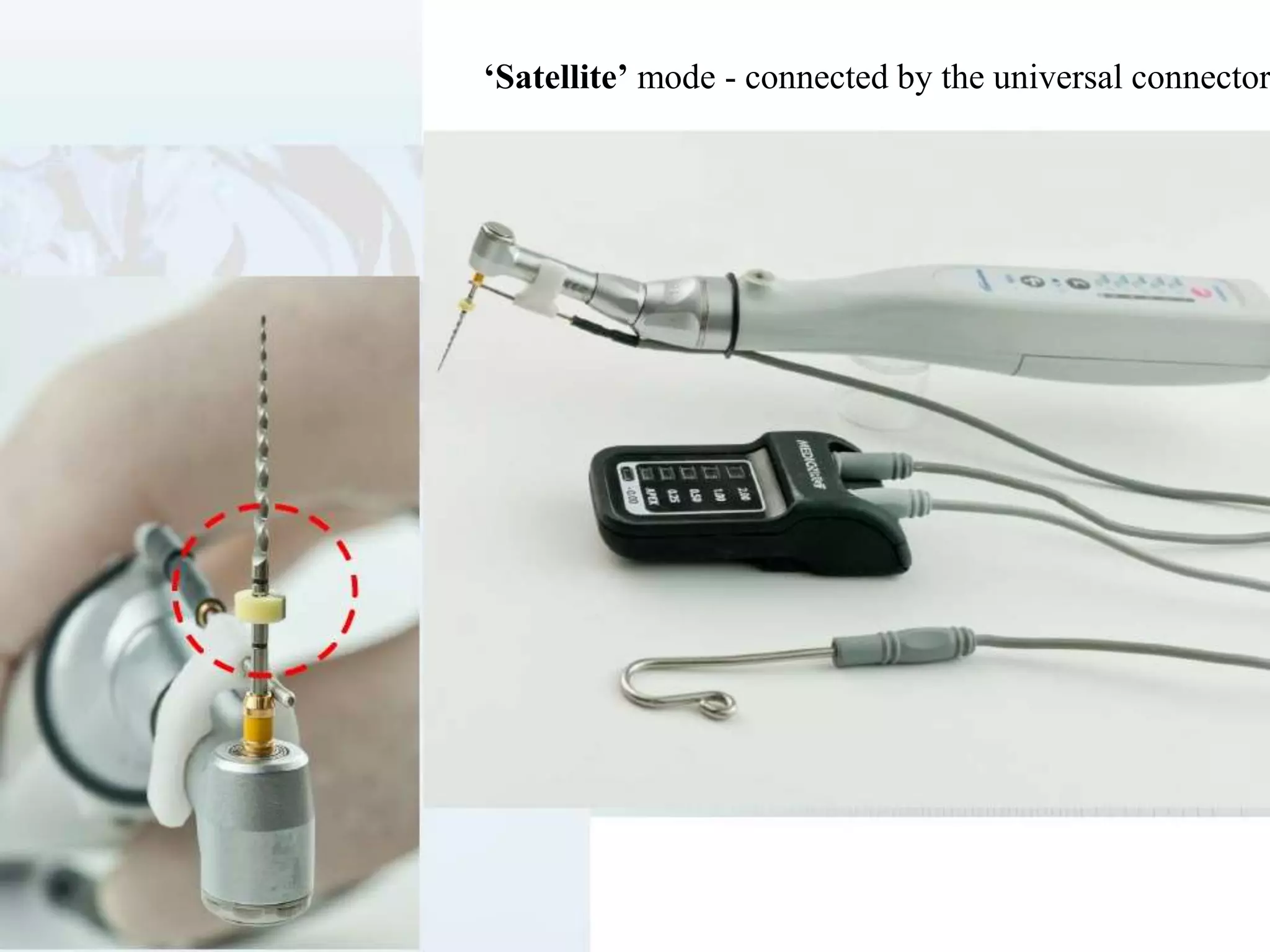
‘Satellite’ mode - connected by the universal connector
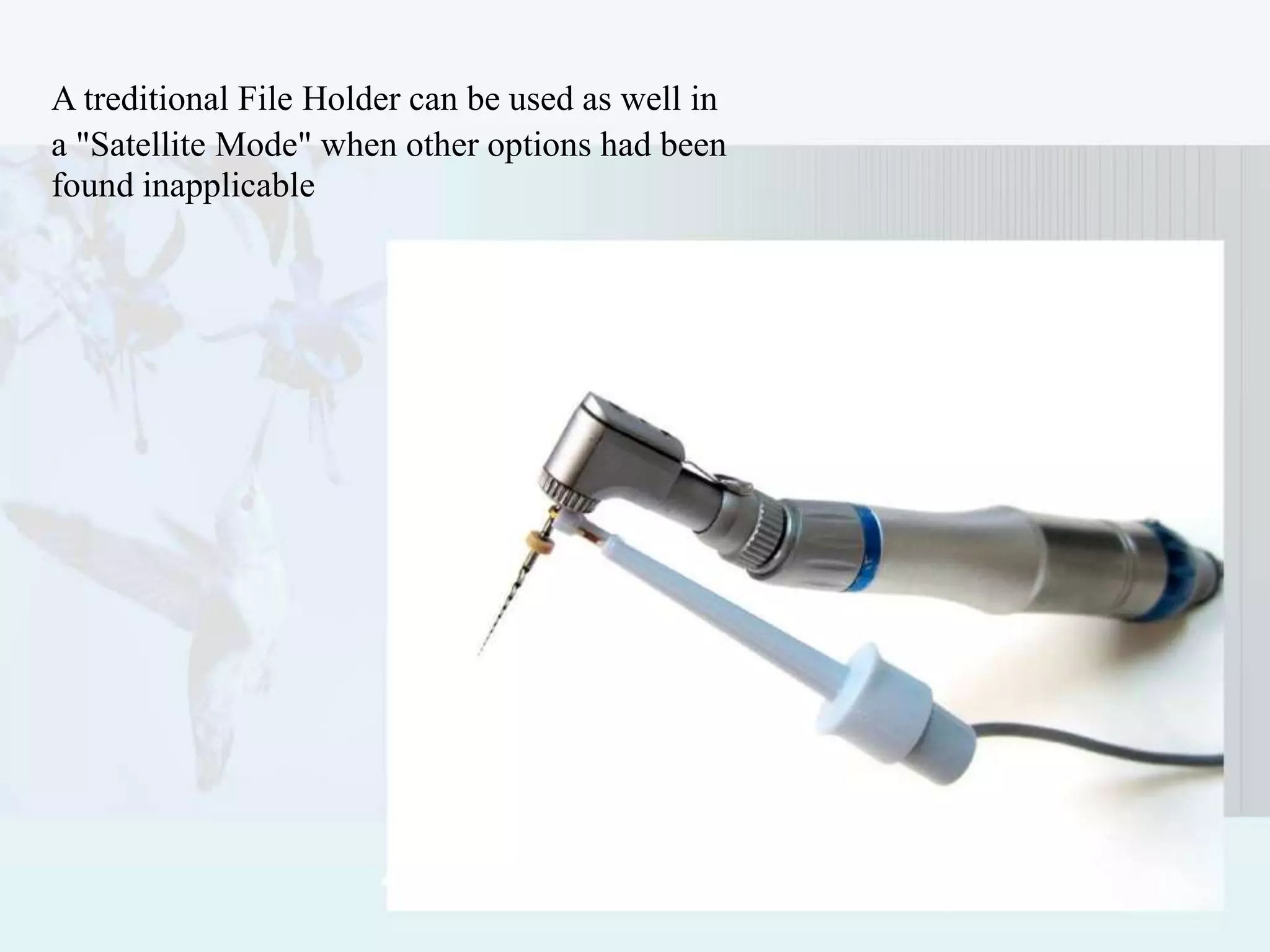
A treditional File Holder can be used as well in
a "Satellite Mode" when other options had been
found inapplicable
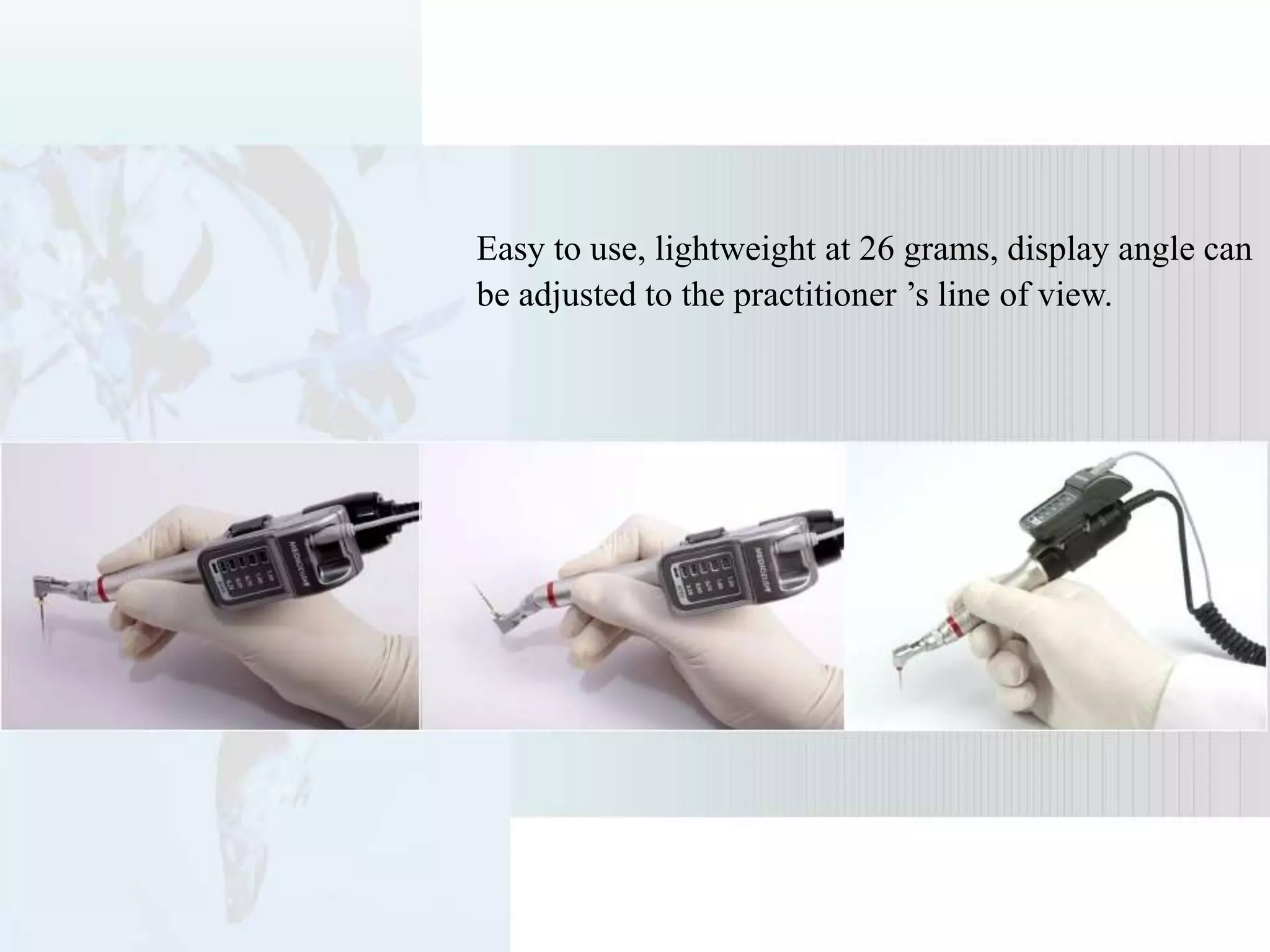
Easy to use, lightweight at 26 grams, display angle can
be adjusted to the practitioner ’s line of view.
Benefits
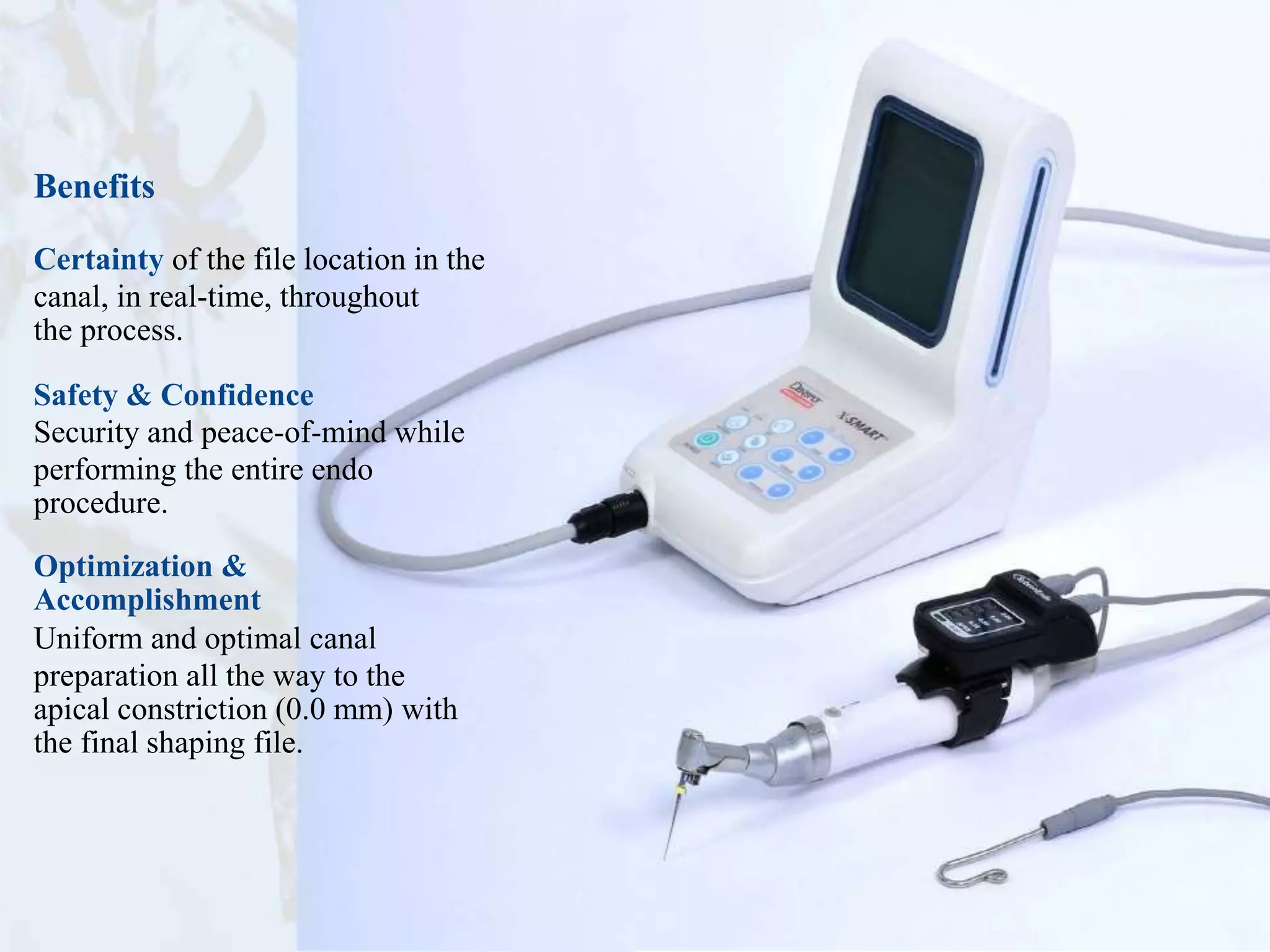
Certainty of the file location in the
canal, in real-time, throughout
the process.
Safety & Confidence
Security and peace-of-mind while
performing the entire endo
procedure.
Optimization &
Accomplishment
Uniform and optimal canal
preparation all the way to the
apical constriction (0.0 mm) with
the final shaping file.
Benefits
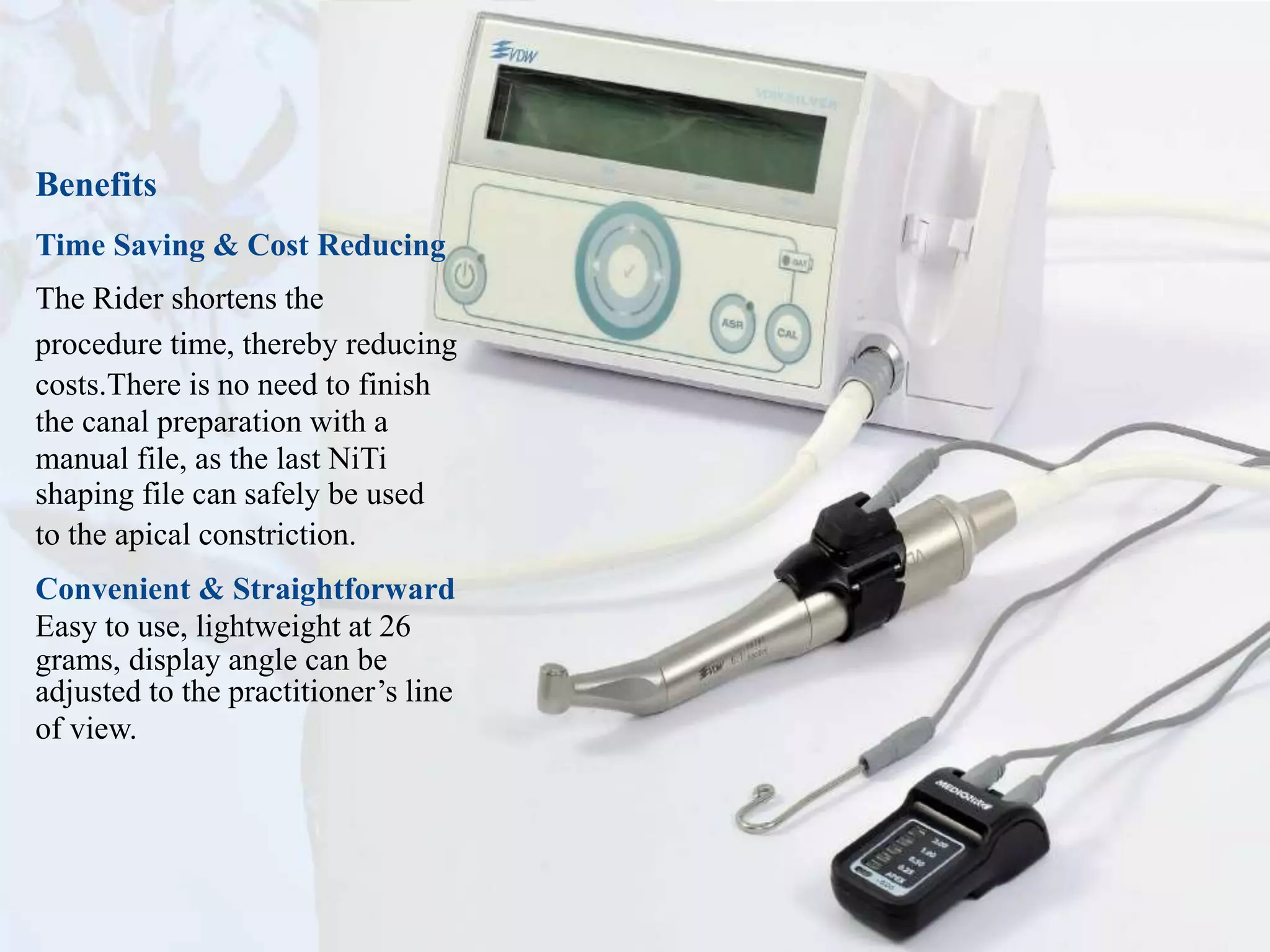
Time Saving & Cost Reducing
The Rider shortens the
procedure time, thereby reducing
costs.There is no need to finish
the canal preparation with a
manual file, as the last NiTi
shaping file can safely be used
to the apical constriction.
Convenient & Straightforward
Easy to use, lightweight at 26
grams, display angle can be
adjusted to the practitioner’s line
of view.
Benefits
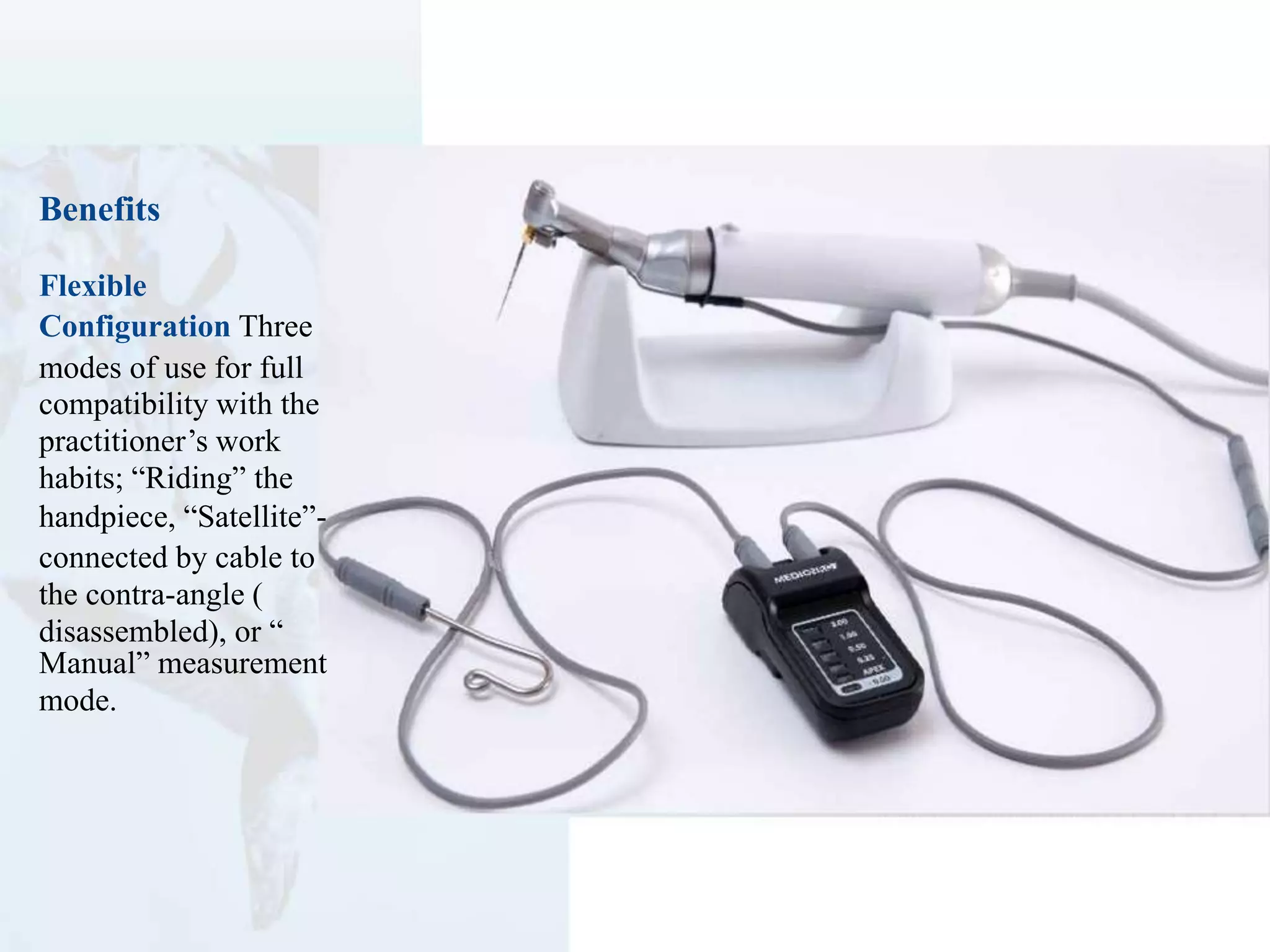
Flexible
Configuration Three
modes of use for full
compatibility with the
practitioner’s work
habits; “Riding” the
handpiece, “Satellite”-
connected by cable to
the contra-angle (
disassembled), or “
Manual” measurement
mode.
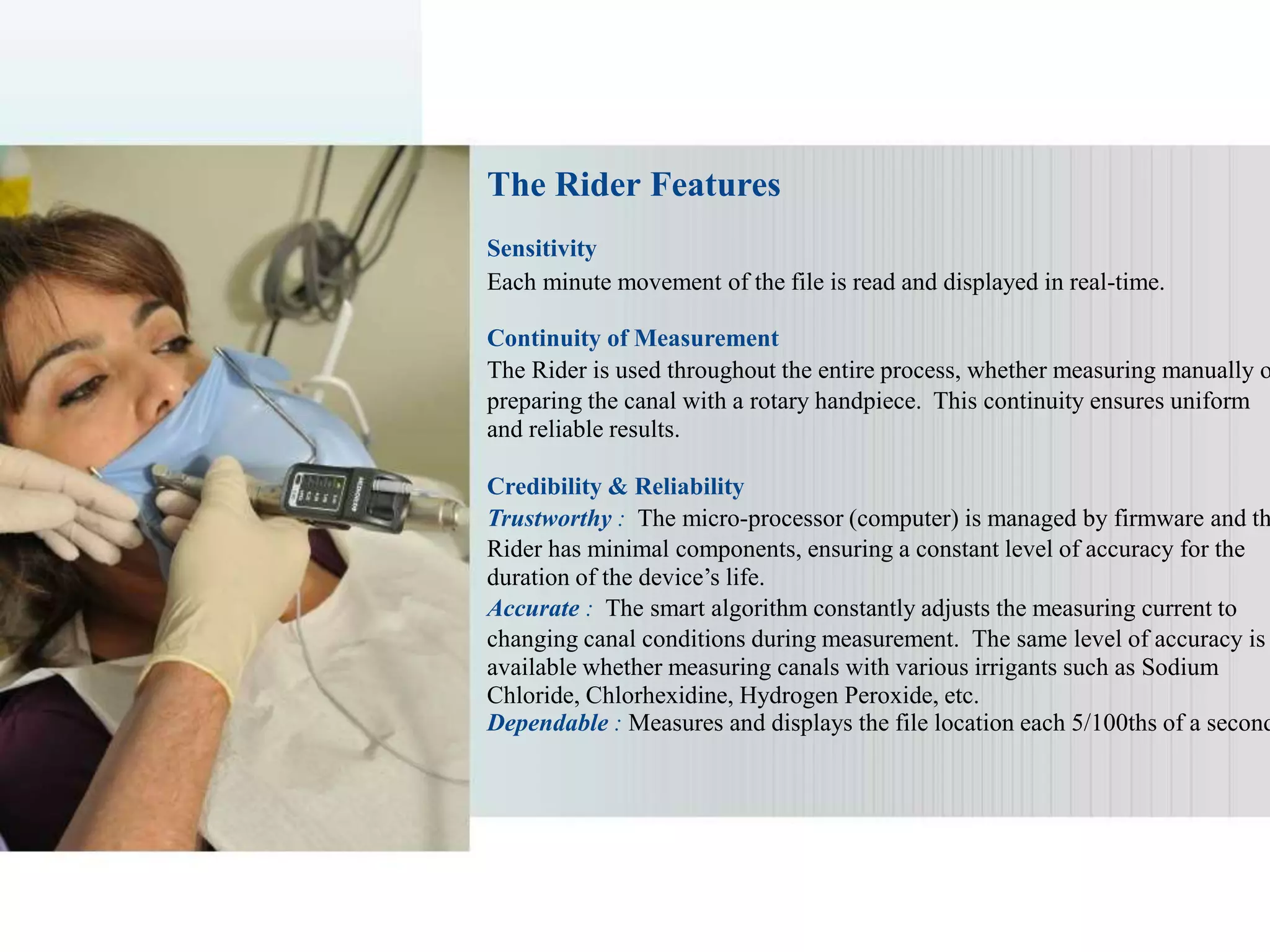
The Rider Features
Sensitivity
Each minute movement of the file is read and displayed in real-time.
Continuity of Measurement
The Rider is used throughout the entire process, whether measuring manually o
preparing the canal with a rotary handpiece. This continuity ensures uniform
and reliable results.
Credibility & Reliability
Trustworthy : The micro-processor (computer) is managed by firmware and th
Rider has minimal components, ensuring a constant level of accuracy for the
duration of the device’s life.
Accurate : The smart algorithm constantly adjusts the measuring current to
changing canal conditions during measurement. The same level of accuracy is
available whether measuring canals with various irrigants such as Sodium
Chloride, Chlorhexidine, Hydrogen Peroxide, etc.
Dependable : Measures and displays the file location each 5/100ths of a second
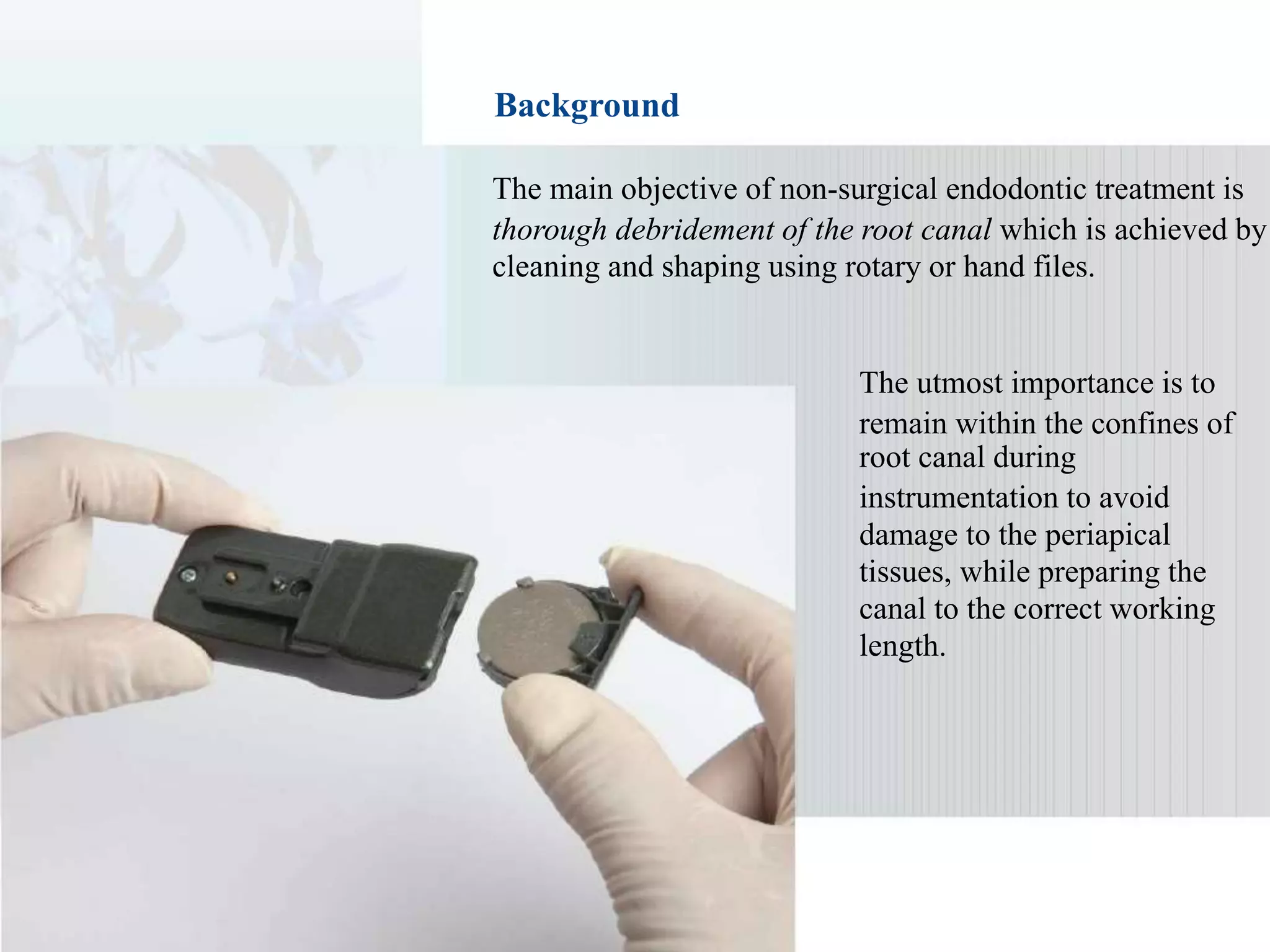
Background
The main objective of non-surgical endodontic treatment is
thorough debridement of the root canal which is achieved by
cleaning and shaping using rotary or hand files.
The utmost importance is to
remain within the confines of
root canal during
instrumentation to avoid
damage to the periapical
tissues, while preparing the
canal to the correct working
length.
Sensitivity, safety and control of the file’s location:
Comparison between rotary handpiece and manual file usage
When using a manual file , there is a much higher level of sensitivity
and control of the force applied to the advancement of the file. The
advancement is slower and controlled. Therefore, it is easier to
measure the file’s motion and location using an apex locator.
When using a rotary handpiece , vertical forces are applied to the
advancement of the file via the automatic handpieces.
Visual observation is limited and relies upon the rubber stopper. The
control of the location of the file in the last 1-2 mm of the apical regio
is very problematic. It is difficult to measure location, especially due t
the length and rapid movement of the file.
Therefore the quality and swiftness of canal preparation using a
handpiece is always in conflict with the safety of the procedure
Why are the existing apex locator / handpiece integrations
unreliable?
Analog devices have a naturally slower response time, which is not
very perceptible when performing manual measurements. But this
delayed response time becomes a huge obstacle to reliable
measurements when using rotary handpieces. The swift rotation
and continuous penetrating movement impede the apex locator’s
ability to gauge where the file is in a timely, in real-time manner.
When faced with the choice of no measurement or using an
unreliable integrated apex locator, many dentists have decided that
no measurement is a better option. This is the reason that the
integrated handpiece / EAL’s with torque and speed control have
not really been able to grab a significant market share.
Quality or Safety?
The rubber stopper indicates that the NiTi file has reached (about !)
2 mm from the apical constriction. What to do now?
•
•
•
•
Some dentists will put aside the rotary handpiece and use a
manual file until the working length is reached.
Some will try to reduce the vertical forces and continue until an
estimated length short of 1-0.5 mm is reached, finishing the
preparation there.
Some will take a chance of over-instrumentation and advance to
the full working length.
Some will gamble upon the analog apex locator integrated in th
handpiece control box.
Whichever option is chosen, the dentist will need to either
compromise quality or safety.
Preparing a canal with a rotary handpiece greatly enhances the
quality by enabling of the Sodium Hypochlorite to reach the end
of the canal, overcoming the capillarity of the irrigants.
Therefore, it is important for the NiTi file to reach the apical
constriction. In order to do so, maximum control of the file’s
location is critical, to ensure there is no damage to the apical
tissue.
So how do we do that?
We need to find an apex locator that:
● Measures with a tolerance of 0.1 mm
● Has swift, on-line response, continuously reading the file’s motion.
● Is located on or near the handpiece, ensuring that the display will always be within the dentist’s
line of vision.
● Is lightweight apex locator, without added weight to impair the use of the handpiece.
● Has an easy to read, milli-metric display, with audible alarms that change frequency as the file
approaches the apical constriction.
● An audible alarm.
● Can be used to measure canal length with or without the handpiece.
● Automatically calibrates the measuring current to the actual conditions: wet, dry or bleeding Has a
long warranty period (at least 4 years).

Apex Locator Presentation

  • 1.
    A new conceptin accuracy and reliabilityApexNRG RIDER Real-Time Handpiece measurements For the first time, it is now possible to digitally measure and read the position of the file with the handpiece in Real-time. The Rider is a Digital apex locator designed to work with a handpieces giving real-time measurements
  • 2.
    One apex locator, Twoapplications Use the same device first for manual measurement then for use with a rotary handpiece. Achieve continuous, accurate in real-time readings o the file location even during rapid movement of the handpiece. Maintain maximum control and accuracy throughout the entire canal preparation procedure.
  • 3.
    3 Modes ofoperation: Riding
  • 4.
    3 Modes ofoperation: Satellite
  • 5.
    3 Modes ofoperation: Manually
  • 6.
    The Rider canbe attached to most micro-motors, and suits most models of E-type micro-motors. The measuring current is transmitted to the file via the metal bridge.
  • 7.
    Universal connector For mosthandpiece available
  • 8.
    ‘Satellite’ mode -connected by the universal connector
  • 9.
    A treditional FileHolder can be used as well in a "Satellite Mode" when other options had been found inapplicable
  • 10.
    Easy to use,lightweight at 26 grams, display angle can be adjusted to the practitioner ’s line of view.
  • 11.
    Benefits Certainty of thefile location in the canal, in real-time, throughout the process. Safety & Confidence Security and peace-of-mind while performing the entire endo procedure. Optimization & Accomplishment Uniform and optimal canal preparation all the way to the apical constriction (0.0 mm) with the final shaping file.
  • 12.
    Benefits Time Saving &Cost Reducing The Rider shortens the procedure time, thereby reducing costs.There is no need to finish the canal preparation with a manual file, as the last NiTi shaping file can safely be used to the apical constriction. Convenient & Straightforward Easy to use, lightweight at 26 grams, display angle can be adjusted to the practitioner’s line of view.
  • 13.
    Benefits Flexible Configuration Three modes ofuse for full compatibility with the practitioner’s work habits; “Riding” the handpiece, “Satellite”- connected by cable to the contra-angle ( disassembled), or “ Manual” measurement mode.
  • 14.
    The Rider Features Sensitivity Eachminute movement of the file is read and displayed in real-time. Continuity of Measurement The Rider is used throughout the entire process, whether measuring manually o preparing the canal with a rotary handpiece. This continuity ensures uniform and reliable results. Credibility & Reliability Trustworthy : The micro-processor (computer) is managed by firmware and th Rider has minimal components, ensuring a constant level of accuracy for the duration of the device’s life. Accurate : The smart algorithm constantly adjusts the measuring current to changing canal conditions during measurement. The same level of accuracy is available whether measuring canals with various irrigants such as Sodium Chloride, Chlorhexidine, Hydrogen Peroxide, etc. Dependable : Measures and displays the file location each 5/100ths of a second
  • 16.
    Background The main objectiveof non-surgical endodontic treatment is thorough debridement of the root canal which is achieved by cleaning and shaping using rotary or hand files. The utmost importance is to remain within the confines of root canal during instrumentation to avoid damage to the periapical tissues, while preparing the canal to the correct working length.
  • 17.
    Sensitivity, safety andcontrol of the file’s location: Comparison between rotary handpiece and manual file usage When using a manual file , there is a much higher level of sensitivity and control of the force applied to the advancement of the file. The advancement is slower and controlled. Therefore, it is easier to measure the file’s motion and location using an apex locator. When using a rotary handpiece , vertical forces are applied to the advancement of the file via the automatic handpieces. Visual observation is limited and relies upon the rubber stopper. The control of the location of the file in the last 1-2 mm of the apical regio is very problematic. It is difficult to measure location, especially due t the length and rapid movement of the file. Therefore the quality and swiftness of canal preparation using a handpiece is always in conflict with the safety of the procedure
  • 18.
    Why are theexisting apex locator / handpiece integrations unreliable? Analog devices have a naturally slower response time, which is not very perceptible when performing manual measurements. But this delayed response time becomes a huge obstacle to reliable measurements when using rotary handpieces. The swift rotation and continuous penetrating movement impede the apex locator’s ability to gauge where the file is in a timely, in real-time manner. When faced with the choice of no measurement or using an unreliable integrated apex locator, many dentists have decided that no measurement is a better option. This is the reason that the integrated handpiece / EAL’s with torque and speed control have not really been able to grab a significant market share.
  • 19.
    Quality or Safety? Therubber stopper indicates that the NiTi file has reached (about !) 2 mm from the apical constriction. What to do now? • • • • Some dentists will put aside the rotary handpiece and use a manual file until the working length is reached. Some will try to reduce the vertical forces and continue until an estimated length short of 1-0.5 mm is reached, finishing the preparation there. Some will take a chance of over-instrumentation and advance to the full working length. Some will gamble upon the analog apex locator integrated in th handpiece control box. Whichever option is chosen, the dentist will need to either compromise quality or safety.
  • 20.
    Preparing a canalwith a rotary handpiece greatly enhances the quality by enabling of the Sodium Hypochlorite to reach the end of the canal, overcoming the capillarity of the irrigants. Therefore, it is important for the NiTi file to reach the apical constriction. In order to do so, maximum control of the file’s location is critical, to ensure there is no damage to the apical tissue.
  • 21.
    So how dowe do that? We need to find an apex locator that: ● Measures with a tolerance of 0.1 mm ● Has swift, on-line response, continuously reading the file’s motion. ● Is located on or near the handpiece, ensuring that the display will always be within the dentist’s line of vision. ● Is lightweight apex locator, without added weight to impair the use of the handpiece. ● Has an easy to read, milli-metric display, with audible alarms that change frequency as the file approaches the apical constriction. ● An audible alarm. ● Can be used to measure canal length with or without the handpiece. ● Automatically calibrates the measuring current to the actual conditions: wet, dry or bleeding Has a long warranty period (at least 4 years).