AP MICRO REVIEW
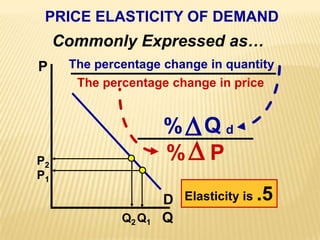
Q% d% PPRICE ELASTICITY OF DEMANDCommonly Expressed as…The percentage change in quantityPThe percentage change in priceP2P1Elasticity is .5DQQ1Q2
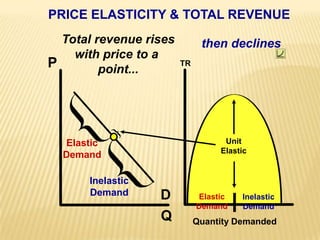
PRICE ELASTICITY & TOTAL REVENUETotal revenue riseswith price to a point...then declinesPTRUnitElasticElasticDemandInelasticDemandDElasticDemandInelasticDemandQQuantity Demanded
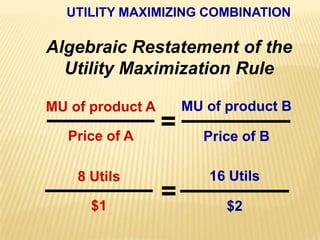
MU of product BMU of product APrice of APrice of B16 Utils8 Utils=$1$2UTILITY MAXIMIZING COMBINATIONAlgebraic Restatement of theUtility Maximization Rule=
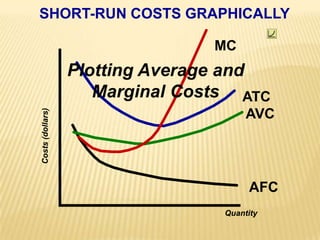
SHORT-RUN COSTS GRAPHICALLYMCPlotting Average andMarginal CostsATCAVCCosts (dollars)AFCQuantity
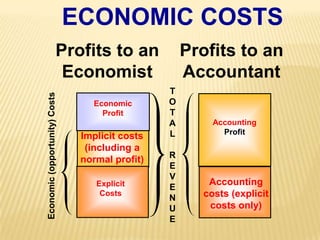
ECONOMIC COSTSEconomicProfitAccountingProfitImplicit costs(including anormal profit)Accountingcosts (explicitcosts only)ExplicitCostsProfits to anEconomistProfits to anAccountantTOTALREVENUEEconomic (opportunity) Costs
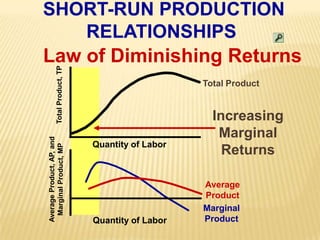
SHORT-RUN PRODUCTIONRELATIONSHIPS Law of Diminishing ReturnsTotal ProductTotal Product, TPIncreasingMarginalReturnsQuantity of LaborAverage Product, AP, andMarginal Product, MPAverageProductMarginalProductQuantity of Labor
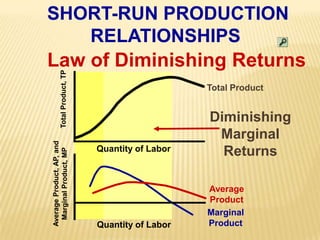
SHORT-RUN PRODUCTIONRELATIONSHIPS Law of Diminishing ReturnsTotal ProductTotal Product, TPDiminishingMarginalReturnsQuantity of LaborAverage Product, AP, andMarginal Product, MPAverageProductMarginalProductQuantity of Labor
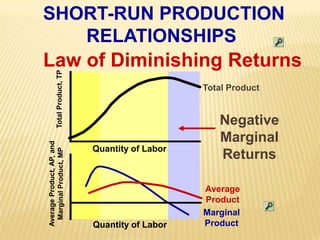
SHORT-RUN PRODUCTIONRELATIONSHIPS Law of Diminishing ReturnsTotal ProductTotal Product, TPNegativeMarginalReturnsQuantity of LaborAverage Product, AP, andMarginal Product, MPAverageProductMarginalProductQuantity of Labor
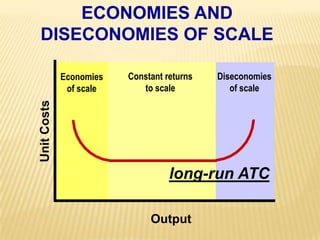
ECONOMIES ANDDISECONOMIES OF SCALEDiseconomiesof scaleConstant returnsto scaleEconomiesof scaleUnit Costslong-run ATCOutput
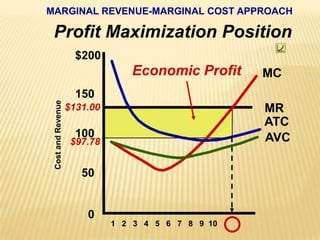
MARGINAL REVENUE-MARGINAL COST APPROACHProfit Maximization Position$200150100  50    0Economic ProfitMCMR$131.00ATCCost and RevenueAVC$97.78 1   2   3   4   5   6   7   8   9  10
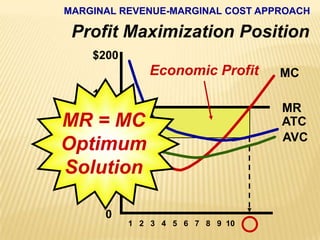
MR = MCOptimumSolutionMARGINAL REVENUE-MARGINAL COST APPROACHProfit Maximization Position$200150100  50    0Economic ProfitMCMR$131.00ATCCost and RevenueAVC$97.78 1   2   3   4   5   6   7   8   9  10
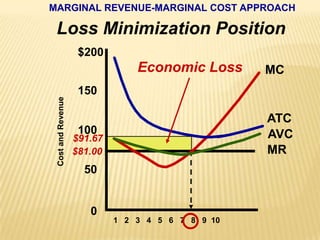
MARGINAL REVENUE-MARGINAL COST APPROACHLoss Minimization Position$200150100  50    0Economic LossMCATCCost and RevenueAVC$91.67MR$81.00 1   2   3   4   5   6   7   8   9  10
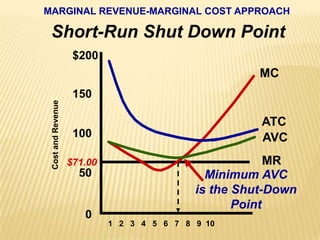
MARGINAL REVENUE-MARGINAL COST APPROACHShort-Run Shut Down Point$200150100  50    0MCATCCost and RevenueAVCMR$71.00Minimum AVCis the Shut-DownPoint 1   2   3   4   5   6   7   8   9  10
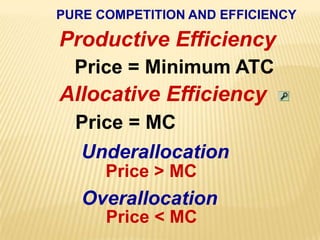
PURE COMPETITION AND EFFICIENCYProductive EfficiencyPrice = Minimum ATCAllocative EfficiencyPrice = MCUnderallocationPrice > MCOverallocationPrice < MC
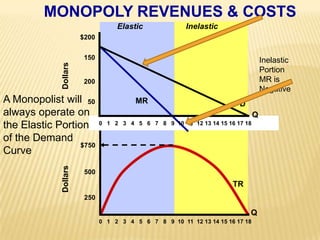
MONOPOLY REVENUES & COSTSInelasticElastic$200150200  50Inelastic PortionMR is NegativeDollarsA Monopolist will always operate on the Elastic Portion of the Demand CurveMRDQ0   1   2   3   4   5   6   7   8   9  10  11  12 13 14 15 16 17 18$750500250DollarsTRQ0   1   2   3   4   5   6   7   8   9  10  11  12 13 14 15 16 17 18
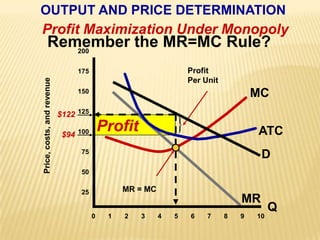
OUTPUT AND PRICE DETERMINATION20017515012510075  5025Price, costs, and revenueQ0       1       2       3       4       5       6       7       8       9       10Profit Maximization Under Monopoly Remember the MR=MC Rule?ProfitPer UnitMC$122ProfitATC$94DMR = MCMR
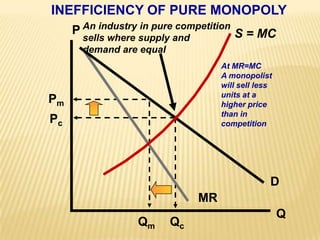
INEFFICIENCY OF PURE MONOPOLYAn industry in pure competitionsells where supply anddemand are equalPS = MCAt MR=MCA monopolistwill sell lessunits at ahigher pricethan incompetitionPmPcDMRQQcQm
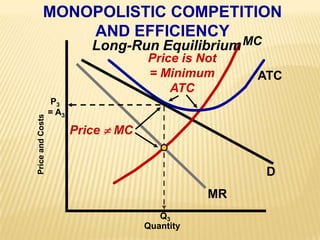
MONOPOLISTIC COMPETITIONAND EFFICIENCYPrice is Not= MinimumATCPrice  MCMCLong-Run EquilibriumATCP3= A3Price and CostsDMRQ3Quantity
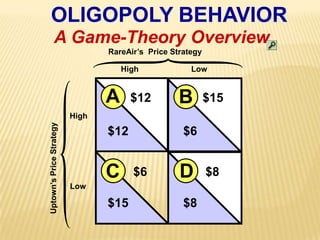
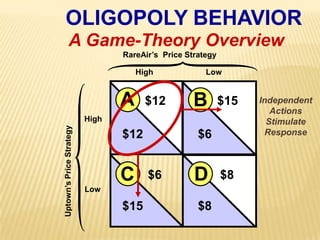
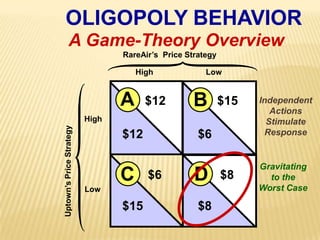
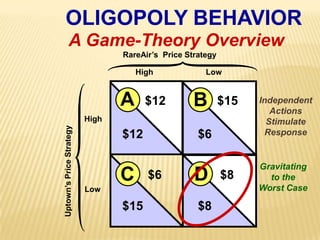
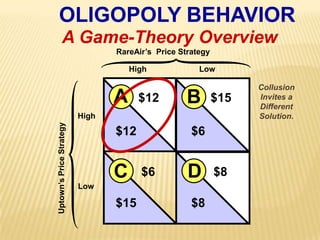
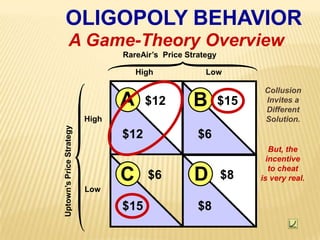
OLIGOPOLY BEHAVIORHighLowAB$12$15High$12$6DC$6$8Low$8$15A Game-Theory OverviewRareAir’s  Price StrategyUptown’s Price Strategy
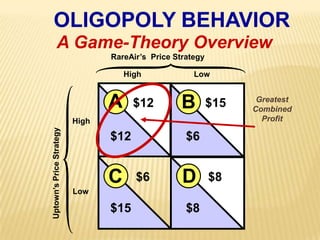
HighLowAB$12$15High$12$6DC$6$8Low$8$15OLIGOPOLY BEHAVIORA Game-Theory OverviewRareAir’s  Price StrategyGreatestCombinedProfitUptown’s Price Strategy
HighLowAB$12$15High$12$6DC$6$8Low$8$15OLIGOPOLY BEHAVIORA Game-Theory OverviewRareAir’s  Price StrategyIndependentActionsStimulateResponseUptown’s Price Strategy
HighLowAB$12$15High$12$6DC$6$8Low$8$15OLIGOPOLY BEHAVIORA Game-Theory OverviewRareAir’s  Price StrategyIndependentActionsStimulateResponseUptown’s Price StrategyGravitatingto theWorst Case
OLIGOPOLY BEHAVIORHighLowAB$12$15High$12$6DC$6$8Low$8$15A Game-Theory OverviewRareAir’s  Price StrategyCollusionInvites aDifferentSolution.Uptown’s Price Strategy
HighLowAB$12$15High$12$6DC$6$8Low$8$15OLIGOPOLY BEHAVIORA Game-Theory OverviewRareAir’s  Price StrategyCollusionInvites aDifferentSolution.But, theincentiveto cheatis very real.Uptown’s Price Strategy
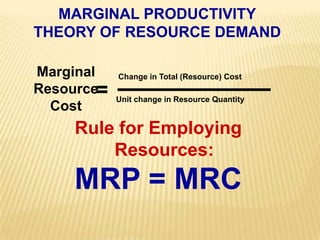
MarginalResourceCostChange in Total (Resource) CostUnit change in Resource Quantity=MARGINAL PRODUCTIVITYTHEORY OF RESOURCE DEMANDRule for Employing Resources:MRP = MRC
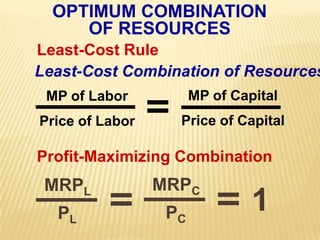
MP of CapitalMP of LaborPrice of CapitalPrice of LaborMRPCMRPL1PCPLOPTIMUM COMBINATIONOF RESOURCESLeast-Cost RuleLeast-Cost Combination of ResourcesProfit-Maximizing Combination
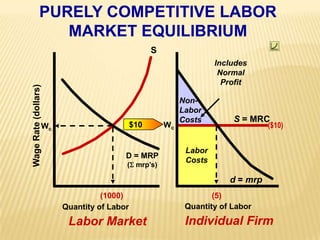
PURELY COMPETITIVE LABORMARKET EQUILIBRIUMNon-LaborCostsWage Rate (dollars)Quantity of LaborQuantity of LaborSIncludesNormalProfitS = MRCWc($10) $10 $10 $10 $10 $10 $10WcLaborCostsD = MRP( mrp’s)d = mrp(1000)(5)Individual FirmLabor Market
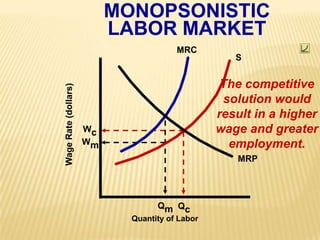
MONOPSONISTICLABOR MARKETMRCSThe competitivesolution wouldresult in a higherwage and greateremployment.Wage Rate (dollars)WcWmMRPQmQcQuantity of Labor
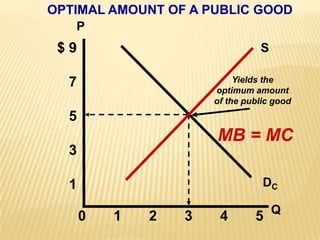
OPTIMAL AMOUNT OF A PUBLIC GOODP$ 9   7   5   3   1SYields theoptimum amountof the public goodMB = MCDCQ0       1       2       3       4       5
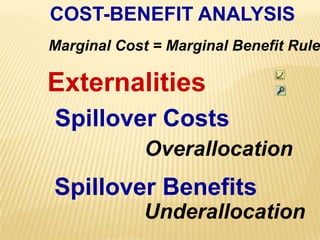
COST-BENEFIT ANALYSISMarginal Cost = Marginal Benefit RuleExternalitiesSpillover CostsOverallocationSpillover BenefitsUnderallocation

Ap micro review