






Any time, any where, any how: flexible learning in practice Sarah Stewart  Otago Polytechnic, Dunedin 2011 http://farm6.static.flickr.com/5207/5366530695_60d25182f5.jpg
 
Five elements of flexible learning Time Delivery and logistics Entry requirements (formal, informal) Instructional approaches and resources (interaction, assessment, strategies  Content
 
Flexible use of time   http://farm1.static.flickr.com/27/51307333_49319d363f.jpg
Attitudes of you and your students to time and place may have to change http://farm1.static.flickr.com/49/110993877_7e91376579.jpg
Can the times you teach better suit students?  How can course time frames suit students’ needs? http://farm1.static.flickr.com/8/9500812_11935bf7a4.jpg
What are the constraints that  impact on time?  http://farm3.static.flickr.com/2686/4086292276_d36fa4d6a8.jpg
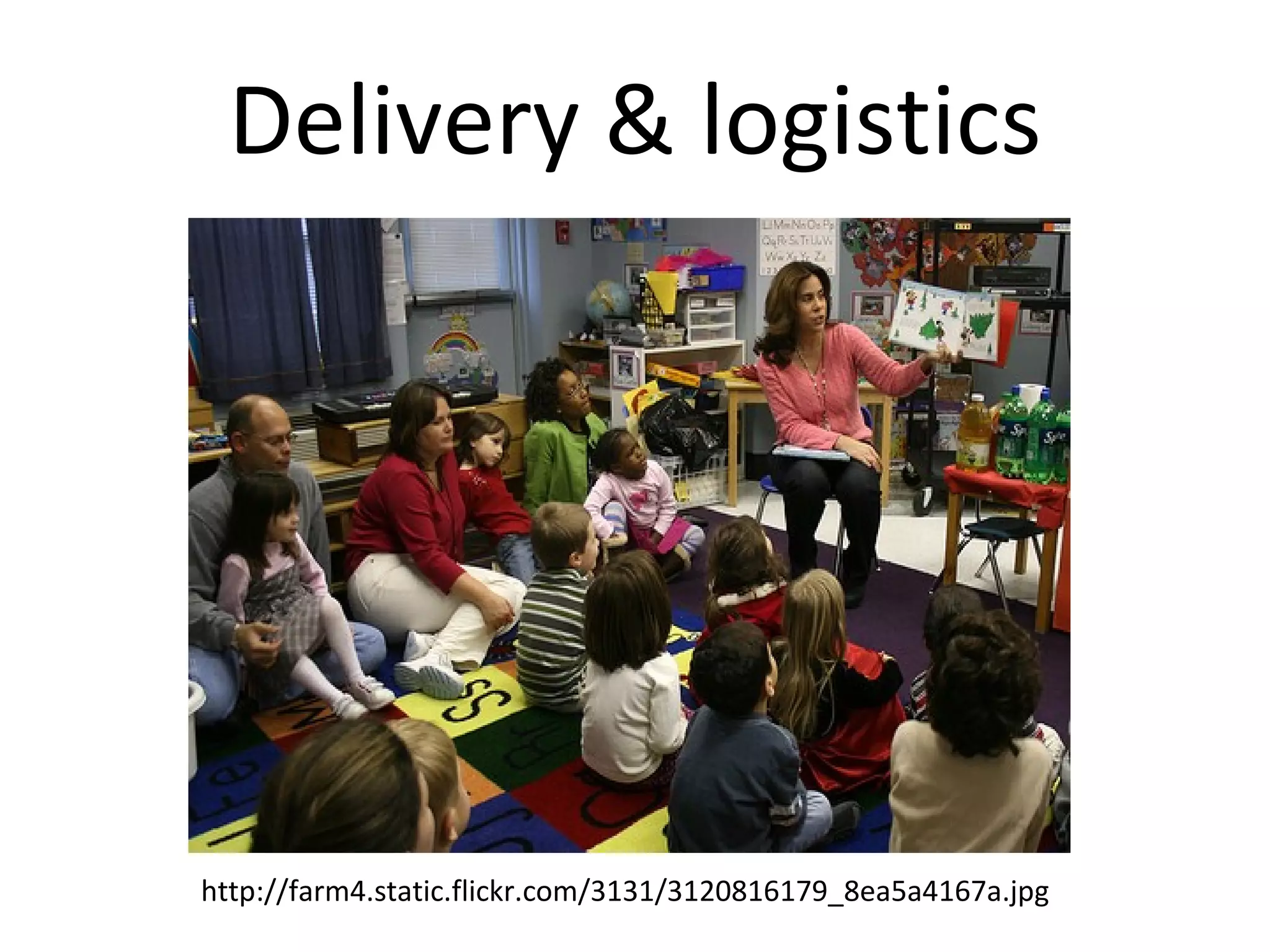
Delivery & logistics http://farm4.static.flickr.com/3131/3120816179_8ea5a4167a.jpg
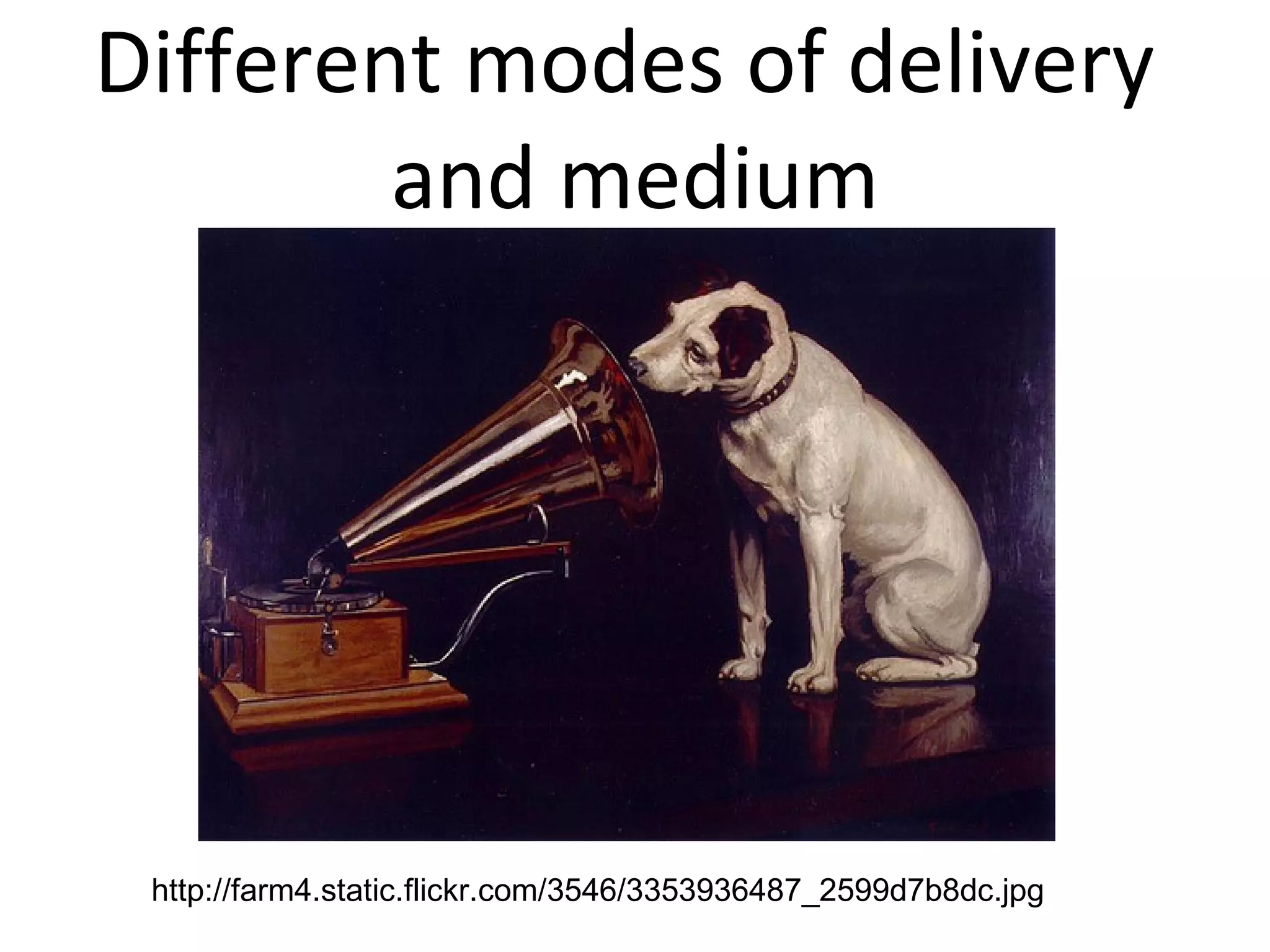
Different modes of delivery  and medium http://farm4.static.flickr.com/3546/3353936487_2599d7b8dc.jpg
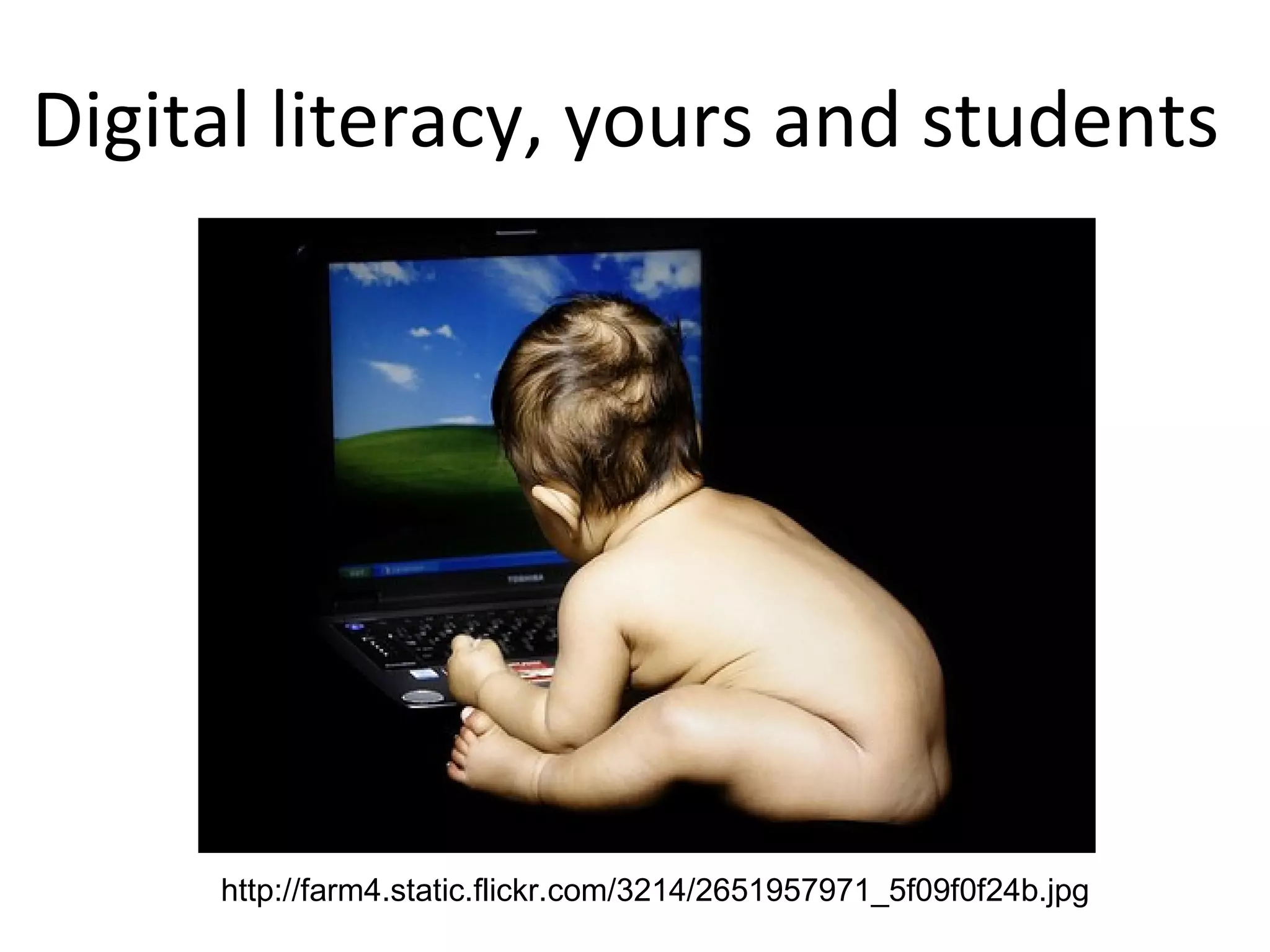
Digital literacy, yours and students  http://farm4.static.flickr.com/3214/2651957971_5f09f0f24b.jpg
How is flexible practice affected by institutional processes? http://farm4.static.flickr.com/3436/3219197135_e2b8a35a03.jpg
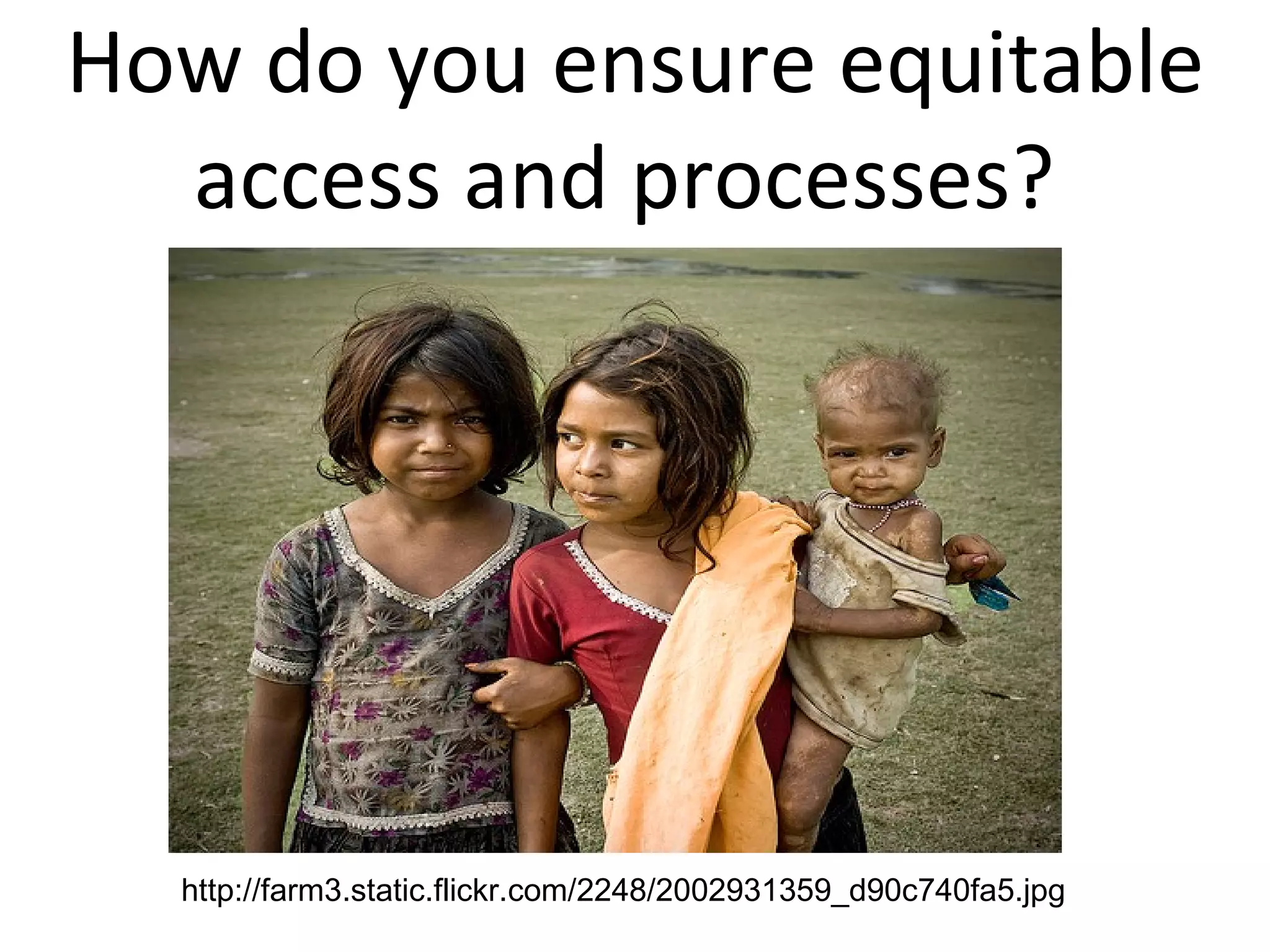
How do you ensure equitable access and processes?  http://farm3.static.flickr.com/2248/2002931359_d90c740fa5.jpg
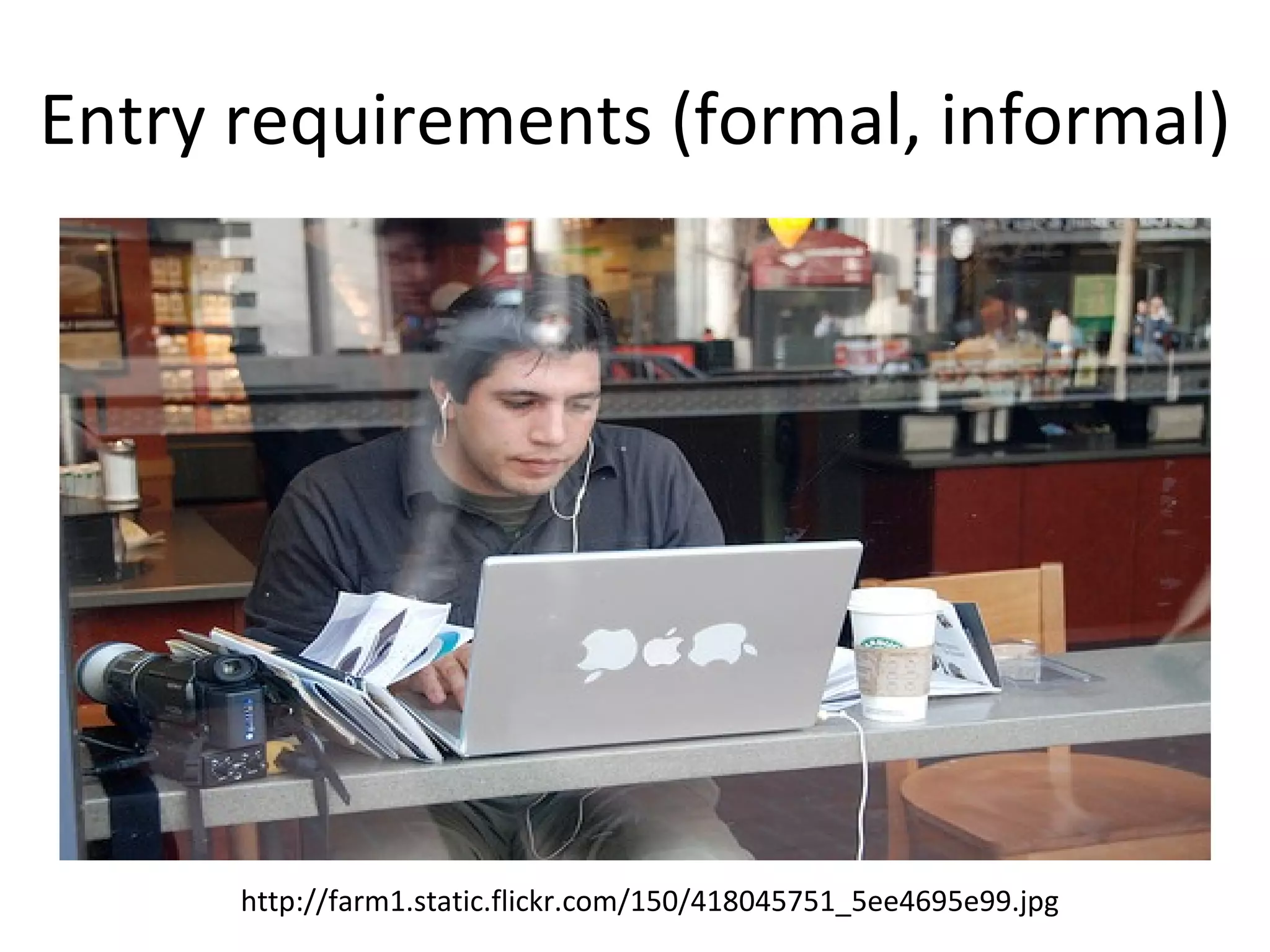
Entry requirements (formal, informal) http://farm1.static.flickr.com/150/418045751_5ee4695e99.jpg
Support for students who  have open entry to a course
Instructional approaches & resources (interaction, assessment, strategies) http://farm3.static.flickr.com/2031/4508732411_c8c6dc210f.jpg
Content  http://farm1.static.flickr.com/8/19650368_ad5e5c496e.jpg
What’s the secret to being a flexible teacher? http://farm6.static.flickr.com/5207/5366530695_60d25182f5.jpg
Letting go of your traditional views of teaching and learning http://farm2.static.flickr.com/1117/1307859206_72c5480e01.jpg
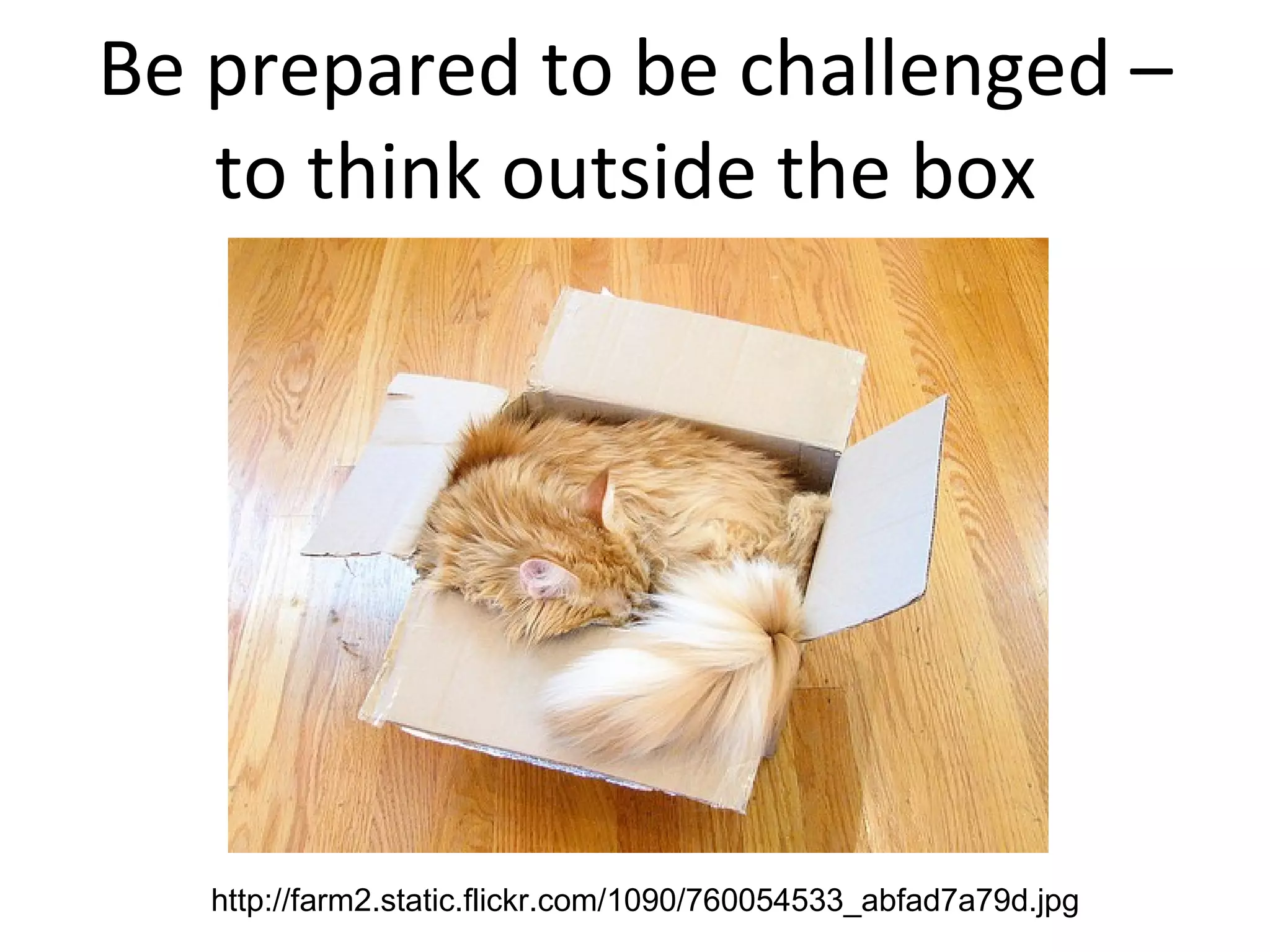
Be prepared to be challenged – to think outside the box  http://farm2.static.flickr.com/1090/760054533_abfad7a79d.jpg
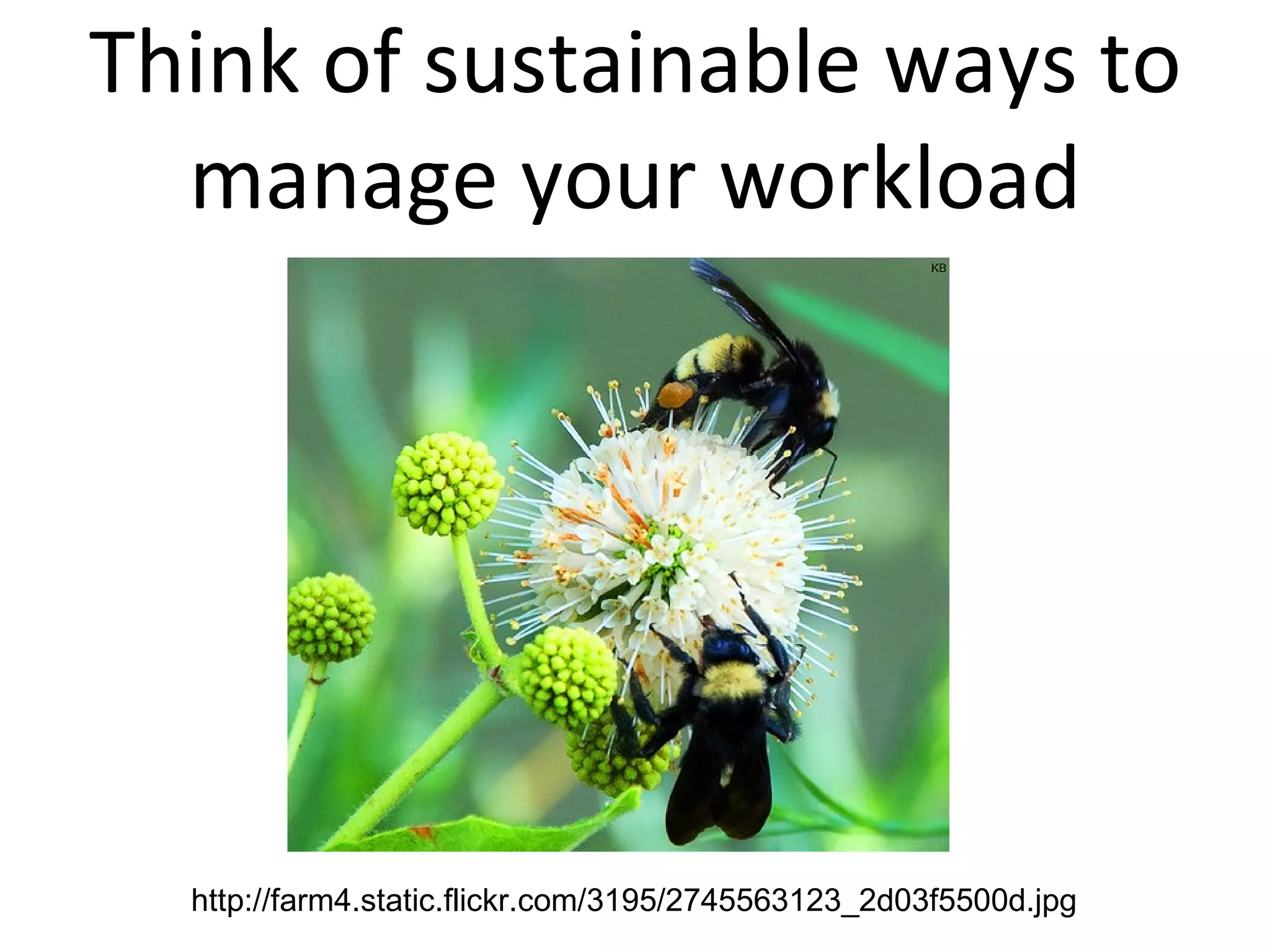
Think of sustainable ways to manage your workload http://farm4.static.flickr.com/3195/2745563123_2d03f5500d.jpg
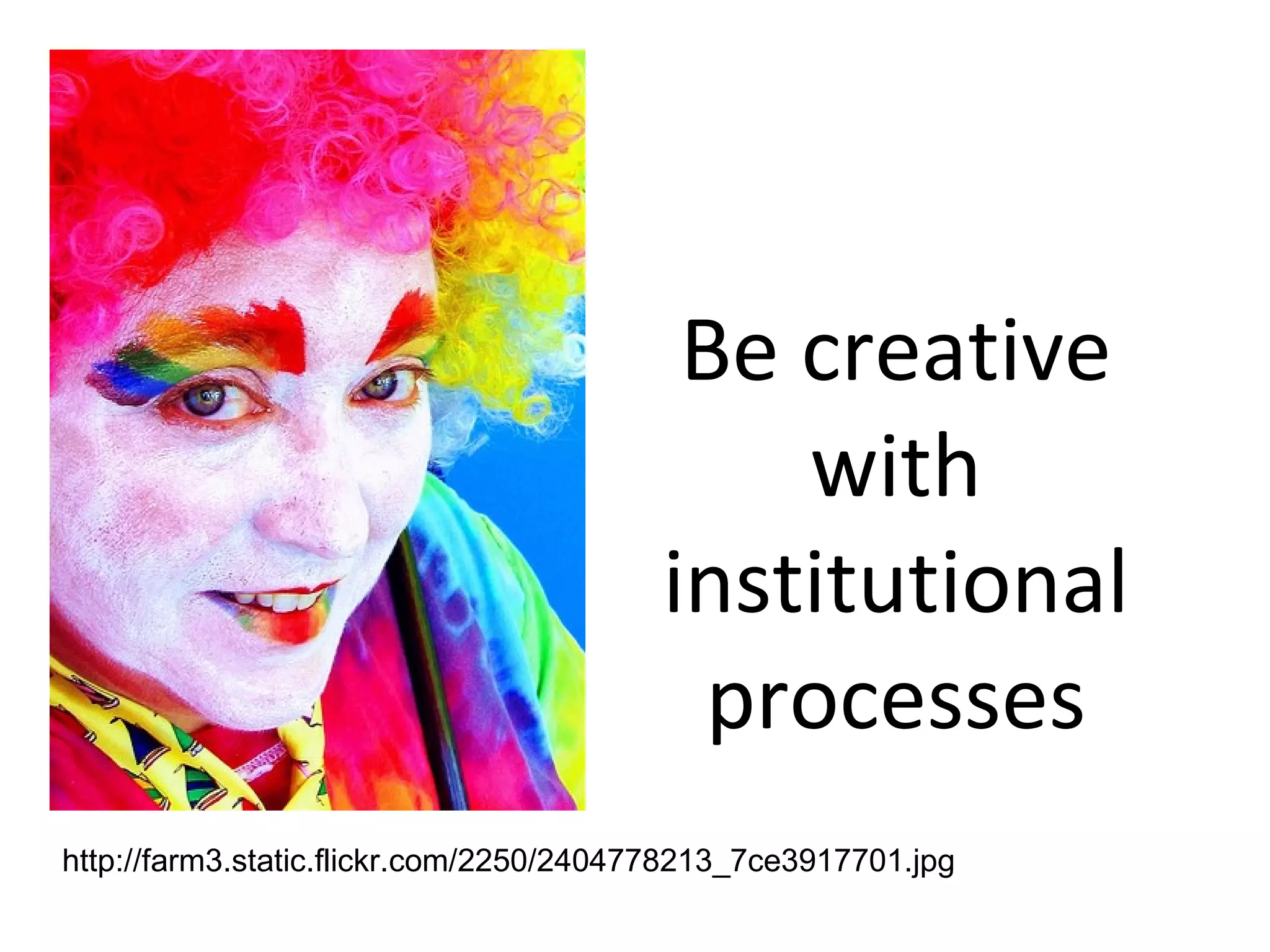
Be creative with institutional processes http://farm3.static.flickr.com/2250/2404778213_7ce3917701.jpg
Email: sarahstewart07@gmail.com Blog:  http://sarah-stewart.blogspot.com Slideshare:  http://www.slideshare.net/sarahs Twitter:  http://twitter.com/SarahStewart

"Any time, any where, any how" - flexible teaching and learning practice

  • 1.
    Any time, anywhere, any how: flexible learning in practice Sarah Stewart Otago Polytechnic, Dunedin 2011 http://farm6.static.flickr.com/5207/5366530695_60d25182f5.jpg
  • 2.
  • 3.
    Five elements offlexible learning Time Delivery and logistics Entry requirements (formal, informal) Instructional approaches and resources (interaction, assessment, strategies Content
  • 4.
  • 5.
    Flexible use oftime http://farm1.static.flickr.com/27/51307333_49319d363f.jpg
  • 6.
    Attitudes of youand your students to time and place may have to change http://farm1.static.flickr.com/49/110993877_7e91376579.jpg
  • 7.
    Can the timesyou teach better suit students? How can course time frames suit students’ needs? http://farm1.static.flickr.com/8/9500812_11935bf7a4.jpg
  • 8.
    What are theconstraints that impact on time? http://farm3.static.flickr.com/2686/4086292276_d36fa4d6a8.jpg
  • 9.
    Delivery & logisticshttp://farm4.static.flickr.com/3131/3120816179_8ea5a4167a.jpg
  • 10.
    Different modes ofdelivery and medium http://farm4.static.flickr.com/3546/3353936487_2599d7b8dc.jpg
  • 11.
    Digital literacy, yoursand students http://farm4.static.flickr.com/3214/2651957971_5f09f0f24b.jpg
  • 12.
    How is flexiblepractice affected by institutional processes? http://farm4.static.flickr.com/3436/3219197135_e2b8a35a03.jpg
  • 13.
    How do youensure equitable access and processes? http://farm3.static.flickr.com/2248/2002931359_d90c740fa5.jpg
  • 14.
    Entry requirements (formal,informal) http://farm1.static.flickr.com/150/418045751_5ee4695e99.jpg
  • 15.
    Support for studentswho have open entry to a course
  • 16.
    Instructional approaches &resources (interaction, assessment, strategies) http://farm3.static.flickr.com/2031/4508732411_c8c6dc210f.jpg
  • 17.
  • 18.
    What’s the secretto being a flexible teacher? http://farm6.static.flickr.com/5207/5366530695_60d25182f5.jpg
  • 19.
    Letting go ofyour traditional views of teaching and learning http://farm2.static.flickr.com/1117/1307859206_72c5480e01.jpg
  • 20.
    Be prepared tobe challenged – to think outside the box http://farm2.static.flickr.com/1090/760054533_abfad7a79d.jpg
  • 21.
    Think of sustainableways to manage your workload http://farm4.static.flickr.com/3195/2745563123_2d03f5500d.jpg
  • 22.
    Be creative withinstitutional processes http://farm3.static.flickr.com/2250/2404778213_7ce3917701.jpg
  • 23.
    Email: sarahstewart07@gmail.com Blog: http://sarah-stewart.blogspot.com Slideshare: http://www.slideshare.net/sarahs Twitter: http://twitter.com/SarahStewart

Editor's Notes

  • #3 Some of the issues we’ll talk about today
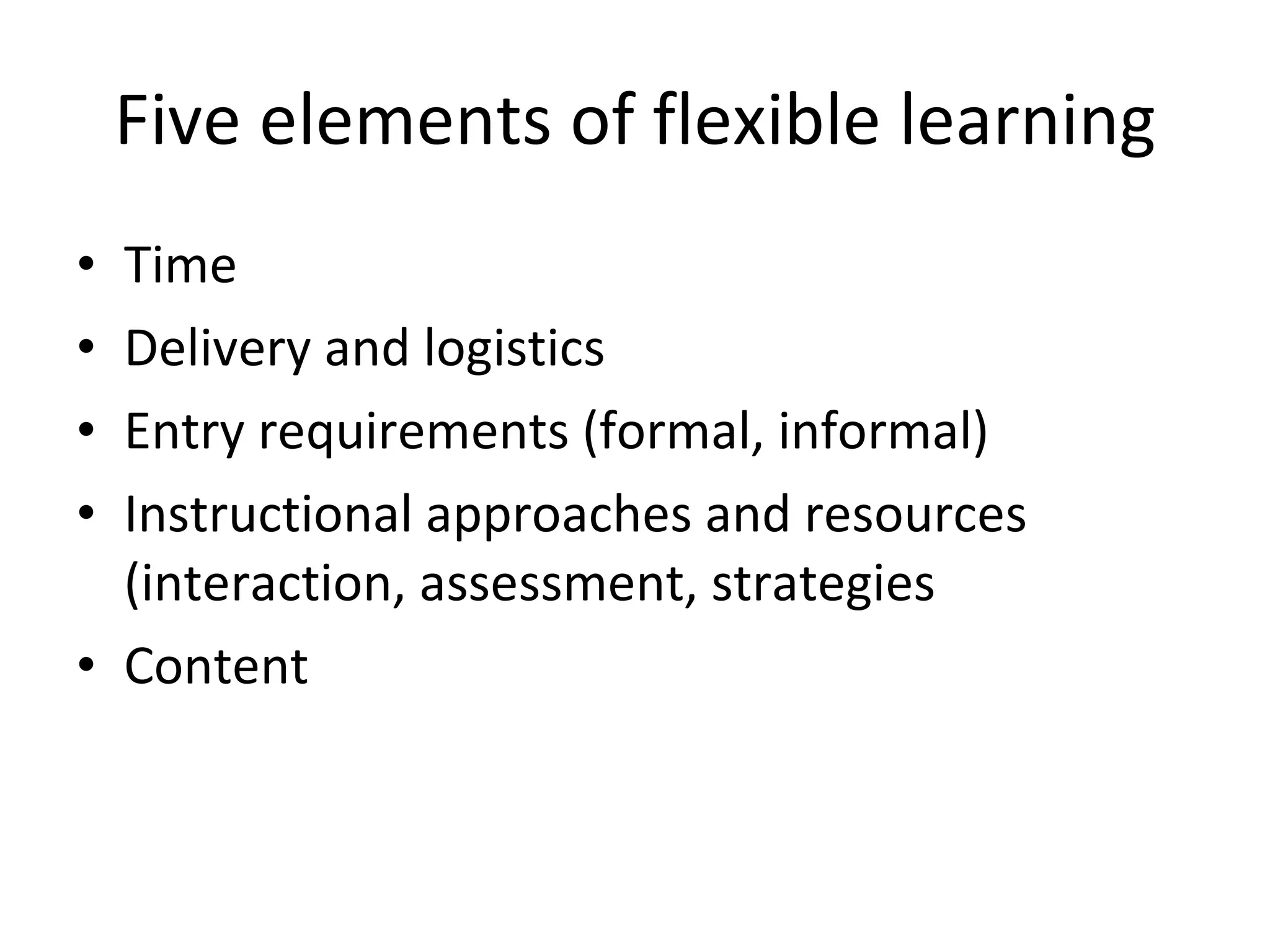
  • #5 Will be telling my story: “ Facilitating Online” – open, online course – Otago Polytechnic Bachelor of Midwifery, Griffth University Virtual International Day of the Midwife My own experiences as student using learning as informal learner which was integrated in GCTLT
  • #6 Flexible about time I deliver content as well as length of course.
  • #8 FO2011 – students have a designated time for the course, but they can have long extensions. They can also do the course as self-directed students because it is in an open environment and then enrol for assessment when they choose Whilst some students like open ended courses, others like a schedule to work to
  • #9 Griffith – time frame for completing so more constraints around that *I have to re-consider my attitudes to how my work – freed me to be flexible in my approach to work, so I suit my needs *Have to support students to think about their attitudes to time *time zones, when working with people overseas *Difficult to please all the people all the time – work out what best suits people *Facilitate other methods of content delivery to suit all time zones etc *Implications about workload for me for people finishing all over the place
  • #10 Mix of delivery modes.
  • #11 Need to think about learning styles – try to keep things exciting and “sexy” . I don’t think so much about learning styles, but more about using a variety of delivery modes.
  • #12 Need to think about digital literacy, and people who do not have access to good computers or Internet. Challenge for me, to develop my technology skills
  • #13 FO2011. Needing to align delivery of course with institution policies eg enrolment of informal students
  • #14 Mix of live and asynchronous – need to think about giving access to students who cannot get to the live session ie recordings Use open content – course materials openly available Re-use of open materials developed my other people eg Nancy White’s work…iFacilitate Griffith – flexible about location, but having issues working through processes about things like moderation and equitable access to resources and learning opportunities.
  • #15 FO2011 Explain model of enrolment
  • #16 Open entry can be problematic for some courses – you will have to think about how you prepare & support students who have academic challenges
  • #17 My experience with CCK2008, transferring in GCTlT & GETTING CREDIT FOR f02007
  • #18 Open content-prepares students for when they do prepare eg NZ midwives course Supporting students to move from sponges of content to life-long learners Put content in open environment – sustainable, supporting bigger world of learners