ANTILOCKING
BRAKE SYSTEM
K. Bharath Kanna B.E Mech
Project Associate,
NITTTR Chennai.
Introduction
 Antilock braking systems (ABS) are electronic systems
that monitor and control wheel slip during vehicle
braking.
 ABS can improve vehicle control during braking, and
reduce stopping distances on slippery road surfaces
by limiting wheel slip and minimizing lockup.
 Reducing wheel slip improves vehicle stability and
control during braking, since stability increases as
wheel slip decreases.
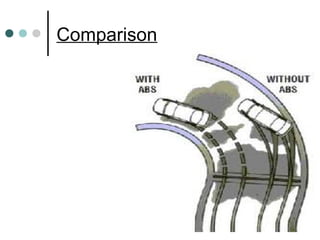
Comparison
Simple hydraulic braking
system
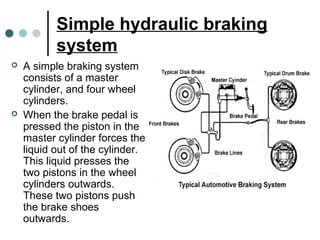
 A simple braking system
consists of a master
cylinder, and four wheel
cylinders.
 When the brake pedal is
pressed the piston in the
master cylinder forces the
liquid out of the cylinder.
This liquid presses the
two pistons in the wheel
cylinders outwards.
These two pistons push
the brake shoes
outwards.
Working
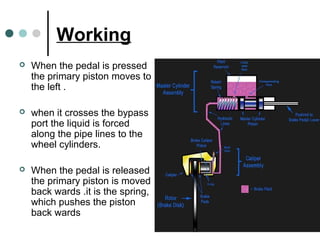
 When the pedal is pressed
the primary piston moves to
the left .
 when it crosses the bypass
port the liquid is forced
along the pipe lines to the
wheel cylinders.
 When the pedal is released
the primary piston is moved
back wards .it is the spring,
which pushes the piston
back wards
Principles of ABS
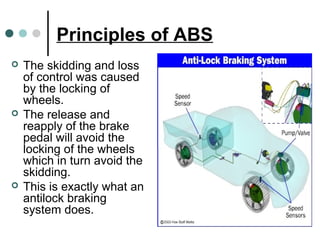
 The skidding and loss
of control was caused
by the locking of
wheels.
 The release and
reapply of the brake
pedal will avoid the
locking of the wheels
which in turn avoid the
skidding.
 This is exactly what an
antilock braking
system does.
Pressure Modulation
 When the brake pedal is pumped or
pulsed the pressure is quickly applied and
released at the wheels. This is called
“pressure modulation”. Pressure
modulation works to prevent the wheel
locking.
 ABS can modulate the pressure to the
brake as often as 15 times per seconds.
ABS Components
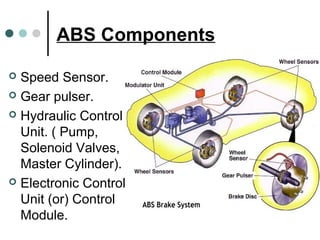
 Speed Sensor.
 Gear pulser.
 Hydraulic Control
Unit. ( Pump,
Solenoid Valves,
Master Cylinder).
 Electronic Control
Unit (or) Control
Module.
Features and Benefits
o Control of steering
o Fail-safe electronic
system.
o Traction control
o ABS Malfunction
Indicator Lamp
o Increases steering ability
and vehicle
stability during braking.
o If the electrical/electronic
system fails, the ABS is
shut off.
o It controls excessive
wheel spin during
acceleration.
o Informs the driver or
technician that an ABS
fault has occurred.
Disadvantages
It is very costly.
Maintenance cost of a car
equipped with ABS is more.
Conclusion
 Statistics show that approximately 40 % of
automobile accidents are due to skidding.
 These problems commonly occur on vehicle
with conventional brake system which can
be avoided by adding devices called ABS.
 If there is an ABS failure, the system will
revert to normal brake operation. Normally
the ABS warning light will turn on and let the
driver know there is a fault.
Thank You

Antilocking brake sys

  • 1.
    ANTILOCKING BRAKE SYSTEM K. BharathKanna B.E Mech Project Associate, NITTTR Chennai.
  • 2.
    Introduction  Antilock brakingsystems (ABS) are electronic systems that monitor and control wheel slip during vehicle braking.  ABS can improve vehicle control during braking, and reduce stopping distances on slippery road surfaces by limiting wheel slip and minimizing lockup.  Reducing wheel slip improves vehicle stability and control during braking, since stability increases as wheel slip decreases.
  • 3.
  • 4.
    Simple hydraulic braking system A simple braking system consists of a master cylinder, and four wheel cylinders.  When the brake pedal is pressed the piston in the master cylinder forces the liquid out of the cylinder. This liquid presses the two pistons in the wheel cylinders outwards. These two pistons push the brake shoes outwards.
  • 5.
    Working  When thepedal is pressed the primary piston moves to the left .  when it crosses the bypass port the liquid is forced along the pipe lines to the wheel cylinders.  When the pedal is released the primary piston is moved back wards .it is the spring, which pushes the piston back wards
  • 6.
    Principles of ABS The skidding and loss of control was caused by the locking of wheels.  The release and reapply of the brake pedal will avoid the locking of the wheels which in turn avoid the skidding.  This is exactly what an antilock braking system does.
  • 7.
    Pressure Modulation  Whenthe brake pedal is pumped or pulsed the pressure is quickly applied and released at the wheels. This is called “pressure modulation”. Pressure modulation works to prevent the wheel locking.  ABS can modulate the pressure to the brake as often as 15 times per seconds.
  • 8.
    ABS Components  SpeedSensor.  Gear pulser.  Hydraulic Control Unit. ( Pump, Solenoid Valves, Master Cylinder).  Electronic Control Unit (or) Control Module.
  • 9.
    Features and Benefits oControl of steering o Fail-safe electronic system. o Traction control o ABS Malfunction Indicator Lamp o Increases steering ability and vehicle stability during braking. o If the electrical/electronic system fails, the ABS is shut off. o It controls excessive wheel spin during acceleration. o Informs the driver or technician that an ABS fault has occurred.
  • 10.
    Disadvantages It is verycostly. Maintenance cost of a car equipped with ABS is more.
  • 11.
    Conclusion  Statistics showthat approximately 40 % of automobile accidents are due to skidding.  These problems commonly occur on vehicle with conventional brake system which can be avoided by adding devices called ABS.  If there is an ABS failure, the system will revert to normal brake operation. Normally the ABS warning light will turn on and let the driver know there is a fault.
  • 12.