OBSTETRIC
EMERGENCIES
Hira Altaf (202001
Faiza Liaqat (202002)
Zohra Nazir (202003)
Abdul Muqeet (202004)
LEARNING OBJECTIVES
 To understand the incidence of common obstetric emergencies.
 To understand the risk factors for common obstetric emergencies.
 To be able to understand the early warning signs in obstetric emergencies.
 To be able to provide a stepwise approach in the management of common
obstetric emergencies.
OBSTETRIC EMERGENCIES
defines obstetric emergencies as
“life-threatening conditions that arise during
pregnancy, child birth, or the post-partum
period requiring immediate medical attention
and intervention to prevent maternal and fetal
morbidity and mortality”
COMMON EMERGENCIES
It includes
1. Placental abruption
2. Sepsis
3. Major obstetric haemorrhage(Antepartum and Postpartum)
4. Pre-eclamsia and eclampsia
5. Uterine Rupture
6. Amniotic fluid emblolism
7. Shoulder dystotia
ANTEPARTUM HAEMORRHAGE
(APH)
Antepartum haemorrhage is defined as bleeding from vagina
after of gestation.
It complicates about of all pregnancies.
CAUSES OF APH
placental
• Placental
abruption
• Placenta
praevia
maternal
• Vaginal trauma
• Cervical
carcinoma
• Vaginal
infection
• Cervicitis
fetal
• Vasa praevia
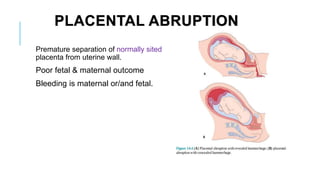
PLACENTAL ABRUPTION
Premature separation of normally sited
placenta from uterine wall.
Poor fetal & maternal outcome
Bleeding is maternal or/and fetal.
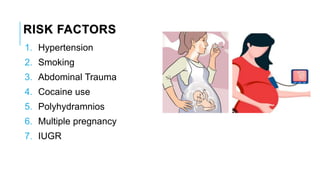
RISK FACTORS
1. Hypertension
2. Smoking
3. Abdominal Trauma
4. Cocaine use
5. Polyhydramnios
6. Multiple pregnancy
7. IUGR
WARNING SIGNS
1. Vaginal bleeding
2. Painful tender abdomen
3. Feeling cold
4. Light headedness
5. Restlessness
6. Distress and panic
7. Maternal collapse
CLINICAL PRESENTATION
How much bleeding?
Triggering factors (e.g. postcoital bleed).
Associated with pain or contractions?
Is the baby moving?
Last cervical smear (date/normal or abnormal)?
Pulse, blood pressure.
Is the uterus soft or tender and firm?
Fetal heart auscultation/CTG.
Speculum vaginal examination, with particular importance placed on visualizing
the cervix (having established that placenta is not a praevia, preferably using a
portable ultrasound machine).
May be diagnosed on ultrasound
MANAGEMENT
Give steroids
CTG
Doppler ultrasound
Rest
Correction of anemia
Treat the cause like hypertension
AIM IS TO TAKE PREGNANCY TO TERM
Immediate delivery
COMPLICATIONS:
1. DIC
2. Hpovolumic shock
3. fetal distress/ demise
4. acute renal failure (Cortical necrosis)
5. perinatal motality
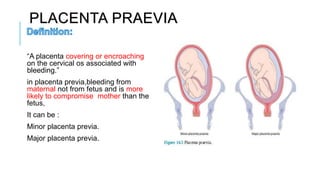
PLACENTA PRAEVIA
“A placenta covering or encroaching
on the cervical os associated with
bleeding.”
in placenta previa,bleeding from
maternal not from fetus and is more
likely to compromise mother than the
fetus,
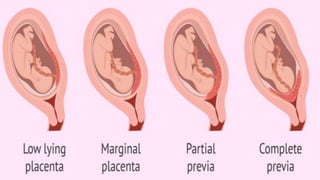
It can be :
Minor placenta previa.
Major placenta previa.
RISK FACTORS
1. Multiple gestation.
2. Previous Caesarean Section.
3. Uterine structural anomaly
4. Assisted conception
5. Patients with a placenta previa have a 4% -- 8% risk of having
placenta previa in a subsequent pregnancy.
WARNING SIGNS
•Low-lying placenta at 20 weeks anomaly scan
•Maternal collapse
•Feeling cold
•Light-headedness
•Restlessness
•Distress and panic
vaginal bleeding
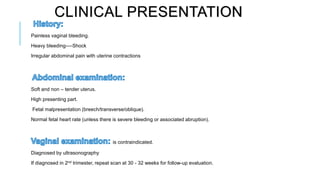
CLINICAL PRESENTATION
Painless vaginal bleeding.
Heavy bleeding----Shock
Irregular abdominal pain with uterine contractions
Soft and non – tender uterus.
High presenting part.
Fetal malpresentation (breech/transverse/oblique).
Normal fetal heart rate (unless there is severe bleeding or associated abruption).
is contraindicated.
Diagnosed by ultrasonography
If diagnosed in 2nd trimester, repeat scan at 30 - 32 weeks for follow-up evaluation.
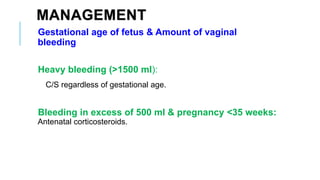
MANAGEMENT
Gestational age of fetus & Amount of vaginal
bleeding
Heavy bleeding (>1500 ml):
C/S regardless of gestational age.
Bleeding in excess of 500 ml & pregnancy <35 weeks:
Antenatal corticosteroids.
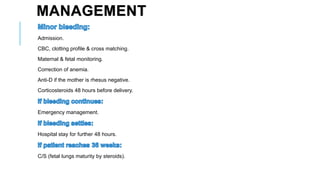
MANAGEMENT
Admission.
CBC, clotting profile & cross matching.
Maternal & fetal monitoring.
Correction of anemia.
Anti-D if the mother is rhesus negative.
Corticosteroids 48 hours before delivery.
Emergency management.
Hospital stay for further 48 hours.
C/S (fetal lungs maturity by steroids).
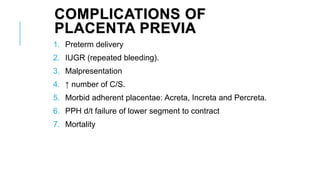
COMPLICATIONS OF
PLACENTA PREVIA
1. Preterm delivery
2. IUGR (repeated bleeding).
3. Malpresentation
4. ↑ number of C/S.
5. Morbid adherent placentae: Acreta, Increta and Percreta.
6. PPH d/t failure of lower segment to contract
7. Mortality
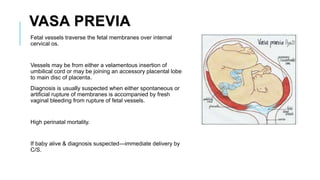
VASA PREVIA
Fetal vessels traverse the fetal membranes over internal
cervical os.
Vessels may be from either a velamentous insertion of
umbilical cord or may be joining an accessory placental lobe
to main disc of placenta.
Diagnosis is usually suspected when either spontaneous or
artificial rupture of membranes is accompanied by fresh
vaginal bleeding from rupture of fetal vessels.
High perinatal mortality.
If baby alive & diagnosis suspected---immediate delivery by
C/S.
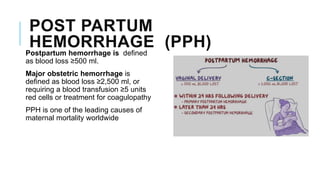
POST PARTUM
HEMORRHAGE (PPH)
Postpartum hemorrhage is defined
as blood loss ≥500 ml.
Major obstetric hemorrhage is
defined as blood loss ≥2,500 ml, or
requiring a blood transfusion ≥5 units
red cells or treatment for coagulopathy
PPH is one of the leading causes of
maternal mortality worldwide
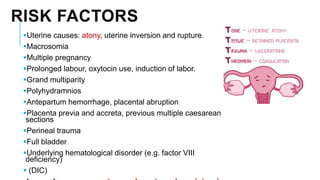
RISK FACTORS
Uterine causes: atony, uterine inversion and rupture.
Macrosomia
Multiple pregnancy
Prolonged labour, oxytocin use, induction of labor.
Grand multiparity
Polyhydramnios
Antepartum hemorrhage, placental abruption
Placenta previa and accreta, previous multiple caesarean
sections
Perineal trauma
Full bladder
Underlying hematological disorder (e.g. factor VIII
deficiency)
 (DIC)
PREVENTION:
Hemoglobin levels below the normal
range for pregnancy should be
investigated and iron supplementation
considered.
Prophylactic use of oxytocin agents
for high risk patients.
SYMPTOMS:
Anxiety, thirst, nausea, cold, pain,
dizziness
WARNING SIGNS:
failure of uterus to contract following
delivery of the placenta, maternal
collapse.
SIGNS:
Rising fundus, peritonism, reduced urine
output, tachypnoea, tachycardia,
hypotension, narrow pulse pressure.
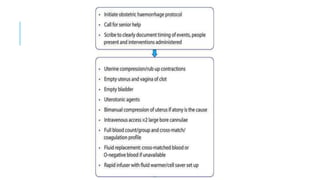
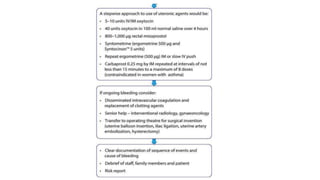
MANAGEMENT
Do not delay fluid resuscitation and blood
Consider the administration of blood components before coagulation
indices deteriorate
Consider early recourse to hysterectomy if simpler medical and surgical
interventions prove ineffective.
In complicated cases (e.g. placenta accreata), ideally obtain advanced
consent
ECLAMPSIA
Pre-eclampsia is HTN of at
least 140/90 mmHg recorded
on two separate occasions, 4
hours apart with proteinuria
(300 mg protein in a 24 hour
collection of urine) developed
after 20th week of pregnancy &
resolving completely by the 6th
postpartum week.
Characterized by vascular
dysfunction and systemic
inflammation involving the
brain, liver and kidneys of the
Eclampsia refers to the
occurrence of one or more
generalized tonic-clonic
convulsions and/or coma in the
setting of pre-eclampsia and in
the absence of other
neurological conditions
Cerebral hemorrhage has
been reported to be the most
common cause of death in
patients with eclampsia
Prevention: low threshold for administration of magnesium sulphate
in woman with pre-eclampsia.
Risk factors: Family history of preeclampsia, previous preeclampsia and
eclampsia, difficult to predict, uncontrolled hypertension, two or fewer
prenatal care visits, primigravida, obesity, black ethnicity, history of
diabetes and age <20 or >35 years.
Signs: epigastric pain, right upper quadrant tenderness, headache,
uncontrolled hypertension, agitation, hyper reflexia and clonus, facial
(especially periorbital) oedema, poor urine output, papilloedema.
MANAGEMENT
Call senior help and emergency alert team.
Initial approach is similar to the collapsed patient with a focus on
airway, breathing and circulation
Magnesium sulphate first-line anticonvulsant (at risk of
eclampsia or when eclampsia occurs) . A loading dose of 4 g,
maintenance infusion of 1 g/hour generally for 24 hours
after delivery.
Drawback: narrow therapeutic range and overdose can cause
respiratory depression and ultimately cardiac arrest.
Antidote is 10 ml 10% calcium gluconate given slowly
intravenously.
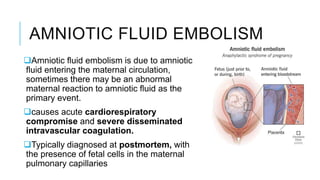
AMNIOTIC FLUID EMBOLISM
Amniotic fluid embolism is due to amniotic
fluid entering the maternal circulation,
sometimes there may be an abnormal
maternal reaction to amniotic fluid as the
primary event.
causes acute cardiorespiratory
compromise and severe disseminated
intravascular coagulation.
Typically diagnosed at postmortem, with
the presence of fetal cells in the maternal
pulmonary capillaries
Prevention: unknown.
Risk factors:
35% for induction of labor
13% for women 35 years or older
7% for multiple pregnancy.
Signs: maternal collapse, shortness
of breath, chest pain, feeling cold,
light-headedness, restlessness,
distress and panic, pins and needles
in the fingers, nausea and vomiting.
MANAGEMENT
Sudden collapse structured ABC approach but poor prognosis
(30% of patients dying in the first hour and only 10%
surviving overall)
Management is supportive, requiring intensive care, no specific
therapies available.
Perimortem caesarean section should be carried out within 5
minutes or as soon as possible after cardiac arrest as to
improve the effect of resuscitation.
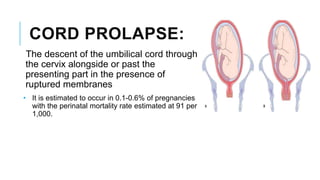
CORD PROLAPSE:
The descent of the umbilical cord through
the cervix alongside or past the
presenting part in the presence of
ruptured membranes
• It is estimated to occur in 0.1-0.6% of pregnancies
with the perinatal mortality rate estimated at 91 per
1,000.
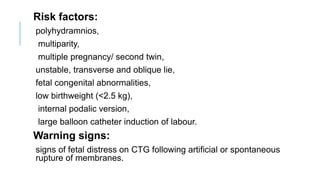
Risk factors:
polyhydramnios,
multiparity,
multiple pregnancy/ second twin,
unstable, transverse and oblique lie,
fetal congenital abnormalities,
low birthweight (<2.5 kg),
internal podalic version,
large balloon catheter induction of labour.
Warning signs:
signs of fetal distress on CTG following artificial or spontaneous
rupture of membranes.
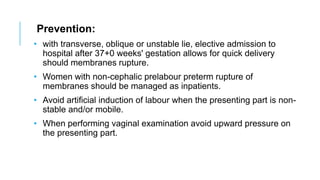
Prevention:
• with transverse, oblique or unstable lie, elective admission to
hospital after 37+0 weeks' gestation allows for quick delivery
should membranes rupture.
• Women with non-cephalic prelabour preterm rupture of
membranes should be managed as inpatients.
• Avoid artificial induction of labour when the presenting part is non-
stable and/or mobile.
• When performing vaginal examination avoid upward pressure on
the presenting part.
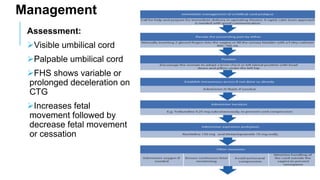
Assessment:
Visible umbilical cord
Palpable umbilical cord
FHS shows variable or
prolonged deceleration on
CTG
Increases fetal
movement followed by
decrease fetal movement
or cessation
Management
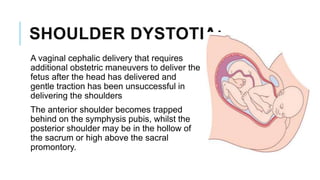
SHOULDER DYSTOTIA:
A vaginal cephalic delivery that requires
additional obstetric maneuvers to deliver the
fetus after the head has delivered and
gentle traction has been unsuccessful in
delivering the shoulders
The anterior shoulder becomes trapped
behind on the symphysis pubis, whilst the
posterior shoulder may be in the hollow of
the sacrum or high above the sacral
promontory.
Risk factors:
Macrosomia
Poorly controlled gestational and insulin-dependent diabetes
Maternal obesity
previous shoulder dystocia
instrumental
Warning signs:
Failure of restitution of head following delivery of the head
Retraction of the fetal head against the perineum
Prevention: diagnosis and optimal control of gestational and insulin-
dependent diabetics, reduction of maternal obesity. Careful plan for mode
of delivery in women with previous shoulder dystocia delivery (recurrence
rate 10–15%).
Complications with Shoulder Dystocia
Neonatal:
Brachial plexus injury
fracture (humerus, clavicle)
Hypoxemia
Stillbirth
Maternal:
Perineal laceration
Uterine rupture
Hemorrhage
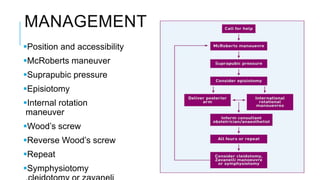
MANAGEMENT
Position and accessibility
McRoberts maneuver
Suprapubic pressure
Episiotomy
Internal rotation
maneuver
Wood’s screw
Reverse Wood’s screw
Repeat
Symphysiotomy
THROMBOSIS AND
THROMBOEMBOLISM:
Venous thromboembolism (VTE) is 10 times more common in
pregnancy compared with non-pregnant women.
Symptoms:
Women with VTE may be asymptomatic or present with a range of
symptoms (specific and non-specific)
For example: calf or groin pain and/or swelling that is often unilateral,
low-grade pyrexia to more extreme presentations including
hemoptysis, shortness of breath, collapse and death.
Risk factors:
Immobility
Obesity
Increased maternal age (≥35)
Underlying medical conditions,
Pre-eclampsia
Dehydration
Multiple pregnancy
Raised body mass index (BMI) (≥30 kg/m2 )
Smoker
Grand multiparity,
Thrombophilia.
Warning signs: immobility, dehydration, calf pain, shortness of breath.
Prevention:
Thrombosis assessment should be performed on all patients
early in pregnancy as per RCOG guideline
To assess need for antenatal thromboprophylaxis and on
each admission to hospital to assess for additional Risk
factors.
Managing patients where possible as outpatients and limiting
bed rest.
Thromboembolic stockings.
Prophylactic low-molecular-weight heparin for at-risk patients
DIAGNOSIS:
When DVT is suspected clinically, compression duplex ultrasound should be
undertaken.
 If this is negative and there is a low level of clinical suspicion, anticoagulant
treatment can be discontinued.
 If clinical suspicion remains high or symptoms fail to resolve, ultrasound may
be repeated.
Venography is invasive (injection & X-rays)—excellent visualization of veins
both below & above the knee
If pulmonary embolus is suspected, investigative options include
 chest X-ray (to rule out other respiratory causes of chest symptoms such as
pneumonia),
 low limb Doppler to rule out lower limb VTE
 ventilation perfusion (V/Q scan)
TREATMENT:
Treatment of confirmed or suspected VTE is
Therapeutic low-molecular-weight heparin given daily in two divided
doses according to the patient’s weight.
 In the case of a collapsed patient with pulmonary embolus,
Intravenous unfractionated heparin
Thrombolytic therapy or thoracotomy and surgical embolectomy.
 This complex management decision is taken by the multidisciplinary
resuscitation team including senior physicians, obstetricians and
radiologists.
UTERINE INVERSION
•Partial Inversion
•Complete Inversion
Four Degrees of Inversion
Early Diagnosis and Prompt Correction
Risk Factors : Think!
 Full dilatation sections
 Malpresentations
 IV oxytocin prior to a decision to deliver by caesarean section
 Unsuccessful instrumental delivery
 Prolonged second stage
 Hyperstimulated uterus
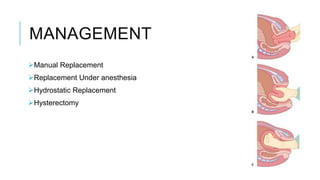
MANAGEMENT
Manual Replacement
Replacement Under anesthesia
Hydrostatic Replacement
Hysterectomy
UTERINE RUPTURE
Prevention
Reduce rates of primary caesarean section. Avoid vaginal delivery in
women with previous myomectomies in which the endometrial cavity
has been breached.
Management
Urgent laparotomy
Vaginal examination
Fetus delivered by the quickest route possible
IMPACTED HEAD AT
CAESAREAN SECTION
Prevention : How?
Risk factors : Same as that of Uterine Rupture
 Full dilatation sections
 Malpresentations
 IV oxytocin prior to a decision to deliver by caesarean section
 Unsuccessful instrumental delivery
 Prolonged second stage
 Hyperstimulated uterus
MANAGEMENT
Allow the uterus to relax before disimpacting the head.
Disengagement of the head requires flexion and rotation of the head
into the transverse position prior to delivery by lateral flexion.
use of a uterine relaxant such as glyceryl trinitrate (GTN) spray or
terbutaline
BUT.....!
risk of postpartum haemorrhage following the use of uterorelaxant
agents.
BRAIN TEASER : GTN is also used for? (Hint : Anal Disorder)
LET’S GUESS….
A 28-year-old woman, G3P2, gave birth vaginally to a healthy infant weighing 3.5 kg
after an uncomplicated pregnancy. However, within one hour post-delivery, she
experiences excessive bleeding. She is hypotensive (blood pressure 90/60
mmHg), tachycardic (pulse 120 bpm), and has a distended uterus with clots.
What is the most likely cause of her condition?
A) Uterine rupture
B) Retained placental tissue
C) Uterine atony
D) Cervical laceration
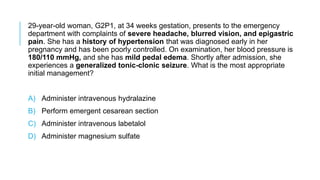
29-year-old woman, G2P1, at 34 weeks gestation, presents to the emergency
department with complaints of severe headache, blurred vision, and epigastric
pain. She has a history of hypertension that was diagnosed early in her
pregnancy and has been poorly controlled. On examination, her blood pressure is
180/110 mmHg, and she has mild pedal edema. Shortly after admission, she
experiences a generalized tonic-clonic seizure. What is the most appropriate
initial management?
A) Administer intravenous hydralazine
B) Perform emergent cesarean section
C) Administer intravenous labetalol
D) Administer magnesium sulfate
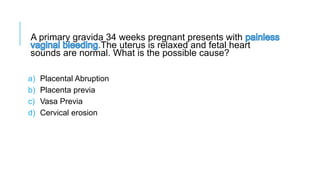
A primary gravida 34 weeks pregnant presents with
.The uterus is relaxed and fetal heart
sounds are normal. What is the possible cause?
a) Placental Abruption
b) Placenta previa
c) Vasa Previa
d) Cervical erosion
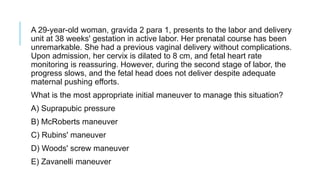
A 29-year-old woman, gravida 2 para 1, presents to the labor and delivery
unit at 38 weeks' gestation in active labor. Her prenatal course has been
unremarkable. She had a previous vaginal delivery without complications.
Upon admission, her cervix is dilated to 8 cm, and fetal heart rate
monitoring is reassuring. However, during the second stage of labor, the
progress slows, and the fetal head does not deliver despite adequate
maternal pushing efforts.
What is the most appropriate initial maneuver to manage this situation?
A) Suprapubic pressure
B) McRoberts maneuver
C) Rubins' maneuver
D) Woods' screw maneuver
E) Zavanelli maneuver
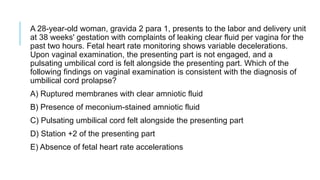
A 28-year-old woman, gravida 2 para 1, presents to the labor and delivery unit
at 38 weeks' gestation with complaints of leaking clear fluid per vagina for the
past two hours. Fetal heart rate monitoring shows variable decelerations.
Upon vaginal examination, the presenting part is not engaged, and a
pulsating umbilical cord is felt alongside the presenting part. Which of the
following findings on vaginal examination is consistent with the diagnosis of
umbilical cord prolapse?
A) Ruptured membranes with clear amniotic fluid
B) Presence of meconium-stained amniotic fluid
C) Pulsating umbilical cord felt alongside the presenting part
D) Station +2 of the presenting part
E) Absence of fetal heart rate accelerations
What risk factor has the highest association with uterine rupture in a woman
with a previous caesarean section?
A) Spontaneous onset of labour.
B) Severe pelvic girdle pain.
C) The use of oxytocin in labour.
D) Prostaglandin E2 induction of labour.
E) Women with systemic lupus erythematosus.
OBS EMERGENCIES GROUP A.pptx obs lecture

OBS EMERGENCIES GROUP A.pptx obs lecture

  • 1.
    OBSTETRIC EMERGENCIES Hira Altaf (202001 FaizaLiaqat (202002) Zohra Nazir (202003) Abdul Muqeet (202004)
  • 2.
    LEARNING OBJECTIVES  Tounderstand the incidence of common obstetric emergencies.  To understand the risk factors for common obstetric emergencies.  To be able to understand the early warning signs in obstetric emergencies.  To be able to provide a stepwise approach in the management of common obstetric emergencies.
  • 3.
    OBSTETRIC EMERGENCIES defines obstetricemergencies as “life-threatening conditions that arise during pregnancy, child birth, or the post-partum period requiring immediate medical attention and intervention to prevent maternal and fetal morbidity and mortality”
  • 4.
    COMMON EMERGENCIES It includes 1.Placental abruption 2. Sepsis 3. Major obstetric haemorrhage(Antepartum and Postpartum) 4. Pre-eclamsia and eclampsia 5. Uterine Rupture 6. Amniotic fluid emblolism 7. Shoulder dystotia
  • 5.
    ANTEPARTUM HAEMORRHAGE (APH) Antepartum haemorrhageis defined as bleeding from vagina after of gestation. It complicates about of all pregnancies.
  • 6.
    CAUSES OF APH placental •Placental abruption • Placenta praevia maternal • Vaginal trauma • Cervical carcinoma • Vaginal infection • Cervicitis fetal • Vasa praevia
  • 7.
    PLACENTAL ABRUPTION Premature separationof normally sited placenta from uterine wall. Poor fetal & maternal outcome Bleeding is maternal or/and fetal.
  • 8.
    RISK FACTORS 1. Hypertension 2.Smoking 3. Abdominal Trauma 4. Cocaine use 5. Polyhydramnios 6. Multiple pregnancy 7. IUGR
  • 9.
    WARNING SIGNS 1. Vaginalbleeding 2. Painful tender abdomen 3. Feeling cold 4. Light headedness 5. Restlessness 6. Distress and panic 7. Maternal collapse
  • 10.
    CLINICAL PRESENTATION How muchbleeding? Triggering factors (e.g. postcoital bleed). Associated with pain or contractions? Is the baby moving? Last cervical smear (date/normal or abnormal)? Pulse, blood pressure. Is the uterus soft or tender and firm? Fetal heart auscultation/CTG. Speculum vaginal examination, with particular importance placed on visualizing the cervix (having established that placenta is not a praevia, preferably using a portable ultrasound machine). May be diagnosed on ultrasound
  • 11.
    MANAGEMENT Give steroids CTG Doppler ultrasound Rest Correctionof anemia Treat the cause like hypertension AIM IS TO TAKE PREGNANCY TO TERM Immediate delivery
  • 12.
    COMPLICATIONS: 1. DIC 2. Hpovolumicshock 3. fetal distress/ demise 4. acute renal failure (Cortical necrosis) 5. perinatal motality
  • 13.
    PLACENTA PRAEVIA “A placentacovering or encroaching on the cervical os associated with bleeding.” in placenta previa,bleeding from maternal not from fetus and is more likely to compromise mother than the fetus, It can be : Minor placenta previa. Major placenta previa.
  • 15.
    RISK FACTORS 1. Multiplegestation. 2. Previous Caesarean Section. 3. Uterine structural anomaly 4. Assisted conception 5. Patients with a placenta previa have a 4% -- 8% risk of having placenta previa in a subsequent pregnancy.
  • 16.
    WARNING SIGNS •Low-lying placentaat 20 weeks anomaly scan •Maternal collapse •Feeling cold •Light-headedness •Restlessness •Distress and panic vaginal bleeding
  • 17.
    CLINICAL PRESENTATION Painless vaginalbleeding. Heavy bleeding----Shock Irregular abdominal pain with uterine contractions Soft and non – tender uterus. High presenting part. Fetal malpresentation (breech/transverse/oblique). Normal fetal heart rate (unless there is severe bleeding or associated abruption). is contraindicated. Diagnosed by ultrasonography If diagnosed in 2nd trimester, repeat scan at 30 - 32 weeks for follow-up evaluation.
  • 18.
    MANAGEMENT Gestational age offetus & Amount of vaginal bleeding Heavy bleeding (>1500 ml): C/S regardless of gestational age. Bleeding in excess of 500 ml & pregnancy <35 weeks: Antenatal corticosteroids.
  • 19.
    MANAGEMENT Admission. CBC, clotting profile& cross matching. Maternal & fetal monitoring. Correction of anemia. Anti-D if the mother is rhesus negative. Corticosteroids 48 hours before delivery. Emergency management. Hospital stay for further 48 hours. C/S (fetal lungs maturity by steroids).
  • 20.
    COMPLICATIONS OF PLACENTA PREVIA 1.Preterm delivery 2. IUGR (repeated bleeding). 3. Malpresentation 4. ↑ number of C/S. 5. Morbid adherent placentae: Acreta, Increta and Percreta. 6. PPH d/t failure of lower segment to contract 7. Mortality
  • 21.
    VASA PREVIA Fetal vesselstraverse the fetal membranes over internal cervical os. Vessels may be from either a velamentous insertion of umbilical cord or may be joining an accessory placental lobe to main disc of placenta. Diagnosis is usually suspected when either spontaneous or artificial rupture of membranes is accompanied by fresh vaginal bleeding from rupture of fetal vessels. High perinatal mortality. If baby alive & diagnosis suspected---immediate delivery by C/S.
  • 22.
    POST PARTUM HEMORRHAGE (PPH) Postpartumhemorrhage is defined as blood loss ≥500 ml. Major obstetric hemorrhage is defined as blood loss ≥2,500 ml, or requiring a blood transfusion ≥5 units red cells or treatment for coagulopathy PPH is one of the leading causes of maternal mortality worldwide
  • 23.
    RISK FACTORS Uterine causes:atony, uterine inversion and rupture. Macrosomia Multiple pregnancy Prolonged labour, oxytocin use, induction of labor. Grand multiparity Polyhydramnios Antepartum hemorrhage, placental abruption Placenta previa and accreta, previous multiple caesarean sections Perineal trauma Full bladder Underlying hematological disorder (e.g. factor VIII deficiency)  (DIC)
  • 24.
    PREVENTION: Hemoglobin levels belowthe normal range for pregnancy should be investigated and iron supplementation considered. Prophylactic use of oxytocin agents for high risk patients. SYMPTOMS: Anxiety, thirst, nausea, cold, pain, dizziness WARNING SIGNS: failure of uterus to contract following delivery of the placenta, maternal collapse. SIGNS: Rising fundus, peritonism, reduced urine output, tachypnoea, tachycardia, hypotension, narrow pulse pressure.
  • 25.
    MANAGEMENT Do not delayfluid resuscitation and blood Consider the administration of blood components before coagulation indices deteriorate Consider early recourse to hysterectomy if simpler medical and surgical interventions prove ineffective. In complicated cases (e.g. placenta accreata), ideally obtain advanced consent
  • 28.
    ECLAMPSIA Pre-eclampsia is HTNof at least 140/90 mmHg recorded on two separate occasions, 4 hours apart with proteinuria (300 mg protein in a 24 hour collection of urine) developed after 20th week of pregnancy & resolving completely by the 6th postpartum week. Characterized by vascular dysfunction and systemic inflammation involving the brain, liver and kidneys of the Eclampsia refers to the occurrence of one or more generalized tonic-clonic convulsions and/or coma in the setting of pre-eclampsia and in the absence of other neurological conditions Cerebral hemorrhage has been reported to be the most common cause of death in patients with eclampsia
  • 29.
    Prevention: low thresholdfor administration of magnesium sulphate in woman with pre-eclampsia. Risk factors: Family history of preeclampsia, previous preeclampsia and eclampsia, difficult to predict, uncontrolled hypertension, two or fewer prenatal care visits, primigravida, obesity, black ethnicity, history of diabetes and age <20 or >35 years. Signs: epigastric pain, right upper quadrant tenderness, headache, uncontrolled hypertension, agitation, hyper reflexia and clonus, facial (especially periorbital) oedema, poor urine output, papilloedema.
  • 30.
    MANAGEMENT Call senior helpand emergency alert team. Initial approach is similar to the collapsed patient with a focus on airway, breathing and circulation Magnesium sulphate first-line anticonvulsant (at risk of eclampsia or when eclampsia occurs) . A loading dose of 4 g, maintenance infusion of 1 g/hour generally for 24 hours after delivery. Drawback: narrow therapeutic range and overdose can cause respiratory depression and ultimately cardiac arrest. Antidote is 10 ml 10% calcium gluconate given slowly intravenously.
  • 31.
    AMNIOTIC FLUID EMBOLISM Amnioticfluid embolism is due to amniotic fluid entering the maternal circulation, sometimes there may be an abnormal maternal reaction to amniotic fluid as the primary event. causes acute cardiorespiratory compromise and severe disseminated intravascular coagulation. Typically diagnosed at postmortem, with the presence of fetal cells in the maternal pulmonary capillaries
  • 32.
    Prevention: unknown. Risk factors: 35%for induction of labor 13% for women 35 years or older 7% for multiple pregnancy. Signs: maternal collapse, shortness of breath, chest pain, feeling cold, light-headedness, restlessness, distress and panic, pins and needles in the fingers, nausea and vomiting.
  • 33.
    MANAGEMENT Sudden collapse structuredABC approach but poor prognosis (30% of patients dying in the first hour and only 10% surviving overall) Management is supportive, requiring intensive care, no specific therapies available. Perimortem caesarean section should be carried out within 5 minutes or as soon as possible after cardiac arrest as to improve the effect of resuscitation.
  • 34.
    CORD PROLAPSE: The descentof the umbilical cord through the cervix alongside or past the presenting part in the presence of ruptured membranes • It is estimated to occur in 0.1-0.6% of pregnancies with the perinatal mortality rate estimated at 91 per 1,000.
  • 35.
    Risk factors: polyhydramnios, multiparity, multiple pregnancy/second twin, unstable, transverse and oblique lie, fetal congenital abnormalities, low birthweight (<2.5 kg), internal podalic version, large balloon catheter induction of labour. Warning signs: signs of fetal distress on CTG following artificial or spontaneous rupture of membranes.
  • 36.
    Prevention: • with transverse,oblique or unstable lie, elective admission to hospital after 37+0 weeks' gestation allows for quick delivery should membranes rupture. • Women with non-cephalic prelabour preterm rupture of membranes should be managed as inpatients. • Avoid artificial induction of labour when the presenting part is non- stable and/or mobile. • When performing vaginal examination avoid upward pressure on the presenting part.
  • 37.
    Assessment: Visible umbilical cord Palpableumbilical cord FHS shows variable or prolonged deceleration on CTG Increases fetal movement followed by decrease fetal movement or cessation Management
  • 38.
    SHOULDER DYSTOTIA: A vaginalcephalic delivery that requires additional obstetric maneuvers to deliver the fetus after the head has delivered and gentle traction has been unsuccessful in delivering the shoulders The anterior shoulder becomes trapped behind on the symphysis pubis, whilst the posterior shoulder may be in the hollow of the sacrum or high above the sacral promontory.
  • 39.
    Risk factors: Macrosomia Poorly controlledgestational and insulin-dependent diabetes Maternal obesity previous shoulder dystocia instrumental Warning signs: Failure of restitution of head following delivery of the head Retraction of the fetal head against the perineum Prevention: diagnosis and optimal control of gestational and insulin- dependent diabetics, reduction of maternal obesity. Careful plan for mode of delivery in women with previous shoulder dystocia delivery (recurrence rate 10–15%).
  • 40.
    Complications with ShoulderDystocia Neonatal: Brachial plexus injury fracture (humerus, clavicle) Hypoxemia Stillbirth Maternal: Perineal laceration Uterine rupture Hemorrhage
  • 41.
    MANAGEMENT Position and accessibility McRobertsmaneuver Suprapubic pressure Episiotomy Internal rotation maneuver Wood’s screw Reverse Wood’s screw Repeat Symphysiotomy
  • 42.
    THROMBOSIS AND THROMBOEMBOLISM: Venous thromboembolism(VTE) is 10 times more common in pregnancy compared with non-pregnant women. Symptoms: Women with VTE may be asymptomatic or present with a range of symptoms (specific and non-specific) For example: calf or groin pain and/or swelling that is often unilateral, low-grade pyrexia to more extreme presentations including hemoptysis, shortness of breath, collapse and death.
  • 43.
    Risk factors: Immobility Obesity Increased maternalage (≥35) Underlying medical conditions, Pre-eclampsia Dehydration Multiple pregnancy Raised body mass index (BMI) (≥30 kg/m2 ) Smoker Grand multiparity, Thrombophilia. Warning signs: immobility, dehydration, calf pain, shortness of breath.
  • 44.
    Prevention: Thrombosis assessment shouldbe performed on all patients early in pregnancy as per RCOG guideline To assess need for antenatal thromboprophylaxis and on each admission to hospital to assess for additional Risk factors. Managing patients where possible as outpatients and limiting bed rest. Thromboembolic stockings. Prophylactic low-molecular-weight heparin for at-risk patients
  • 45.
    DIAGNOSIS: When DVT issuspected clinically, compression duplex ultrasound should be undertaken.  If this is negative and there is a low level of clinical suspicion, anticoagulant treatment can be discontinued.  If clinical suspicion remains high or symptoms fail to resolve, ultrasound may be repeated. Venography is invasive (injection & X-rays)—excellent visualization of veins both below & above the knee If pulmonary embolus is suspected, investigative options include  chest X-ray (to rule out other respiratory causes of chest symptoms such as pneumonia),  low limb Doppler to rule out lower limb VTE  ventilation perfusion (V/Q scan)
  • 46.
    TREATMENT: Treatment of confirmedor suspected VTE is Therapeutic low-molecular-weight heparin given daily in two divided doses according to the patient’s weight.  In the case of a collapsed patient with pulmonary embolus, Intravenous unfractionated heparin Thrombolytic therapy or thoracotomy and surgical embolectomy.  This complex management decision is taken by the multidisciplinary resuscitation team including senior physicians, obstetricians and radiologists.
  • 47.
    UTERINE INVERSION •Partial Inversion •CompleteInversion Four Degrees of Inversion Early Diagnosis and Prompt Correction Risk Factors : Think!  Full dilatation sections  Malpresentations  IV oxytocin prior to a decision to deliver by caesarean section  Unsuccessful instrumental delivery  Prolonged second stage  Hyperstimulated uterus
  • 48.
    MANAGEMENT Manual Replacement Replacement Underanesthesia Hydrostatic Replacement Hysterectomy
  • 49.
    UTERINE RUPTURE Prevention Reduce ratesof primary caesarean section. Avoid vaginal delivery in women with previous myomectomies in which the endometrial cavity has been breached. Management Urgent laparotomy Vaginal examination Fetus delivered by the quickest route possible
  • 50.
    IMPACTED HEAD AT CAESAREANSECTION Prevention : How? Risk factors : Same as that of Uterine Rupture  Full dilatation sections  Malpresentations  IV oxytocin prior to a decision to deliver by caesarean section  Unsuccessful instrumental delivery  Prolonged second stage  Hyperstimulated uterus
  • 51.
    MANAGEMENT Allow the uterusto relax before disimpacting the head. Disengagement of the head requires flexion and rotation of the head into the transverse position prior to delivery by lateral flexion. use of a uterine relaxant such as glyceryl trinitrate (GTN) spray or terbutaline BUT.....! risk of postpartum haemorrhage following the use of uterorelaxant agents. BRAIN TEASER : GTN is also used for? (Hint : Anal Disorder)
  • 52.
    LET’S GUESS…. A 28-year-oldwoman, G3P2, gave birth vaginally to a healthy infant weighing 3.5 kg after an uncomplicated pregnancy. However, within one hour post-delivery, she experiences excessive bleeding. She is hypotensive (blood pressure 90/60 mmHg), tachycardic (pulse 120 bpm), and has a distended uterus with clots. What is the most likely cause of her condition? A) Uterine rupture B) Retained placental tissue C) Uterine atony D) Cervical laceration
  • 53.
    29-year-old woman, G2P1,at 34 weeks gestation, presents to the emergency department with complaints of severe headache, blurred vision, and epigastric pain. She has a history of hypertension that was diagnosed early in her pregnancy and has been poorly controlled. On examination, her blood pressure is 180/110 mmHg, and she has mild pedal edema. Shortly after admission, she experiences a generalized tonic-clonic seizure. What is the most appropriate initial management? A) Administer intravenous hydralazine B) Perform emergent cesarean section C) Administer intravenous labetalol D) Administer magnesium sulfate
  • 54.
    A primary gravida34 weeks pregnant presents with .The uterus is relaxed and fetal heart sounds are normal. What is the possible cause? a) Placental Abruption b) Placenta previa c) Vasa Previa d) Cervical erosion
  • 55.
    A 29-year-old woman,gravida 2 para 1, presents to the labor and delivery unit at 38 weeks' gestation in active labor. Her prenatal course has been unremarkable. She had a previous vaginal delivery without complications. Upon admission, her cervix is dilated to 8 cm, and fetal heart rate monitoring is reassuring. However, during the second stage of labor, the progress slows, and the fetal head does not deliver despite adequate maternal pushing efforts. What is the most appropriate initial maneuver to manage this situation? A) Suprapubic pressure B) McRoberts maneuver C) Rubins' maneuver D) Woods' screw maneuver E) Zavanelli maneuver
  • 56.
    A 28-year-old woman,gravida 2 para 1, presents to the labor and delivery unit at 38 weeks' gestation with complaints of leaking clear fluid per vagina for the past two hours. Fetal heart rate monitoring shows variable decelerations. Upon vaginal examination, the presenting part is not engaged, and a pulsating umbilical cord is felt alongside the presenting part. Which of the following findings on vaginal examination is consistent with the diagnosis of umbilical cord prolapse? A) Ruptured membranes with clear amniotic fluid B) Presence of meconium-stained amniotic fluid C) Pulsating umbilical cord felt alongside the presenting part D) Station +2 of the presenting part E) Absence of fetal heart rate accelerations
  • 57.
    What risk factorhas the highest association with uterine rupture in a woman with a previous caesarean section? A) Spontaneous onset of labour. B) Severe pelvic girdle pain. C) The use of oxytocin in labour. D) Prostaglandin E2 induction of labour. E) Women with systemic lupus erythematosus.