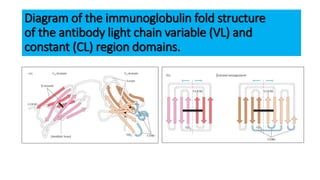
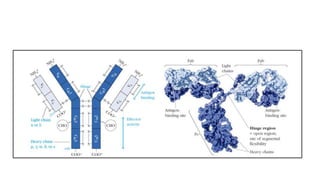
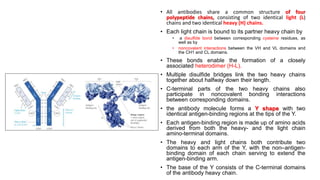
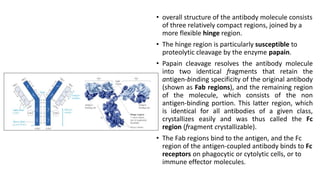
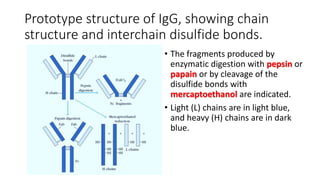
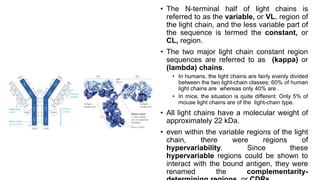
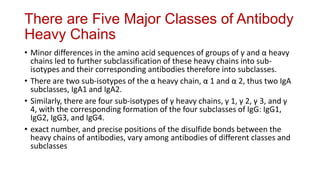
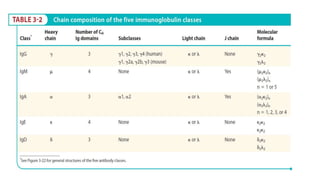
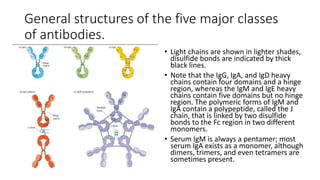
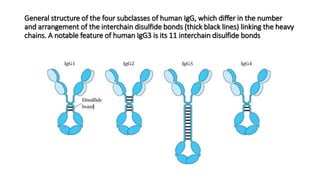
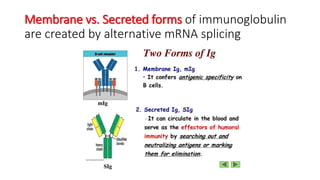
Antibodies are Y-shaped proteins produced by B cells that recognize and bind to antigens as part of the adaptive immune response. They consist of four polypeptide chains - two identical heavy chains and two identical light chains connected by disulfide bonds in a flexible structure. The variable regions at the tips of the Y determine antigen binding specificity, while the constant regions mediate important effector functions. There are five major classes of antibodies (IgG, IgM, IgA, IgD, IgE) which differ in their heavy chain structure and roles in the immune response. Each domain of the heavy and light chains contributes unique functions important for antigen recognition, binding, and signaling. Membrane-bound and secreted forms of antibodies