Antibiotics usage in
Obstetrics- Evidence
based Guidelines
Dr Meenakshi Sharma
Consultant Obs & Gynae
Deepak Memorial Hospital
Yashoda Superspeciality Hospital Kaushambi
Judicious Antibiotic Usage
Reduces Infectious morbidity and mortality
Prevents development of antibiotic resistance
Prophylactic antibiotics
Principles of Surgical Antibiotic Prophylaxis
(SAP)
● To reduce the colonization pressure of microorganisms introduced at the
time of operation to a level that the patient’s immune system is able to
overcome.
● Prophylaxis does not prevent infection caused by postoperative
contamination
● Prophylaxis is intended for elective procedures when the incision will be
closed in the OT
● SAP should be safe, inexpensive and effective against organisms likely to
be encountered in surgery
Cesarean Section
Most important risk factor for infection in Obstetrics - 5-20 times vaginal
delivery
Surgical site infection 8 - 25%
Outcome Em LSCS
RR (95%CI)
El LSCS
RR (95%CI)
Fever 0.49 (0.32-0.75) 0.40(0.31-0.51)
Wound
infection
0.73(0.53-0.99) 0.36(0.26-0.51
Endometritis 0.38(0.22-0.64) 0.39(0.34-0.46)
UTI 0.57(0.29-1.11) 0.43(0.30-0.60)
Outcome of antibiotic Prophylaxis
Smaill F, Hofmeyr GJ. Antibiotic prophylaxis for cesarean section. Cochrane Database Syst Rev. 2002;(3) CD000933
Cochrane review of 81 RCT assessing antibiotic prophylaxis versus placebo or no
treatment with 2000 women in both arms
Antibiotic prophylaxis in LSCS narrow range
or broad spectrum
CDC and ACOG recommends narrow range first generation cephalosporin for
SAP as equally effective and less costly than broad spectrum SAP
Despite SAP 10% have SSI and 15% fever
Smaill F, Hofmeyr GJ. Antibiotic prophylaxis for cesarean section. Cochrane Database Syst Rev. 2002;(3) CD000933
Concern of broad spectrum SAP leading to infection with resistant Cl difficile
and MRSA seems unlikely with single dose SAP
Broad spectrum SAP prior to incision may mask Neonatal Sepsis and neonate
exposed to resistant bacteria
Cesarean Section -Timing of Prophylaxis pre
incision or Post clamping ?
ACOG 2003 and CDC 2008 recommended first generation of cephalosporin
after clamping of umbilical cord
Prophylaxis has been delayed in an effort to avoid masking a neonatal infection
and to prevent unnecessary sepsis workup in neonate.
Cesarean Section -Timing of Prophylaxis pre
incision or Post clamping ?
RCT 357 women randomized to receive Cefazolin 15-60 min prior to incision
versus cord clamp.
Overall maternal infectious morbidity was reduced in the pre-treatment group
(RR 0.4; 95% CI 0.18 to 0.87); in particular, endometritis was reduced (RR 0.2;
95% CI 0.15 to 0.94). No increase in neonatal sepsis, investigation, or length of
stay was observed
A recent meta-analysis of 3 RCT with 749 women supports the use of SAP
prior to LSCS incision to prevent total infectious morbidity (RR 0.50; 95% CI
0.33 to 0.78, P = 0.002). Neonatal outcomes were not affected
Sullivan SA, Am J Obstet Gynaecol 2007
Constantine MM, Am J Obstet Gynaecol 2008
Cesarean Section -Timing of Prophylaxis pre
incision or Post clamping ?
Large Observational study after policy change >4000 CD in each arm
Post-clamping antibiotics (n=4229) was associated with a 3.9% incidence of
endometritis compared to 2.2% incidence for pre-incision cefazolin, (n=4781) (
OR = 0.61; 95% CI=0.47-0.79) and post-clamping WI occurred in 3.6%
compared to 2.5% following pre-incision antibiotics (OR= 0.70; 95% CI=0.55-
0.90) (p=0.001 for the linear trend).
Pre-incision antibiotics was not associated with an increase in neonatal sepsis,
sepsis work-up, and admission or length of stay in the NICU
Antimicrobial prophylaxis for cesarean delivery before skin incision.Owens SM, Obstet Gynecol. 2009 Sep; 114(3):573-9.
Choice of antibiotic and rationale of broad
spectrum antibiotics
Source of infection - Lower Genitourinary tract
Causative organisms- Polymicrobial Ureaplasmas, mycoplasmas, anaerobes or
Gardnerella vaginalis, even in women with intact membranes.
Cefazolin provides good antibiotic activity against Ureaplasma and
Mycoplasma but results in resistant anaerobes.
Broad spectrum antibiotics 2nd and 3rd gen cephalosporin -no advantage
Choice of antibiotic and rationale of broad
spectrum antibiotics
4 RCT compared Narrow range antibiotic (Cefazolin or Ampicillin) with Broad spectrum
antibiotics ( Cefazolin with Gentamicin or Metronidazole or Azithromycin or Doxycycline)
Conclusion- Broad spectrum antibiotics was associated with significant reduction in
infection rates, Endometritis and WI and shorter hospital stay compared to narrow range
Azithromycin preferable to increase broad spectrum coverage as longer half life (68hrs),
high tissue penetration, lower transplacental passage than other antibiotic and it is active
against both aerobes and anaerobes as well as Ureaplasma, can prevent neonatal
sepsis
Preincision broad spectrum antibiotics better than post clamping narrow range
antibiotics
Lamont RF, BJOG, 2011
Cesarean Section Guidelines - Prophylaxis
Drug Timing Guideline Level of
evidence
IV Co-amoxiclav 1.5 gm OR
IV Clindamicin 900mg
Add IV Gentamicin 1.5gm if em LSCS
If MRSA colonisation IV Teicoplanin 400mg
plus IV Gentamicin 1.5mg/kg and IV
Metronidazole 500mg
Prior to incision NHS 2016
IV Cefazolin 1-2 gm OR
IV Clindamycin 600mg OR
IV Erythromycin 500mg
Prior to incision SOGC
2010
IA
IV Cefazolin 1-2 gm
Clindamycin with Gentamicin if allergic to
penicillin
Within 60 min
prior to incision
ACOG
2011
A
An additional dose if procedure lasts more than 4 hrs (>2 half life of drug) or more than 1500
ml blood loss
Infective Endocarditis Prophylaxis in Cardiac
patients for Obstetric Procedures
IE Prophylaxis only recommended for High risk Patients-
● Patients with Prosthetic Cardiac valves
● Patients with previous Infective Endocarditis
● Cardiac transplant patients with valvulopathy
● CHD with Unrepaired cyanotic CHD with palliative shunts or conduits, CHD
with repaired prosthetic valves less than 6 months and repaired CHD with
residual defects at site or prosthetic device
NHS 2016
Infective Endocarditis Prophylaxis in Cardiac
patients for Obstetric Procedures
IV Teicoplanin 400mg and IV Gentamicin 1.5 mg/Kg prior to incision should
be given for IE Prophylaxis
NHS 2016
Intrapartum prophylaxis for Group B
streptococci
Antibiotics should be given at least 2 hours prior to delivery
IV Benzylpenicillin 3gm initially then 1.2gm 4 hrly till delivery
In Penicillin allergy IV Clindamycin 900 mg TDS till delivery
NHS 2016
Operative Vaginal Delivery
Cochrane in 2004
Only one RCT of 393 women, only 2 outcome endometritis and length of
hospital stay could be assessed. Risk ratio reduction of endometritis was 93%
(RR 0.07; 95% CI (0.00 to 1.21). There was no difference in the length of
hospital stay between the two groups
Conclusion- There were insufficient data on which to base recommendations
for practice and further research is needed. No additional studies addressing
this issue have been published to date.
Liabsuetrakul T, Antibiotic prophylaxis for operative vaginal delivery. Cochrane Database Syst Rev 2004;(3):CD004455.
Operative Vaginal Delivery
Drug Level of Evidence Guideline
None II-1C SOGC, 2010
None C ACOG, 2011
None NHS
Perineal Lacerations 3rd or 4th degree
Cochrane in 2005 found no RCT on this subject
A prospective RCT was conducted by Duggal et al in 2008, 107 women were
followed for 2 weeks after delivery. A single IV dose of cefotetan, cefoxitin, or
placebo. Four of 49 (8%) who received antibiotics and 14 of 58 (24%) who
received placebo developed perineal wound complication (P = 0.037). This
suggests a benefit to using prophylactic antibiotics to reduce morbidity following
significant perineal laceration
Duggal N, Obstet Gynaecol, 2008
Perineal Lacerations third & fourth Degree
Drug Dose Level of Evidence Guideline
Cefotetan
Cefoxitin
1gm IV
1gm IV
I-B SOGC 2010
Single dose of antibiotic ACOG 2016
Broad spectrum antibiotics B RCOG,2015
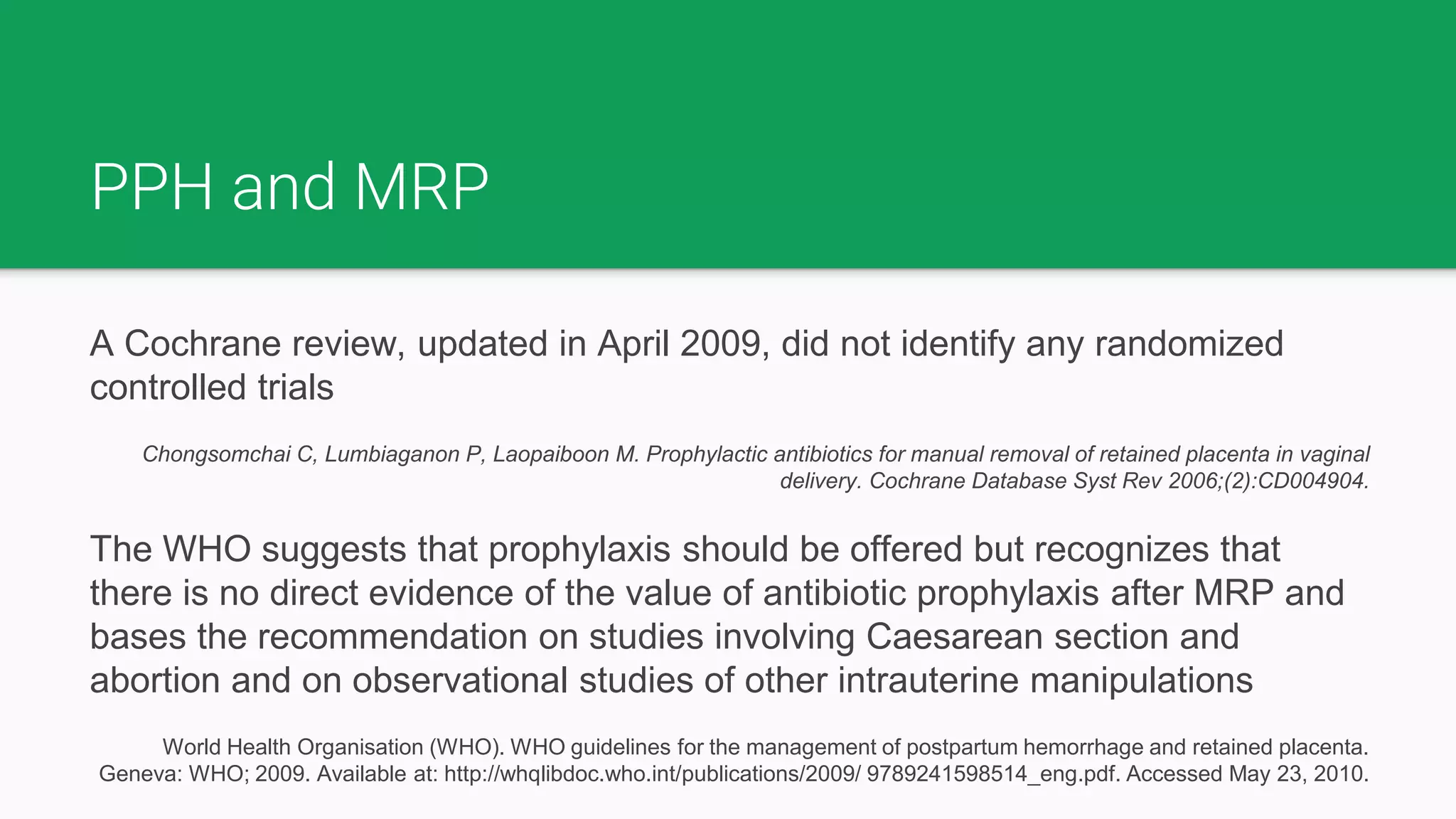
PPH and MRP
A Cochrane review, updated in April 2009, did not identify any randomized
controlled trials
Chongsomchai C, Lumbiaganon P, Laopaiboon M. Prophylactic antibiotics for manual removal of retained placenta in vaginal
delivery. Cochrane Database Syst Rev 2006;(2):CD004904.
The WHO suggests that prophylaxis should be offered but recognizes that
there is no direct evidence of the value of antibiotic prophylaxis after MRP and
bases the recommendation on studies involving Caesarean section and
abortion and on observational studies of other intrauterine manipulations
World Health Organisation (WHO). WHO guidelines for the management of postpartum hemorrhage and retained placenta.
Geneva: WHO; 2009. Available at: http://whqlibdoc.who.int/publications/2009/ 9789241598514_eng.pdf. Accessed May 23, 2010.
Circlage
One observational study 10 women with circlage 14-24 weeks received low
dose antibiotics. Each had live birth and pregnancy prolonged by 13.4+/-
4.2days
Shiffman RL, J Reprod Med, 2000
A retrospective study of 116 mid-trimester cerclage placements, antibiotic use
was not associated with a decreased risk of delivery before 28 weeks’ gestation
Terkildsen MF. Factors associated with success of emergent second-trimester cerclage. Obstet Gynecol
2003;101:565–9.
Antibiotic prophylaxis not recommended by SOGC 2010, II-3C
Postpartum D&C
No studies were identified that investigated the use of prophylactic antibiotics
for postpartum D&C
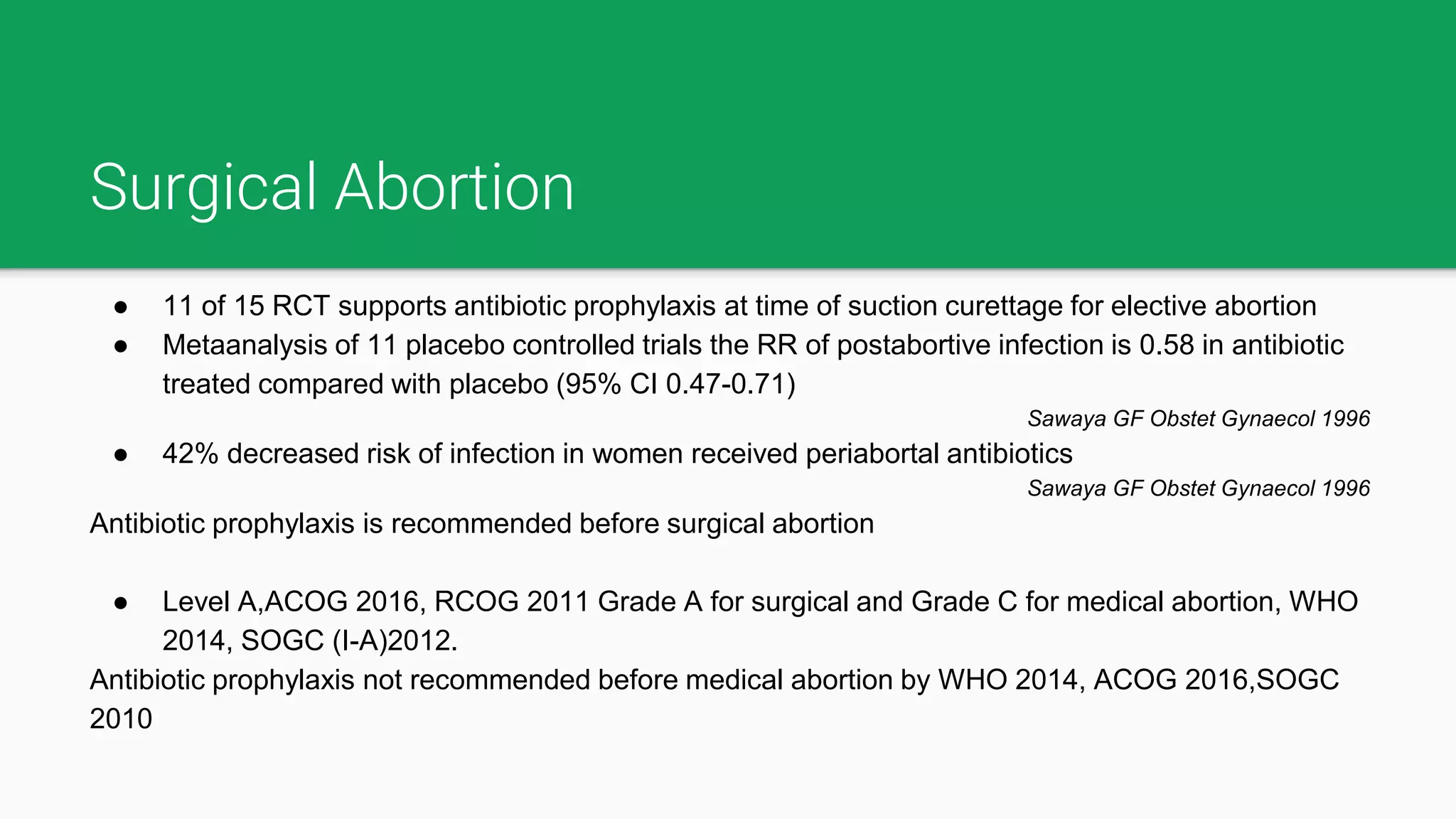
Surgical Abortion
● 11 of 15 RCT supports antibiotic prophylaxis at time of suction curettage for elective abortion
● Metaanalysis of 11 placebo controlled trials the RR of postabortive infection is 0.58 in antibiotic
treated compared with placebo (95% CI 0.47-0.71)
Sawaya GF Obstet Gynaecol 1996
● 42% decreased risk of infection in women received periabortal antibiotics
Sawaya GF Obstet Gynaecol 1996
Antibiotic prophylaxis is recommended before surgical abortion
● Level A,ACOG 2016, RCOG 2011 Grade A for surgical and Grade C for medical abortion, WHO
2014, SOGC (I-A)2012.
Antibiotic prophylaxis not recommended before medical abortion by WHO 2014, ACOG 2016,SOGC
2010
Surgical abortion
Drug Dose Remarks Guideline
Doxycycline
plus
Metronidazole
100mg 1 hr prior
and 200mg after
procedure
500mg BD x 5 Days
ACOG 2016
Azithromycin
And Metronidazole
OR
Doxycycline
And Metronidazole
OR
Metronidazole
1gm
800mg
100mg BD x7Days
800mg single dose
800mg oral
Prior to procedure
In C trachomatis
negative women
RCOG 2011
Doxycycline 100mg PO prior and
200 mg PO after
procedure
SOGC 2012
Therapeutic Antibiotic Usage in
Pregnancy
Antibiotic FDA risk category Antibiotic FDA risk category
Amoxicillin B Trimethoprim/sulfamethoxazol C
Cephalosporins B Ciprofloxacin C
Piperacillin/tazobactam B Levofloxacin C
Daptomycin B Imipenem/cilastatin C
Azithromycin B Linezolid C
Erythromycin B Clarithromycin C
Meropenem B Spiramycin C
Clindamycin B Gentamycin C
Nitrofurantoin B Amikacin D
Vankomycin iv. B Tobramycin D
Metronidazol iv. B Netilmycin D
Trimethoprim C Tetracyclines D
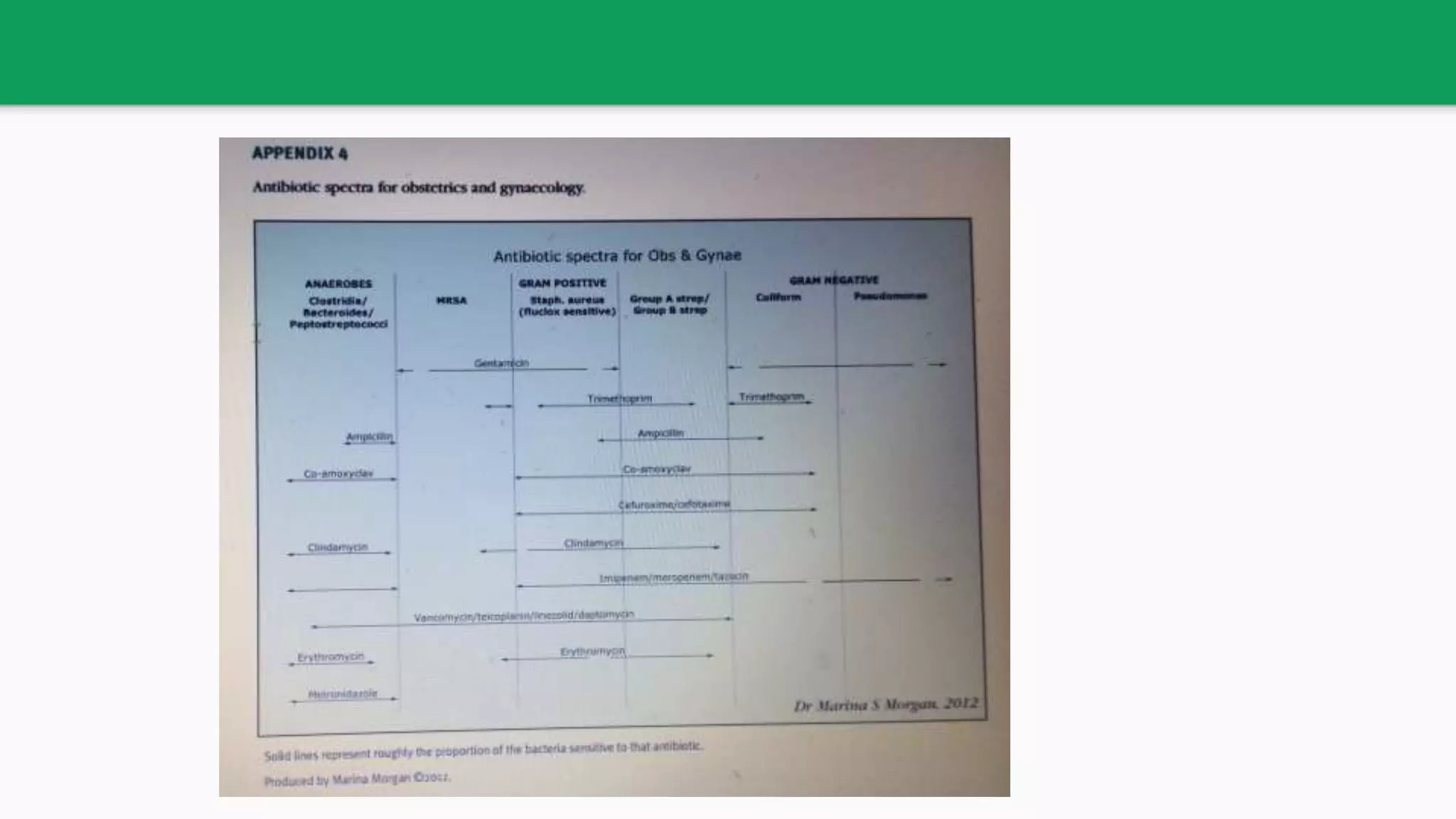
Antimicrobial choices and limitations of antimicrobial.
Drug Remarks
Co-amoxiclav Does not cover MRSA or Pseudomonas, and there is concern
about an increase in the risk of NEC in neonates exposed in utero
Metronidazole Only covers anaerobes
Clindamycin Covers most streptococci and staphylococci, including many
MRSA, and switches off exotoxin production with significantly
decreased mortality.Not renally excreted or nephrotoxic.
Piperacillin–
tazobactam
Covers all except MRSA and are renal sparing (in contrast to
aminoglycosides).
Gentamicin-single
dose 3-5mg/kg
Poses no problem in normal renal function but if doses are to be
given regularly serum levels must be monitored
Cephalosporin Antibiotics
Gener
ation
Drug Sectrum
1 Cephalexin tab(Cefalexin,
Ceff, Phexin) 250-1000gm
TDS/QID
Gram Positive good activity against Strep and Staph,
Gram Negative E coli and Pseudomonas- Limited activity
Cefazolin inj (Ancef, Reflin,
Cephazolin,Kefzol) 0.5-1gm IV
2 Cefuroxime inj tab (Ceftum,
Pulmocef, Cetil, Supacef,) 250-
500mg BD
Gram Positive - Activity less than first generation
Gram Negative- Activity greater than first generation, E coli,
Pseudomonas, H Influenzae, Enterobacter, Nisseria
Cefaclor tab (Distaclor, Keflor)
250-500mgTDS
Cefotetan (cefotan)
Cefoxitin
Cephalosporin Antibiotics
Generati
on
Drug Sectrum
3 Cefixime tab (Taxim O,Zifi)
200mg BD
Gram-positive: Some members of this group (in particular, those
available in an oral formulation, and those with antipseudomonal
activity) have decreased activity against gram-positive organisms.
Gram Negative Broad spectrum increased activity against Gram
negative organism, effective against nosocomial infections. Able
to penetrate CNS barrier. Ceftriaxone is currently the only
effective third generation cephalosporin against gonorrhea in
addition to Azithromycin and Doxycyclin in US.Activity against
staphylococci and streptococci is less with the third-generation
compounds than with the first- and second-generation
compounds.
Cefotaxime ( Taxim) 1-2 gm
BD
Cefpodoxime tab (Monocef)
200-400 mg BD
Ceftriaxone inj (Monocef,
Gramocef) 1-2 gm IV BD
Cefoperazone inj
(Magnamycin,
kephazon) 1-2 gm BD
Ceftazidime inj( Fortum,
Forzid) 0.5-2gm IV TDS
Cephalosporin Antibiotics
Generati
on
Drug Sectrum
4 Cefepime inj (Cepime,
Micropime, Maxipime) 1-2
gm BD
Gram-positive: extended-spectrum agents with similar activity
against Gram-positive organisms as first-generation
cephalosporins.
Gram-negative: can penetrate the outer membrane of Gram-
negative bacteria.[19] They also have a greater resistance to β-
lactamases than the third-gen cephalosporins. can cross CNS.
They are also used against Pseudomonas aeruginosa
Cefpirome inj (Cefor,
Bacirom) 1-2 gm BD
Ceflurepenam
5 Ceftobiprole Broad spectrum activity against MRSA and Pseudomonas
Ceftaroline
Ceftolozane
Broad Spectrum Antibiotics
Drug Brand-company Dose Spectrum Price
Cefoperazon
e +
Sulbactum
Magnex Forte 1:1-
Pfizer
3 Cef Novo( 2:1) -
1000mg+500mg
Alkem
1-2gm IV
12hrly
Max dose
of
sulbactam
4gm/day
Broad
Spectrum
Rs 575
Rs 125
Cefotaxime
+ sulbactum
Taximax 1.5gm,
0.75gm- Alkem
1-2 gm IV
6-12 hrly
Ceftriaxone
+
Tazobatum
Montaz - Aristo 1-2 gm IV
BD
Piperacillin
Tazobactum
Tazact - cipla 2.25-
4.5gm IV
6-8 hrly
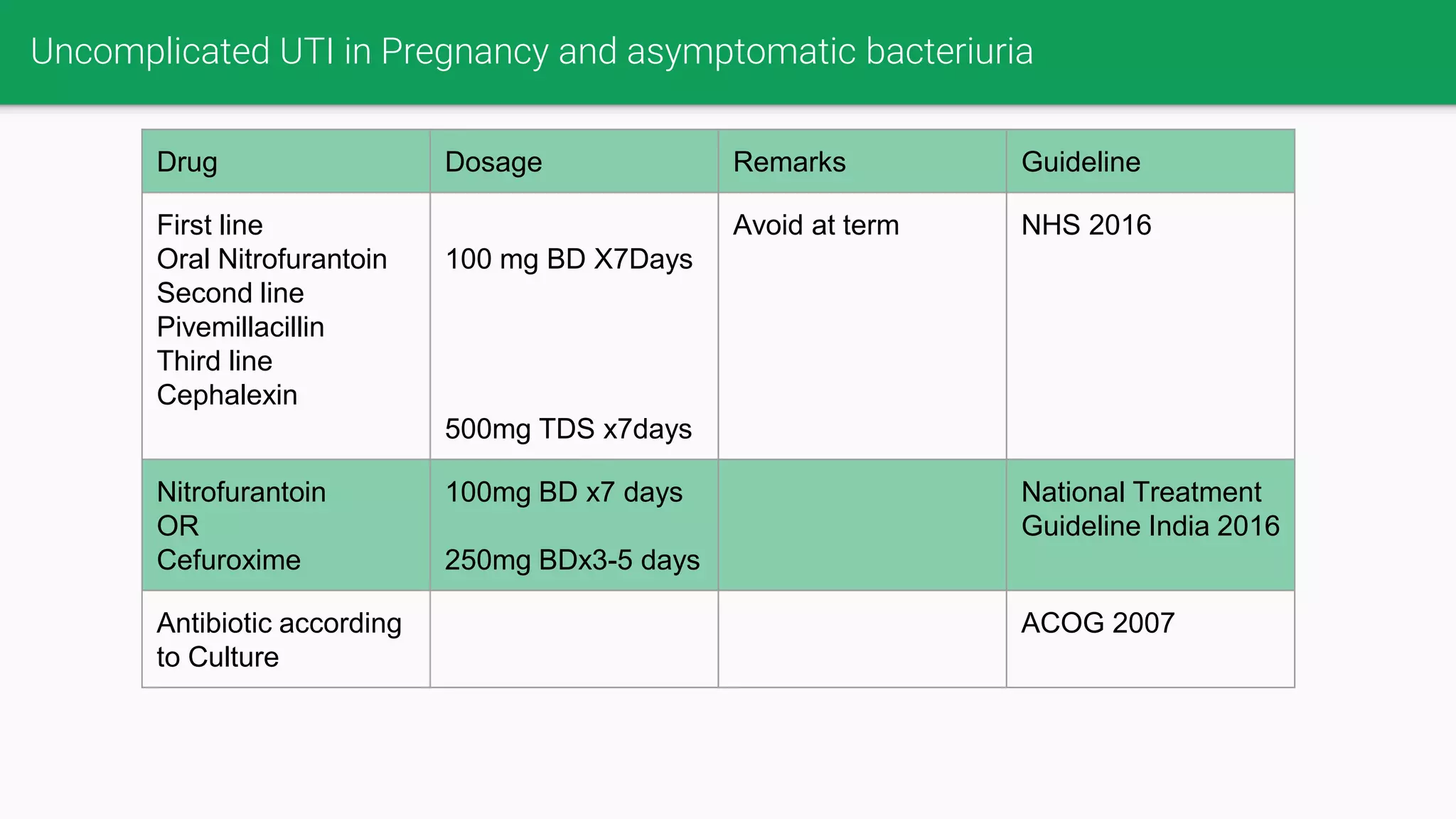
Uncomplicated UTI in Pregnancy and asymptomatic bacteriuria
Drug Dosage Remarks Guideline
First line
Oral Nitrofurantoin
Second line
Pivemillacillin
Third line
Cephalexin
100 mg BD X7Days
500mg TDS x7days
Avoid at term NHS 2016
Nitrofurantoin
OR
Cefuroxime
100mg BD x7 days
250mg BDx3-5 days
National Treatment
Guideline India 2016
Antibiotic according
to Culture
ACOG 2007
Upper UTI in Pregnancy
Drug Dose Remarks Guideline
IV Piperacillin/
Tazobactum
OR
IV Meropenam
In mild Penicillin allergy
IV Cefuroxime
4.5gm TDS x 48 Hrs
500mg QID x48hrs
1.5gm TDS x 48Hrs
Add IV Gentamicin if no
improvement in 24 hrs or
patient in sepsis
If patient improves Oral
Cefalexin 500mg TDS x7
days
NHS 2016
IV Piperacillin/
Tazobactum
OR
IV Cefaperazone
sulbactum
OR
IV Amikacin
4.5gm 6Hrly x 48 Hrs
3gm 12hrly
1gm OD
Change Oral antibiotics
based on Urine culture
for 10-14 days
National Treatment
Guideline India 2016
Chorioamnionitis
Clinical features suggestive are -
● Maternal Pyrexia >380C
● Uterine tenderness
● Maternal tachycardia >100
● Fetal tachycardia >160
Chorioamnionitis
IV Amoxicillin 2gm plus IV Metronidazole 500mg Stat followed by
IV Amoxicillin 1gm TDS plus IV Metronidazole 500mg TDS till delivery
If allergic to penicillin IV Clindamycin 900mg TDS till delivery
NHS 2016
National Treatment Guideline India 2016
IV Piperacillin-Tazobactum Or IV Cefoperazone-sulbactum
National Treatment Guideline India 2016
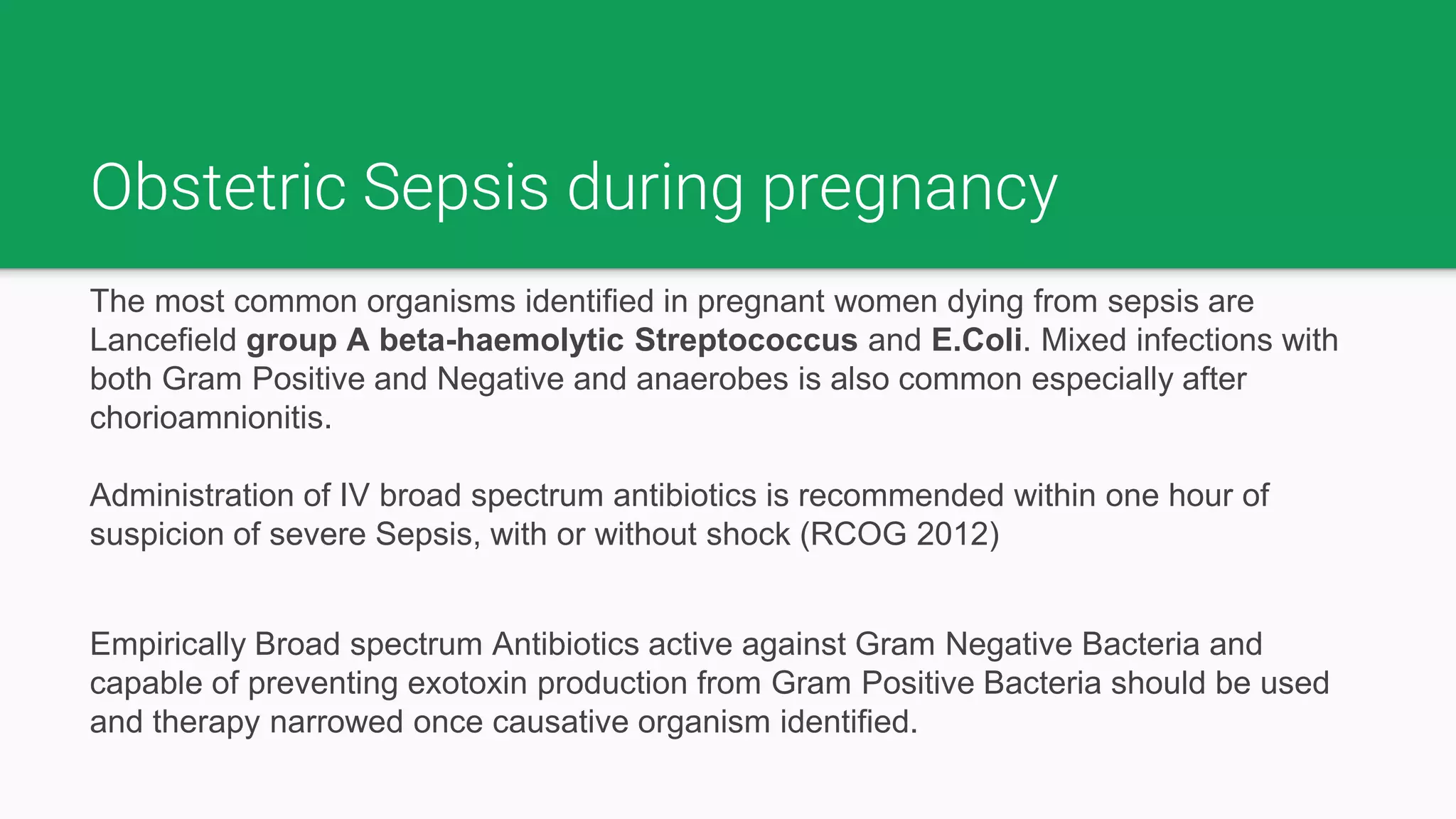
Obstetric Sepsis during pregnancy
The most common organisms identified in pregnant women dying from sepsis are
Lancefield group A beta-haemolytic Streptococcus and E.Coli. Mixed infections with
both Gram Positive and Negative and anaerobes is also common especially after
chorioamnionitis.
Administration of IV broad spectrum antibiotics is recommended within one hour of
suspicion of severe Sepsis, with or without shock (RCOG 2012)
Empirically Broad spectrum Antibiotics active against Gram Negative Bacteria and
capable of preventing exotoxin production from Gram Positive Bacteria should be used
and therapy narrowed once causative organism identified.
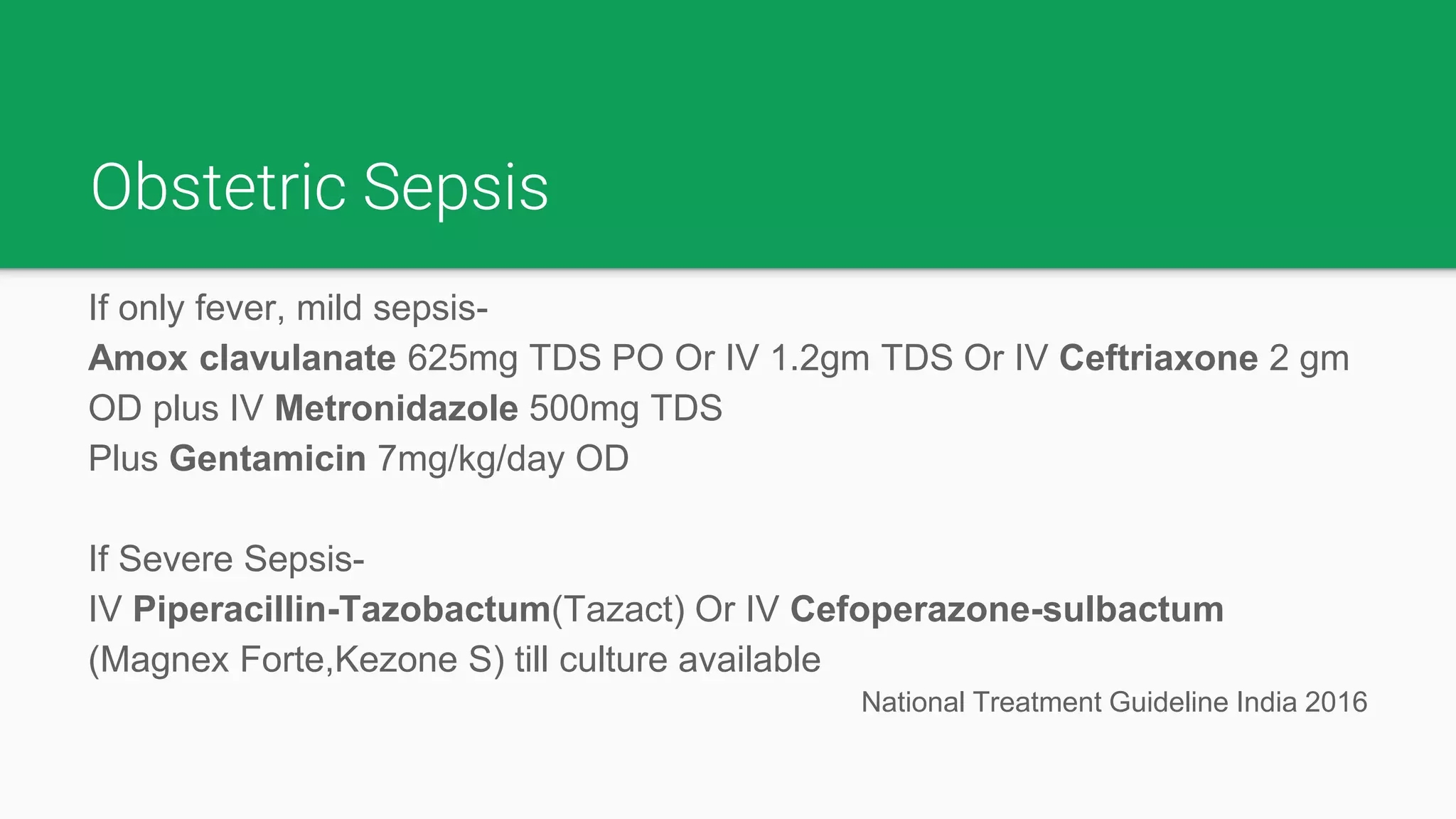
Obstetric Sepsis
If only fever, mild sepsis-
Amox clavulanate 625mg TDS PO Or IV 1.2gm TDS Or IV Ceftriaxone 2 gm
OD plus IV Metronidazole 500mg TDS
Plus Gentamicin 7mg/kg/day OD
If Severe Sepsis-
IV Piperacillin-Tazobactum(Tazact) Or IV Cefoperazone-sulbactum
(Magnex Forte,Kezone S) till culture available
National Treatment Guideline India 2016
Obstetric Sepsis
Mild endometritis without sepsis-
Oral Co-amoxiclav 625 TDS Or Cephalexin 500mg TDS and Metro 400mg
TDS
If patient unwell
IV Piperacillin-Tazobactum(Tazact, Tazar) 4.5 gm TDS Or IV Cefuroxime
(Pulmocef) 1.5gm TDS and IV Metro 500mg TDS
In Penicillin allergy IV Clindamycin 900mg TDS and IV Gentamycin
7mg/kg/day OD for48 hrs followed by Co-amoxiclav 625 mg TDS Or
Cephalexin 500mg TDS and Metro 400mg TDS for 5 days if patient improves
NHS 2016
Infected cesarean and perineal wounds
Oral Flucloxacillin 500 mg QID and Oral Metronidazole 400 mg TDS initially till
swab culture available
In Penicillin allergy oral Clindamycin 300-450 mg TDS
NHS 2016
Puerperal Sepsis
Causative Organisms- GAS Group A beta-haemolytic Streptococci-
Streptococci Pyogenes, E. coli, S. aureus,S pneumoniae, MRSA, C. Septicum
& Morganella morganii.
Administration of intravenous broad-spectrum antibiotics within 1 hour of
suspicion of severe sepsis, with or without septic shock, is recommended as
part of the Surviving Sepsis resuscitation care bundle. RCOG 2012 Level D
Puerperal Sepsis
A combination of either piperacillin/tazobactam or a carbapenem plus clindamycin
provides one of the broadest ranges of treatment for severe sepsis.
MRSA may be resistant to clindamycin, hence if the woman is or is highly likely to be
MRSA-positive, a glycopeptide such as vancomycin or teicoplanin may be added until
sensitivity is known.
Clindamycin is not nephrotoxic and switches off the production of superantigens and
other exotoxins. Therefore, together with either piperacillin/tazobactam or a carbapenem,
clindamycin provides broad cover in severe sepsis.
RCOG 2012
Conclusion
● All women undergoing elective or emergency Caesarean section should receive antibiotic
prophylaxis. (I-A)
● The choice of antibiotic for Caesarean section should be a single dose of a first-generation
cephalosporin. If the patient has a penicillin allergy, clindamycin or erythromycin can be used. (I-
A)
● The timing of prophylactic antibiotics for Caesarean section should be 15 to 60 minutes prior to
skin incision. No additional doses are recommended. (I-A)
● If an open abdominal procedure is lengthy (> 3 hours) or estimated blood loss is greater than
1500 mL, an additional dose of the prophylactic antibiotic may be given 3 to 4 hours after the
initial dose. (III-L)
Conclusion
● Available evidence does not support the use of prophylactic antibiotics to reduce infectious
morbidity following operative vaginal delivery. (II-1)
● There is insufficient evidence to argue for or against the use of prophylactic antibiotics to reduce
infectious morbidity for manual removal of the placenta. (III)
● There is insufficient evidence to argue for or against the use of prophylactic antibiotics at the
time of postpartum dilatation and curettage for retained products of conception. (III)
● Available evidence does not support the use of prophylactic antibiotics to reduce infectious
morbidity following elective or emergency cerclage. (II-3)
Conclusion
● Prophylactic antibiotics may be considered for reduction of infectious
morbidity associated with repair of third and fourth degree perineal injury.
(I-B)
● In patients with morbid obesity (BMI > 35), doubling the antibiotic dose
may be considered. (III-B)
● Antibiotics should not be administered solely to prevent endocarditis for
patients who undergo an obstetrical procedure of any kind. (III-E
Thank You

Antibiotic usage in pregnancy

  • 1.
    Antibiotics usage in Obstetrics-Evidence based Guidelines Dr Meenakshi Sharma Consultant Obs & Gynae Deepak Memorial Hospital Yashoda Superspeciality Hospital Kaushambi
  • 2.
    Judicious Antibiotic Usage ReducesInfectious morbidity and mortality Prevents development of antibiotic resistance
  • 3.
  • 4.
    Principles of SurgicalAntibiotic Prophylaxis (SAP) ● To reduce the colonization pressure of microorganisms introduced at the time of operation to a level that the patient’s immune system is able to overcome. ● Prophylaxis does not prevent infection caused by postoperative contamination ● Prophylaxis is intended for elective procedures when the incision will be closed in the OT ● SAP should be safe, inexpensive and effective against organisms likely to be encountered in surgery
  • 5.
    Cesarean Section Most importantrisk factor for infection in Obstetrics - 5-20 times vaginal delivery Surgical site infection 8 - 25%
  • 6.
    Outcome Em LSCS RR(95%CI) El LSCS RR (95%CI) Fever 0.49 (0.32-0.75) 0.40(0.31-0.51) Wound infection 0.73(0.53-0.99) 0.36(0.26-0.51 Endometritis 0.38(0.22-0.64) 0.39(0.34-0.46) UTI 0.57(0.29-1.11) 0.43(0.30-0.60) Outcome of antibiotic Prophylaxis Smaill F, Hofmeyr GJ. Antibiotic prophylaxis for cesarean section. Cochrane Database Syst Rev. 2002;(3) CD000933 Cochrane review of 81 RCT assessing antibiotic prophylaxis versus placebo or no treatment with 2000 women in both arms
  • 7.
    Antibiotic prophylaxis inLSCS narrow range or broad spectrum CDC and ACOG recommends narrow range first generation cephalosporin for SAP as equally effective and less costly than broad spectrum SAP Despite SAP 10% have SSI and 15% fever Smaill F, Hofmeyr GJ. Antibiotic prophylaxis for cesarean section. Cochrane Database Syst Rev. 2002;(3) CD000933 Concern of broad spectrum SAP leading to infection with resistant Cl difficile and MRSA seems unlikely with single dose SAP Broad spectrum SAP prior to incision may mask Neonatal Sepsis and neonate exposed to resistant bacteria
  • 8.
    Cesarean Section -Timingof Prophylaxis pre incision or Post clamping ? ACOG 2003 and CDC 2008 recommended first generation of cephalosporin after clamping of umbilical cord Prophylaxis has been delayed in an effort to avoid masking a neonatal infection and to prevent unnecessary sepsis workup in neonate.
  • 9.
    Cesarean Section -Timingof Prophylaxis pre incision or Post clamping ? RCT 357 women randomized to receive Cefazolin 15-60 min prior to incision versus cord clamp. Overall maternal infectious morbidity was reduced in the pre-treatment group (RR 0.4; 95% CI 0.18 to 0.87); in particular, endometritis was reduced (RR 0.2; 95% CI 0.15 to 0.94). No increase in neonatal sepsis, investigation, or length of stay was observed A recent meta-analysis of 3 RCT with 749 women supports the use of SAP prior to LSCS incision to prevent total infectious morbidity (RR 0.50; 95% CI 0.33 to 0.78, P = 0.002). Neonatal outcomes were not affected Sullivan SA, Am J Obstet Gynaecol 2007 Constantine MM, Am J Obstet Gynaecol 2008
  • 10.
    Cesarean Section -Timingof Prophylaxis pre incision or Post clamping ? Large Observational study after policy change >4000 CD in each arm Post-clamping antibiotics (n=4229) was associated with a 3.9% incidence of endometritis compared to 2.2% incidence for pre-incision cefazolin, (n=4781) ( OR = 0.61; 95% CI=0.47-0.79) and post-clamping WI occurred in 3.6% compared to 2.5% following pre-incision antibiotics (OR= 0.70; 95% CI=0.55- 0.90) (p=0.001 for the linear trend). Pre-incision antibiotics was not associated with an increase in neonatal sepsis, sepsis work-up, and admission or length of stay in the NICU Antimicrobial prophylaxis for cesarean delivery before skin incision.Owens SM, Obstet Gynecol. 2009 Sep; 114(3):573-9.
  • 11.
    Choice of antibioticand rationale of broad spectrum antibiotics Source of infection - Lower Genitourinary tract Causative organisms- Polymicrobial Ureaplasmas, mycoplasmas, anaerobes or Gardnerella vaginalis, even in women with intact membranes. Cefazolin provides good antibiotic activity against Ureaplasma and Mycoplasma but results in resistant anaerobes. Broad spectrum antibiotics 2nd and 3rd gen cephalosporin -no advantage
  • 12.
    Choice of antibioticand rationale of broad spectrum antibiotics 4 RCT compared Narrow range antibiotic (Cefazolin or Ampicillin) with Broad spectrum antibiotics ( Cefazolin with Gentamicin or Metronidazole or Azithromycin or Doxycycline) Conclusion- Broad spectrum antibiotics was associated with significant reduction in infection rates, Endometritis and WI and shorter hospital stay compared to narrow range Azithromycin preferable to increase broad spectrum coverage as longer half life (68hrs), high tissue penetration, lower transplacental passage than other antibiotic and it is active against both aerobes and anaerobes as well as Ureaplasma, can prevent neonatal sepsis Preincision broad spectrum antibiotics better than post clamping narrow range antibiotics Lamont RF, BJOG, 2011
  • 13.
    Cesarean Section Guidelines- Prophylaxis Drug Timing Guideline Level of evidence IV Co-amoxiclav 1.5 gm OR IV Clindamicin 900mg Add IV Gentamicin 1.5gm if em LSCS If MRSA colonisation IV Teicoplanin 400mg plus IV Gentamicin 1.5mg/kg and IV Metronidazole 500mg Prior to incision NHS 2016 IV Cefazolin 1-2 gm OR IV Clindamycin 600mg OR IV Erythromycin 500mg Prior to incision SOGC 2010 IA IV Cefazolin 1-2 gm Clindamycin with Gentamicin if allergic to penicillin Within 60 min prior to incision ACOG 2011 A An additional dose if procedure lasts more than 4 hrs (>2 half life of drug) or more than 1500 ml blood loss
  • 14.
    Infective Endocarditis Prophylaxisin Cardiac patients for Obstetric Procedures IE Prophylaxis only recommended for High risk Patients- ● Patients with Prosthetic Cardiac valves ● Patients with previous Infective Endocarditis ● Cardiac transplant patients with valvulopathy ● CHD with Unrepaired cyanotic CHD with palliative shunts or conduits, CHD with repaired prosthetic valves less than 6 months and repaired CHD with residual defects at site or prosthetic device NHS 2016
  • 15.
    Infective Endocarditis Prophylaxisin Cardiac patients for Obstetric Procedures IV Teicoplanin 400mg and IV Gentamicin 1.5 mg/Kg prior to incision should be given for IE Prophylaxis NHS 2016
  • 16.
    Intrapartum prophylaxis forGroup B streptococci Antibiotics should be given at least 2 hours prior to delivery IV Benzylpenicillin 3gm initially then 1.2gm 4 hrly till delivery In Penicillin allergy IV Clindamycin 900 mg TDS till delivery NHS 2016
  • 17.
    Operative Vaginal Delivery Cochranein 2004 Only one RCT of 393 women, only 2 outcome endometritis and length of hospital stay could be assessed. Risk ratio reduction of endometritis was 93% (RR 0.07; 95% CI (0.00 to 1.21). There was no difference in the length of hospital stay between the two groups Conclusion- There were insufficient data on which to base recommendations for practice and further research is needed. No additional studies addressing this issue have been published to date. Liabsuetrakul T, Antibiotic prophylaxis for operative vaginal delivery. Cochrane Database Syst Rev 2004;(3):CD004455.
  • 18.
    Operative Vaginal Delivery DrugLevel of Evidence Guideline None II-1C SOGC, 2010 None C ACOG, 2011 None NHS
  • 19.
    Perineal Lacerations 3rdor 4th degree Cochrane in 2005 found no RCT on this subject A prospective RCT was conducted by Duggal et al in 2008, 107 women were followed for 2 weeks after delivery. A single IV dose of cefotetan, cefoxitin, or placebo. Four of 49 (8%) who received antibiotics and 14 of 58 (24%) who received placebo developed perineal wound complication (P = 0.037). This suggests a benefit to using prophylactic antibiotics to reduce morbidity following significant perineal laceration Duggal N, Obstet Gynaecol, 2008
  • 20.
    Perineal Lacerations third& fourth Degree Drug Dose Level of Evidence Guideline Cefotetan Cefoxitin 1gm IV 1gm IV I-B SOGC 2010 Single dose of antibiotic ACOG 2016 Broad spectrum antibiotics B RCOG,2015
  • 21.
    PPH and MRP ACochrane review, updated in April 2009, did not identify any randomized controlled trials Chongsomchai C, Lumbiaganon P, Laopaiboon M. Prophylactic antibiotics for manual removal of retained placenta in vaginal delivery. Cochrane Database Syst Rev 2006;(2):CD004904. The WHO suggests that prophylaxis should be offered but recognizes that there is no direct evidence of the value of antibiotic prophylaxis after MRP and bases the recommendation on studies involving Caesarean section and abortion and on observational studies of other intrauterine manipulations World Health Organisation (WHO). WHO guidelines for the management of postpartum hemorrhage and retained placenta. Geneva: WHO; 2009. Available at: http://whqlibdoc.who.int/publications/2009/ 9789241598514_eng.pdf. Accessed May 23, 2010.
  • 22.
    Circlage One observational study10 women with circlage 14-24 weeks received low dose antibiotics. Each had live birth and pregnancy prolonged by 13.4+/- 4.2days Shiffman RL, J Reprod Med, 2000 A retrospective study of 116 mid-trimester cerclage placements, antibiotic use was not associated with a decreased risk of delivery before 28 weeks’ gestation Terkildsen MF. Factors associated with success of emergent second-trimester cerclage. Obstet Gynecol 2003;101:565–9. Antibiotic prophylaxis not recommended by SOGC 2010, II-3C
  • 23.
    Postpartum D&C No studieswere identified that investigated the use of prophylactic antibiotics for postpartum D&C
  • 24.
    Surgical Abortion ● 11of 15 RCT supports antibiotic prophylaxis at time of suction curettage for elective abortion ● Metaanalysis of 11 placebo controlled trials the RR of postabortive infection is 0.58 in antibiotic treated compared with placebo (95% CI 0.47-0.71) Sawaya GF Obstet Gynaecol 1996 ● 42% decreased risk of infection in women received periabortal antibiotics Sawaya GF Obstet Gynaecol 1996 Antibiotic prophylaxis is recommended before surgical abortion ● Level A,ACOG 2016, RCOG 2011 Grade A for surgical and Grade C for medical abortion, WHO 2014, SOGC (I-A)2012. Antibiotic prophylaxis not recommended before medical abortion by WHO 2014, ACOG 2016,SOGC 2010
  • 25.
    Surgical abortion Drug DoseRemarks Guideline Doxycycline plus Metronidazole 100mg 1 hr prior and 200mg after procedure 500mg BD x 5 Days ACOG 2016 Azithromycin And Metronidazole OR Doxycycline And Metronidazole OR Metronidazole 1gm 800mg 100mg BD x7Days 800mg single dose 800mg oral Prior to procedure In C trachomatis negative women RCOG 2011 Doxycycline 100mg PO prior and 200 mg PO after procedure SOGC 2012
  • 26.
  • 27.
    Antibiotic FDA riskcategory Antibiotic FDA risk category Amoxicillin B Trimethoprim/sulfamethoxazol C Cephalosporins B Ciprofloxacin C Piperacillin/tazobactam B Levofloxacin C Daptomycin B Imipenem/cilastatin C Azithromycin B Linezolid C Erythromycin B Clarithromycin C Meropenem B Spiramycin C Clindamycin B Gentamycin C Nitrofurantoin B Amikacin D Vankomycin iv. B Tobramycin D Metronidazol iv. B Netilmycin D Trimethoprim C Tetracyclines D
  • 29.
    Antimicrobial choices andlimitations of antimicrobial. Drug Remarks Co-amoxiclav Does not cover MRSA or Pseudomonas, and there is concern about an increase in the risk of NEC in neonates exposed in utero Metronidazole Only covers anaerobes Clindamycin Covers most streptococci and staphylococci, including many MRSA, and switches off exotoxin production with significantly decreased mortality.Not renally excreted or nephrotoxic. Piperacillin– tazobactam Covers all except MRSA and are renal sparing (in contrast to aminoglycosides). Gentamicin-single dose 3-5mg/kg Poses no problem in normal renal function but if doses are to be given regularly serum levels must be monitored
  • 30.
    Cephalosporin Antibiotics Gener ation Drug Sectrum 1Cephalexin tab(Cefalexin, Ceff, Phexin) 250-1000gm TDS/QID Gram Positive good activity against Strep and Staph, Gram Negative E coli and Pseudomonas- Limited activity Cefazolin inj (Ancef, Reflin, Cephazolin,Kefzol) 0.5-1gm IV 2 Cefuroxime inj tab (Ceftum, Pulmocef, Cetil, Supacef,) 250- 500mg BD Gram Positive - Activity less than first generation Gram Negative- Activity greater than first generation, E coli, Pseudomonas, H Influenzae, Enterobacter, Nisseria Cefaclor tab (Distaclor, Keflor) 250-500mgTDS Cefotetan (cefotan) Cefoxitin
  • 31.
    Cephalosporin Antibiotics Generati on Drug Sectrum 3Cefixime tab (Taxim O,Zifi) 200mg BD Gram-positive: Some members of this group (in particular, those available in an oral formulation, and those with antipseudomonal activity) have decreased activity against gram-positive organisms. Gram Negative Broad spectrum increased activity against Gram negative organism, effective against nosocomial infections. Able to penetrate CNS barrier. Ceftriaxone is currently the only effective third generation cephalosporin against gonorrhea in addition to Azithromycin and Doxycyclin in US.Activity against staphylococci and streptococci is less with the third-generation compounds than with the first- and second-generation compounds. Cefotaxime ( Taxim) 1-2 gm BD Cefpodoxime tab (Monocef) 200-400 mg BD Ceftriaxone inj (Monocef, Gramocef) 1-2 gm IV BD Cefoperazone inj (Magnamycin, kephazon) 1-2 gm BD Ceftazidime inj( Fortum, Forzid) 0.5-2gm IV TDS
  • 32.
    Cephalosporin Antibiotics Generati on Drug Sectrum 4Cefepime inj (Cepime, Micropime, Maxipime) 1-2 gm BD Gram-positive: extended-spectrum agents with similar activity against Gram-positive organisms as first-generation cephalosporins. Gram-negative: can penetrate the outer membrane of Gram- negative bacteria.[19] They also have a greater resistance to β- lactamases than the third-gen cephalosporins. can cross CNS. They are also used against Pseudomonas aeruginosa Cefpirome inj (Cefor, Bacirom) 1-2 gm BD Ceflurepenam 5 Ceftobiprole Broad spectrum activity against MRSA and Pseudomonas Ceftaroline Ceftolozane
  • 33.
    Broad Spectrum Antibiotics DrugBrand-company Dose Spectrum Price Cefoperazon e + Sulbactum Magnex Forte 1:1- Pfizer 3 Cef Novo( 2:1) - 1000mg+500mg Alkem 1-2gm IV 12hrly Max dose of sulbactam 4gm/day Broad Spectrum Rs 575 Rs 125 Cefotaxime + sulbactum Taximax 1.5gm, 0.75gm- Alkem 1-2 gm IV 6-12 hrly Ceftriaxone + Tazobatum Montaz - Aristo 1-2 gm IV BD Piperacillin Tazobactum Tazact - cipla 2.25- 4.5gm IV 6-8 hrly
  • 34.
    Uncomplicated UTI inPregnancy and asymptomatic bacteriuria Drug Dosage Remarks Guideline First line Oral Nitrofurantoin Second line Pivemillacillin Third line Cephalexin 100 mg BD X7Days 500mg TDS x7days Avoid at term NHS 2016 Nitrofurantoin OR Cefuroxime 100mg BD x7 days 250mg BDx3-5 days National Treatment Guideline India 2016 Antibiotic according to Culture ACOG 2007
  • 35.
    Upper UTI inPregnancy Drug Dose Remarks Guideline IV Piperacillin/ Tazobactum OR IV Meropenam In mild Penicillin allergy IV Cefuroxime 4.5gm TDS x 48 Hrs 500mg QID x48hrs 1.5gm TDS x 48Hrs Add IV Gentamicin if no improvement in 24 hrs or patient in sepsis If patient improves Oral Cefalexin 500mg TDS x7 days NHS 2016 IV Piperacillin/ Tazobactum OR IV Cefaperazone sulbactum OR IV Amikacin 4.5gm 6Hrly x 48 Hrs 3gm 12hrly 1gm OD Change Oral antibiotics based on Urine culture for 10-14 days National Treatment Guideline India 2016
  • 36.
    Chorioamnionitis Clinical features suggestiveare - ● Maternal Pyrexia >380C ● Uterine tenderness ● Maternal tachycardia >100 ● Fetal tachycardia >160
  • 37.
    Chorioamnionitis IV Amoxicillin 2gmplus IV Metronidazole 500mg Stat followed by IV Amoxicillin 1gm TDS plus IV Metronidazole 500mg TDS till delivery If allergic to penicillin IV Clindamycin 900mg TDS till delivery NHS 2016 National Treatment Guideline India 2016 IV Piperacillin-Tazobactum Or IV Cefoperazone-sulbactum National Treatment Guideline India 2016
  • 38.
    Obstetric Sepsis duringpregnancy The most common organisms identified in pregnant women dying from sepsis are Lancefield group A beta-haemolytic Streptococcus and E.Coli. Mixed infections with both Gram Positive and Negative and anaerobes is also common especially after chorioamnionitis. Administration of IV broad spectrum antibiotics is recommended within one hour of suspicion of severe Sepsis, with or without shock (RCOG 2012) Empirically Broad spectrum Antibiotics active against Gram Negative Bacteria and capable of preventing exotoxin production from Gram Positive Bacteria should be used and therapy narrowed once causative organism identified.
  • 39.
    Obstetric Sepsis If onlyfever, mild sepsis- Amox clavulanate 625mg TDS PO Or IV 1.2gm TDS Or IV Ceftriaxone 2 gm OD plus IV Metronidazole 500mg TDS Plus Gentamicin 7mg/kg/day OD If Severe Sepsis- IV Piperacillin-Tazobactum(Tazact) Or IV Cefoperazone-sulbactum (Magnex Forte,Kezone S) till culture available National Treatment Guideline India 2016
  • 40.
    Obstetric Sepsis Mild endometritiswithout sepsis- Oral Co-amoxiclav 625 TDS Or Cephalexin 500mg TDS and Metro 400mg TDS If patient unwell IV Piperacillin-Tazobactum(Tazact, Tazar) 4.5 gm TDS Or IV Cefuroxime (Pulmocef) 1.5gm TDS and IV Metro 500mg TDS In Penicillin allergy IV Clindamycin 900mg TDS and IV Gentamycin 7mg/kg/day OD for48 hrs followed by Co-amoxiclav 625 mg TDS Or Cephalexin 500mg TDS and Metro 400mg TDS for 5 days if patient improves NHS 2016
  • 41.
    Infected cesarean andperineal wounds Oral Flucloxacillin 500 mg QID and Oral Metronidazole 400 mg TDS initially till swab culture available In Penicillin allergy oral Clindamycin 300-450 mg TDS NHS 2016
  • 42.
    Puerperal Sepsis Causative Organisms-GAS Group A beta-haemolytic Streptococci- Streptococci Pyogenes, E. coli, S. aureus,S pneumoniae, MRSA, C. Septicum & Morganella morganii. Administration of intravenous broad-spectrum antibiotics within 1 hour of suspicion of severe sepsis, with or without septic shock, is recommended as part of the Surviving Sepsis resuscitation care bundle. RCOG 2012 Level D
  • 43.
    Puerperal Sepsis A combinationof either piperacillin/tazobactam or a carbapenem plus clindamycin provides one of the broadest ranges of treatment for severe sepsis. MRSA may be resistant to clindamycin, hence if the woman is or is highly likely to be MRSA-positive, a glycopeptide such as vancomycin or teicoplanin may be added until sensitivity is known. Clindamycin is not nephrotoxic and switches off the production of superantigens and other exotoxins. Therefore, together with either piperacillin/tazobactam or a carbapenem, clindamycin provides broad cover in severe sepsis. RCOG 2012
  • 45.
    Conclusion ● All womenundergoing elective or emergency Caesarean section should receive antibiotic prophylaxis. (I-A) ● The choice of antibiotic for Caesarean section should be a single dose of a first-generation cephalosporin. If the patient has a penicillin allergy, clindamycin or erythromycin can be used. (I- A) ● The timing of prophylactic antibiotics for Caesarean section should be 15 to 60 minutes prior to skin incision. No additional doses are recommended. (I-A) ● If an open abdominal procedure is lengthy (> 3 hours) or estimated blood loss is greater than 1500 mL, an additional dose of the prophylactic antibiotic may be given 3 to 4 hours after the initial dose. (III-L)
  • 46.
    Conclusion ● Available evidencedoes not support the use of prophylactic antibiotics to reduce infectious morbidity following operative vaginal delivery. (II-1) ● There is insufficient evidence to argue for or against the use of prophylactic antibiotics to reduce infectious morbidity for manual removal of the placenta. (III) ● There is insufficient evidence to argue for or against the use of prophylactic antibiotics at the time of postpartum dilatation and curettage for retained products of conception. (III) ● Available evidence does not support the use of prophylactic antibiotics to reduce infectious morbidity following elective or emergency cerclage. (II-3)
  • 47.
    Conclusion ● Prophylactic antibioticsmay be considered for reduction of infectious morbidity associated with repair of third and fourth degree perineal injury. (I-B) ● In patients with morbid obesity (BMI > 35), doubling the antibiotic dose may be considered. (III-B) ● Antibiotics should not be administered solely to prevent endocarditis for patients who undergo an obstetrical procedure of any kind. (III-E
  • 48.