Antibiotic
Resistance
(sp)²
Sabrina Tabita Beghan
Sophia Xinyiwu
Paul Kelly
Pearse O’Brien
Antibiotics
 Greek word anti meaning “against” and bios
meaning “life” (bacteria are life forms)
 Medications that destroy or slow down the
growth of bacteria.
 First discovered in 1928 by Alexander Fleming-
Penicillin.
 Used to kill bacteria, not viruses!
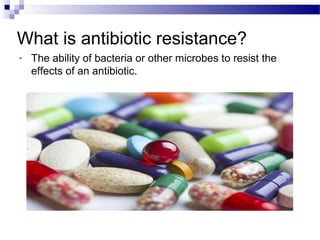
What is antibiotic resistance?
- The ability of bacteria or other microbes to resist the
effects of an antibiotic.
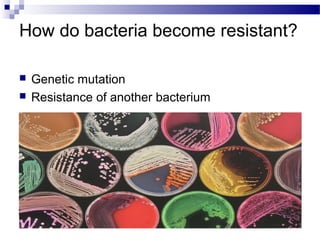
How do bacteria become resistant?
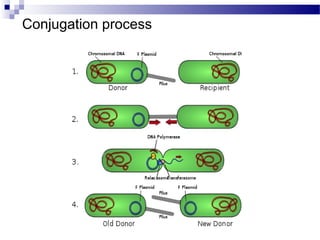
 Genetic mutation
 Resistance of another bacterium
Conjugation process
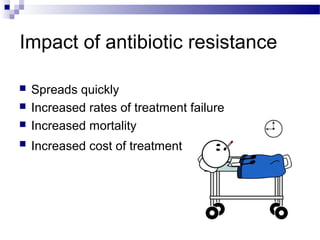
Impact of antibiotic resistance
 Spreads quickly
 Increased rates of treatment failure
 Increased mortality
 Increased cost of treatment
To prevent from antibiotic
resistance infections
 Talk with your healthcare provider about
antibiotic resistance.
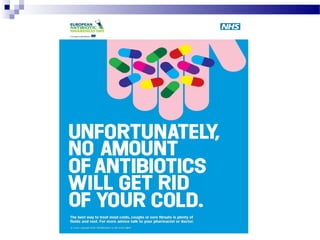
 Don’t take antibiotics for viral infections like a
cold or flu.
 Take antibiotics exactly as the healthcare
provider tells you.
Antibiotic Resistance presentation

Antibiotic Resistance presentation

  • 1.
  • 2.
    Antibiotics  Greek wordanti meaning “against” and bios meaning “life” (bacteria are life forms)  Medications that destroy or slow down the growth of bacteria.  First discovered in 1928 by Alexander Fleming- Penicillin.  Used to kill bacteria, not viruses!
  • 3.
    What is antibioticresistance? - The ability of bacteria or other microbes to resist the effects of an antibiotic.
  • 4.
    How do bacteriabecome resistant?  Genetic mutation  Resistance of another bacterium
  • 5.
  • 6.
    Impact of antibioticresistance  Spreads quickly  Increased rates of treatment failure  Increased mortality  Increased cost of treatment
  • 7.
    To prevent fromantibiotic resistance infections  Talk with your healthcare provider about antibiotic resistance.  Don’t take antibiotics for viral infections like a cold or flu.  Take antibiotics exactly as the healthcare provider tells you.