School Health
Awareness Program
on Antibiotic
Resistance
GARP Nepal
Nepal Public Health Foundation
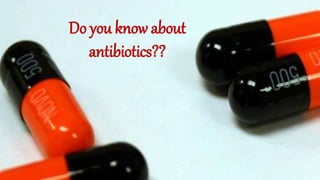
Do you know about
antibiotics??
Introduction
 Antibiotics are the medicines that are used to
kill bacteria and certain parasites which can
cause illness and disease.
 Antibiotics are the miracle drug of 20th
century.
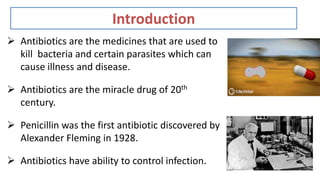
 Penicillin was the first antibiotic discovered by
Alexander Fleming in 1928.
 Antibiotics have ability to control infection.
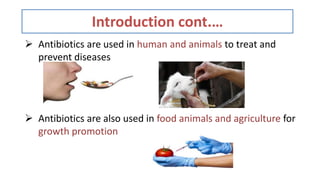
Introduction cont.…
 Antibiotics are used in human and animals to treat and
prevent diseases
 Antibiotics are also used in food animals and agriculture for
growth promotion
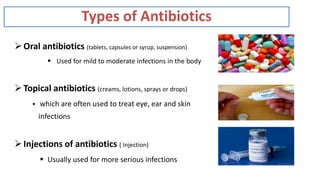
Oral antibiotics (tablets, capsules or syrup, suspension)
 Used for mild to moderate infections in the body
Topical antibiotics (creams, lotions, sprays or drops)
 which are often used to treat eye, ear and skin
infections
Injections of antibiotics ( Injection)
 Usually used for more serious infections
Types of Antibiotics
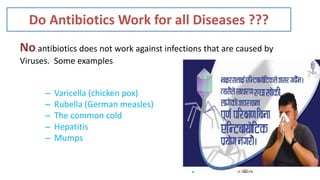
Do Antibiotics Work for all Diseases ???
No, antibiotics does not work against infections that are caused by
Viruses. Some examples
– Varicella (chicken pox)
– Rubella (German measles)
– The common cold
– Hepatitis
– Mumps
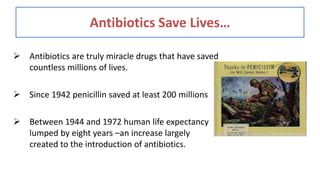
Antibiotics Save Lives…
 Antibiotics are truly miracle drugs that have saved
countless millions of lives.
 Since 1942 penicillin saved at least 200 millions
 Between 1944 and 1972 human life expectancy
lumped by eight years –an increase largely
created to the introduction of antibiotics.
BUT Too Much of Everything is as bad as too little
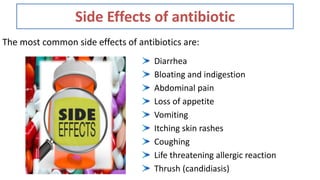
Side Effects of antibiotic
Diarrhea
Bloating and indigestion
Abdominal pain
Loss of appetite
Vomiting
Itching skin rashes
Coughing
Life threatening allergic reaction
Thrush (candidiasis)
The most common side effects of antibiotics are:
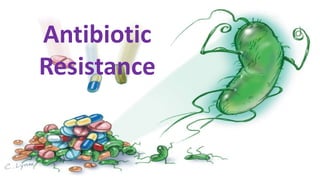
Antibiotic
Resistance
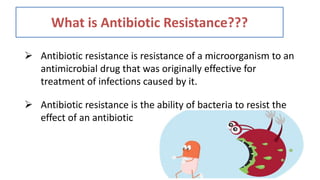
What is Antibiotic Resistance???
 Antibiotic resistance is resistance of a microorganism to an
antimicrobial drug that was originally effective for
treatment of infections caused by it.
 Antibiotic resistance is the ability of bacteria to resist the
effect of an antibiotic
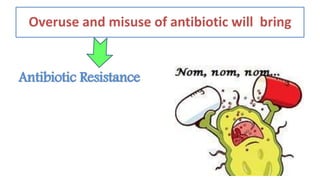
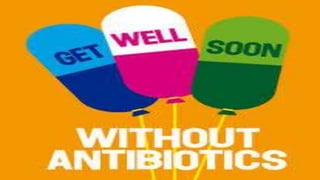
Overuse and misuse of antibiotic will bring
Antibiotic Resistance
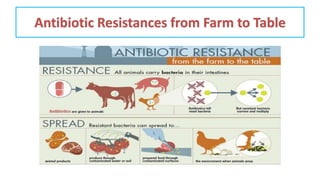
Antibiotic Resistances from Farm to Table
Why is Antimicrobial Resistance a Global
Concern?
 New resistance mechanisms emerge and spread globally
threatening our ability to treat common infectious diseases,
resulting in death and disability of individuals who until
recently could continue a normal course of life.
 Without effective anti-infective treatment, many standard
medical treatments will fail or turn into very high risk
procedures.
Situation of Antibiotics Resistance
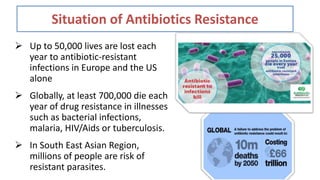
 Up to 50,000 lives are lost each
year to antibiotic-resistant
infections in Europe and the US
alone
 Globally, at least 700,000 die each
year of drug resistance in illnesses
such as bacterial infections,
malaria, HIV/Aids or tuberculosis.
 In South East Asian Region,
millions of people are risk of
resistant parasites.
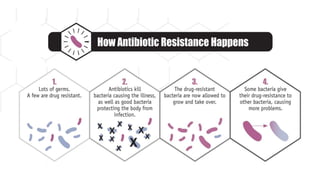
The current global antibiotic resistance crisis is the result
of six factors:
1. Over-prescribing and dispensing of antibiotics by health
workers
2. Patients not finishing their full treatment course of
antibiotics
3. The over-use of antibiotics in livestock and fish farming
4. Poor infection control in hospitals and clinics
5. Lack of hygiene and poor sanitation
6. Lack of new antibiotics being developed
Health Impacts of Antibiotic Resistance
 Longer duration of illness
 Longer treatment
 Higher mortality
 Treatment with expensive drugs
 Increased burden on health system
Health Impacts of Antibiotic Resistance Cont..
 Negates technological advances in medical sector
 Complex surgeries
 Transplantations and other interventions
 Patient acts as reservoir of resistant organisms which are passed to
community and health-care workers
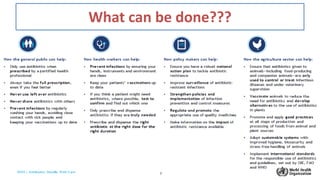
What can be done???
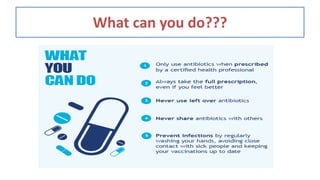
What can you do???
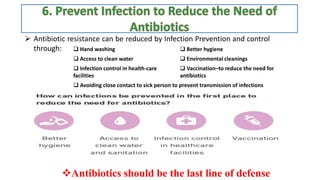
 Antibiotic resistance can be reduced by Infection Prevention and control
through:  Hand washing  Better hygiene
 Access to clean water  Environmental cleanings
 Infection control in health-care
facilities
 Vaccination–to reduce the need for
antibiotics
 Avoiding close contact to sick person to prevent transmission of infections
Antibiotics should be the last line of defense
Antibiotic resistance comic….
Antibiotics are
a precious
resource
School health awareness programme22

School health awareness programme22

  • 1.
    School Health Awareness Program onAntibiotic Resistance GARP Nepal Nepal Public Health Foundation
  • 2.
    Do you knowabout antibiotics??
  • 3.
    Introduction  Antibiotics arethe medicines that are used to kill bacteria and certain parasites which can cause illness and disease.  Antibiotics are the miracle drug of 20th century.  Penicillin was the first antibiotic discovered by Alexander Fleming in 1928.  Antibiotics have ability to control infection.
  • 4.
    Introduction cont.…  Antibioticsare used in human and animals to treat and prevent diseases  Antibiotics are also used in food animals and agriculture for growth promotion
  • 6.
    Oral antibiotics (tablets,capsules or syrup, suspension)  Used for mild to moderate infections in the body Topical antibiotics (creams, lotions, sprays or drops)  which are often used to treat eye, ear and skin infections Injections of antibiotics ( Injection)  Usually used for more serious infections Types of Antibiotics
  • 7.
    Do Antibiotics Workfor all Diseases ??? No, antibiotics does not work against infections that are caused by Viruses. Some examples – Varicella (chicken pox) – Rubella (German measles) – The common cold – Hepatitis – Mumps
  • 8.
    Antibiotics Save Lives… Antibiotics are truly miracle drugs that have saved countless millions of lives.  Since 1942 penicillin saved at least 200 millions  Between 1944 and 1972 human life expectancy lumped by eight years –an increase largely created to the introduction of antibiotics.
  • 9.
    BUT Too Muchof Everything is as bad as too little
  • 10.
    Side Effects ofantibiotic Diarrhea Bloating and indigestion Abdominal pain Loss of appetite Vomiting Itching skin rashes Coughing Life threatening allergic reaction Thrush (candidiasis) The most common side effects of antibiotics are:
  • 12.
  • 13.
    What is AntibioticResistance???  Antibiotic resistance is resistance of a microorganism to an antimicrobial drug that was originally effective for treatment of infections caused by it.  Antibiotic resistance is the ability of bacteria to resist the effect of an antibiotic
  • 15.
    Overuse and misuseof antibiotic will bring Antibiotic Resistance
  • 17.
  • 18.
    Why is AntimicrobialResistance a Global Concern?  New resistance mechanisms emerge and spread globally threatening our ability to treat common infectious diseases, resulting in death and disability of individuals who until recently could continue a normal course of life.  Without effective anti-infective treatment, many standard medical treatments will fail or turn into very high risk procedures.
  • 19.
    Situation of AntibioticsResistance  Up to 50,000 lives are lost each year to antibiotic-resistant infections in Europe and the US alone  Globally, at least 700,000 die each year of drug resistance in illnesses such as bacterial infections, malaria, HIV/Aids or tuberculosis.  In South East Asian Region, millions of people are risk of resistant parasites.
  • 20.
    The current globalantibiotic resistance crisis is the result of six factors: 1. Over-prescribing and dispensing of antibiotics by health workers 2. Patients not finishing their full treatment course of antibiotics 3. The over-use of antibiotics in livestock and fish farming 4. Poor infection control in hospitals and clinics 5. Lack of hygiene and poor sanitation 6. Lack of new antibiotics being developed
  • 21.
    Health Impacts ofAntibiotic Resistance  Longer duration of illness  Longer treatment  Higher mortality  Treatment with expensive drugs  Increased burden on health system
  • 22.
    Health Impacts ofAntibiotic Resistance Cont..  Negates technological advances in medical sector  Complex surgeries  Transplantations and other interventions  Patient acts as reservoir of resistant organisms which are passed to community and health-care workers
  • 23.
    What can bedone???
  • 24.
  • 30.
     Antibiotic resistancecan be reduced by Infection Prevention and control through:  Hand washing  Better hygiene  Access to clean water  Environmental cleanings  Infection control in health-care facilities  Vaccination–to reduce the need for antibiotics  Avoiding close contact to sick person to prevent transmission of infections Antibiotics should be the last line of defense
  • 31.
  • 32.