Done By: Dr.Manar Al Sanaa Ali
FAMCO R3
*Ph. Shamsa Alharrasi
Overall aim
To evaluate the current clinical practice of
antibiotic prescription in the health center.
Objectives
 To review current antibiotic prescription.
 To have a general idea about common antibiotic prescription as
well as common infection in our health center.
 To evaluate record keeping.
 To evaluate change in antibiotic prescription quality within 2016.
 To improve family medicine resident knowledge and skills on
conducting successful clinical audit activity
Background
• Worldwide, primary care is responsible for the majority of antibiotic use
by human beings.
• Accounts for a bout 80 – 90% of all antibiotic prescriptions, mainly for
respiratory tract infection.
• When an antibiotic is needed, the choice of agent and its use needs to be
considered in order to ensure that infections are treated effectively.
• Antibiotic resistance is an increasingly serious public health problem.
• Inappropriate antibiotic prescribing contributes to an increasing risk of
antimirobial resistance.
• Broad spectrum antibiotics should be reserved for the treatment of
resistance disease only.
• Experience from some countries shows that reduction in antibiotic
prescribing for outpatients has resulted in concomitant decrease in
antibiotic resistance.
• Unnecessary antibiotic prescribing in primary care is a complex
phenomenon but it is mainly related to factors such as misinterpretation
of symptoms, diagnostic uncertainty and perceived patients
expectations.
• Studies shows that patient satisfaction in primary care settings depends
more on effective communication than on receiving an antibiotic
prescription and that prescribing an antibiotic for un upper respiratory
tract infection does not decrease the rate of subsequent return visits.
• Professionals medical advice impacts pts perceptions & attitude towards
their illness and perceived need for antibiotic, in particular when they
are advised on what to expect in the course of the illness, including the
realistic recovery time and self management strategies.
• Antibiotics prescribed to an individual in primary care were
consistently found to be associated with resistance of urinary and
respiratory bacteria to those antibiotics in that individual.
• Antibiotics prescribed in primary care may impact on bacterial
resistance in a patient for up to 12 months.
• The greater the number or duration of antibiotic courses prescribed
in the previous 12 months, the greater the likelihood that resistant
bacteria would be isolated from that patient
Effect of antibiotic prescribing in primary care on antimicrobial
resistance in individual patients: systematic review and meta-analysis
BMJ 2010; 340 doi: http://dx.doi.org/10.1136/bmj.c2096 (Published 18
May 2010)
• Worldwide….
• The incidence of Acute otitis media is 10.85%
• The incidence of acute tonsillitis is 15% to 30%
in children and 5% to 15% in adults.
Methodology:
• Auditing was conducted during the period from
1/10/2016 to 31/12/2016.
• Target population: all the antibiotic prescribed in North
Alkhwair health center during audit period.
• Exclusion criteria: antibiotic prescribed by the dentist &
outside the audit period.
• Total number of patients received antibiotic were 673
pts out of 8325 total attend the cliinic ( 8.08%).
• Compared with 305 out of 4019pts in last audit(7.5%).
• The collected data was entered and analyzed via SPSS
program version20.
Gender distribution
The sample included 52.9% females and 47.1% males.
Gender distribution
The sample included 53.7% females and 46.2% males.
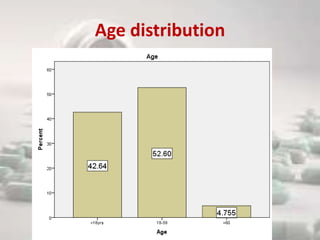
Age distribution
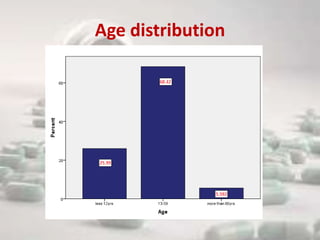
Age distribution
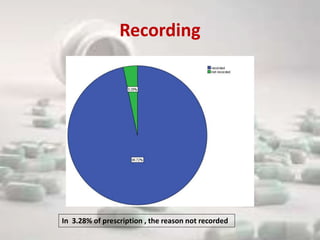
Recording
In 3.28% of prescription , the reason not recorded
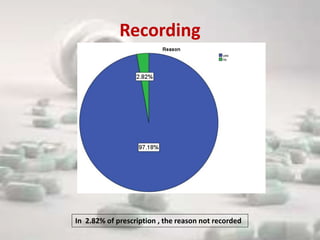
Recording
In 2.82% of prescription , the reason not recorded
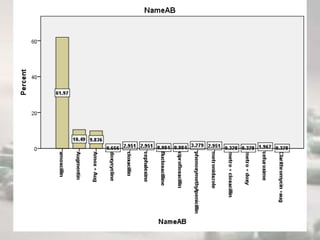
Most prescribed antibiotic was amoxcillin with a percentage of 62.2%
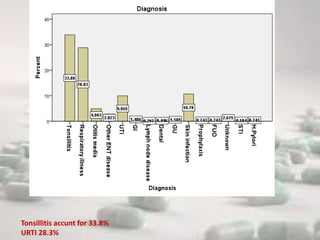
Tonsillitis accunt for 33.8%
URTI 28.3%
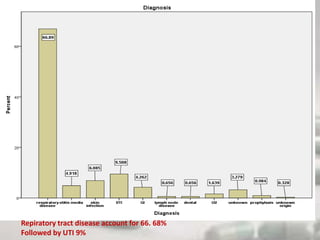
Repiratory tract disease account for 66. 68%
Followed by UTI 9%
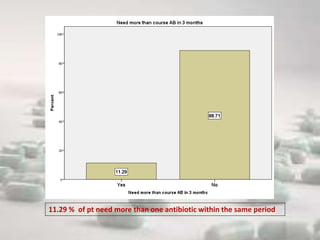
11.29 % of pt need more than one antibiotic within the same period
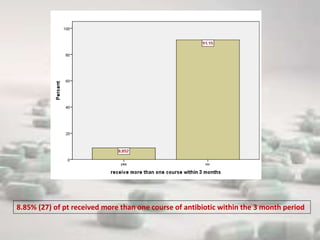
8.85% (27) of pt received more than one course of antibiotic within the 3 month period
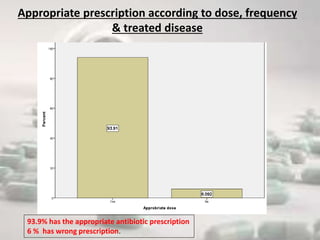
Appropriate prescription according to dose, frequency
& treated disease
93.9% has the appropriate antibiotic prescription
6 % has wrong prescription.
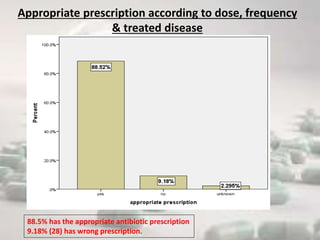
Appropriate prescription according to dose, frequency
& treated disease
88.5% has the appropriate antibiotic prescription
9.18% (28) has wrong prescription.
Factors affecting the result
• Documentation of some of the information
were missing.
• Lack of knowledge about correct dose &
duration of antibiotic.
• Short consultation time.
Recommendation
Insure proper documentation of symptoms, signs
& diagnosis.
Extra time can be given for some patient like
those insisting for antibiotic prescription each
time.
Encourage Health care providers to be updated
about latest guidelines of common infectious
disease.
A remainder paper for available and appropriate
dose of each antibiotics available in the health
center in each clinic especially the pediatric dose.
Compare the result of this audit with next audit
that we recommend to be done annually.
Focus more on indication for antibiotic
prescription in next audit.
Recommendation for next audit to include:
criteria to start antibiotic for different condition like
acute tonsillitis, sinusitis, UTI…
Antibiotic Prescription

Antibiotic Prescription

  • 1.
    Done By: Dr.ManarAl Sanaa Ali FAMCO R3 *Ph. Shamsa Alharrasi
  • 2.
    Overall aim To evaluatethe current clinical practice of antibiotic prescription in the health center.
  • 3.
    Objectives  To reviewcurrent antibiotic prescription.  To have a general idea about common antibiotic prescription as well as common infection in our health center.  To evaluate record keeping.  To evaluate change in antibiotic prescription quality within 2016.  To improve family medicine resident knowledge and skills on conducting successful clinical audit activity
  • 4.
    Background • Worldwide, primarycare is responsible for the majority of antibiotic use by human beings. • Accounts for a bout 80 – 90% of all antibiotic prescriptions, mainly for respiratory tract infection. • When an antibiotic is needed, the choice of agent and its use needs to be considered in order to ensure that infections are treated effectively. • Antibiotic resistance is an increasingly serious public health problem. • Inappropriate antibiotic prescribing contributes to an increasing risk of antimirobial resistance. • Broad spectrum antibiotics should be reserved for the treatment of resistance disease only.
  • 5.
    • Experience fromsome countries shows that reduction in antibiotic prescribing for outpatients has resulted in concomitant decrease in antibiotic resistance. • Unnecessary antibiotic prescribing in primary care is a complex phenomenon but it is mainly related to factors such as misinterpretation of symptoms, diagnostic uncertainty and perceived patients expectations. • Studies shows that patient satisfaction in primary care settings depends more on effective communication than on receiving an antibiotic prescription and that prescribing an antibiotic for un upper respiratory tract infection does not decrease the rate of subsequent return visits. • Professionals medical advice impacts pts perceptions & attitude towards their illness and perceived need for antibiotic, in particular when they are advised on what to expect in the course of the illness, including the realistic recovery time and self management strategies.
  • 6.
    • Antibiotics prescribedto an individual in primary care were consistently found to be associated with resistance of urinary and respiratory bacteria to those antibiotics in that individual. • Antibiotics prescribed in primary care may impact on bacterial resistance in a patient for up to 12 months. • The greater the number or duration of antibiotic courses prescribed in the previous 12 months, the greater the likelihood that resistant bacteria would be isolated from that patient Effect of antibiotic prescribing in primary care on antimicrobial resistance in individual patients: systematic review and meta-analysis BMJ 2010; 340 doi: http://dx.doi.org/10.1136/bmj.c2096 (Published 18 May 2010)
  • 7.
    • Worldwide…. • Theincidence of Acute otitis media is 10.85% • The incidence of acute tonsillitis is 15% to 30% in children and 5% to 15% in adults.
  • 8.
    Methodology: • Auditing wasconducted during the period from 1/10/2016 to 31/12/2016. • Target population: all the antibiotic prescribed in North Alkhwair health center during audit period. • Exclusion criteria: antibiotic prescribed by the dentist & outside the audit period. • Total number of patients received antibiotic were 673 pts out of 8325 total attend the cliinic ( 8.08%). • Compared with 305 out of 4019pts in last audit(7.5%). • The collected data was entered and analyzed via SPSS program version20.
  • 10.
    Gender distribution The sampleincluded 52.9% females and 47.1% males.
  • 11.
    Gender distribution The sampleincluded 53.7% females and 46.2% males.
  • 12.
  • 13.
  • 14.
    Recording In 3.28% ofprescription , the reason not recorded
  • 15.
    Recording In 2.82% ofprescription , the reason not recorded
  • 16.
    Most prescribed antibioticwas amoxcillin with a percentage of 62.2%
  • 18.
    Tonsillitis accunt for33.8% URTI 28.3%
  • 19.
    Repiratory tract diseaseaccount for 66. 68% Followed by UTI 9%
  • 20.
    11.29 % ofpt need more than one antibiotic within the same period
  • 21.
    8.85% (27) ofpt received more than one course of antibiotic within the 3 month period
  • 22.
    Appropriate prescription accordingto dose, frequency & treated disease 93.9% has the appropriate antibiotic prescription 6 % has wrong prescription.
  • 23.
    Appropriate prescription accordingto dose, frequency & treated disease 88.5% has the appropriate antibiotic prescription 9.18% (28) has wrong prescription.
  • 24.
    Factors affecting theresult • Documentation of some of the information were missing. • Lack of knowledge about correct dose & duration of antibiotic. • Short consultation time.
  • 25.
    Recommendation Insure proper documentationof symptoms, signs & diagnosis. Extra time can be given for some patient like those insisting for antibiotic prescription each time. Encourage Health care providers to be updated about latest guidelines of common infectious disease. A remainder paper for available and appropriate dose of each antibiotics available in the health center in each clinic especially the pediatric dose.
  • 26.
    Compare the resultof this audit with next audit that we recommend to be done annually. Focus more on indication for antibiotic prescription in next audit. Recommendation for next audit to include: criteria to start antibiotic for different condition like acute tonsillitis, sinusitis, UTI…