

Ansible Configuration
management
Afroz Hussain
Agenda
 What is Ansible?
 How is it different?
 how does it work?
 Installation
 The ansible tools
 Running some adhoc commands
 What is Playbooks?
 Basic playbook
 Handlers
 Roles
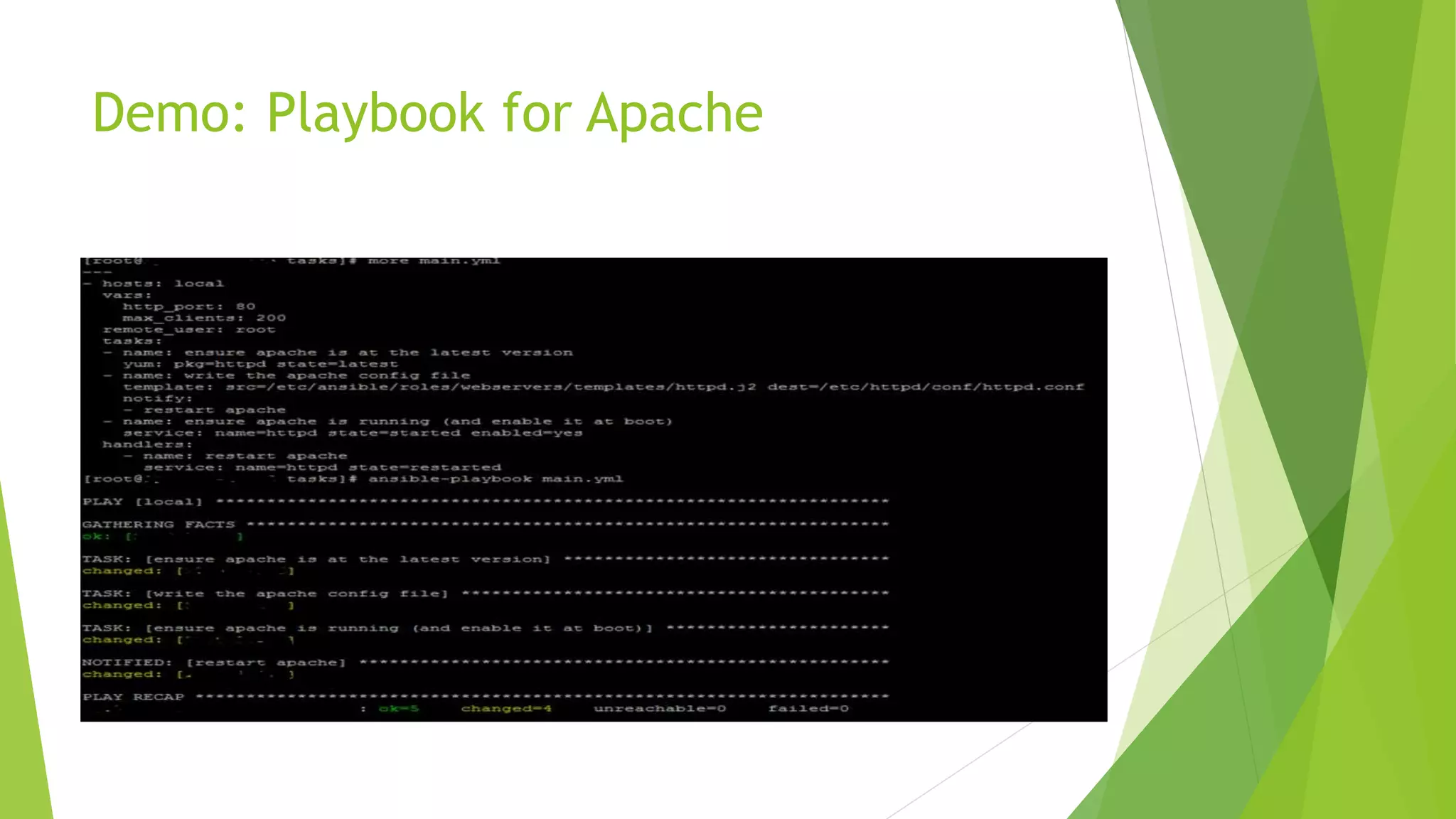
 Demo: Playbook for Apache
What is Ansible?
 Ansible is a radically simple IT automation engine that automates cloud
provisioning, configuration management, application deployment, intra-
service orchestration Ansible’s goals are foremost those of simplicity and
maximum ease of use.
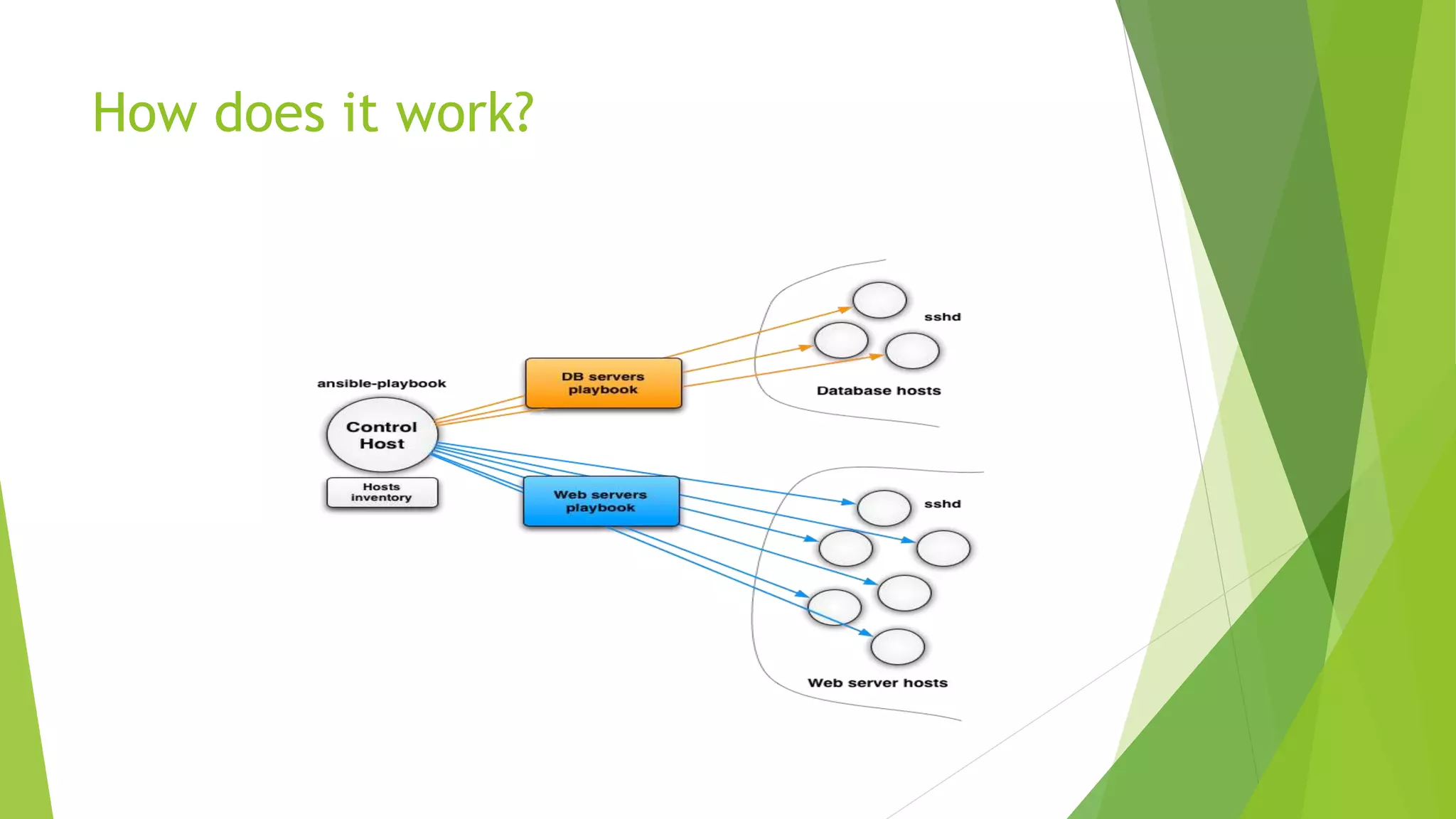
 Ansible manages machines in an agentless manner.
 There is never a question of how to upgrade remote daemons or the problem
of not being able to manage systems because daemons are uninstalled.
 It uses a very simple language (YAML, in the form of Ansible Playbooks) that
allow you to describe your automation jobs in a way that approaches plain
English.
How is it different?
 Agent-less architecture
 Configuration as data, not code
 Betterires-included(module).
 Full configuration management, orechestration, deployment.
How does it work?
Installation
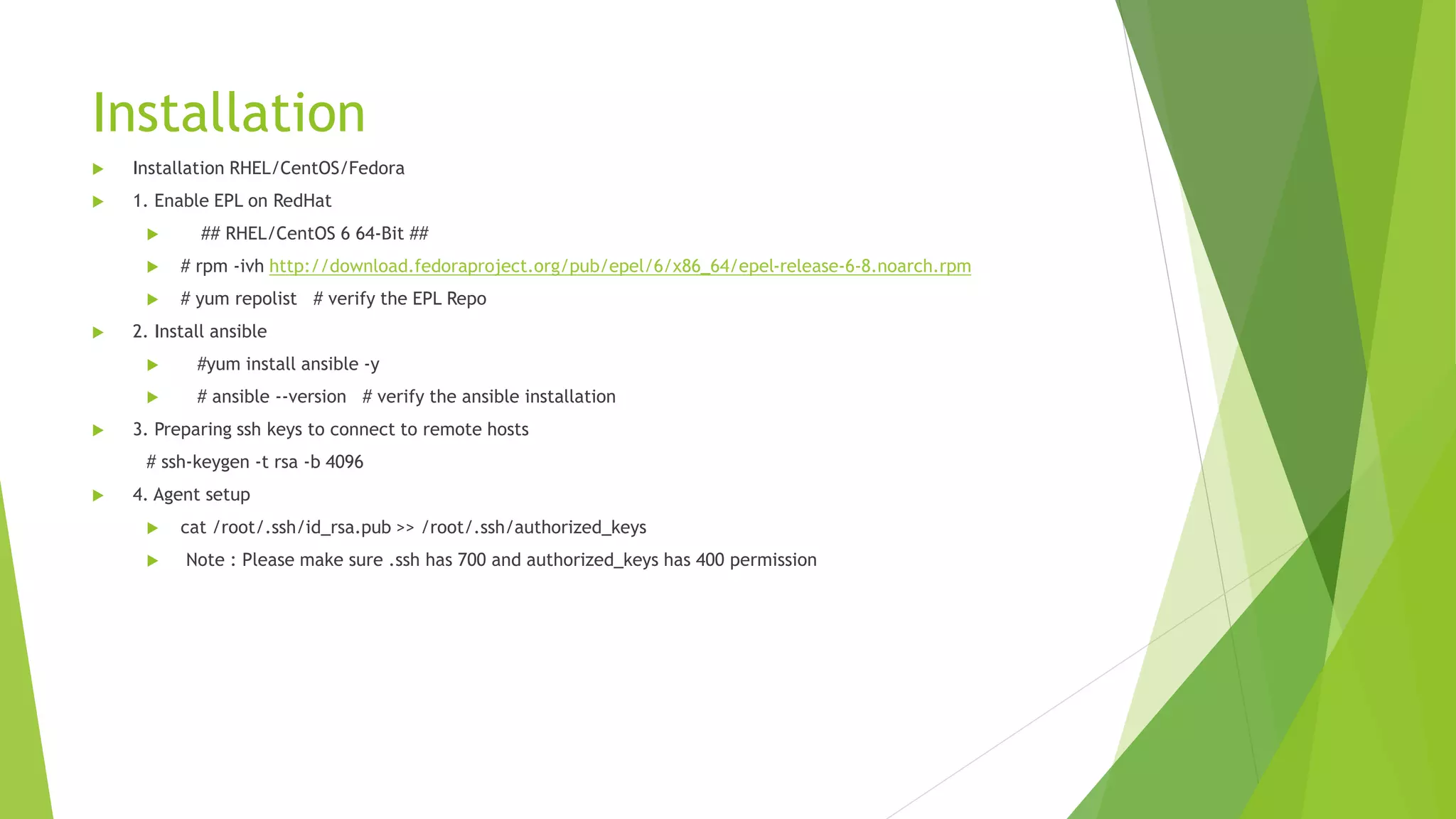
 Installation RHEL/CentOS/Fedora
 1. Enable EPL on RedHat
 ## RHEL/CentOS 6 64-Bit ##
 # rpm -ivh http://download.fedoraproject.org/pub/epel/6/x86_64/epel-release-6-8.noarch.rpm
 # yum repolist # verify the EPL Repo
 2. Install ansible
 #yum install ansible -y
 # ansible --version # verify the ansible installation
 3. Preparing ssh keys to connect to remote hosts
# ssh-keygen -t rsa -b 4096
 4. Agent setup
 cat /root/.ssh/id_rsa.pub >> /root/.ssh/authorized_keys
 Note : Please make sure .ssh has 700 and authorized_keys has 400 permission
 Ansible comes with several command-line tools. The first one is simply
called… ansible.
 The purpose of the ansible tool is mainly to execute a command over selected
groups of an inventory.
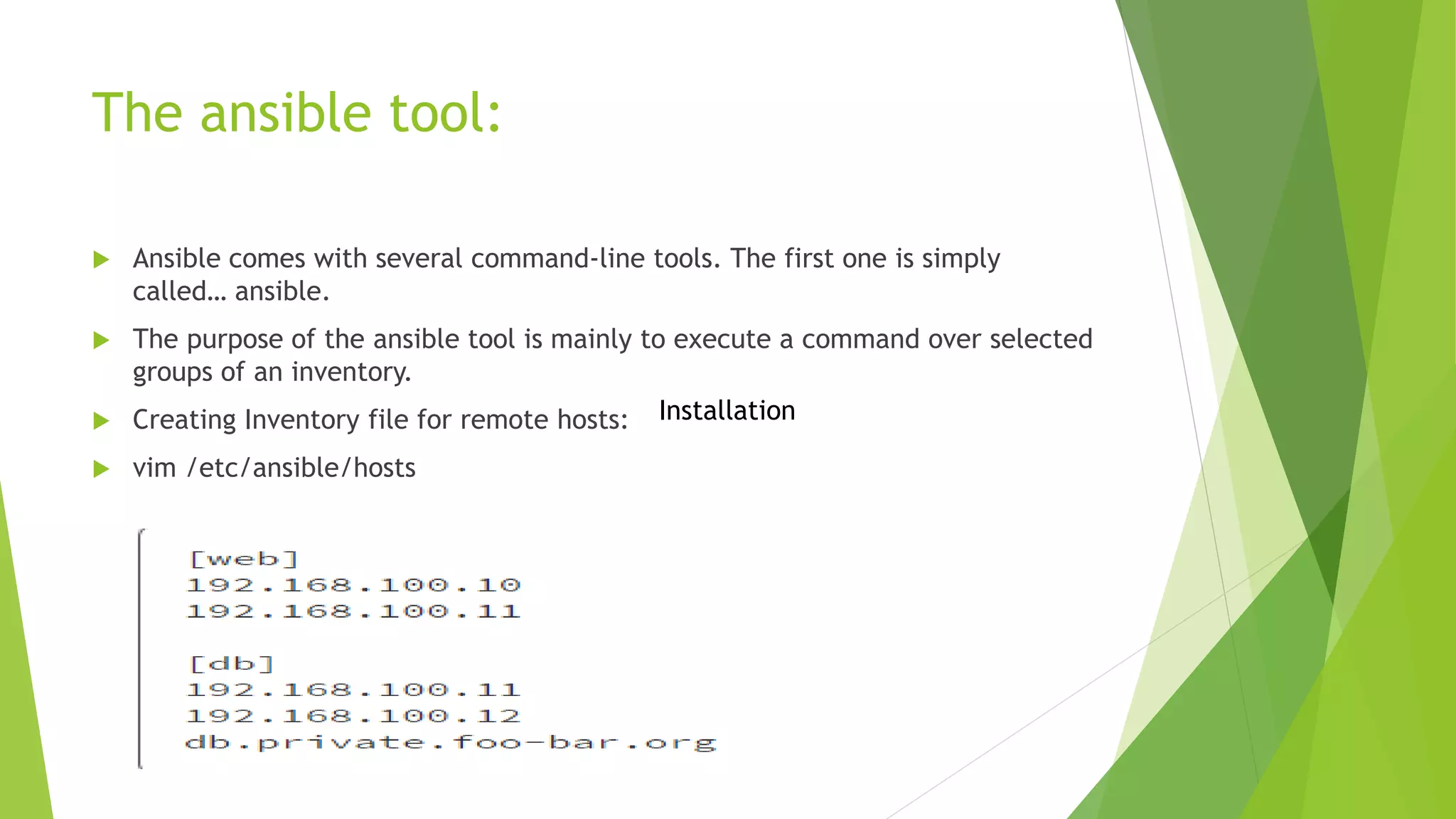
 Creating Inventory file for remote hosts:
 vim /etc/ansible/hosts
The ansible tool:
Installation
Running some commands:
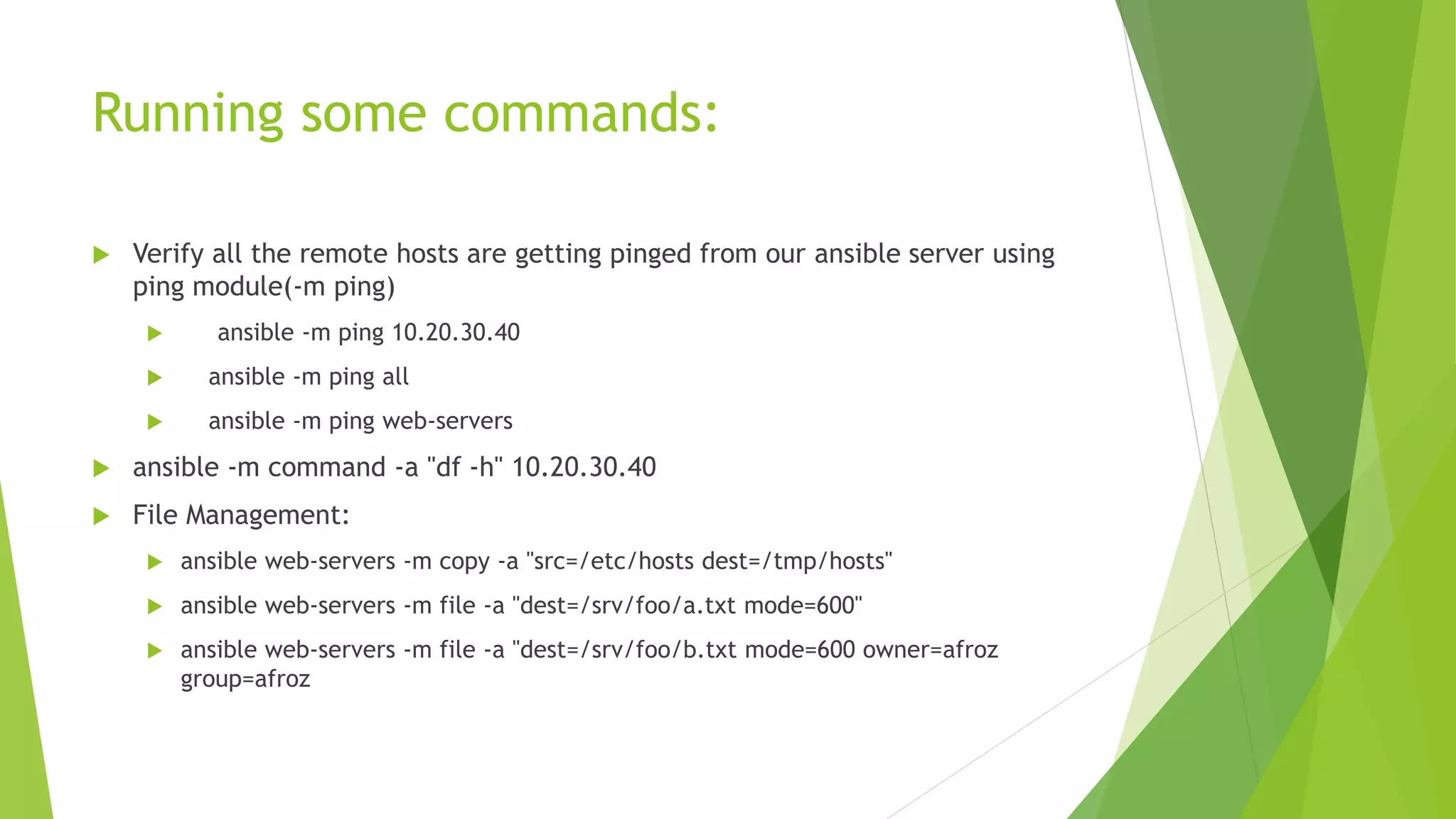
 Verify all the remote hosts are getting pinged from our ansible server using
ping module(-m ping)
 ansible -m ping 10.20.30.40
 ansible -m ping all
 ansible -m ping web-servers
 ansible -m command -a "df -h" 10.20.30.40
 File Management:
 ansible web-servers -m copy -a "src=/etc/hosts dest=/tmp/hosts"
 ansible web-servers -m file -a "dest=/srv/foo/a.txt mode=600"
 ansible web-servers -m file -a "dest=/srv/foo/b.txt mode=600 owner=afroz
group=afroz
Running some commands(contd..)
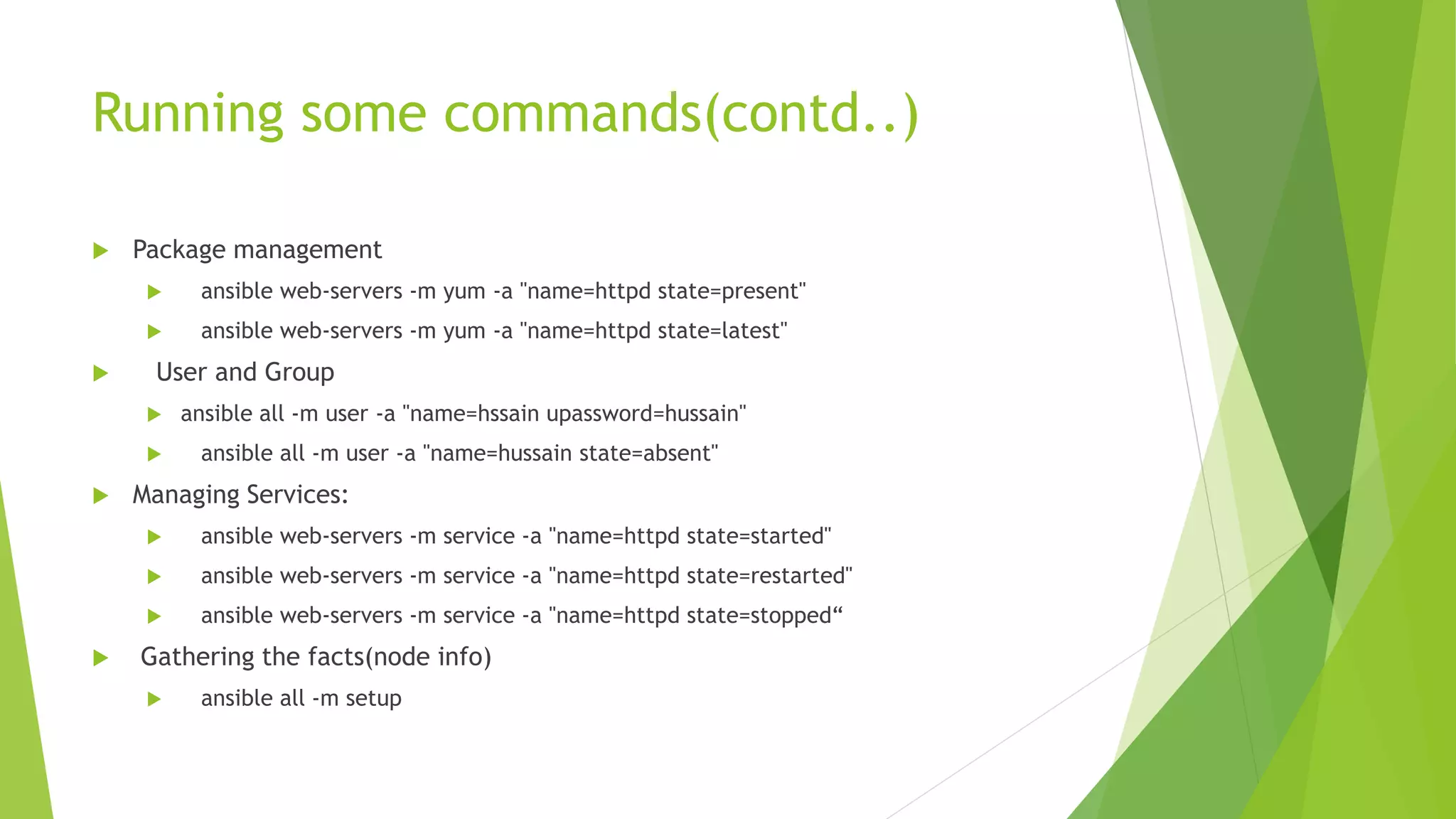
 Package management
 ansible web-servers -m yum -a "name=httpd state=present"
 ansible web-servers -m yum -a "name=httpd state=latest"
 User and Group
 ansible all -m user -a "name=hssain upassword=hussain"
 ansible all -m user -a "name=hussain state=absent"
 Managing Services:
 ansible web-servers -m service -a "name=httpd state=started"
 ansible web-servers -m service -a "name=httpd state=restarted"
 ansible web-servers -m service -a "name=httpd state=stopped“
 Gathering the facts(node info)
 ansible all -m setup
Playbooks
 Playbooks are Ansible’s configuration, deployment, and orchestration
language.
 They can describe a policy you want your remote systems to enforce, or a set
of steps in a general IT process.
 It runs multiple Tasks and provide some more advanced functionality that we
would miss out on using ad-hoc commands.
 Playboooks contains plays.
 plays contains tasks
 tasks contains modules
 Modules: The actual work done by modules such
file,yum,host,service,ping,command etc.
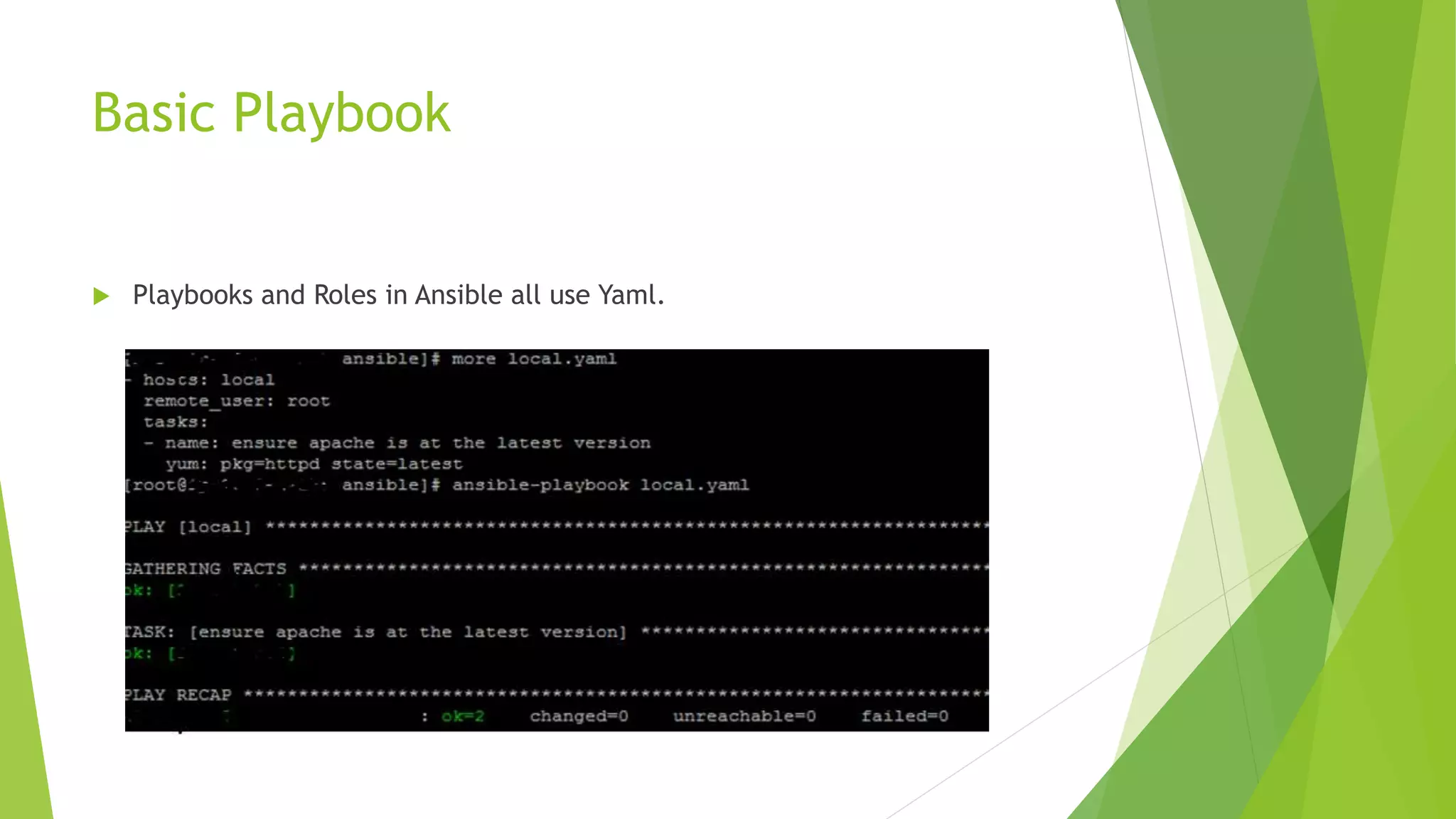
Basic Playbook
 Playbooks and Roles in Ansible all use Yaml.
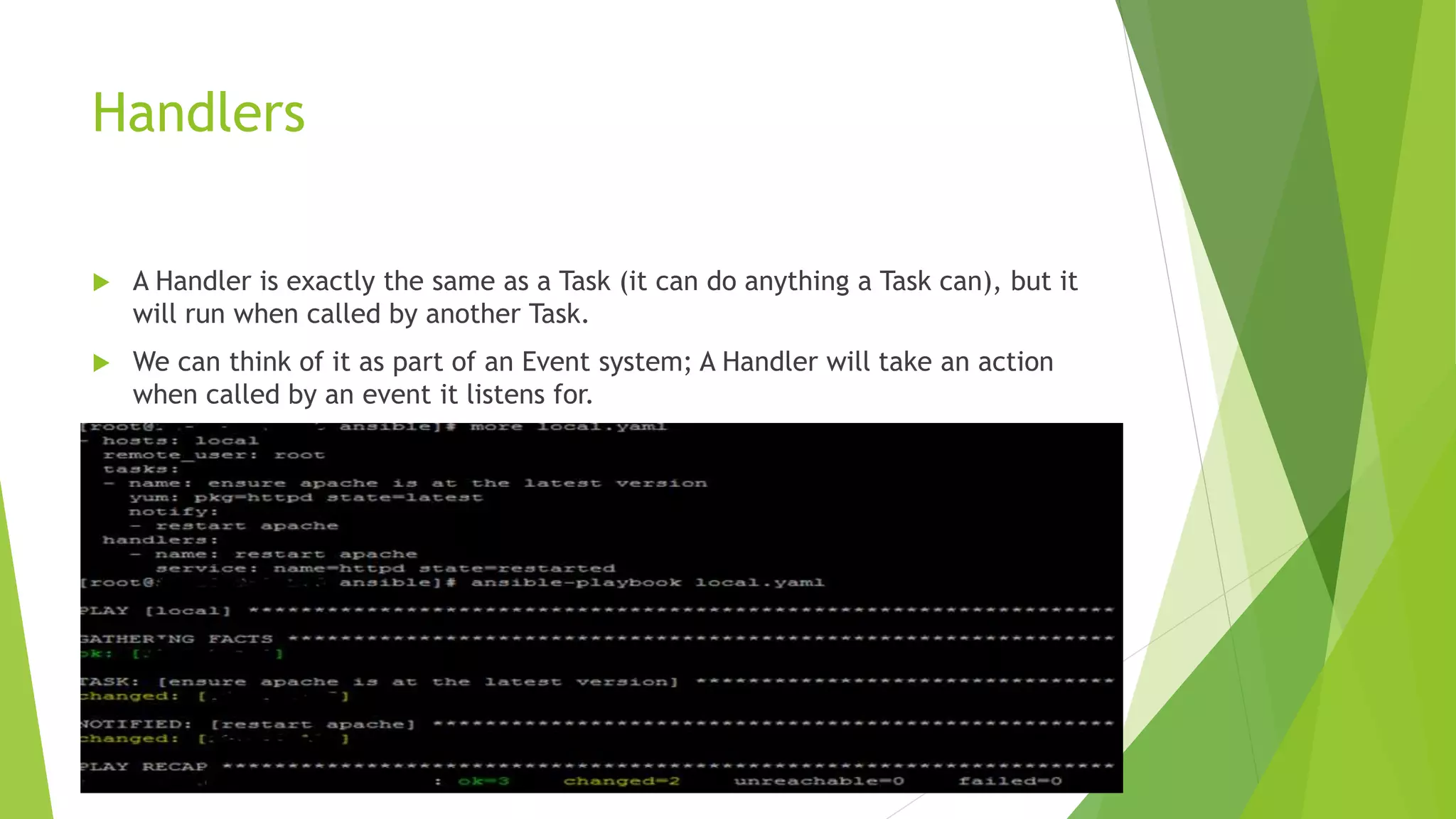
Handlers
 A Handler is exactly the same as a Task (it can do anything a Task can), but it
will run when called by another Task.
 We can think of it as part of an Event system; A Handler will take an action
when called by an event it listens for.
Roles
 Roles are good for organizing multiple, related Tasks and encapsulating data
needed to accomplish those Tasks.
 The configuration portion often requires extra data such as variables, files,
dynamic templates and more.
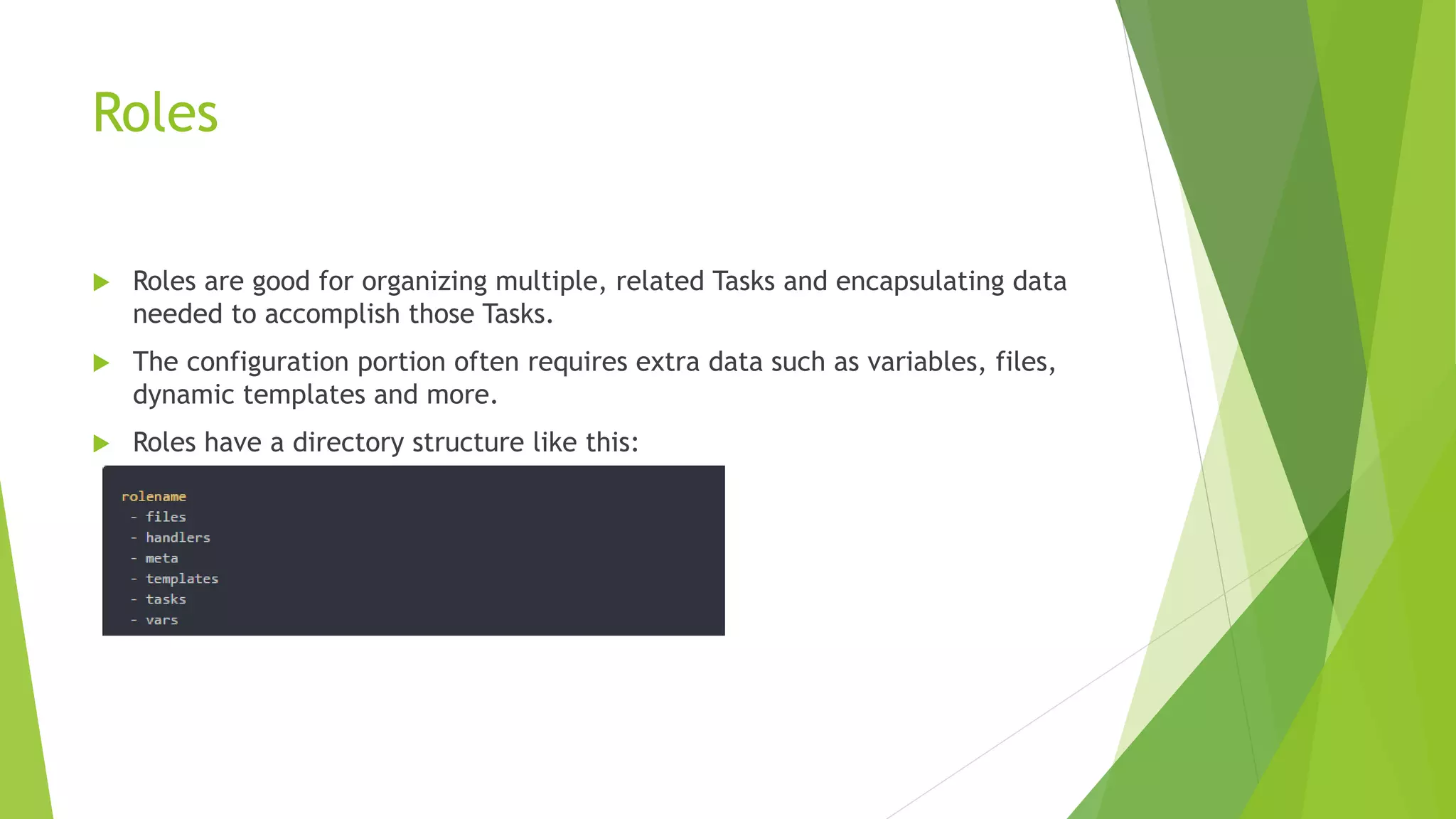
 Roles have a directory structure like this:
Demo: Playbook for Apache
Thank You

Ansible

  • 1.
  • 2.
    Agenda  What isAnsible?  How is it different?  how does it work?  Installation  The ansible tools  Running some adhoc commands  What is Playbooks?  Basic playbook  Handlers  Roles  Demo: Playbook for Apache
  • 3.
    What is Ansible? Ansible is a radically simple IT automation engine that automates cloud provisioning, configuration management, application deployment, intra- service orchestration Ansible’s goals are foremost those of simplicity and maximum ease of use.  Ansible manages machines in an agentless manner.  There is never a question of how to upgrade remote daemons or the problem of not being able to manage systems because daemons are uninstalled.  It uses a very simple language (YAML, in the form of Ansible Playbooks) that allow you to describe your automation jobs in a way that approaches plain English.
  • 4.
    How is itdifferent?  Agent-less architecture  Configuration as data, not code  Betterires-included(module).  Full configuration management, orechestration, deployment.
  • 5.
  • 6.
    Installation  Installation RHEL/CentOS/Fedora 1. Enable EPL on RedHat  ## RHEL/CentOS 6 64-Bit ##  # rpm -ivh http://download.fedoraproject.org/pub/epel/6/x86_64/epel-release-6-8.noarch.rpm  # yum repolist # verify the EPL Repo  2. Install ansible  #yum install ansible -y  # ansible --version # verify the ansible installation  3. Preparing ssh keys to connect to remote hosts # ssh-keygen -t rsa -b 4096  4. Agent setup  cat /root/.ssh/id_rsa.pub >> /root/.ssh/authorized_keys  Note : Please make sure .ssh has 700 and authorized_keys has 400 permission
  • 7.
     Ansible comeswith several command-line tools. The first one is simply called… ansible.  The purpose of the ansible tool is mainly to execute a command over selected groups of an inventory.  Creating Inventory file for remote hosts:  vim /etc/ansible/hosts The ansible tool: Installation
  • 8.
    Running some commands: Verify all the remote hosts are getting pinged from our ansible server using ping module(-m ping)  ansible -m ping 10.20.30.40  ansible -m ping all  ansible -m ping web-servers  ansible -m command -a "df -h" 10.20.30.40  File Management:  ansible web-servers -m copy -a "src=/etc/hosts dest=/tmp/hosts"  ansible web-servers -m file -a "dest=/srv/foo/a.txt mode=600"  ansible web-servers -m file -a "dest=/srv/foo/b.txt mode=600 owner=afroz group=afroz
  • 9.
    Running some commands(contd..) Package management  ansible web-servers -m yum -a "name=httpd state=present"  ansible web-servers -m yum -a "name=httpd state=latest"  User and Group  ansible all -m user -a "name=hssain upassword=hussain"  ansible all -m user -a "name=hussain state=absent"  Managing Services:  ansible web-servers -m service -a "name=httpd state=started"  ansible web-servers -m service -a "name=httpd state=restarted"  ansible web-servers -m service -a "name=httpd state=stopped“  Gathering the facts(node info)  ansible all -m setup
  • 10.
    Playbooks  Playbooks areAnsible’s configuration, deployment, and orchestration language.  They can describe a policy you want your remote systems to enforce, or a set of steps in a general IT process.  It runs multiple Tasks and provide some more advanced functionality that we would miss out on using ad-hoc commands.  Playboooks contains plays.  plays contains tasks  tasks contains modules  Modules: The actual work done by modules such file,yum,host,service,ping,command etc.
  • 11.
    Basic Playbook  Playbooksand Roles in Ansible all use Yaml.
  • 12.
    Handlers  A Handleris exactly the same as a Task (it can do anything a Task can), but it will run when called by another Task.  We can think of it as part of an Event system; A Handler will take an action when called by an event it listens for.
  • 13.
    Roles  Roles aregood for organizing multiple, related Tasks and encapsulating data needed to accomplish those Tasks.  The configuration portion often requires extra data such as variables, files, dynamic templates and more.  Roles have a directory structure like this:
  • 14.
  • 15.