ANSI
AMERICAN NATIONAL STANDARDS INSTITUTE
Group no. 00
•Saim Khalid
•Muhammad Waseem
•Asad Habib
•Awais Haider
Agenda
• About ANSI
• Mission Statement
• History
• Introduction
• Role of ANSI
• Members of the ANSI Federation
• ANSI-accredited SDOs and U.S.
TAGs
• ANSI Panels
• ANSI Organizational Structure
• Guiding Principles of ANSI
• Basic Units used in ANSI
• ANS Development Cycle
• Standards Developer Accreditation
• Benefits / Advantages
• ANS Approval Process
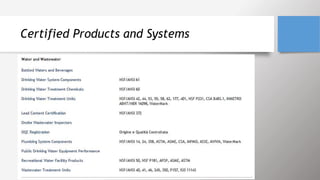
• Certified Products and Systems
About ANSI
Logo of the American National Standards
Institute.
Abbreviation ANSI
Formation May 14, 1918 (96 years ago)
Purpose National Standards
Headquarters Washington, D.C., U.S.
Membership 125,000 companies and 3.5 million professionals
Official language English
Website www.ansi.org
About ANSI
• There are approximately 10,000 American National Standards
• Currently there are approximately 227 ANSI-accredited
standards developers (ASD)
• In the U.S. alone, there are more than 95,000 recognized
standards.
• The ANSI Federation represents more than 125,000 companies
and organizations and 3.5 million professionals worldwide
Mission Statement of ANSI
To enhance both the global competitiveness of U.S.
business and the U.S. quality of life by promoting
and facilitating voluntary consensus standards and
conformity assessment systems, and safeguarding
their integrity.
History of ANSI
ANSI was originally formed in 1918, when five engineering
societies and three government agencies founded the American
Engineering Standards Committee (AESC). In 1928, the AESC
became the American Standards Association (ASA). In 1966,
the ASA was reorganized and became the United States of
America Standards Institute(USASI). The present name was
adopted in 1969.
History of ANSI
Prior to 1918, these five founding engineering societies that had
been members of the United Engineering Society (UES) are:
• American Institute of Electrical Engineers (AIEE, now IEEE)
• American Society of Mechanical Engineers (ASME)
• American Society of Civil Engineers (ASCE)
• American Institute of Mining Engineers (AIME, now American
Institute of Mining, Metallurgical, and Petroleum Engineers)
• American Society for Testing and Materials (now ASTM
International)
Introduction to ANSI
The American National Standards Institute (ANSI) is a private
non-profit organization that oversees the development of voluntary
consensus standards for products, services, processes, systems, and
personnel in the United States. The organization also coordinates
U.S. standards with international standards so that American products can be
used worldwide. For example, standards ensure that people who own
cameras can find the film they need for that camera anywhere around the
globe.
ANSI also accredits organizations that carry out product or personnel
certification in accordance with requirements defined in international
standards.
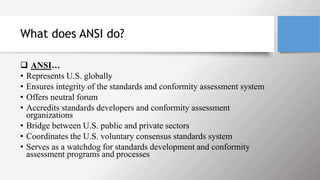
What does ANSI do?
 ANSI…
• Represents U.S. globally
• Ensures integrity of the standards and conformity assessment system
• Offers neutral forum
• Accredits standards developers and conformity assessment
organizations
• Bridge between U.S. public and private sectors
• Coordinates the U.S. voluntary consensus standards system
• Serves as a watchdog for standards development and conformity
assessment programs and processes
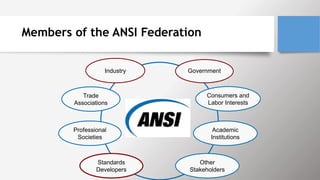
Industry
Trade
Associations
Professional
Societies
Government
Consumers and
Labor Interests
Standards
Developers
Other
Stakeholders
Academic
Institutions
Members of the ANSI Federation
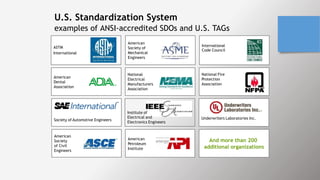
U.S. Standardization System
examples of ANSI-accredited SDOs and U.S. TAGs
Code Council
Protection
Electronics Engineers
American
Society
of Civil
Engineers
American
Petroleum
Institute
And more than 200
additional organizations
Society of Automotive Engineers
Institute of
Electrical and Underwriters Laboratories Inc.
American
Dental
Association
National
Electrical
Manufacturers
Association
National Fire
Association
ASTM
International
American
Society of
Mechanical
Engineers
International
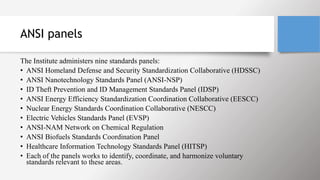
ANSI panels
The Institute administers nine standards panels:
• ANSI Homeland Defense and Security Standardization Collaborative (HDSSC)
• ANSI Nanotechnology Standards Panel (ANSI-NSP)
• ID Theft Prevention and ID Management Standards Panel (IDSP)
• ANSI Energy Efficiency Standardization Coordination Collaborative (EESCC)
• Nuclear Energy Standards Coordination Collaborative (NESCC)
• Electric Vehicles Standards Panel (EVSP)
• ANSI-NAM Network on Chemical Regulation
• ANSI Biofuels Standards Coordination Panel
• Healthcare Information Technology Standards Panel (HITSP)
• Each of the panels works to identify, coordinate, and harmonize voluntary
standards relevant to these areas.
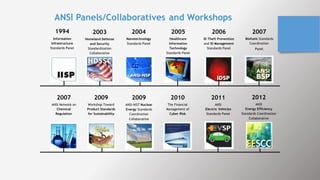
ANSI
1994
Information
Infrastructure
Standards Panel
Panels/Collaboratives and Workshops
2004
Nanotechnology
Standards Panel
2005
Healthcare
Information
Technology
Standards Panel
2006
ID Theft Prevention
and ID Management
Standards Panel
2007
Biofuels Standards
Coordination
Panel
2003
Homeland Defense
and Security
Standardization
Collaborative
2012
ANSI
Energy Efficiency
Standards Coordination
Collaborative
2007
ANSI Network on
Chemical
Regulation
2009
Workshop Toward
Product Standards
for Sustainability
2009
ANSI-NIST Nuclear
Energy Standards
Coordination
Collaborative
2010
The Financial
Management of
Cyber Risk
2011
ANSI
Electric Vehicles
Standards Panel
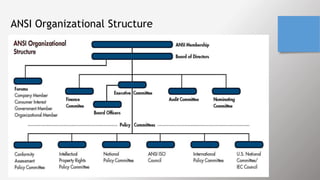
ANSI Organizational Structure
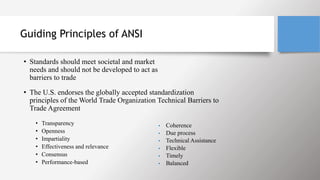
Guiding Principles of ANSI
• Standards should meet societal and market
needs and should not be developed to act as
barriers to trade
• The U.S. endorses the globally accepted standardization
principles of the World Trade Organization Technical Barriers to
Trade Agreement
• Transparency
• Openness
• Impartiality
• Effectiveness and relevance
• Consensus
• Performance-based
• Coherence
• Due process
• Technical Assistance
• Flexible
• Timely
• Balanced
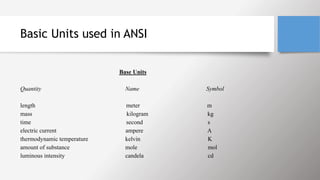
Basic Units used in ANSI
Base Units
Quantity Name Symbol
length meter m
mass kilogram kg
time second s
electric current ampere A
thermodynamic temperature kelvin K
amount of substance mole mol
luminous intensity candela cd
Process
Though ANSI itself does not develop standards, the Institute oversees the
development and use of standards by accrediting the procedures of standards
developing organizations. ANSI accreditation signifies that the procedures
used by standards developing organizations meet the Institute's requirements
for openness, balance, consensus, and due process.
ANSI also designates specific standards as American National Standards, or
ANS, when the Institute determines that the standards were developed in an
environment that is equitable, accessible and responsive to the requirements
of various stakeholders.
Voluntary consensus standards quicken the market acceptance of products
while making clear how to improve the safety of those products for the
protection of consumers. There are approximately 9,500 American National
Standards that carry the ANSI designation.
Process
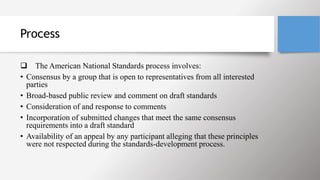
 The American National Standards process involves:
• Consensus by a group that is open to representatives from all interested
parties
• Broad-based public review and comment on draft standards
• Consideration of and response to comments
• Incorporation of submitted changes that meet the same consensus
requirements into a draft standard
• Availability of an appeal by any participant alleging that these principles
were not respected during the standards-development process.
American National Standards (ANS)
• Currently there are approximately 227ANSI-accredited
standards developers (ASD)
• Only ASDs may submit standards for approval as ANS
• Not all standards developed by these organizations are submitted
for consideration as ANS
• There are approximately 10,000ANS
• All ASDs are subject to ANSI’s neutral third-party
oversight including a routine audit of ANS and an
annual compliance review of accredited procedures
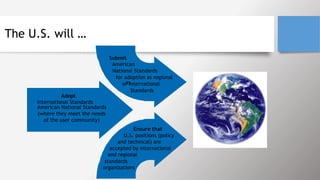
Submit
American
National Standards
for adoption as regional
or International
Standards
Adopt
International Standards
as
American National Standards
(where they meet the needs
of the user community)
Ensure that
U.S. positions (policy
and technical) are
accepted by international
and regional
standards
organizations
The U.S. will …
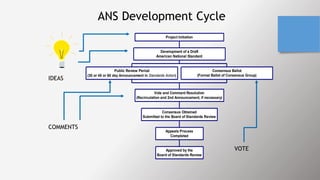
ANS Development Cycle
Public Review Period
(30 or 45 or 60 day Announcement in Standards Action)
Consensus Ballot
(Formal Ballot of Consensus Group)
Approved by the
Board of Standards Review
Appeals Process
Completed
Consensus Obtained
Submitted to the Board of Standards Review
Vote and Comment Resolution
(Recirculation and 2nd Announcement, if necessary)
Development of a Draft
American National Standard
Project Initiation
IDEAS
COMMENTS
VOTE
Standards Developer Accreditation
• Only ANSI-Accredited Standards Developers may submit their
standards through the American National Standard approval
process
• ANSI-accreditation signifies that the standards developer is
committed to an open, fair and time-tested consensus
process that benefits stakeholders and the American public
• ANSI-Accredited Standards Developers are accredited to the
requirements contained in the ANSI Essential
Requirements: Due process requirements for American
National Standards (2008)
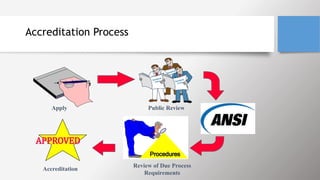
Accreditation Process
Procedures
Review of Due Process
Requirements
Apply Public Review
Accreditation
APPROVED
ANSI Standards Developer Accreditation Requirements
A standards developer’s written procedures for the development
and approval of proposed American National Standards must meet
ANSI due process and consensus requirements
1. Openness
2. Balance
 Discrete interest category definitions
3. Lack of Dominance
4. Public comment opportunity
5. Consideration of Views and Objections
ANSI Standards Developer Accreditation Requirements
3. Comment Resolution and Response
4. Recirculation Opportunity
5. Consensus Body Vote
6. Numerical Requirements for Consensus
7. Standards Developer Appeals Process
8. Policy for Retention of Evidence of Compliance
9. Compliance with ANSI’s Patent Policy
10. Compliance with ANSI’s Commercial Terms and Conditions
Provisions
11. Interpretations and Metrics Policies
Benefits/Advantages of
Membership
Benefits to Companies
• Protection
• The strong voice, influence and
networks necessary to help ensure
that standards are not written that
will exclude your products, processes or technologies
• Knowledge
• Early awareness of new requirements
• Close customer and supplier contact
• Early assessment of new market directions
• Positioning
• Influence at the leading edges of technology
Benefits to Organizations
• Global relevance
• Self-regulation
• Shared costs
• Reduced liability
• Reduced redundancy
• Marketplace acceptance
of standards
Benefits to Consumers
• Greater selection
• Easier choices
• Better and consistent quality
• Lower costs
• Enhanced safety & health
Benefits to Government
• Lower costs for procurement
and regulatory agencies
• Increased U.S. competitiveness,
employment and economic growth
• Private sector cooperation
• World Trade Organization (WTO) compliance
• Legislative compliance
ANS Approval Process
• Stage 1: PINS form to ANSI
• Announcement of project initiation
• PINS deliberation if claim of conflict or duplication is
raised
• Stage 2: Approval of draft
• Consensus body approves text of draft standard
• Must meet numerical requirements for consensus as
described in developer’s accredited procedures (e.g.
approval by a majority of consensus body and 2/3 of
those voting, etc.)
• Stage 3: Public Review
• BSR-8 form initiates announcement in Standards
Action. Developer may also announce in industry
publications, etc. (multiple public reviews are
possible)
ANS Approval Process
• Stage 4: Comment resolution
• Public and consensus body member comments
• Stage 5: Recirculation (if applicable)
• Unresolved negative comments from consensus
body members and public review commenters as
well as any substantive changes to the text, must be
recirculated to the entire consensus body to allow
them to vote, reaffirm a vote or change a vote
• Stage 6: Appeals at developer level
ANS Approval Process
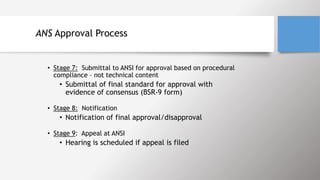
• Stage 7: Submittal to ANSI for approval based on procedural
compliance – not technical content
• Submittal of final standard for approval with
evidence of consensus (BSR-9 form)
• Stage 8: Notification
• Notification of final approval/disapproval
• Stage 9: Appeal at ANSI
• Hearing is scheduled if appeal is filed
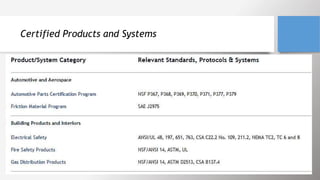
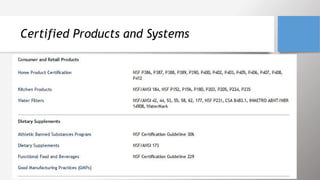
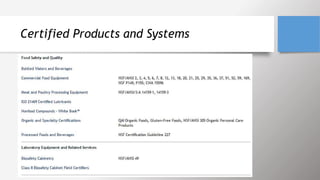
Certified Products and Systems

American National Standard Institute (ANSI)

  • 1.
  • 2.
    Group no. 00 •SaimKhalid •Muhammad Waseem •Asad Habib •Awais Haider
  • 3.
    Agenda • About ANSI •Mission Statement • History • Introduction • Role of ANSI • Members of the ANSI Federation • ANSI-accredited SDOs and U.S. TAGs • ANSI Panels • ANSI Organizational Structure • Guiding Principles of ANSI • Basic Units used in ANSI • ANS Development Cycle • Standards Developer Accreditation • Benefits / Advantages • ANS Approval Process • Certified Products and Systems
  • 4.
    About ANSI Logo ofthe American National Standards Institute. Abbreviation ANSI Formation May 14, 1918 (96 years ago) Purpose National Standards Headquarters Washington, D.C., U.S. Membership 125,000 companies and 3.5 million professionals Official language English Website www.ansi.org
  • 5.
    About ANSI • Thereare approximately 10,000 American National Standards • Currently there are approximately 227 ANSI-accredited standards developers (ASD) • In the U.S. alone, there are more than 95,000 recognized standards. • The ANSI Federation represents more than 125,000 companies and organizations and 3.5 million professionals worldwide
  • 6.
    Mission Statement ofANSI To enhance both the global competitiveness of U.S. business and the U.S. quality of life by promoting and facilitating voluntary consensus standards and conformity assessment systems, and safeguarding their integrity.
  • 7.
    History of ANSI ANSIwas originally formed in 1918, when five engineering societies and three government agencies founded the American Engineering Standards Committee (AESC). In 1928, the AESC became the American Standards Association (ASA). In 1966, the ASA was reorganized and became the United States of America Standards Institute(USASI). The present name was adopted in 1969.
  • 8.
    History of ANSI Priorto 1918, these five founding engineering societies that had been members of the United Engineering Society (UES) are: • American Institute of Electrical Engineers (AIEE, now IEEE) • American Society of Mechanical Engineers (ASME) • American Society of Civil Engineers (ASCE) • American Institute of Mining Engineers (AIME, now American Institute of Mining, Metallurgical, and Petroleum Engineers) • American Society for Testing and Materials (now ASTM International)
  • 9.
    Introduction to ANSI TheAmerican National Standards Institute (ANSI) is a private non-profit organization that oversees the development of voluntary consensus standards for products, services, processes, systems, and personnel in the United States. The organization also coordinates U.S. standards with international standards so that American products can be used worldwide. For example, standards ensure that people who own cameras can find the film they need for that camera anywhere around the globe. ANSI also accredits organizations that carry out product or personnel certification in accordance with requirements defined in international standards.
  • 10.
    What does ANSIdo?  ANSI… • Represents U.S. globally • Ensures integrity of the standards and conformity assessment system • Offers neutral forum • Accredits standards developers and conformity assessment organizations • Bridge between U.S. public and private sectors • Coordinates the U.S. voluntary consensus standards system • Serves as a watchdog for standards development and conformity assessment programs and processes
  • 11.
  • 12.
    U.S. Standardization System examplesof ANSI-accredited SDOs and U.S. TAGs Code Council Protection Electronics Engineers American Society of Civil Engineers American Petroleum Institute And more than 200 additional organizations Society of Automotive Engineers Institute of Electrical and Underwriters Laboratories Inc. American Dental Association National Electrical Manufacturers Association National Fire Association ASTM International American Society of Mechanical Engineers International
  • 13.
    ANSI panels The Instituteadministers nine standards panels: • ANSI Homeland Defense and Security Standardization Collaborative (HDSSC) • ANSI Nanotechnology Standards Panel (ANSI-NSP) • ID Theft Prevention and ID Management Standards Panel (IDSP) • ANSI Energy Efficiency Standardization Coordination Collaborative (EESCC) • Nuclear Energy Standards Coordination Collaborative (NESCC) • Electric Vehicles Standards Panel (EVSP) • ANSI-NAM Network on Chemical Regulation • ANSI Biofuels Standards Coordination Panel • Healthcare Information Technology Standards Panel (HITSP) • Each of the panels works to identify, coordinate, and harmonize voluntary standards relevant to these areas.
  • 14.
    ANSI 1994 Information Infrastructure Standards Panel Panels/Collaboratives andWorkshops 2004 Nanotechnology Standards Panel 2005 Healthcare Information Technology Standards Panel 2006 ID Theft Prevention and ID Management Standards Panel 2007 Biofuels Standards Coordination Panel 2003 Homeland Defense and Security Standardization Collaborative 2012 ANSI Energy Efficiency Standards Coordination Collaborative 2007 ANSI Network on Chemical Regulation 2009 Workshop Toward Product Standards for Sustainability 2009 ANSI-NIST Nuclear Energy Standards Coordination Collaborative 2010 The Financial Management of Cyber Risk 2011 ANSI Electric Vehicles Standards Panel
  • 15.
  • 16.
    Guiding Principles ofANSI • Standards should meet societal and market needs and should not be developed to act as barriers to trade • The U.S. endorses the globally accepted standardization principles of the World Trade Organization Technical Barriers to Trade Agreement • Transparency • Openness • Impartiality • Effectiveness and relevance • Consensus • Performance-based • Coherence • Due process • Technical Assistance • Flexible • Timely • Balanced
  • 17.
    Basic Units usedin ANSI Base Units Quantity Name Symbol length meter m mass kilogram kg time second s electric current ampere A thermodynamic temperature kelvin K amount of substance mole mol luminous intensity candela cd
  • 18.
    Process Though ANSI itselfdoes not develop standards, the Institute oversees the development and use of standards by accrediting the procedures of standards developing organizations. ANSI accreditation signifies that the procedures used by standards developing organizations meet the Institute's requirements for openness, balance, consensus, and due process. ANSI also designates specific standards as American National Standards, or ANS, when the Institute determines that the standards were developed in an environment that is equitable, accessible and responsive to the requirements of various stakeholders. Voluntary consensus standards quicken the market acceptance of products while making clear how to improve the safety of those products for the protection of consumers. There are approximately 9,500 American National Standards that carry the ANSI designation.
  • 19.
    Process  The AmericanNational Standards process involves: • Consensus by a group that is open to representatives from all interested parties • Broad-based public review and comment on draft standards • Consideration of and response to comments • Incorporation of submitted changes that meet the same consensus requirements into a draft standard • Availability of an appeal by any participant alleging that these principles were not respected during the standards-development process.
  • 20.
    American National Standards(ANS) • Currently there are approximately 227ANSI-accredited standards developers (ASD) • Only ASDs may submit standards for approval as ANS • Not all standards developed by these organizations are submitted for consideration as ANS • There are approximately 10,000ANS • All ASDs are subject to ANSI’s neutral third-party oversight including a routine audit of ANS and an annual compliance review of accredited procedures
  • 21.
    Submit American National Standards for adoptionas regional or International Standards Adopt International Standards as American National Standards (where they meet the needs of the user community) Ensure that U.S. positions (policy and technical) are accepted by international and regional standards organizations The U.S. will …
  • 22.
    ANS Development Cycle PublicReview Period (30 or 45 or 60 day Announcement in Standards Action) Consensus Ballot (Formal Ballot of Consensus Group) Approved by the Board of Standards Review Appeals Process Completed Consensus Obtained Submitted to the Board of Standards Review Vote and Comment Resolution (Recirculation and 2nd Announcement, if necessary) Development of a Draft American National Standard Project Initiation IDEAS COMMENTS VOTE
  • 23.
    Standards Developer Accreditation •Only ANSI-Accredited Standards Developers may submit their standards through the American National Standard approval process • ANSI-accreditation signifies that the standards developer is committed to an open, fair and time-tested consensus process that benefits stakeholders and the American public • ANSI-Accredited Standards Developers are accredited to the requirements contained in the ANSI Essential Requirements: Due process requirements for American National Standards (2008)
  • 24.
    Accreditation Process Procedures Review ofDue Process Requirements Apply Public Review Accreditation APPROVED
  • 25.
    ANSI Standards DeveloperAccreditation Requirements A standards developer’s written procedures for the development and approval of proposed American National Standards must meet ANSI due process and consensus requirements 1. Openness 2. Balance  Discrete interest category definitions 3. Lack of Dominance 4. Public comment opportunity 5. Consideration of Views and Objections
  • 26.
    ANSI Standards DeveloperAccreditation Requirements 3. Comment Resolution and Response 4. Recirculation Opportunity 5. Consensus Body Vote 6. Numerical Requirements for Consensus 7. Standards Developer Appeals Process 8. Policy for Retention of Evidence of Compliance 9. Compliance with ANSI’s Patent Policy 10. Compliance with ANSI’s Commercial Terms and Conditions Provisions 11. Interpretations and Metrics Policies
  • 27.
  • 28.
    Benefits to Companies •Protection • The strong voice, influence and networks necessary to help ensure that standards are not written that will exclude your products, processes or technologies • Knowledge • Early awareness of new requirements • Close customer and supplier contact • Early assessment of new market directions • Positioning • Influence at the leading edges of technology
  • 29.
    Benefits to Organizations •Global relevance • Self-regulation • Shared costs • Reduced liability • Reduced redundancy • Marketplace acceptance of standards
  • 30.
    Benefits to Consumers •Greater selection • Easier choices • Better and consistent quality • Lower costs • Enhanced safety & health
  • 31.
    Benefits to Government •Lower costs for procurement and regulatory agencies • Increased U.S. competitiveness, employment and economic growth • Private sector cooperation • World Trade Organization (WTO) compliance • Legislative compliance
  • 32.
    ANS Approval Process •Stage 1: PINS form to ANSI • Announcement of project initiation • PINS deliberation if claim of conflict or duplication is raised • Stage 2: Approval of draft • Consensus body approves text of draft standard • Must meet numerical requirements for consensus as described in developer’s accredited procedures (e.g. approval by a majority of consensus body and 2/3 of those voting, etc.) • Stage 3: Public Review • BSR-8 form initiates announcement in Standards Action. Developer may also announce in industry publications, etc. (multiple public reviews are possible)
  • 33.
    ANS Approval Process •Stage 4: Comment resolution • Public and consensus body member comments • Stage 5: Recirculation (if applicable) • Unresolved negative comments from consensus body members and public review commenters as well as any substantive changes to the text, must be recirculated to the entire consensus body to allow them to vote, reaffirm a vote or change a vote • Stage 6: Appeals at developer level
  • 34.
    ANS Approval Process •Stage 7: Submittal to ANSI for approval based on procedural compliance – not technical content • Submittal of final standard for approval with evidence of consensus (BSR-9 form) • Stage 8: Notification • Notification of final approval/disapproval • Stage 9: Appeal at ANSI • Hearing is scheduled if appeal is filed
  • 35.
  • 36.
  • 37.
  • 38.

Editor's Notes

  • #12 The ANSI Federation is comprised of businesses, professional societies and trade associations, standards developers, government agencies, and consumer and labor organizations. ANSI represents the diverse interests of more than 120,000 entities and 3.2 million professionals worldwide. Currently, membership includes almost all industry sectors nearly 500 Member Companies (with revenues of more than $1.2+ trillion) 270+ Professional, Trade, Educational, Consumer and Labor Institutions 30+ Government Agencies (Federal, State and Local) The ANSI Federation comprises four broadly defined constituencies: company members, organizational members, government members, and consumer interests.
  • #31 Key message: American National Standards make it clear how to improve the safety of products for the protection of consumers.
  • #32 Key message: Voluntary standards help the government fulfill its mandate to ensure public safety and health