By: Isabella Lennon


“Anorexia nervosa isn't really about food. It's an unhealthy way
   to try to cope with emotional problems. When you have
 anorexia nervosa, you often equate thinness with self-worth.”
                      (Mayo Clinic, 2010)
What’s Anorexia really about?
• An Eating disorder that means loss of appetite due to
psychological illness

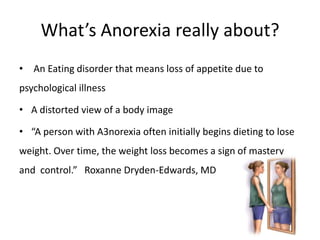
• A distorted view of a body image

• “A person with A3norexia often initially begins dieting to lose
weight. Over time, the weight loss becomes a sign of mastery
and control.” Roxanne Dryden-Edwards, MD
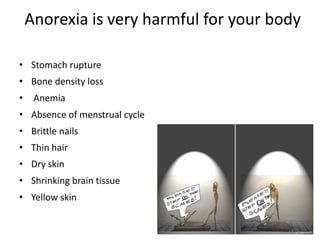
Anorexia is very harmful for your body

• Stomach rupture
• Bone density loss
•    Anemia
• Absence of menstrual cycle
• Brittle nails
• Thin hair
• Dry skin
• Shrinking brain tissue
• Yellow skin
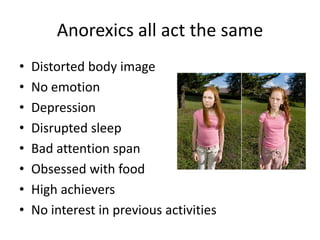
Anorexics all act the same
•   Distorted body image
•   No emotion
•   Depression
•   Disrupted sleep
•   Bad attention span
•   Obsessed with food
•   High achievers
•   No interest in previous activities
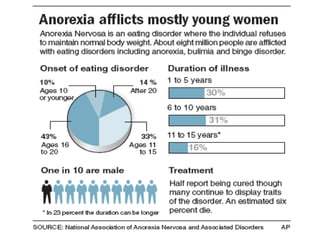
Anyone can be Anorexic
• 95% of anorexics are female and 1 in 100 adolescents
  experience anorexia (Roxanne Dryden-Edwards, MD)
• Children as young as five
• 3.7% of women have experienced it once in there life
  (Roxanne Dryden-Edwards, MD)
• 0.3% of men have experienced it once in there life
  (Roxanne Dryden-Edwards, MD)
Anorexia can be biological

• Genetically venerable


• Dysfunction in part of a brain


• History of Under eating
Anorexia is a mental disease too

• Low self-worth


• Never think your thin enough


• High demands from parents
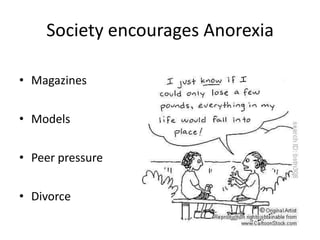
Society encourages Anorexia

• Magazines

• Models

• Peer pressure

• Divorce
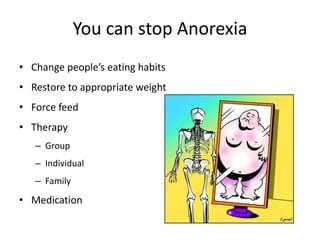
You can stop Anorexia
• Change people’s eating habits
• Restore to appropriate weight
• Force feed
• Therapy
   – Group
   – Individual
   – Family
• Medication
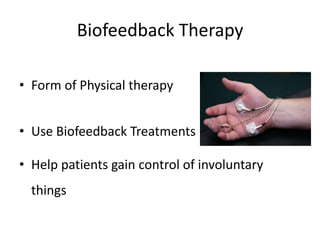
Biofeedback Therapy

• Form of Physical therapy


• Use Biofeedback Treatments

• Help patients gain control of involuntary
  things
Education

• High School Diploma

• Bachelors Degree in Psychology

• License

• Supervised training

• Certification
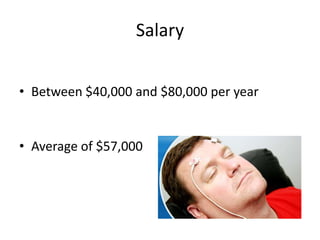
Salary


• Between $40,000 and $80,000 per year


• Average of $57,000
Future demand for position

• Average growth of 12% per year
High School

• Atholton High School, 2012-2016

• Allied Health Academy

  – Maintain “C” Average

  – Completion of Biology 1

  – Classes held at Application & Research Laboratory
College
•   Indiana University Southeast
•   $530.50 per credit hour
•   Mascot is Grenadier
•   Degree in Psychology
    – Psychology 1 and 2
    – 33 credit hours
Community Service and past employment

• Ran a successful Pet Sitting Business from 5th-
  7th grade
• Volunteered for two years serving lunches to
  the homeless
• Worked with Biofeedback Therapists for two
  years at John Hopkins Hospital
• Three years of babysitting

Anorexia

  • 1.
    By: Isabella Lennon “Anorexianervosa isn't really about food. It's an unhealthy way to try to cope with emotional problems. When you have anorexia nervosa, you often equate thinness with self-worth.” (Mayo Clinic, 2010)
  • 2.
    What’s Anorexia reallyabout? • An Eating disorder that means loss of appetite due to psychological illness • A distorted view of a body image • “A person with A3norexia often initially begins dieting to lose weight. Over time, the weight loss becomes a sign of mastery and control.” Roxanne Dryden-Edwards, MD
  • 3.
    Anorexia is veryharmful for your body • Stomach rupture • Bone density loss • Anemia • Absence of menstrual cycle • Brittle nails • Thin hair • Dry skin • Shrinking brain tissue • Yellow skin
  • 4.
    Anorexics all actthe same • Distorted body image • No emotion • Depression • Disrupted sleep • Bad attention span • Obsessed with food • High achievers • No interest in previous activities
  • 5.
    Anyone can beAnorexic • 95% of anorexics are female and 1 in 100 adolescents experience anorexia (Roxanne Dryden-Edwards, MD) • Children as young as five • 3.7% of women have experienced it once in there life (Roxanne Dryden-Edwards, MD) • 0.3% of men have experienced it once in there life (Roxanne Dryden-Edwards, MD)
  • 7.
    Anorexia can bebiological • Genetically venerable • Dysfunction in part of a brain • History of Under eating
  • 8.
    Anorexia is amental disease too • Low self-worth • Never think your thin enough • High demands from parents
  • 9.
    Society encourages Anorexia •Magazines • Models • Peer pressure • Divorce
  • 10.
    You can stopAnorexia • Change people’s eating habits • Restore to appropriate weight • Force feed • Therapy – Group – Individual – Family • Medication
  • 11.
    Biofeedback Therapy • Formof Physical therapy • Use Biofeedback Treatments • Help patients gain control of involuntary things
  • 12.
    Education • High SchoolDiploma • Bachelors Degree in Psychology • License • Supervised training • Certification
  • 13.
    Salary • Between $40,000and $80,000 per year • Average of $57,000
  • 14.
    Future demand forposition • Average growth of 12% per year
  • 15.
    High School • AtholtonHigh School, 2012-2016 • Allied Health Academy – Maintain “C” Average – Completion of Biology 1 – Classes held at Application & Research Laboratory
  • 16.
    College • Indiana University Southeast • $530.50 per credit hour • Mascot is Grenadier • Degree in Psychology – Psychology 1 and 2 – 33 credit hours
  • 17.
    Community Service andpast employment • Ran a successful Pet Sitting Business from 5th- 7th grade • Volunteered for two years serving lunches to the homeless • Worked with Biofeedback Therapists for two years at John Hopkins Hospital • Three years of babysitting