Postnatal
Depression:
Is it Predictable?
Dr. Umi Adzlin Silim
Consultation-LiaisonPsychiatrist
Hospital Kuala Lumpur
MD (UKM), MMED (PSYCH)(UKM),
Fellowship In Consultation-liaison Psychiatry & Women’s Mental Health (Melbourne)
Postnatal depression (PND): In A Glance
• The Suffering of PND: Clinical Presentation
• Significant Impact of PND
• Magnitude of PND
• Is it Predictable? What We Know as Risk Factors of PND
• Recommendations in Managing PND
The Suffering of PND
• PND is a debilitating illness of clinical depression that occur after
childbirth, sudden or gradual within weeks-months, up to 1 year
• Mild, moderate, severe
• Affect mothers, and fathers!
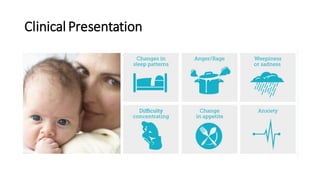
Clinical Presentation
Themes In PND
• Low confidence / self esteem (‘bad mother’)
• Difficultycoping with childcare
• Difficultybonding
• Extreme anxiety about health of baby
• Overconcern about feeding / sleeping regime
• Odd / overvalued ideas
• Physical anxiety symptoms / panic attacks
• Suicidal thoughts
• Infanticidal thoughts
• Relationship difficulties / conflict
Significant Impact to Women, Men & Child
Magnitude: Feelings afterbirth
• Baby blues
• 80-90% of women
feeling tearful
• Postnatal depression
• 10-20% women feel
depressed
• Onset in the first year
after birth
• Psychosis
• 1 in 1000 women
experience
hallucinations, with an
onset in first 6 weeks
Prevalence of PND in Malaysia
• 6.8% - In hospital setting using MINI (NorZuraida Zainalet al 2012)
• 9.8% - In health centre using CIS (Wan M. Rushidi et al 2002)
• 14.3% - in Sabah using EPDS* (Aza Sherin et al 2014)
• 27.3% - in Kelantan using EPDS* (Azidah AK et al 2009)
• 30.7% - in KL using EPDS* (Siti Roshadai et al 2014)
*EPDS = Edinburgh Postnatal Depression Scale
PND Magnitude
Is it predictable?
The Risk Factors
Life event & Stress
• Negative life events
(found in 84% of cases of
depression) including birth
complications, loss of
employment of partner,
health difficulties
• Stress, mainly in area of
infant care.
Paykel et al, 1980; O’hara et al 1982; Brown, 1993.
Family & Marital Difficulties
• Poor marital relationship • Woman-mother conflict
Paykel et al, 1980; Schweitzer et al 1992.
Perceived
husband’s
low support,
practical &
emotional
High
control,
low level
of care
Declined
marital
satisfaction
after
childbirth
Balinger et 1979; Kumar & Robson 1978.
Inadequate Level of Perceived Social Support
• Poor Family Support & Social Isolation
Taylor, 1989; Cutrona 1984.
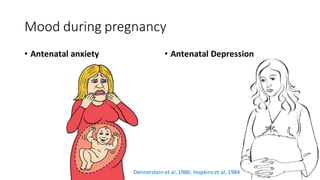
Mood during pregnancy
• Antenatal anxiety • Antenatal Depression
Dennerstein et al, 1986; Hopkinset al, 1984
Personal or family history of depression
• Previous episode of PND or
major depression
O’hara et al, 1991; O’hara& Swain, 1996.
Early experiences
• Difficult relationship with own
mother
• History of sexual abuse
Infant temperament;
mother infant-difficulties
• Infant difficult temperament
• Mothers of babies who cry or
vomit more than average more
likely to be depressed
• Depressed mom perceived infants
are more demanding
Mayberry & Alfonso, 1993; Milgrom & McCloud, 1996
Personality, attitudes, skills
• Low self esteem • Poor social skills
• Poor parenting
self efficacy is
partly a function
of poor social skill
& child rearing skills
Paykel et al, 1980; Lewinsohn, 1974.
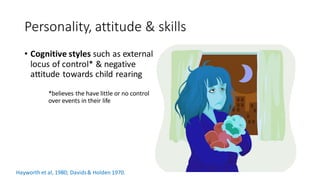
Personality, attitude & skills
• Cognitive styles such as external
locus of control* & negative
attitude towards child rearing
*believes the have little or no control
over events in their life
Hayworth et al, 1980; Davids& Holden 1970.
Personality, attitude, skills
• Personality factors including strong need for order,
control and perfectionism
Social expectations of joy of motherhood
• Myth of serenity after childbirth • Cultural influences
Unrealistic expectation may cause sense of failure
The truth of motherhood
• Complexities in life with baby
• Transition to motherhood
• Huge physical, emotional, social
changes
• Physical stress – breastfeeding,
constantdemand of caring
• Frustration of unable to complete
other activities
• Revive stress of family of origin
What Can We Do?
From Identification to Treatment
Increasing help seeking
• Normalising the possibility of
PND
• Early identification through
awareness of healthcare team
• Close attention to women at risk
• Routine screening
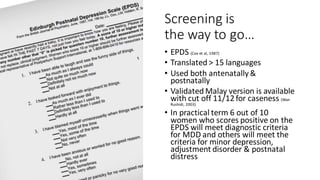
Screening is
the way to go…
• EPDS (Cox et al, 1987)
• Translated > 15 languages
• Used both antenatally&
postnatally
• Validated Malay version is available
with cut off 11/12for caseness (Wan
Rushidi, 2003)
• In practical term 6 out of 10
women who scores positive on the
EPDS will meet diagnostic criteria
for MDD and others will meet the
criteria for minor depression,
adjustment disorder & postnatal
distress
Level of Care
Source Beyond Blue NationalPND Initiative,NationalActionPlan Full Report 2008-2010
Treatment of PND
Mild Psychological interventions, Counselling,
Cognitive Behavioural Therapy (CBT)
Moderate Risk Benefit Analysis for Antidepressant therapy,
CBT
Severe Antidepressant therapy, CBT, Community Mental
Health Treatment
All Levels Address Mother-Baby Interaction
Thank you.umiadzlin@gmail.com

Postnatal Depression: Is it Predictable?

  • 1.
    Postnatal Depression: Is it Predictable? Dr.Umi Adzlin Silim Consultation-LiaisonPsychiatrist Hospital Kuala Lumpur MD (UKM), MMED (PSYCH)(UKM), Fellowship In Consultation-liaison Psychiatry & Women’s Mental Health (Melbourne)
  • 2.
    Postnatal depression (PND):In A Glance • The Suffering of PND: Clinical Presentation • Significant Impact of PND • Magnitude of PND • Is it Predictable? What We Know as Risk Factors of PND • Recommendations in Managing PND
  • 3.
    The Suffering ofPND • PND is a debilitating illness of clinical depression that occur after childbirth, sudden or gradual within weeks-months, up to 1 year • Mild, moderate, severe • Affect mothers, and fathers!
  • 4.
  • 5.
    Themes In PND •Low confidence / self esteem (‘bad mother’) • Difficultycoping with childcare • Difficultybonding • Extreme anxiety about health of baby • Overconcern about feeding / sleeping regime • Odd / overvalued ideas • Physical anxiety symptoms / panic attacks • Suicidal thoughts • Infanticidal thoughts • Relationship difficulties / conflict
  • 6.
    Significant Impact toWomen, Men & Child
  • 7.
    Magnitude: Feelings afterbirth •Baby blues • 80-90% of women feeling tearful • Postnatal depression • 10-20% women feel depressed • Onset in the first year after birth • Psychosis • 1 in 1000 women experience hallucinations, with an onset in first 6 weeks
  • 8.
    Prevalence of PNDin Malaysia • 6.8% - In hospital setting using MINI (NorZuraida Zainalet al 2012) • 9.8% - In health centre using CIS (Wan M. Rushidi et al 2002) • 14.3% - in Sabah using EPDS* (Aza Sherin et al 2014) • 27.3% - in Kelantan using EPDS* (Azidah AK et al 2009) • 30.7% - in KL using EPDS* (Siti Roshadai et al 2014) *EPDS = Edinburgh Postnatal Depression Scale
  • 9.
  • 10.
  • 11.
    Life event &Stress • Negative life events (found in 84% of cases of depression) including birth complications, loss of employment of partner, health difficulties • Stress, mainly in area of infant care. Paykel et al, 1980; O’hara et al 1982; Brown, 1993.
  • 12.
    Family & MaritalDifficulties • Poor marital relationship • Woman-mother conflict Paykel et al, 1980; Schweitzer et al 1992. Perceived husband’s low support, practical & emotional High control, low level of care Declined marital satisfaction after childbirth Balinger et 1979; Kumar & Robson 1978.
  • 13.
    Inadequate Level ofPerceived Social Support • Poor Family Support & Social Isolation Taylor, 1989; Cutrona 1984.
  • 14.
    Mood during pregnancy •Antenatal anxiety • Antenatal Depression Dennerstein et al, 1986; Hopkinset al, 1984
  • 15.
    Personal or familyhistory of depression • Previous episode of PND or major depression O’hara et al, 1991; O’hara& Swain, 1996.
  • 16.
    Early experiences • Difficultrelationship with own mother • History of sexual abuse
  • 17.
    Infant temperament; mother infant-difficulties •Infant difficult temperament • Mothers of babies who cry or vomit more than average more likely to be depressed • Depressed mom perceived infants are more demanding Mayberry & Alfonso, 1993; Milgrom & McCloud, 1996
  • 18.
    Personality, attitudes, skills •Low self esteem • Poor social skills • Poor parenting self efficacy is partly a function of poor social skill & child rearing skills Paykel et al, 1980; Lewinsohn, 1974.
  • 19.
    Personality, attitude &skills • Cognitive styles such as external locus of control* & negative attitude towards child rearing *believes the have little or no control over events in their life Hayworth et al, 1980; Davids& Holden 1970.
  • 20.
    Personality, attitude, skills •Personality factors including strong need for order, control and perfectionism
  • 21.
    Social expectations ofjoy of motherhood • Myth of serenity after childbirth • Cultural influences Unrealistic expectation may cause sense of failure
  • 22.
    The truth ofmotherhood • Complexities in life with baby • Transition to motherhood • Huge physical, emotional, social changes • Physical stress – breastfeeding, constantdemand of caring • Frustration of unable to complete other activities • Revive stress of family of origin
  • 23.
    What Can WeDo? From Identification to Treatment
  • 24.
    Increasing help seeking •Normalising the possibility of PND • Early identification through awareness of healthcare team • Close attention to women at risk • Routine screening
  • 25.
    Screening is the wayto go… • EPDS (Cox et al, 1987) • Translated > 15 languages • Used both antenatally& postnatally • Validated Malay version is available with cut off 11/12for caseness (Wan Rushidi, 2003) • In practical term 6 out of 10 women who scores positive on the EPDS will meet diagnostic criteria for MDD and others will meet the criteria for minor depression, adjustment disorder & postnatal distress
  • 26.
    Level of Care SourceBeyond Blue NationalPND Initiative,NationalActionPlan Full Report 2008-2010
  • 27.
    Treatment of PND MildPsychological interventions, Counselling, Cognitive Behavioural Therapy (CBT) Moderate Risk Benefit Analysis for Antidepressant therapy, CBT Severe Antidepressant therapy, CBT, Community Mental Health Treatment All Levels Address Mother-Baby Interaction
  • 28.