Annex 1
Chapter 1
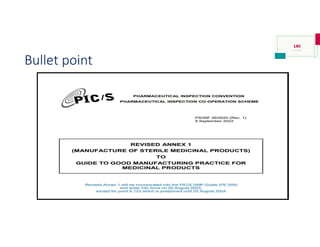
REVISED ANNEX 1 (MANUFACTURE OF STERILE MEDICINAL PRODUCTS)
TO GUIDE TO GOOD MANUFACTURING PRACTICE FOR MEDICINAL
PRODUCTS
From Hema Sharma,
Learn, Share and care
Bullet point
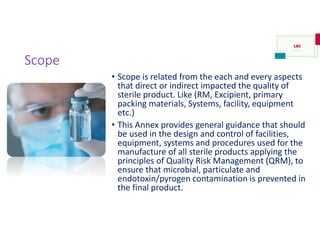
Scope
• Scope is related from the each and every aspects
that direct or indirect impacted the quality of
sterile product. Like (RM, Excipient, primary
packing materials, Systems, facility, equipment
etc.)
• This Annex provides general guidance that should
be used in the design and control of facilities,
equipment, systems and procedures used for the
manufacture of all sterile products applying the
principles of Quality Risk Management (QRM), to
ensure that microbial, particulate and
endotoxin/pyrogen contamination is prevented in
the final product.
Principle
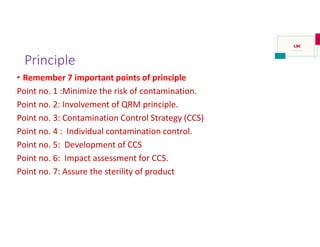
• Remember 7 important points of principle
Point no. 1 :Minimize the risk of contamination.
Point no. 2: Involvement of QRM principle.
Point no. 3: Contamination Control Strategy (CCS)
Point no. 4 : Individual contamination control.
Point no. 5: Development of CCS
Point no. 6: Impact assessment for CCS.
Point no. 7: Assure the sterility of product
Principle
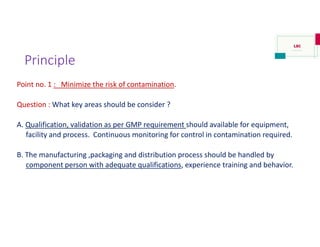
Point no. 1 : Minimize the risk of contamination.
Question : What key areas should be consider ?
A. Qualification, validation as per GMP requirement should available for equipment,
facility and process. Continuous monitoring for control in contamination required.
B. The manufacturing ,packaging and distribution process should be handled by
component person with adequate qualifications, experience training and behavior.
Principle
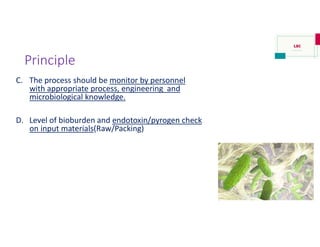
C. The process should be monitor by personnel
with appropriate process, engineering and
microbiological knowledge.
D. Level of bioburden and endotoxin/pyrogen check
on input materials(Raw/Packing)
Principle
Point no. 2: Involvement of QRM principle.
A. Identify the potential risk to product quality.
B. There should be appropriate rationales, risk assessment and mitigation
for alternative approach that meet requirement of annex 1.
C. Only monitoring and testing can not assure the sterility of product.
Hence the QRM approach should include from design of facility,
equipment and processes with implementation of validated procedures.
Principle
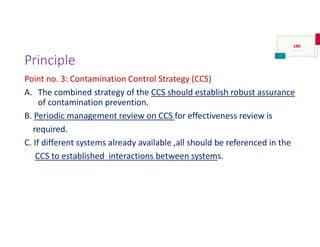
Point no. 3: Contamination Control Strategy (CCS)
A. The combined strategy of the CCS should establish robust assurance
of contamination prevention.
B. Periodic management review on CCS for effectiveness review is
required.
C. If different systems already available ,all should be referenced in the
CCS to established interactions between systems.
Principle
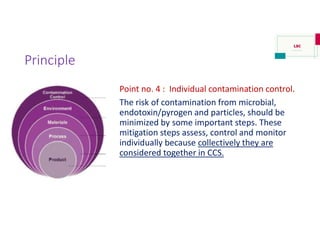
Point no. 4 : Individual contamination control.
The risk of contamination from microbial,
endotoxin/pyrogen and particles, should be
minimized by some important steps. These
mitigation steps assess, control and monitor
individually because collectively they are
considered together in CCS.
Principle
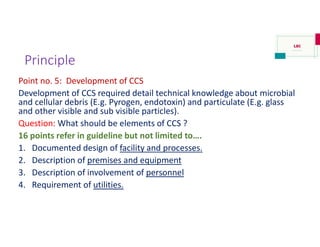
Point no. 5: Development of CCS
Development of CCS required detail technical knowledge about microbial
and cellular debris (E.g. Pyrogen, endotoxin) and particulate (E.g. glass
and other visible and sub visible particles).
Question: What should be elements of CCS ?
16 points refer in guideline but not limited to….
1. Documented design of facility and processes.
2. Description of premises and equipment
3. Description of involvement of personnel
4. Requirement of utilities.
Principle
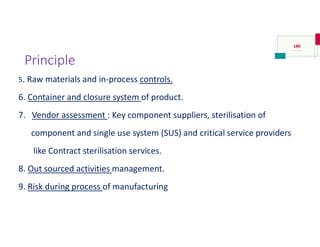
5. Raw materials and in-process controls.
6. Container and closure system of product.
7. Vendor assessment : Key component suppliers, sterilisation of
component and single use system (SUS) and critical service providers
like Contract sterilisation services.
8. Out sourced activities management.
9. Risk during process of manufacturing
Principle
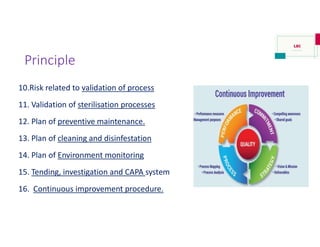
10.Risk related to validation of process
11. Validation of sterilisation processes
12. Plan of preventive maintenance.
13. Plan of cleaning and disinfestation
14. Plan of Environment monitoring
15. Tending, investigation and CAPA system
16. Continuous improvement procedure.
Principle
Point no. 6: On any changes and updation under pharmaceutical quality
system the impact assessment for CCS should be consider.
Point no. 7: All precautions and controls should be taken from
manufacturer to assure the sterility of product.
To be continue in next chapter………………
Hema Sharma

ANNEX 1 VOL 4 PPT.pdf

  • 1.
    Annex 1 Chapter 1 REVISEDANNEX 1 (MANUFACTURE OF STERILE MEDICINAL PRODUCTS) TO GUIDE TO GOOD MANUFACTURING PRACTICE FOR MEDICINAL PRODUCTS From Hema Sharma, Learn, Share and care
  • 2.
  • 3.
    Scope • Scope isrelated from the each and every aspects that direct or indirect impacted the quality of sterile product. Like (RM, Excipient, primary packing materials, Systems, facility, equipment etc.) • This Annex provides general guidance that should be used in the design and control of facilities, equipment, systems and procedures used for the manufacture of all sterile products applying the principles of Quality Risk Management (QRM), to ensure that microbial, particulate and endotoxin/pyrogen contamination is prevented in the final product.
  • 4.
    Principle • Remember 7important points of principle Point no. 1 :Minimize the risk of contamination. Point no. 2: Involvement of QRM principle. Point no. 3: Contamination Control Strategy (CCS) Point no. 4 : Individual contamination control. Point no. 5: Development of CCS Point no. 6: Impact assessment for CCS. Point no. 7: Assure the sterility of product
  • 5.
    Principle Point no. 1: Minimize the risk of contamination. Question : What key areas should be consider ? A. Qualification, validation as per GMP requirement should available for equipment, facility and process. Continuous monitoring for control in contamination required. B. The manufacturing ,packaging and distribution process should be handled by component person with adequate qualifications, experience training and behavior.
  • 6.
    Principle C. The processshould be monitor by personnel with appropriate process, engineering and microbiological knowledge. D. Level of bioburden and endotoxin/pyrogen check on input materials(Raw/Packing)
  • 7.
    Principle Point no. 2:Involvement of QRM principle. A. Identify the potential risk to product quality. B. There should be appropriate rationales, risk assessment and mitigation for alternative approach that meet requirement of annex 1. C. Only monitoring and testing can not assure the sterility of product. Hence the QRM approach should include from design of facility, equipment and processes with implementation of validated procedures.
  • 8.
    Principle Point no. 3:Contamination Control Strategy (CCS) A. The combined strategy of the CCS should establish robust assurance of contamination prevention. B. Periodic management review on CCS for effectiveness review is required. C. If different systems already available ,all should be referenced in the CCS to established interactions between systems.
  • 9.
    Principle Point no. 4: Individual contamination control. The risk of contamination from microbial, endotoxin/pyrogen and particles, should be minimized by some important steps. These mitigation steps assess, control and monitor individually because collectively they are considered together in CCS.
  • 10.
    Principle Point no. 5:Development of CCS Development of CCS required detail technical knowledge about microbial and cellular debris (E.g. Pyrogen, endotoxin) and particulate (E.g. glass and other visible and sub visible particles). Question: What should be elements of CCS ? 16 points refer in guideline but not limited to…. 1. Documented design of facility and processes. 2. Description of premises and equipment 3. Description of involvement of personnel 4. Requirement of utilities.
  • 11.
    Principle 5. Raw materialsand in-process controls. 6. Container and closure system of product. 7. Vendor assessment : Key component suppliers, sterilisation of component and single use system (SUS) and critical service providers like Contract sterilisation services. 8. Out sourced activities management. 9. Risk during process of manufacturing
  • 12.
    Principle 10.Risk related tovalidation of process 11. Validation of sterilisation processes 12. Plan of preventive maintenance. 13. Plan of cleaning and disinfestation 14. Plan of Environment monitoring 15. Tending, investigation and CAPA system 16. Continuous improvement procedure.
  • 13.
    Principle Point no. 6:On any changes and updation under pharmaceutical quality system the impact assessment for CCS should be consider. Point no. 7: All precautions and controls should be taken from manufacturer to assure the sterility of product.
  • 14.
    To be continuein next chapter……………… Hema Sharma