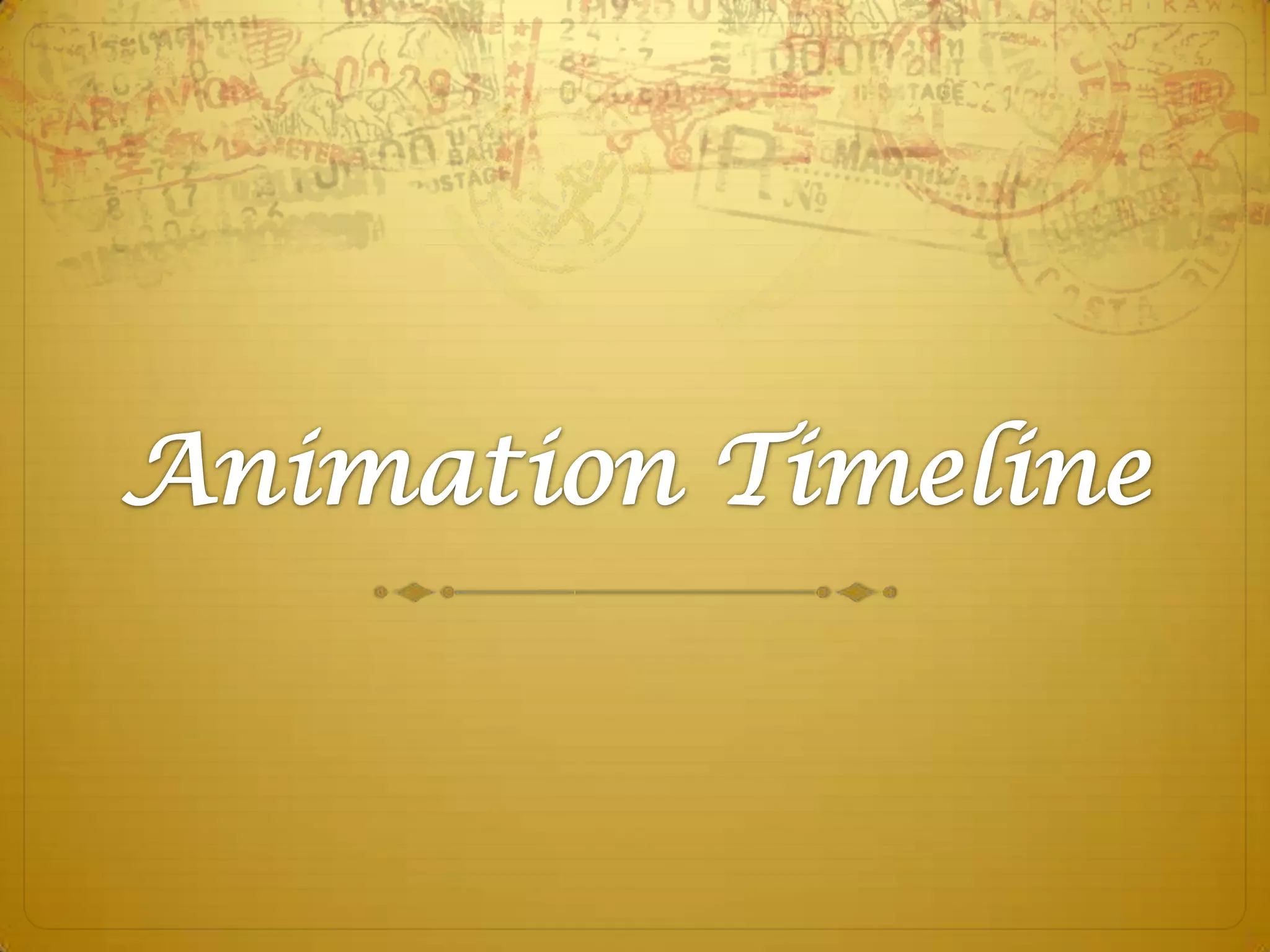
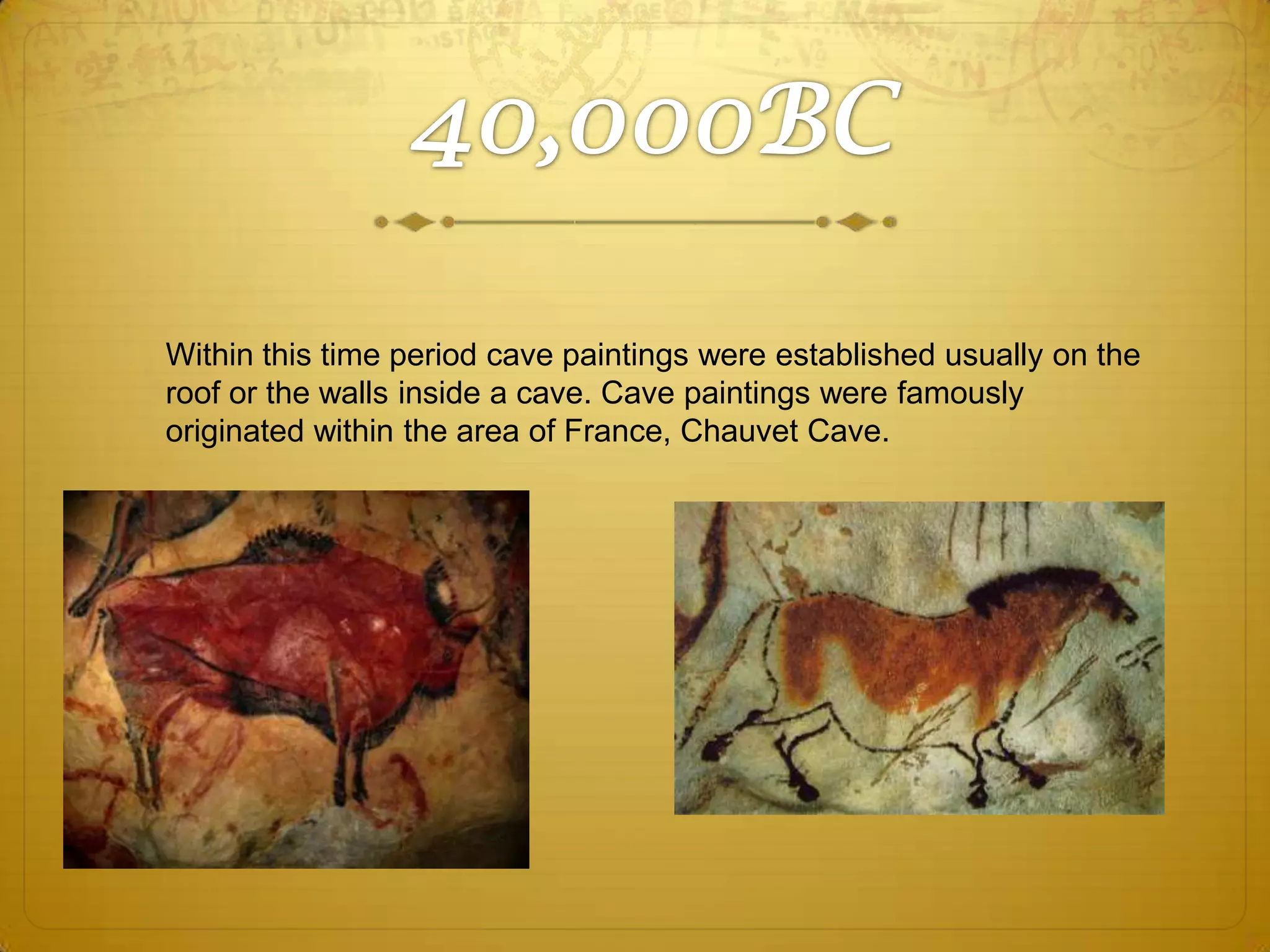
Within this time period cave paintings were established usually on the
roof or the walls inside a cave. Cave paintings were famously
originated within the area of France, Chauvet Cave.
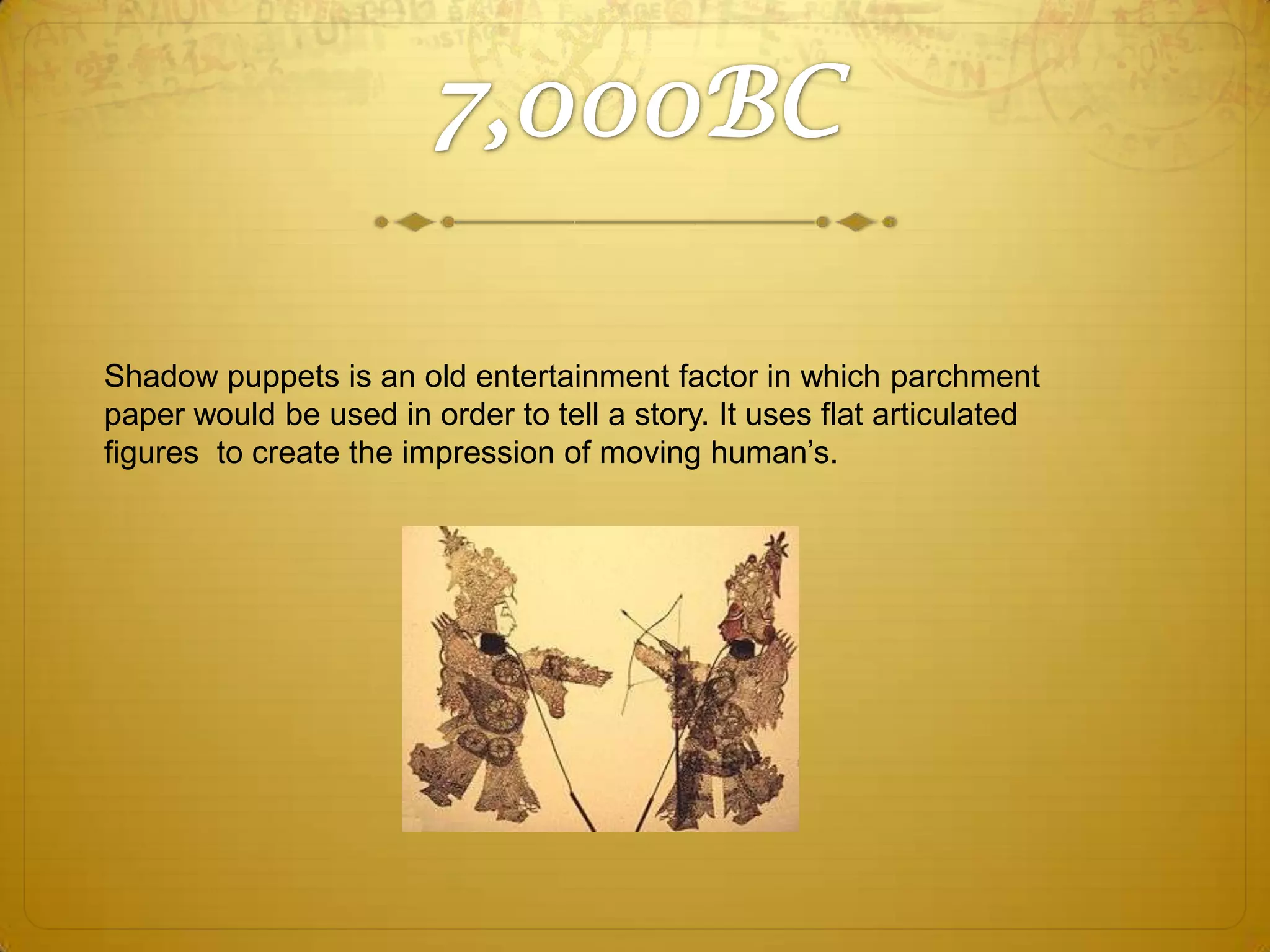
Shadow puppets is an old entertainment factor in which parchment
paper would be used in order to tell a story. It uses flat articulated
figures to create the impression of moving human’s.
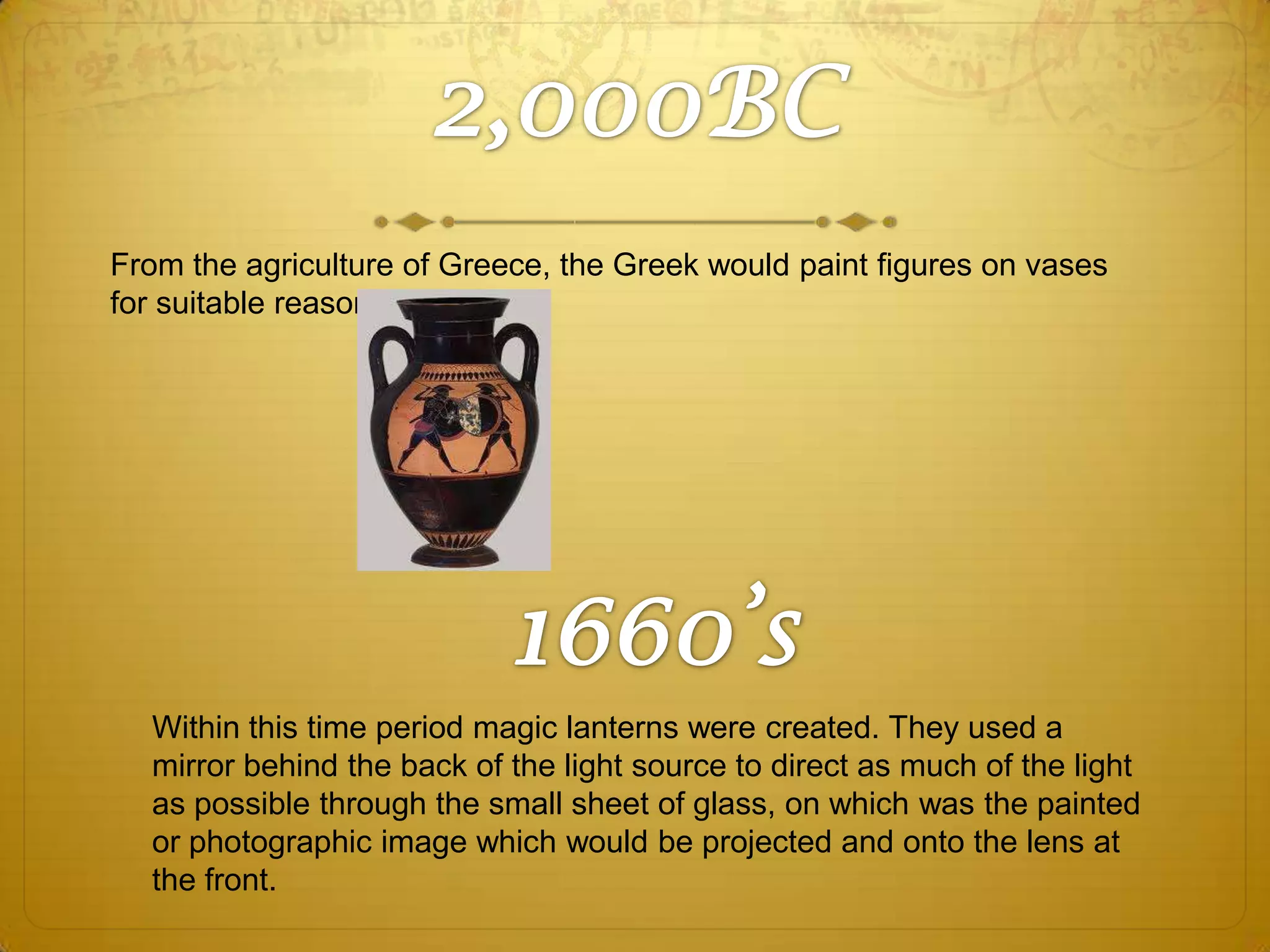
From the agriculture of Greece, the Greek would paint figures on vases
for suitable reasons.

Within this time period magic lanterns were created. They used a
mirror behind the back of the light source to direct as much of the light
as possible through the small sheet of glass, on which was the painted
or photographic image which would be projected and onto the lens at
the front.
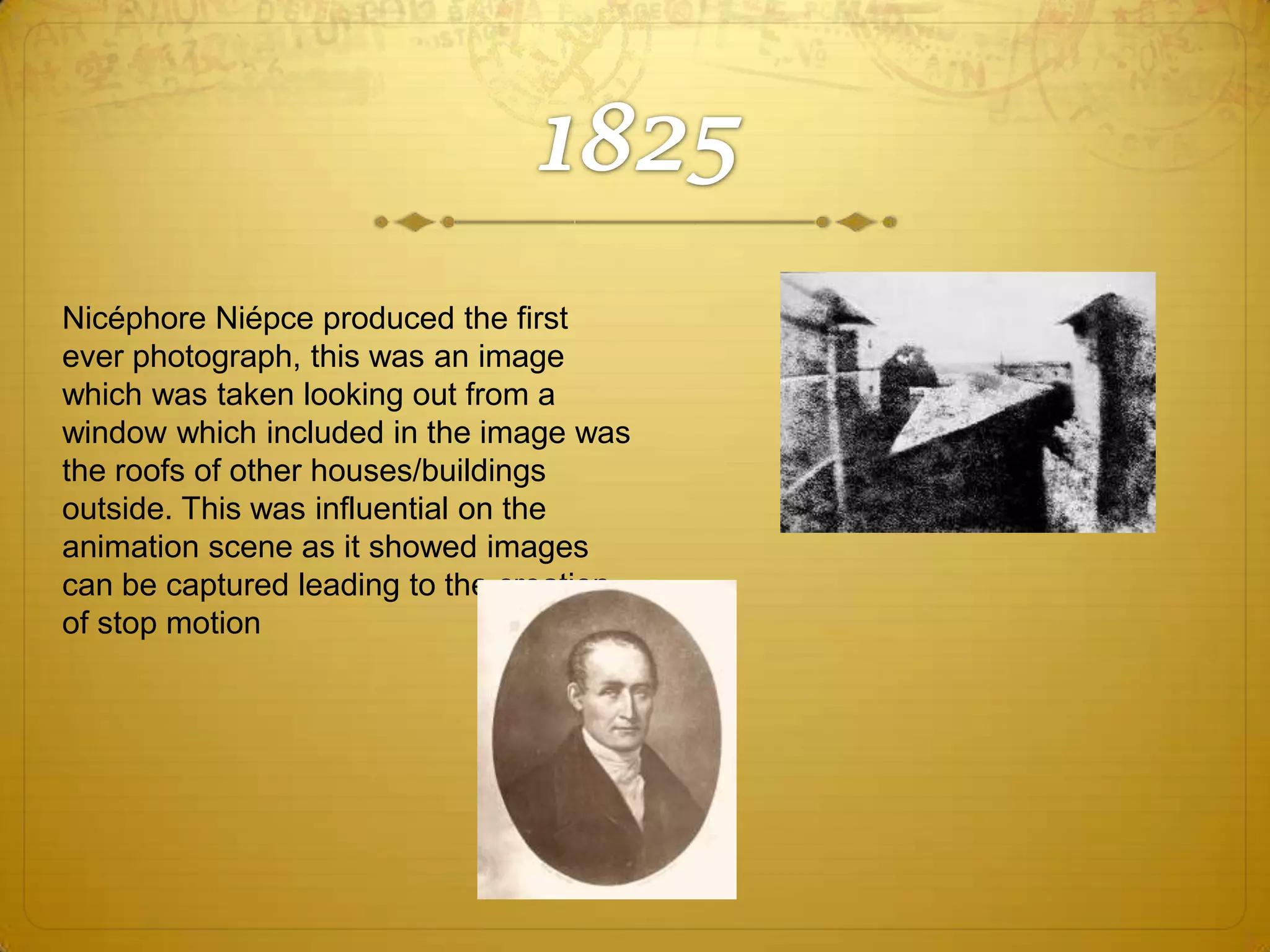
Nicéphore Niépce produced the first
ever photograph, this was an image
which was taken looking out from a
window which included in the image was
the roofs of other houses/buildings
outside. This was influential on the
animation scene as it showed images
can be captured leading to the creation
of stop motion
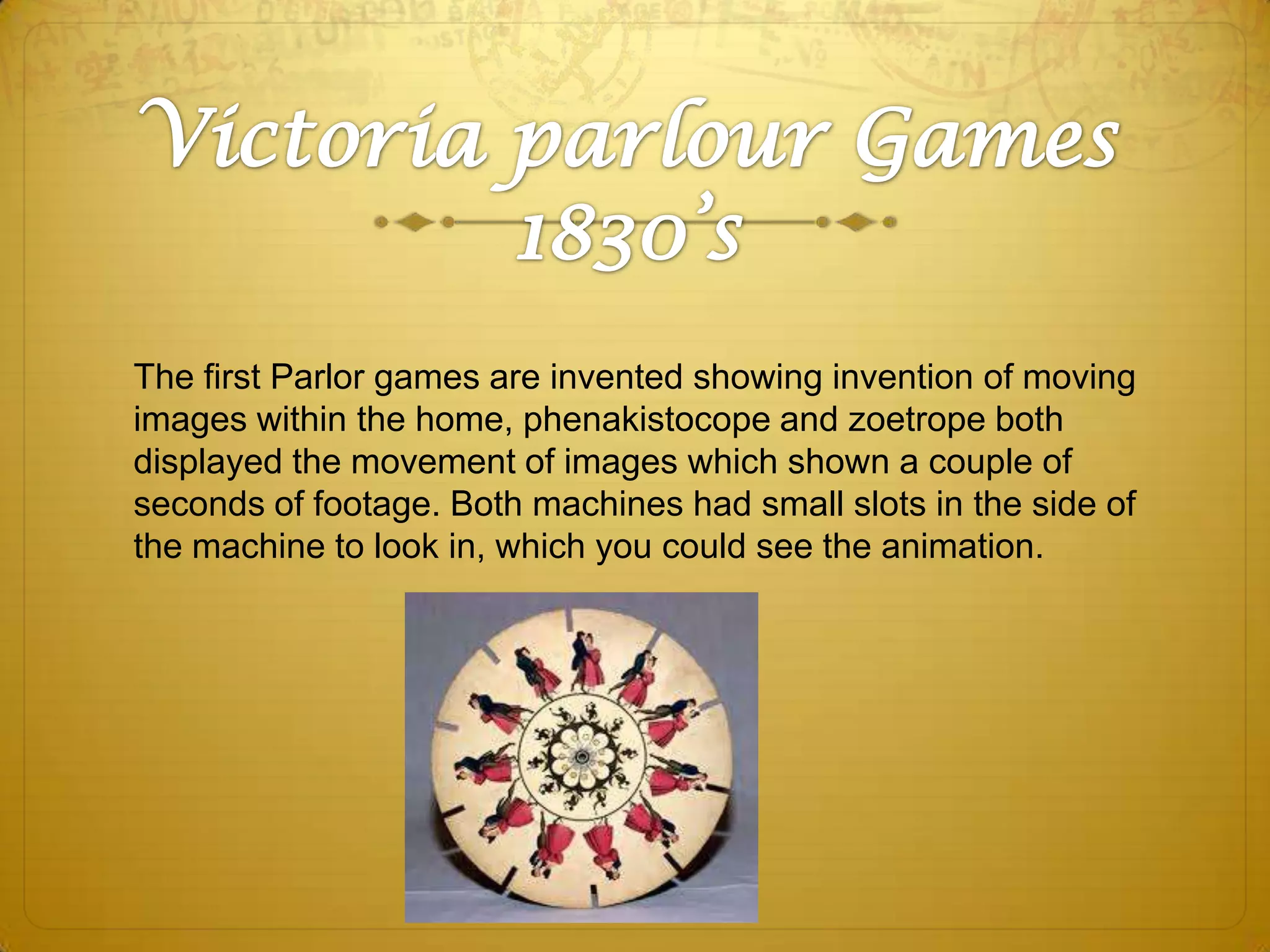
The first Parlor games are invented showing invention of moving
images within the home, phenakistocope and zoetrope both
displayed the movement of images which shown a couple of
seconds of footage. Both machines had small slots in the side of
the machine to look in, which you could see the animation.
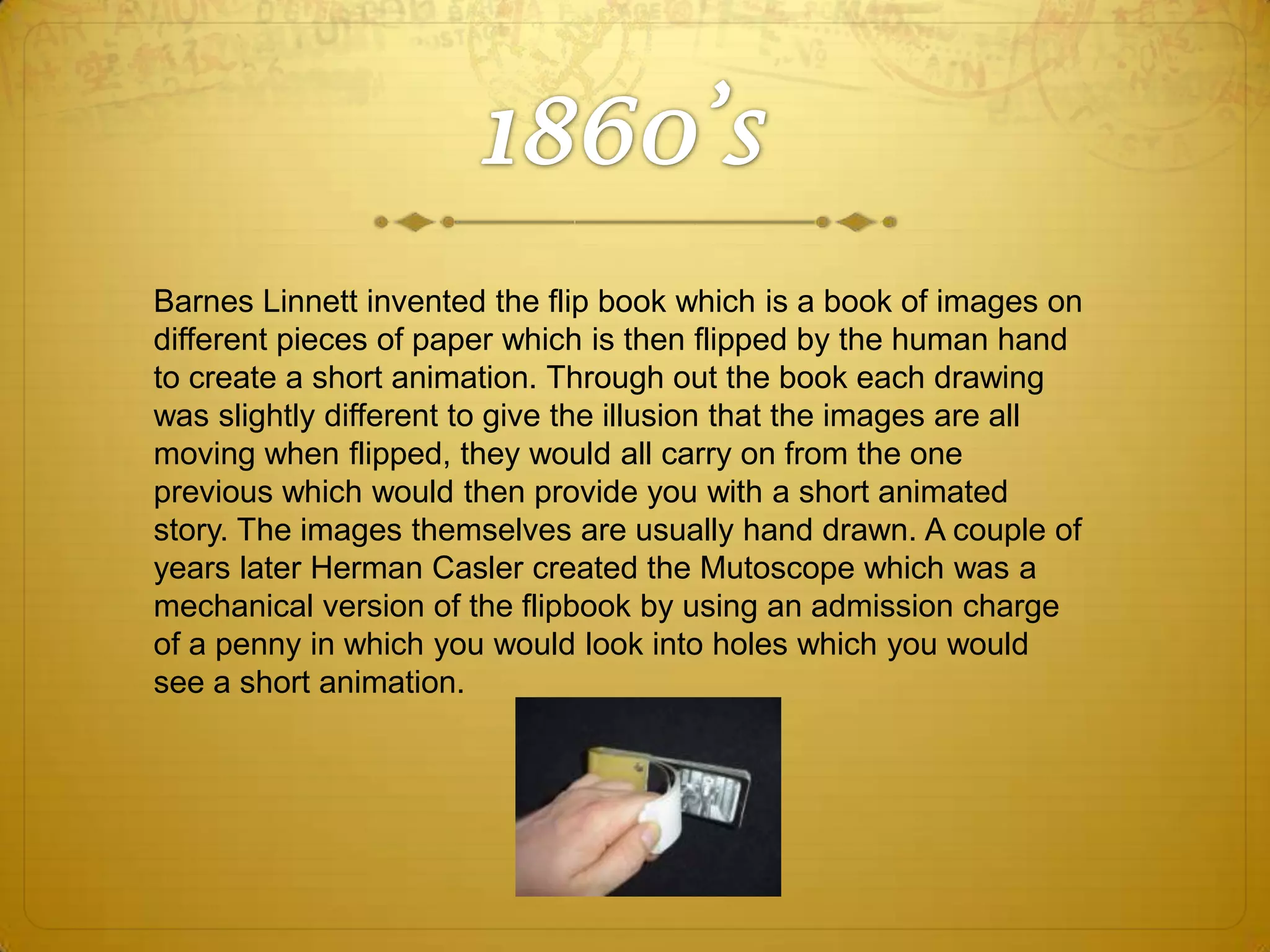
Barnes Linnett invented the flip book which is a book of images on
different pieces of paper which is then flipped by the human hand
to create a short animation. Through out the book each drawing
was slightly different to give the illusion that the images are all
moving when flipped, they would all carry on from the one
previous which would then provide you with a short animated
story. The images themselves are usually hand drawn. A couple of
years later Herman Casler created the Mutoscope which was a
mechanical version of the flipbook by using an admission charge
of a penny in which you would look into holes which you would
see a short animation.
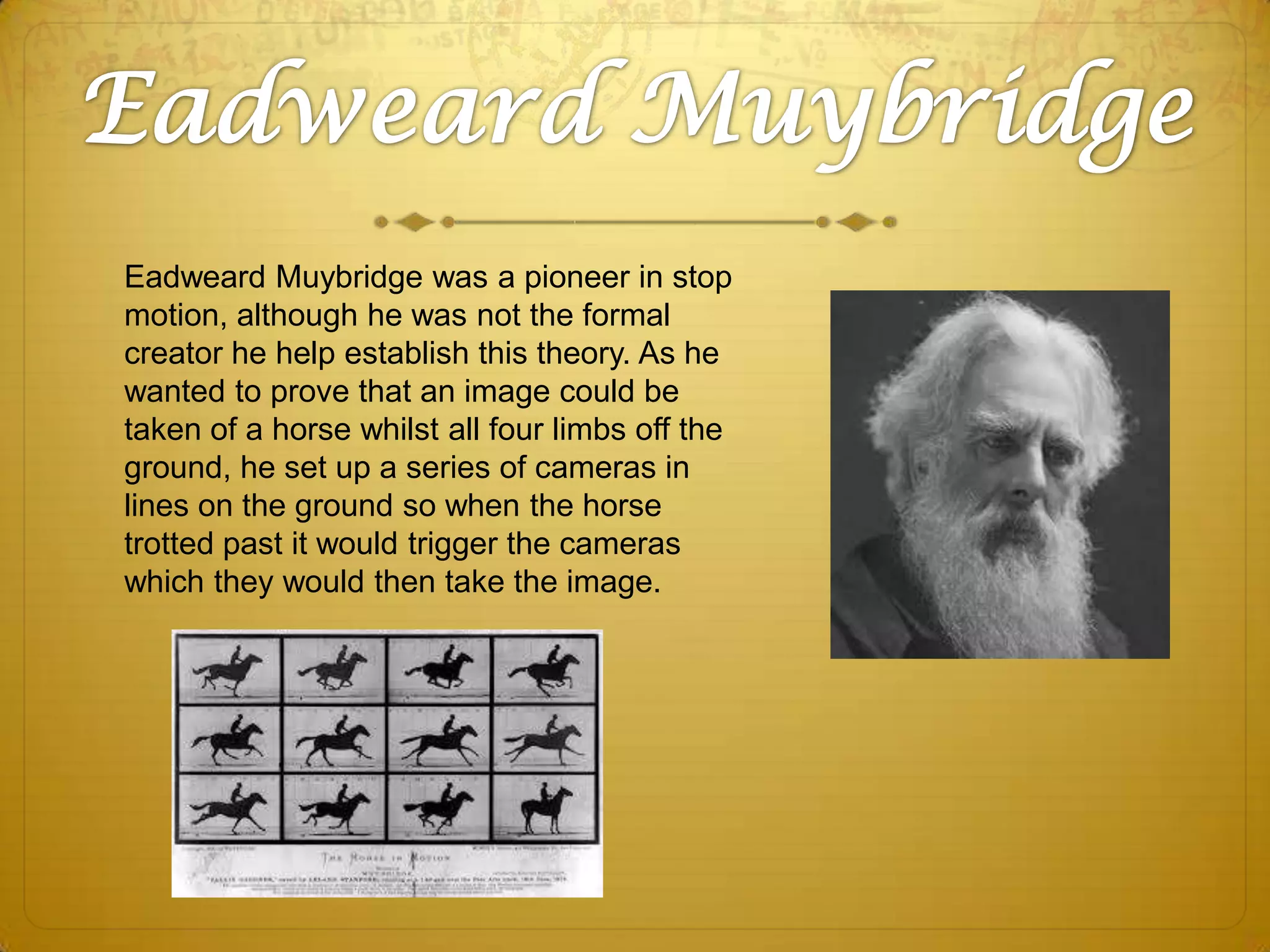
Eadweard Muybridge was a pioneer in stop
motion, although he was not the formal
creator he help establish this theory. As he
wanted to prove that an image could be
taken of a horse whilst all four limbs off the
ground, he set up a series of cameras in
lines on the ground so when the horse
trotted past it would trigger the cameras
which they would then take the image.


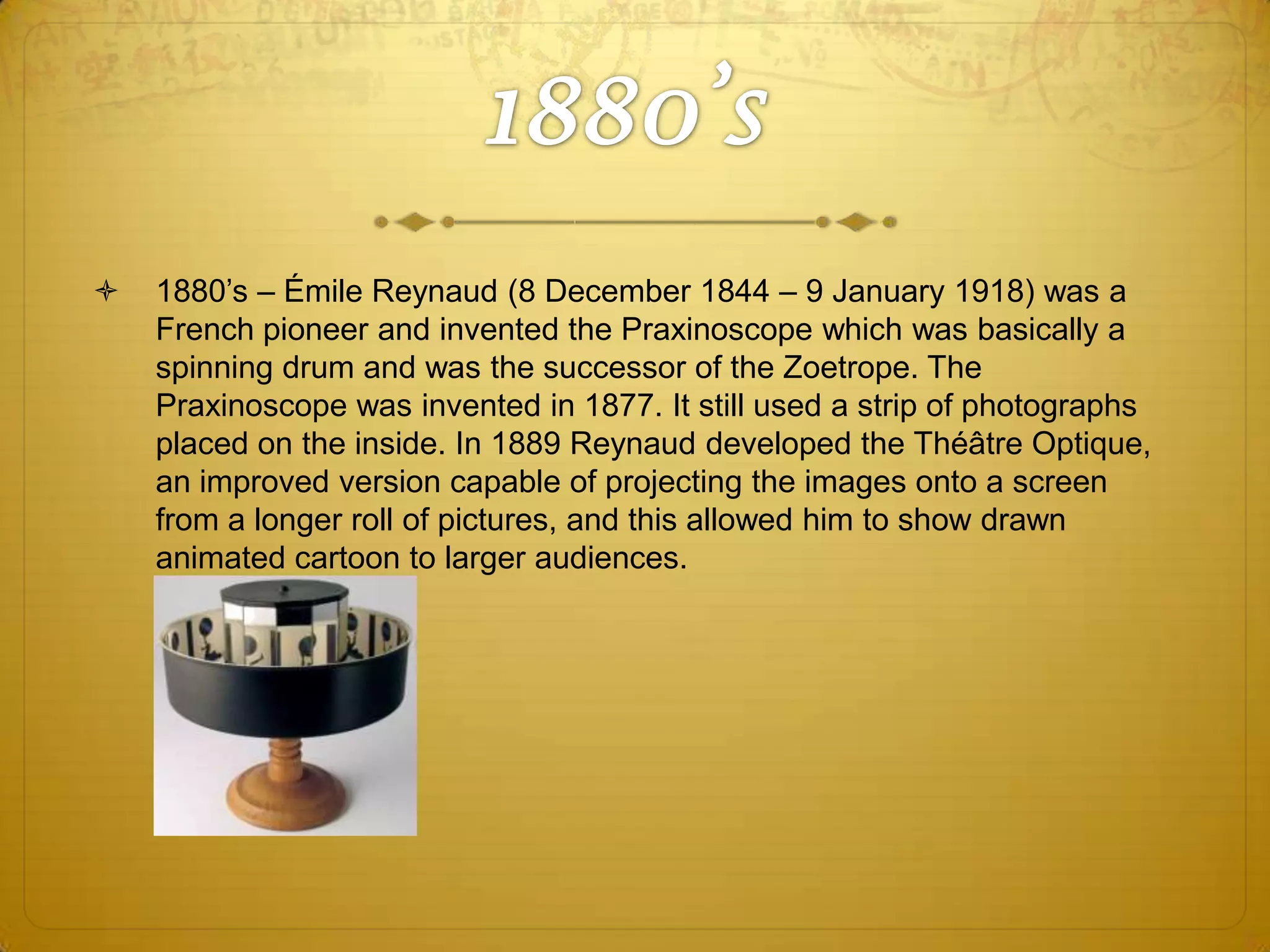
1880’s – Émile Reynaud (8 December 1844 – 9 January 1918) was a
French pioneer and invented the Praxinoscope which was basically a
spinning drum and was the successor of the Zoetrope. The
Praxinoscope was invented in 1877. It still used a strip of photographs
placed on the inside. In 1889 Reynaud developed the Théâtre Optique,
an improved version capable of projecting the images onto a screen
from a longer roll of pictures, and this allowed him to show drawn
animated cartoon to larger audiences.
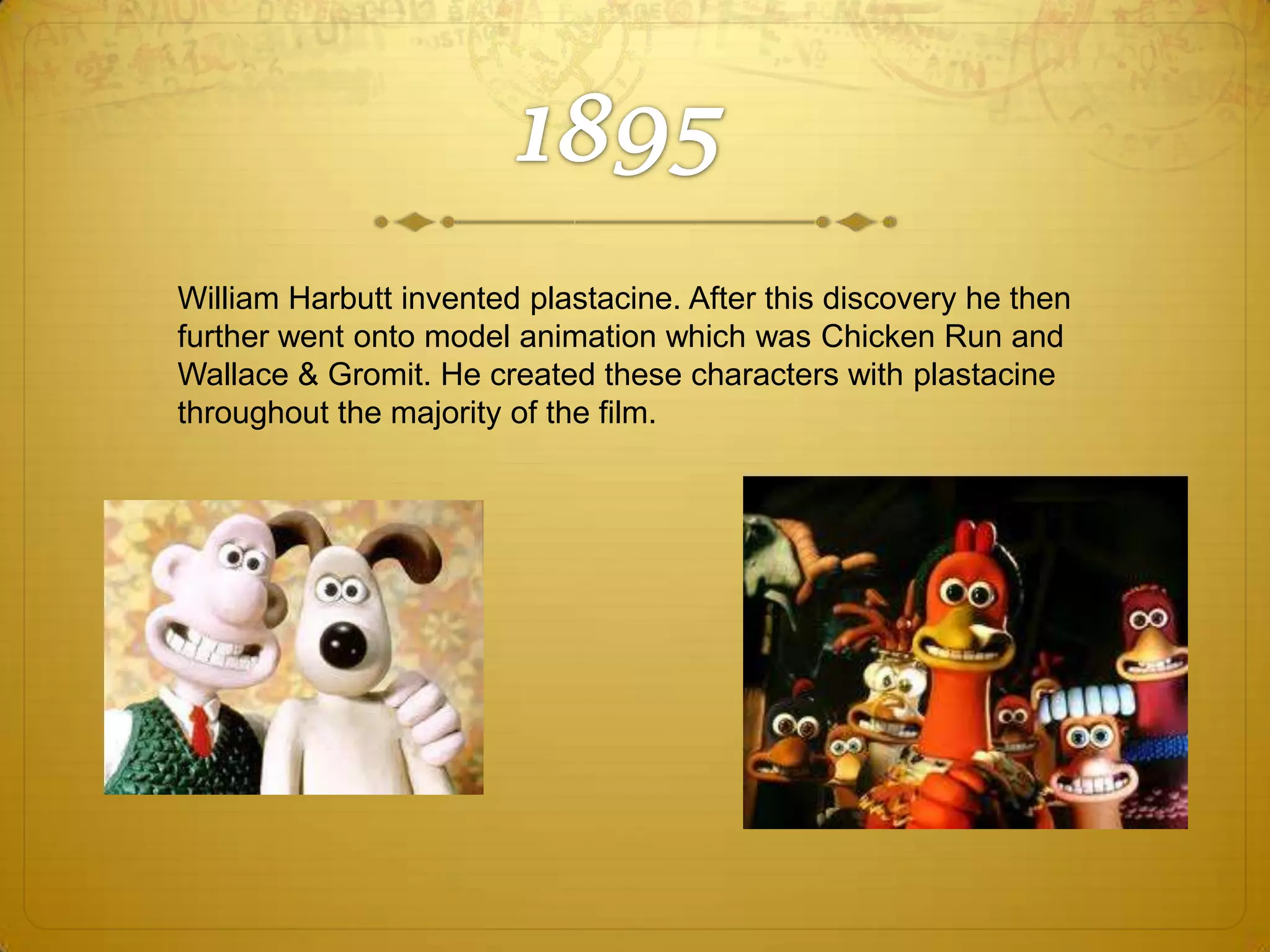
William Harbutt invented plastacine. After this discovery he then
further went onto model animation which was Chicken Run and
Wallace & Gromit. He created these characters with plastacine
throughout the majority of the film.
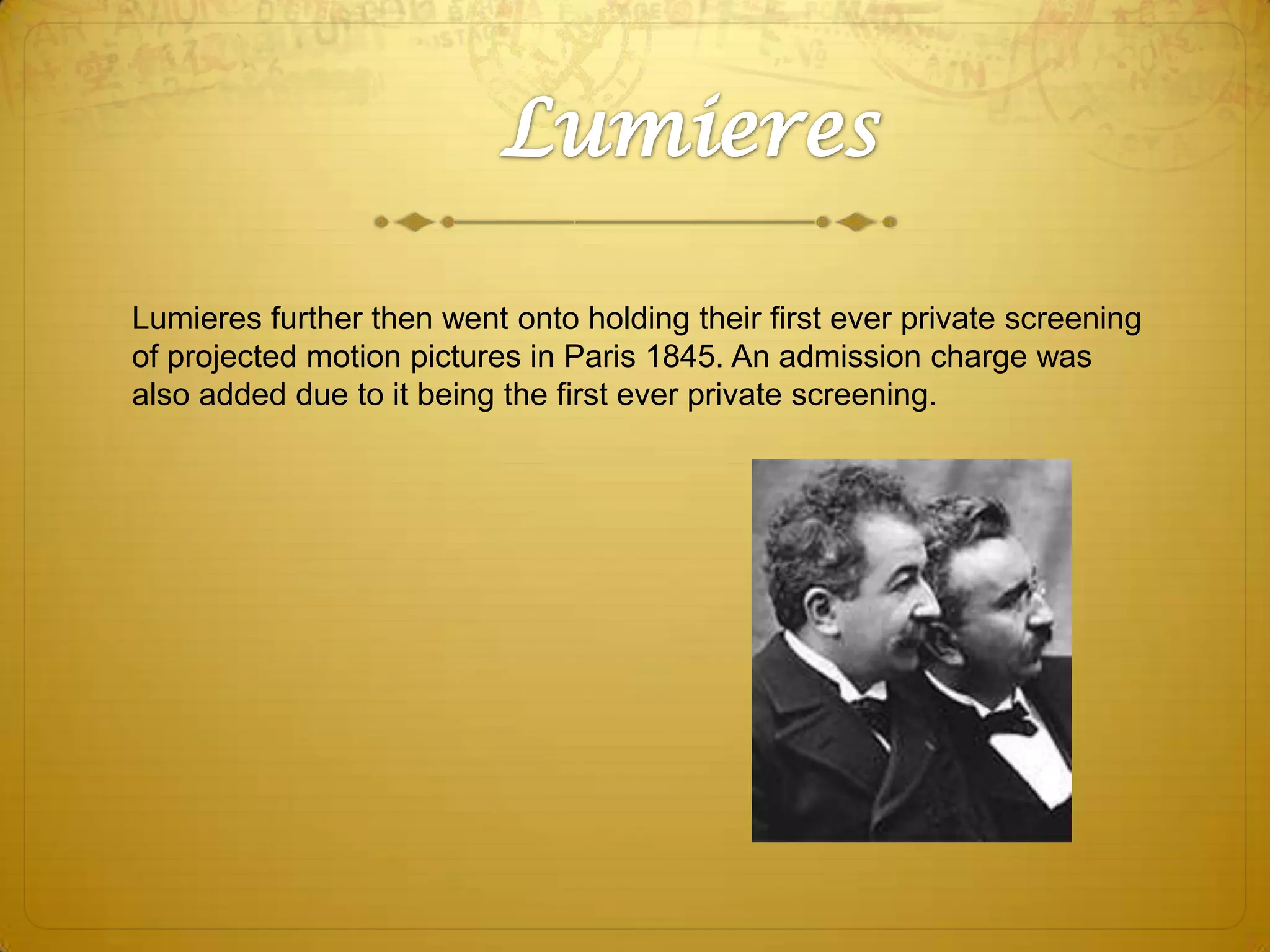
Lumieres further then went onto holding their first ever private screening
of projected motion pictures in Paris 1845. An admission charge was
also added due to it being the first ever private screening.
Georges Méliès
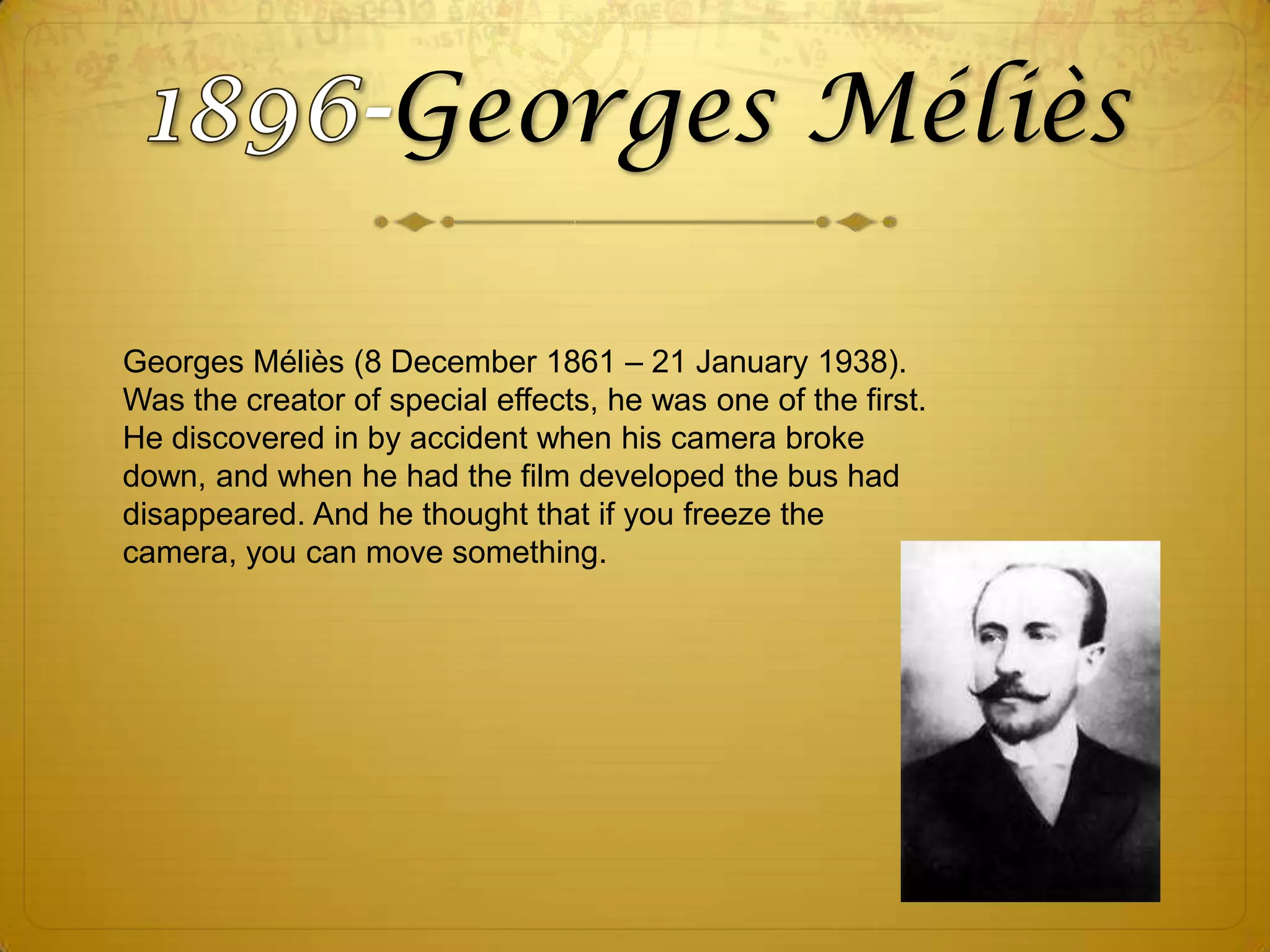
Georges Méliès (8 December 1861 – 21 January 1938).
Was the creator of special effects, he was one of the first.
He discovered in by accident when his camera broke
down, and when he had the film developed the bus had
disappeared. And he thought that if you freeze the
camera, you can move something.
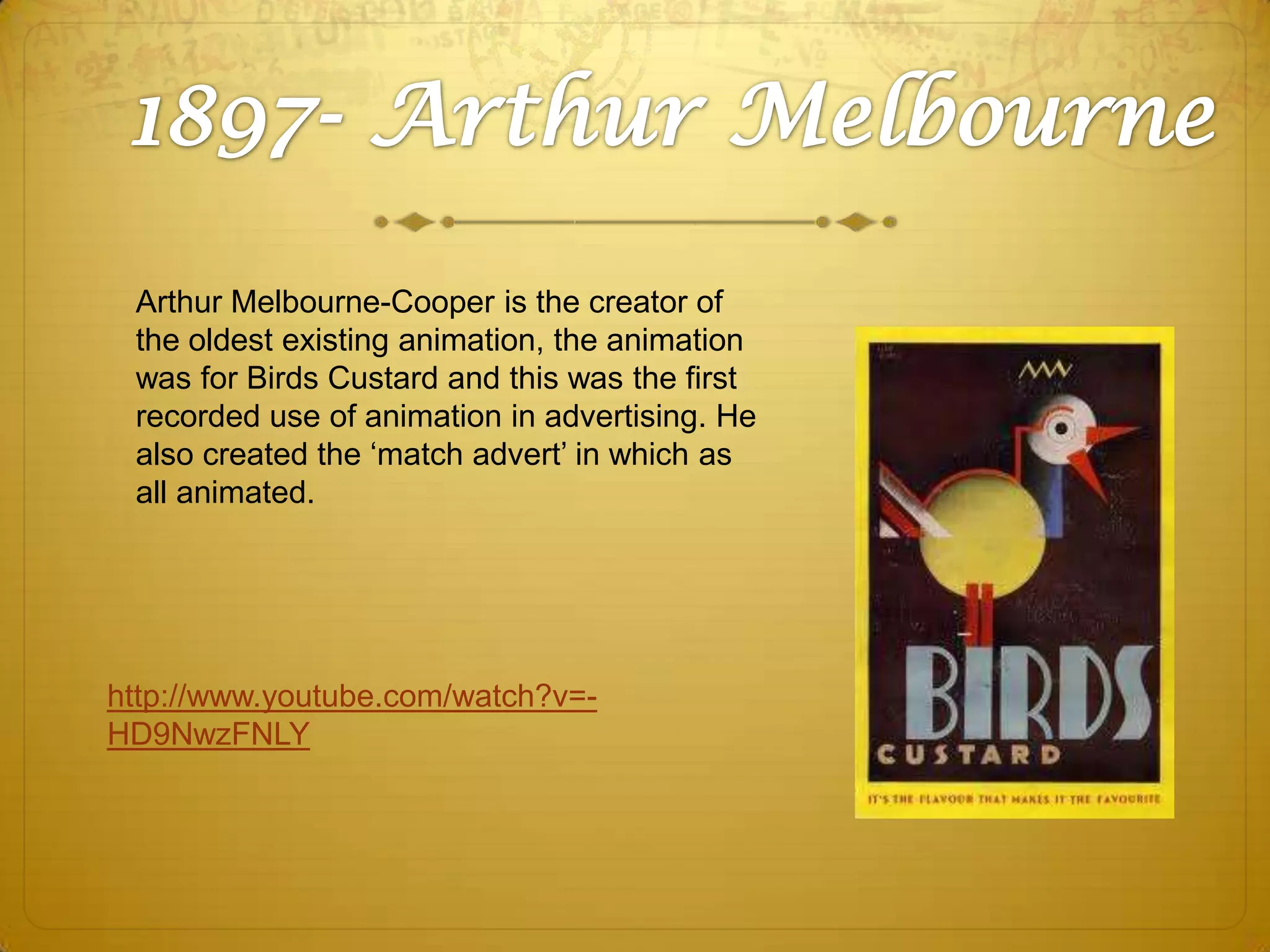
Arthur Melbourne-Cooper is the creator of
the oldest existing animation, the animation
was for Birds Custard and this was the first
recorded use of animation in advertising. He
also created the ‘match advert’ in which as
all animated.

http://www.youtube.com/watch?v=HD9NwzFNLY
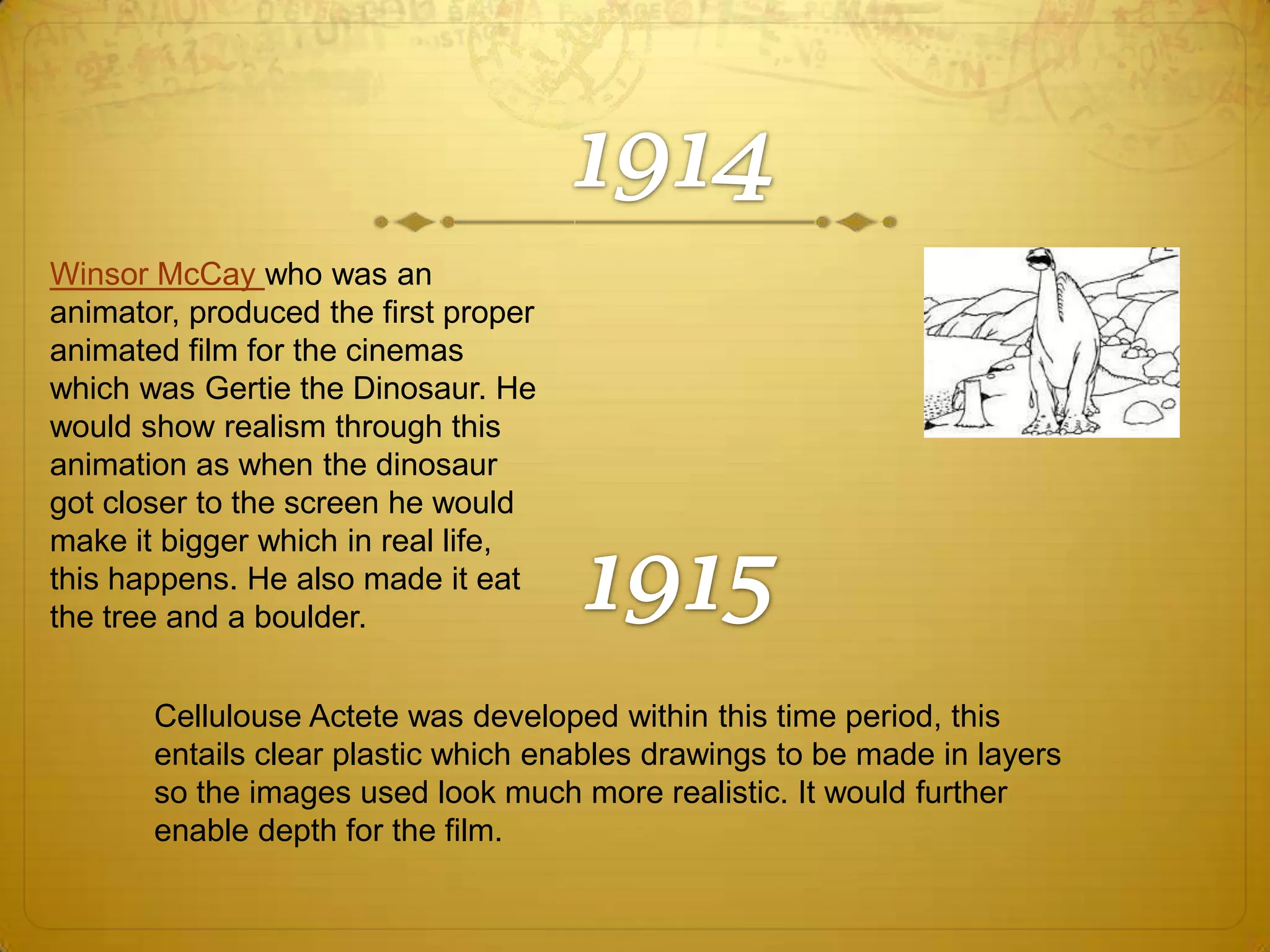
Winsor McCay who was an
animator, produced the first proper
animated film for the cinemas
which was Gertie the Dinosaur. He
would show realism through this
animation as when the dinosaur
got closer to the screen he would
make it bigger which in real life,
this happens. He also made it eat
the tree and a boulder.
Cellulouse Actete was developed within this time period, this
entails clear plastic which enables drawings to be made in layers
so the images used look much more realistic. It would further
enable depth for the film.
Within the 1920’s, sound was then further added onto films. The
sound was then synchronized onto movies. This made films a lot
more successful as individuals could then also watch and listen to
what was going on, feelings of characters could then be further
expressed through speech.

http://www.hollywoodmoviememories.com/articles/silen
t-films-articles/1920s-films-early-production.php
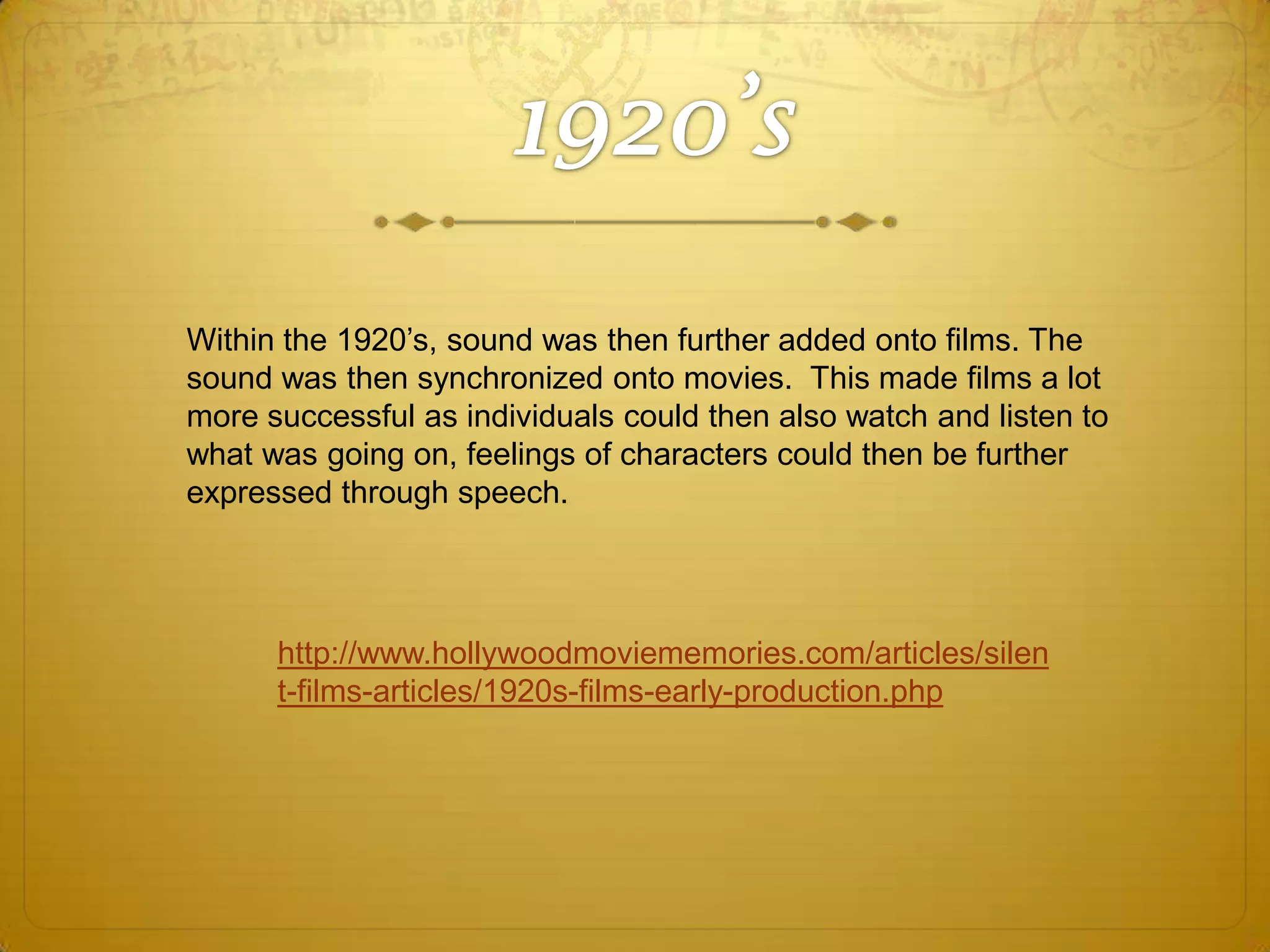
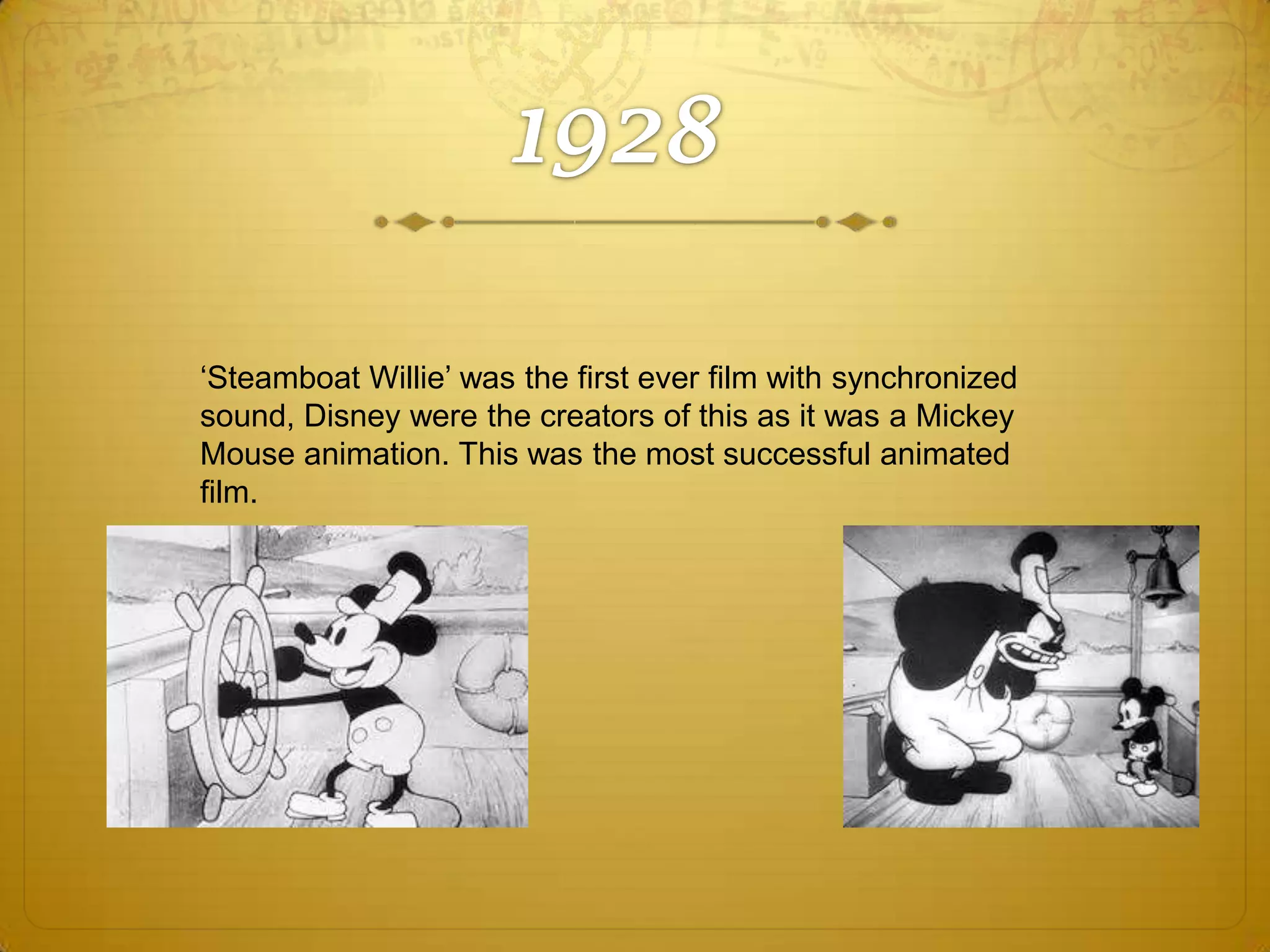
‘Steamboat Willie’ was the first ever film with synchronized
sound, Disney were the creators of this as it was a Mickey
Mouse animation. This was the most successful animated
film.
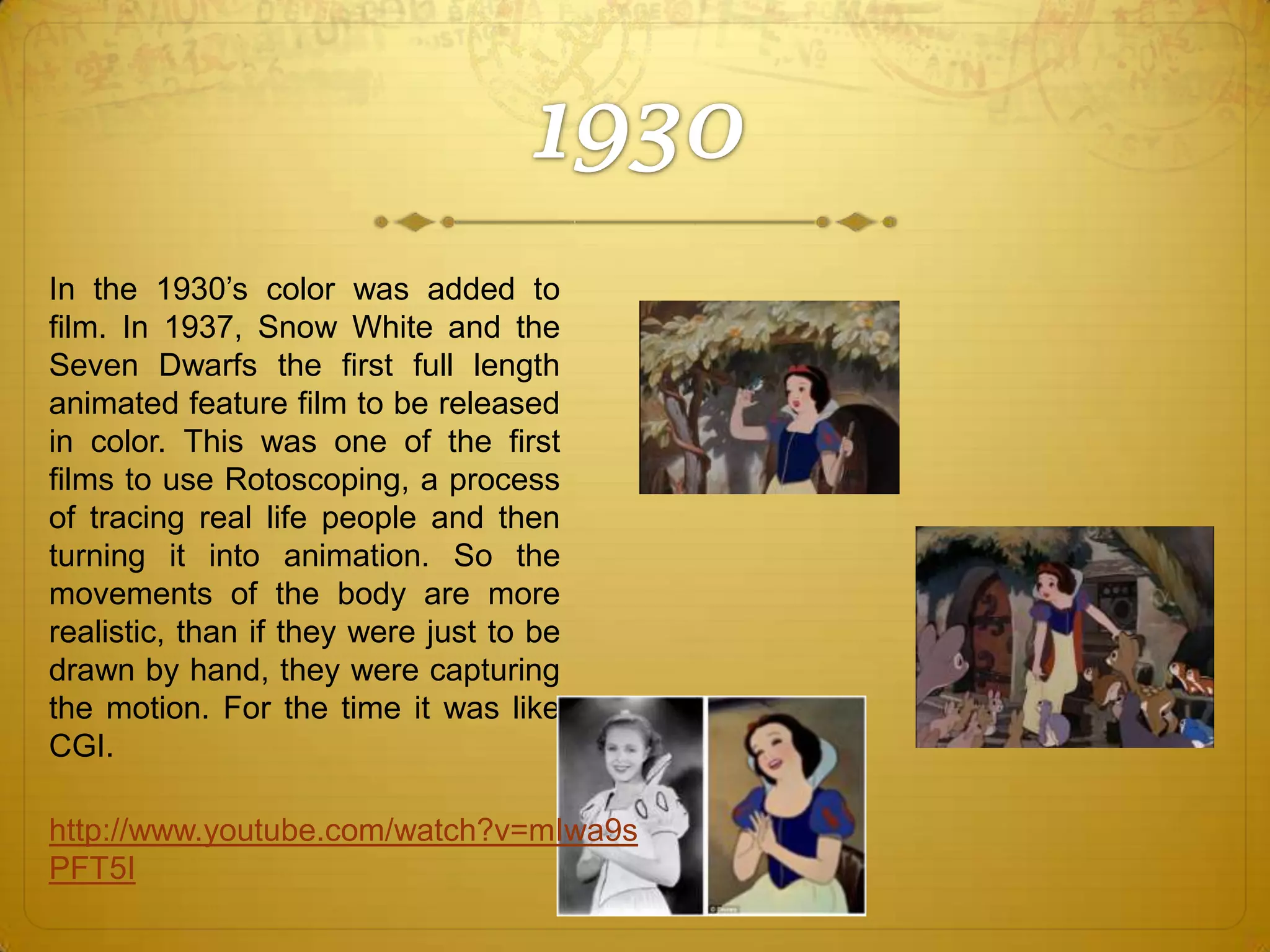
In the 1930’s color was added to
film. In 1937, Snow White and the
Seven Dwarfs the first full length
animated feature film to be released
in color. This was one of the first
films to use Rotoscoping, a process
of tracing real life people and then
turning it into animation. So the
movements of the body are more
realistic, than if they were just to be
drawn by hand, they were capturing
the motion. For the time it was like
CGI.
http://www.youtube.com/watch?v=mIwa9s
PFT5I
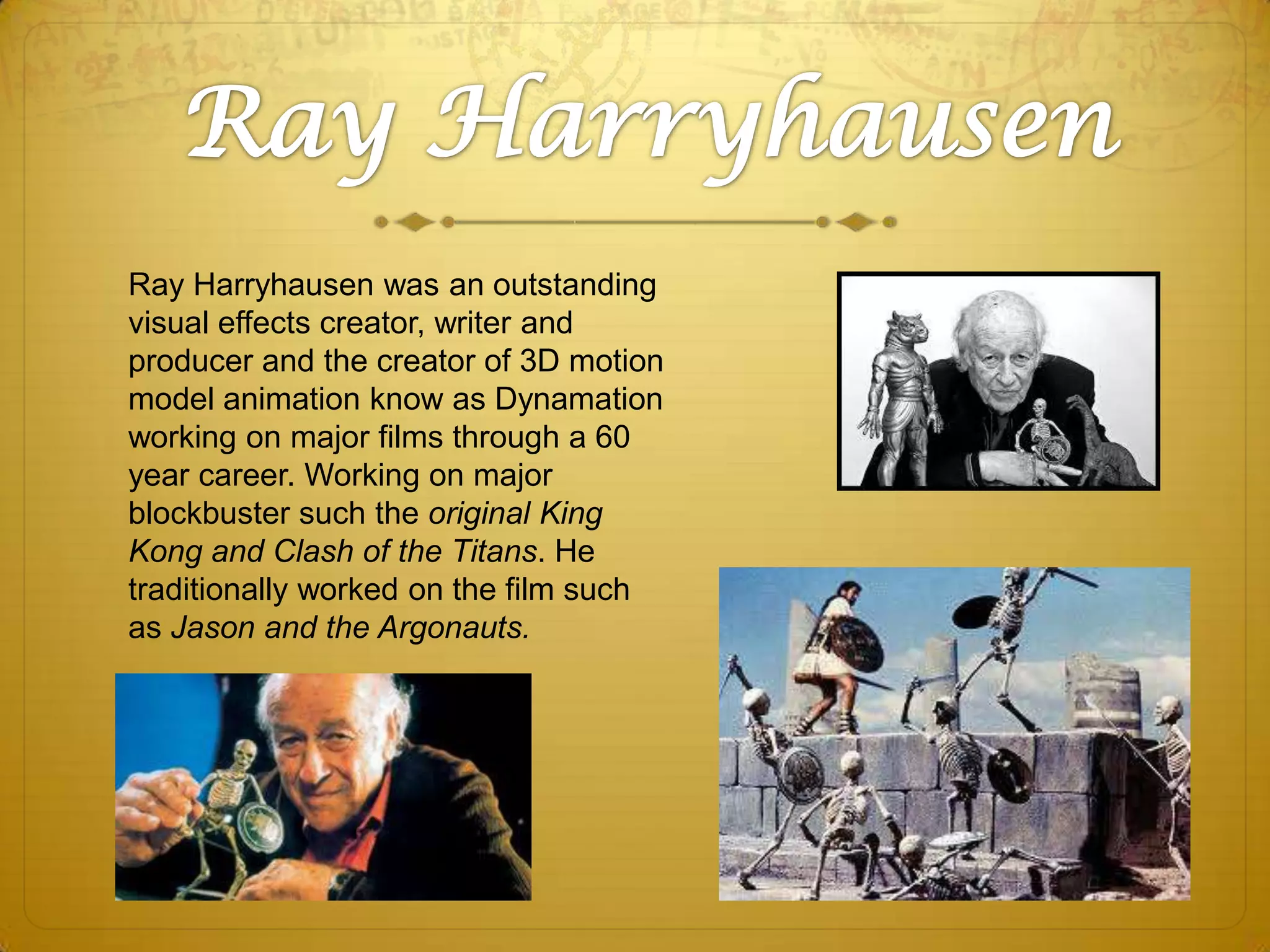
Ray Harryhausen was an outstanding
visual effects creator, writer and
producer and the creator of 3D motion
model animation know as Dynamation
working on major films through a 60
year career. Working on major
blockbuster such the original King
Kong and Clash of the Titans. He
traditionally worked on the film such
as Jason and the Argonauts.
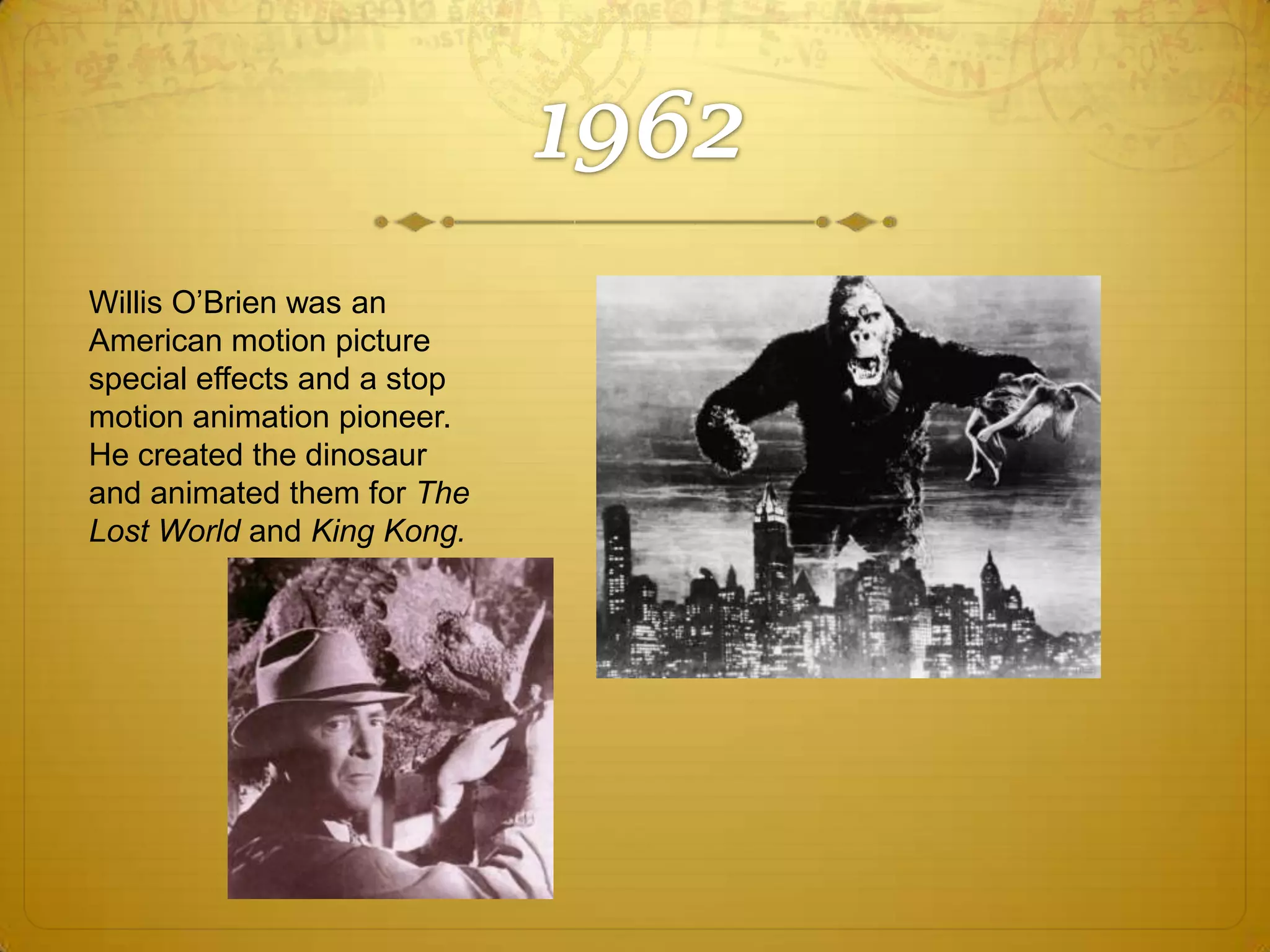
Willis O’Brien was an
American motion picture
special effects and a stop
motion animation pioneer.
He created the dinosaur
and animated them for The
Lost World and King Kong.
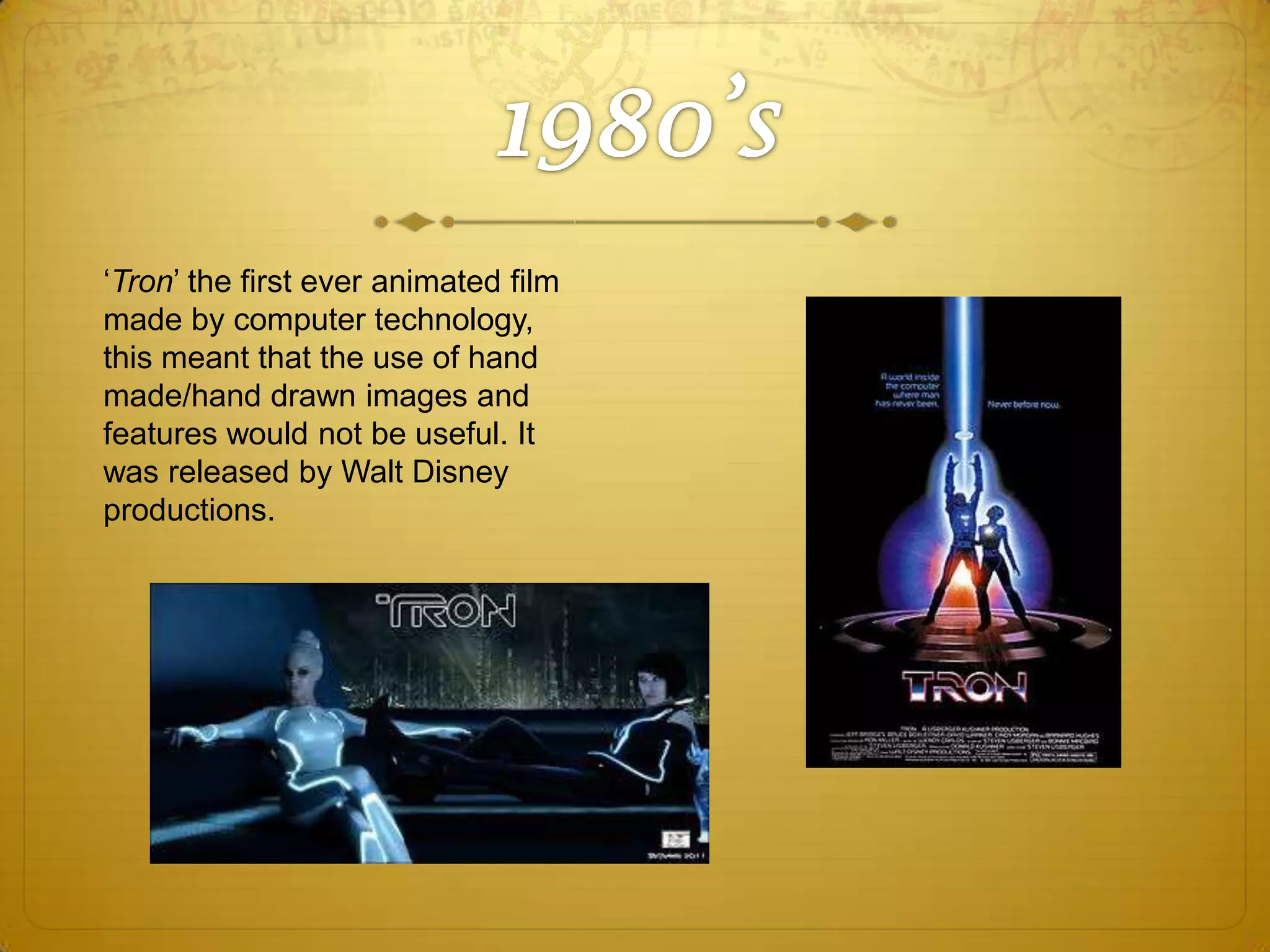
‘Tron’ the first ever animated film
made by computer technology,
this meant that the use of hand
made/hand drawn images and
features would not be useful. It
was released by Walt Disney
productions.
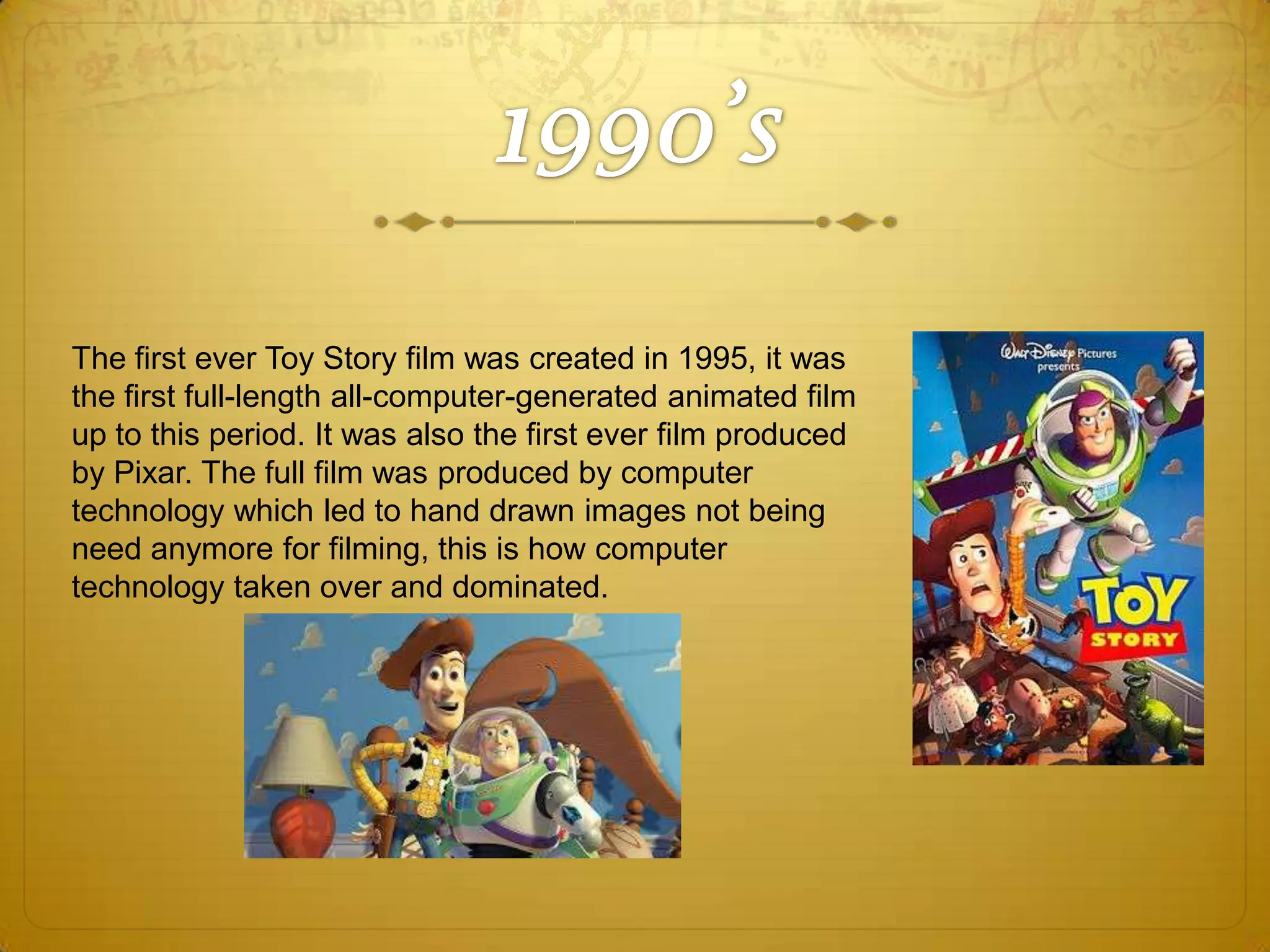
The first ever Toy Story film was created in 1995, it was
the first full-length all-computer-generated animated film
up to this period. It was also the first ever film produced
by Pixar. The full film was produced by computer
technology which led to hand drawn images not being
need anymore for filming, this is how computer
technology taken over and dominated.
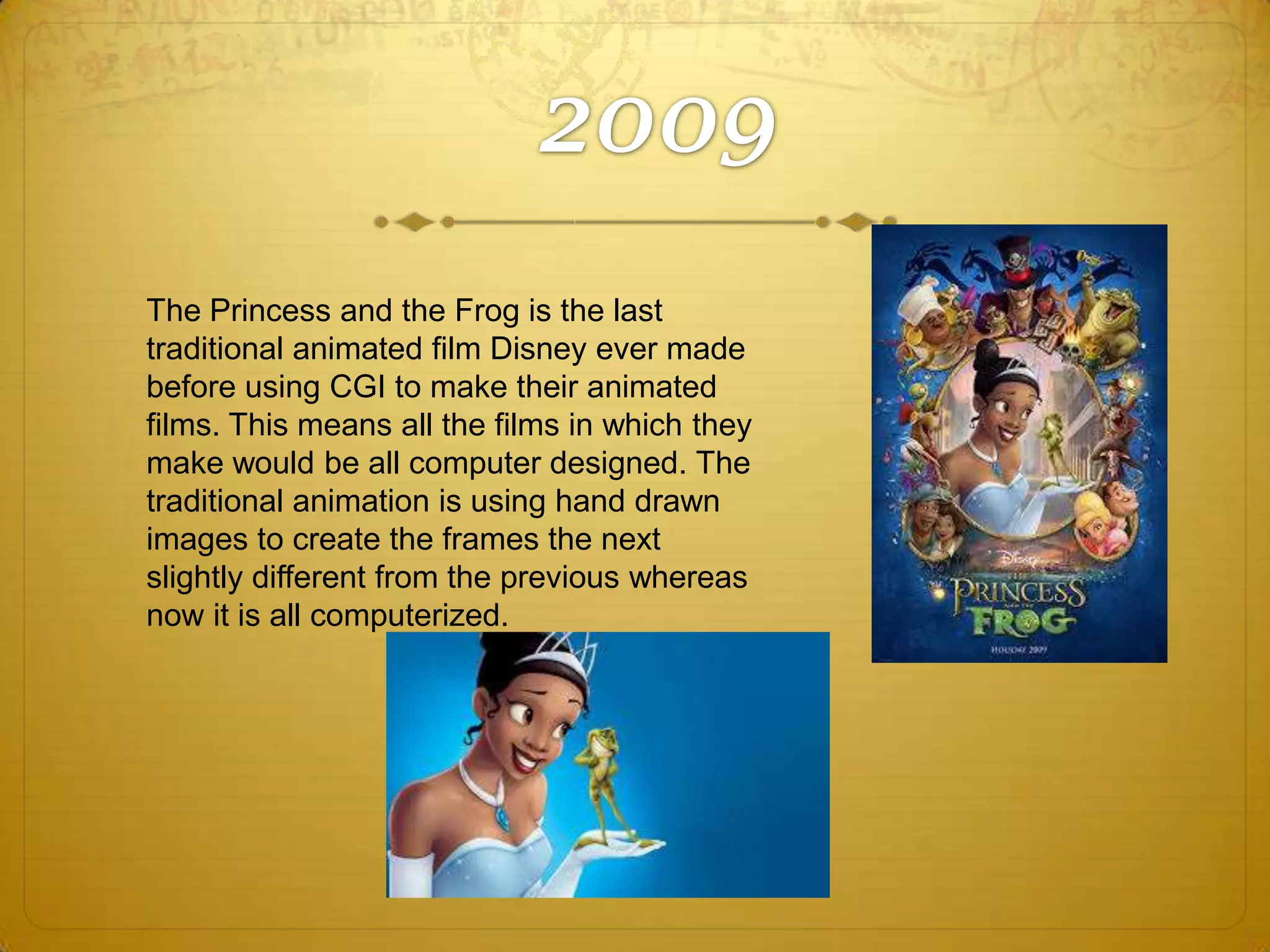
The Princess and the Frog is the last
traditional animated film Disney ever made
before using CGI to make their animated
films. This means all the films in which they
make would be all computer designed. The
traditional animation is using hand drawn
images to create the frames the next
slightly different from the previous whereas
now it is all computerized.

Animation Timeline

  • 2.
    Within this timeperiod cave paintings were established usually on the roof or the walls inside a cave. Cave paintings were famously originated within the area of France, Chauvet Cave.
  • 3.
    Shadow puppets isan old entertainment factor in which parchment paper would be used in order to tell a story. It uses flat articulated figures to create the impression of moving human’s.
  • 4.
    From the agricultureof Greece, the Greek would paint figures on vases for suitable reasons. Within this time period magic lanterns were created. They used a mirror behind the back of the light source to direct as much of the light as possible through the small sheet of glass, on which was the painted or photographic image which would be projected and onto the lens at the front.
  • 5.
    Nicéphore Niépce producedthe first ever photograph, this was an image which was taken looking out from a window which included in the image was the roofs of other houses/buildings outside. This was influential on the animation scene as it showed images can be captured leading to the creation of stop motion
  • 6.
    The first Parlorgames are invented showing invention of moving images within the home, phenakistocope and zoetrope both displayed the movement of images which shown a couple of seconds of footage. Both machines had small slots in the side of the machine to look in, which you could see the animation.
  • 7.
    Barnes Linnett inventedthe flip book which is a book of images on different pieces of paper which is then flipped by the human hand to create a short animation. Through out the book each drawing was slightly different to give the illusion that the images are all moving when flipped, they would all carry on from the one previous which would then provide you with a short animated story. The images themselves are usually hand drawn. A couple of years later Herman Casler created the Mutoscope which was a mechanical version of the flipbook by using an admission charge of a penny in which you would look into holes which you would see a short animation.
  • 8.
    Eadweard Muybridge wasa pioneer in stop motion, although he was not the formal creator he help establish this theory. As he wanted to prove that an image could be taken of a horse whilst all four limbs off the ground, he set up a series of cameras in lines on the ground so when the horse trotted past it would trigger the cameras which they would then take the image.
  • 9.
     1880’s – ÉmileReynaud (8 December 1844 – 9 January 1918) was a French pioneer and invented the Praxinoscope which was basically a spinning drum and was the successor of the Zoetrope. The Praxinoscope was invented in 1877. It still used a strip of photographs placed on the inside. In 1889 Reynaud developed the Théâtre Optique, an improved version capable of projecting the images onto a screen from a longer roll of pictures, and this allowed him to show drawn animated cartoon to larger audiences.
  • 10.
    William Harbutt inventedplastacine. After this discovery he then further went onto model animation which was Chicken Run and Wallace & Gromit. He created these characters with plastacine throughout the majority of the film.
  • 11.
    Lumieres further thenwent onto holding their first ever private screening of projected motion pictures in Paris 1845. An admission charge was also added due to it being the first ever private screening.
  • 12.
    Georges Méliès Georges Méliès(8 December 1861 – 21 January 1938). Was the creator of special effects, he was one of the first. He discovered in by accident when his camera broke down, and when he had the film developed the bus had disappeared. And he thought that if you freeze the camera, you can move something.
  • 13.
    Arthur Melbourne-Cooper isthe creator of the oldest existing animation, the animation was for Birds Custard and this was the first recorded use of animation in advertising. He also created the ‘match advert’ in which as all animated. http://www.youtube.com/watch?v=HD9NwzFNLY
  • 14.
    Winsor McCay whowas an animator, produced the first proper animated film for the cinemas which was Gertie the Dinosaur. He would show realism through this animation as when the dinosaur got closer to the screen he would make it bigger which in real life, this happens. He also made it eat the tree and a boulder. Cellulouse Actete was developed within this time period, this entails clear plastic which enables drawings to be made in layers so the images used look much more realistic. It would further enable depth for the film.
  • 15.
    Within the 1920’s,sound was then further added onto films. The sound was then synchronized onto movies. This made films a lot more successful as individuals could then also watch and listen to what was going on, feelings of characters could then be further expressed through speech. http://www.hollywoodmoviememories.com/articles/silen t-films-articles/1920s-films-early-production.php
  • 16.
    ‘Steamboat Willie’ wasthe first ever film with synchronized sound, Disney were the creators of this as it was a Mickey Mouse animation. This was the most successful animated film.
  • 17.
    In the 1930’scolor was added to film. In 1937, Snow White and the Seven Dwarfs the first full length animated feature film to be released in color. This was one of the first films to use Rotoscoping, a process of tracing real life people and then turning it into animation. So the movements of the body are more realistic, than if they were just to be drawn by hand, they were capturing the motion. For the time it was like CGI. http://www.youtube.com/watch?v=mIwa9s PFT5I
  • 18.
    Ray Harryhausen wasan outstanding visual effects creator, writer and producer and the creator of 3D motion model animation know as Dynamation working on major films through a 60 year career. Working on major blockbuster such the original King Kong and Clash of the Titans. He traditionally worked on the film such as Jason and the Argonauts.
  • 19.
    Willis O’Brien wasan American motion picture special effects and a stop motion animation pioneer. He created the dinosaur and animated them for The Lost World and King Kong.
  • 20.
    ‘Tron’ the firstever animated film made by computer technology, this meant that the use of hand made/hand drawn images and features would not be useful. It was released by Walt Disney productions.
  • 21.
    The first everToy Story film was created in 1995, it was the first full-length all-computer-generated animated film up to this period. It was also the first ever film produced by Pixar. The full film was produced by computer technology which led to hand drawn images not being need anymore for filming, this is how computer technology taken over and dominated.
  • 22.
    The Princess andthe Frog is the last traditional animated film Disney ever made before using CGI to make their animated films. This means all the films in which they make would be all computer designed. The traditional animation is using hand drawn images to create the frames the next slightly different from the previous whereas now it is all computerized.