LIVING THINGS
ANIMALS
PLANTS
OTHERS LIKE FUNGI AND
BACTERIA
ANIMALS
• Animals need water, food and right
temperature to live.
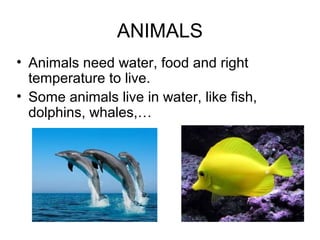
• Some animals live in water, like fish,
dolphins, whales,…
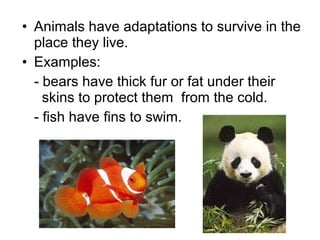
• Animals have adaptations to survive in the
place they live.
• Examples:
- bears have thick fur or fat under their
skins to protect them from the cold.
- fish have fins to swim.
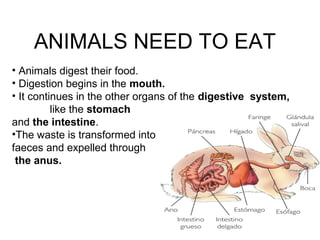
ANIMALS NEED TO EAT
• Animals digest their food.
• Digestion begins in the mouth.
• It continues in the other organs of the digestive system,
like the stomach
and the intestine.
•The waste is transformed into
faeces and expelled through
the anus.
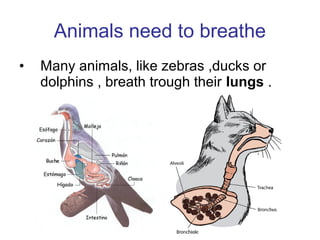
Animals need to breathe
•

Many animals, like zebras ,ducks or
dolphins , breath trough their lungs .
• Most aquatic animals, like fish , take
oxygen from water through their gills.
• Other animals , like insects, breathe
through a tracheal system.
(small tubes carry air to the different
parts of the body.)
ANIMALS CLASSIFICATION
THE FOOD THEY HAVE
Herbivores:They eat plants.
Carnivores:They eat other animals.
Omnivores:They eat palants and animals.
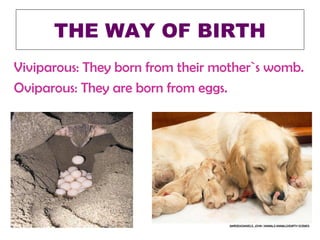
THE WAY OF BIRTH
Viviparous: They born from their mother`s womb.
Oviparous: They are born from eggs.
BONES
- VERTEBRATES .They

have bakbones.
- INVERTEBRATES. They don’t have bones.
VERTEBRATES
•
•
•
•

MAMMALS

They are born from their mother’s womb.
Mammals give milk to their young.
They have hair or fur .
They are warm blooded.
BIRDS
• They lay eggs.
• They are worm-blooded.
• They have feathers and wins.
•
•
•
•

They breathe under water using gills.
They have scales and fins.
They are cold-blooded.
They lay eggs.
REPTILES.
• They have scales and dry skin.
• They usually lay eggs.
• They are cold blooded.
Animals

Animals

  • 1.
  • 2.
  • 3.
  • 4.
    OTHERS LIKE FUNGIAND BACTERIA
  • 5.
    ANIMALS • Animals needwater, food and right temperature to live. • Some animals live in water, like fish, dolphins, whales,…
  • 6.
    • Animals haveadaptations to survive in the place they live. • Examples: - bears have thick fur or fat under their skins to protect them from the cold. - fish have fins to swim.
  • 7.
    ANIMALS NEED TOEAT • Animals digest their food. • Digestion begins in the mouth. • It continues in the other organs of the digestive system, like the stomach and the intestine. •The waste is transformed into faeces and expelled through the anus.
  • 8.
    Animals need tobreathe • Many animals, like zebras ,ducks or dolphins , breath trough their lungs .
  • 9.
    • Most aquaticanimals, like fish , take oxygen from water through their gills.
  • 10.
    • Other animals, like insects, breathe through a tracheal system. (small tubes carry air to the different parts of the body.)
  • 11.
  • 12.
    THE FOOD THEYHAVE Herbivores:They eat plants. Carnivores:They eat other animals. Omnivores:They eat palants and animals.
  • 13.
    THE WAY OFBIRTH Viviparous: They born from their mother`s womb. Oviparous: They are born from eggs.
  • 14.
    BONES - VERTEBRATES .They havebakbones. - INVERTEBRATES. They don’t have bones.
  • 15.
  • 16.
    • • • • MAMMALS They are bornfrom their mother’s womb. Mammals give milk to their young. They have hair or fur . They are warm blooded.
  • 17.
    BIRDS • They layeggs. • They are worm-blooded. • They have feathers and wins.
  • 18.
    • • • • They breathe underwater using gills. They have scales and fins. They are cold-blooded. They lay eggs.
  • 19.
    REPTILES. • They havescales and dry skin. • They usually lay eggs. • They are cold blooded.