Angoumois Grain Moth
Sitotroga cerealella
ALL PRAISE IS DUE TO ALLAH , THE LORD OF THE WORLDS, THE [ONE WHO] SUSTAINS THE HEAVENS AND EARTHS
Made by:
Arslan Ahmad
University of Agriculture Faisalabad
Sub Campus Burewala, Pakistan
blackeagle94473@gmail.com
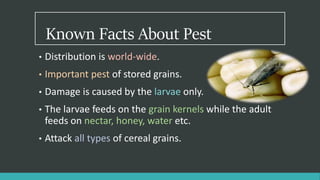
Known Facts About Pest
• Distribution is world-wide.
• Important pest of stored grains.
• Damage is caused by the larvae only.
• The larvae feeds on the grain kernels while the adult
feeds on nectar, honey, water etc.
• Attack all types of cereal grains.
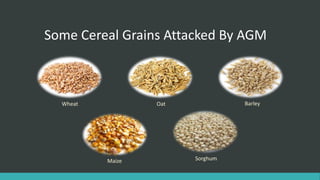
Some Cereal Grains Attacked By AGM
Wheat Oat Barley
Maize Sorghum
Identification
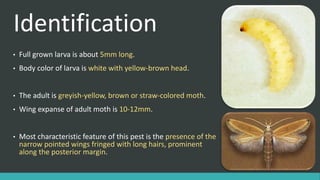
• Full grown larva is about 5mm long.
• Body color of larva is white with yellow-brown head.
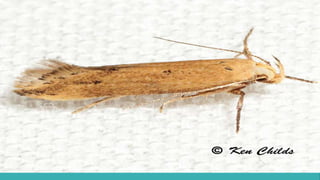
• The adult is greyish-yellow, brown or straw-colored moth.
• Wing expanse of adult moth is 10-12mm.
• Most characteristic feature of this pest is the presence of the
narrow pointed wings fringed with long hairs, prominent
along the posterior margin.
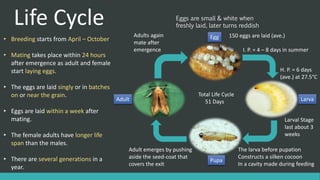
Life Cycle
Egg
Larva
Pupa
Adult
• Breeding starts from April – October
• Mating takes place within 24 hours
after emergence as adult and female
start laying eggs.
• The eggs are laid singly or in batches
on or near the grain.
• Eggs are laid within a week after
mating.
• The female adults have longer life
span than the males.
• There are several generations in a
year.
Eggs are small & white when
freshly laid, later turns reddish
150 eggs are laid (ave.)
I. P. = 4 – 8 days in summer
Larval Stage
last about 3
weeks
The larva before pupation
Constructs a silken cocoon
In a cavity made during feeding
H. P. = 6 days
(ave.) at 27.5°Ϲ
Total Life Cycle
51 Days
Adult emerges by pushing
aside the seed-coat that
covers the exit
Adults again
mate after
emergence
Damage
• Maximum damage is caused in monsoon season.
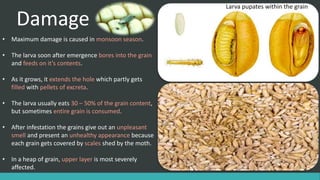
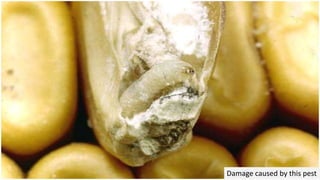
• The larva soon after emergence bores into the grain
and feeds on it’s contents.
• As it grows, it extends the hole which partly gets
filled with pellets of excreta.
• The larva usually eats 30 – 50% of the grain content,
but sometimes entire grain is consumed.
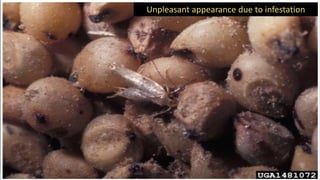
• After infestation the grains give out an unpleasant
smell and present an unhealthy appearance because
each grain gets covered by scales shed by the moth.
• In a heap of grain, upper layer is most severely
affected.
Larva pupates within the grain
Damage
Unpleasant appearance due to infestation
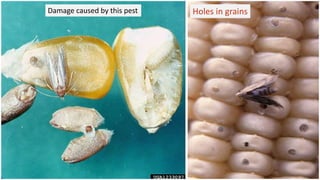
Holes in grainsDamage caused by this pest
Damage caused by this pest
Thank
You

Angoumois Grain Moth

  • 1.
    Angoumois Grain Moth Sitotrogacerealella ALL PRAISE IS DUE TO ALLAH , THE LORD OF THE WORLDS, THE [ONE WHO] SUSTAINS THE HEAVENS AND EARTHS Made by: Arslan Ahmad University of Agriculture Faisalabad Sub Campus Burewala, Pakistan blackeagle94473@gmail.com
  • 3.
    Known Facts AboutPest • Distribution is world-wide. • Important pest of stored grains. • Damage is caused by the larvae only. • The larvae feeds on the grain kernels while the adult feeds on nectar, honey, water etc. • Attack all types of cereal grains.
  • 4.
    Some Cereal GrainsAttacked By AGM Wheat Oat Barley Maize Sorghum
  • 5.
    Identification • Full grownlarva is about 5mm long. • Body color of larva is white with yellow-brown head. • The adult is greyish-yellow, brown or straw-colored moth. • Wing expanse of adult moth is 10-12mm. • Most characteristic feature of this pest is the presence of the narrow pointed wings fringed with long hairs, prominent along the posterior margin.
  • 6.
    Life Cycle Egg Larva Pupa Adult • Breedingstarts from April – October • Mating takes place within 24 hours after emergence as adult and female start laying eggs. • The eggs are laid singly or in batches on or near the grain. • Eggs are laid within a week after mating. • The female adults have longer life span than the males. • There are several generations in a year. Eggs are small & white when freshly laid, later turns reddish 150 eggs are laid (ave.) I. P. = 4 – 8 days in summer Larval Stage last about 3 weeks The larva before pupation Constructs a silken cocoon In a cavity made during feeding H. P. = 6 days (ave.) at 27.5°Ϲ Total Life Cycle 51 Days Adult emerges by pushing aside the seed-coat that covers the exit Adults again mate after emergence
  • 7.
    Damage • Maximum damageis caused in monsoon season. • The larva soon after emergence bores into the grain and feeds on it’s contents. • As it grows, it extends the hole which partly gets filled with pellets of excreta. • The larva usually eats 30 – 50% of the grain content, but sometimes entire grain is consumed. • After infestation the grains give out an unpleasant smell and present an unhealthy appearance because each grain gets covered by scales shed by the moth. • In a heap of grain, upper layer is most severely affected. Larva pupates within the grain
  • 8.
  • 9.
    Holes in grainsDamagecaused by this pest
  • 10.
  • 11.