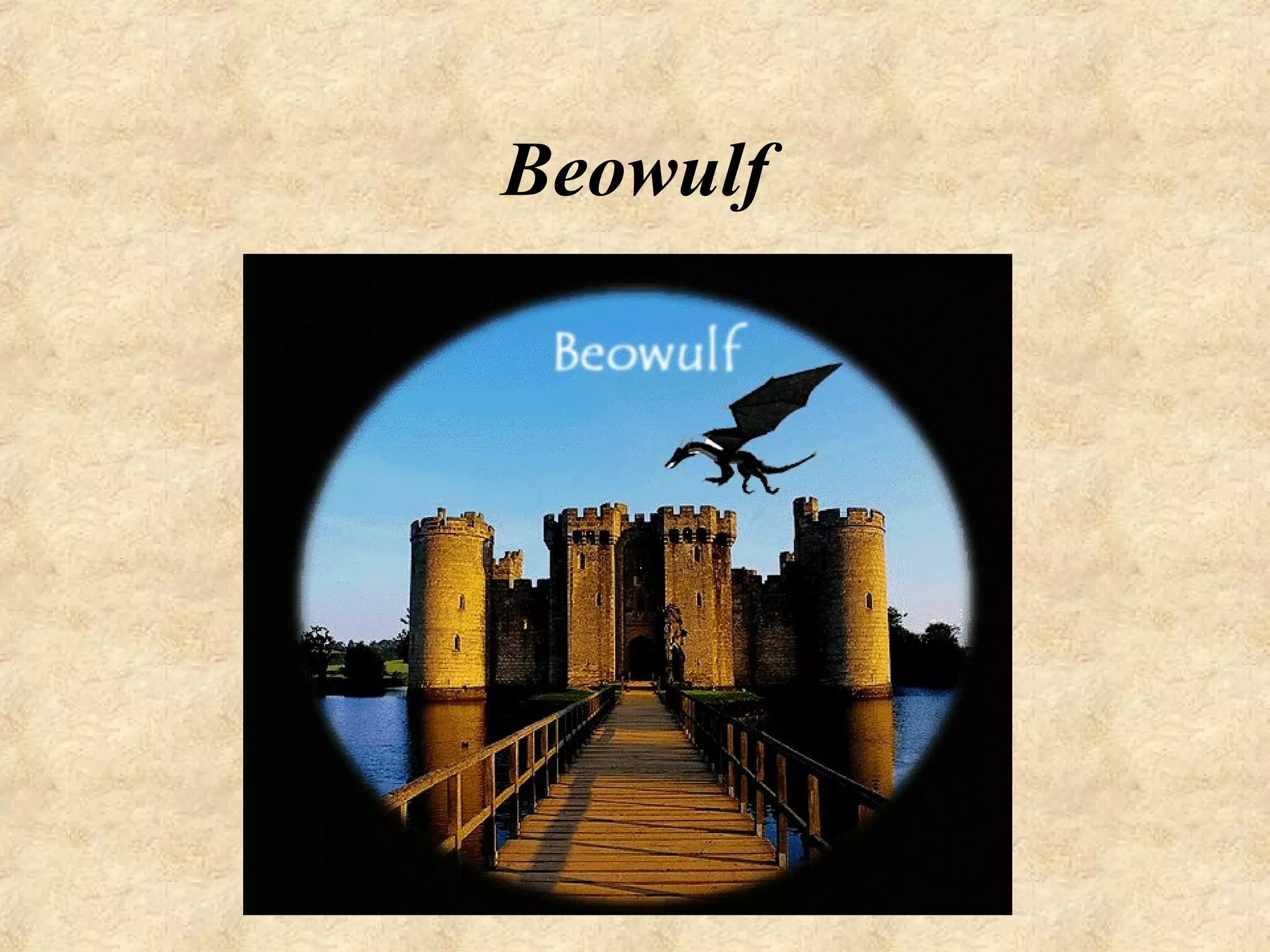
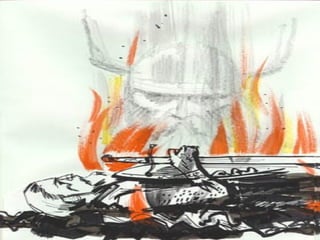
Beowulf
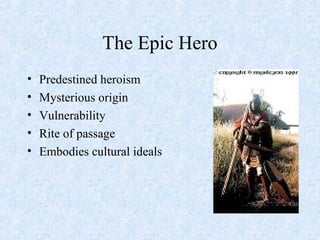
The Epic Hero
• Predestined heroism
• Mysterious origin
• Vulnerability
• Rite of passage
• Embodies cultural ideals
The Epic Hero
• Actions consist of responses to catastrophic
situations in which the supernatural often
intervenes.
• Code of conduct forces him to challenge any threat
to society
• Destiny discovered through a series of episodes
punctuated by violent incidents interspersed with
idyllic descriptions.
Epic Poem
• Long narrative poem that recounts the
adventures of a hero.
• Elevated language
• Does not sermonize
• Invokes a muse
• Begins in media res
• Mysterious origin, super powers,
vulnerability, rite of passage
Background Information
• 30,000 lines of Anglo-Saxon poetry survive
today
• 3, 182 (10%) of the lines are from Beowulf
• Setting - Denmark and Sweden
• Author - Unknown, probably a monk
• Composed in the 7th or 8th century
• Oldest surviving English poem
Elements of Anglo-Saxon Poetry
• Chant-like effect of the four-beat line
• Alliteration (“Then the grim man in green gathers
his strength”)
• Caesura-pause or break in a line of poetry
(“Oft to the wanderer weary of exile”)
• Kenning-metaphorical phrase used instead of a
name (“battle-blade” and “ring-giver”)
• Epithet-description name to characterize
something (“keen-edge sword”)
• Hyperbole-exaggeration
Anglo-Saxon Culture
• Belief in fate (Wyrd)
• Accumulated treasures amount to success
• Fame and fortune zealously sought after
• Loyalty to one’s leader crucial
• Importance of pagan, Germanic, and
Christian ideals to people whose lives were
often hard and uncertain
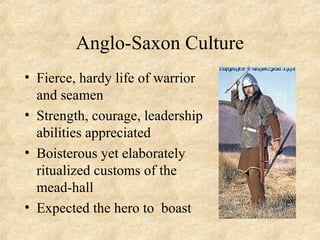
Anglo-Saxon Culture
• Fierce, hardy life of warrior
and seamen
• Strength, courage, leadership
abilities appreciated
• Boisterous yet elaborately
ritualized customs of the
mead-hall
• Expected the hero to boast
Anglo-Saxon Hero
• Strong
• Courageous
• Loyal
• Desires fame
• Generous
Anglo-Saxon Ideals
Codes of Conduct
• Good defeats evil
• Wergild--restitution for murder or expect
revenge from victim’s relatives
• Boasts must be backed with actions.
• Fate is in control
• Fair fights are the only honorable fights
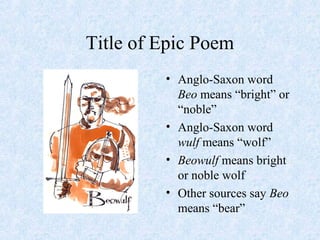
Title of Epic Poem
• Anglo-Saxon word
Beo means “bright” or
“noble”
• Anglo-Saxon word
wulf means “wolf”
• Beowulf means bright
or noble wolf
• Other sources say Beo
means “bear”
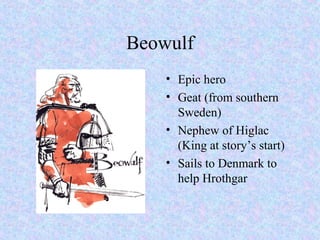
Beowulf
• Epic hero
• Geat (from southern
Sweden)
• Nephew of Higlac
(King at story’s start)
• Sails to Denmark to
help Hrothgar
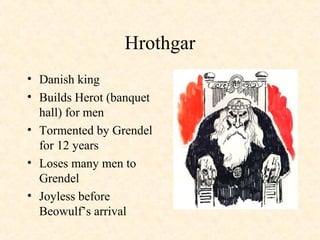
Hrothgar
• Danish king
• Builds Herot (banquet
hall) for men
• Tormented by Grendel
for 12 years
• Loses many men to
Grendel
• Joyless before
Beowulf’s arrival
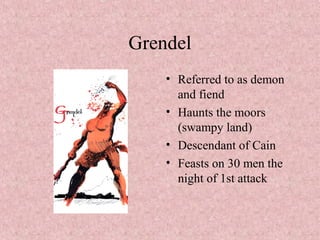
Grendel
• Referred to as demon
and fiend
• Haunts the moors
(swampy land)
• Descendant of Cain
• Feasts on 30 men the
night of 1st attack
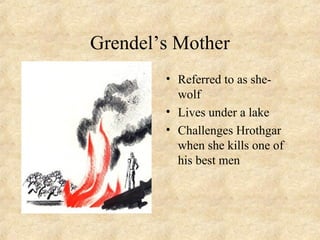
Grendel’s Mother
• Referred to as she-
wolf
• Lives under a lake
• Challenges Hrothgar
when she kills one of
his best men
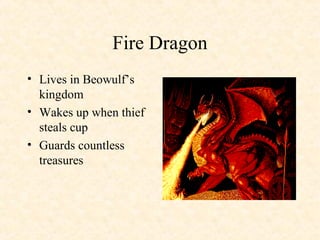
Fire Dragon
• Lives in Beowulf’s
kingdom
• Wakes up when thief
steals cup
• Guards countless
treasures
Beowulf powerpoint 2

Beowulf powerpoint 2

  • 1.
  • 2.
    The Epic Hero •Predestined heroism • Mysterious origin • Vulnerability • Rite of passage • Embodies cultural ideals
  • 3.
    The Epic Hero •Actions consist of responses to catastrophic situations in which the supernatural often intervenes. • Code of conduct forces him to challenge any threat to society • Destiny discovered through a series of episodes punctuated by violent incidents interspersed with idyllic descriptions.
  • 4.
    Epic Poem • Longnarrative poem that recounts the adventures of a hero. • Elevated language • Does not sermonize • Invokes a muse • Begins in media res • Mysterious origin, super powers, vulnerability, rite of passage
  • 5.
    Background Information • 30,000lines of Anglo-Saxon poetry survive today • 3, 182 (10%) of the lines are from Beowulf • Setting - Denmark and Sweden • Author - Unknown, probably a monk • Composed in the 7th or 8th century • Oldest surviving English poem
  • 6.
    Elements of Anglo-SaxonPoetry • Chant-like effect of the four-beat line • Alliteration (“Then the grim man in green gathers his strength”) • Caesura-pause or break in a line of poetry (“Oft to the wanderer weary of exile”) • Kenning-metaphorical phrase used instead of a name (“battle-blade” and “ring-giver”) • Epithet-description name to characterize something (“keen-edge sword”) • Hyperbole-exaggeration
  • 7.
    Anglo-Saxon Culture • Beliefin fate (Wyrd) • Accumulated treasures amount to success • Fame and fortune zealously sought after • Loyalty to one’s leader crucial • Importance of pagan, Germanic, and Christian ideals to people whose lives were often hard and uncertain
  • 8.
    Anglo-Saxon Culture • Fierce,hardy life of warrior and seamen • Strength, courage, leadership abilities appreciated • Boisterous yet elaborately ritualized customs of the mead-hall • Expected the hero to boast
  • 9.
    Anglo-Saxon Hero • Strong •Courageous • Loyal • Desires fame • Generous
  • 10.
    Anglo-Saxon Ideals Codes ofConduct • Good defeats evil • Wergild--restitution for murder or expect revenge from victim’s relatives • Boasts must be backed with actions. • Fate is in control • Fair fights are the only honorable fights
  • 11.
    Title of EpicPoem • Anglo-Saxon word Beo means “bright” or “noble” • Anglo-Saxon word wulf means “wolf” • Beowulf means bright or noble wolf • Other sources say Beo means “bear”
  • 12.
    Beowulf • Epic hero •Geat (from southern Sweden) • Nephew of Higlac (King at story’s start) • Sails to Denmark to help Hrothgar
  • 13.
    Hrothgar • Danish king •Builds Herot (banquet hall) for men • Tormented by Grendel for 12 years • Loses many men to Grendel • Joyless before Beowulf’s arrival
  • 14.
    Grendel • Referred toas demon and fiend • Haunts the moors (swampy land) • Descendant of Cain • Feasts on 30 men the night of 1st attack
  • 15.
    Grendel’s Mother • Referredto as she- wolf • Lives under a lake • Challenges Hrothgar when she kills one of his best men
  • 16.
    Fire Dragon • Livesin Beowulf’s kingdom • Wakes up when thief steals cup • Guards countless treasures