Anger Management: What
Triggers It and How to
Manage It
www.unitedcommunitysolution.c
om
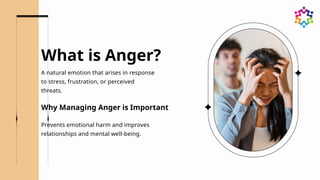
A natural emotion that arises in response
to stress, frustration, or perceived
threats.
What is Anger?
Why Managing Anger is Important
Prevents emotional harm and improves
relationships and mental well-being.
Common Triggers of Anger
• Internal Triggers: Negative self-talk, unmet expectations, insecurities.
• External Triggers: Arguments, conflicts, perceived unfairness.
• Emotional Triggers: Stress, anxiety, past trauma.
Recognizing the Warning
Signs
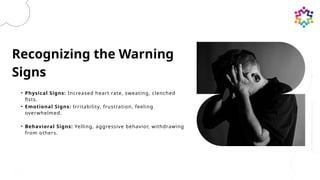
• Physical Signs: Increased heart rate, sweating, clenched
fists.
• Emotional Signs: Irritability, frustration, feeling
overwhelmed.
• Behavioral Signs: Yelling, aggressive behavior, withdrawing
from others.
Short-Term Anger
Management Techniques
Immediate Steps to Calm Down:
• Take a timeout and step away from the situation.
• Internalized Shame: Reduces self-esteem and hope for recovery.
• Count to ten or longer if necessary.
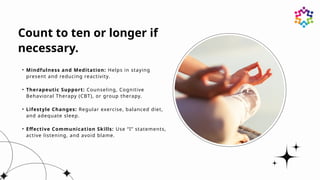
Count to ten or longer if
necessary.
• Mindfulness and Meditation: Helps in staying
present and reducing reactivity.
• Therapeutic Support: Counseling, Cognitive
Behavioral Therapy (CBT), or group therapy.
• Lifestyle Changes: Regular exercise, balanced diet,
and adequate sleep.
• Effective Communication Skills: Use “I” statements,
active listening, and avoid blame.
Benefits of Managing Anger
Improved Relationships: Better communication and trust-building
Enhanced Emotional Health: Reduced stress, anxiety, and depression.
Greater Self-Control: Increased confidence and resilience.
How UCS Helps in Anger Management
• Comprehensive Anger Management Programs: Individual and group
therapy tailored to client needs.
• Evidence-Based Methods: Techniques such as CBT and mindfulness
training.
• Supportive Environment: Safe and non-judgmental space for healing.
• Holistic Approach: Addressing underlying triggers, lifestyle habits,
and emotional regulation.
Recognizing and managing anger is essential for
personal growth and healthier relationships. Seek
help if anger feels uncontrollable. Professional
support can make a significant difference.
unitedcommunitysolution.co
m
+1757-410-
2644
Reach out to UCS for expert anger management
support today..
info@unitedcommunitysolution.c
om

Anger Management: Common Triggers and Effective Solutions | UCS

  • 1.
    Anger Management: What TriggersIt and How to Manage It www.unitedcommunitysolution.c om
  • 2.
    A natural emotionthat arises in response to stress, frustration, or perceived threats. What is Anger? Why Managing Anger is Important Prevents emotional harm and improves relationships and mental well-being.
  • 3.
    Common Triggers ofAnger • Internal Triggers: Negative self-talk, unmet expectations, insecurities. • External Triggers: Arguments, conflicts, perceived unfairness. • Emotional Triggers: Stress, anxiety, past trauma.
  • 4.
    Recognizing the Warning Signs •Physical Signs: Increased heart rate, sweating, clenched fists. • Emotional Signs: Irritability, frustration, feeling overwhelmed. • Behavioral Signs: Yelling, aggressive behavior, withdrawing from others.
  • 5.
    Short-Term Anger Management Techniques ImmediateSteps to Calm Down: • Take a timeout and step away from the situation. • Internalized Shame: Reduces self-esteem and hope for recovery. • Count to ten or longer if necessary.
  • 6.
    Count to tenor longer if necessary. • Mindfulness and Meditation: Helps in staying present and reducing reactivity. • Therapeutic Support: Counseling, Cognitive Behavioral Therapy (CBT), or group therapy. • Lifestyle Changes: Regular exercise, balanced diet, and adequate sleep. • Effective Communication Skills: Use “I” statements, active listening, and avoid blame.
  • 7.
    Benefits of ManagingAnger Improved Relationships: Better communication and trust-building Enhanced Emotional Health: Reduced stress, anxiety, and depression. Greater Self-Control: Increased confidence and resilience.
  • 8.
    How UCS Helpsin Anger Management • Comprehensive Anger Management Programs: Individual and group therapy tailored to client needs. • Evidence-Based Methods: Techniques such as CBT and mindfulness training. • Supportive Environment: Safe and non-judgmental space for healing. • Holistic Approach: Addressing underlying triggers, lifestyle habits, and emotional regulation.
  • 9.
    Recognizing and managinganger is essential for personal growth and healthier relationships. Seek help if anger feels uncontrollable. Professional support can make a significant difference. unitedcommunitysolution.co m +1757-410- 2644 Reach out to UCS for expert anger management support today.. info@unitedcommunitysolution.c om