SK,stc, Bhopal
Welcomes
U all
Welcome 1
What is Anger ?
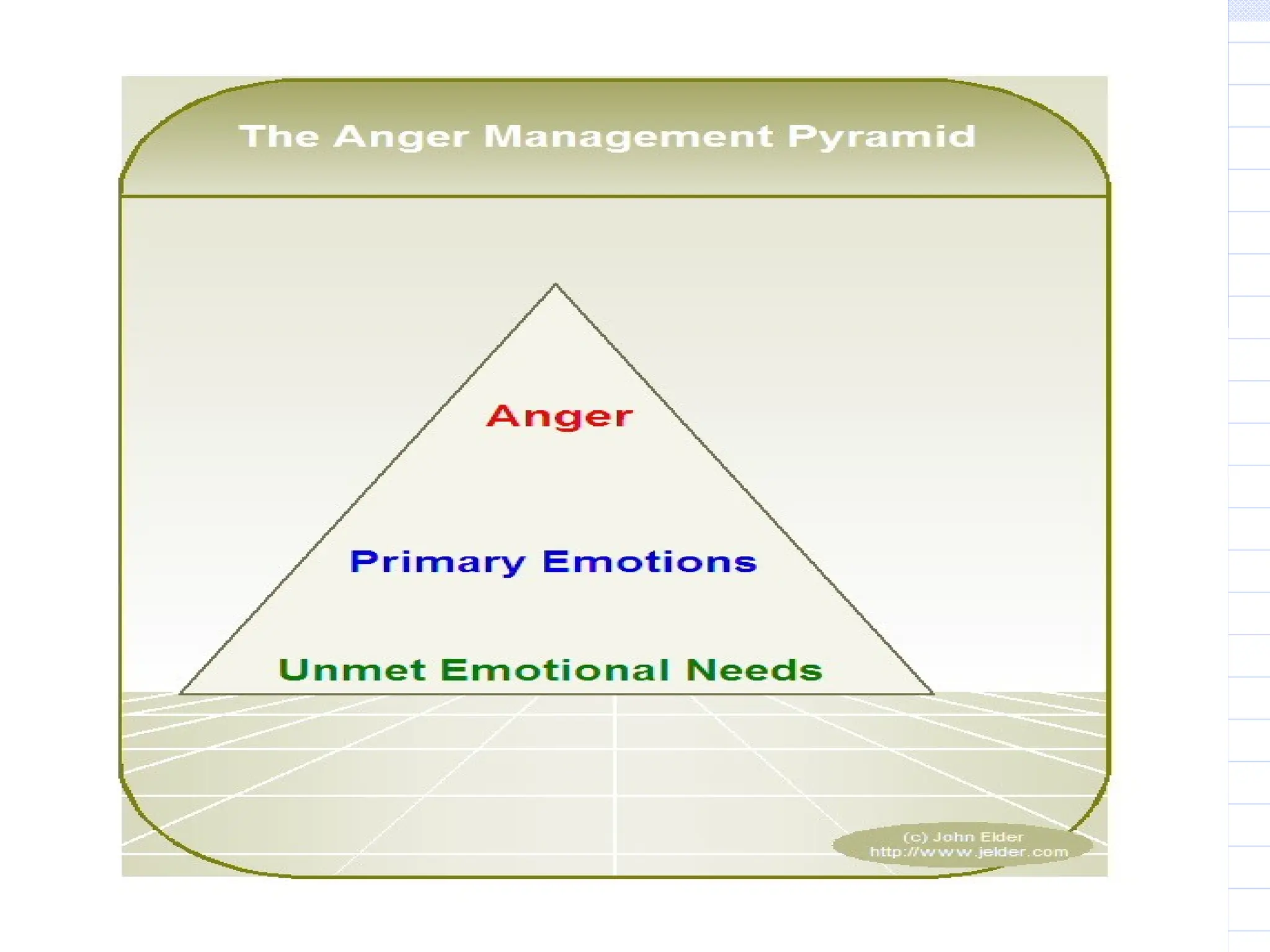
Anger is a secondary emotion.
Another emotion, such as fear, frustration,
anxiety, sorrow, or feeling diminished,
inevitably precedes the experience of anger.
Generally, anger replaces these primary
emotions so quickly that we never notice
them. Beneath the primary emotions lie
unmet needs.
Anger Management
. Anger is an emotion that either controls
us or helps us to succeed in life. If we have
negative thoughts most likely when a
threat hits our emotion, we will explode.
We should keep on primary source of anger i.e
unmet desire. Once the needs are identified, an
individual can constructively work to get them met
or can practice self-soothing and avoid blowing
up into anger or rage.
Anger
Anger is not the problem. Out of
control anger is the problem. When a
person is angry is often a result of
threatened emotions, such as hurt of
our self-importance, rejections,
difficult to deal with prospects, and
antagonistic flight of the imaginations
Anger
The purpose of your anger is to protect
us. If you couldn’t feel anger, you would
be at a big disadvantage.
But like any powerful tool, you need to
know how to use it. There are two
general ways in which your anger can
hurt you and those you love. I call
these explosion and suppression.
Anger Management
Explosion is basically reacting while the
angry energy passing through you is too
hot to allow you to think. The part of
your brain that can think, the cerebral
cortex is kept out of the loop. You are
actually operating from the early
warning part of our brain, the limbic
system, which is fast but not very smart
about what’s actually going on.
Anger Management
That part of your brain is meant to give
you a jump on things. It was never
meant to handle anything complex. I
help you get the cerebral cortex back in
charge. Your first priority however,
needs to be damage control by avoiding
the explosion. Try a deep breath or two
to avoid reacting before you regain
control.
Anger Management
Suppression is where you are so
unwilling to admit that you are angry,
that you stuff your feelings down inside.
When you do that, the anger does not
go away, but only goes underground.
You do not lose the anger, you only lose
track of it. Even though you may have
told yourself that what happened
doesn’t matter, your unconscious knows
better.
Anger Management
Suppressed anger can go several ways. It
can cause you to turn off, to shut down as
far as your feelings towards the people
around you. It can also form into
landmines which are prone to be triggered
and to ambush the people around you.
Chronic unresolved anger has been
implicated in numerous serious physical
health problems. Even though it can be
very unpleasant to admit to yourself just
how angry you are, identifying the depth
of your feelings can be a major step
towards ridding yourself of anger.
Anger Management
A very important part of anger
management is to sort through how much
of your anger really comes from what is
happening now and how much is baggage
from your past. If you are carrying around
anger from the past, people will trigger it
now. You cannot solve that problem by
beating on the current people in your life.
You can solve it by learning what your
triggers are and disarming them
Anger Management
There is two general ways in which that
anger can hurt us and those we love:-
1. Explosion: In this, cerebral cortex part
which can think does not operate. Limbic
System operate which is fast but not
smart enough to think.
2. Suppression:- Is unwillingness to admit
that we are angry. It does not go out but
goes to underground. Our unconcious
know it better.
Anger Management
Suppressed anger can go several ways:-1.
It can shut down us
2.Chronic unresolved anger
Very important part of anger
management is to know what is
happening now and what has happened
in past. If problem is because of past
baggage, beating the current people will
harm and trigger new problems
Anger Management-what
can be done
Self Control, Understand the situation ;
Give example of wife and husband
Some anger person can walk and relieve
tension
Some activities: Self talk, Count 10 to 15,
Drink water, Playing Music, writing , Art,
Running. The best course available is to
keep in touch of feeling. Dance is great for
relieving tension. Dance is natural source
of getting in touch of feeling.
Anger Management-what
can be done
Try a deep breath or two to avoid
reacting before you regain control.
Crying is good for relieving stress and
anger; however this is not always
suitable for everyone.
In case of mental illness it is necessary
to consult mental health expert
Anger Management
IQ bears little relationship to success or
happiness in life.
"emotional intelligence"-- the ability to relate to
one's self and to others in a perceptive way
Emotional intelligence is a cornerstone of anger
management, stress management, and effective
communication. The process of examining one's
self during an anger management class helps to
improve emotional intelligence.
Anger Management aim to raise the emotional
intelligence levels of people who take them.
ANGER
Anger will never disappear so long as
thoughts of resentment are cherished in
the mind. Anger will disappear just as
soon as thoughts of resentment are
forgotten. -Buddha

ANGER
One minute of Anger you lose
opportunity of 60 seconds of
happiness.
Anger Management.ppt                                           why

Anger Management.ppt why

  • 1.
  • 2.
    What is Anger? Anger is a secondary emotion. Another emotion, such as fear, frustration, anxiety, sorrow, or feeling diminished, inevitably precedes the experience of anger. Generally, anger replaces these primary emotions so quickly that we never notice them. Beneath the primary emotions lie unmet needs.
  • 5.
    Anger Management . Angeris an emotion that either controls us or helps us to succeed in life. If we have negative thoughts most likely when a threat hits our emotion, we will explode. We should keep on primary source of anger i.e unmet desire. Once the needs are identified, an individual can constructively work to get them met or can practice self-soothing and avoid blowing up into anger or rage.
  • 6.
    Anger Anger is notthe problem. Out of control anger is the problem. When a person is angry is often a result of threatened emotions, such as hurt of our self-importance, rejections, difficult to deal with prospects, and antagonistic flight of the imaginations
  • 7.
    Anger The purpose ofyour anger is to protect us. If you couldn’t feel anger, you would be at a big disadvantage. But like any powerful tool, you need to know how to use it. There are two general ways in which your anger can hurt you and those you love. I call these explosion and suppression.
  • 8.
    Anger Management Explosion isbasically reacting while the angry energy passing through you is too hot to allow you to think. The part of your brain that can think, the cerebral cortex is kept out of the loop. You are actually operating from the early warning part of our brain, the limbic system, which is fast but not very smart about what’s actually going on.
  • 9.
    Anger Management That partof your brain is meant to give you a jump on things. It was never meant to handle anything complex. I help you get the cerebral cortex back in charge. Your first priority however, needs to be damage control by avoiding the explosion. Try a deep breath or two to avoid reacting before you regain control.
  • 10.
    Anger Management Suppression iswhere you are so unwilling to admit that you are angry, that you stuff your feelings down inside. When you do that, the anger does not go away, but only goes underground. You do not lose the anger, you only lose track of it. Even though you may have told yourself that what happened doesn’t matter, your unconscious knows better.
  • 11.
    Anger Management Suppressed angercan go several ways. It can cause you to turn off, to shut down as far as your feelings towards the people around you. It can also form into landmines which are prone to be triggered and to ambush the people around you. Chronic unresolved anger has been implicated in numerous serious physical health problems. Even though it can be very unpleasant to admit to yourself just how angry you are, identifying the depth of your feelings can be a major step towards ridding yourself of anger.
  • 12.
    Anger Management A veryimportant part of anger management is to sort through how much of your anger really comes from what is happening now and how much is baggage from your past. If you are carrying around anger from the past, people will trigger it now. You cannot solve that problem by beating on the current people in your life. You can solve it by learning what your triggers are and disarming them
  • 13.
    Anger Management There istwo general ways in which that anger can hurt us and those we love:- 1. Explosion: In this, cerebral cortex part which can think does not operate. Limbic System operate which is fast but not smart enough to think. 2. Suppression:- Is unwillingness to admit that we are angry. It does not go out but goes to underground. Our unconcious know it better.
  • 14.
    Anger Management Suppressed angercan go several ways:-1. It can shut down us 2.Chronic unresolved anger Very important part of anger management is to know what is happening now and what has happened in past. If problem is because of past baggage, beating the current people will harm and trigger new problems
  • 15.
    Anger Management-what can bedone Self Control, Understand the situation ; Give example of wife and husband Some anger person can walk and relieve tension Some activities: Self talk, Count 10 to 15, Drink water, Playing Music, writing , Art, Running. The best course available is to keep in touch of feeling. Dance is great for relieving tension. Dance is natural source of getting in touch of feeling.
  • 16.
    Anger Management-what can bedone Try a deep breath or two to avoid reacting before you regain control. Crying is good for relieving stress and anger; however this is not always suitable for everyone. In case of mental illness it is necessary to consult mental health expert
  • 17.
    Anger Management IQ bearslittle relationship to success or happiness in life. "emotional intelligence"-- the ability to relate to one's self and to others in a perceptive way Emotional intelligence is a cornerstone of anger management, stress management, and effective communication. The process of examining one's self during an anger management class helps to improve emotional intelligence. Anger Management aim to raise the emotional intelligence levels of people who take them.
  • 19.
    ANGER Anger will neverdisappear so long as thoughts of resentment are cherished in the mind. Anger will disappear just as soon as thoughts of resentment are forgotten. -Buddha
  • 20.
    ANGER One minute ofAnger you lose opportunity of 60 seconds of happiness.