- have no nucleus
            - have no membrane-bound organelles
            - make up the kingdoms Monera (bacteria) and Archaea
                [See more info on The Six Kingdoms]
            - prokaryotes are more primitive than eukaryotes
            - cells have a single circular chromosome
            - have ribosomes surrounded by a cell membrane and a cell wall
            - may have photosynthetic pigments (i.e. cyanobacteria)
            - some prokaryotes have an external flagellum for locomotion or pili for adhesion
            - shapes: baccilli (rods), cocci (round), spirilla (helical)
            - prokaryotes were the first forms of life on earth, evolving over 3.5 billion years ago
Prokaryotic Structure
  Internally, prokaryotes have a simple internal structure, and no membrane-bound organelles.
  Nucleoid – DNA in the cell is generally found in this central region. Though it isn't surrounded by a membrane, it
is visibly separate from the rest of the cell interior.
  Ribosomes – Ribosomes make the cytoplasm of prokaryotes look granular appearance in electron micrographs.
They are smaller than ribosomes in eukaryotic cells, but they do the same job of translating the genetic message in
messenger RNA so as to produce proteins.
  Storage granules – Nutrients may be stored in the cytoplasm in the form of lipids, glycogen , polyphosphate (and
sometimes sulfur or nitrogen).
  Endospore - Some prokaryotes form spores that are very resistant to drought, high temperatures and other hazards
of nature. Once the hazard is removed, the spore germinates to create a new prokaryotes.
  Externally, prokaryotes have some or all of the following structures:
  Capsule – Protective layer of polysaccharides (and sometimes proteins) around the cell. It is often associated with
pathogenic bacteria because it serves as a barrier against phagocytosis by leukocytes (white blood cells).


                                                         Outer membrane – This lipid bilayer is found in Gram
                                                       negative bacteria and is the source of lipopolysaccharide
                                                       (LPS) in these bacteria. LPS is toxic.
                                                         Cell wall – The cell wall maintains the overall shape of a
                                                       prokaryotic cell. It is made up of peptidoglycan
                                                       (polysaccharides and protein). The three primary shapes in
                                                       bacteria are coccus (round), bacillus (rods) and spirillum
                                                       (spiral or helical). Mycoplasma are bacteria that have no cell
                                                       wall and therefore have no definite shape.
                                                         Periplasmic space – This is found only in prokaryotes with
                                                       both an outer membrane and plasma membrane (i.e. Gram
                                                       negative bacteria). In the space between the two membranes
                                                       are enzymes and other proteins that help digest and move
                                                       nutrients into the cell.
                                                         Plasma membrane – This is a lipid bilayer similar to the
                                                       plasma membrane of other cells. There are numerous proteins
                                                       moving in or on this layer that transport waste, ions, and
                                                       nutrients across the membrane.


   Appendages: prokaryotes may have the following appendages:
  Pili – These are hollow, hair-like extensions made of protein allow prokaryotes to attach to other cells. One
particular type, the sex pilus, allows the transfer of DNA from one prokaryote to another. Pili are also called
fimbriae.
  Flagella - Flagella are long appendages which rotate by means of a "motor" located just under the cytoplasmic
membrane. They are used to move the cell around. Prokaryotes may have one, a few, or many flagella in different
places on the cell.
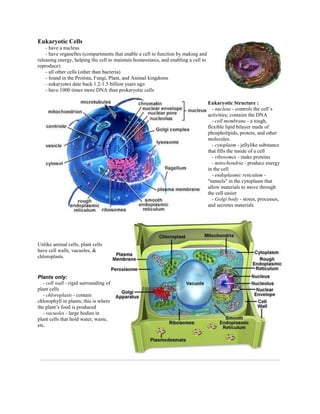
Eukaryotic Cells
    - have a nucleus
    - have organelles (compartments that enable a cell to function by making and
releasing energy, helping the cell to maintain homeostasis, and enabling a cell to
reproduce)
    - all other cells (other than bacteria)
    - found in the Protista, Fungi, Plant, and Animal kingdoms
    - eukaryotes date back 1.2-1.5 billion years ago
    - have 1000 times more DNA than prokaryotic cells

                                                                                     Eukaryotic Structure :
                                                                                       - nucleus - controls the cell’s
                                                                                     activities; contains the DNA
                                                                                       - cell membrane - a tough,
                                                                                     flexible lipid bilayer made of
                                                                                     phospholipids, protein, and other
                                                                                     molecules.
                                                                                       - cytoplasm - jellylike substance
                                                                                     that fills the inside of a cell
                                                                                       - ribosomes - make proteins
                                                                                       - mitochondria - produce energy
                                                                                     in the cell
                                                                                       - endoplasmic reticulum -
                                                                                     "tunnels" in the cytoplasm that
                                                                                     allow materials to move through
                                                                                     the cell easier
                                                                                       - Golgi body - stores, processes,
                                                                                     and secretes materials


Unlike animal cells, plant cells
have cell walls, vacuoles, &
chloroplasts.


Plants only:
   - cell wall - rigid surrounding of
plant cells
   - chloroplasts - contain
chlorophyll in plants; this is where
the plant’s food is produced
   - vacuoles - large bodies in
plant cells that hold water, waste,
etc.
Theories on the origin of eukaryotic organelles:
   The two major theories are Endosymbiosis and Autogenous models.

   Endosymbiotis theory:
      > This is the most popular scientific theory was first attributed to Lynn Margulis, though related concepts by
others (i.e. Mereschkowsky) have been around for years.
      > It is theorized that a larger anaerobic prokaryotic cell “swallowed” a smaller aerobic one, and the aerobic
prokaryote became an organelle ... a mitochondrion ... of the larger


cell.

Angelica

  • 1.
    - have nonucleus - have no membrane-bound organelles - make up the kingdoms Monera (bacteria) and Archaea [See more info on The Six Kingdoms] - prokaryotes are more primitive than eukaryotes - cells have a single circular chromosome - have ribosomes surrounded by a cell membrane and a cell wall - may have photosynthetic pigments (i.e. cyanobacteria) - some prokaryotes have an external flagellum for locomotion or pili for adhesion - shapes: baccilli (rods), cocci (round), spirilla (helical) - prokaryotes were the first forms of life on earth, evolving over 3.5 billion years ago Prokaryotic Structure Internally, prokaryotes have a simple internal structure, and no membrane-bound organelles. Nucleoid – DNA in the cell is generally found in this central region. Though it isn't surrounded by a membrane, it is visibly separate from the rest of the cell interior. Ribosomes – Ribosomes make the cytoplasm of prokaryotes look granular appearance in electron micrographs. They are smaller than ribosomes in eukaryotic cells, but they do the same job of translating the genetic message in messenger RNA so as to produce proteins. Storage granules – Nutrients may be stored in the cytoplasm in the form of lipids, glycogen , polyphosphate (and sometimes sulfur or nitrogen). Endospore - Some prokaryotes form spores that are very resistant to drought, high temperatures and other hazards of nature. Once the hazard is removed, the spore germinates to create a new prokaryotes. Externally, prokaryotes have some or all of the following structures: Capsule – Protective layer of polysaccharides (and sometimes proteins) around the cell. It is often associated with pathogenic bacteria because it serves as a barrier against phagocytosis by leukocytes (white blood cells). Outer membrane – This lipid bilayer is found in Gram negative bacteria and is the source of lipopolysaccharide (LPS) in these bacteria. LPS is toxic. Cell wall – The cell wall maintains the overall shape of a prokaryotic cell. It is made up of peptidoglycan (polysaccharides and protein). The three primary shapes in bacteria are coccus (round), bacillus (rods) and spirillum (spiral or helical). Mycoplasma are bacteria that have no cell wall and therefore have no definite shape. Periplasmic space – This is found only in prokaryotes with both an outer membrane and plasma membrane (i.e. Gram negative bacteria). In the space between the two membranes are enzymes and other proteins that help digest and move nutrients into the cell. Plasma membrane – This is a lipid bilayer similar to the plasma membrane of other cells. There are numerous proteins moving in or on this layer that transport waste, ions, and nutrients across the membrane. Appendages: prokaryotes may have the following appendages: Pili – These are hollow, hair-like extensions made of protein allow prokaryotes to attach to other cells. One particular type, the sex pilus, allows the transfer of DNA from one prokaryote to another. Pili are also called fimbriae. Flagella - Flagella are long appendages which rotate by means of a "motor" located just under the cytoplasmic membrane. They are used to move the cell around. Prokaryotes may have one, a few, or many flagella in different places on the cell.
  • 2.
    Eukaryotic Cells - have a nucleus - have organelles (compartments that enable a cell to function by making and releasing energy, helping the cell to maintain homeostasis, and enabling a cell to reproduce) - all other cells (other than bacteria) - found in the Protista, Fungi, Plant, and Animal kingdoms - eukaryotes date back 1.2-1.5 billion years ago - have 1000 times more DNA than prokaryotic cells Eukaryotic Structure : - nucleus - controls the cell’s activities; contains the DNA - cell membrane - a tough, flexible lipid bilayer made of phospholipids, protein, and other molecules. - cytoplasm - jellylike substance that fills the inside of a cell - ribosomes - make proteins - mitochondria - produce energy in the cell - endoplasmic reticulum - "tunnels" in the cytoplasm that allow materials to move through the cell easier - Golgi body - stores, processes, and secretes materials Unlike animal cells, plant cells have cell walls, vacuoles, & chloroplasts. Plants only: - cell wall - rigid surrounding of plant cells - chloroplasts - contain chlorophyll in plants; this is where the plant’s food is produced - vacuoles - large bodies in plant cells that hold water, waste, etc.
  • 3.
    Theories on theorigin of eukaryotic organelles: The two major theories are Endosymbiosis and Autogenous models. Endosymbiotis theory: > This is the most popular scientific theory was first attributed to Lynn Margulis, though related concepts by others (i.e. Mereschkowsky) have been around for years. > It is theorized that a larger anaerobic prokaryotic cell “swallowed” a smaller aerobic one, and the aerobic prokaryote became an organelle ... a mitochondrion ... of the larger cell.