Anemia in Pregnancy
Suhani (135) Sukhman(136)
Tanishq(137) Tanvi(138)
Definition of Anaemia in pregnancy
CLASSIFICATION
● Physiological Anemia of
Pregnancy
● Pathological Anemia
(A)Based on etiology
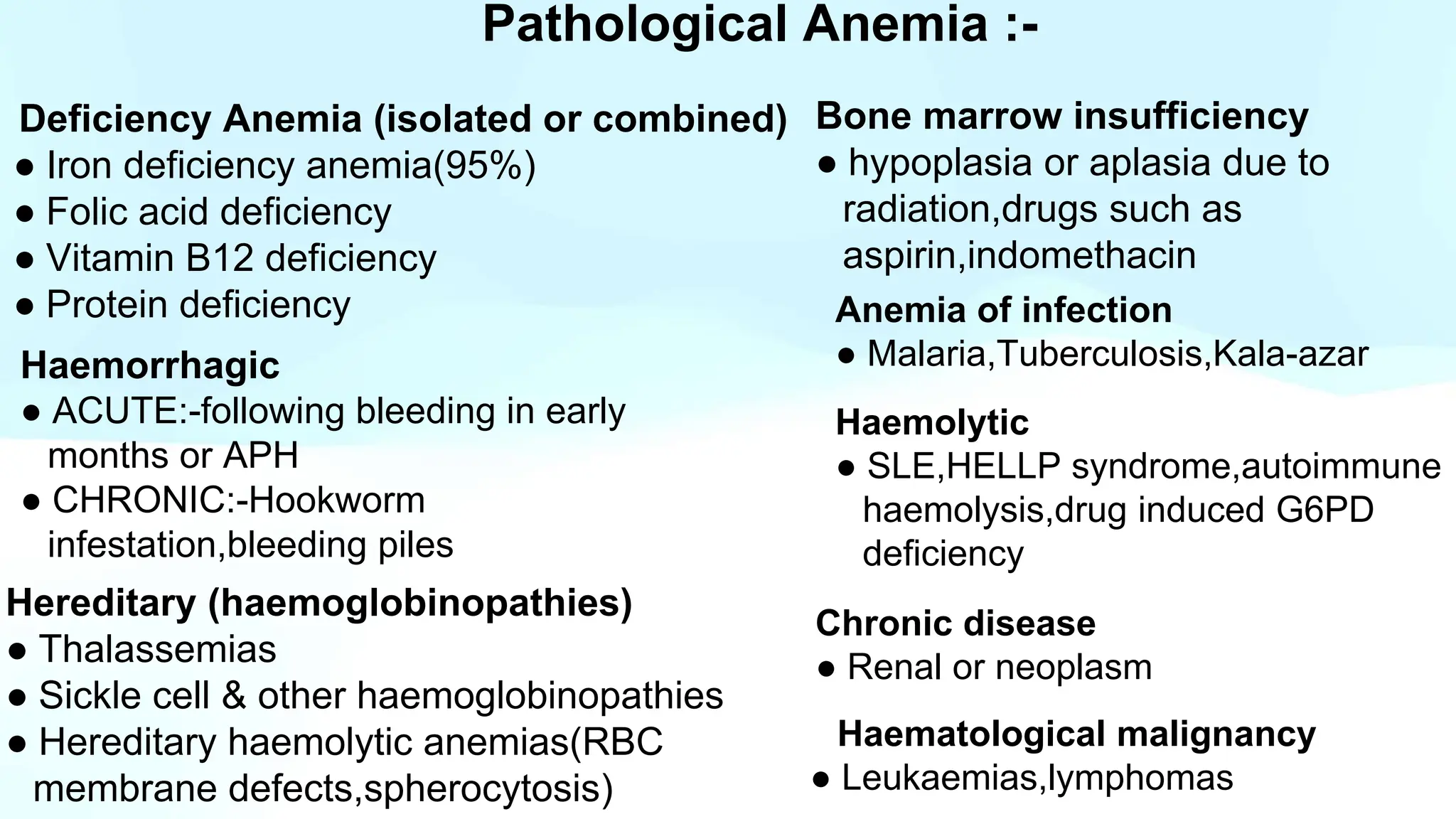
Pathological Anemia :-
Deficiency Anemia (isolated or combined)
● Iron deficiency anemia(95%)
● Folic acid deficiency
● Vitamin B12 deficiency
● Protein deficiency
Haemorrhagic
● ACUTE:-following bleeding in early
months or APH
● CHRONIC:-Hookworm
infestation,bleeding piles
Hereditary (haemoglobinopathies)
● Thalassemias
● Sickle cell & other haemoglobinopathies
● Hereditary haemolytic anemias(RBC
membrane defects,spherocytosis)
Bone marrow insufficiency
● hypoplasia or aplasia due to
radiation,drugs such as
aspirin,indomethacin
Anemia of infection
● Malaria,Tuberculosis,Kala-azar
Chronic disease
● Renal or neoplasm
Haematological malignancy
● Leukaemias,lymphomas
Haemolytic
● SLE,HELLP syndrome,autoimmune
haemolysis,drug induced G6PD
deficiency
B)Based on morphology
(3) Normocytic
normochromic
● MCV:-normal
● MCHC:-normal
(1)Microcytic
hypochromic
● MCV:- reduced
● MCHC:-reduced
(2)Macrocytic normochromic
● MCV:-raised
● MCHC:-normal
● Causes:-Vit B12 & Folate deficiency
Causes:-
● Thalassemia
● Anemia of Chronic disease
● Iron Deficiency anemia
● Lead poisoning
● Sideroblastic anemia
● Causes:-
● Sickle cell anemia
● Hereditary spherocytosis
● Autoimmune haemolytic anemia
● Anemia of inflammation
● Renal failure
● Enzyme deficiency
Red Cell Indices:-
Mean corpuscular volume (MCV):-
● It is the measure of average volume of RBCs
● Normal range:-75-100 femtoliter(fL)
● Calculated as:- PCV in L/L/RBC count/L
Mean corpuscular Hemoglobin (MCH):-
● It is a measurement of the average weight of
hemoglobin in individual erythrocyte
● Normal range:- 26-31 picogram(pg)
● Calculated as:- Hb/L/RBC count/L
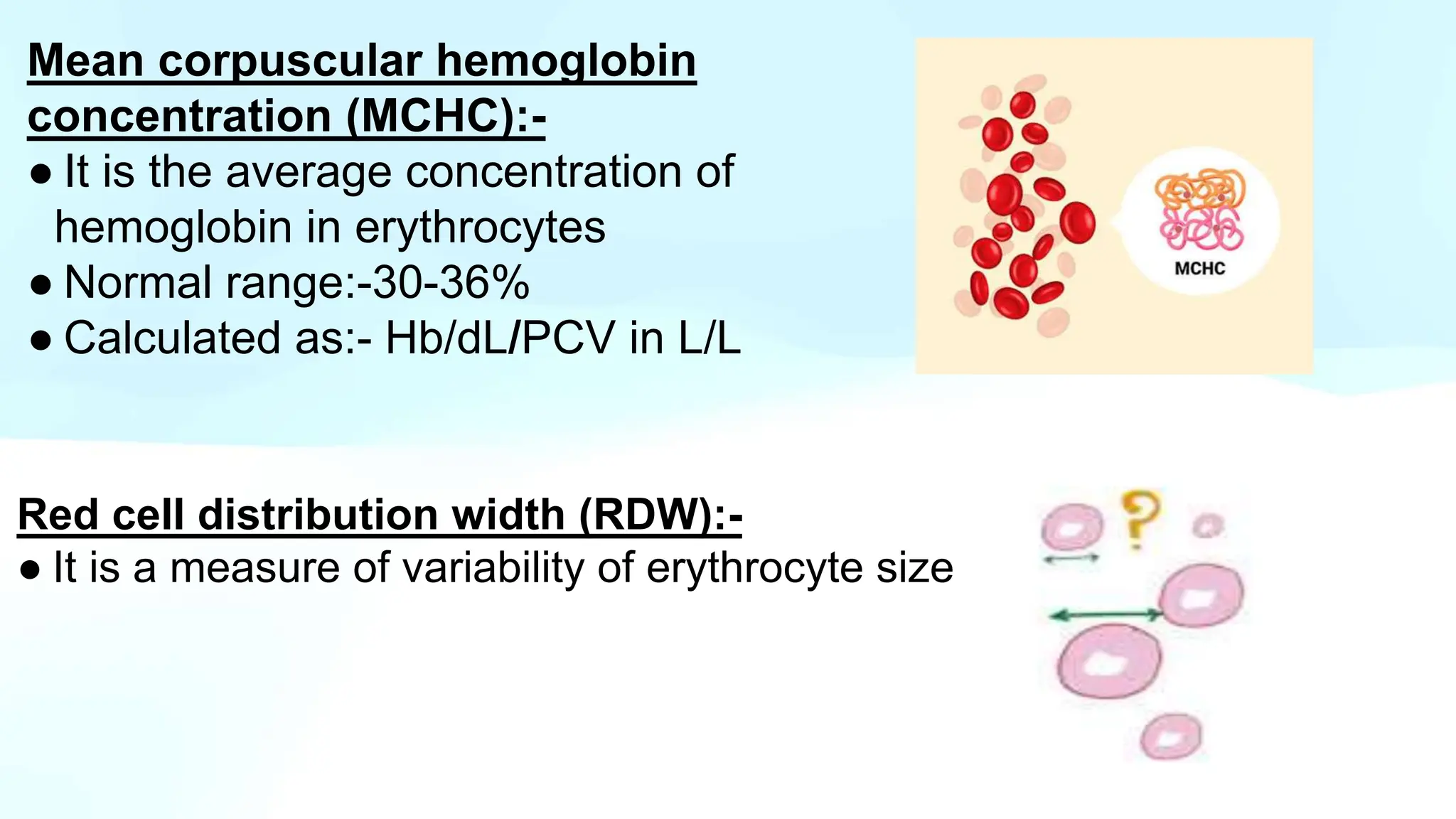
Mean corpuscular hemoglobin
concentration (MCHC):-
● It is the average concentration of
hemoglobin in erythrocytes
● Normal range:-30-36%
● Calculated as:- Hb/dL/PCV in L/L
Red cell distribution width (RDW):-
● It is a measure of variability of erythrocyte size
PHYSIOLOGICAL ANEMIA IN PREGNANCY
HEMODILUTION:
• Plasma volume increases by 40-
50%
• Rbc volume increases by 20-
30%
• Liquid component > solid
component
• Decrease in Hb concentration
will be maximum around 2nd
trimester
• The anemia is normocytic and
normochromic in type.
FACTORS RESPONSIBLE FOR ANEMIA DURING
PREGNANCY
• Increased demands of iron
• Diminished intake of iron
• Diminished absorption
• Infection
• Excess demand 1)multiple pregnancy. 2) women with rapidly recurring
pregnancy
CLINICAL FEATURES
SYMPTOMS:
• Easy fatigue or weakness
• Anorexia and indigestion
• Palpitations
• Dyspnea
• Giddiness
• Swelling of the legs
SIGNS:
● Pallor of varying degree
● Evidence of glossitis and stomatitis and angular
cheilitis
● Nails become brittle, fragile
● Koilonychias( spoon shaped nails)
● Oedema of legs( hypoproteinemia or
preeclampsia)
● A soft systolic murmur may be heard in the
mitral area due to physiological mitral
incompetence.
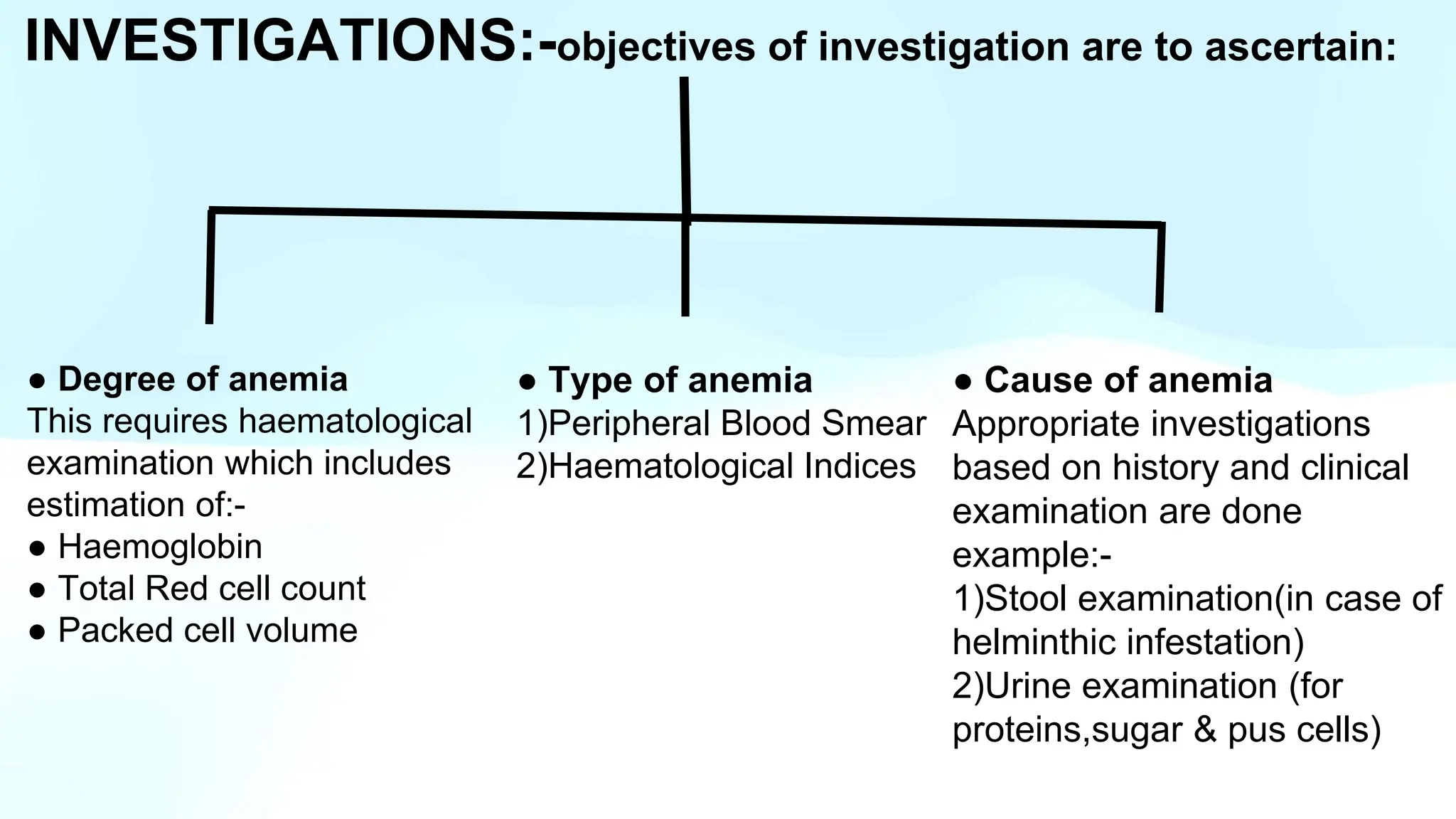
INVESTIGATIONS:-objectives of investigation are to ascertain:
● Degree of anemia
This requires haematological
examination which includes
estimation of:-
● Haemoglobin
● Total Red cell count
● Packed cell volume
● Type of anemia
1)Peripheral Blood Smear
2)Haematological Indices
● Cause of anemia
Appropriate investigations
based on history and clinical
examination are done
example:-
1)Stool examination(in case of
helminthic infestation)
2)Urine examination (for
proteins,sugar & pus cells)
Peripheral blood smear:-
Pencil cells
Target cells
Microcytosis
Hypochromasia
Haematological indices:-
• Hb <10gm%
• Rbc< 4 million per cubic mm
• PCV<30%
• MCHC<30% ( most sensitive index of IDA) ( normal value is 32-36%)
• MCV<75 fL ( normal MCV in pregnancy is 75-100 fL)
• MCH<25 pg ( normal value is 27-31 pg)
• IRON PROFILE:-
• TIBC is raised ( >400 mg/dL)
• Serum ferritin <10 microgram/L ( normal value 22-100 microgram/L)
• Transferrin saturation ( serum iron / TIBC) ( <10%) ( normal value 25-50%)
• Serum iron < 30 microgram/ 100 ml ( normal value is 60-70 microgram/ 100 ml)
HEPCIDIN
• Liver peptide
• Regulates iron haemostasis
• Inhibits iron absorption in SI and iron release from macrophages
• Helps to differentiate IDA from anemia of chronic disease
• Value decreased in IDA
• Increased in anemia of chronic disease
MICROCYTIC ANEMIAS
●DIFFERENTIAL DIAGNOSIS: "TICS“
●I: Iron deficiency anemia
●C: Anemia of chronic
disease
●S: Sideroblastic
anemias
●T: The thalassemia syndromes
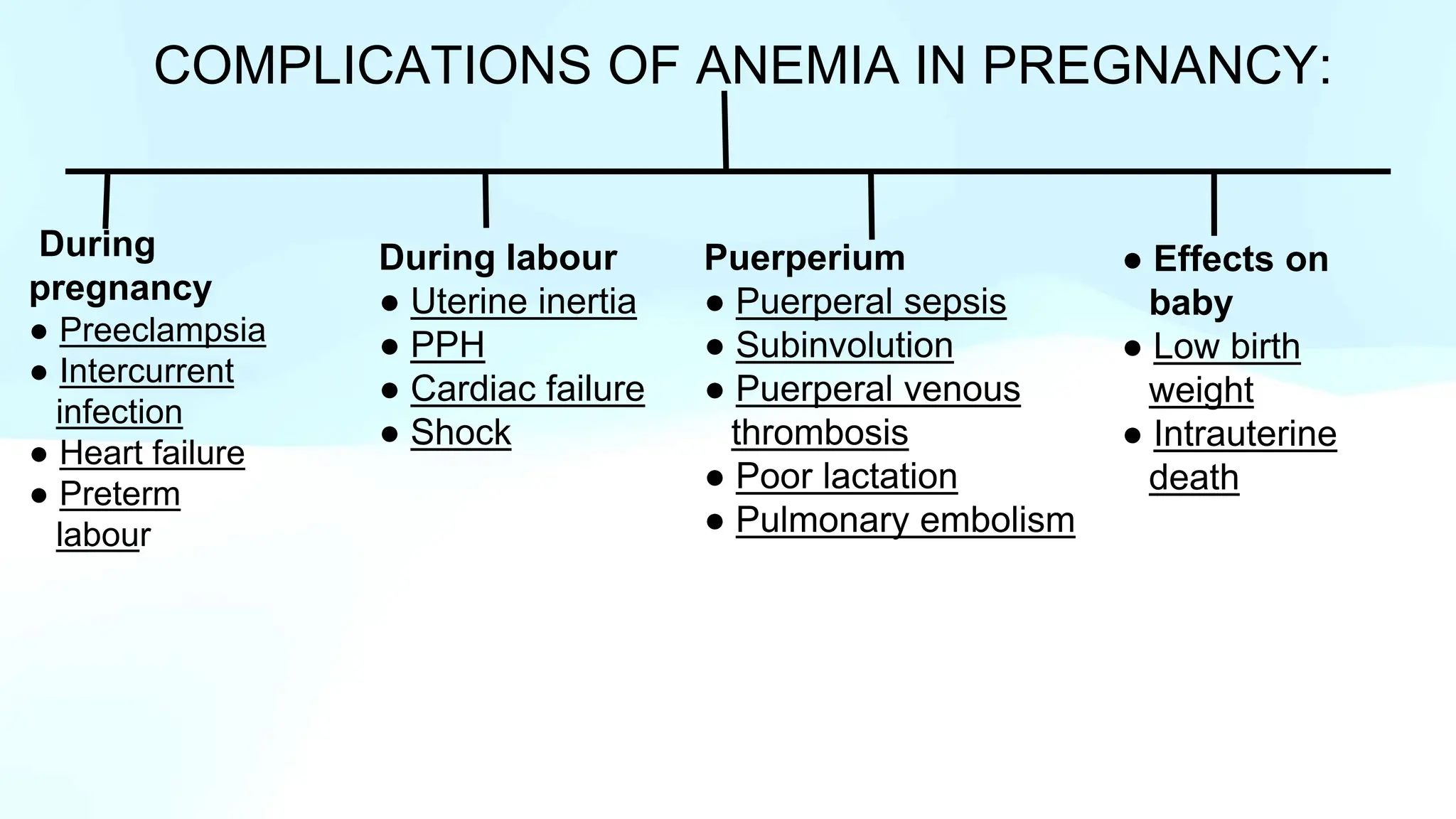
COMPLICATIONS OF ANEMIA IN PREGNANCY:
During
pregnancy
● Preeclampsia
● Intercurrent
infection
● Heart failure
● Preterm
labour
During labour
● Uterine inertia
● PPH
● Cardiac failure
● Shock
IRON DEMAND IN PREGNANCY
Total iron requirement during pregnancy is 1000 mg.
a) Rbc volume increase by 450 mL during pregnancy
1 mL rbc needs 1.1 mg iron. Amount of iron needed by maternal rbc is 450x1.1= 500 mg
a) Amount of iron required by fetus is 300 mg
b) Amount of iron lost by urine, stool, sweat is 250 mg
Average daily requirement of iron during pregnancy is 4-6 mg
Fetus gets iron from mother by active transport.
IRON DEMANDS
• Only 10% of dietary iron is absorbed
• To achieve the daily requirement of 4-6 mg in pregnancy, a pregnant woman will have
to take 40-60 mg of dietary iron. Disadvantage : Practical difficulty
• Iron supplementation is mandatory in pregnancy
TREATMENT
PROPHYLACTIC:
• Spacing of birth- a minimum interval between pregnancies, should be atleast 2 years.
• Supplemental iron therapy- daily administration of 60 mg of elemental iron along with 1
mg folic acid is a quit effective prophylactic procedure. Tea should be avoided within 1
hr of taking iron tablet.
• Dietary prescription - a realistic balanced diet, rich in iron and protein should be
prescribed
• Treatment should be instituted to eradicate hookworm infestation, malaria, dysentery,
bleeding piles and UTI.
Iron and calcium tablets
should not be taken
together. There should
be a minimum gap of 2
hrs.
IRON THERAPY
Preparations available are :
● Ferrous fumarate
● Ferrous gluconate
● Ferrous sulfate ( widely used)
2 tablet per day throughout pregnancy 180 days after delivery( to replenish iron stores)
Hb starts to increase 3 wks later at a rate of 0.7 gm/ dL per week.
Hence, Hb levels can be checked every month ( because of marginal rise in value every week)
Reticulocyte count is a better marker than Hb( increase within 7 days, max by 10 days)
If Hb increase is <1 gm% after 1 month : inadequate response( most common cause non compliance,
defective absorption due to associated GI disorder, pt fails to take iron, concurrent blood loss as in
hookworm infestation or bleeding piles, coexistence folate deficiency )
ALTERNATIVE OPTIONS IN NON COMPLIANT PATIENT:
Change the salt of iron from ferrous sulfate to ferrous fumarate in affordable patients
Unaffordable pt: parenteral therapy
SIDE EFFECTS OF ORAL IRON THERAPY: Gastric irritation , Constipation, diarrhoea, nausea,
vomiting, epigastric pain, metallic taste.
ORAL THERAPY
ALTERNATIVE OPTIONS IN NON COMPLIANT PATIENT:
Change the salt of iron from ferrous sulfate to ferrous fumarate in affordable patients
Unaffordable pt: parenteral therapy
SIDE EFFECTS OF ORAL IRON THERAPY: Gastric irritation , Constipation, diarrhoea,
nausea, vomiting, epigastric pain, metallic taste.
ENHANCERS OF ABSORPTION
1)Haem iron
2)Proteins
3)Ascorbic acid
4)Gastric acidity
5)Low iron stores
6)Increased erythropoietic
activity ( high altitude, bleeding,
hemolysis)
INHIBITORS OF IRON ABSORPTION
1)Phytates
2)Calcium
3)Tannins
4)Tea and coffee
PARENTERAL THERAPY
INDICATIONS:
1) non compliant pt
2) non tolerant pt , not cooperative( gastritis, nausea , vomiting with oral iron)
3) cases seen for the first time during the last 8-10 was with severe anemia
Parenteral therapy can be given through I.V. route or I.M route
PARENTERAL IRON APPROVED BY GOVT OF INDIA:
1) iron dextran
2) iron sucrose( most commonly used; it is safe, effective and has less side effects)
3) ferric carboxylate maltose
CONTRAINDICATIONS :
- first trimester
- hemochromatosis
- thalessimia major
ESTIMATION OF TOTAL IRON REQUIREMENT USING GANZONI FORMULA:
Total dose of iron required( mg) = body weight in kg( pre pregnancy weight) x [target
Hb - actual Hb gm/L] x 2.4 + 500 mg ( additional to replenish the stores)
Iron sucrose
Max single dose 200 mg
Max iron sucrose/ week 600 mg ( 3 times/ week)
1 vial contains 5 ml/100 mg iron sucrose (1ml = 20 mg of iron sucrose)
Rate of iv infusion= 2 vials (200 mg diluted with 100 ml of normal saline) over 30 min
BLOOD TRANSFUSION
INDICATIONS:
• Thalassemia major
• Anemia leading to heart failure
• Acute haemorrhage leading to severe anemia
• Hb< 5 gm/dL at any gestational age
• Hb<5-6.9 gm/dL at more than 34 wks of gestation
• Bone marrow failure
• 1 packed cell transfusion per day is given. The quantity should be between 80 and
100 mL at a time.
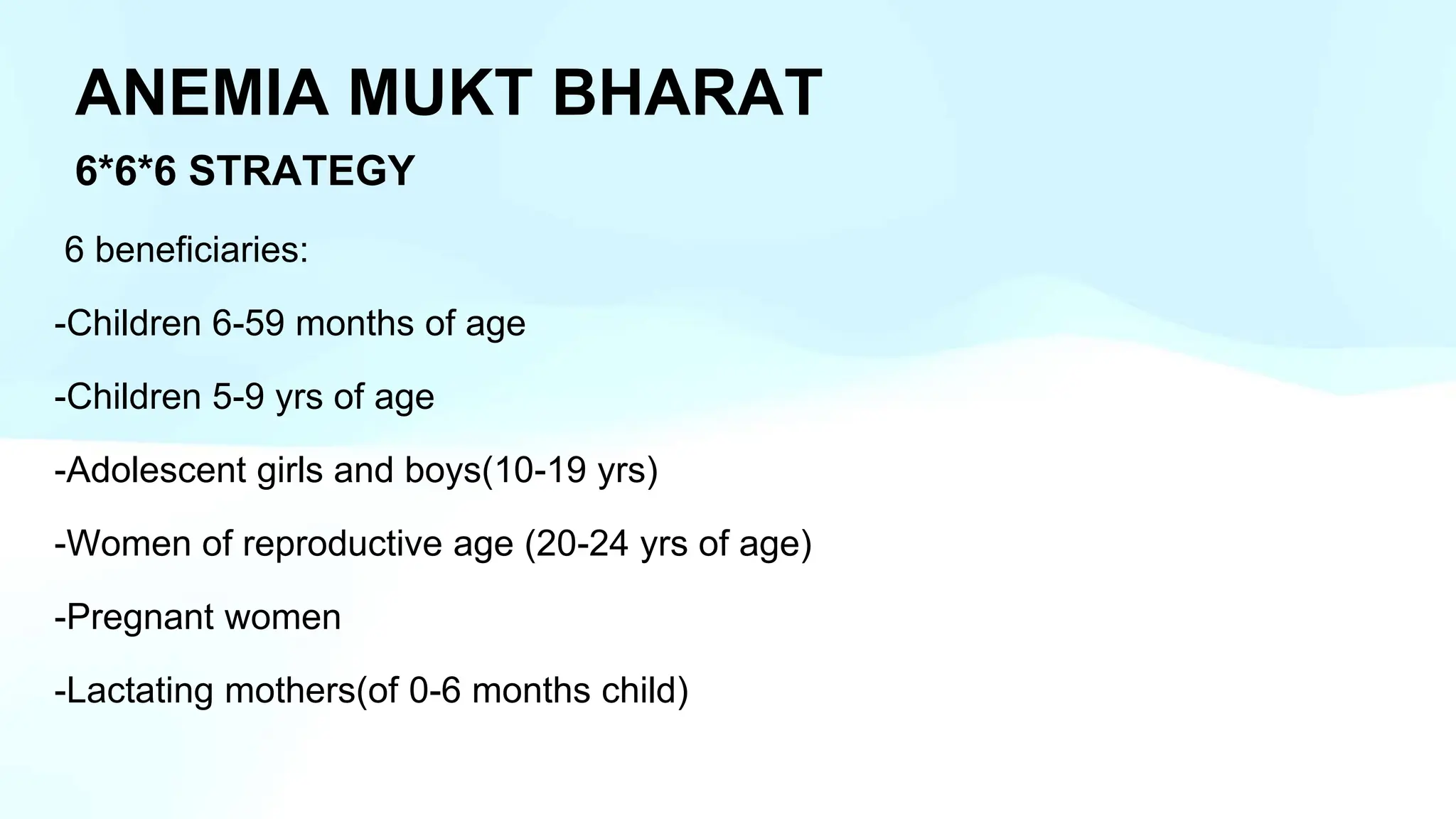
ANEMIA MUKT BHARAT
6*6*6 STRATEGY
6 beneficiaries:
-Children 6-59 months of age
-Children 5-9 yrs of age
-Adolescent girls and boys(10-19 yrs)
-Women of reproductive age (20-24 yrs of age)
-Pregnant women
-Lactating mothers(of 0-6 months child)
6 Institutional mechanisms:
-National anaemia mukt Bharat unit
-Intra ministerial coordination
-Strengthening supply chain and logistics
-Convergence with other ministries
-National centre of excellence and Advanced research on anaemia control
-Anaemia mukt Bharat dashboard and digital portal - one stop shop for anaemia
6 interventions:
1) Prophylactic iron folic acid supplementation
2) Deworming : albendazole -in non pregnant 400 mg twice a year
-In pregnant 400 mg after 1st trimester
3) Intensified year round behaviour change communication campaign including
ensuring delayed cord clamping
4) Testing of anaemia using digital methods and treatment of anaemia
5) Addressing non nutritional causes of anaemia
6)Mandatory provision of iron folic acid fortified food in public health programmes
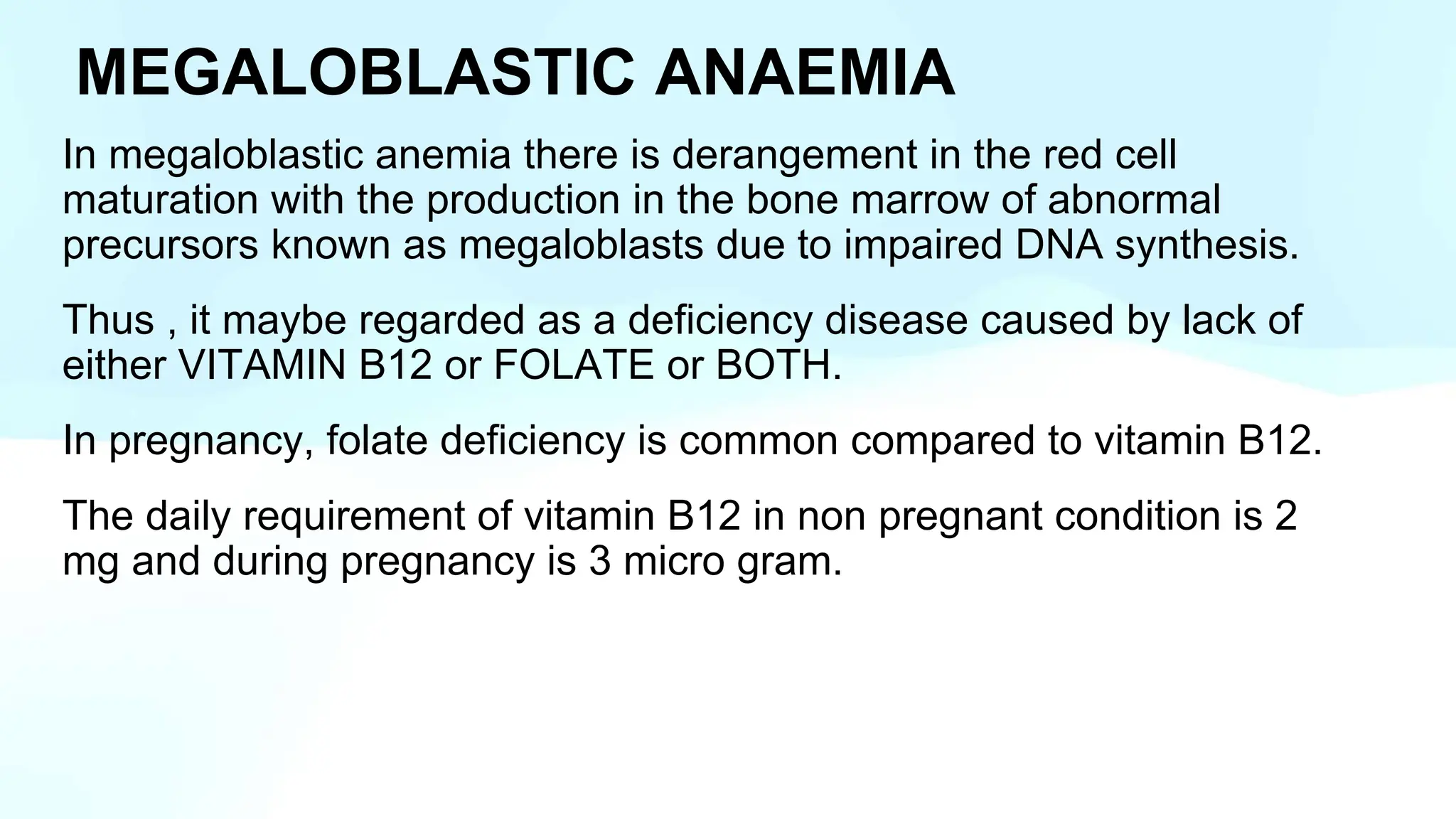
MEGALOBLASTIC ANAEMIA
In megaloblastic anemia there is derangement in the red cell
maturation with the production in the bone marrow of abnormal
precursors known as megaloblasts due to impaired DNA synthesis.
Thus , it maybe regarded as a deficiency disease caused by lack of
either VITAMIN B12 or FOLATE or BOTH.
In pregnancy, folate deficiency is common compared to vitamin B12.
The daily requirement of vitamin B12 in non pregnant condition is 2
mg and during pregnancy is 3 micro gram.
CAUSES OF VITAMIN B12 DEFICIENCY:
• Strict vegetarian diet
• Gastritis
• Gastrectomy
• Crohn’s disease
• Drugs( metformin, PPIs)
• MEGALOBLASTIC anaemia of malabsorption syndrome
CAUSES OF FOLIC ACID DEFICIENCY:
INADEQUATE INTAKE
- nausea, vomiting
- dietary insufficiency
INCREASED DEMAND DUE TO
- increased maternal tissue including red cell volume
- growing foetus
- multiple pregnancy
( daily requirement of folic acid in non pregnant women is 50-100 micro gm/ day and during pregnancy is
increased to 400 microgram/ day)
DIMINISHED ABSORPTION
- intestinal malabsorption syndrome is responsible
ABNORMAL DEMAND
- infection
- hemorrhagic states such as peptic ulcer, hookworm infestation
CLINICAL FEATURES:
Symptoms -
• Onset is insidious
• Anorexia
• Occasional diarrhoea
Constitutional symptoms like unexplained fever is often associated.
ON EXAMINATION-
• Pallor of varying degree.
• Ulceration in the mouth ( glossitis) and tongue.
• Enlarged liver and spleen.
• Features of pre eclampsia may be present
• Haemorrhagic patches under the skin and conjunctiva.
Haematological examination and other blood
values:
• Hb level is usually below 10 gm%
• Hypersegmentation of neutrophils, macrocytosis ,anisocytosis, megaloblast, Howell
jolly bodies.
• MCV, MCH is high but MCHC is normal. TIBC is low .
• Red cell folate is below 3 ng/ mL( normal non pregnant level being 2.8- 8ng/mL)
• Serum vit B12 level is below 90 pg/mL ( normal values 300 pg/ mL)
• Serum bilirubin may be raised.
• Bone marrow shows megaloblastic erythropoiesis.
THERAPY:
PROPHYLACTIC:
All women of reproductive age
should be given 400 microgram
of folic acid daily. Additional
amount (5mg) should be given
in situations where demand is
high like multiple pregnancy, pt
having anticonvulsant therapy,
hemoglobinopathies, associated
chronic infections or diseases
CURATIVE:
Specific therapy includes daily
administration of folic acid 5mg
orally which should be continued
for at least 4wks following delivery.
Supplementation of 1mg of folic
acid daily along with iron and
nutritious diet can improve
pregnancy induced megaloblastic
anemia by 7-10 days.
SICKLE CELL HAEMOGLOBINOPATHIES
These are hereditary disorders caused by a point mutation in the beta globin gene on
chromosome 11.
This results in the substitution of valine for glutamic acid at position 6 of the beta chain
of normal Haemoglobin.
EFFECTS ON PREGNANCY:
-There is increased incidence of miscarriage (25%), prematurity, IUGR and still birth(8-
10%).
- incidence of pre eclampsia, post partum haemorrhage and infection is increased.
MANAGEMENT
DURING DELIVERY
• Prophylactically folic acid 5 mg should be given daily
• Careful antenatal supervision
• Penicillin prophylaxis is given to all patients as they are at risk of infection
LABOR AND DELIVERY
Vaginal delivery is preferred
Continuous oxygen therapy by nasal cannula
Epidural anaesthesia is preferred
Adequate fluid infusion to avoid dehydration and acidosis
THALASSEMIA
The thalassemia syndromes are the commonly found genetic disorders of blood.
The basic defect is reduced rate of globin chain synthesis. As a result, the red cells
being formed with an inadequate Hb content. There is deficient erythropoeisis ,
reduced rbc life span, haemolysis and ultimately anaemia.
The major syndromes are of 2 groups
● Alpha thalassemia ● Beta thalassemia
Alpha peptide chain
production is controlled
by 4 genes, located on
chromosome 16
Beta chain production is directed by 2 genes,
one on each copy chromosome 11
TYPES : - 1) beta thalassemia major
2) beta thalassemia minor
CLASSIFICATION OF THALASSAEMIAS
TYPE Hb ELECTROPHORESIS GENOTYPE CLINICAL SYNDROME
ALPHA THALASSEMIA
1) Hydrops fetalis Hb Barts( 4 gamma chains)
Hb H ( 4 beta chains)
Deletion of 4 alpha genes Fetal in utero or in early infancy
2) Hb- H disease Hb H ( 4 beta chains) Deletion of 3 alpha genes Hemolytic anemia
3) Alpha Thalassemia trait Normal Deletion of 2 alpha genes It often goes unrecognized and
pregnancy is well tolerated.
4)Silent carrier Normal Deletion of 1 alpha gene No clinical or laboratory
abnormalities.
BETA THALASSEMIAS
1)Beta Thalassemia major Hb F Mutation in both the beta genes Progressive
hepatosplenomegaly, impaired
growth, anemia, congestive
cardiac failure
2) Beta Thalassemia minor Hb A2 Mutation in either of the genes Usually asymptomatic
MANAGEMENT
INVESTIGATIONS
Low MCV and MCH but normal MCHC
Serum iron and total iron binding capacity are normal or elevated
Serum bilirubin may be raised to about 2-3 mg%
Usually anemia is mild
TREATMENT
These women need careful monitoring for cardiac, liver, thyroid and parathyroid
functions.
Chelating therapy during pregnancy is safer after 20 wks with desferroxamine.
Oral iron therapy in Thalassemia minor is given only when the lab diagnosis of iron
deficiency is established
In Thalassemia major oral and iv iron therapy is contraindicated.
THANK YOU

Anemia in pregnancy , definition , causes , pathogenesis, management.

  • 1.
    Anemia in Pregnancy Suhani(135) Sukhman(136) Tanishq(137) Tanvi(138)
  • 2.
  • 3.
    CLASSIFICATION ● Physiological Anemiaof Pregnancy ● Pathological Anemia (A)Based on etiology
  • 4.
    Pathological Anemia :- DeficiencyAnemia (isolated or combined) ● Iron deficiency anemia(95%) ● Folic acid deficiency ● Vitamin B12 deficiency ● Protein deficiency Haemorrhagic ● ACUTE:-following bleeding in early months or APH ● CHRONIC:-Hookworm infestation,bleeding piles Hereditary (haemoglobinopathies) ● Thalassemias ● Sickle cell & other haemoglobinopathies ● Hereditary haemolytic anemias(RBC membrane defects,spherocytosis) Bone marrow insufficiency ● hypoplasia or aplasia due to radiation,drugs such as aspirin,indomethacin Anemia of infection ● Malaria,Tuberculosis,Kala-azar Chronic disease ● Renal or neoplasm Haematological malignancy ● Leukaemias,lymphomas Haemolytic ● SLE,HELLP syndrome,autoimmune haemolysis,drug induced G6PD deficiency
  • 5.
    B)Based on morphology (3)Normocytic normochromic ● MCV:-normal ● MCHC:-normal (1)Microcytic hypochromic ● MCV:- reduced ● MCHC:-reduced (2)Macrocytic normochromic ● MCV:-raised ● MCHC:-normal ● Causes:-Vit B12 & Folate deficiency Causes:- ● Thalassemia ● Anemia of Chronic disease ● Iron Deficiency anemia ● Lead poisoning ● Sideroblastic anemia ● Causes:- ● Sickle cell anemia ● Hereditary spherocytosis ● Autoimmune haemolytic anemia ● Anemia of inflammation ● Renal failure ● Enzyme deficiency
  • 6.
    Red Cell Indices:- Meancorpuscular volume (MCV):- ● It is the measure of average volume of RBCs ● Normal range:-75-100 femtoliter(fL) ● Calculated as:- PCV in L/L/RBC count/L Mean corpuscular Hemoglobin (MCH):- ● It is a measurement of the average weight of hemoglobin in individual erythrocyte ● Normal range:- 26-31 picogram(pg) ● Calculated as:- Hb/L/RBC count/L
  • 7.
    Mean corpuscular hemoglobin concentration(MCHC):- ● It is the average concentration of hemoglobin in erythrocytes ● Normal range:-30-36% ● Calculated as:- Hb/dL/PCV in L/L Red cell distribution width (RDW):- ● It is a measure of variability of erythrocyte size
  • 8.
    PHYSIOLOGICAL ANEMIA INPREGNANCY HEMODILUTION: • Plasma volume increases by 40- 50% • Rbc volume increases by 20- 30% • Liquid component > solid component • Decrease in Hb concentration will be maximum around 2nd trimester • The anemia is normocytic and normochromic in type.
  • 9.
    FACTORS RESPONSIBLE FORANEMIA DURING PREGNANCY • Increased demands of iron • Diminished intake of iron • Diminished absorption • Infection • Excess demand 1)multiple pregnancy. 2) women with rapidly recurring pregnancy
  • 10.
    CLINICAL FEATURES SYMPTOMS: • Easyfatigue or weakness • Anorexia and indigestion • Palpitations • Dyspnea • Giddiness • Swelling of the legs SIGNS: ● Pallor of varying degree ● Evidence of glossitis and stomatitis and angular cheilitis ● Nails become brittle, fragile ● Koilonychias( spoon shaped nails) ● Oedema of legs( hypoproteinemia or preeclampsia) ● A soft systolic murmur may be heard in the mitral area due to physiological mitral incompetence.
  • 11.
    INVESTIGATIONS:-objectives of investigationare to ascertain: ● Degree of anemia This requires haematological examination which includes estimation of:- ● Haemoglobin ● Total Red cell count ● Packed cell volume ● Type of anemia 1)Peripheral Blood Smear 2)Haematological Indices ● Cause of anemia Appropriate investigations based on history and clinical examination are done example:- 1)Stool examination(in case of helminthic infestation) 2)Urine examination (for proteins,sugar & pus cells)
  • 12.
    Peripheral blood smear:- Pencilcells Target cells Microcytosis Hypochromasia
  • 13.
    Haematological indices:- • Hb<10gm% • Rbc< 4 million per cubic mm • PCV<30% • MCHC<30% ( most sensitive index of IDA) ( normal value is 32-36%) • MCV<75 fL ( normal MCV in pregnancy is 75-100 fL) • MCH<25 pg ( normal value is 27-31 pg) • IRON PROFILE:- • TIBC is raised ( >400 mg/dL) • Serum ferritin <10 microgram/L ( normal value 22-100 microgram/L) • Transferrin saturation ( serum iron / TIBC) ( <10%) ( normal value 25-50%) • Serum iron < 30 microgram/ 100 ml ( normal value is 60-70 microgram/ 100 ml)
  • 14.
    HEPCIDIN • Liver peptide •Regulates iron haemostasis • Inhibits iron absorption in SI and iron release from macrophages • Helps to differentiate IDA from anemia of chronic disease • Value decreased in IDA • Increased in anemia of chronic disease
  • 15.
    MICROCYTIC ANEMIAS ●DIFFERENTIAL DIAGNOSIS:"TICS“ ●I: Iron deficiency anemia ●C: Anemia of chronic disease ●S: Sideroblastic anemias ●T: The thalassemia syndromes
  • 16.
    COMPLICATIONS OF ANEMIAIN PREGNANCY: During pregnancy ● Preeclampsia ● Intercurrent infection ● Heart failure ● Preterm labour During labour ● Uterine inertia ● PPH ● Cardiac failure ● Shock
  • 17.
    IRON DEMAND INPREGNANCY Total iron requirement during pregnancy is 1000 mg. a) Rbc volume increase by 450 mL during pregnancy 1 mL rbc needs 1.1 mg iron. Amount of iron needed by maternal rbc is 450x1.1= 500 mg a) Amount of iron required by fetus is 300 mg b) Amount of iron lost by urine, stool, sweat is 250 mg Average daily requirement of iron during pregnancy is 4-6 mg Fetus gets iron from mother by active transport. IRON DEMANDS • Only 10% of dietary iron is absorbed • To achieve the daily requirement of 4-6 mg in pregnancy, a pregnant woman will have to take 40-60 mg of dietary iron. Disadvantage : Practical difficulty • Iron supplementation is mandatory in pregnancy
  • 18.
    TREATMENT PROPHYLACTIC: • Spacing ofbirth- a minimum interval between pregnancies, should be atleast 2 years. • Supplemental iron therapy- daily administration of 60 mg of elemental iron along with 1 mg folic acid is a quit effective prophylactic procedure. Tea should be avoided within 1 hr of taking iron tablet. • Dietary prescription - a realistic balanced diet, rich in iron and protein should be prescribed • Treatment should be instituted to eradicate hookworm infestation, malaria, dysentery, bleeding piles and UTI. Iron and calcium tablets should not be taken together. There should be a minimum gap of 2 hrs.
  • 19.
    IRON THERAPY Preparations availableare : ● Ferrous fumarate ● Ferrous gluconate ● Ferrous sulfate ( widely used) 2 tablet per day throughout pregnancy 180 days after delivery( to replenish iron stores) Hb starts to increase 3 wks later at a rate of 0.7 gm/ dL per week. Hence, Hb levels can be checked every month ( because of marginal rise in value every week) Reticulocyte count is a better marker than Hb( increase within 7 days, max by 10 days) If Hb increase is <1 gm% after 1 month : inadequate response( most common cause non compliance, defective absorption due to associated GI disorder, pt fails to take iron, concurrent blood loss as in hookworm infestation or bleeding piles, coexistence folate deficiency ) ALTERNATIVE OPTIONS IN NON COMPLIANT PATIENT: Change the salt of iron from ferrous sulfate to ferrous fumarate in affordable patients Unaffordable pt: parenteral therapy SIDE EFFECTS OF ORAL IRON THERAPY: Gastric irritation , Constipation, diarrhoea, nausea, vomiting, epigastric pain, metallic taste. ORAL THERAPY
  • 20.
    ALTERNATIVE OPTIONS INNON COMPLIANT PATIENT: Change the salt of iron from ferrous sulfate to ferrous fumarate in affordable patients Unaffordable pt: parenteral therapy SIDE EFFECTS OF ORAL IRON THERAPY: Gastric irritation , Constipation, diarrhoea, nausea, vomiting, epigastric pain, metallic taste.
  • 21.
    ENHANCERS OF ABSORPTION 1)Haemiron 2)Proteins 3)Ascorbic acid 4)Gastric acidity 5)Low iron stores 6)Increased erythropoietic activity ( high altitude, bleeding, hemolysis) INHIBITORS OF IRON ABSORPTION 1)Phytates 2)Calcium 3)Tannins 4)Tea and coffee
  • 22.
    PARENTERAL THERAPY INDICATIONS: 1) noncompliant pt 2) non tolerant pt , not cooperative( gastritis, nausea , vomiting with oral iron) 3) cases seen for the first time during the last 8-10 was with severe anemia Parenteral therapy can be given through I.V. route or I.M route PARENTERAL IRON APPROVED BY GOVT OF INDIA: 1) iron dextran 2) iron sucrose( most commonly used; it is safe, effective and has less side effects) 3) ferric carboxylate maltose CONTRAINDICATIONS : - first trimester - hemochromatosis - thalessimia major
  • 23.
    ESTIMATION OF TOTALIRON REQUIREMENT USING GANZONI FORMULA: Total dose of iron required( mg) = body weight in kg( pre pregnancy weight) x [target Hb - actual Hb gm/L] x 2.4 + 500 mg ( additional to replenish the stores) Iron sucrose Max single dose 200 mg Max iron sucrose/ week 600 mg ( 3 times/ week) 1 vial contains 5 ml/100 mg iron sucrose (1ml = 20 mg of iron sucrose) Rate of iv infusion= 2 vials (200 mg diluted with 100 ml of normal saline) over 30 min
  • 25.
    BLOOD TRANSFUSION INDICATIONS: • Thalassemiamajor • Anemia leading to heart failure • Acute haemorrhage leading to severe anemia • Hb< 5 gm/dL at any gestational age • Hb<5-6.9 gm/dL at more than 34 wks of gestation • Bone marrow failure • 1 packed cell transfusion per day is given. The quantity should be between 80 and 100 mL at a time.
  • 26.
    ANEMIA MUKT BHARAT 6*6*6STRATEGY 6 beneficiaries: -Children 6-59 months of age -Children 5-9 yrs of age -Adolescent girls and boys(10-19 yrs) -Women of reproductive age (20-24 yrs of age) -Pregnant women -Lactating mothers(of 0-6 months child)
  • 27.
    6 Institutional mechanisms: -Nationalanaemia mukt Bharat unit -Intra ministerial coordination -Strengthening supply chain and logistics -Convergence with other ministries -National centre of excellence and Advanced research on anaemia control -Anaemia mukt Bharat dashboard and digital portal - one stop shop for anaemia
  • 28.
    6 interventions: 1) Prophylacticiron folic acid supplementation
  • 29.
    2) Deworming :albendazole -in non pregnant 400 mg twice a year -In pregnant 400 mg after 1st trimester 3) Intensified year round behaviour change communication campaign including ensuring delayed cord clamping 4) Testing of anaemia using digital methods and treatment of anaemia 5) Addressing non nutritional causes of anaemia 6)Mandatory provision of iron folic acid fortified food in public health programmes
  • 30.
    MEGALOBLASTIC ANAEMIA In megaloblasticanemia there is derangement in the red cell maturation with the production in the bone marrow of abnormal precursors known as megaloblasts due to impaired DNA synthesis. Thus , it maybe regarded as a deficiency disease caused by lack of either VITAMIN B12 or FOLATE or BOTH. In pregnancy, folate deficiency is common compared to vitamin B12. The daily requirement of vitamin B12 in non pregnant condition is 2 mg and during pregnancy is 3 micro gram.
  • 31.
    CAUSES OF VITAMINB12 DEFICIENCY: • Strict vegetarian diet • Gastritis • Gastrectomy • Crohn’s disease • Drugs( metformin, PPIs) • MEGALOBLASTIC anaemia of malabsorption syndrome
  • 32.
    CAUSES OF FOLICACID DEFICIENCY: INADEQUATE INTAKE - nausea, vomiting - dietary insufficiency INCREASED DEMAND DUE TO - increased maternal tissue including red cell volume - growing foetus - multiple pregnancy ( daily requirement of folic acid in non pregnant women is 50-100 micro gm/ day and during pregnancy is increased to 400 microgram/ day) DIMINISHED ABSORPTION - intestinal malabsorption syndrome is responsible ABNORMAL DEMAND - infection - hemorrhagic states such as peptic ulcer, hookworm infestation
  • 33.
    CLINICAL FEATURES: Symptoms - •Onset is insidious • Anorexia • Occasional diarrhoea Constitutional symptoms like unexplained fever is often associated. ON EXAMINATION- • Pallor of varying degree. • Ulceration in the mouth ( glossitis) and tongue. • Enlarged liver and spleen. • Features of pre eclampsia may be present • Haemorrhagic patches under the skin and conjunctiva.
  • 34.
    Haematological examination andother blood values: • Hb level is usually below 10 gm% • Hypersegmentation of neutrophils, macrocytosis ,anisocytosis, megaloblast, Howell jolly bodies. • MCV, MCH is high but MCHC is normal. TIBC is low . • Red cell folate is below 3 ng/ mL( normal non pregnant level being 2.8- 8ng/mL) • Serum vit B12 level is below 90 pg/mL ( normal values 300 pg/ mL) • Serum bilirubin may be raised. • Bone marrow shows megaloblastic erythropoiesis.
  • 35.
    THERAPY: PROPHYLACTIC: All women ofreproductive age should be given 400 microgram of folic acid daily. Additional amount (5mg) should be given in situations where demand is high like multiple pregnancy, pt having anticonvulsant therapy, hemoglobinopathies, associated chronic infections or diseases CURATIVE: Specific therapy includes daily administration of folic acid 5mg orally which should be continued for at least 4wks following delivery. Supplementation of 1mg of folic acid daily along with iron and nutritious diet can improve pregnancy induced megaloblastic anemia by 7-10 days.
  • 36.
    SICKLE CELL HAEMOGLOBINOPATHIES Theseare hereditary disorders caused by a point mutation in the beta globin gene on chromosome 11. This results in the substitution of valine for glutamic acid at position 6 of the beta chain of normal Haemoglobin. EFFECTS ON PREGNANCY: -There is increased incidence of miscarriage (25%), prematurity, IUGR and still birth(8- 10%). - incidence of pre eclampsia, post partum haemorrhage and infection is increased.
  • 37.
    MANAGEMENT DURING DELIVERY • Prophylacticallyfolic acid 5 mg should be given daily • Careful antenatal supervision • Penicillin prophylaxis is given to all patients as they are at risk of infection LABOR AND DELIVERY Vaginal delivery is preferred Continuous oxygen therapy by nasal cannula Epidural anaesthesia is preferred Adequate fluid infusion to avoid dehydration and acidosis
  • 38.
    THALASSEMIA The thalassemia syndromesare the commonly found genetic disorders of blood. The basic defect is reduced rate of globin chain synthesis. As a result, the red cells being formed with an inadequate Hb content. There is deficient erythropoeisis , reduced rbc life span, haemolysis and ultimately anaemia. The major syndromes are of 2 groups ● Alpha thalassemia ● Beta thalassemia Alpha peptide chain production is controlled by 4 genes, located on chromosome 16 Beta chain production is directed by 2 genes, one on each copy chromosome 11 TYPES : - 1) beta thalassemia major 2) beta thalassemia minor
  • 39.
    CLASSIFICATION OF THALASSAEMIAS TYPEHb ELECTROPHORESIS GENOTYPE CLINICAL SYNDROME ALPHA THALASSEMIA 1) Hydrops fetalis Hb Barts( 4 gamma chains) Hb H ( 4 beta chains) Deletion of 4 alpha genes Fetal in utero or in early infancy 2) Hb- H disease Hb H ( 4 beta chains) Deletion of 3 alpha genes Hemolytic anemia 3) Alpha Thalassemia trait Normal Deletion of 2 alpha genes It often goes unrecognized and pregnancy is well tolerated. 4)Silent carrier Normal Deletion of 1 alpha gene No clinical or laboratory abnormalities. BETA THALASSEMIAS 1)Beta Thalassemia major Hb F Mutation in both the beta genes Progressive hepatosplenomegaly, impaired growth, anemia, congestive cardiac failure 2) Beta Thalassemia minor Hb A2 Mutation in either of the genes Usually asymptomatic
  • 40.
    MANAGEMENT INVESTIGATIONS Low MCV andMCH but normal MCHC Serum iron and total iron binding capacity are normal or elevated Serum bilirubin may be raised to about 2-3 mg% Usually anemia is mild TREATMENT These women need careful monitoring for cardiac, liver, thyroid and parathyroid functions. Chelating therapy during pregnancy is safer after 20 wks with desferroxamine. Oral iron therapy in Thalassemia minor is given only when the lab diagnosis of iron deficiency is established In Thalassemia major oral and iv iron therapy is contraindicated.
  • 41.