The Ancients 
( Philosophy in Education ) 
Rebekah 
Sharmilah 
Tayatul 
Amiera 
Mogana 
Hayati
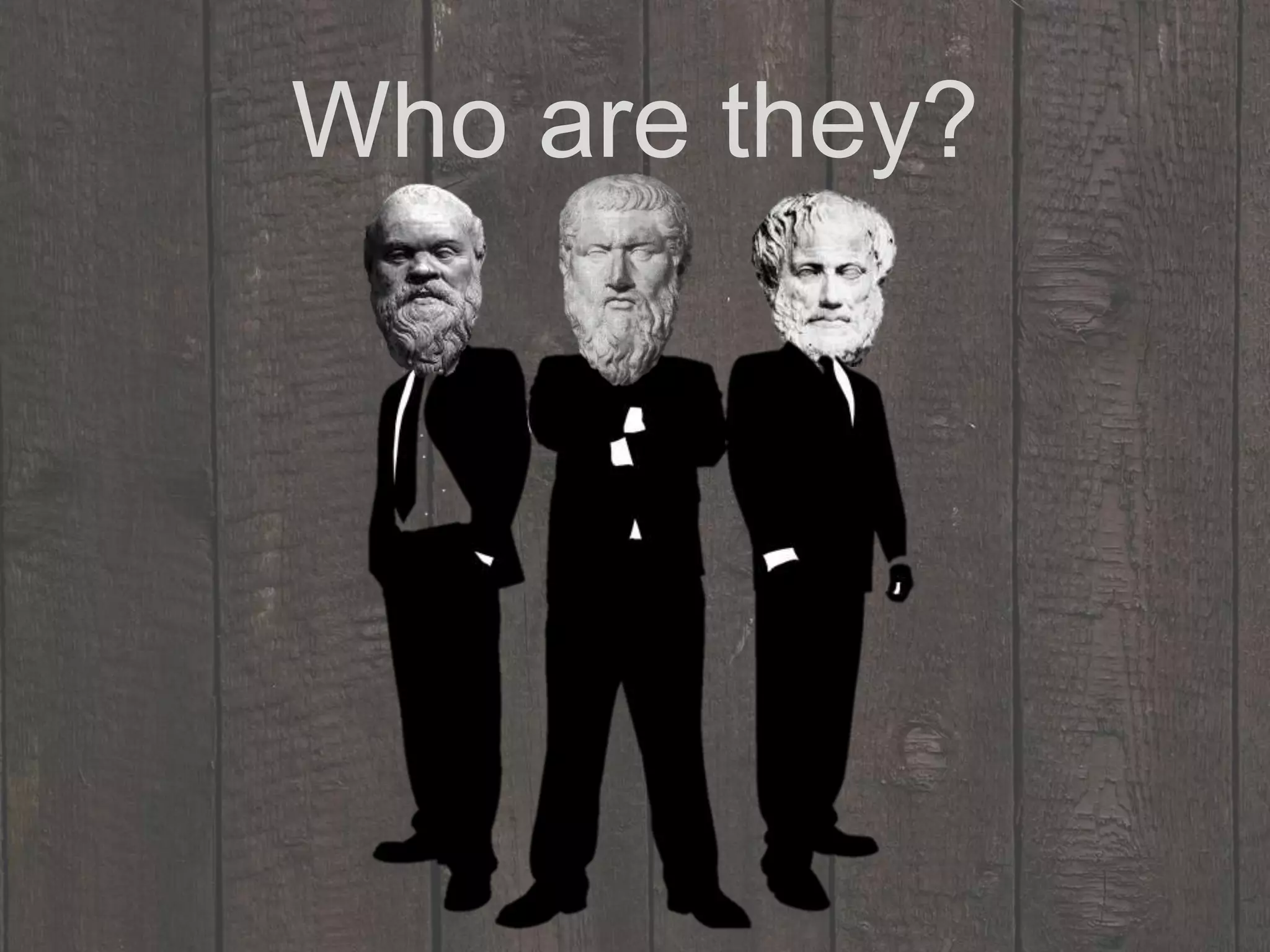
Who are they?
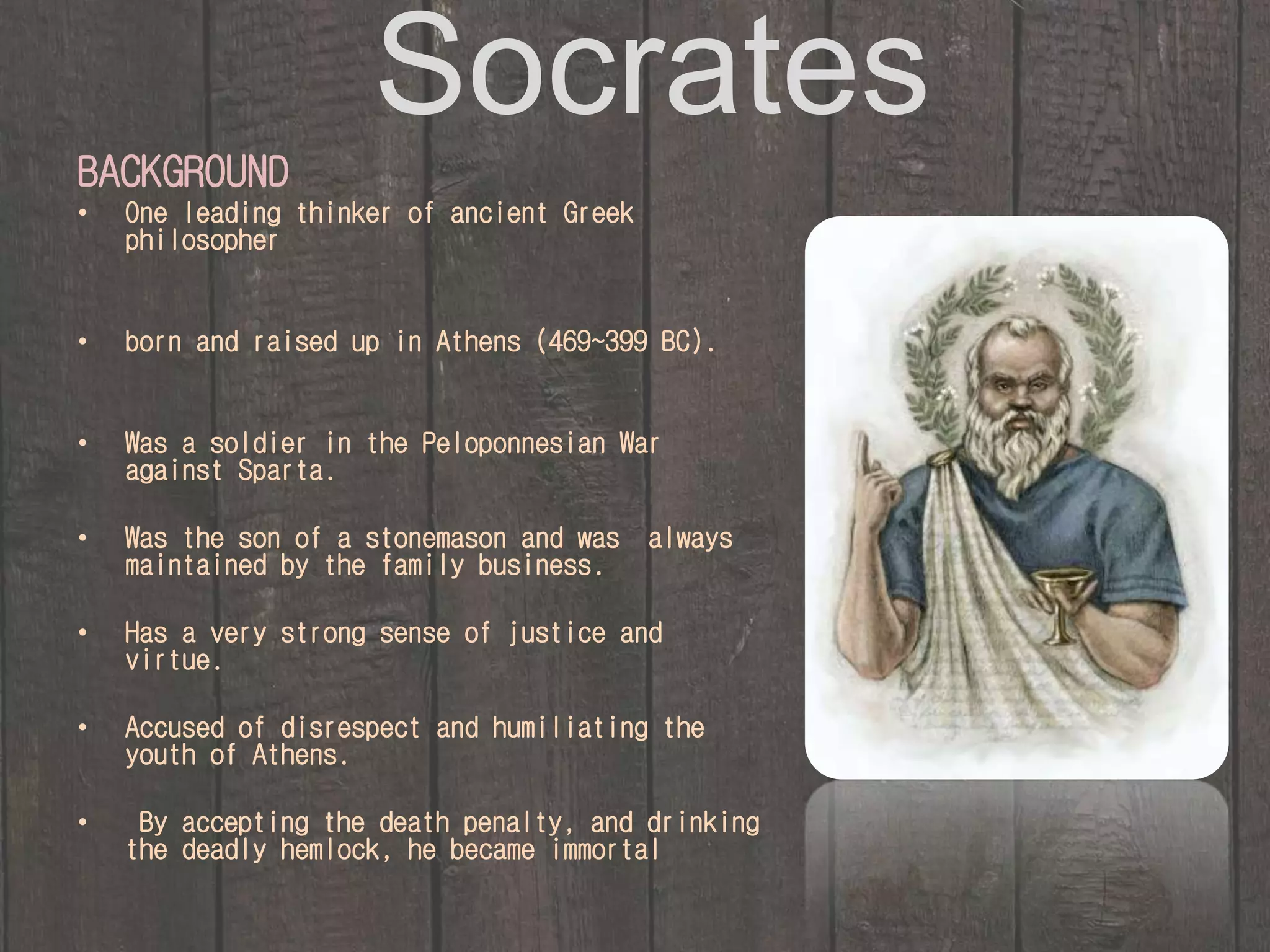
Socrates 
BACKGROUND 
• One leading thinker of ancient Greek 
philosopher 
• born and raised up in Athens (469~399 BC). 
• Was a soldier in the Peloponnesian War 
against Sparta. 
• Was the son of a stonemason and was always 
maintained by the family business. 
• Has a very strong sense of justice and 
virtue. 
• Accused of disrespect and humiliating the 
youth of Athens. 
• By accepting the death penalty, and drinking 
the deadly hemlock, he became immortal
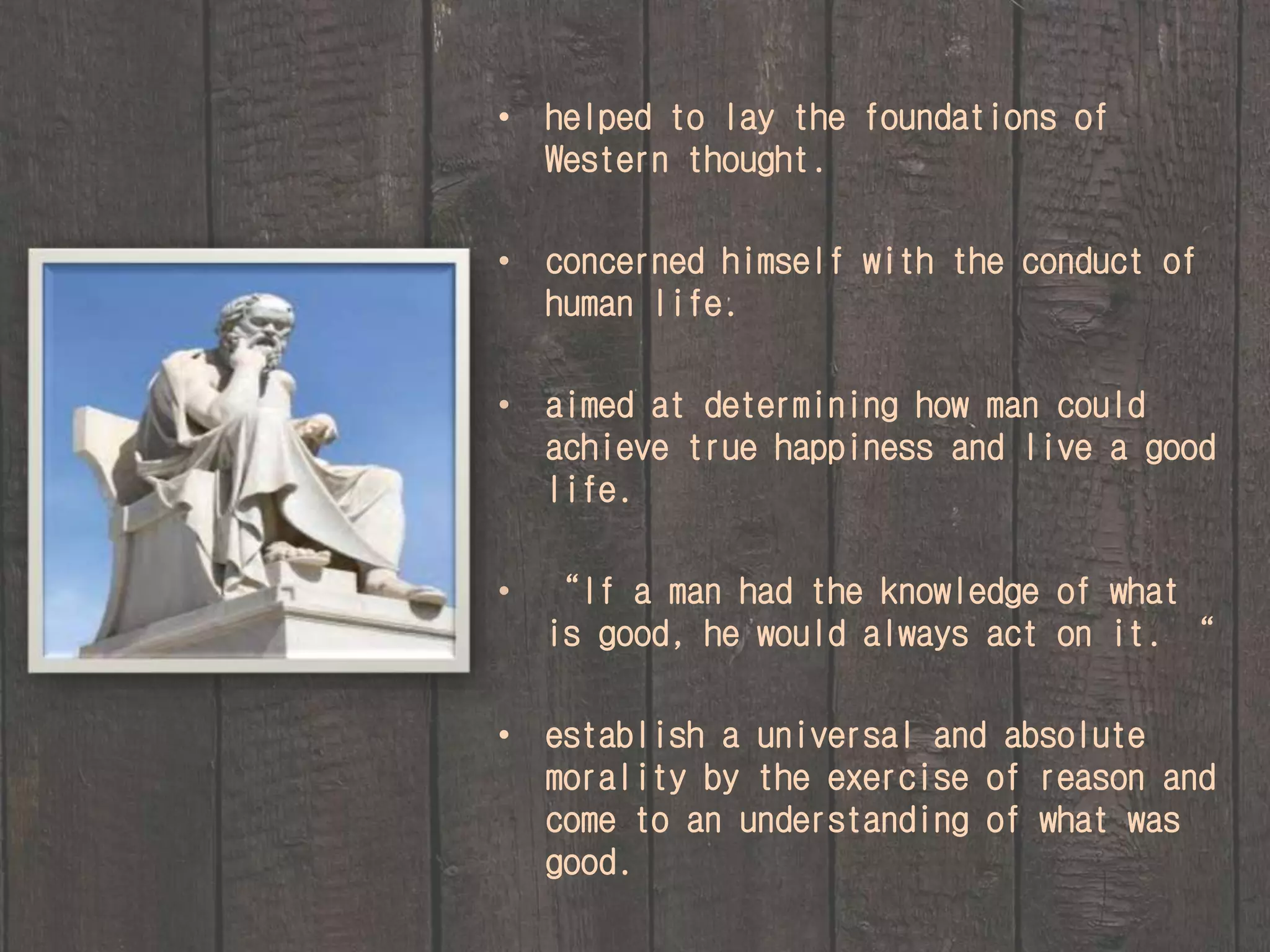
• helped to lay the foundations of 
Western thought. 
• concerned himself with the conduct of 
human life. 
• aimed at determining how man could 
achieve true happiness and live a good 
life. 
• “If a man had the knowledge of what 
is good, he would always act on it. “ 
• establish a universal and absolute 
morality by the exercise of reason and 
come to an understanding of what was 
good.
Socrates 
CONTRIBUTIONS 
• Known as the Socratic method or method of "elenchus“ 
• largely applied to the examination of key moral concepts such 
as the Good and Justice 
To Illustrate The Use Of The Socratic Method 
• A series of questions are posed to help a person or group to 
determine their underlying beliefs and the extent of their 
knowledge. 
• A teacher poses a simple question such as ‘what is truth’- 
when a student answer the question, the teacher asks another 
question that make to think more deeply and offer a new answer. 
• The process continues until they feel that the analysis has 
gone as far as they can take it at the moment. 
• It was designed to force one to examine one's own beliefs and 
the validity of such beliefs.
• Socrates argued that moral excellence was 
more a matter of divine bequest than 
parental nurture. 
• This belief may have contributed to his lack 
of anxiety about the future of his own sons. 
• His doctrine of the soul led him to the 
belief that all virtues converge into one, 
which is the good, or knowledge of one's 
true self and purposes through the course of 
a lifetime.
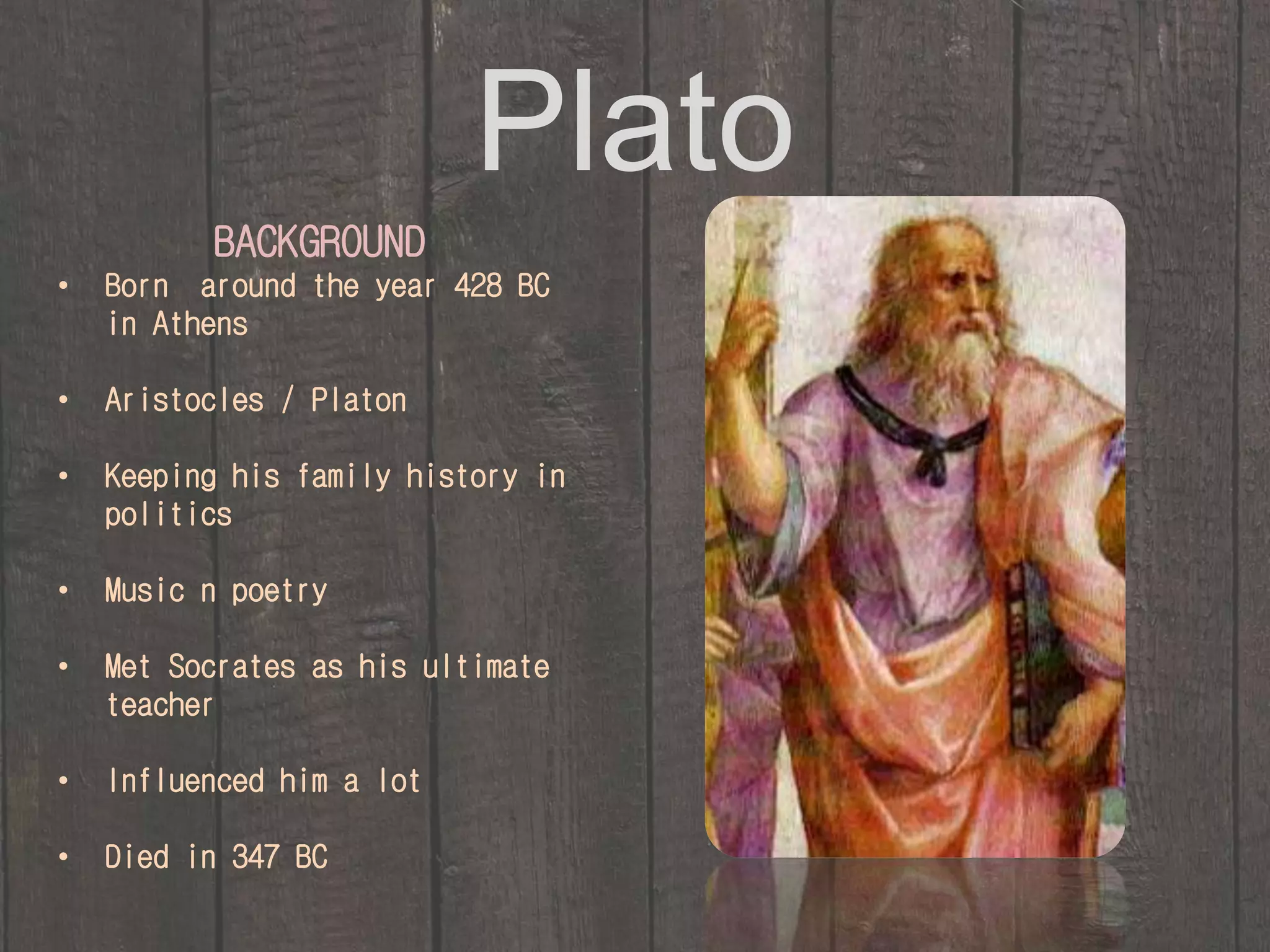
Plato 
BACKGROUND 
• Born around the year 428 BC 
in Athens 
• Aristocles / Platon 
• Keeping his family history in 
politics 
• Music n poetry 
• Met Socrates as his ultimate 
teacher 
• Influenced him a lot 
• Died in 347 BC
Plato 
CONTRIBUTIONS 
• Introduced the discussion as a teaching method. 
• Co-education (mathematics, poetry, music and literature) for 
elementary school 
• Physical education for military training 
• Mathematics, literature and philosophy for higher education. 
• Women education
Aristotle 
BACKGROUND 
• Greek philosopher who was born in 
Stagirus. 
• Enrolled in Plato’s Academy when 
he was seventeen. 
• Tutored Alexander in 338 B.E.C. 
• Found his own school, The Lyceum 
in Athens. 
• Favourite subject were Physics, 
Biology, Metaphysics and Ethics. 
• Was the first genuine scientist in 
history.
Aristotle 
• Studied education in foreign customs and 
literature 
• Golden Mean 
• Influenced by Plato and Socrates 
• Influenced Western and Christian philosophy, 
science and Islamic most 
CONTRIBUTIONS 
• Teaching of such subjects. 
• Defining and classifying the various branches of 
knowledge. 
• Established important principles in physics.
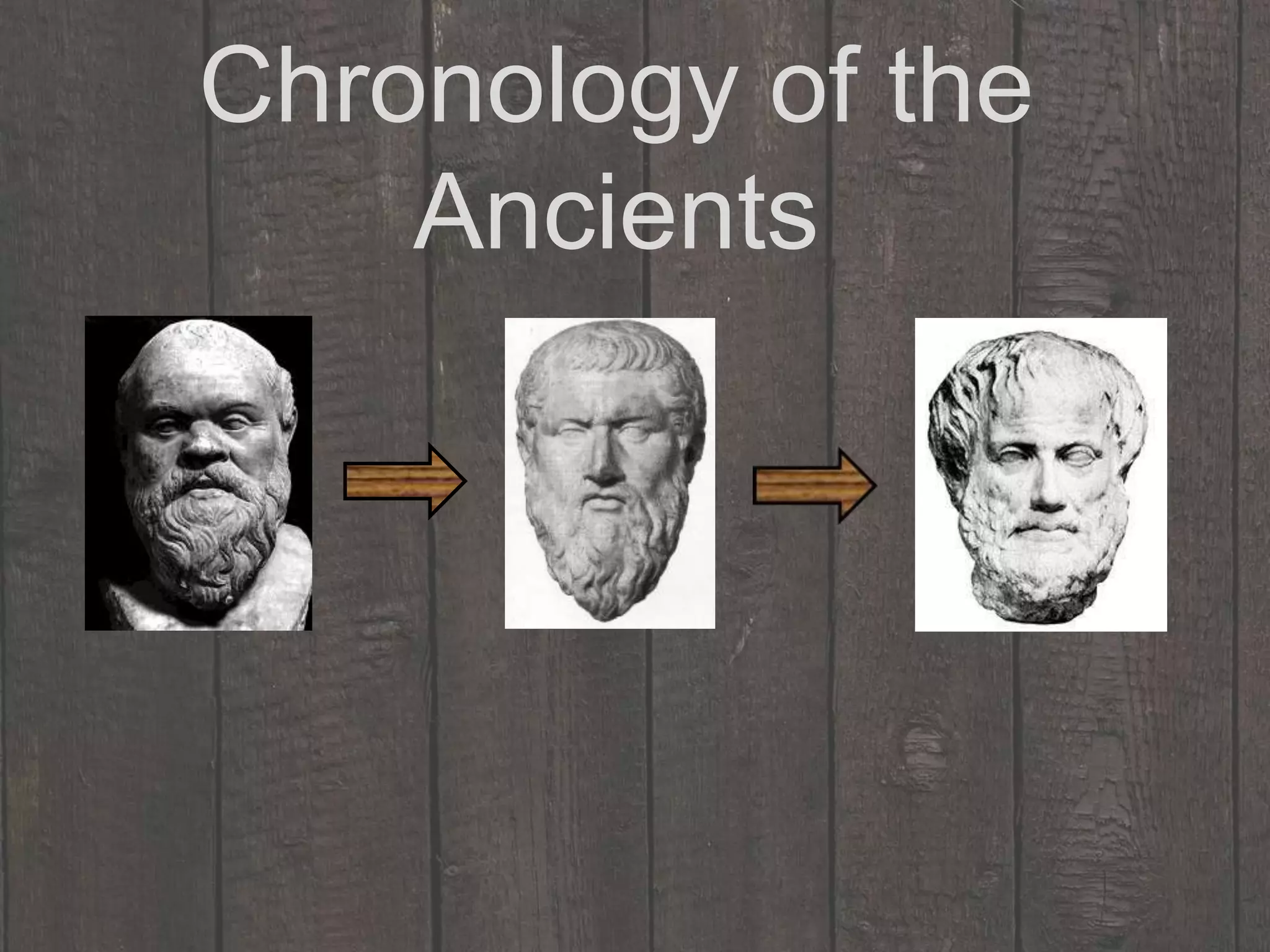
Chronology of the 
Ancients

Ancient Philosophers.

  • 1.
    The Ancients (Philosophy in Education ) Rebekah Sharmilah Tayatul Amiera Mogana Hayati
  • 2.
  • 3.
    Socrates BACKGROUND •One leading thinker of ancient Greek philosopher • born and raised up in Athens (469~399 BC). • Was a soldier in the Peloponnesian War against Sparta. • Was the son of a stonemason and was always maintained by the family business. • Has a very strong sense of justice and virtue. • Accused of disrespect and humiliating the youth of Athens. • By accepting the death penalty, and drinking the deadly hemlock, he became immortal
  • 4.
    • helped tolay the foundations of Western thought. • concerned himself with the conduct of human life. • aimed at determining how man could achieve true happiness and live a good life. • “If a man had the knowledge of what is good, he would always act on it. “ • establish a universal and absolute morality by the exercise of reason and come to an understanding of what was good.
  • 5.
    Socrates CONTRIBUTIONS •Known as the Socratic method or method of "elenchus“ • largely applied to the examination of key moral concepts such as the Good and Justice To Illustrate The Use Of The Socratic Method • A series of questions are posed to help a person or group to determine their underlying beliefs and the extent of their knowledge. • A teacher poses a simple question such as ‘what is truth’- when a student answer the question, the teacher asks another question that make to think more deeply and offer a new answer. • The process continues until they feel that the analysis has gone as far as they can take it at the moment. • It was designed to force one to examine one's own beliefs and the validity of such beliefs.
  • 6.
    • Socrates arguedthat moral excellence was more a matter of divine bequest than parental nurture. • This belief may have contributed to his lack of anxiety about the future of his own sons. • His doctrine of the soul led him to the belief that all virtues converge into one, which is the good, or knowledge of one's true self and purposes through the course of a lifetime.
  • 7.
    Plato BACKGROUND •Born around the year 428 BC in Athens • Aristocles / Platon • Keeping his family history in politics • Music n poetry • Met Socrates as his ultimate teacher • Influenced him a lot • Died in 347 BC
  • 8.
    Plato CONTRIBUTIONS •Introduced the discussion as a teaching method. • Co-education (mathematics, poetry, music and literature) for elementary school • Physical education for military training • Mathematics, literature and philosophy for higher education. • Women education
  • 9.
    Aristotle BACKGROUND •Greek philosopher who was born in Stagirus. • Enrolled in Plato’s Academy when he was seventeen. • Tutored Alexander in 338 B.E.C. • Found his own school, The Lyceum in Athens. • Favourite subject were Physics, Biology, Metaphysics and Ethics. • Was the first genuine scientist in history.
  • 10.
    Aristotle • Studiededucation in foreign customs and literature • Golden Mean • Influenced by Plato and Socrates • Influenced Western and Christian philosophy, science and Islamic most CONTRIBUTIONS • Teaching of such subjects. • Defining and classifying the various branches of knowledge. • Established important principles in physics.
  • 11.