ANATOMY
OF
TONSIL
Dr.GEORGE
SHAPE AND SITUATION
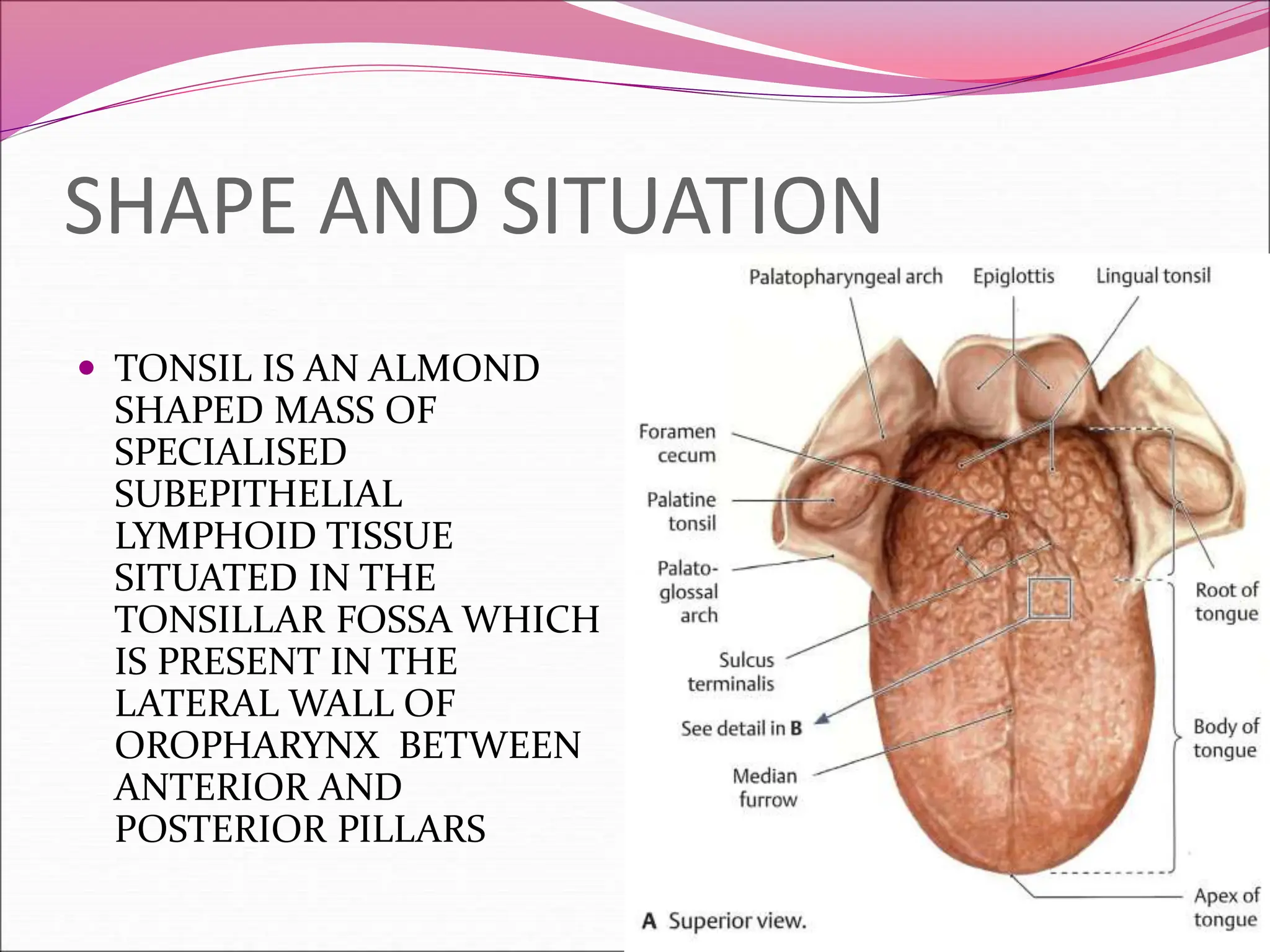
 TONSIL IS AN ALMOND
SHAPED MASS OF
SPECIALISED
SUBEPITHELIAL
LYMPHOID TISSUE
SITUATED IN THE
TONSILLAR FOSSA WHICH
IS PRESENT IN THE
LATERAL WALL OF
OROPHARYNX BETWEEN
ANTERIOR AND
POSTERIOR PILLARS
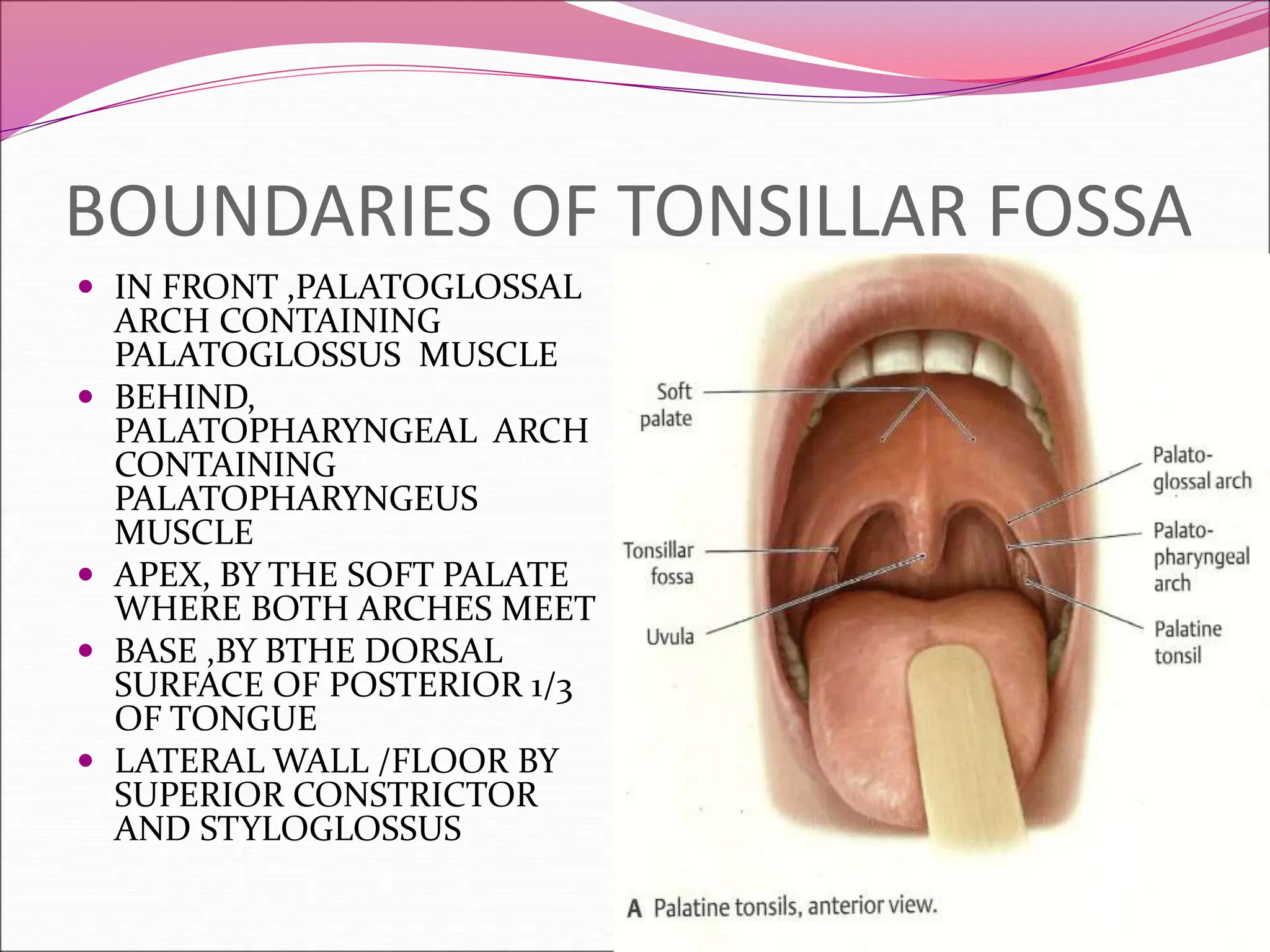
BOUNDARIES OF TONSILLAR FOSSA
 IN FRONT ,PALATOGLOSSAL
ARCH CONTAINING
PALATOGLOSSUS MUSCLE
 BEHIND,
PALATOPHARYNGEAL ARCH
CONTAINING
PALATOPHARYNGEUS
MUSCLE
 APEX, BY THE SOFT PALATE
WHERE BOTH ARCHES MEET
 BASE ,BY BTHE DORSAL
SURFACE OF POSTERIOR 1/3
OF TONGUE
 LATERAL WALL /FLOOR BY
SUPERIOR CONSTRICTOR
AND STYLOGLOSSUS
 IT HAS 2 SURFACES –MEDIAL AND LATERAL
 2POLES –UPPER AND LOWER
MEDIAL SURFACE
 SURFACE IS FREE AND HAS
 1)TONSILLAR PITS –SMALL OPENINGS ABOUT 12 – 15 IN
NUMBER KNOWN AS TONSILLAR CRYPTS
 2)INTRATONSILLAR CLEFT-ALSO KNOWN AS CRYPTA
MAGNAWHICH IS VERY LARGE DEEP SEMILUNAR
FISSURE AFFECTING UPPER PART OF TONSIL
 3)EMBRYONIC FOLDS-
 a)plica triangularis-is a triangular vestegeal fold of mucous
membrane at the lower part of palatoglossal arch
b)plica semilunaris- semilunar fold of mucous membrane at
the upper part of palatoglossal arch
Both these folds are replaced by lymphoid tissue after birth
Lateral surface
 Surface is covered by a well defined fibrous capsule
 Capule is an extension of pharyngobasilar fascia
 Post superiorly ,capsule is attched loosely to muscular
wall of pharynx
 Anteroinferiorly, it is firmly adherent to medial side of
tongue
 Loose areolar tissue is present between capsule and
bed of tonsil
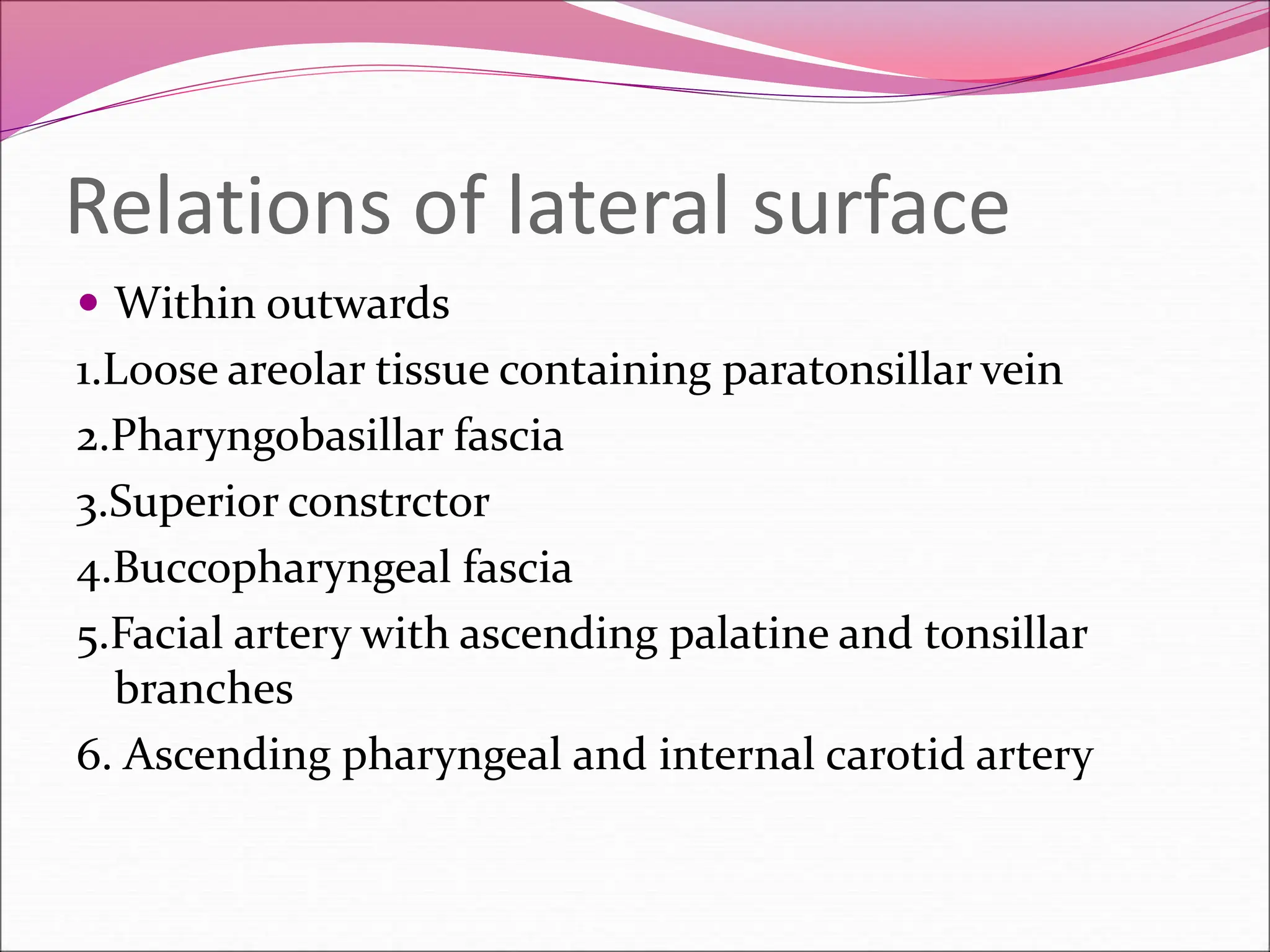
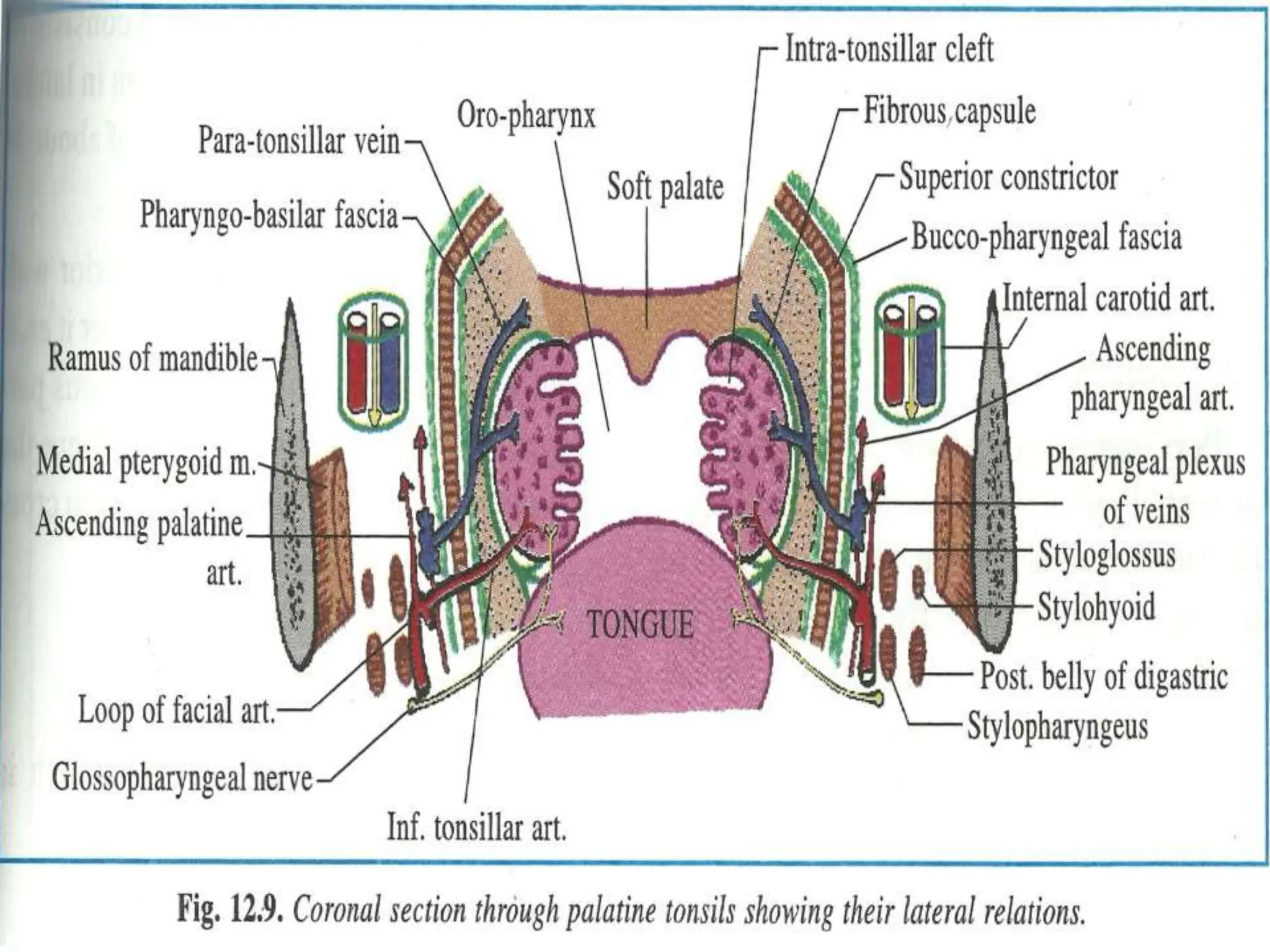
Relations of lateral surface
 Within outwards
1.Loose areolar tissue containing paratonsillar vein
2.Pharyngobasillar fascia
3.Superior constrctor
4.Buccopharyngeal fascia
5.Facial artery with ascending palatine and tonsillar
branches
6. Ascending pharyngeal and internal carotid artery
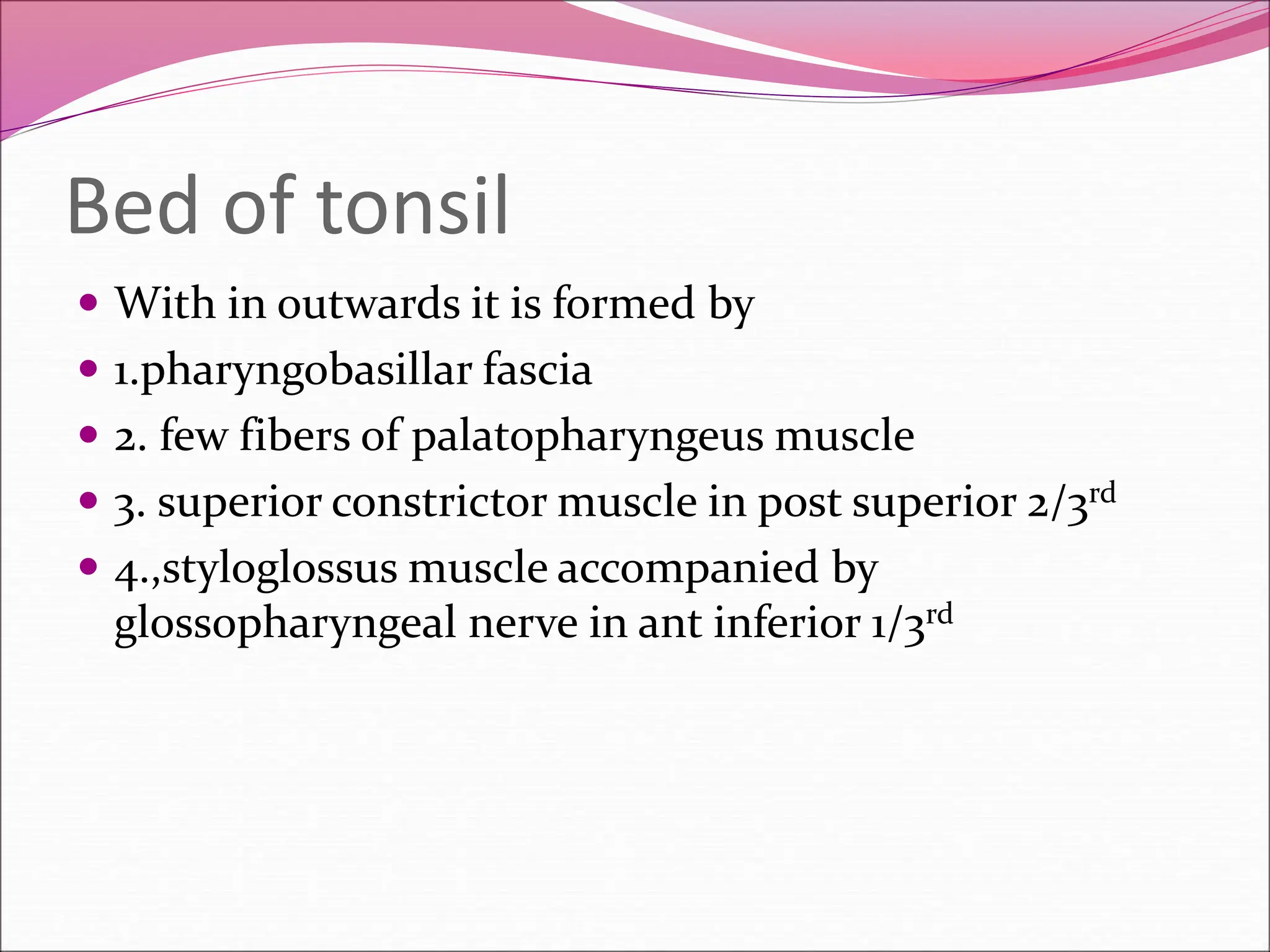
Bed of tonsil
 With in outwards it is formed by
 1.pharyngobasillar fascia
 2. few fibers of palatopharyngeus muscle
 3. superior constrictor muscle in post superior 2/3rd
 4.,styloglossus muscle accompanied by
glossopharyngeal nerve in ant inferior 1/3rd
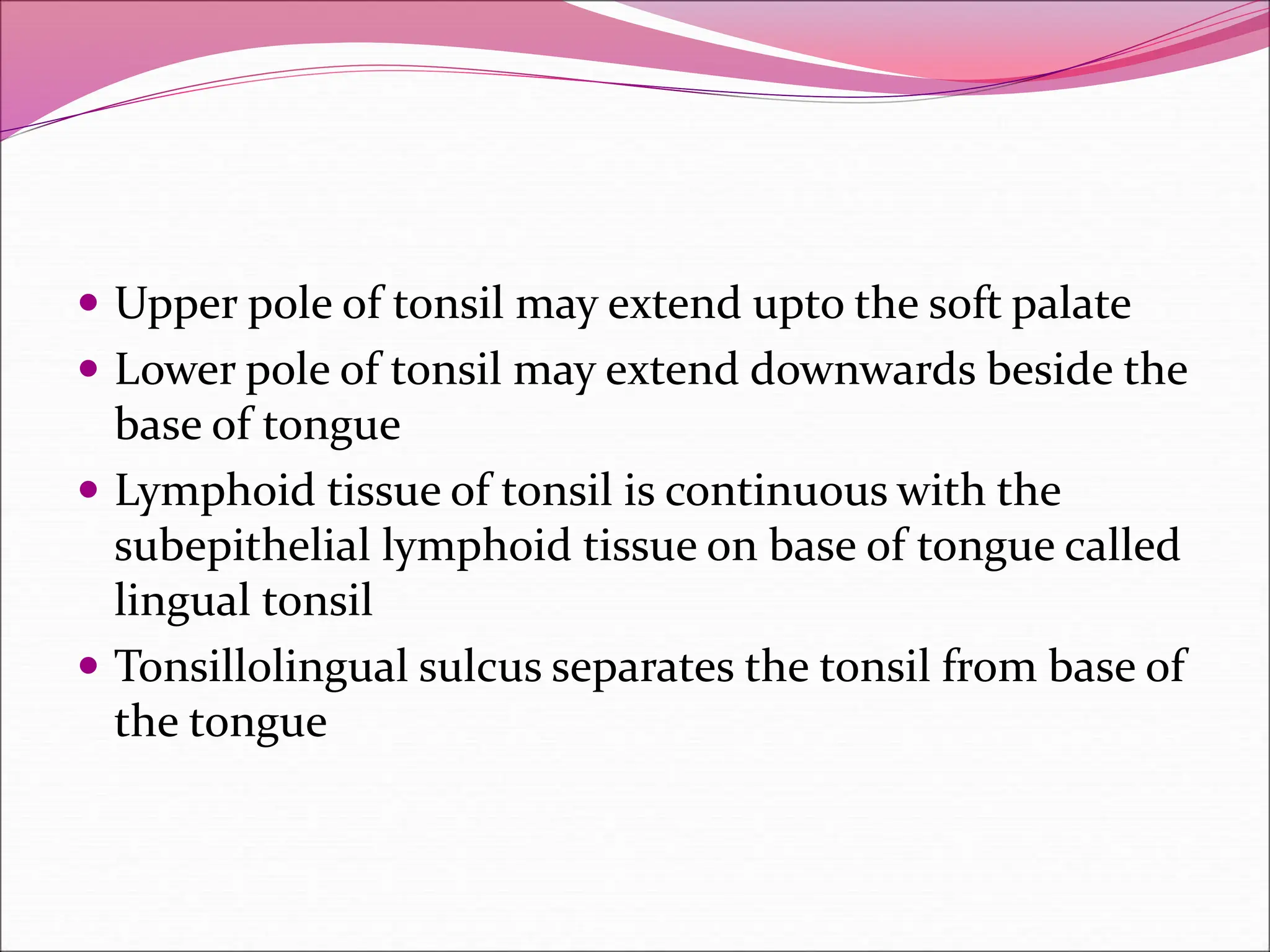
 Upper pole of tonsil may extend upto the soft palate
 Lower pole of tonsil may extend downwards beside the
base of tongue
 Lymphoid tissue of tonsil is continuous with the
subepithelial lymphoid tissue on base of tongue called
lingual tonsil
 Tonsillolingual sulcus separates the tonsil from base of
the tongue
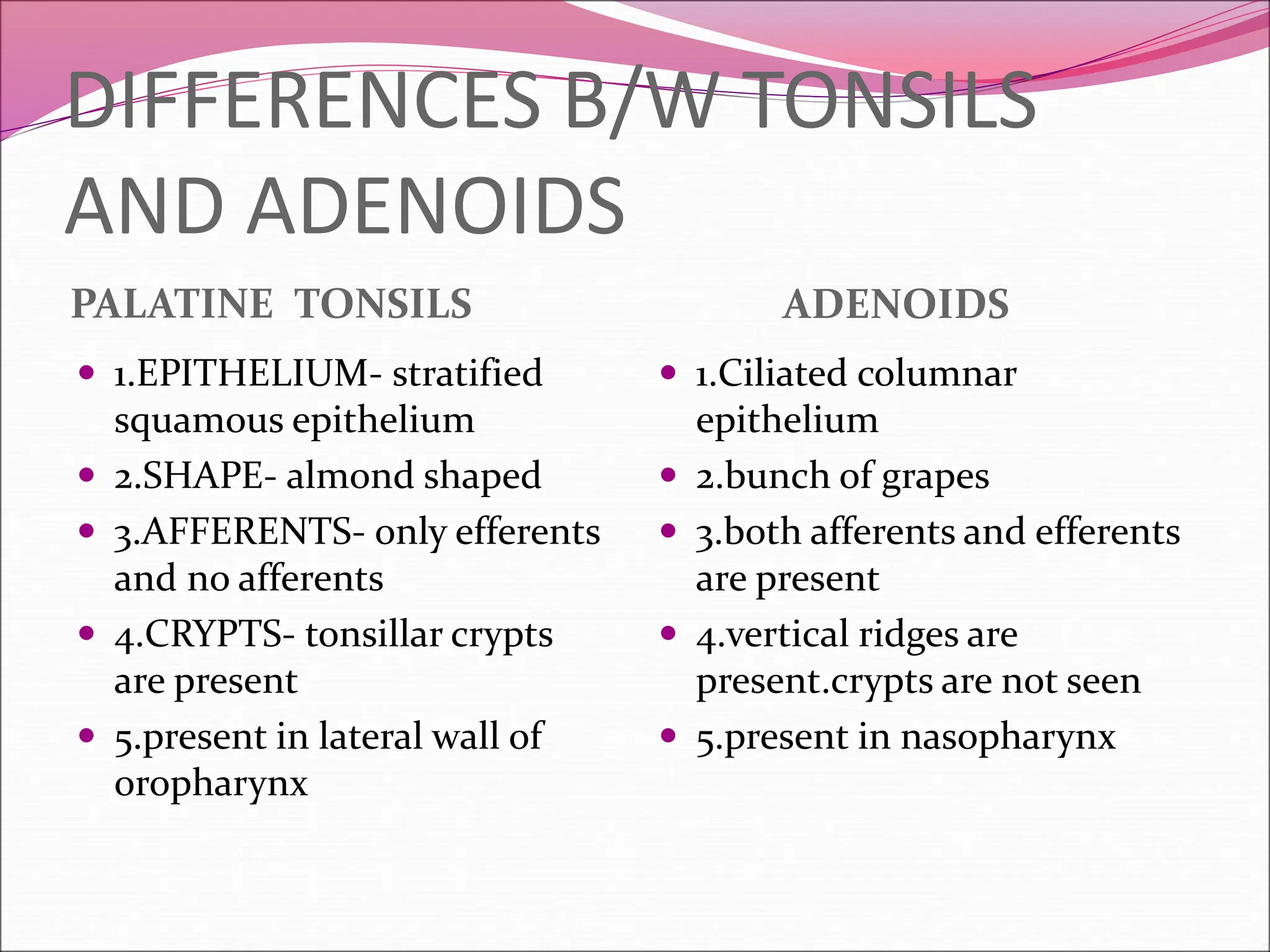
DIFFERENCES B/W TONSILS
AND ADENOIDS
PALATINE TONSILS ADENOIDS
 1.EPITHELIUM- stratified
squamous epithelium
 2.SHAPE- almond shaped
 3.AFFERENTS- only efferents
and no afferents
 4.CRYPTS- tonsillar crypts
are present
 5.present in lateral wall of
oropharynx
 1.Ciliated columnar
epithelium
 2.bunch of grapes
 3.both afferents and efferents
are present
 4.vertical ridges are
present.crypts are not seen
 5.present in nasopharynx
Factors keeping tonsil in position
 1. suspensory ligament of tonsil connecting it with
tongue
 2. attachments of palatopharyngeus and palatoglossus
muscles to the fibrous capsule of tonsil
 3.perivascular stalks
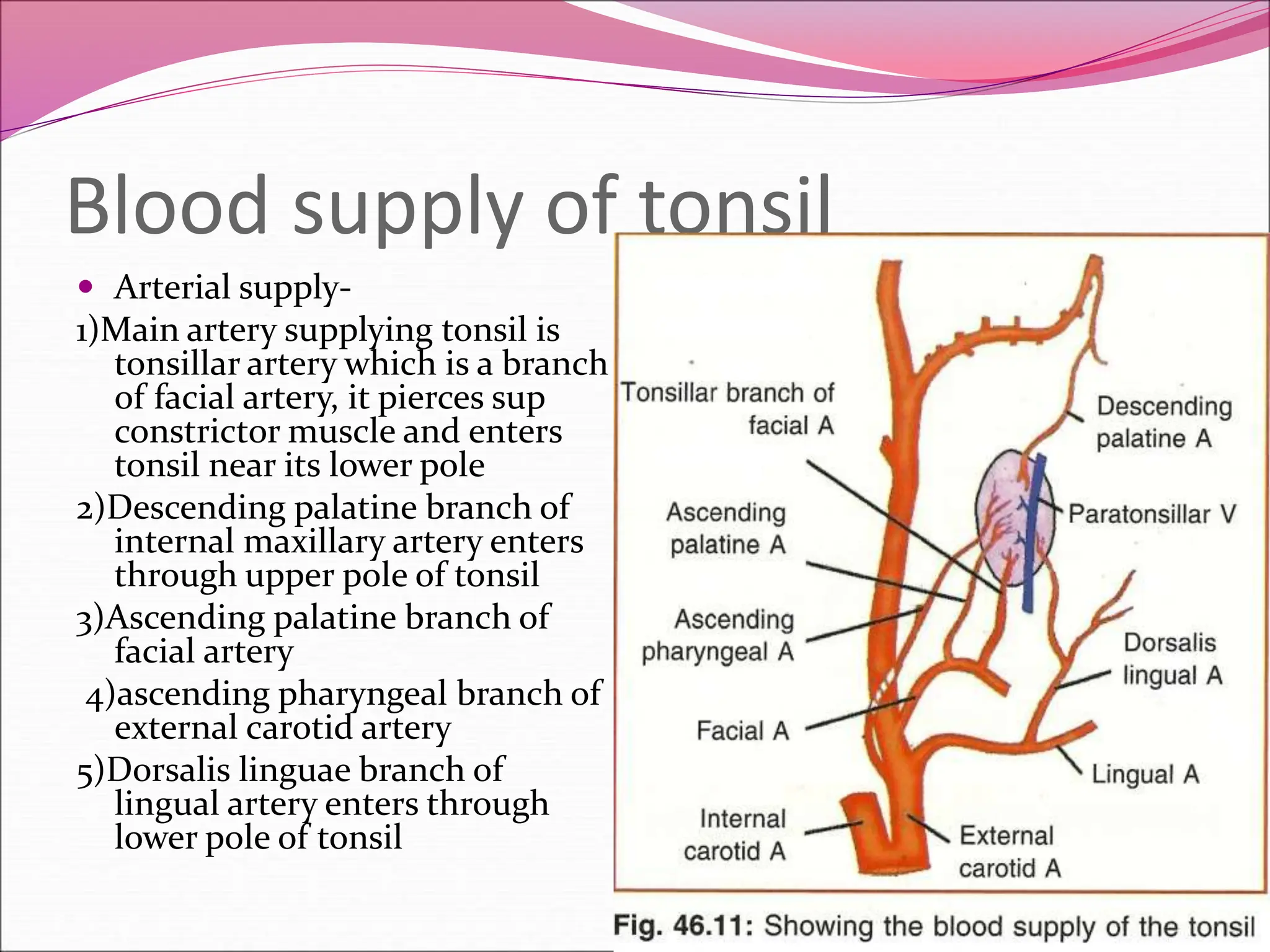
Blood supply of tonsil
 Arterial supply-
1)Main artery supplying tonsil is
tonsillar artery which is a branch
of facial artery, it pierces sup
constrictor muscle and enters
tonsil near its lower pole
2)Descending palatine branch of
internal maxillary artery enters
through upper pole of tonsil
3)Ascending palatine branch of
facial artery
4)ascending pharyngeal branch of
external carotid artery
5)Dorsalis linguae branch of
lingual artery enters through
lower pole of tonsil
Venous drainage
 Veins drain into pharyngeal venous plexus via the para
tonsillar vein
Lymphatic drainage
 Lymphatics drain into jugulodigastric lymphnodes
situated at the junction of common facial and internal
juglar vein just below posterior belly of digastric
muscle
Nerve supply
 Main sensory supply is by tonsillar branch of
glossopharngeal nerve
 Greater and lesser palatine branches from
pterygopalatine ganglion supply upper part of tonsil
near the soft palate
Waldeyer ‘s ring
 It is a scattered collection of
subepithelial lymphoid tissue
around aerodigestive tract
 It consists of inner and outer
rings
 Inner ring is formed by
1.Nasopharyngeal tonsils or
adenoids
2.Palatine tonsils
3. Lingual tonsils
4.Tubal tonsils
5. Lateral pharyngeal band
6.Discrete nodules in posterior
pharyngeal wall
 Outer ring is formed by
1.Occipital lymphnodes
2.Post auricular lymph nodes
3.Parotid lymphnodes
4.Facial lymphnodes
5.Submental lymphnodes
Functins of waldeyer’s ring
 1.helps in defensive mehanism of respiratory and
alimentary systems by destroying the entry of
microorganisms
 2.formation of lymphocytes and plasma cells
 3.body immunity and antibody formation in early
years of life
 4.protection to lower respiratory tract by guarding the
entry of air passage
Developmental anatomy
 Tonsils are developed from ventral part of second
pharyngeal pouch
 Intra tonsillar cleft is a remnant of second pharyngeal
pouch
 Lymphocytes are mesodermal in origin.they appear
during 3rd month.
 Tosillar crypts develop as solid ingrowths from the
surface epithelium by 3rd to 6th month.
 Tosillar capsule is formed from mesenchyme by 5th
month.
 Pillars are formed from 2nd & 3rd branchial arches
through dorsal extension of mesenchyme into the
forming soft palate
 Nasopharyngeal tonsils or adenoids develop during
4th to 6th month of intrauterine life
Histology of tonsil
 Tonsil is lined by nonkeratinised stratified squamous
epithelium
 Consists of numerous lymphatic follicles which
surround the tonsillar crypt
 Each follicle presents a germinal centre composed of
lymphoblasts
 Multiplication of lymphocytes occur in germinal
center.
Applied anatomy
 Surgical removal of tonsils is indicated in recurrent
tonsillitis
 Reffered pain in the ear following tonsillectomy is due
to common nerve supply by glossopharyngeal nerve
 Sometimes patient may complain of loss of taste
sensation after tonsillectomy due to involvement of
glosspharyngeal nerve
 During removal ,the paratonsillar vein may be
damaged producing excessive venous haemorrhage
 A penetrating oropharyngeal injury directed
posterolaterally travels the tonsillar bed and superior
constrictor enters the parapharyngeal space
 Stuctures that can be injured are
1.internal jugular vein
2.internal carotid artery
3.nerves associated with carotid sheath
4.sympathetic trunk
Thank u. . .

Anatomy Of Tonsil..........................

  • 1.
  • 2.
    SHAPE AND SITUATION TONSIL IS AN ALMOND SHAPED MASS OF SPECIALISED SUBEPITHELIAL LYMPHOID TISSUE SITUATED IN THE TONSILLAR FOSSA WHICH IS PRESENT IN THE LATERAL WALL OF OROPHARYNX BETWEEN ANTERIOR AND POSTERIOR PILLARS
  • 3.
    BOUNDARIES OF TONSILLARFOSSA  IN FRONT ,PALATOGLOSSAL ARCH CONTAINING PALATOGLOSSUS MUSCLE  BEHIND, PALATOPHARYNGEAL ARCH CONTAINING PALATOPHARYNGEUS MUSCLE  APEX, BY THE SOFT PALATE WHERE BOTH ARCHES MEET  BASE ,BY BTHE DORSAL SURFACE OF POSTERIOR 1/3 OF TONGUE  LATERAL WALL /FLOOR BY SUPERIOR CONSTRICTOR AND STYLOGLOSSUS
  • 4.
     IT HAS2 SURFACES –MEDIAL AND LATERAL  2POLES –UPPER AND LOWER
  • 5.
    MEDIAL SURFACE  SURFACEIS FREE AND HAS  1)TONSILLAR PITS –SMALL OPENINGS ABOUT 12 – 15 IN NUMBER KNOWN AS TONSILLAR CRYPTS  2)INTRATONSILLAR CLEFT-ALSO KNOWN AS CRYPTA MAGNAWHICH IS VERY LARGE DEEP SEMILUNAR FISSURE AFFECTING UPPER PART OF TONSIL  3)EMBRYONIC FOLDS-  a)plica triangularis-is a triangular vestegeal fold of mucous membrane at the lower part of palatoglossal arch b)plica semilunaris- semilunar fold of mucous membrane at the upper part of palatoglossal arch Both these folds are replaced by lymphoid tissue after birth
  • 6.
    Lateral surface  Surfaceis covered by a well defined fibrous capsule  Capule is an extension of pharyngobasilar fascia  Post superiorly ,capsule is attched loosely to muscular wall of pharynx  Anteroinferiorly, it is firmly adherent to medial side of tongue  Loose areolar tissue is present between capsule and bed of tonsil
  • 7.
    Relations of lateralsurface  Within outwards 1.Loose areolar tissue containing paratonsillar vein 2.Pharyngobasillar fascia 3.Superior constrctor 4.Buccopharyngeal fascia 5.Facial artery with ascending palatine and tonsillar branches 6. Ascending pharyngeal and internal carotid artery
  • 9.
    Bed of tonsil With in outwards it is formed by  1.pharyngobasillar fascia  2. few fibers of palatopharyngeus muscle  3. superior constrictor muscle in post superior 2/3rd  4.,styloglossus muscle accompanied by glossopharyngeal nerve in ant inferior 1/3rd
  • 10.
     Upper poleof tonsil may extend upto the soft palate  Lower pole of tonsil may extend downwards beside the base of tongue  Lymphoid tissue of tonsil is continuous with the subepithelial lymphoid tissue on base of tongue called lingual tonsil  Tonsillolingual sulcus separates the tonsil from base of the tongue
  • 11.
    DIFFERENCES B/W TONSILS ANDADENOIDS PALATINE TONSILS ADENOIDS  1.EPITHELIUM- stratified squamous epithelium  2.SHAPE- almond shaped  3.AFFERENTS- only efferents and no afferents  4.CRYPTS- tonsillar crypts are present  5.present in lateral wall of oropharynx  1.Ciliated columnar epithelium  2.bunch of grapes  3.both afferents and efferents are present  4.vertical ridges are present.crypts are not seen  5.present in nasopharynx
  • 12.
    Factors keeping tonsilin position  1. suspensory ligament of tonsil connecting it with tongue  2. attachments of palatopharyngeus and palatoglossus muscles to the fibrous capsule of tonsil  3.perivascular stalks
  • 13.
    Blood supply oftonsil  Arterial supply- 1)Main artery supplying tonsil is tonsillar artery which is a branch of facial artery, it pierces sup constrictor muscle and enters tonsil near its lower pole 2)Descending palatine branch of internal maxillary artery enters through upper pole of tonsil 3)Ascending palatine branch of facial artery 4)ascending pharyngeal branch of external carotid artery 5)Dorsalis linguae branch of lingual artery enters through lower pole of tonsil
  • 14.
    Venous drainage  Veinsdrain into pharyngeal venous plexus via the para tonsillar vein
  • 15.
    Lymphatic drainage  Lymphaticsdrain into jugulodigastric lymphnodes situated at the junction of common facial and internal juglar vein just below posterior belly of digastric muscle
  • 16.
    Nerve supply  Mainsensory supply is by tonsillar branch of glossopharngeal nerve  Greater and lesser palatine branches from pterygopalatine ganglion supply upper part of tonsil near the soft palate
  • 17.
    Waldeyer ‘s ring It is a scattered collection of subepithelial lymphoid tissue around aerodigestive tract  It consists of inner and outer rings  Inner ring is formed by 1.Nasopharyngeal tonsils or adenoids 2.Palatine tonsils 3. Lingual tonsils 4.Tubal tonsils 5. Lateral pharyngeal band 6.Discrete nodules in posterior pharyngeal wall
  • 18.
     Outer ringis formed by 1.Occipital lymphnodes 2.Post auricular lymph nodes 3.Parotid lymphnodes 4.Facial lymphnodes 5.Submental lymphnodes
  • 19.
    Functins of waldeyer’sring  1.helps in defensive mehanism of respiratory and alimentary systems by destroying the entry of microorganisms  2.formation of lymphocytes and plasma cells  3.body immunity and antibody formation in early years of life  4.protection to lower respiratory tract by guarding the entry of air passage
  • 20.
    Developmental anatomy  Tonsilsare developed from ventral part of second pharyngeal pouch  Intra tonsillar cleft is a remnant of second pharyngeal pouch  Lymphocytes are mesodermal in origin.they appear during 3rd month.  Tosillar crypts develop as solid ingrowths from the surface epithelium by 3rd to 6th month.  Tosillar capsule is formed from mesenchyme by 5th month.
  • 21.
     Pillars areformed from 2nd & 3rd branchial arches through dorsal extension of mesenchyme into the forming soft palate  Nasopharyngeal tonsils or adenoids develop during 4th to 6th month of intrauterine life
  • 22.
    Histology of tonsil Tonsil is lined by nonkeratinised stratified squamous epithelium  Consists of numerous lymphatic follicles which surround the tonsillar crypt  Each follicle presents a germinal centre composed of lymphoblasts  Multiplication of lymphocytes occur in germinal center.
  • 23.
    Applied anatomy  Surgicalremoval of tonsils is indicated in recurrent tonsillitis  Reffered pain in the ear following tonsillectomy is due to common nerve supply by glossopharyngeal nerve  Sometimes patient may complain of loss of taste sensation after tonsillectomy due to involvement of glosspharyngeal nerve  During removal ,the paratonsillar vein may be damaged producing excessive venous haemorrhage
  • 24.
     A penetratingoropharyngeal injury directed posterolaterally travels the tonsillar bed and superior constrictor enters the parapharyngeal space  Stuctures that can be injured are 1.internal jugular vein 2.internal carotid artery 3.nerves associated with carotid sheath 4.sympathetic trunk
  • 25.