CEREBELLUM
•INTRODUCTION
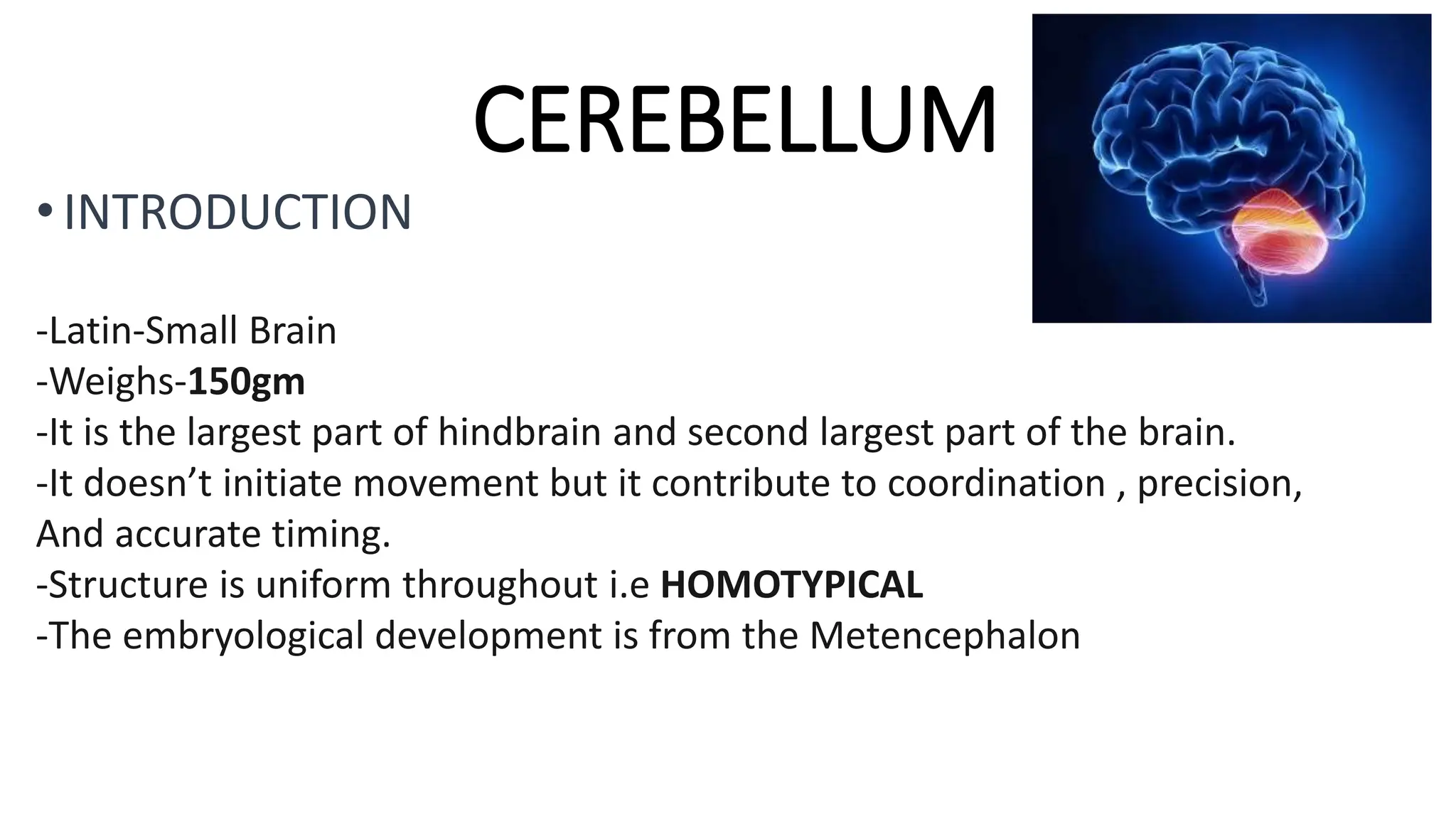
-Latin-Small Brain
-Weighs-150gm
-It is the largest part of hindbrain and second largest part of the brain.
-It doesn’t initiate movement but it contribute to coordination , precision,
And accurate timing.
-Structure is uniform throughout i.e HOMOTYPICAL
-The embryological development is from the Metencephalon
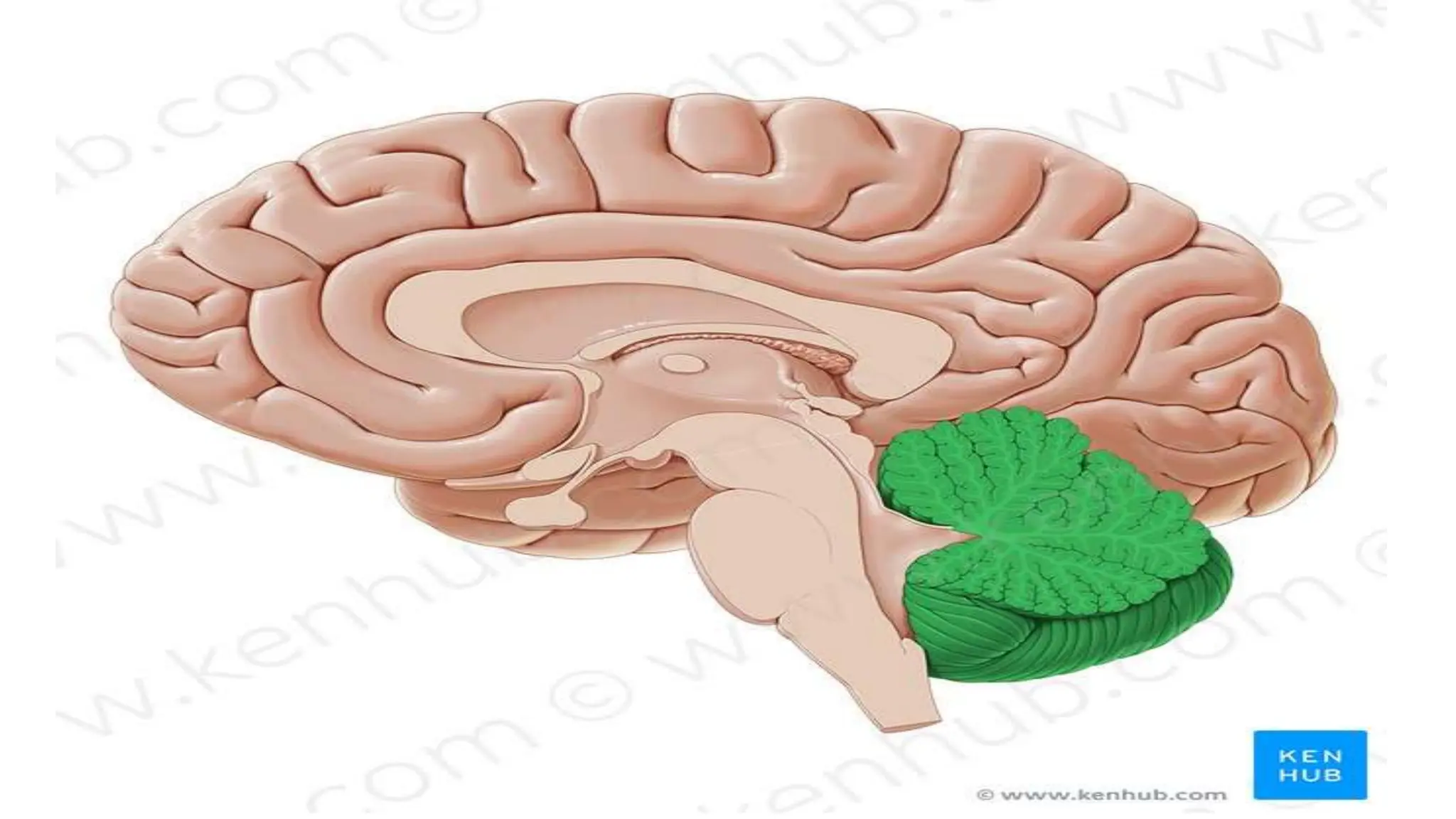
Location
• Situated in the posterior cranial fossa behind
the pons and medulla.
• It is an infratentorial structure that controls
voluntary movements of the body.
RELATIONS
*Anteriorly: Fourth ventricle,pons
and medulla
*Posteroinferiorly:Squamous
occipital bone.
*Superiorly: Tentorium cerebelli
(it is a dura matter fold which
separate cerebellum from
temporal and occipital bone)
EXTERNAL FEATURES
• Cerebellum consist of two cerebellar hemispheres connect to each other by
MEDIAN VERMIS.
• SURFACES
2 Surface
Superior
slightly convex
Two hemisphere are
continuous with
eachother
Inferior
shows a deep
median notch
called the vallecula
seperates
right and left
convex hemisphere
2 Aspects
• 3 Lobes
• ANTERIOR MIDDLE Flocculonodular
-Lies on the ant Largest and Smallest lobe
Part of superior situated on both lies on inferior
surface surface surface,front
-Separate from middle of posterior-
Lobe by fissura prima lateral fissure
3 Fissures
HORIZONTAL PRIMARY POSTEROLATERAL
Separate superior separate anterior separate middle
from inferior from middle lobe from flocculo
Surface lobe nodular lobe
PRIMARY FISSURE
ANTERIOR
LOBE
POSTERIOR
LOBE
FLOCCULONODULAR
PHYLOGENETICAL DIVISION
1)Archicerebellum- oldest,include
flooculonodular
lobe and lingula
2)Paleocerebellum- next part of cerebellum
include anterior lobe,pyramid and uvula
3)Neocerebellum-Newest part
include middle lobe except pyramid and
uvula
FUNCTIONAL DIVISIONS
1.Lateral Zone-
Cerebrocerebellum
2.Intermediate Zone
3.Median Zone/Vermis
-This both include spinocerebellum
4.Flocculonodular lobe-
Vestibulocerebellum
Connections of cerebellum
Peduncle coonects the cerebellum
to the brain stem by its fibers.
• Superior cerebellar peduncle =
cerebellum+midbrain
• Middle cerebellar peduncle=
Cerebellum + pons
• Inferior cerebellar peduncle=
Cerebellum + medulla oblangata
.GREY MATTER
-Grey matter is highly folded to
accommodate millions of neurons in a
Small area called “arbor vitae” or tree of life
-consist of cerebellar cortex and cerebellar
nuclei
-four pairs of nuclei:
1)Nucleus dentatus is neocerebellar
2)Nucleus globosus
3)Nucleus emboliformis is paleocerebellar
4)Nucleus fastigii is archicerebellar
• Cerebellum functions as ‘comparator’ It receives information
from cerebrum and spinal cord.
• Neocerebellum- Fine tuning of motor performance for precise
movements.
• FMRI(functional magnetic resonance imaging) -measure the
small change in blood flow that occur with brain activity and used
to examine which part are handling critical function and to guide
brain treatment.
Clinical Anatomy
• Ataxia- connection of vermis to the vestibular nuclei are involved
• Nystagmus- loss of connection of vermis with labyrinth.
• Anterior lobe lesion- cause gait ataxia
• Neocerebellar lesions- cause incoordination of upper limb movements
• 'Cerebellum cognitive affective syndrome’- one of the six arteries get affected
• Muscular
• Intention tremors

ANATOMY OF CEREBELLUM With Clinical Anatomy.pptx

  • 2.
    CEREBELLUM •INTRODUCTION -Latin-Small Brain -Weighs-150gm -It isthe largest part of hindbrain and second largest part of the brain. -It doesn’t initiate movement but it contribute to coordination , precision, And accurate timing. -Structure is uniform throughout i.e HOMOTYPICAL -The embryological development is from the Metencephalon
  • 3.
    Location • Situated inthe posterior cranial fossa behind the pons and medulla. • It is an infratentorial structure that controls voluntary movements of the body.
  • 5.
    RELATIONS *Anteriorly: Fourth ventricle,pons andmedulla *Posteroinferiorly:Squamous occipital bone. *Superiorly: Tentorium cerebelli (it is a dura matter fold which separate cerebellum from temporal and occipital bone)
  • 6.
    EXTERNAL FEATURES • Cerebellumconsist of two cerebellar hemispheres connect to each other by MEDIAN VERMIS. • SURFACES 2 Surface Superior slightly convex Two hemisphere are continuous with eachother Inferior shows a deep median notch called the vallecula seperates right and left convex hemisphere
  • 7.
  • 9.
    • 3 Lobes •ANTERIOR MIDDLE Flocculonodular -Lies on the ant Largest and Smallest lobe Part of superior situated on both lies on inferior surface surface surface,front -Separate from middle of posterior- Lobe by fissura prima lateral fissure 3 Fissures HORIZONTAL PRIMARY POSTEROLATERAL Separate superior separate anterior separate middle from inferior from middle lobe from flocculo Surface lobe nodular lobe
  • 10.
  • 11.
  • 12.
  • 13.
  • 14.
    PHYLOGENETICAL DIVISION 1)Archicerebellum- oldest,include flooculonodular lobeand lingula 2)Paleocerebellum- next part of cerebellum include anterior lobe,pyramid and uvula 3)Neocerebellum-Newest part include middle lobe except pyramid and uvula
  • 17.
    FUNCTIONAL DIVISIONS 1.Lateral Zone- Cerebrocerebellum 2.IntermediateZone 3.Median Zone/Vermis -This both include spinocerebellum 4.Flocculonodular lobe- Vestibulocerebellum
  • 18.
    Connections of cerebellum Pedunclecoonects the cerebellum to the brain stem by its fibers. • Superior cerebellar peduncle = cerebellum+midbrain • Middle cerebellar peduncle= Cerebellum + pons • Inferior cerebellar peduncle= Cerebellum + medulla oblangata
  • 19.
    .GREY MATTER -Grey matteris highly folded to accommodate millions of neurons in a Small area called “arbor vitae” or tree of life -consist of cerebellar cortex and cerebellar nuclei -four pairs of nuclei: 1)Nucleus dentatus is neocerebellar 2)Nucleus globosus 3)Nucleus emboliformis is paleocerebellar 4)Nucleus fastigii is archicerebellar
  • 22.
    • Cerebellum functionsas ‘comparator’ It receives information from cerebrum and spinal cord. • Neocerebellum- Fine tuning of motor performance for precise movements. • FMRI(functional magnetic resonance imaging) -measure the small change in blood flow that occur with brain activity and used to examine which part are handling critical function and to guide brain treatment.
  • 23.
    Clinical Anatomy • Ataxia-connection of vermis to the vestibular nuclei are involved • Nystagmus- loss of connection of vermis with labyrinth. • Anterior lobe lesion- cause gait ataxia • Neocerebellar lesions- cause incoordination of upper limb movements • 'Cerebellum cognitive affective syndrome’- one of the six arteries get affected • Muscular • Intention tremors