ANAPHYLAXIS
INTRODUCTION
Anaphylaxis is a severe, life-threatening allergic
reaction occurring within seconds or minutes of
exposure to some allergents to, such as peanuts or
bee stings. It causes the immune system to release a
flood of chemicals that can cause shock, blood
pressure drops suddenly and the airways narrow and
can cause breathing difficulty .
DEFINITION
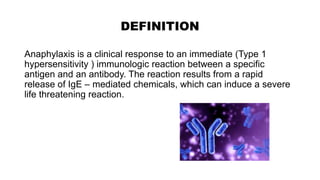
Anaphylaxis is a clinical response to an immediate (Type 1
hypersensitivity ) immunologic reaction between a specific
antigen and an antibody. The reaction results from a rapid
release of IgE – mediated chemicals, which can induce a severe
life threatening reaction.
CAUSES
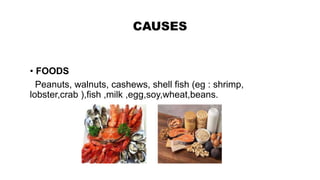
• FOODS
Peanuts, walnuts, cashews, shell fish (eg : shrimp,
lobster,crab ),fish ,milk ,egg,soy,wheat,beans.
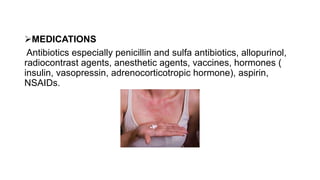
MEDICATIONS
Antibiotics especially penicillin and sulfa antibiotics, allopurinol,
radiocontrast agents, anesthetic agents, vaccines, hormones (
insulin, vasopressin, adrenocorticotropic hormone), aspirin,
NSAIDs.
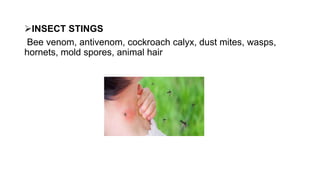
INSECT STINGS
Bee venom, antivenom, cockroach calyx, dust mites, wasps,
hornets, mold spores, animal hair
LATEX
medical and non medical products containing latex
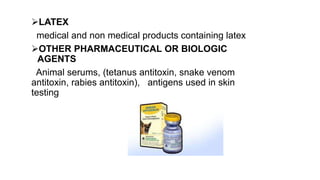
OTHER PHARMACEUTICAL OR BIOLOGIC
AGENTS
Animal serums, (tetanus antitoxin, snake venom
antitoxin, rabies antitoxin), antigens used in skin
testing
IMMEDIATE CLINICAL FEATURES
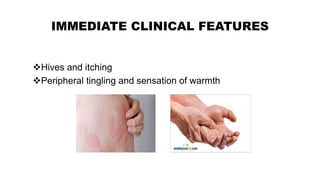
Hives and itching
Peripheral tingling and sensation of warmth
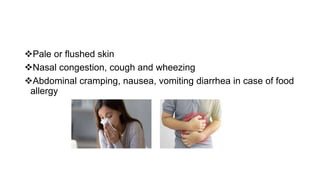
Pale or flushed skin
Nasal congestion, cough and wheezing
Abdominal cramping, nausea, vomiting diarrhea in case of food
allergy
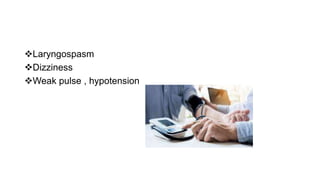
Laryngospasm
Dizziness
Weak pulse , hypotension
IMMEDIATE MANAGEMENT
History collection regarding the causes of reaction
Monitor pulse, oxygen saturation and blood pressure
Monitor ECG for any cardiac abnormality
Administration of IV fluids (normal saline 1-2 L )
Oxygen administration
Loosen tight clothing and cover the person with a blanket.
Don't give the person anything to drink.
If there's vomiting or bleeding from the mouth, turn the person
to the side to prevent choking.
Placement of the patient in the supine position with the lower
extremities elevated,
If there are no signs of breathing, coughing or movement,
begin CPR
Intubation should be performed on an emergency basis if
stridor or respiratory distress due to upper airway compromise
is present.
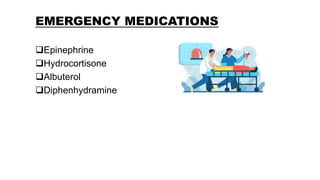
EMERGENCY MEDICATIONS
Epinephrine
Hydrocortisone
Albuterol
Diphenhydramine
EPINEPHRINE
• Normal adult dose: 50 to 100 mcg (equal to 0.05 to 0.1 mg)
• Route: IV / IM
• Mechanism of action: It decreases mediator release from
mast cells, prevents or reverses obstruction to airflow in the
upper and lower respiratory tracts, and prevents or reverses
cardiovascular collapse .
HYDROCORTISONE
• Normal adult dose :20 to 240 milligrams (mg)
• Route :Intravenous / Intramuscular
• Mechanism of action : Inhibits accumulation of inflammatory
cells at inflammation sites, phagocytosis, lysosomal enzyme
release and synthesis, and release of mediators of
inflammation.
ALBUTEROL
• Normal adult dose :1 puff
• Route :Inhalation
• Mechanism of action: Acts on beta 2 adrenergic receptors ,
including bronchial smooth muscles relaxations and inhibiting
immediate hypersensitivity mediator release , particularly from
mast cells
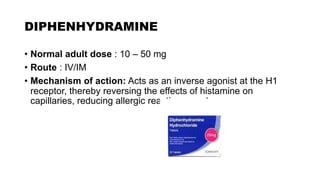
DIPHENHYDRAMINE
• Normal adult dose : 10 – 50 mg
• Route : IV/IM
• Mechanism of action: Acts as an inverse agonist at the H1
receptor, thereby reversing the effects of histamine on
capillaries, reducing allergic reaction symptoms.

anaphylaxis cne.pptx NURSING 4 YR BSC NURS

  • 1.
  • 2.
    INTRODUCTION Anaphylaxis is asevere, life-threatening allergic reaction occurring within seconds or minutes of exposure to some allergents to, such as peanuts or bee stings. It causes the immune system to release a flood of chemicals that can cause shock, blood pressure drops suddenly and the airways narrow and can cause breathing difficulty .
  • 3.
    DEFINITION Anaphylaxis is aclinical response to an immediate (Type 1 hypersensitivity ) immunologic reaction between a specific antigen and an antibody. The reaction results from a rapid release of IgE – mediated chemicals, which can induce a severe life threatening reaction.
  • 4.
    CAUSES • FOODS Peanuts, walnuts,cashews, shell fish (eg : shrimp, lobster,crab ),fish ,milk ,egg,soy,wheat,beans.
  • 5.
    MEDICATIONS Antibiotics especially penicillinand sulfa antibiotics, allopurinol, radiocontrast agents, anesthetic agents, vaccines, hormones ( insulin, vasopressin, adrenocorticotropic hormone), aspirin, NSAIDs.
  • 6.
    INSECT STINGS Bee venom,antivenom, cockroach calyx, dust mites, wasps, hornets, mold spores, animal hair
  • 7.
    LATEX medical and nonmedical products containing latex OTHER PHARMACEUTICAL OR BIOLOGIC AGENTS Animal serums, (tetanus antitoxin, snake venom antitoxin, rabies antitoxin), antigens used in skin testing
  • 8.
    IMMEDIATE CLINICAL FEATURES Hivesand itching Peripheral tingling and sensation of warmth
  • 9.
    Pale or flushedskin Nasal congestion, cough and wheezing Abdominal cramping, nausea, vomiting diarrhea in case of food allergy
  • 10.
  • 11.
    IMMEDIATE MANAGEMENT History collectionregarding the causes of reaction Monitor pulse, oxygen saturation and blood pressure Monitor ECG for any cardiac abnormality Administration of IV fluids (normal saline 1-2 L ) Oxygen administration
  • 12.
    Loosen tight clothingand cover the person with a blanket. Don't give the person anything to drink. If there's vomiting or bleeding from the mouth, turn the person to the side to prevent choking. Placement of the patient in the supine position with the lower extremities elevated, If there are no signs of breathing, coughing or movement, begin CPR Intubation should be performed on an emergency basis if stridor or respiratory distress due to upper airway compromise is present.
  • 13.
  • 14.
    EPINEPHRINE • Normal adultdose: 50 to 100 mcg (equal to 0.05 to 0.1 mg) • Route: IV / IM • Mechanism of action: It decreases mediator release from mast cells, prevents or reverses obstruction to airflow in the upper and lower respiratory tracts, and prevents or reverses cardiovascular collapse .
  • 15.
    HYDROCORTISONE • Normal adultdose :20 to 240 milligrams (mg) • Route :Intravenous / Intramuscular • Mechanism of action : Inhibits accumulation of inflammatory cells at inflammation sites, phagocytosis, lysosomal enzyme release and synthesis, and release of mediators of inflammation.
  • 16.
    ALBUTEROL • Normal adultdose :1 puff • Route :Inhalation • Mechanism of action: Acts on beta 2 adrenergic receptors , including bronchial smooth muscles relaxations and inhibiting immediate hypersensitivity mediator release , particularly from mast cells
  • 17.
    DIPHENHYDRAMINE • Normal adultdose : 10 – 50 mg • Route : IV/IM • Mechanism of action: Acts as an inverse agonist at the H1 receptor, thereby reversing the effects of histamine on capillaries, reducing allergic reaction symptoms.