Analyzing Semi-Structured
Data at Volume in the Cloud
Kevin Bair
Solution Architect
Kevin.Bair@snowflake.net
Topics this presentation will cover
1.  Structured vs. Semi-Structured
2.  ETL / Data Pipeline Architecture
3.  Analytics on Semi-Structured Data
Clickstream Demo
4.  Analyzing Structured with Semi-Structured Data
Twitter feed Demo
5.  Time permitting…..Cloud Big Data / Data Warehousing
2
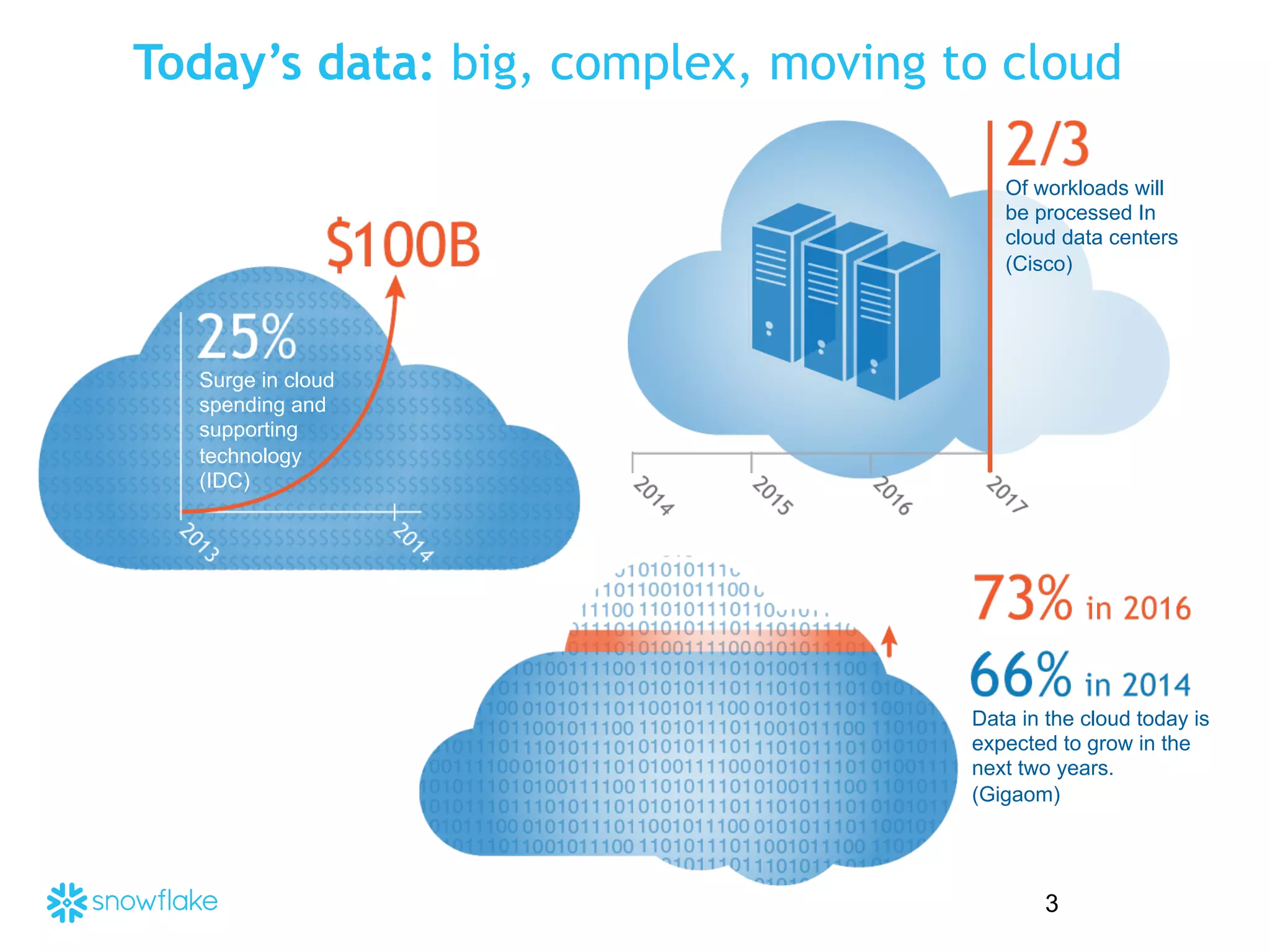
3
Surge in cloud
spending and
supporting
technology
(IDC)
Of workloads will
be processed In
cloud data centers
(Cisco)
Data in the cloud today is
expected to grow in the
next two years.
(Gigaom)
Today’s data: big, complex, moving to cloud
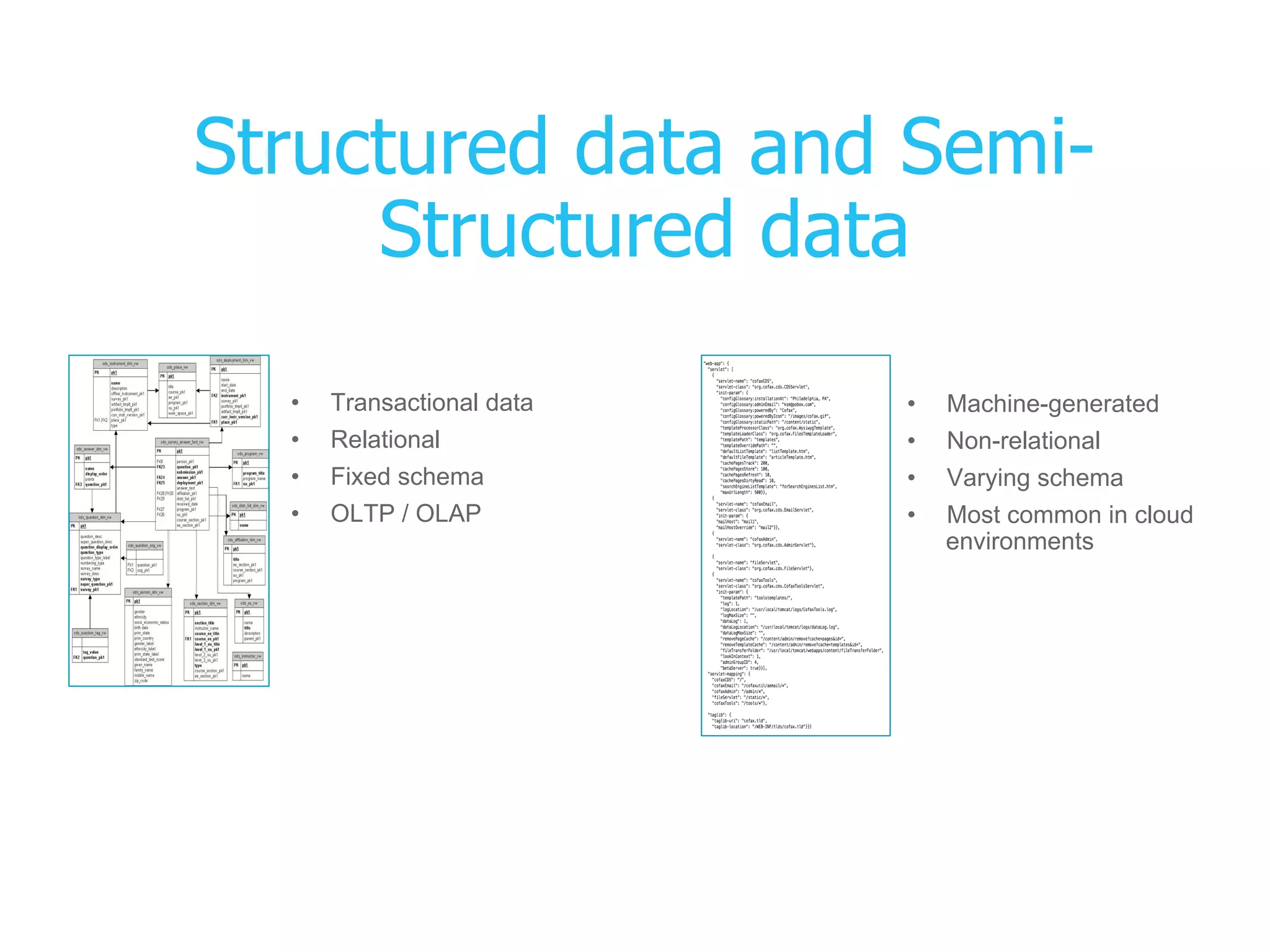
Structured data and Semi-
Structured data
•  Transactional data
•  Relational
•  Fixed schema
•  OLTP / OLAP
•  Machine-generated
•  Non-relational
•  Varying schema
•  Most common in cloud
environments
What does Semi Structured
mean?
•  Data that may be of any type
•  Data that is variable in length (arrays)
•  Structure that can rapidly and unpredictably
change
•  Usually Self Describing
•  Examples
•  XML
•  AVRO
•  JSON
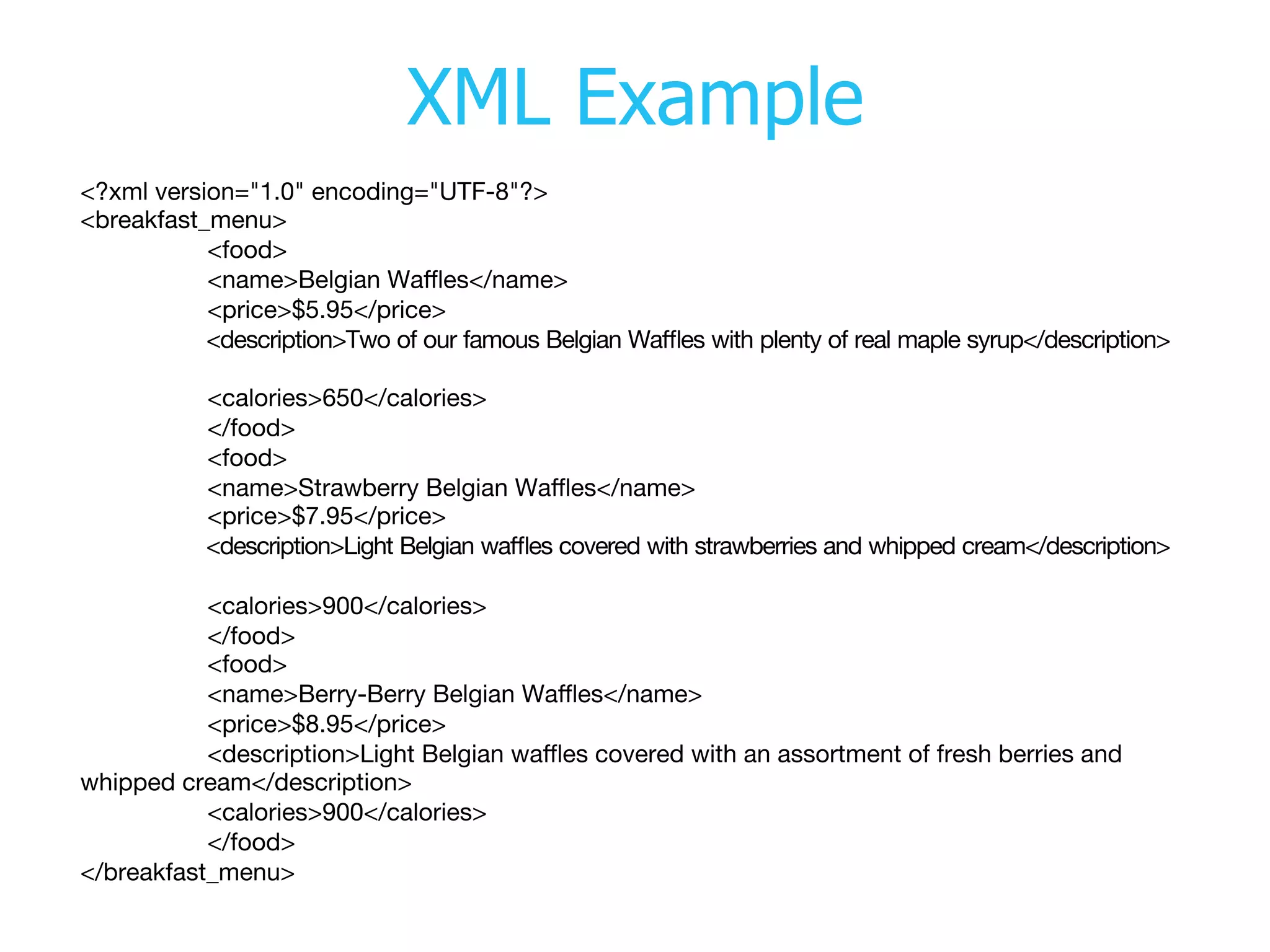
XML Example
<?xml version="1.0" encoding="UTF-8"?> 
 

<breakfast_menu> 


<food> 


<name>Belgian Waffles</name> 


<price>$5.95</price> 


<description>Two of our famous Belgian Waffles with plenty of real maple syrup</description>


<calories>650</calories> 


</food> 


<food> 


<name>Strawberry Belgian Waffles</name> 


<price>$7.95</price> 


<description>Light Belgian waffles covered with strawberries and whipped cream</description>


<calories>900</calories> 


</food> 


<food> 


<name>Berry-Berry Belgian Waffles</name> 


<price>$8.95</price> 


<description>Light Belgian waffles covered with an assortment of fresh berries and
whipped cream</description> 


<calories>900</calories> 


</food> 

</breakfast_menu>
JSON Example
{	


  "custkey":	
  "450002",	


  "useragent":	
  {	


  "devicetype":	
  "pc",	


  "experience":	
  "browser",	


  "platform":	
  "windows"	


  },	


  "pagetype":	
  "home",	


  "productline":	
  "television",	


  "customerprofile":	
  {	


  "age":	
  20,	


  "gender":	
  "male",	


  "customerinterests":	
  [	


  "movies",	


  "fashion",	


  "music"	


  ]	


  }	
  
}	
  
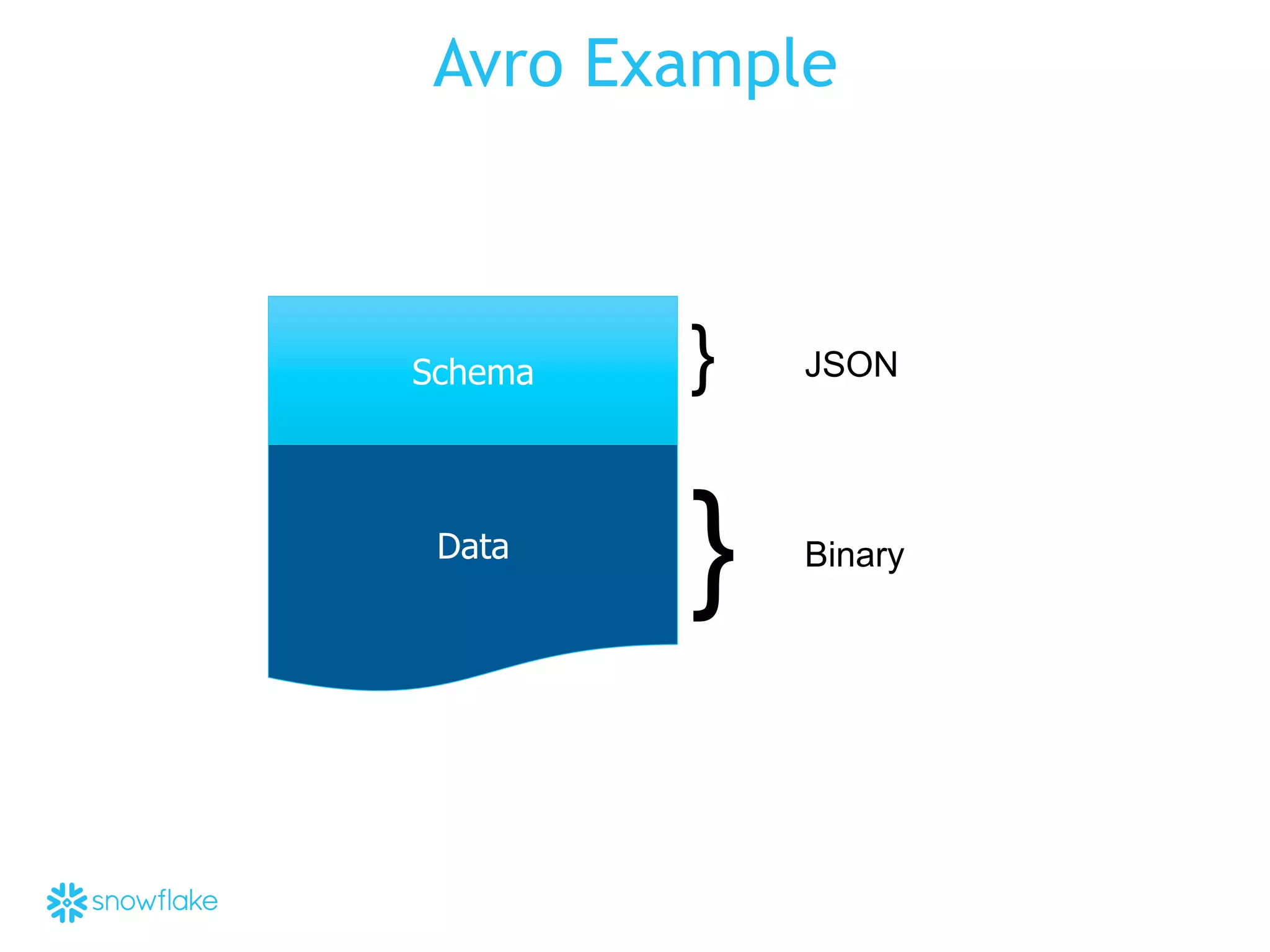
Avro Example
Schema
Data
}
}
JSON
Binary
Why is this so hard for a
traditional Relational DBMS?
•  Pre-defined Schema
•  Store in Character Large Object (CLOB) data
type
•  Constantly Changing
•  Inefficient to Query
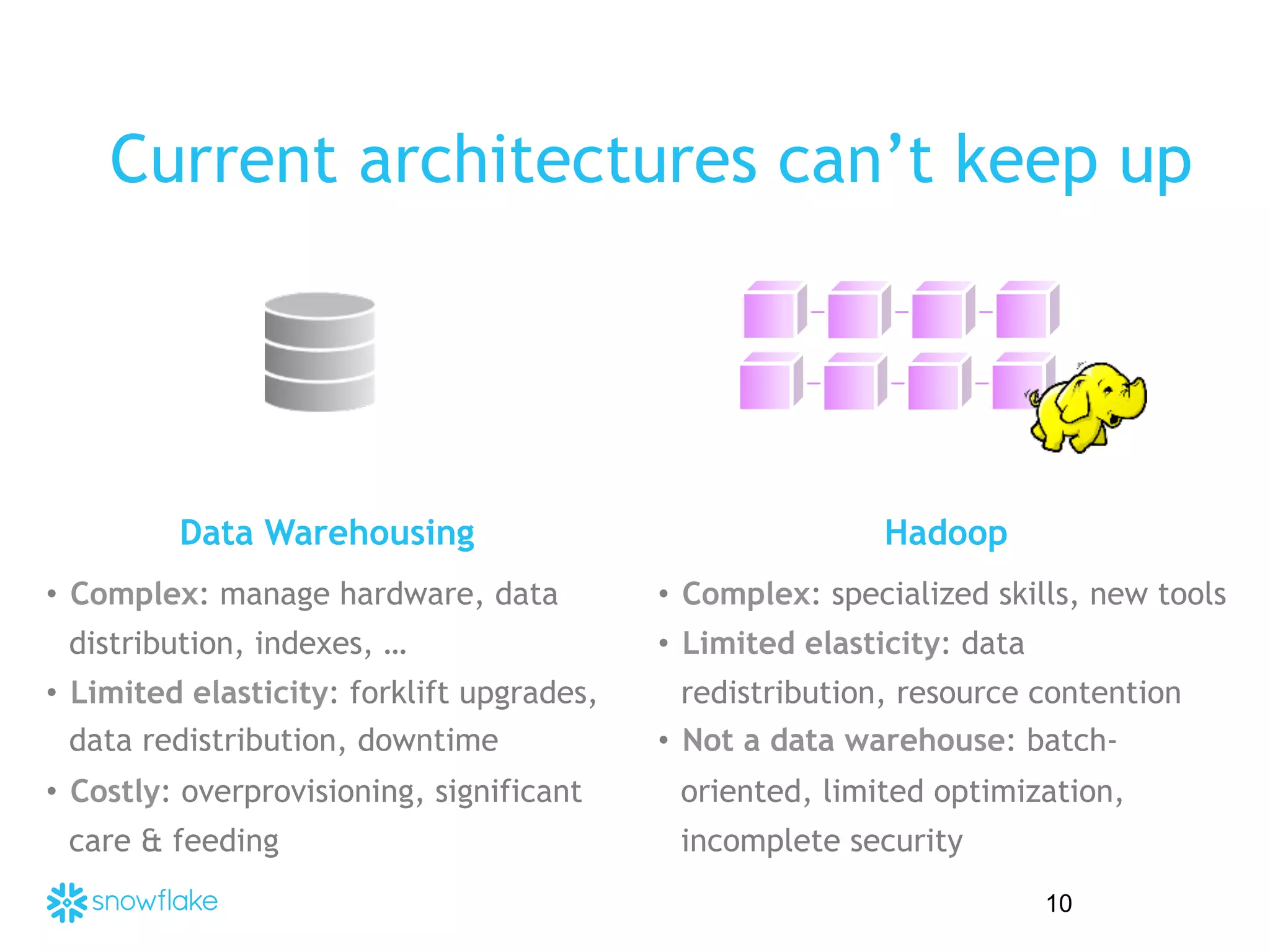
Data Warehousing
•  Complex: manage hardware, data
distribution, indexes, …
•  Limited elasticity: forklift upgrades,
data redistribution, downtime
•  Costly: overprovisioning, significant
care & feeding
Hadoop
•  Complex: specialized skills, new tools
•  Limited elasticity: data
redistribution, resource contention
•  Not a data warehouse: batch-
oriented, limited optimization,
incomplete security
Current architectures can’t keep up
10
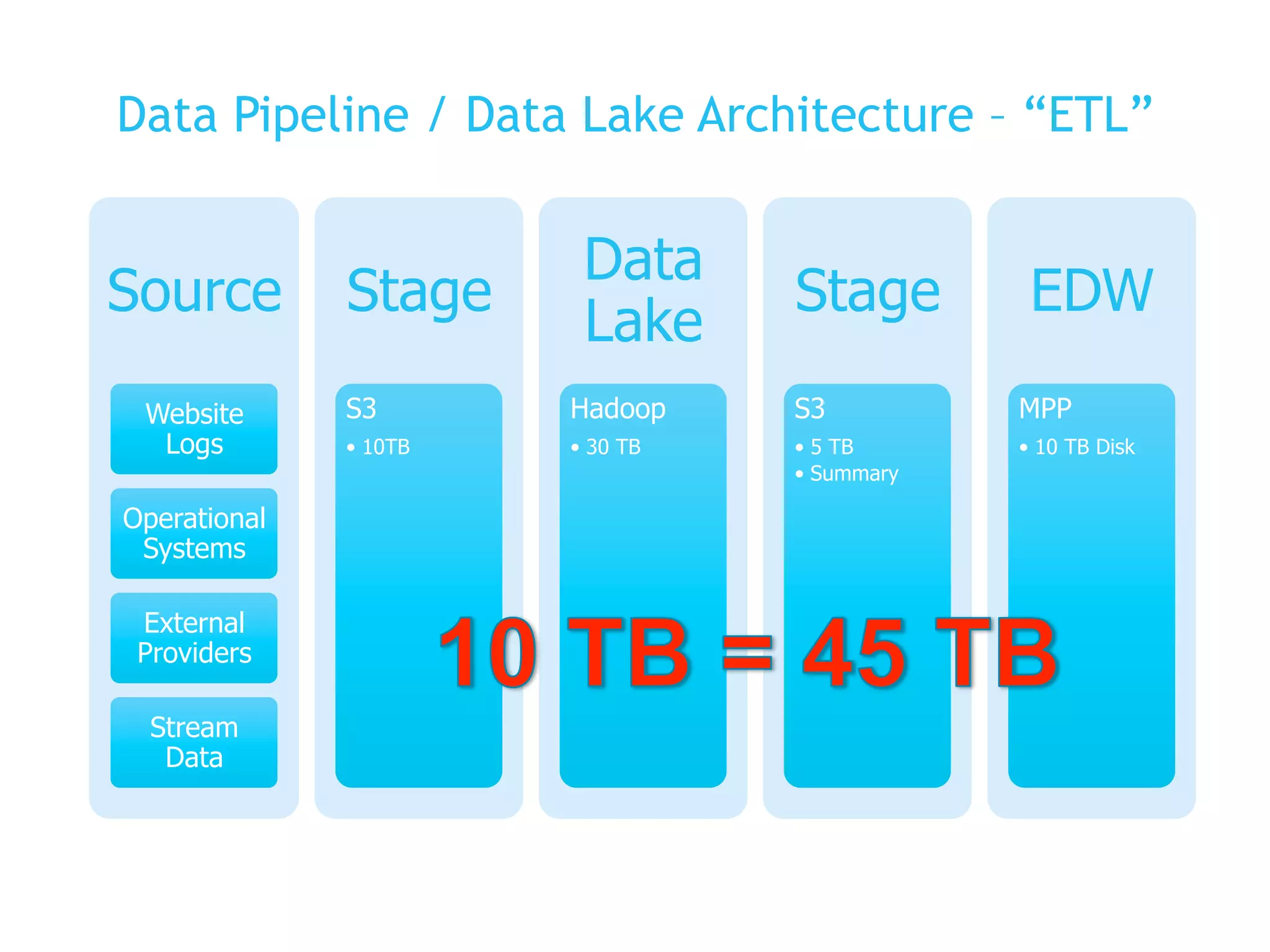
Source
Website
Logs
Operational
Systems
External
Providers
Stream
Data
Stage
S3
•  10TB
Data
Lake
Hadoop
•  30 TB
Stage
S3
•  5 TB
•  Summary
EDW
MPP
•  10 TB Disk
Data Pipeline / Data Lake Architecture – “ETL”
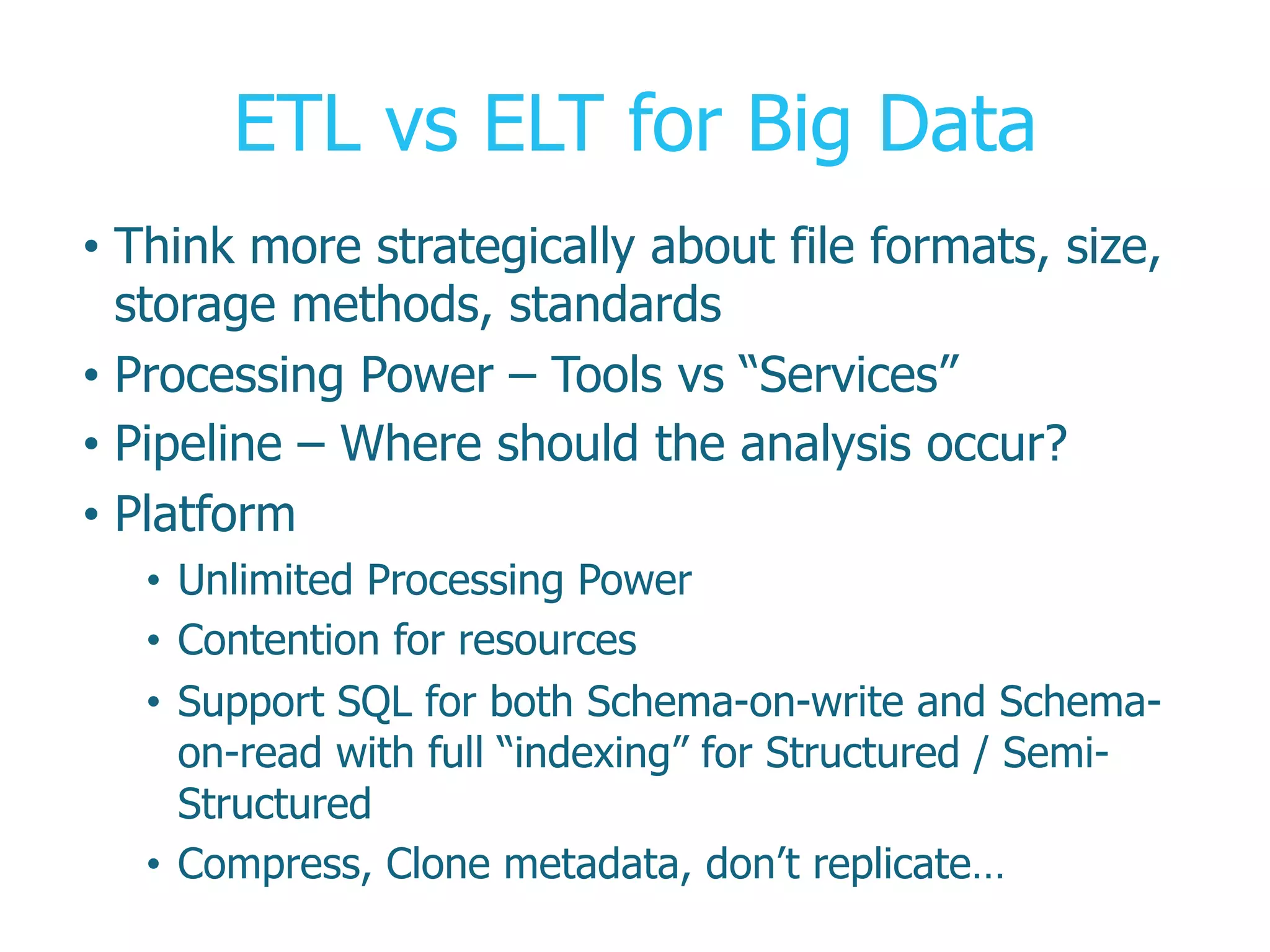
ETL vs ELT for Big Data
•  Think more strategically about file formats, size,
storage methods, standards
•  Processing Power – Tools vs “Services”
•  Pipeline – Where should the analysis occur?
•  Platform
•  Unlimited Processing Power
•  Contention for resources
•  Support SQL for both Schema-on-write and Schema-
on-read with full “indexing” for Structured / Semi-
Structured
•  Compress, Clone metadata, don’t replicate…
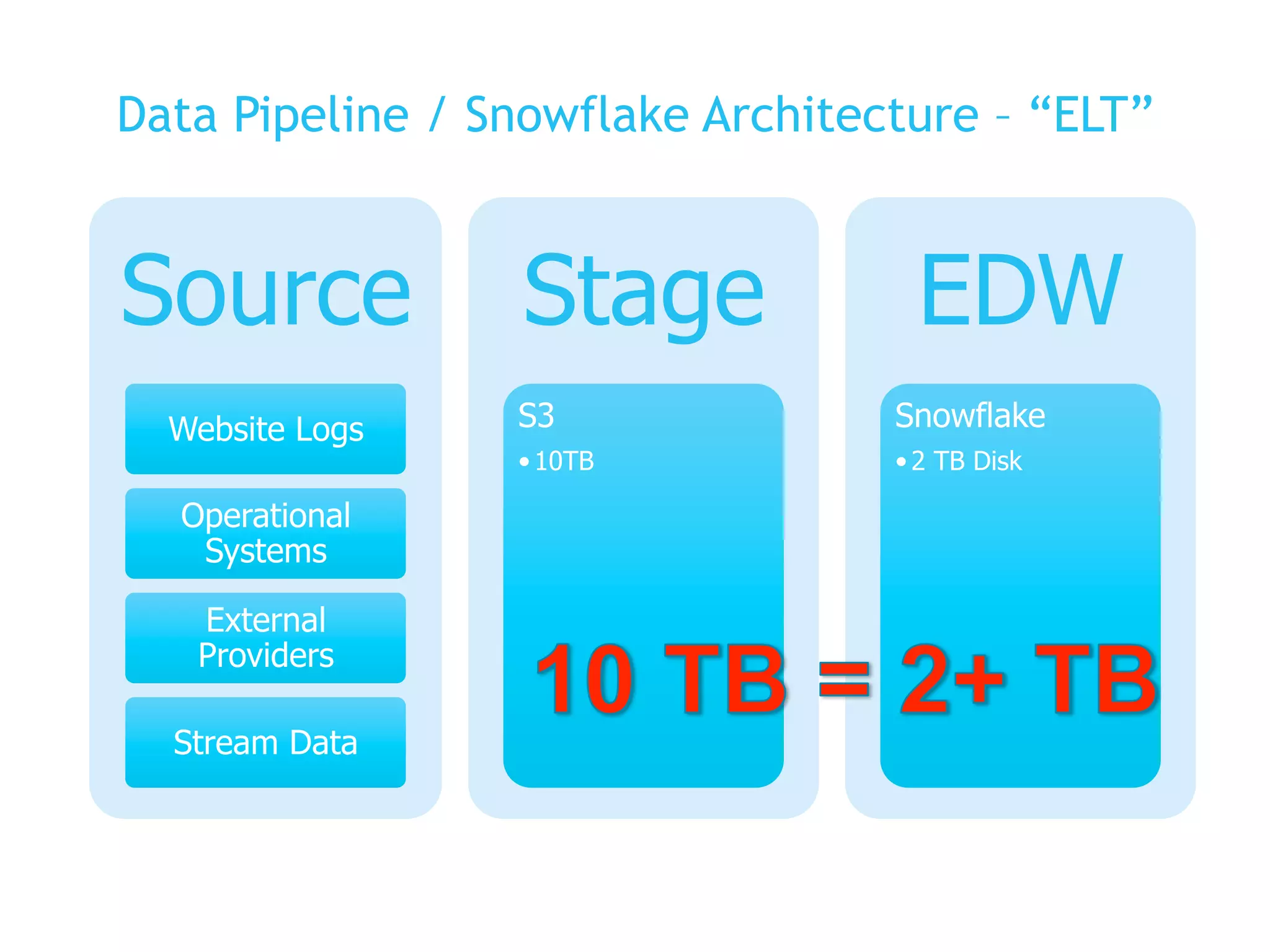
Source
Website Logs
Operational
Systems
External
Providers
Stream Data
Stage
S3
• 10TB
EDW
Snowflake
• 2 TB Disk
Data Pipeline / Snowflake Architecture – “ELT”
Demo Scenarios
•  Clickstream Analysis (load JSON, multi-table insert)
•  Which Product Category is most clicked on?
•  Which Product line does the customer self identify as
having the most interest in?
•  Twitter Feed (Join Structured and Semi-Structured)
•  From our twitter campaign, is there a correlation
between twitter volume and sales?
Clickstream Example
{	


  "custkey":	
  "450002",	


  "useragent":	
  {	


  "devicetype":	
  "pc",	


  "experience":	
  "browser",	


  "platform":	
  "windows"	


  },	


  "pagetype":	
  "home",	


  "productline":	
  "none",	


  "customerprofile":	
  {	


  "age":	
  20,	


  "gender":	
  "male",	


  "customerinterests":	
  [	


  "movies",	


  "fashion",	


  "music"	


  ]	


  }	
  
}	
  
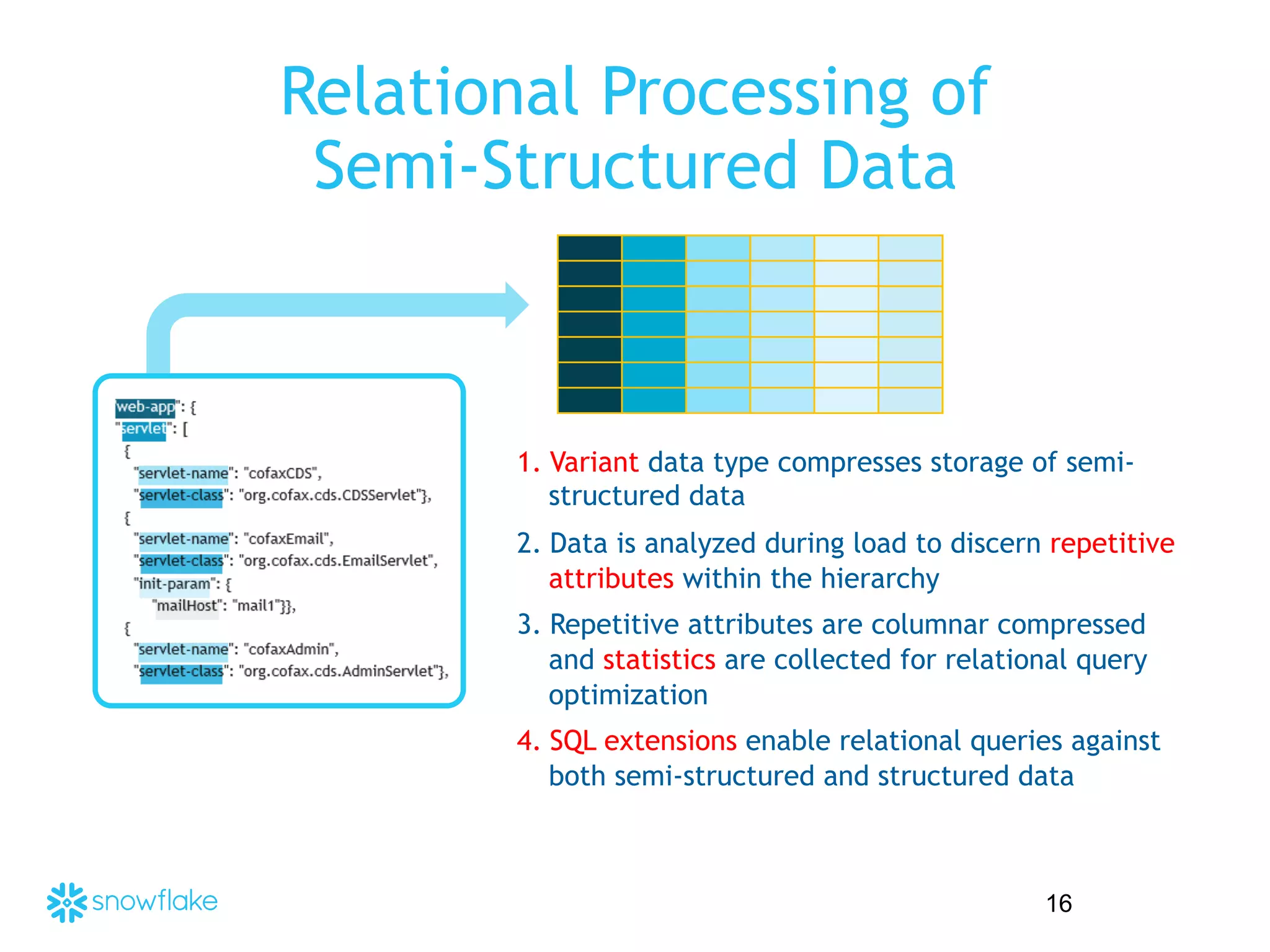
Relational Processing of
Semi-Structured Data
16
1. Variant data type compresses storage of semi-
structured data
2. Data is analyzed during load to discern repetitive
attributes within the hierarchy
3. Repetitive attributes are columnar compressed
and statistics are collected for relational query
optimization
4. SQL extensions enable relational queries against
both semi-structured and structured data
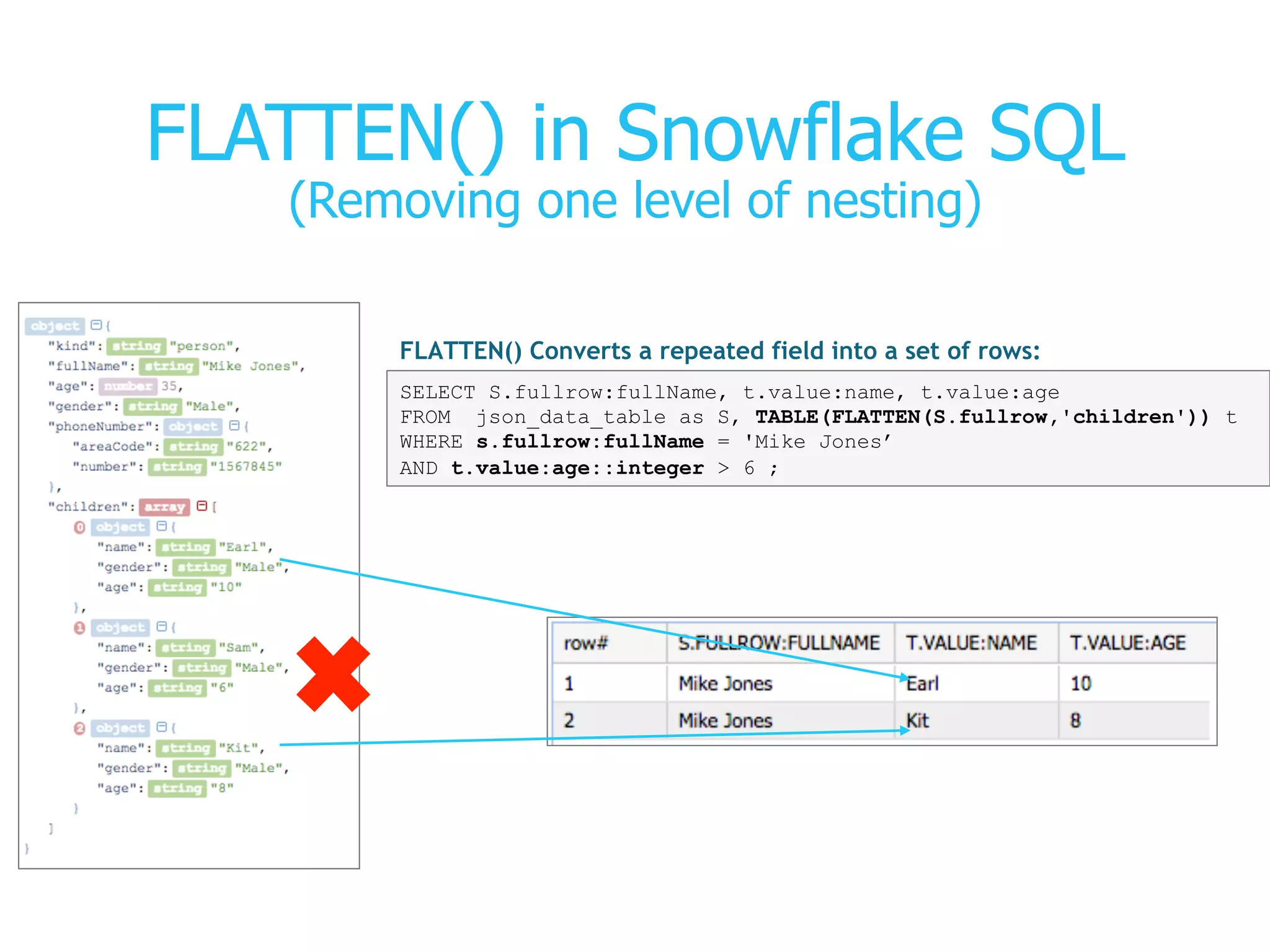
FLATTEN() in Snowflake SQL
(Removing one level of nesting)
SELECT S.fullrow:fullName, t.value:name, t.value:age
FROM json_data_table as S, TABLE(FLATTEN(S.fullrow,'children')) t
WHERE s.fullrow:fullName = 'Mike Jones’
AND t.value:age::integer > 6 ;
FLATTEN() Converts a repeated field into a set of rows:
What makes Snowflake unique for
handling Semi-Structured Data?
•  Compression
•  Encryption / Role Based Authentication
•  Shredding
•  History/Results
•  Clone
•  Time Travel
•  Flatten
•  Regexp
•  No Contention
•  No Tuning
•  Infinitely scalable
•  SQL based with extremely high performance
z
Map-Reduce Jobs
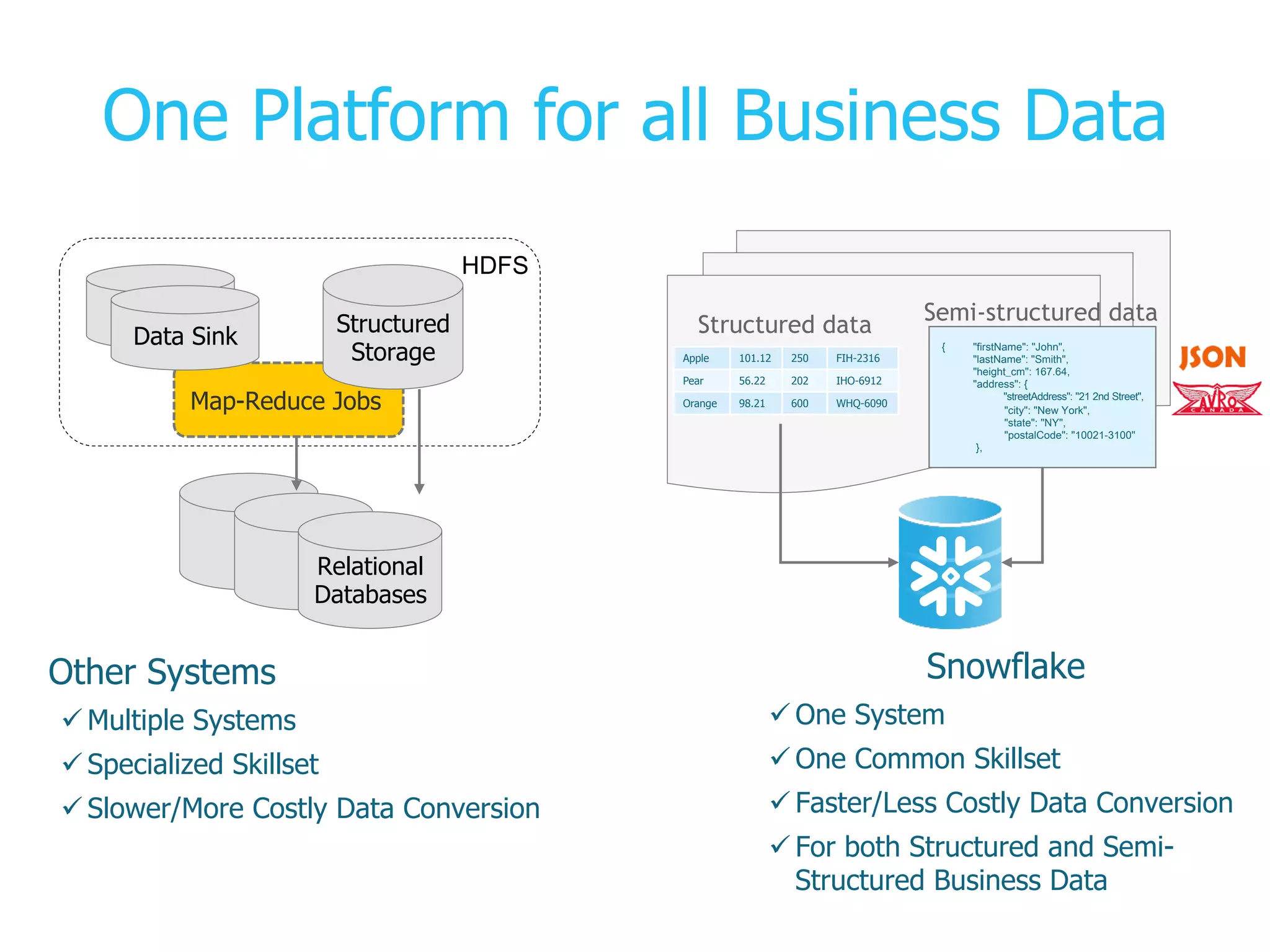
One Platform for all Business Data
Data Sink
Structured
Storage
HDFS
Relational
Databases
Snowflake
ü One System
ü One Common Skillset
ü Faster/Less Costly Data Conversion
ü For both Structured and Semi-
Structured Business Data
Apple 101.12 250 FIH-2316
Pear 56.22 202 IHO-6912
Orange 98.21 600 WHQ-6090
Structured data
{ "firstName": "John",
"lastName": "Smith",
"height_cm": 167.64,
"address": {
"streetAddress": "21 2nd Street",
"city": "New York",
"state": "NY",
"postalCode": "10021-3100"
},
Semi-structured data
Other Systems
ü Multiple Systems
ü Specialized Skillset
ü Slower/More Costly Data Conversion
THANK YOU!

Analyzing Semi-Structured Data At Volume In The Cloud

  • 1.
    Analyzing Semi-Structured Data atVolume in the Cloud Kevin Bair Solution Architect Kevin.Bair@snowflake.net
  • 2.
    Topics this presentationwill cover 1.  Structured vs. Semi-Structured 2.  ETL / Data Pipeline Architecture 3.  Analytics on Semi-Structured Data Clickstream Demo 4.  Analyzing Structured with Semi-Structured Data Twitter feed Demo 5.  Time permitting…..Cloud Big Data / Data Warehousing 2
  • 3.
    3 Surge in cloud spendingand supporting technology (IDC) Of workloads will be processed In cloud data centers (Cisco) Data in the cloud today is expected to grow in the next two years. (Gigaom) Today’s data: big, complex, moving to cloud
  • 4.
    Structured data andSemi- Structured data •  Transactional data •  Relational •  Fixed schema •  OLTP / OLAP •  Machine-generated •  Non-relational •  Varying schema •  Most common in cloud environments
  • 5.
    What does SemiStructured mean? •  Data that may be of any type •  Data that is variable in length (arrays) •  Structure that can rapidly and unpredictably change •  Usually Self Describing •  Examples •  XML •  AVRO •  JSON
  • 6.
    XML Example <?xml version="1.0"encoding="UTF-8"?> <breakfast_menu> <food> <name>Belgian Waffles</name> <price>$5.95</price> <description>Two of our famous Belgian Waffles with plenty of real maple syrup</description> <calories>650</calories> </food> <food> <name>Strawberry Belgian Waffles</name> <price>$7.95</price> <description>Light Belgian waffles covered with strawberries and whipped cream</description> <calories>900</calories> </food> <food> <name>Berry-Berry Belgian Waffles</name> <price>$8.95</price> <description>Light Belgian waffles covered with an assortment of fresh berries and whipped cream</description> <calories>900</calories> </food> </breakfast_menu>
  • 7.
    JSON Example {          "custkey":  "450002",          "useragent":  {                  "devicetype":  "pc",                  "experience":  "browser",                  "platform":  "windows"          },          "pagetype":  "home",          "productline":  "television",          "customerprofile":  {                  "age":  20,                  "gender":  "male",                  "customerinterests":  [                          "movies",                          "fashion",                          "music"                  ]          }   }  
  • 8.
  • 9.
    Why is thisso hard for a traditional Relational DBMS? •  Pre-defined Schema •  Store in Character Large Object (CLOB) data type •  Constantly Changing •  Inefficient to Query
  • 10.
    Data Warehousing •  Complex:manage hardware, data distribution, indexes, … •  Limited elasticity: forklift upgrades, data redistribution, downtime •  Costly: overprovisioning, significant care & feeding Hadoop •  Complex: specialized skills, new tools •  Limited elasticity: data redistribution, resource contention •  Not a data warehouse: batch- oriented, limited optimization, incomplete security Current architectures can’t keep up 10
  • 11.
    Source Website Logs Operational Systems External Providers Stream Data Stage S3 •  10TB Data Lake Hadoop •  30TB Stage S3 •  5 TB •  Summary EDW MPP •  10 TB Disk Data Pipeline / Data Lake Architecture – “ETL”
  • 12.
    ETL vs ELTfor Big Data •  Think more strategically about file formats, size, storage methods, standards •  Processing Power – Tools vs “Services” •  Pipeline – Where should the analysis occur? •  Platform •  Unlimited Processing Power •  Contention for resources •  Support SQL for both Schema-on-write and Schema- on-read with full “indexing” for Structured / Semi- Structured •  Compress, Clone metadata, don’t replicate…
  • 13.
  • 14.
    Demo Scenarios •  ClickstreamAnalysis (load JSON, multi-table insert) •  Which Product Category is most clicked on? •  Which Product line does the customer self identify as having the most interest in? •  Twitter Feed (Join Structured and Semi-Structured) •  From our twitter campaign, is there a correlation between twitter volume and sales?
  • 15.
    Clickstream Example {          "custkey":  "450002",          "useragent":  {                  "devicetype":  "pc",                  "experience":  "browser",                  "platform":  "windows"          },          "pagetype":  "home",          "productline":  "none",          "customerprofile":  {                  "age":  20,                  "gender":  "male",                  "customerinterests":  [                          "movies",                          "fashion",                          "music"                  ]          }   }  
  • 16.
    Relational Processing of Semi-StructuredData 16 1. Variant data type compresses storage of semi- structured data 2. Data is analyzed during load to discern repetitive attributes within the hierarchy 3. Repetitive attributes are columnar compressed and statistics are collected for relational query optimization 4. SQL extensions enable relational queries against both semi-structured and structured data
  • 17.
    FLATTEN() in SnowflakeSQL (Removing one level of nesting) SELECT S.fullrow:fullName, t.value:name, t.value:age FROM json_data_table as S, TABLE(FLATTEN(S.fullrow,'children')) t WHERE s.fullrow:fullName = 'Mike Jones’ AND t.value:age::integer > 6 ; FLATTEN() Converts a repeated field into a set of rows:
  • 18.
    What makes Snowflakeunique for handling Semi-Structured Data? •  Compression •  Encryption / Role Based Authentication •  Shredding •  History/Results •  Clone •  Time Travel •  Flatten •  Regexp •  No Contention •  No Tuning •  Infinitely scalable •  SQL based with extremely high performance
  • 19.
    z Map-Reduce Jobs One Platformfor all Business Data Data Sink Structured Storage HDFS Relational Databases Snowflake ü One System ü One Common Skillset ü Faster/Less Costly Data Conversion ü For both Structured and Semi- Structured Business Data Apple 101.12 250 FIH-2316 Pear 56.22 202 IHO-6912 Orange 98.21 600 WHQ-6090 Structured data { "firstName": "John", "lastName": "Smith", "height_cm": 167.64, "address": { "streetAddress": "21 2nd Street", "city": "New York", "state": "NY", "postalCode": "10021-3100" }, Semi-structured data Other Systems ü Multiple Systems ü Specialized Skillset ü Slower/More Costly Data Conversion
  • 20.