

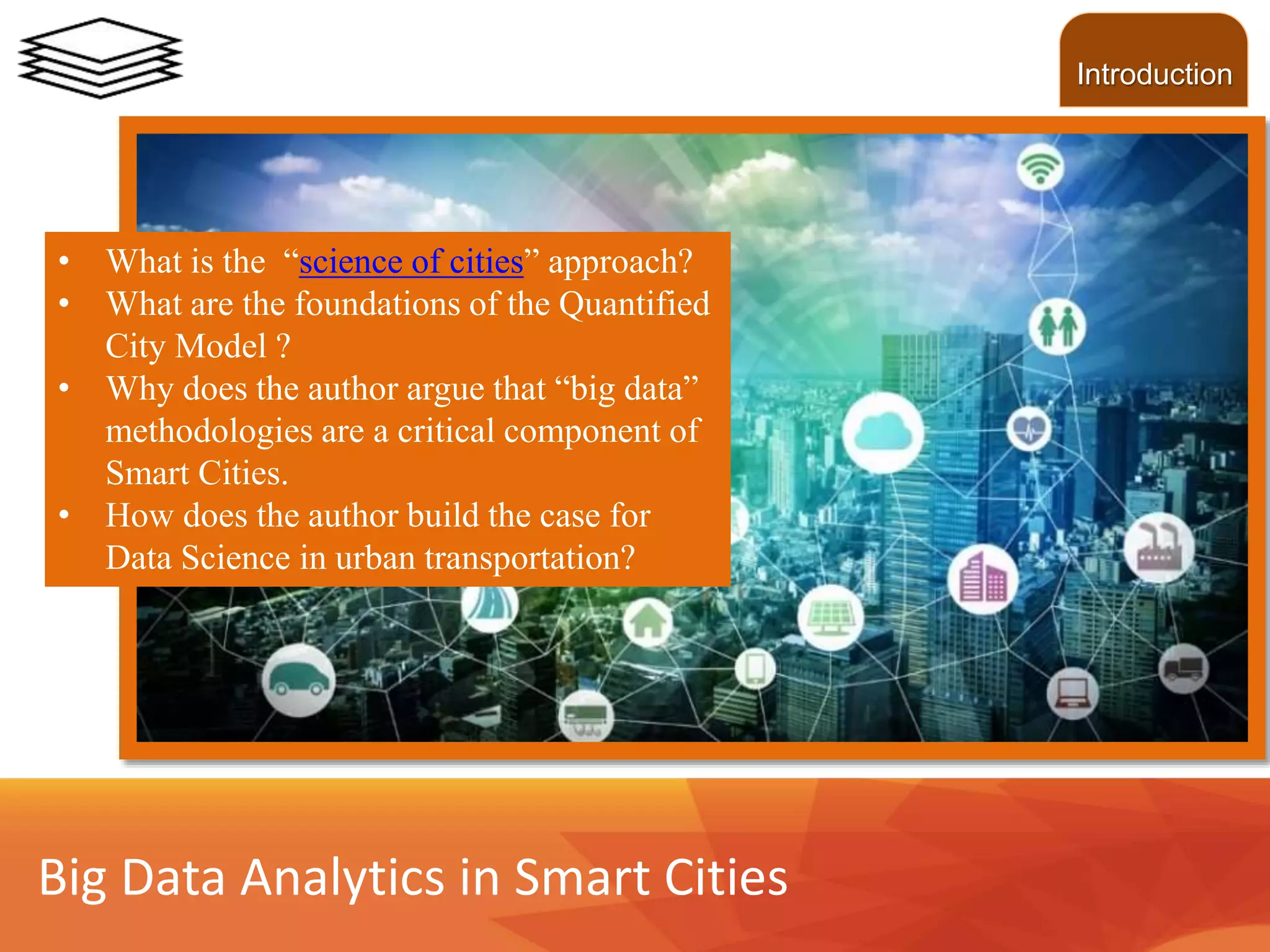
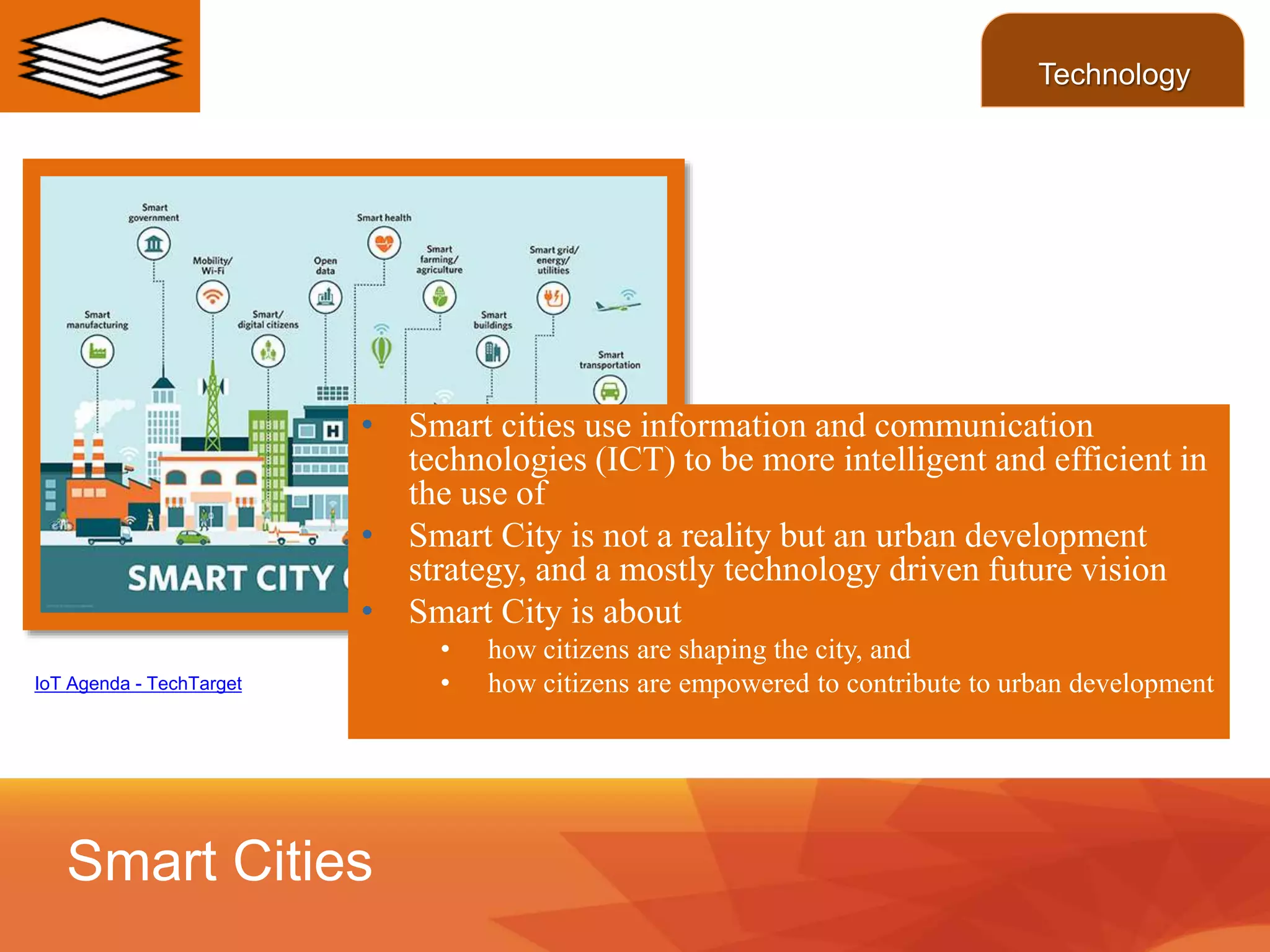





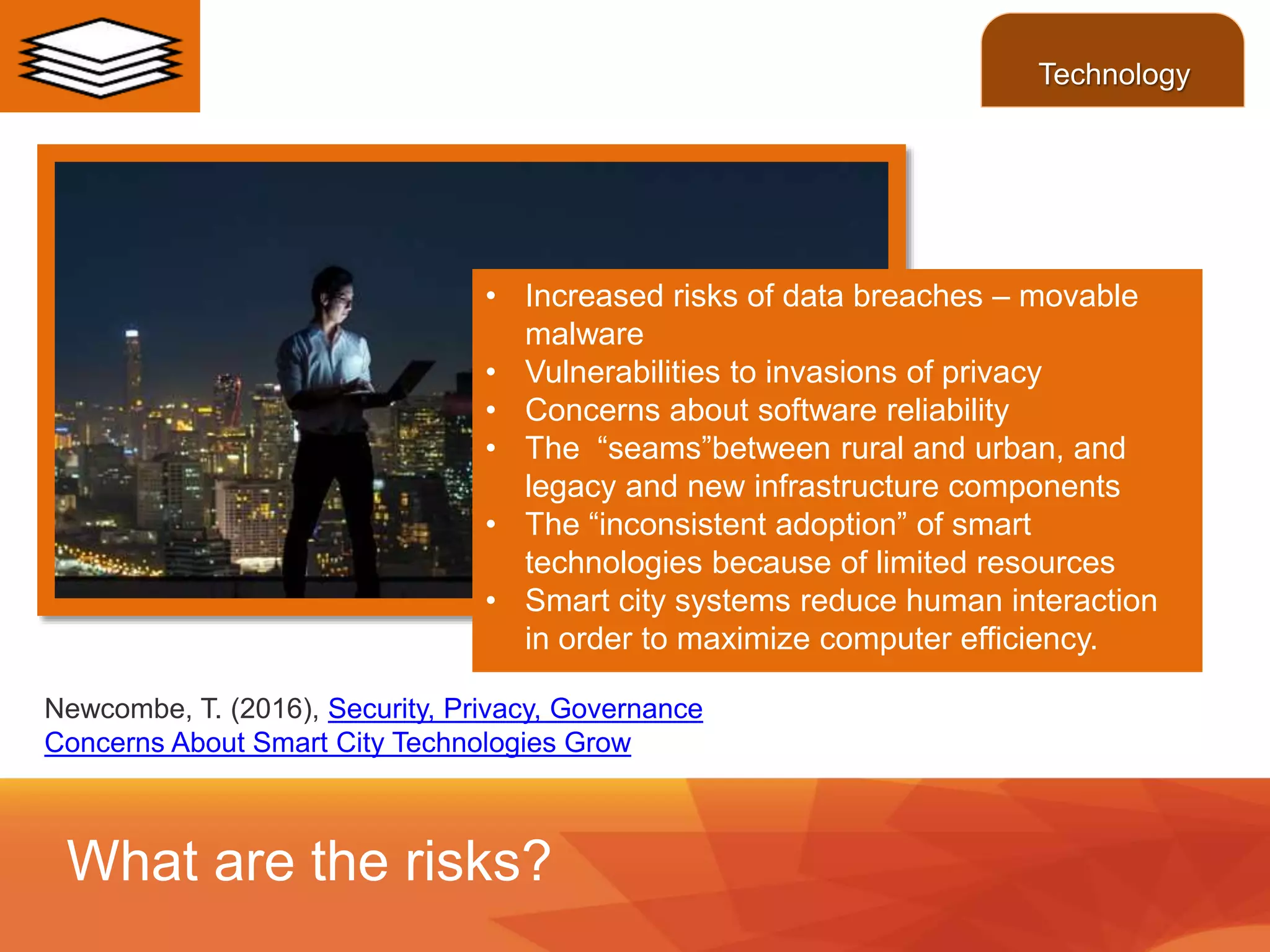



Smart cities use data and technology to improve operations and services. Data is collected from sensors in infrastructure, assets and citizens. This data is analyzed to manage resources efficiently and provide information to citizens. Some benefits of smart cities include better maintenance of infrastructure, improved traffic management, and increased safety. However, smart cities also face risks like privacy and security issues. Data scientists play a key role in smart cities by ensuring open access to data and using it to support decision making. Future trends may include different cities focusing on customized data and solutions based on their unique needs.


