An Overview of Thinking
        Maps
           By
     Melissa Winfield
What are Thinking Maps?
 Thinking maps were developed in 1988 by
 Dr. David Hyerle. Thinking maps are
 comprised of 8 maps that are each based
 on a cognitive skill. Thinking Maps support
 the brain’s natural tendency to detect
 patterns. These Maps often help promote
 reading comprehension, the writing
 process, problems solving and thinking
 skills. Thinking maps can be utilized
 individually or in various combinations to
 form a common visual language for
 students and teachers at all grade levels,
 in all subject areas.
Benefits of Thinking Maps
•   stimulates the brain's natural tendency to detect patterns
•   establishes a common visual language that crosses all
    content areas
•   enables students to hook new information to their individual
    experiences and understandings
•   requires interaction and movement, accessing students'
    semantic and episodic memories to strengthen connections
•   supports students of all learning styles and language
    proficiencies as they construct meaning
•   provides informal assessment data so teachers can plan for
    differentiated instruction to reach common goals
•   improves upon the practice of utilizing graphic organizers,
    placing the emphasis on thinking
•   supports students in critical thinking, a life-long skill!
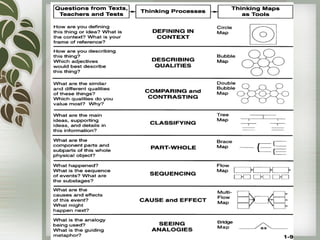
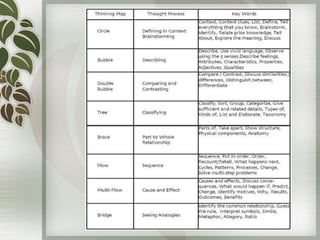
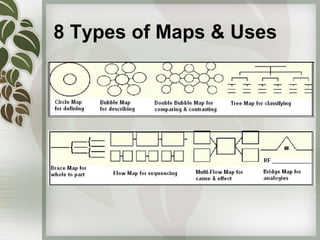
8 Types of Maps & Uses
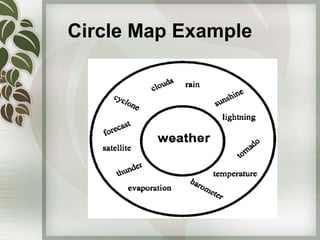
Circle Map Example
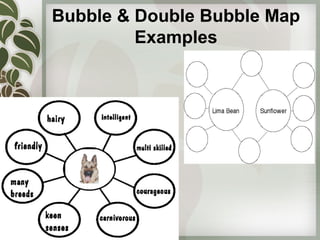
Bubble & Double Bubble Map
         Examples

An overview of thinking maps

  • 1.
    An Overview ofThinking Maps By Melissa Winfield
  • 2.
    What are ThinkingMaps? Thinking maps were developed in 1988 by Dr. David Hyerle. Thinking maps are comprised of 8 maps that are each based on a cognitive skill. Thinking Maps support the brain’s natural tendency to detect patterns. These Maps often help promote reading comprehension, the writing process, problems solving and thinking skills. Thinking maps can be utilized individually or in various combinations to form a common visual language for students and teachers at all grade levels, in all subject areas.
  • 5.
    Benefits of ThinkingMaps • stimulates the brain's natural tendency to detect patterns • establishes a common visual language that crosses all content areas • enables students to hook new information to their individual experiences and understandings • requires interaction and movement, accessing students' semantic and episodic memories to strengthen connections • supports students of all learning styles and language proficiencies as they construct meaning • provides informal assessment data so teachers can plan for differentiated instruction to reach common goals • improves upon the practice of utilizing graphic organizers, placing the emphasis on thinking • supports students in critical thinking, a life-long skill!
  • 6.
    8 Types ofMaps & Uses
  • 7.
  • 8.
    Bubble & DoubleBubble Map Examples