An Integrated Approach to Speed &
Agility Training For Rugby
Pete Burridge
Leicester Tigers S&C Coach
About Me
Taking Vs Making Space
What is the
difference & why is
this relevant to me as
a rugby coach/S&C
Taking Vs Making Space
Both display excellent
agility that results in a try
being scored.
But what are the
differences in approach
from each player and
how is this relevant to
Taking Vs Making Space
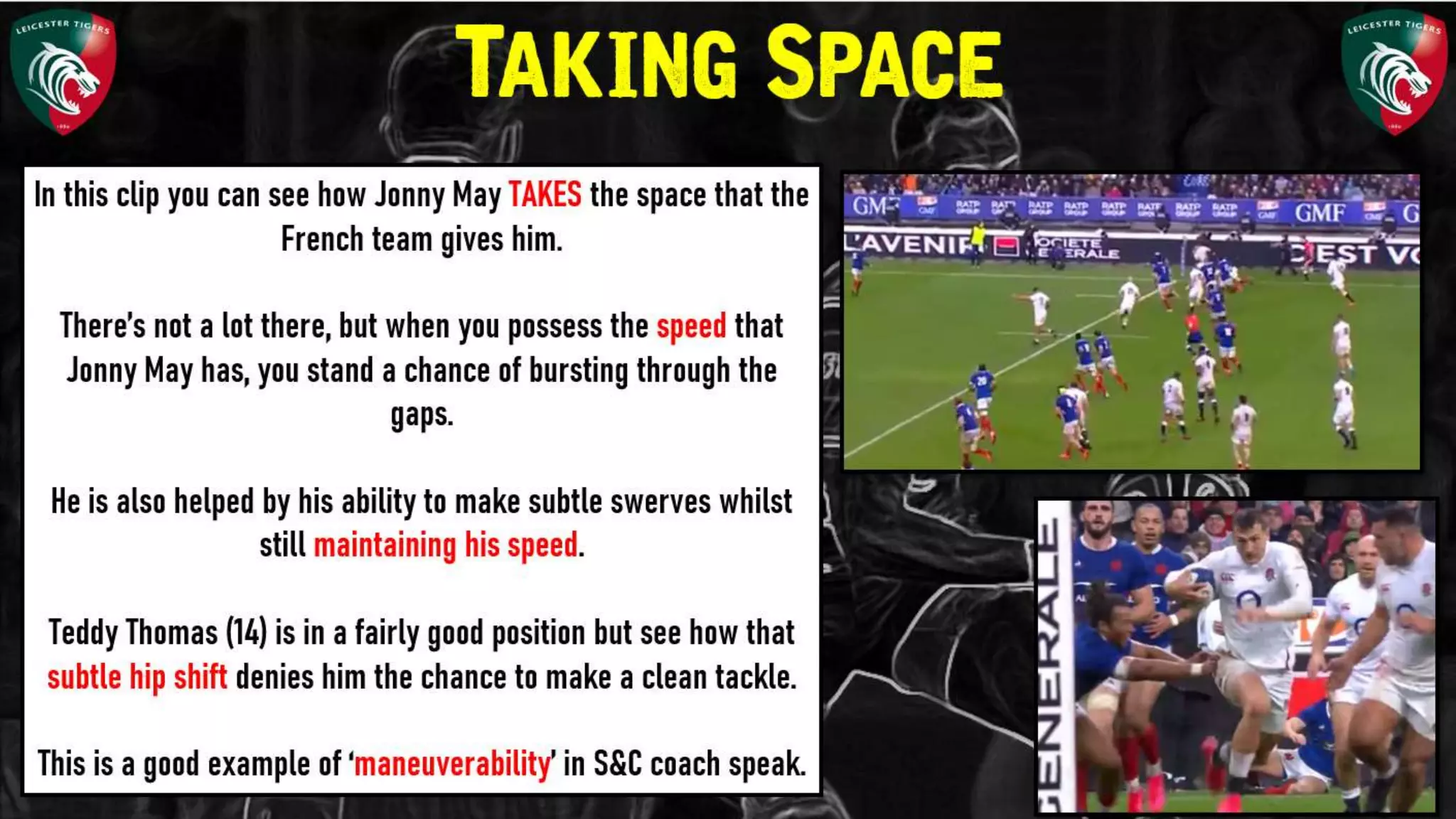
In this clip you can see how Jonny May TAKES
the space that the French team gives him.
There’s not a lot there, but when you possess
the speed that Jonny May has, you stand a
chance of bursting through the gaps.
He is also helped by his ability to make subtle
swerves whilst still maintaining his speed.
Teddy Thomas (14) is in a fairly good position
but see how that subtle hip shift denies him the
chance to make a clean tackle.
This is a good example of ‘maneuverability’ in
Taking Space
Taking Vs Making Space
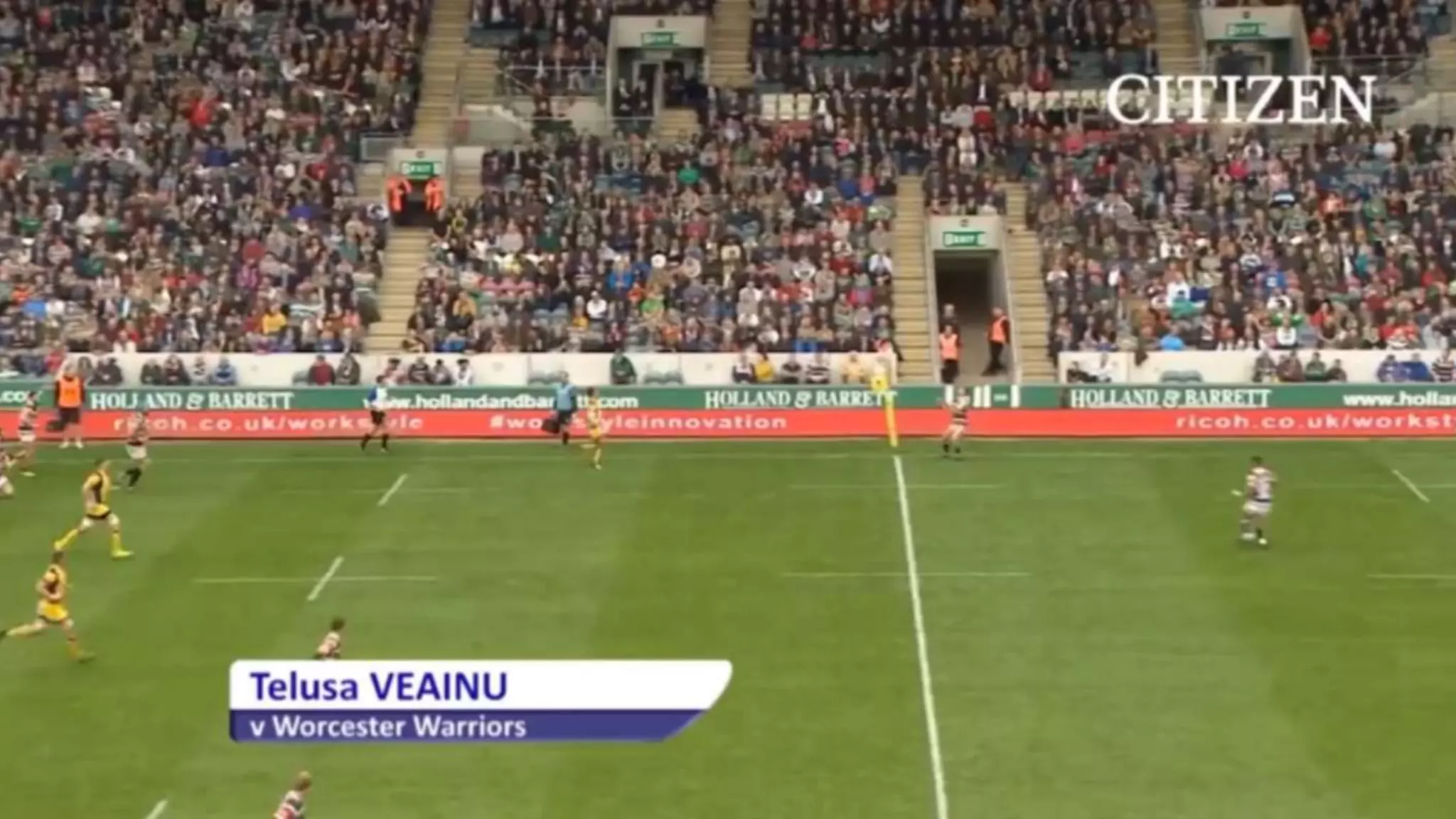
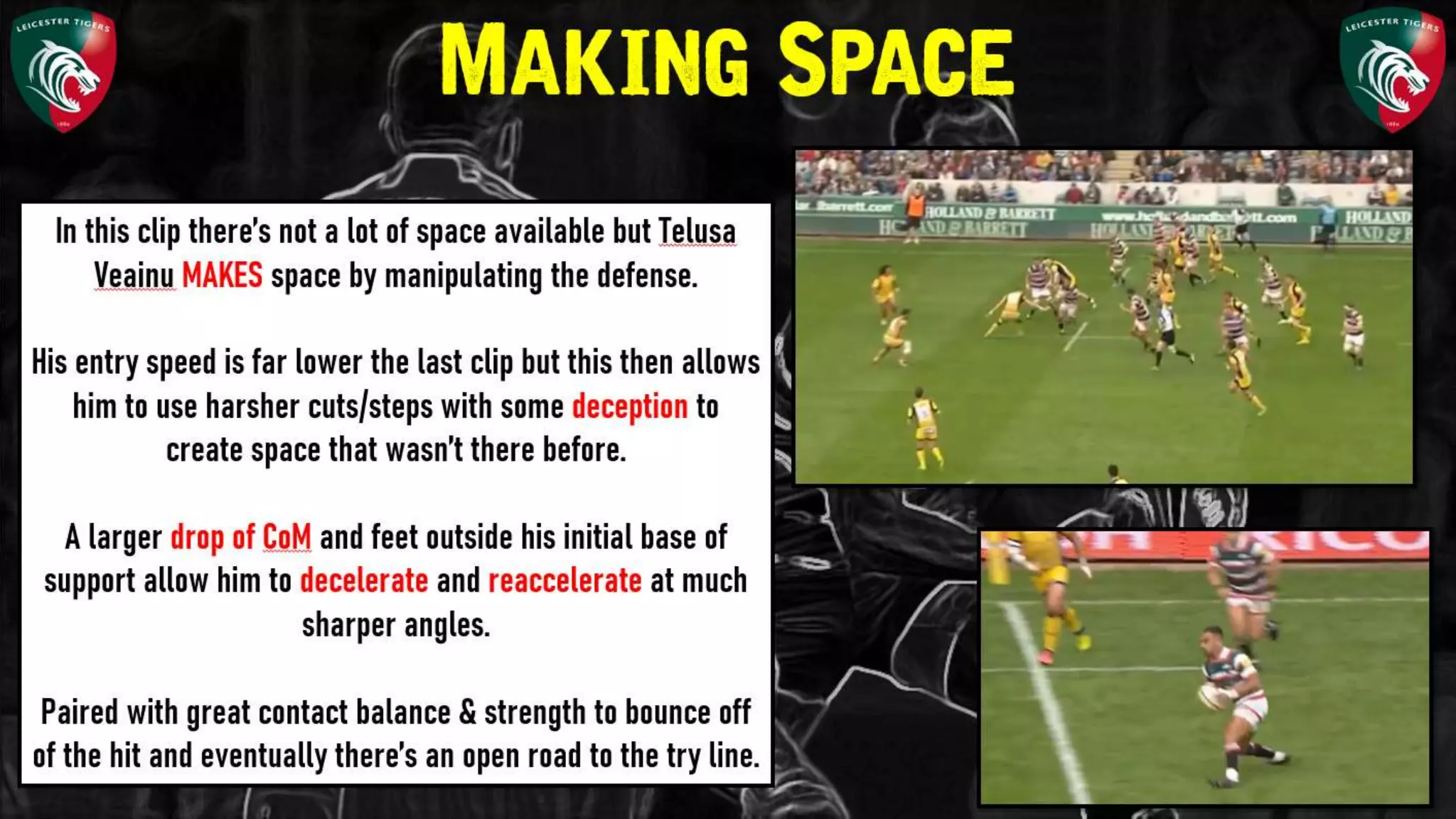
In this clip there’s not a lot of space available
but Telusa Veainu MAKES space by
manipulating the defense.
His entry speed is far lower the last clip but
this then allows him to use harsher
cuts/steps with some deception to create
space that wasn’t there before.
A larger drop of CoM and feet outside his
initial base of support allow him to
decelerate and reaccelerate at much sharper
angles.
Making Space
Both have successful outcomes (tries) but how
they’ve been achieved is very different.
Both have lent into their strengths: either by
TAKING SPACE with raw speed and having
superior maneuverability than their opponent,
or by MAKING SPACE by using deception and
sharp, sudden cuts to get the defender off
balance and exploit the space they leave
behind.
If we take what we see from competition, we
can then apply that to our own sessions. This
enables us to be better equipped to train our
Taking Vs Making Space
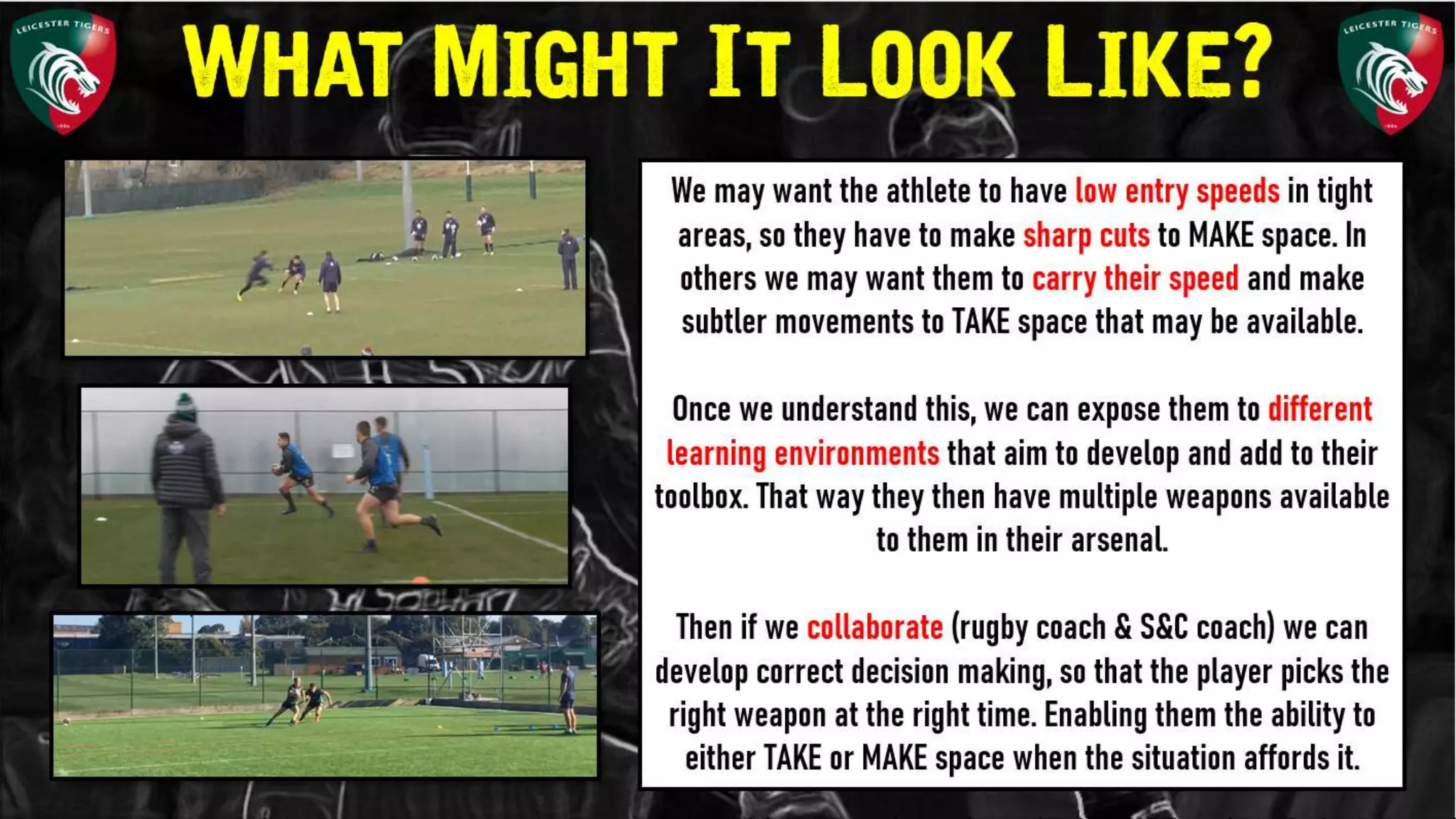
We may want the athlete to have low entry
speeds in tight areas, so they have to make
sharp cuts to MAKE space. In others we may
want them to carry their speed and make
subtler movements to TAKE space that may
be available.
Once we understand this, we can expose
them to different learning environments that
aim to develop and add to their toolbox. That
way they then have multiple weapons
available to them in their arsenal.
Then if we collaborate (rugby coach & S&C
coach) we can develop correct decision
What Might It Look Like?
More Weapons = More Tries
How do we make it
work in training?
Integration
Finding Space is a key
principle of attack in
rugby.
Rugby coaches + S&C
coaches can both play a
part in developing
someone’s ability to find
space.
Integration
The rugby
coach will be
concerned
mostly on the
team and the
tactical
execution of a
Stereotypical Integration
The S&C coach
will be
concerned
mostly on the
individual and
the technical
Stereotypical Integration
When training for speed & agility, it doesn’t
have to always be so polarized.
Good improvements can be made working in
the middle.
Stereotypical Integration
What might it look like?
Questions &
Discussion

An Integrated Approach to Speed & Agility Training for Rugby

  • 1.
    An Integrated Approachto Speed & Agility Training For Rugby Pete Burridge Leicester Tigers S&C Coach
  • 2.
  • 3.
    Taking Vs MakingSpace What is the difference & why is this relevant to me as a rugby coach/S&C
  • 4.
  • 5.
    Taking Vs MakingSpace Both display excellent agility that results in a try being scored. But what are the differences in approach from each player and how is this relevant to
  • 6.
  • 7.
    In this clipyou can see how Jonny May TAKES the space that the French team gives him. There’s not a lot there, but when you possess the speed that Jonny May has, you stand a chance of bursting through the gaps. He is also helped by his ability to make subtle swerves whilst still maintaining his speed. Teddy Thomas (14) is in a fairly good position but see how that subtle hip shift denies him the chance to make a clean tackle. This is a good example of ‘maneuverability’ in Taking Space
  • 8.
  • 9.
    In this clipthere’s not a lot of space available but Telusa Veainu MAKES space by manipulating the defense. His entry speed is far lower the last clip but this then allows him to use harsher cuts/steps with some deception to create space that wasn’t there before. A larger drop of CoM and feet outside his initial base of support allow him to decelerate and reaccelerate at much sharper angles. Making Space
  • 10.
    Both have successfuloutcomes (tries) but how they’ve been achieved is very different. Both have lent into their strengths: either by TAKING SPACE with raw speed and having superior maneuverability than their opponent, or by MAKING SPACE by using deception and sharp, sudden cuts to get the defender off balance and exploit the space they leave behind. If we take what we see from competition, we can then apply that to our own sessions. This enables us to be better equipped to train our Taking Vs Making Space
  • 11.
    We may wantthe athlete to have low entry speeds in tight areas, so they have to make sharp cuts to MAKE space. In others we may want them to carry their speed and make subtler movements to TAKE space that may be available. Once we understand this, we can expose them to different learning environments that aim to develop and add to their toolbox. That way they then have multiple weapons available to them in their arsenal. Then if we collaborate (rugby coach & S&C coach) we can develop correct decision What Might It Look Like?
  • 12.
    More Weapons =More Tries
  • 13.
    How do wemake it work in training? Integration
  • 14.
    Finding Space isa key principle of attack in rugby. Rugby coaches + S&C coaches can both play a part in developing someone’s ability to find space. Integration
  • 15.
    The rugby coach willbe concerned mostly on the team and the tactical execution of a Stereotypical Integration
  • 16.
    The S&C coach willbe concerned mostly on the individual and the technical Stereotypical Integration
  • 17.
    When training forspeed & agility, it doesn’t have to always be so polarized. Good improvements can be made working in the middle. Stereotypical Integration
  • 18.
    What might itlook like?
  • 20.