Paper Id-54
Authored By
Arijit Ganguly, Rumrum Banerjee
Soumya Ghatak, Plabon Saha, Aalok Bhattacharya,
Rahul Shome, Suman Patra
(Dept. of Electrical Engg.)
University of Engineering & Management,Kolkata
Presented By
Soumya Ghatak
Dept. of Electrical Engg.
University of Engineering & Management,Kolkata
 Overview of Power System network
 Problem in Grid network
 Main Objective of the paper
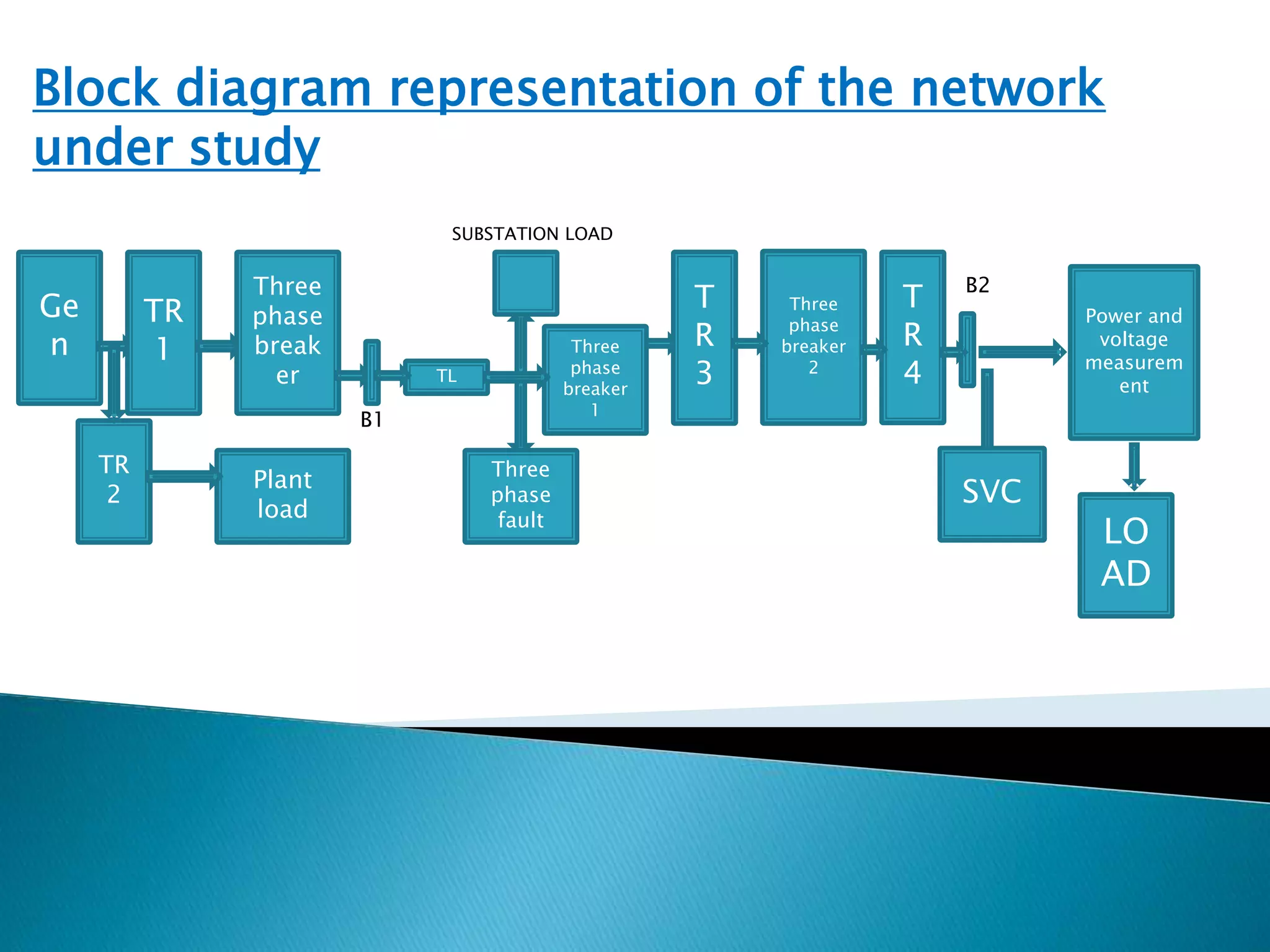
 Block diagram representation of the network under
study
 Simulation diagram
 Conditions of analysis
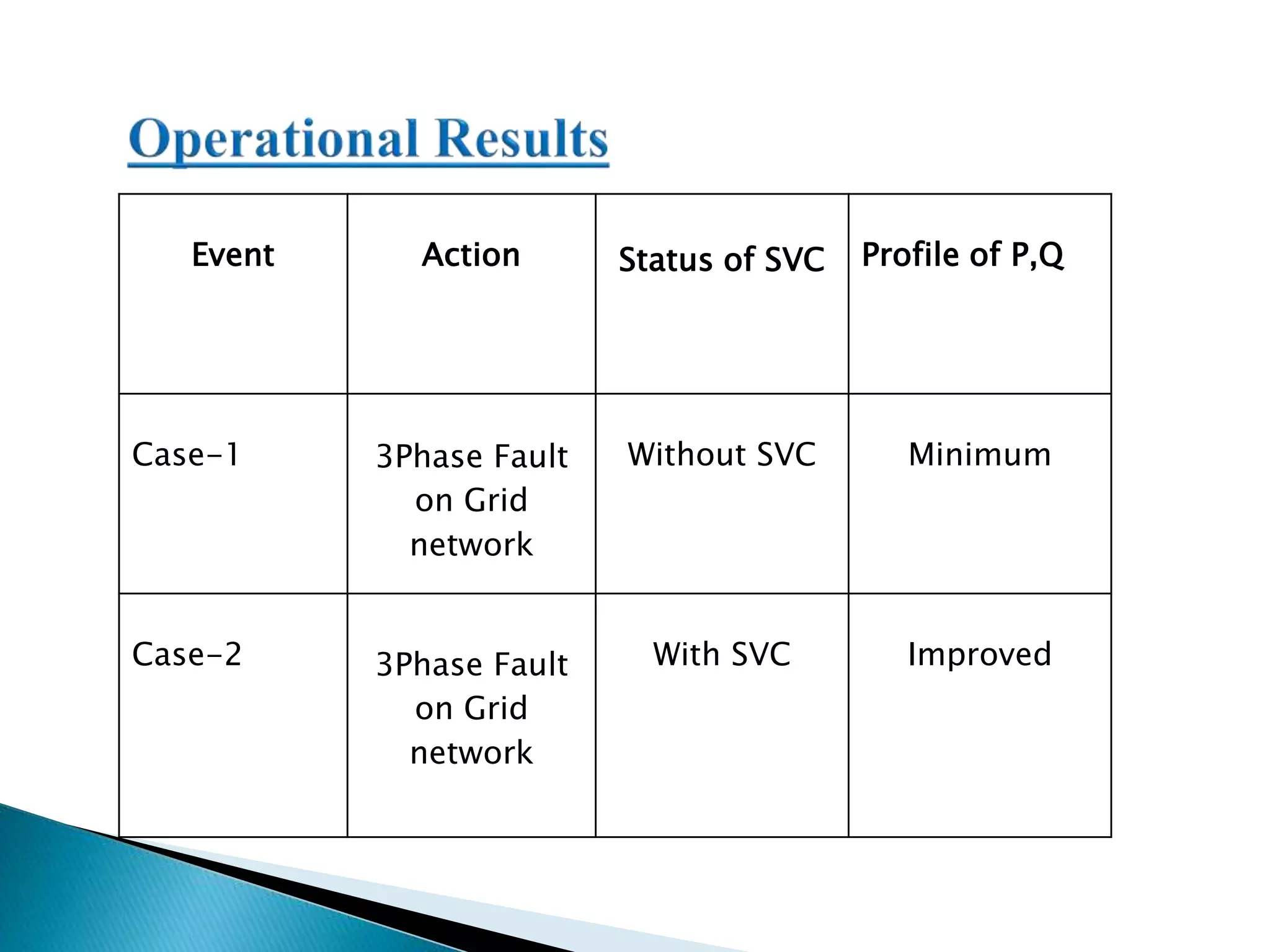
 Operational Results
 Simulation Results
 Conclusion
 Future scope
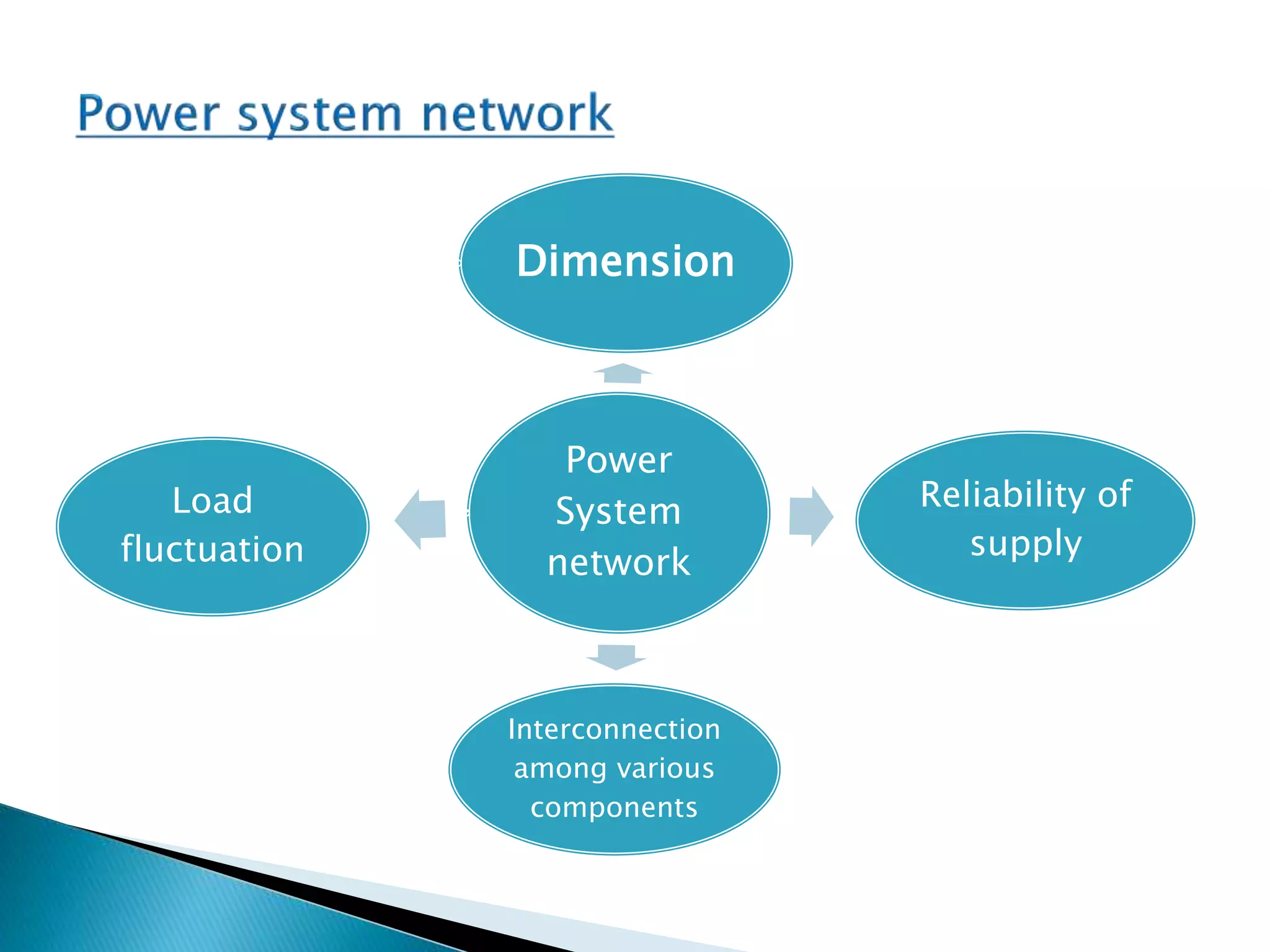
Power
System
network
Dimension
Reliability of
supply
Interconnection
among various
components
Load
fluctuation
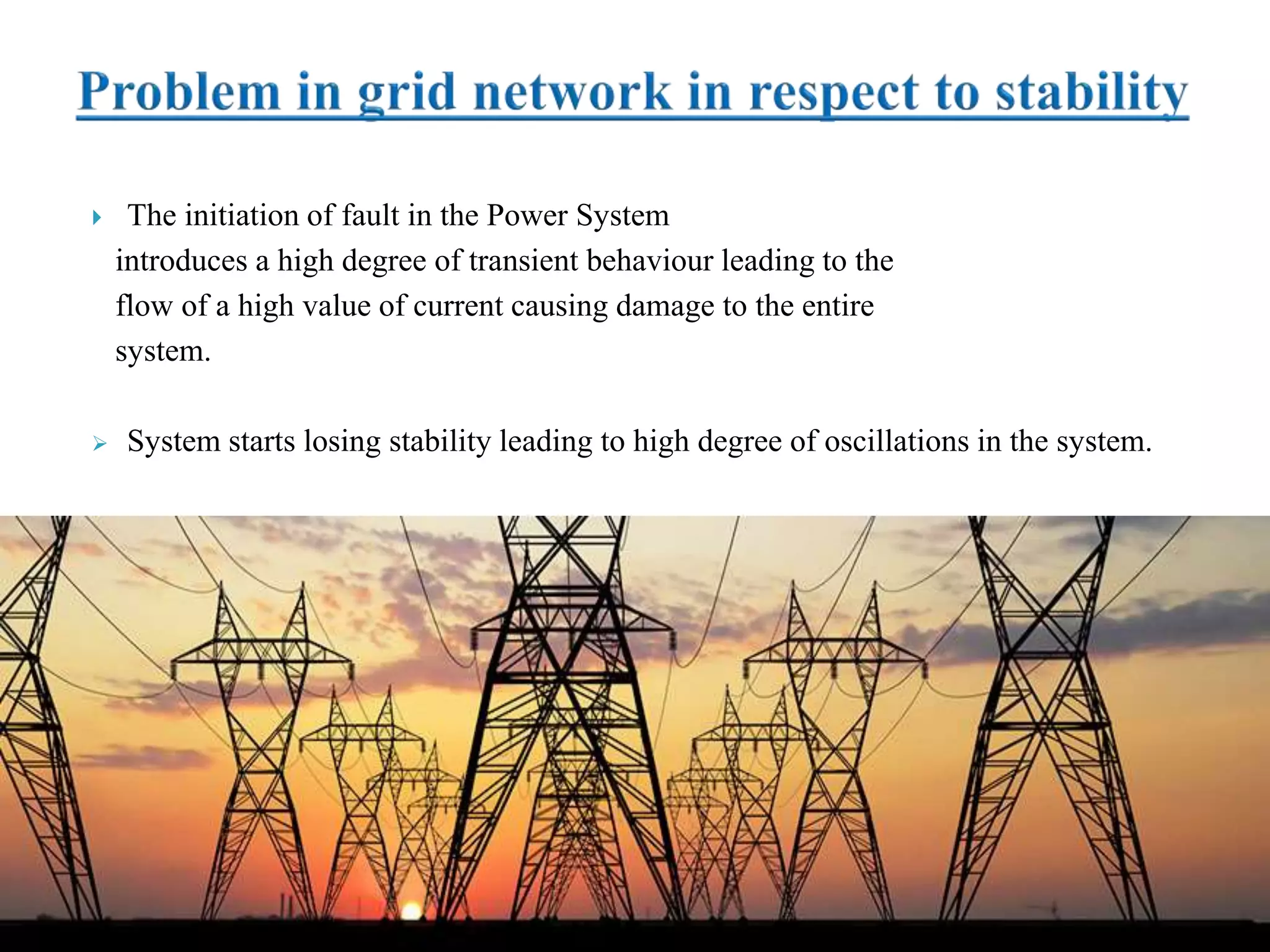
 The initiation of fault in the Power System
introduces a high degree of transient behaviour leading to the
flow of a high value of current causing damage to the entire
system.
 System starts losing stability leading to high degree of oscillations in the system.
Main objective of the paper
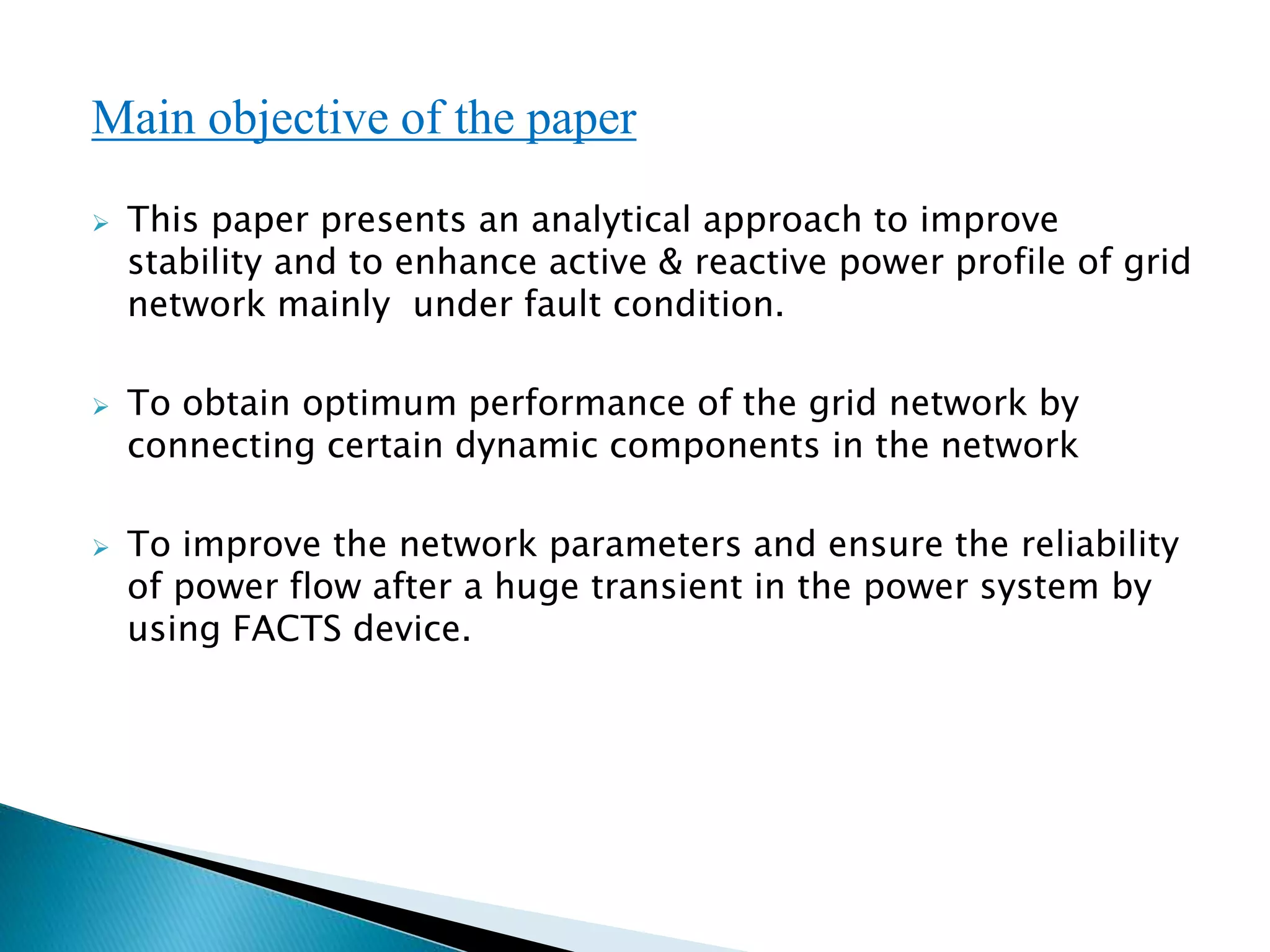
 This paper presents an analytical approach to improve
stability and to enhance active & reactive power profile of grid
network mainly under fault condition.
 To obtain optimum performance of the grid network by
connecting certain dynamic components in the network
 To improve the network parameters and ensure the reliability
of power flow after a huge transient in the power system by
using FACTS device.
Ge
n
TR
1
TR
2
Plant
load
Three
phase
break
er
Three
phase
fault
TL
B1
Three
phase
breaker
1
SUBSTATION LOAD
T
R
3
Three
phase
breaker
2
T
R
4
SVC
Power and
voltage
measurem
ent
LO
AD
Block diagram representation of the network
under study
B2
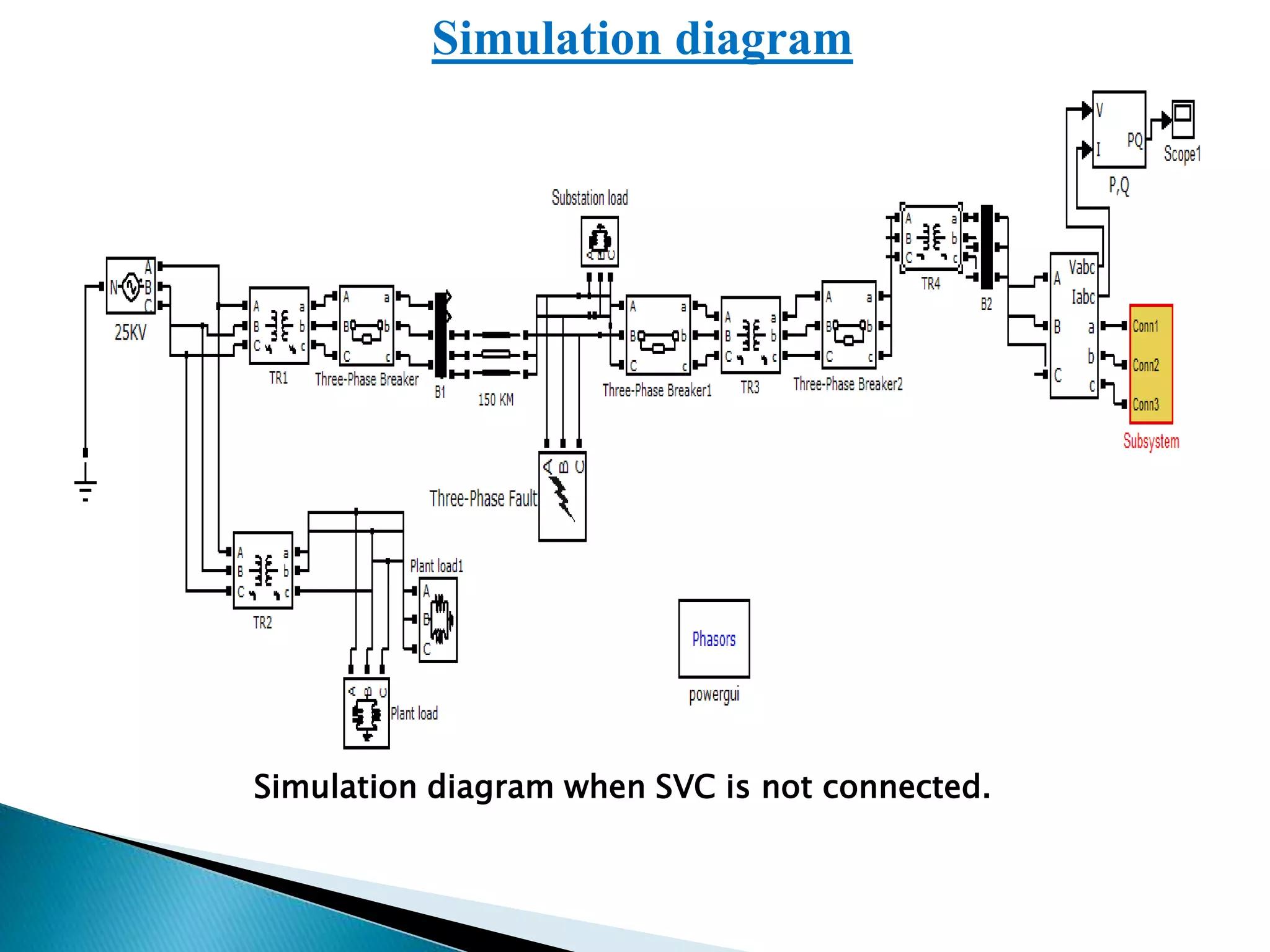
Simulation diagram
Simulation diagram when SVC is not connected.
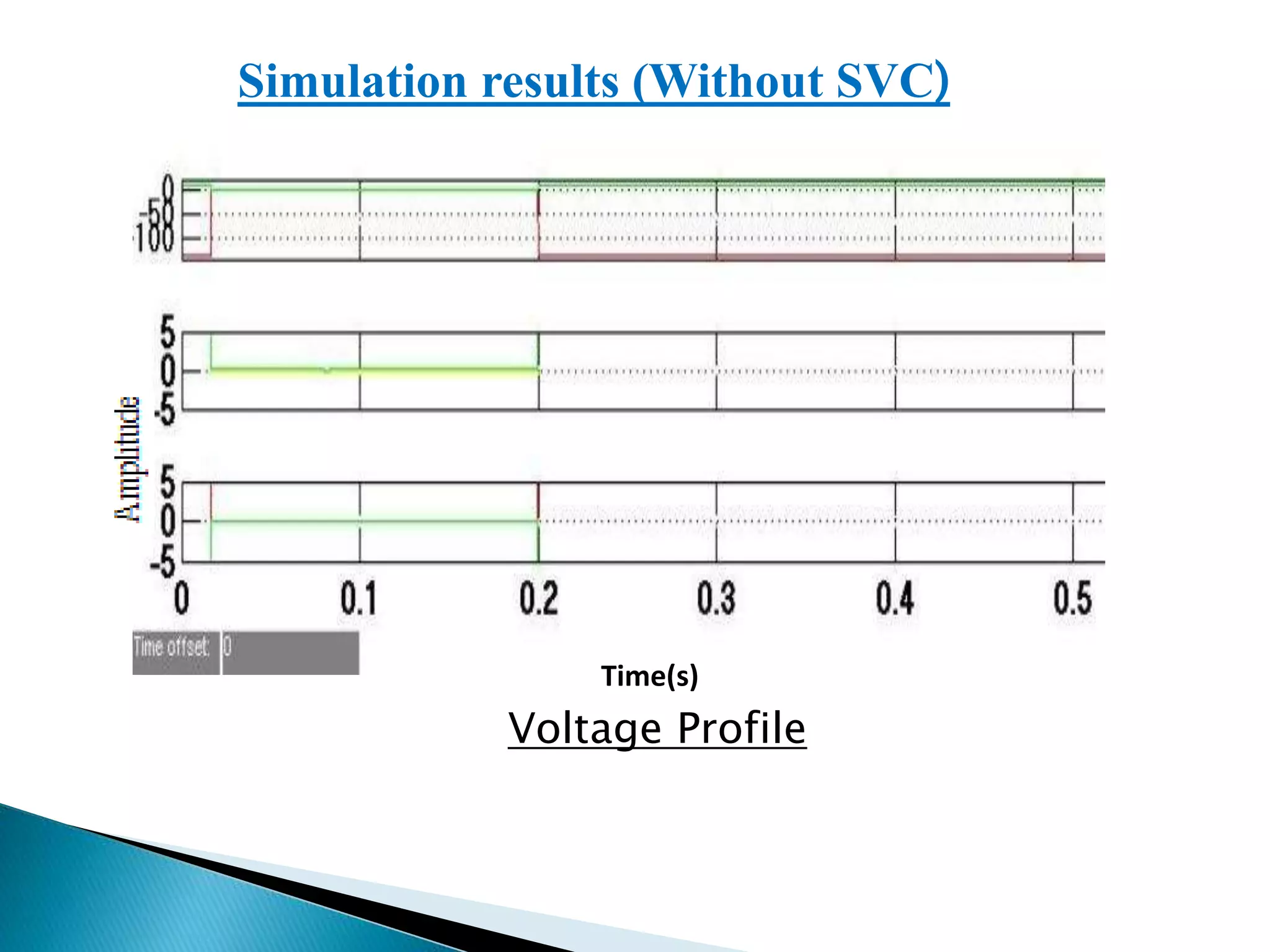
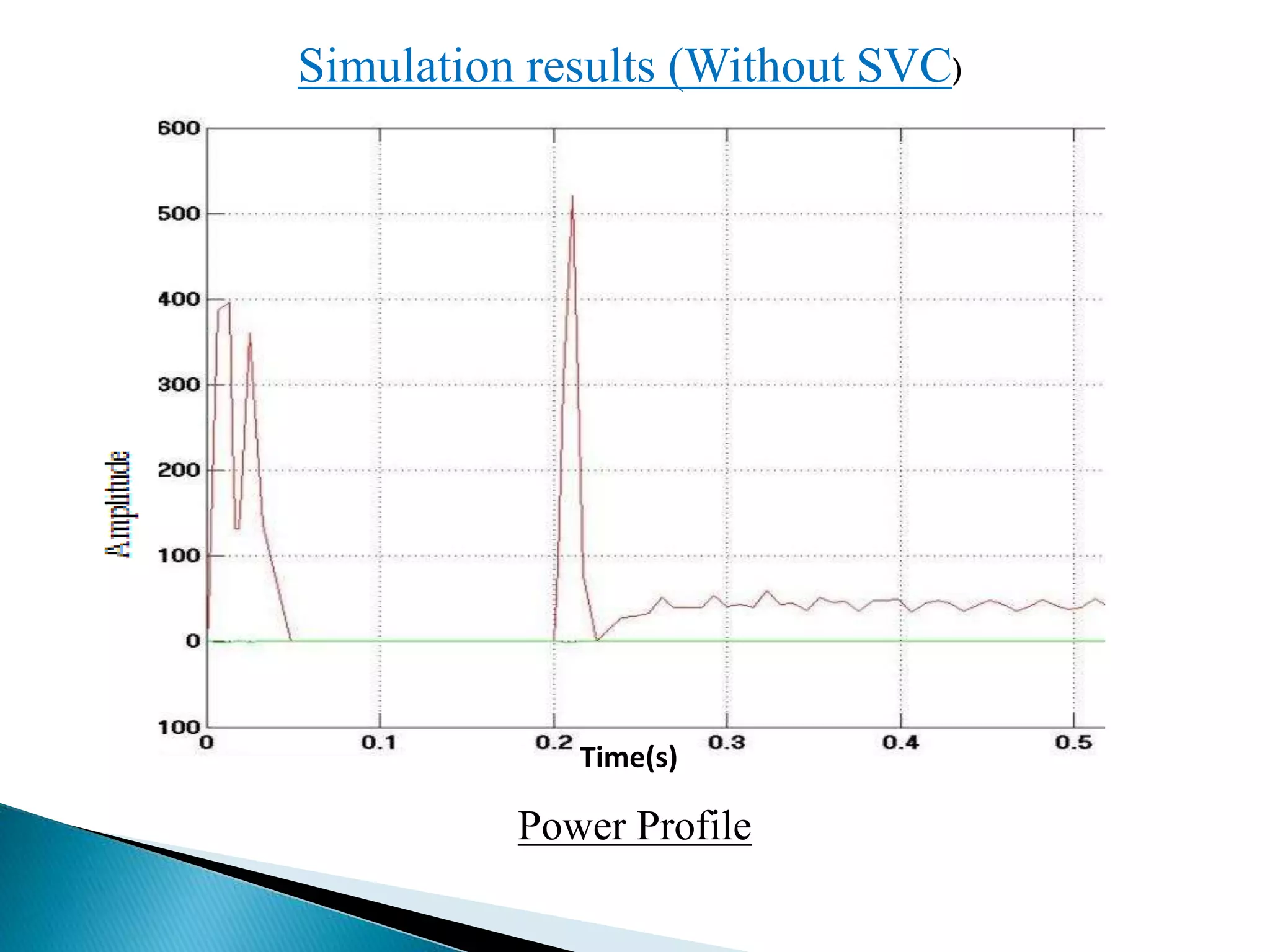
Simulation results (Without SVC)
Time(s)
Voltage Profile
Simulation results (Without SVC)
Power Profile
Time(s)
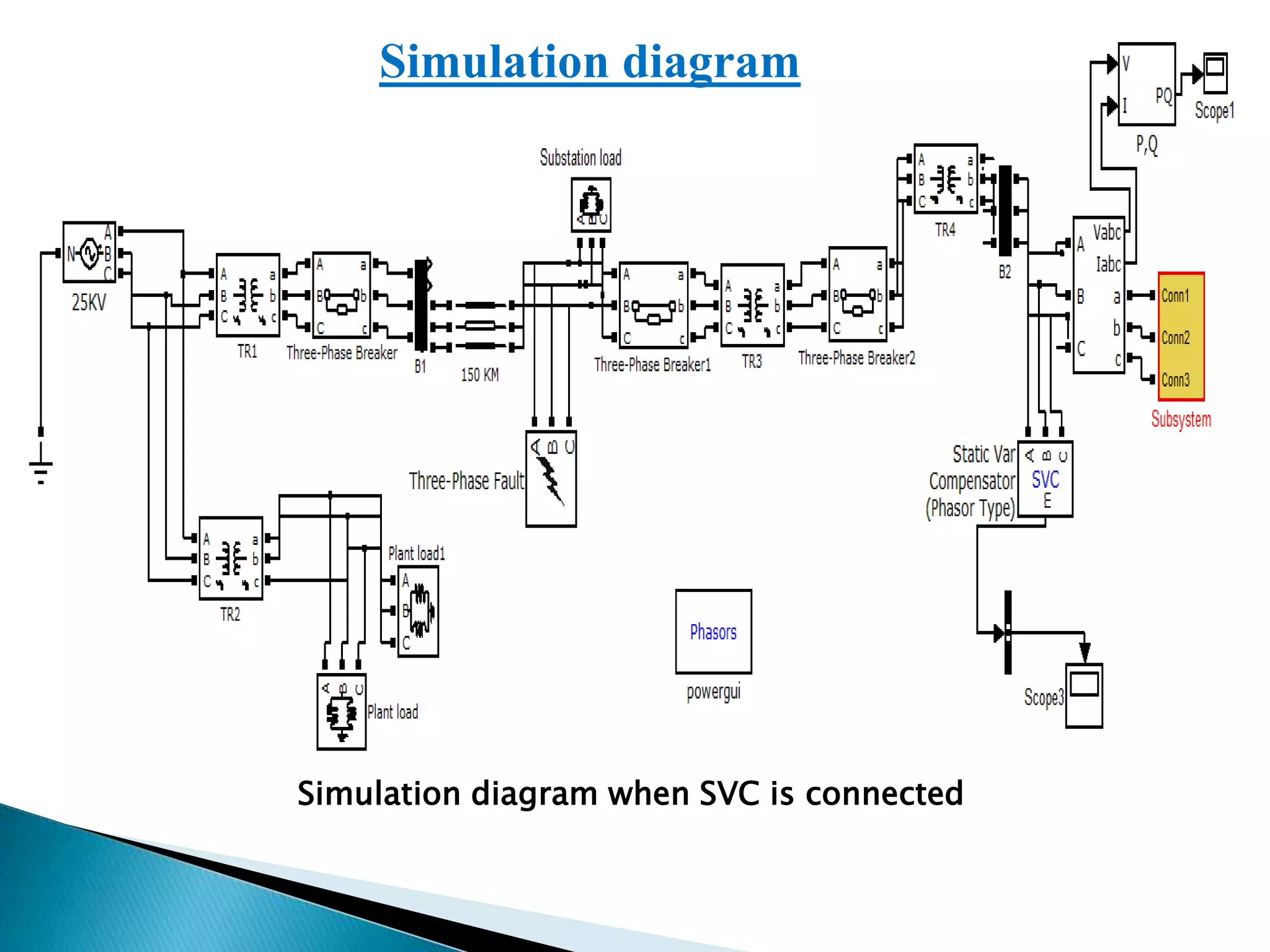
SIMULATION DIAGRAM
Simulation diagram when SVC is connected
Simulation diagram
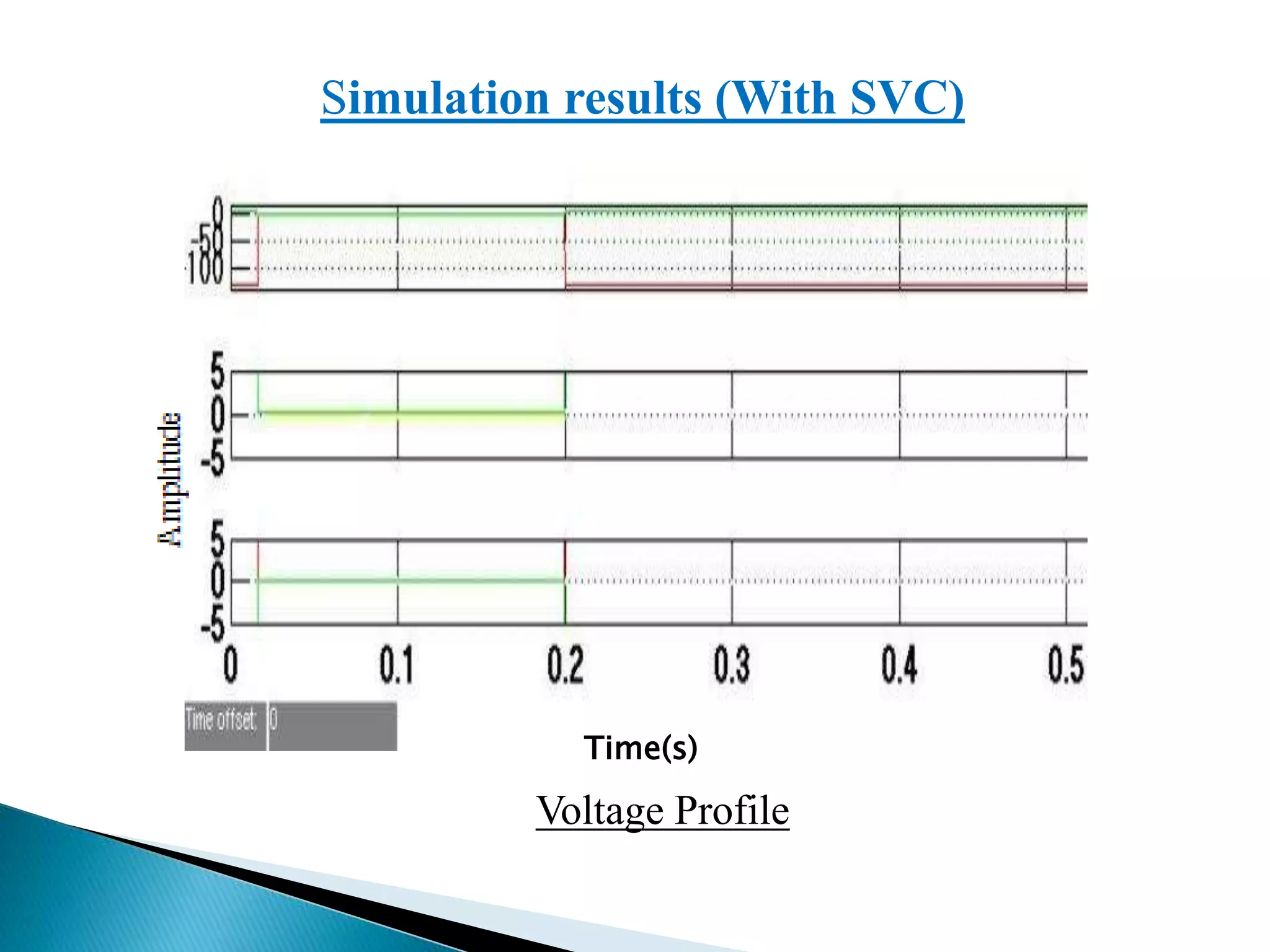
Simulation results (With SVC)
Time(s)
Voltage Profile
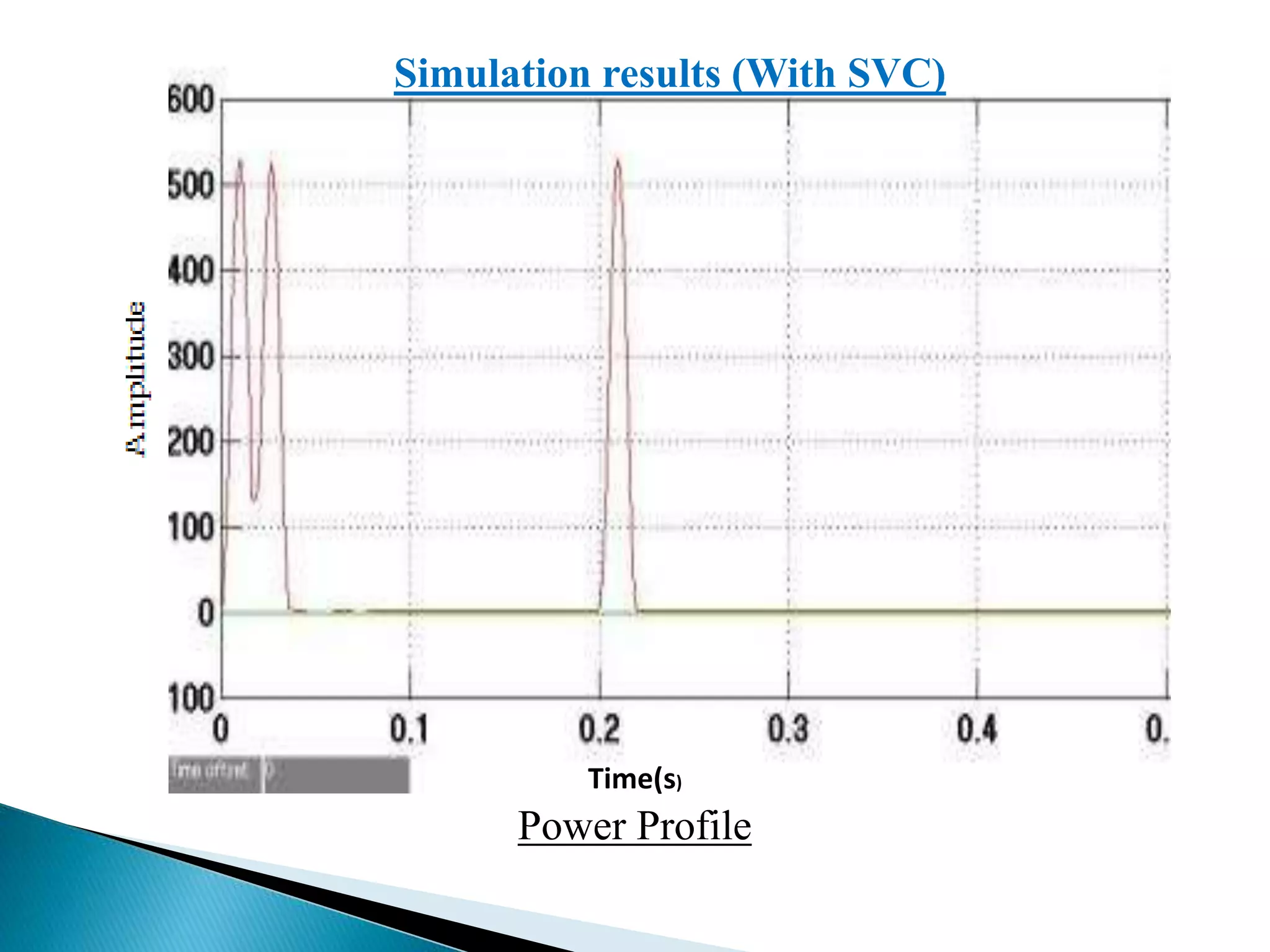
Time(s)
Time(s)
Simulation results (With SVC)
Power Profile
Event Action Status of SVC Profile of P,Q
Case-1 3Phase Fault
on Grid
network
Without SVC Minimum
Case-2 3Phase Fault
on Grid
network
With SVC Improved
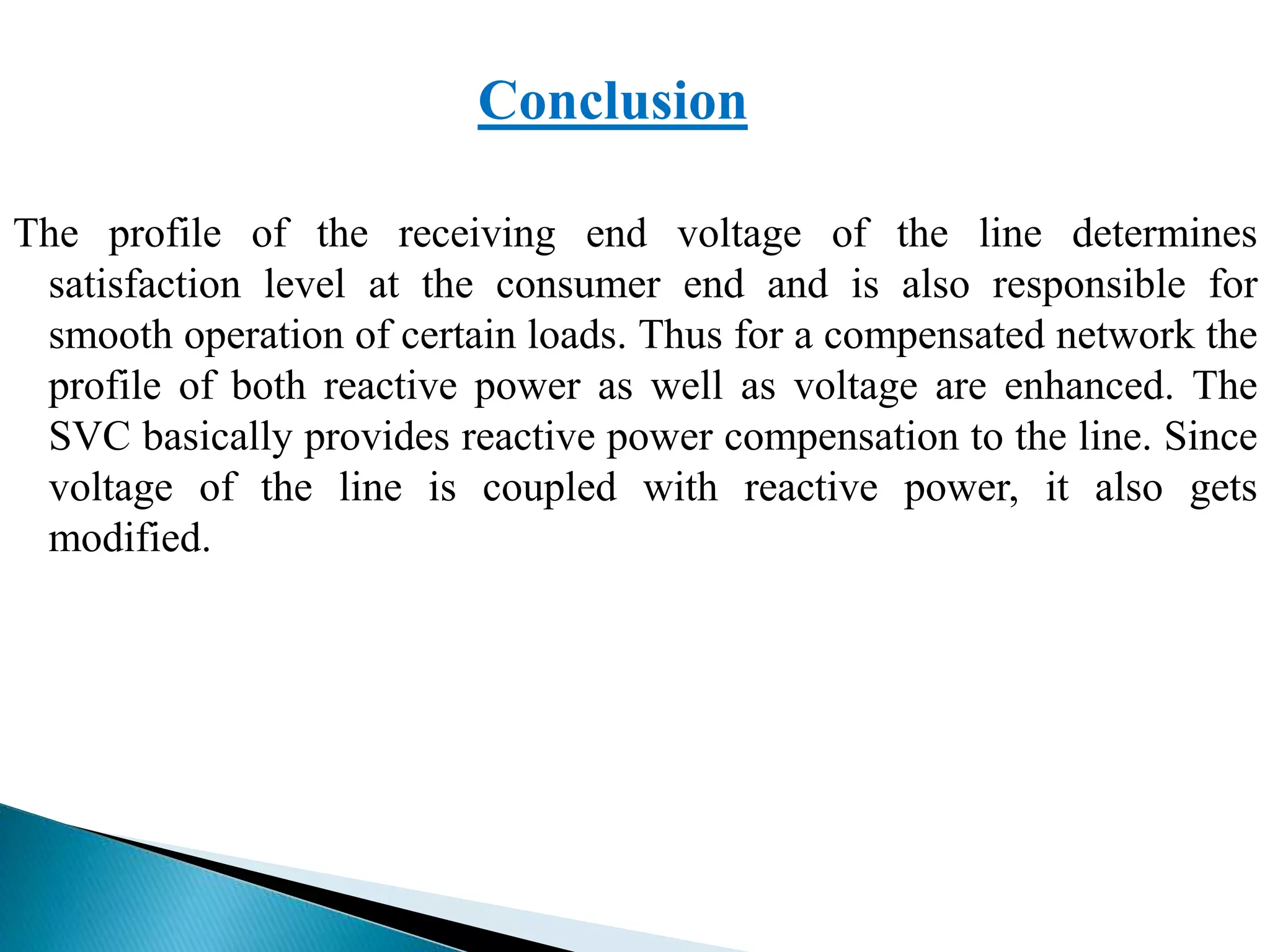
Conclusion
The profile of the receiving end voltage of the line determines
satisfaction level at the consumer end and is also responsible for
smooth operation of certain loads. Thus for a compensated network the
profile of both reactive power as well as voltage are enhanced. The
SVC basically provides reactive power compensation to the line. Since
voltage of the line is coupled with reactive power, it also gets
modified.
 Further improvement of parameters(V,P,Q)
profile by connecting some more dynamic
components in the network.
[1] Power system performance improvement by using an SVC device ,Ali Abdulwahhab
Abdulrazzaq; Mircea Eremia; Lucian Toma ,2014 International Symposium on
Fundamentals of Electrical Engineering (ISFEE),Year: 2014 ,Pages: 1 - 6 ,IEEE Conference
Publications.
[2] Fishow, A.G, “Transient ans Steady State Stability margin to state a power system
stability standardization”, published in UPS of Russia.
[3] Canizarea.C. A, Bhattacharrya. K ,Haghighat. H,Pan. J,Tang. C and Samahy. E. I,
“Reactive Power Despatch Problem in the context of Captive Electricity Market Generation,
Transmission and Distribution”, Vol.4, IET issue, February 2010.
[4] Application of static VAr compensators to increase power system damping,E. -Z. Zhou
,IEEE Transactions on Power Systems ,Year: 1993, Volume: 8, Issue: 2 ,Pages: 655 - 661
,Cited by: Papers (95) ,IEEE Journals & Magazines.
[5] Optimal placement and sizing of SVC for loss minimization and voltage security
improvement using differential evolution algorithm ,Shraddha Udgir; Laxmi Srivastava;
Manjaree Pandit,International Conference on Recent Advances and Innovations in
Engineering (ICRAIE-2014) Year: 2014, Pages: 1 - 6 Cited by: Papers (3) IEEE Conference
Publications.
[6] Improve power oscillation stability in a grid connected wind power system by
using a Static Var Compensator ,Van-Tri Bui; Dinh-Nhon Truong; Dac-Loc Ho,
2017 International Conference on System Science and Engineering (ICSSE),Year:
2017,Pages: 200 – 203,IEEE Conference Publications.
[7] Best locations of shunt SVCs for steady state voltage stability enhancement
Ibrahim B. M. Taha ,2015 IEEE Conference on Energy Conversion
(CENCON),Year:2015,Pages:430-435,IEEE Conference Publications.
[8] Rajamani.K,Hambarde. U.K “ Islanding and Loadshedding Scheme for Captive
Power Plant Power Delivery”, IEEE Transactions, Vol. 14, Jul 1999.
[9] NEMA Standards Publication ICs 1-1988, General Standards for Industrial
Control and Systems; ICs 2-1988, Industrial Control Devices, Controllers and
Assemblies; ICs 3-1988.
[10] Bindon. R.E, “Emergency operation of large steam turbine generator”,
presented at South Eastern Electric Exchange, Atlanta, Georgia, October 13-14,
1966.
[11] IEEE Std 141-1986, IEEE Recommended Practice for Electric Power
Distribution for Industrial Plants (ANSI).
[12] IEEE Std 242-1986, IEEE Recommended Practice for Protection
and Coordination of Industrial and Commercial Power Systems (ANSI).
19458.
[13] SenguptaT.K.,”Studies on Assessment of Power Frequency in
Interconnected Grid – Its Computer based Control and Protection”,
Research Paper, The Faculty of Engineering and
Technology,Department of Electrical Engineering,Jadavpur University,
2008.
[14] Krishnamurti.P,“Captive Power Plant Quality Journal” of TCE
Limited, Vol.4-I-pp.10,April 2006.
Thank
You

An Analytical Approach to Improve Stability and to Enhance Active & Reactive Power Profile of a Grid Network mainly under Fault Condition

  • 1.
    Paper Id-54 Authored By ArijitGanguly, Rumrum Banerjee Soumya Ghatak, Plabon Saha, Aalok Bhattacharya, Rahul Shome, Suman Patra (Dept. of Electrical Engg.) University of Engineering & Management,Kolkata Presented By Soumya Ghatak Dept. of Electrical Engg. University of Engineering & Management,Kolkata
  • 2.
     Overview ofPower System network  Problem in Grid network  Main Objective of the paper  Block diagram representation of the network under study  Simulation diagram  Conditions of analysis  Operational Results  Simulation Results  Conclusion  Future scope
  • 3.
  • 4.
     The initiationof fault in the Power System introduces a high degree of transient behaviour leading to the flow of a high value of current causing damage to the entire system.  System starts losing stability leading to high degree of oscillations in the system.
  • 5.
    Main objective ofthe paper  This paper presents an analytical approach to improve stability and to enhance active & reactive power profile of grid network mainly under fault condition.  To obtain optimum performance of the grid network by connecting certain dynamic components in the network  To improve the network parameters and ensure the reliability of power flow after a huge transient in the power system by using FACTS device.
  • 6.
  • 7.
    Simulation diagram Simulation diagramwhen SVC is not connected.
  • 8.
    Simulation results (WithoutSVC) Time(s) Voltage Profile
  • 9.
    Simulation results (WithoutSVC) Power Profile Time(s)
  • 10.
    SIMULATION DIAGRAM Simulation diagramwhen SVC is connected Simulation diagram
  • 11.
    Simulation results (WithSVC) Time(s) Voltage Profile
  • 12.
  • 13.
    Event Action Statusof SVC Profile of P,Q Case-1 3Phase Fault on Grid network Without SVC Minimum Case-2 3Phase Fault on Grid network With SVC Improved
  • 14.
    Conclusion The profile ofthe receiving end voltage of the line determines satisfaction level at the consumer end and is also responsible for smooth operation of certain loads. Thus for a compensated network the profile of both reactive power as well as voltage are enhanced. The SVC basically provides reactive power compensation to the line. Since voltage of the line is coupled with reactive power, it also gets modified.
  • 15.
     Further improvementof parameters(V,P,Q) profile by connecting some more dynamic components in the network.
  • 16.
    [1] Power systemperformance improvement by using an SVC device ,Ali Abdulwahhab Abdulrazzaq; Mircea Eremia; Lucian Toma ,2014 International Symposium on Fundamentals of Electrical Engineering (ISFEE),Year: 2014 ,Pages: 1 - 6 ,IEEE Conference Publications. [2] Fishow, A.G, “Transient ans Steady State Stability margin to state a power system stability standardization”, published in UPS of Russia. [3] Canizarea.C. A, Bhattacharrya. K ,Haghighat. H,Pan. J,Tang. C and Samahy. E. I, “Reactive Power Despatch Problem in the context of Captive Electricity Market Generation, Transmission and Distribution”, Vol.4, IET issue, February 2010. [4] Application of static VAr compensators to increase power system damping,E. -Z. Zhou ,IEEE Transactions on Power Systems ,Year: 1993, Volume: 8, Issue: 2 ,Pages: 655 - 661 ,Cited by: Papers (95) ,IEEE Journals & Magazines. [5] Optimal placement and sizing of SVC for loss minimization and voltage security improvement using differential evolution algorithm ,Shraddha Udgir; Laxmi Srivastava; Manjaree Pandit,International Conference on Recent Advances and Innovations in Engineering (ICRAIE-2014) Year: 2014, Pages: 1 - 6 Cited by: Papers (3) IEEE Conference Publications.
  • 17.
    [6] Improve poweroscillation stability in a grid connected wind power system by using a Static Var Compensator ,Van-Tri Bui; Dinh-Nhon Truong; Dac-Loc Ho, 2017 International Conference on System Science and Engineering (ICSSE),Year: 2017,Pages: 200 – 203,IEEE Conference Publications. [7] Best locations of shunt SVCs for steady state voltage stability enhancement Ibrahim B. M. Taha ,2015 IEEE Conference on Energy Conversion (CENCON),Year:2015,Pages:430-435,IEEE Conference Publications. [8] Rajamani.K,Hambarde. U.K “ Islanding and Loadshedding Scheme for Captive Power Plant Power Delivery”, IEEE Transactions, Vol. 14, Jul 1999. [9] NEMA Standards Publication ICs 1-1988, General Standards for Industrial Control and Systems; ICs 2-1988, Industrial Control Devices, Controllers and Assemblies; ICs 3-1988. [10] Bindon. R.E, “Emergency operation of large steam turbine generator”, presented at South Eastern Electric Exchange, Atlanta, Georgia, October 13-14, 1966.
  • 18.
    [11] IEEE Std141-1986, IEEE Recommended Practice for Electric Power Distribution for Industrial Plants (ANSI). [12] IEEE Std 242-1986, IEEE Recommended Practice for Protection and Coordination of Industrial and Commercial Power Systems (ANSI). 19458. [13] SenguptaT.K.,”Studies on Assessment of Power Frequency in Interconnected Grid – Its Computer based Control and Protection”, Research Paper, The Faculty of Engineering and Technology,Department of Electrical Engineering,Jadavpur University, 2008. [14] Krishnamurti.P,“Captive Power Plant Quality Journal” of TCE Limited, Vol.4-I-pp.10,April 2006.
  • 19.