Ampicillin
Tendai Bere
Washington Dendera
Tanyaradzwa Ngara
Nyasha Mudukuti
Antibiotics
• are specific chemical substances derived from or
produced by living organisms that are capable of
inhibiting the life processes of other organisms.
Penicillins
• a group of closely related antibiotics used to treat a
wide variety of bacterial infections occurring in the
body
• The first antibiotic was discovered in 1896 by Ernest
Duchesne and "rediscovered" byAlexander Flemming
in 1928 from the filamentous fungus Penicilium
notatum.
• The antibiotic substance, named penicillin, was not
purified until the 1940s (by Florey and Chain), just in
time to be used at the end of the second world war
• Penicillin was the first important commercial product
produced by an aerobic, submerged fermentation
 Antibiotics can be selectively toxic by targeting such
features as the bacterial cell wall, 70S ribosomes, and
enzymes that are specific to bacteria.
 In this way the human eukaryotic cells are
unaffected.
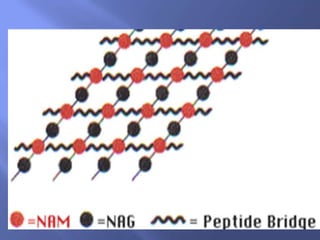
• The walls of bacteria are made of a complex
polymeric material called peptidoglycan.
• It contains both amino acids and amino sugars.
• The amino sugars are of two kinds N-
acetylglucosamine (NAG) and N-acetylmuramic acid
(NAM
-The beta-lactams all work by interfering with the synthesis of
the bacterial cell wall by:
1) disruption of mucopeptide synthesis
2)Penicillin can cause rapid lysis of the bacterial cell by
inducing the action of bacterial autolysins (mucopeptide
hydrolases).
3) penicillin exposes the cell to osmotic action and water
passes from the hypotonic external environment into the
interior of the cell.
Ampicillin prodrug is Broad - spectrum penicillin used
against gram +ve and gram –ve bacteria
- ampicillin is more active against enterococci, Listeria
monocytogenes, and beta-Iactamase negative
Haemophilus influenzae
Two types:
• Biosynthetic penicillin is natural penicillin that is
harvested from the mould itself through fermentation
• Semi-synthetic derivatives of penicillin - like
Ampicillin, Penicillin V
• consist of the basic Penicillin structure, but have been
purposefully modified chemically by removing the
acyl group to leave 6-aminopenicillanic acid and then
adding acyl groups that produce new properties
• Antibiotics are produced on an industrial scale using
a variety of fungi and bacteria
• Penicillin is produced by the fungus Penicillium
chrysogenum
• penicillin is a secondary metabolite, so is only
produced in the stationary phase.
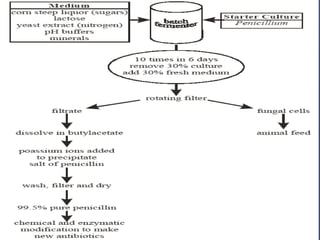
• It requires a batch fermenter, and a fed batch process
is normally used to prolong the stationary period and
so increase production.
• optimum temperature – 25 -27ºC
• Fermentation process is aerobic
• volume fermenter is 40 –200 dm3
• The first strain used to produce penicillin was
Penicillin notatum, which produced1 mg dm‐3
• Today, using a different species (P. chrysogenum)
and a better extraction procedures the yield is 50 g
dm‐3.
• Downstream processing is relatively easy since
penicillin is secreted into the medium (to kill other
cells), so there is no need to break open the fungal
cells.
• However, the product needs to be very pure, since it
being used as a therapeutic medical drug, so it is
dissolved and then precipitated as a potassium salt to
separate it from other substances in the medium.
• The resulting penicillin (called penicillin G) can be
chemically and enzymaticallymodified to make a
variety of penicillinswith slightly different properties.
• These semi‐synthetic penicillinsinclude penicillin V,
penicillin O, ampicillinand amoxycillin.
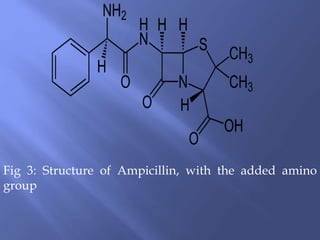
• Semi-synthetic derivative of penicillin
• consist of the basic Penicillin structure, but has been
purposefully modified chemically by removing the
acyl group to leave 6-aminopenicillanic acid and then
adding an acyl group (amino group)
• allows the ampicillin to be effective against gram
negative organisms as well as the gram positive
organisms covered by penicillin
• makes ampicillin better as a 'broad spectrum
antibiotic'
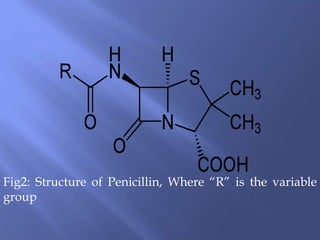
Fig2: Structure of Penicillin, Where “R” is the variable
group
Fig 3: Structure of Ampicillin, with the added amino
group
• the product needs to be very pure, since it being used
as a therapeutic medical drug, so it is dissolved and
then precipitated as a potassium salt to separate it
from other substances in the medium
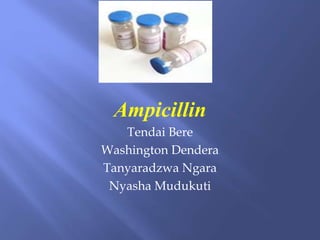
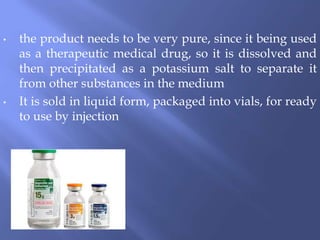
• It is sold in liquid form, packaged into vials, for ready
to use by injection
Thank You

Ampicillin Production

  • 1.
  • 2.
    Antibiotics • are specificchemical substances derived from or produced by living organisms that are capable of inhibiting the life processes of other organisms. Penicillins • a group of closely related antibiotics used to treat a wide variety of bacterial infections occurring in the body
  • 3.
    • The firstantibiotic was discovered in 1896 by Ernest Duchesne and "rediscovered" byAlexander Flemming in 1928 from the filamentous fungus Penicilium notatum. • The antibiotic substance, named penicillin, was not purified until the 1940s (by Florey and Chain), just in time to be used at the end of the second world war • Penicillin was the first important commercial product produced by an aerobic, submerged fermentation
  • 4.
     Antibiotics canbe selectively toxic by targeting such features as the bacterial cell wall, 70S ribosomes, and enzymes that are specific to bacteria.  In this way the human eukaryotic cells are unaffected.
  • 5.
    • The wallsof bacteria are made of a complex polymeric material called peptidoglycan. • It contains both amino acids and amino sugars. • The amino sugars are of two kinds N- acetylglucosamine (NAG) and N-acetylmuramic acid (NAM
  • 7.
    -The beta-lactams allwork by interfering with the synthesis of the bacterial cell wall by: 1) disruption of mucopeptide synthesis 2)Penicillin can cause rapid lysis of the bacterial cell by inducing the action of bacterial autolysins (mucopeptide hydrolases). 3) penicillin exposes the cell to osmotic action and water passes from the hypotonic external environment into the interior of the cell.
  • 8.
    Ampicillin prodrug isBroad - spectrum penicillin used against gram +ve and gram –ve bacteria - ampicillin is more active against enterococci, Listeria monocytogenes, and beta-Iactamase negative Haemophilus influenzae
  • 9.
    Two types: • Biosyntheticpenicillin is natural penicillin that is harvested from the mould itself through fermentation • Semi-synthetic derivatives of penicillin - like Ampicillin, Penicillin V • consist of the basic Penicillin structure, but have been purposefully modified chemically by removing the acyl group to leave 6-aminopenicillanic acid and then adding acyl groups that produce new properties
  • 10.
    • Antibiotics areproduced on an industrial scale using a variety of fungi and bacteria • Penicillin is produced by the fungus Penicillium chrysogenum • penicillin is a secondary metabolite, so is only produced in the stationary phase. • It requires a batch fermenter, and a fed batch process is normally used to prolong the stationary period and so increase production.
  • 12.
    • optimum temperature– 25 -27ºC • Fermentation process is aerobic • volume fermenter is 40 –200 dm3 • The first strain used to produce penicillin was Penicillin notatum, which produced1 mg dm‐3 • Today, using a different species (P. chrysogenum) and a better extraction procedures the yield is 50 g dm‐3.
  • 13.
    • Downstream processingis relatively easy since penicillin is secreted into the medium (to kill other cells), so there is no need to break open the fungal cells. • However, the product needs to be very pure, since it being used as a therapeutic medical drug, so it is dissolved and then precipitated as a potassium salt to separate it from other substances in the medium.
  • 14.
    • The resultingpenicillin (called penicillin G) can be chemically and enzymaticallymodified to make a variety of penicillinswith slightly different properties. • These semi‐synthetic penicillinsinclude penicillin V, penicillin O, ampicillinand amoxycillin.
  • 15.
    • Semi-synthetic derivativeof penicillin • consist of the basic Penicillin structure, but has been purposefully modified chemically by removing the acyl group to leave 6-aminopenicillanic acid and then adding an acyl group (amino group) • allows the ampicillin to be effective against gram negative organisms as well as the gram positive organisms covered by penicillin • makes ampicillin better as a 'broad spectrum antibiotic'
  • 16.
    Fig2: Structure ofPenicillin, Where “R” is the variable group
  • 17.
    Fig 3: Structureof Ampicillin, with the added amino group
  • 18.
    • the productneeds to be very pure, since it being used as a therapeutic medical drug, so it is dissolved and then precipitated as a potassium salt to separate it from other substances in the medium • It is sold in liquid form, packaged into vials, for ready to use by injection
  • 19.